on this page: print and essays
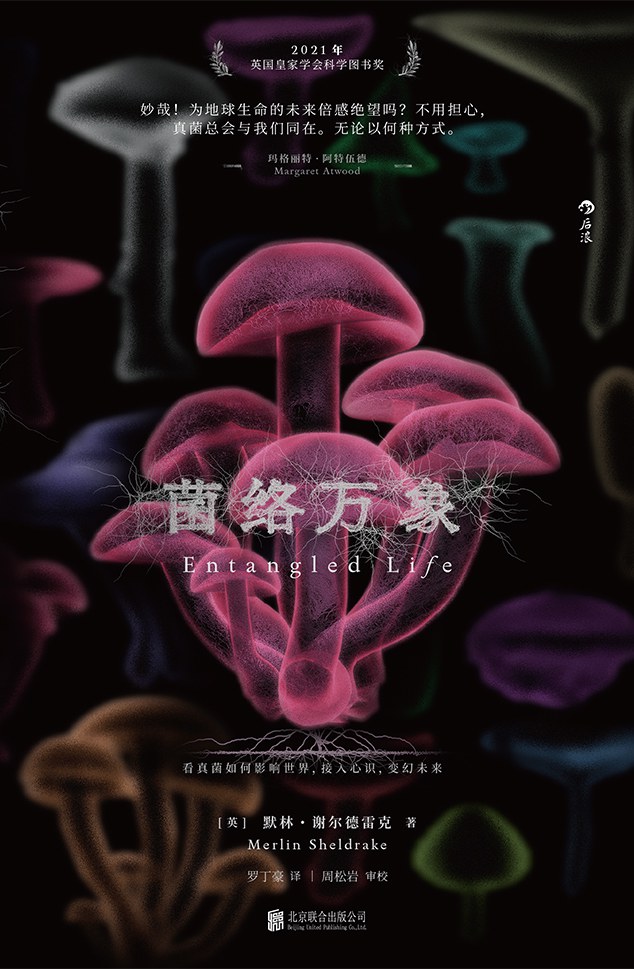
Entangled Life 菌络万象
My Chinese translation of Merlin Sheldrake's Entangled Life (2020), for Houlang Books. I adored Frodo as a child, and I am grateful that some old fondness for Farmer Maggot's mushroom field followed this project into my inbox. I owe thanks to my editor Yanxia and to Cosmo Sheldrake, whose music I kept returning to.
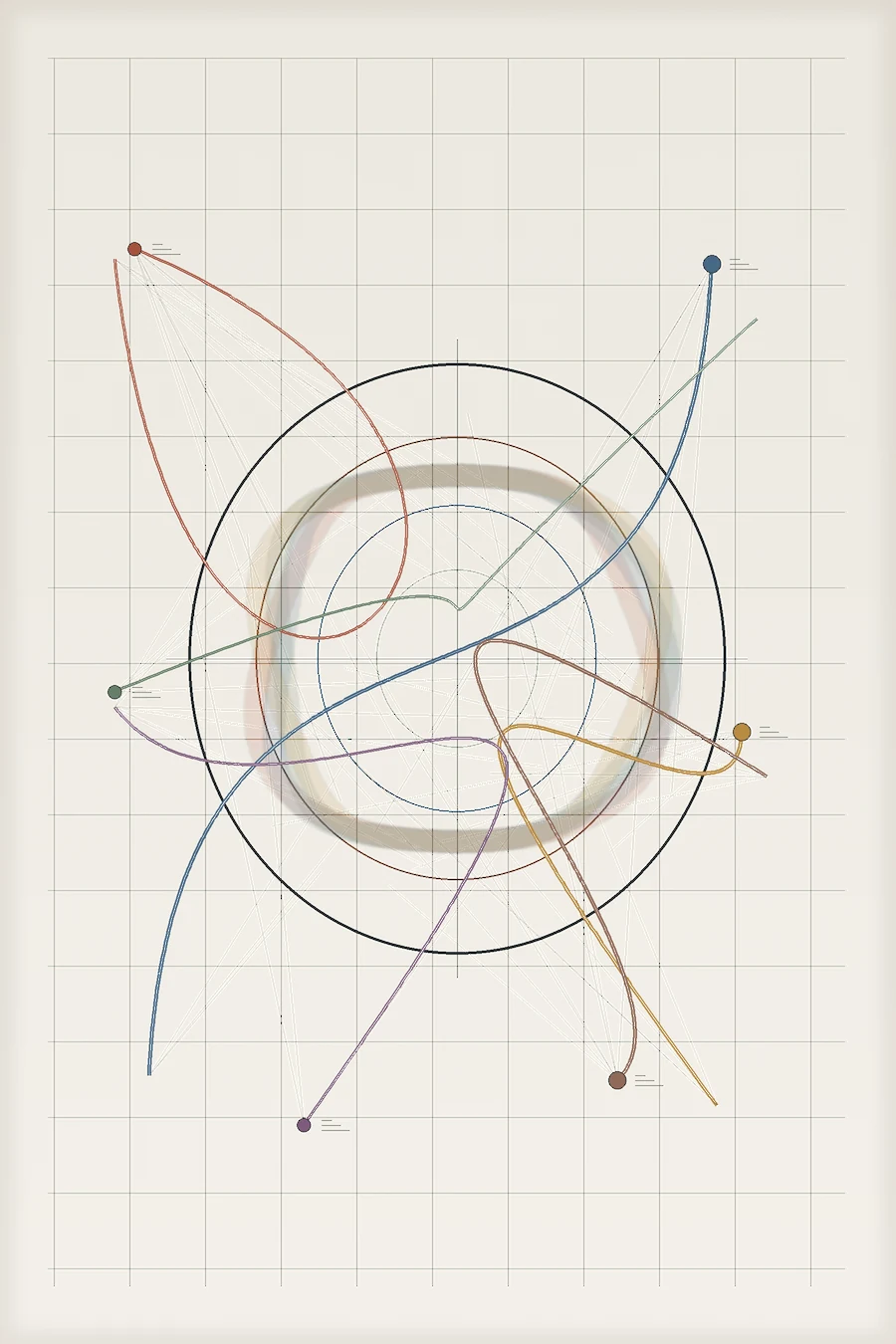
A print feature drawing on interviews with Anil Seth, Hakwan Lau, David Rosenthal, and others. I follow three decades of debate, from Crick and Koch's neural-correlates programme through the Templeton adversarial collaborations, and ask whether rival theories of consciousness can be tested against each other when they disagree on what kind of question consciousness is. Revised and expanded from the Chinese in 2026.
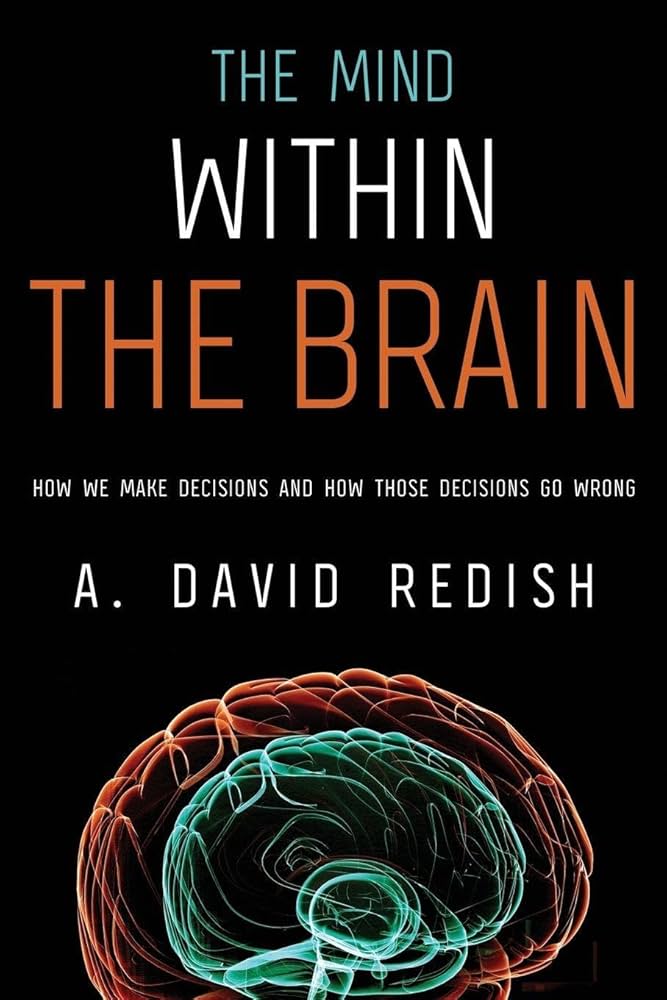
The Mind within the Brain 大脑中的心智
In 2023–2024 I worked on a Chinese translation of David Redish's The Mind within the Brain (2013), expected in print in late 2026. It was special because Redish's hippocampal work and Beyond the Cognitive Map (1999) pushed me towards memory research. Redish argues that addiction and PTSD are failure modes of the same neural systems that support ordinary decision-making, reinforcement learning, and neuroeconomic behaviour.
digital
essay
8 Jul 2026 · 47 min read
Who won the Booker? On transcreation and Taiwan Travelogue
What is a translator’s job? Are there limits to a translator’s liberties with the original text? Kundera, in Testaments Betrayed (1993, trans. Linda Asher), reading Alexandre Vialatte’s French translations of Kafka, penned the same complaint over and over: Vialatte overreaches into the auth
essay
28 Apr 2026 · 33 min read
Doomed as dodoes
In October 1650, the Massachusetts General Court ordered a small theological tract burned in the Boston marketplace. Its author, William Pynchon, was the founder of Springfield, Massachusetts and one of the more prosperous of the first Puritan settlers. William Pynchon, in his book The Meritorio
essay
29 Jan 2026 · 27 min read
Nothing is strange to a child: on Solenoid
Lice came before the fourth dimension in Cărtărescu’s Solenoid. The novel opens at the protagonist’s scalp, where metaphysics touches skin. Before the buried solenoids and levitating bodies, there is a schoolteacher, over a sink, combing lice from his hair and noticing, with horrible calm,
journal
26 Oct 2025 · 6 min read
Danya
I found him through a subreddit recommendation, some time during my first serious month of studying openings. The video was a Theory Speed Run episode on the Rubinstein Variation of the French Defence; I cannot say what drew me in first, but within three minutes I had stopped the video, reset to the
essay
11 Jun 2022 · 10 min read
The abstract and the concrete
Although I have heard it countless times, I still feel a strange surge of emotion whenever someone mentions the Christmas Truce between British and German troops during the First World War in 1914. Over the years I have seen many new clues, read reconstructed diaries from soldiers on both sides, and
science
23 May 2022 · 48 min read
Just one centimetre deeper: Place cells and the brain's cartography
‘I sometimes feel, in reviewing the evidence on the localisation of the memory trace, that the necessary conclusion is that learning just is not possible.’ Karl Lashley wrote this in 1950, after thirty-three years of cutting into the brains of rats and asking where memory lives. He had trained anima
science
2 Dec 2020 · 27 min read
AlphaFold, or how to fold graciously
A protein’s three-dimensional ribbon structure. AlphaFold predicts such structures from amino acid sequences alone, bypassing years of experimental crystallography. Wikimedia Commons, public domain. Consider a modest protein of 100 amino acid residues. If each residue can adopt roughly thre
journal
27 Jul 2020 · 4 min read
Shanwei
The shark meat was in my mouth before I remembered that sharks are cartilaginous fish. I chewed twice, crushing the soft bone and swallowing it. The bitter melon added during cooking had left the flesh loose and tender, carrying an astringent trace of bitterness that overpowered the salt of the beef
journal
12 Jul 2019 · 8 min read
Two freedoms
I finished work at half past five. At the department entrance a middle-aged man was showing two young children the plaque on the building, the one recording where Hodgkin and Huxley first measured a neuron’s action potential. On the way home there was a strange smell of paint, probably from the supe
fiction
29 Nov 2018 · 32 min read
Return to the edge of the world
I was born in Guangzhou, before the millennium. Nobody knew the city back then. According to my mother, she and my father had come to work here only because it was the only sizeable city near their hometowns. ‘Otherwise, of course, Shanghai,’ my mother said. Yes, who wouldn’t want Shanghai? the slee
fiction
20 Oct 2018 · 14 min read
Him / her / Ah Ming
Sometimes we fell asleep against the wall in a corner of the library. I would hold his arm; he contorted himself into some awkward posture, as though trying to make his height reachable for my shoulder. I always thought it was futile. Even if he shifted his waist forward a few centimetres, I still h
journal
31 Aug 2018 · 6 min read
Shaking hands with humans
L was right: I am, by nature, a person who trusts easily. He brought this up while talking about when we first met. We were in Abu Dhabi together for the NYUAD Candidate Weekend. That year’s pool of Asian applicants was not large; he was from Afghanistan, and perhaps for that reason, on the bus back
fiction
27 Apr 2018 · 29 min read
Escape
From a distance, it was not much. Just a small hump, barely protruding from the brown sand. He came running down from its peak towards me, sitting by the drinks stand, eyes shining with an impossible light. I did not know what he had seen, but I knew that it had been a long time since he was this ex
other writing
I’ve written some commissioned science communication pieces in Chinese, including my article with the highest readership, ‘The Persistence of ‘Neuromyths’ (不是人的脑子只用了10%,而是只有10%的人用了脑子)’, which was published on Guokr (果壳), China’s most popular digital pop-science platform. ‘Can We Manipulate Working Memory from Outside the Skull? (无须开颅,就能操控工作记忆?)’ was co-authored with Lindsay Li for Neu-Reality (神经现实), written at the invitation of Dr. Huan Luo, the paper’s corresponding author.
translations
I’ve also translated and edited work by Alex Mar, Geoffrey Hinton, Jordana Cepelewicz, Michael Graziano, Timothy Lillicrap, and others into Chinese for Neu-Reality. The selected translations below are ordered by how proud I am of them.
- Alex Mar, ‘Love in the Times of Robots’ · WIRED · 赛博时期的爱情
- Jordana Cepelewicz, ‘In Brain’s Electrical Ripples, Markers for Memories Appear’ · Quanta Magazine · 海马波簇闪烁,照亮记忆幽林
- Timothy P. Lillicrap, Adam Santoro, Luke Marris, Colin J. Akerman and Geoffrey Hinton, ‘Backpropagation and the Brain’ · Nature Reviews Neuroscience · 大脑中的反向传播 (co-translated with Lindsay Li)
- Grigori Guitchounts, ‘An Existential Crisis in Neuroscience’ · Nautilus · 神经科学的存在危机
- Michael Graziano, ‘Most Popular Theories of Consciousness Are Worse Than Wrong’ · The Atlantic · 一些意识理论,让我们在理解意识的路上“开倒车”?
- Kevin Berger, ‘Gustav Klimt in the Brain Lab’ · Nautilus · 美存在于观看者的神经系统之中
- Dyani Lewis, ‘Optogenetics: Understanding the Brain One Flash of Light at a Time’ · Cosmos Magazine · 光遗传学——大脑说:“要有光。”
- Steve Ayan, ‘The Brain’s Autopilot Mechanism Steers Consciousness’ · Scientific American · 你的大脑在自动驾驶,而你一无所知