Entangled Life and a conversation with Merlin Sheldrake
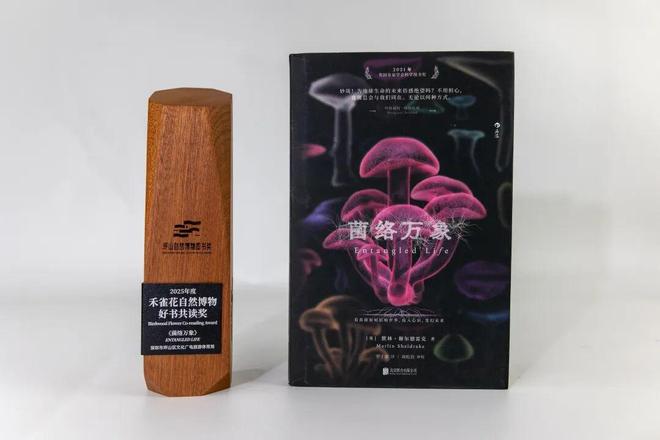
The original Entangled Life (2020) by Merlin Sheldrake won the 2021 Royal Society Science Book Prize and the Wainwright Prize for global conservation writing. Goodreads.
My Chinese translation, published by Houlang Books (ISBN 9787559677754), won the 2025 Pingshan Natural History Museum Book Award, was selected for Scientific American China’s 2024 Best Science Reading list, and was named to Douban’s 2025 Top 10 Science & New Knowledge list. Douban, Amazon.
Originally published by The Paper on 5 November 2025. Co-conducted with Songyan for Houlang Books’ science editorial team.
Fungi: in the grey transition zone between life and non-life
Songyan: Readers might interpret the title Entangled Life as referring to fungi themselves, or to the complex relationships between fungi and other life forms. How do you interpret the title?
Merlin: I understand ‘entangled’ as a state of being tangled and re-tangled, knotted together. The word’s root can be partially traced to North Germanic and German words for ‘seaweed’, likely because seaweed is itself tangled by nature (not counting getting tangled in oars and fishing nets, of course).
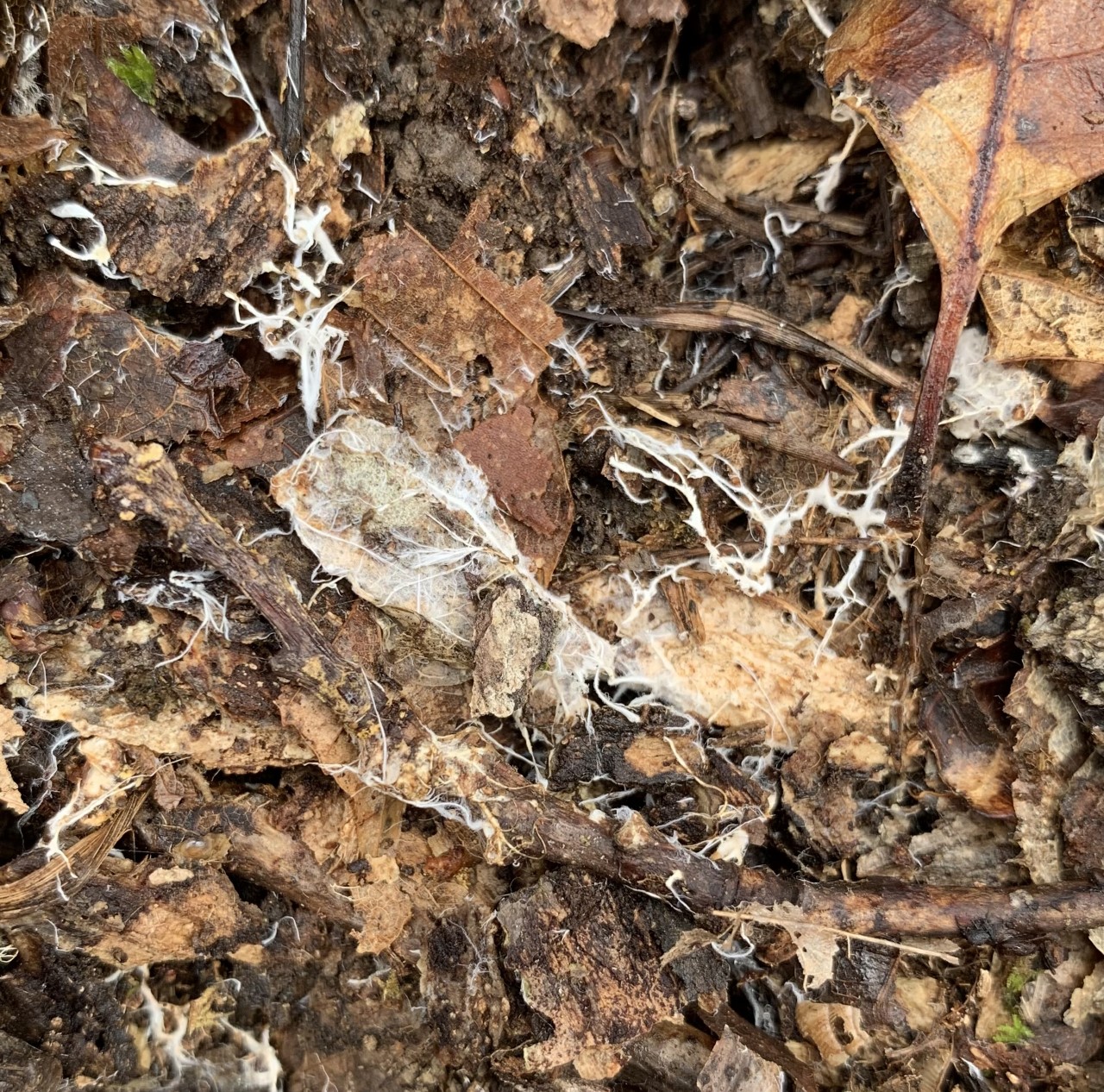
Most fungi branch and fuse into networks of tubular cells called mycelium. Mycelium is how fungi feed. Animals tend to find food externally and ingest it; fungi place their bodies inside their food. To do this, they must constantly reshape themselves, interweaving their bodies with the surrounding environment. This entanglement (with themselves, their physical surroundings, and other organisms) is how they live.
But fungi do not live alone. Mycelium acts like living thread, stitching fungal life into relationship after relationship. Fungi spread through soil, pass through sulphur deposits on the ocean floor, crawl over coral reefs, and penetrate plant roots, stems, and leaves. Bacteria use mycelial networks as highways through the teeming soil. Pull on one hypha and it is always connected to something else.
This connects to the word ‘Life’ in the English title. The most common diagram in evolutionary biology is the tree: a branching figure that represents how species diverge from common ancestors. But in recent decades, researchers have increasingly recognised that divergence is only part of the evolutionary story. One of the most dramatic moments in the history of life occurred when a single-celled organism engulfed a completely different type of single-celled organism, and the latter continued living inside the former. Inspired by these events, many biologists have begun reimagining the tree of life as a network: not just branching, but also merging and fusing. Between life and non-life there is a continuous grey transition zone. If one wanted a single organism to symbolise this evolutionary picture, mycelium would be the obvious choice.

Songyan: People sometimes use analogies with plants to help audiences understand fungi: comparing spores to seeds, or fruiting bodies to flowers. Do you think these analogies are helpful, or might they hinder deeper understanding?
Merlin: One of the problems mycologists face is that fungi were not recognised as an independent kingdom until 1969. This reinforced disciplinary bias: there are fewer opportunities to study fungi than animals or plants, and public awareness remains thin. But using more familiar life forms as analogies can make things easier to understand. The scientific community broadly agrees that metaphors and analogies help open new lines of thinking. As long as one remembers that analogies are just analogies, not factual statements, they serve us well.
Dinghao: You mentioned that at Cambridge, mycology was long housed within plant science. Do you think public awareness of fungi has progressed since then?
Merlin: Fungi have undoubtedly attracted increasing attention, and I am delighted about that. More and more people are becoming aware of just how many forms fungal life takes. Fungi are a vast kingdom, as broad and dazzling as the animal and plant kingdoms. Moreover, the vast majority of fungi do not produce fruiting bodies at all. But there is a long way to go; in research, conservation, and education, we still need to give fungi much more attention.
From imagining fungi to seeing fungi
Songyan: This book reveals the diverse ways fungi interact with animals and plants: parasitism, mycoheterotrophy, symbiosis. Do you think entirely new forms of interaction might emerge in the future?
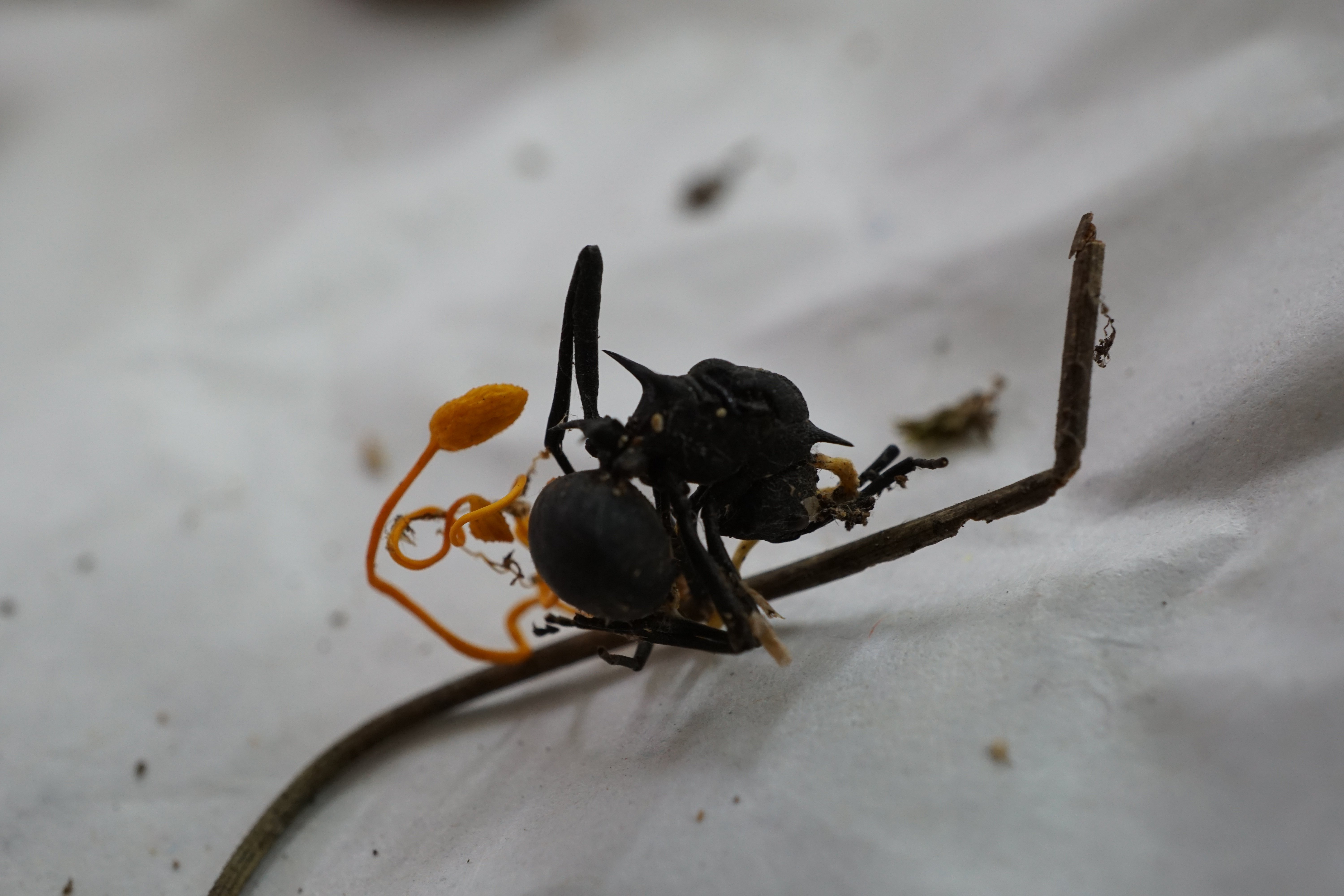
Merlin: The evolutionary history of fungi tells us that relationships between fungi and other organisms are always shifting, adjusting, and varying with ecological context. Many existing symbiotic interactions evolved from pre-existing relationships, and the two may look completely different. For example, mycoheterotrophy evolved from the more common mycorrhizal symbiosis; some fungal symbionts that provide nutrition to cicadas evolved from a deadly insect pathogen, the Cordyceps fungi. As new ecological conditions emerge, new symbiotic relationships will likely arise. I imagine some will be mutualistic; in environments too extreme for any individual organism, such relationships could let all partners survive.

Dinghao: You devoted considerable space to discussing how mycelial networks may resemble neural networks in animal brains. To what extent do you think this view holds up?
Merlin: There are superficial similarities between mycelial networks and neural networks: both are composed of elongated, information-processing cells that grow from their tips. My comparison of the two is not meant to erase their differences in behaviour and evolutionary history. Rather, life runs on information-processing networks of many kinds, and watching how radically different organisms (humans or shiitake mushrooms) solve problems and meet survival challenges can sharpen our understanding of what life does.
Songyan: Hyphae and mycelial networks are hidden underground and almost impossible to see directly. Are there currently research efforts to visualise these structures?
Merlin: Yes. I am collaborating with a Dutch research team, working alongside excellent evolutionary biologists and biophysicists. They are developing new methods using robotics and high-resolution microscopy to image fungi, with the goal of mapping entire fungal networks as they grow and monitoring the flow of material and information within them. The data will bring us remarkably close to the real-life dynamics of fungi and will let us ask entirely different questions about their growth and behaviour.
The language of fungi is an imaginative language
Dinghao: Your brother is a musician, and your wife is a poet. Do you think their creative ways of thinking have contributed to your development as a scientist?
Merlin: They have indeed played a special role. I have always felt that separating art and science is awkward and unnatural. Both spring from imagination, wonder, and curiosity; both explore the world around us and test our capacity to experience it deeply. We split the world into ‘primary’ quantities and ‘secondary’ qualities, and thereby created an artificial division between ‘science’ and ‘art’ that built barriers which confuse more than they clarify.
Scientific research does not advance on cold rationality alone. Scientists have always been imaginative, intuitive, complete human beings. Moreover, scientists must interpret and communicate their insights, and the language they use is often ambiguous, uncertain, even contradictory, full of metaphor and analogy. I think if we could abandon the notion that art and science belong to completely different realms, we would all be richer for it.
Songyan: Fungi and humans are continually influencing each other. Are there signs that we are co-evolving in some unexpected way?
Merlin: I am not sure co-evolution is the right term here; it has a very precise meaning in evolutionary biology, describing a process in which two species shape each other’s evolution. But we and fungi are indeed finding new ways to coexist. We cannot choose not to cooperate with fungi; we are interacting with them at every moment, even when they never cross our minds.
Through the lens of fungi, human history is a long chronicle of cooperation: cooperation with soil, with plants, from ancient mould therapies to modern antibiotics, alcohol and other fungal substances, fermented foods and beverages, and the roles that yeast plays in modern biotechnology and biomedicine. The list goes on.
Bread, alcohol, cheese, soy sauce: fungi influence us at every moment
Songyan: Entangled Life was published in 2020. What current research directions fascinate you most?
Merlin: I am deeply fascinated by fungi’s ability to form complex, decentralised symbiotic networks. These networks sustain the biosphere’s regenerative capacity and allow fungi to coordinate their behaviour without brains or central nervous systems. How do they sense and integrate information from their surroundings? How do they navigate the maze-like, shifting soil? Fungi, as a biological kingdom, have not received the attention a biological kingdom deserves.
Regarding conservation: fungi play a vital role in maintaining Earth’s biodiversity and carbon sequestration, yet they account for only 0.2 per cent of species prioritised for conservation. When we endanger fungi, we undermine efforts to control global warming and weaken the life forms we depend on. We also destroy remarkable solutions fungi have evolved for survival, solutions that may prove vital to us.
Regarding education: fungal knowledge is almost entirely absent from education at every level. Most of us go on ignoring fungi, and our picture of the living world stays distorted. A description of the living world that leaves out fungi describes a world that does not exist.
Dinghao: In China, mycology is still quite far from public attention. Do you have anything you’d like to say to Chinese readers?

Merlin: Through fungi, one can see an entirely different world. Fungi shape life on Earth, including ours, in ways we are only beginning to grasp. There is much to learn from fungi themselves. Life continues because organisms collaborate. New symbiotic relationships often form during moments of crisis. Through collaboration, organisms accomplish what none could alone.
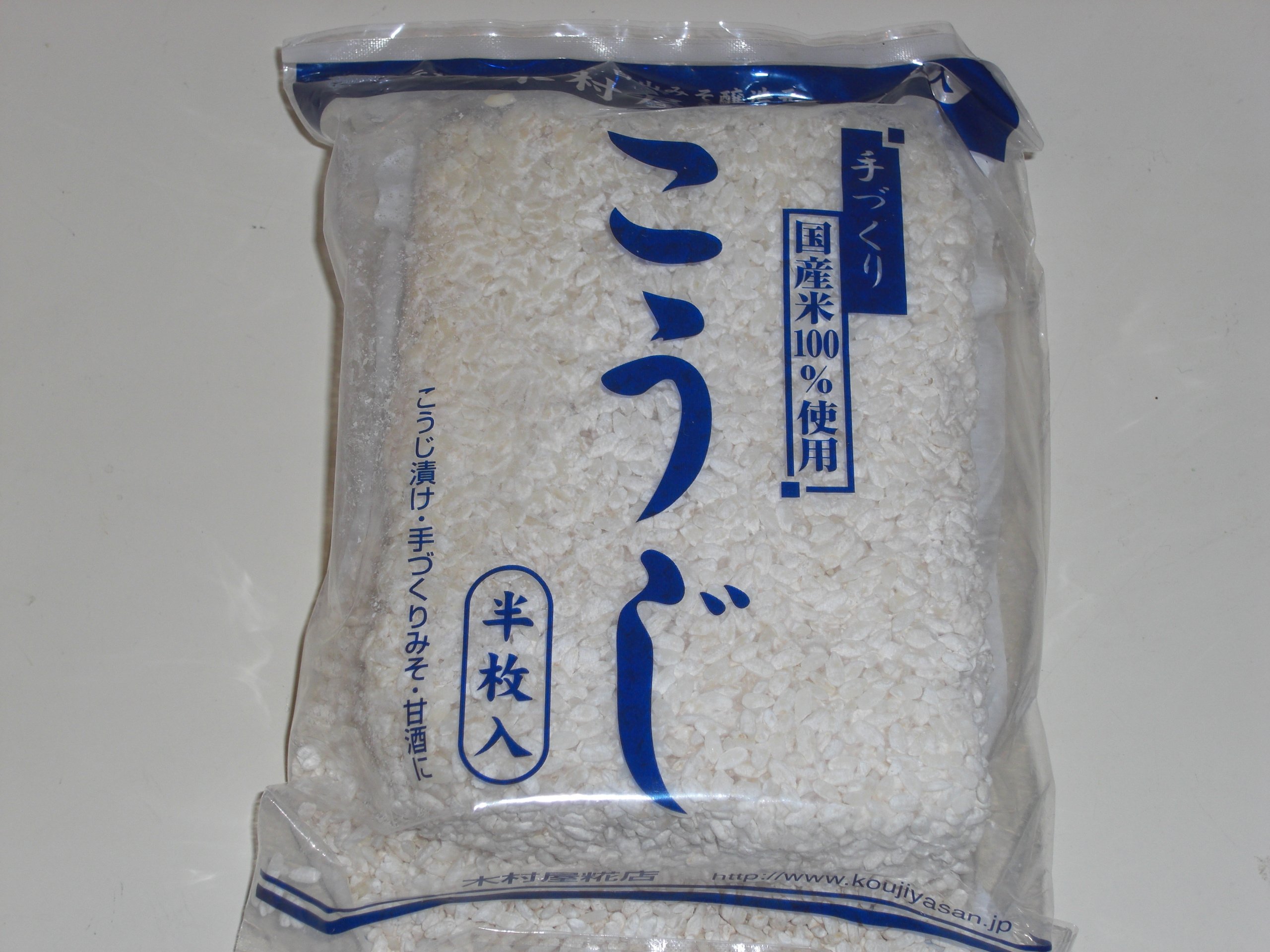
We already know that humans have been cooperating with fungi for an immeasurably long time. Fungi sustain the biosphere’s regenerative capacity partly through their metabolic wizardry, their astonishing ability to shape and reshape the world. Bread, alcohol, cheese, soy sauce, penicillin, anticancer drugs, immunosuppressants; the list is long.
Nevertheless, as a biological kingdom, fungi have never received the attention they deserve. If we fail to notice their constant influence, we stop seeing them, and end up exploiting or destroying them. Caring about fungi, being curious about fungi: this helps reshape our relationship with them. The mysteries they harbour are inexhaustible.