Henrietta Lacks and the immortal cells
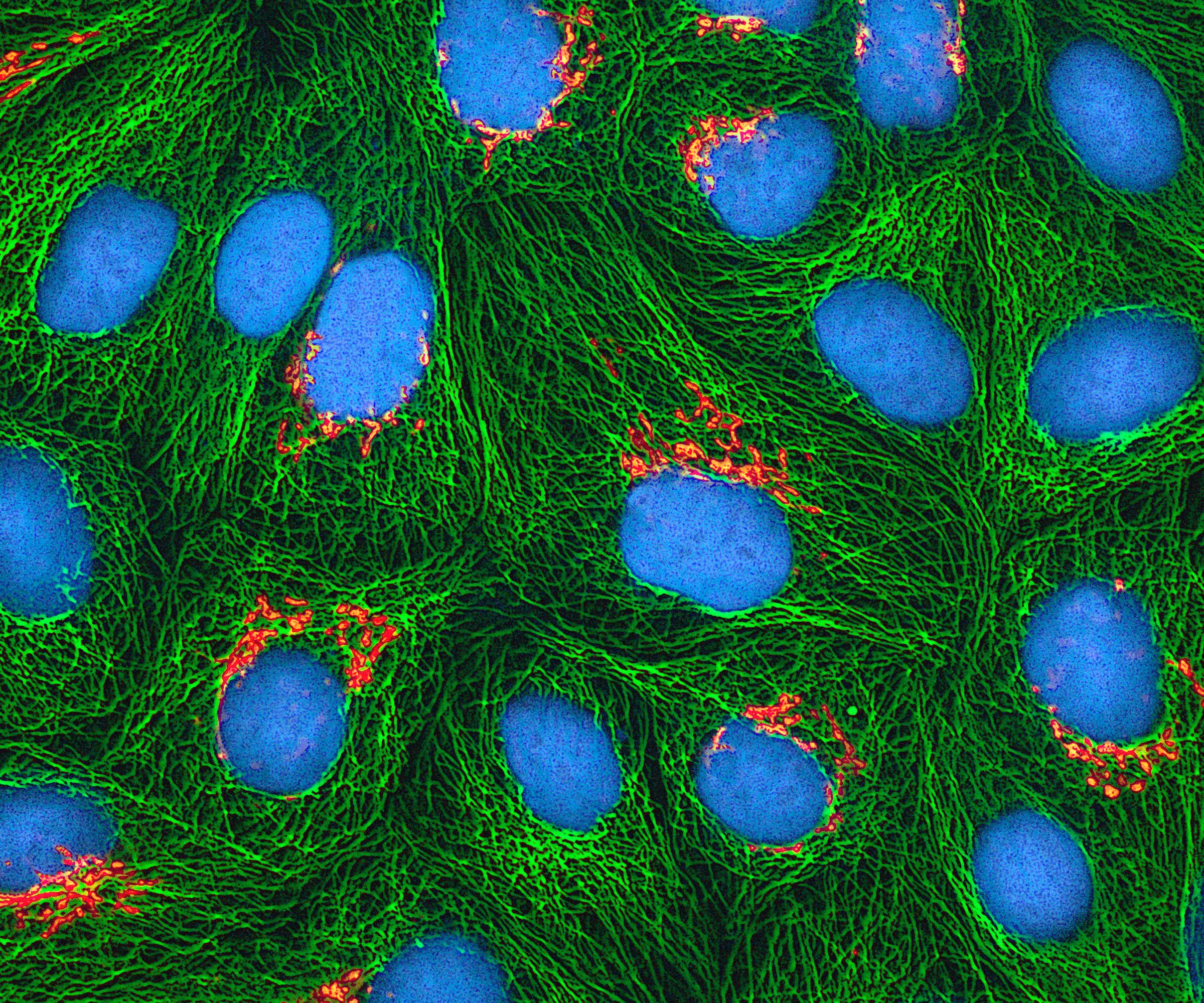
She died of cancer nearly seventy years ago. The cells taken from her body, without her knowledge or consent, went on to transform medicine. Her family received nothing. Now, decades late, her descendants have received compensation.
On 29 January 1951, the waiting room at Johns Hopkins Hospital was packed, most of its occupants Black Americans who had travelled from across the eastern seaboard. Johns Hopkins was one of the few hospitals in early twentieth-century America that admitted Black patients; this generosity was also a pipeline. In the gynaecology ward sat Henrietta Lacks. She told the attending physician that a lump had grown in her uterus, painful to the touch and prone to bleeding. The doctor excised a sample, sent it to the laboratory, and discharged her. Days later, the diagnosis came back: stage I epidermoid carcinoma of the cervix, later reclassified as adenocarcinoma. She was told to return for treatment immediately.
The date matters. Lacks’s cells were taken in 1951: four years after the Nuremberg Code established that voluntary consent is ‘absolutely essential’ in human experimentation, thirteen years before the Declaration of Helsinki, twenty-eight years before the Belmont Report. No United States regulation at that time required consent for the use of surgical specimens. The practice was standard, not aberrant, and its ordinariness makes it systemically significant rather than an individual failing. One does not indict a single physician; one indicts the architecture that made extraction routine, that coded certain bodies as material before they were persons.
Roughly fifteen thousand American women died of cervical cancer each year, and specialists were racing to obtain clinical material. Among them was Richard Wesley TeLinde, the mentor of the physician who had examined Lacks. TeLinde sought to culture malignant tumour cells in vitro, which meant seizing every opportunity to collect samples from patients.
On 5 February, Lacks returned to Johns Hopkins. After two days of examinations, she received her first round of treatment: the standard approach involved suturing a small tube of radium to the tumour site. But just before the procedure, the operating surgeon, acting on TeLinde’s instructions, excised two fingernail-sized pieces of tissue from Lacks’s cervix and placed them in a culture dish. Extraction without consent: no one asked Lacks whether she wished to donate her cells. She knew nothing of it. Researchers labelled the sample ‘HeLa’, taking the first two letters of her given name and surname. Most cervical cancer cells harvested from patients died within days; TeLinde’s team assumed Lacks’s would be no different. They were wrong. The HeLa cells doubled in number almost every day, filling the dish within the week.
What made them immortal was not Lacks’s cancer alone but the virus that caused it. Human papillomavirus type 18 had integrated its genome into her cells at chromosome 8q24.21, and two viral oncoproteins did the rest. E6 targets the tumour suppressor p53 for ubiquitin-mediated degradation, disabling the cell’s primary mechanism for triggering apoptosis: the capacity for self-destruction, abolished. E7 inactivates retinoblastoma protein, releasing E2F transcription factors and unlocking uncontrolled proliferation. E6 also upregulates hTERT, the catalytic subunit of telomerase reverse transcriptase, granting HeLa cells constitutive telomerase activity. Normal human cells observe the Hayflick limit, a ceiling of roughly fifty divisions before senescence; HeLa cells recognise no such constraint. They are hypertriploid, carrying between seventy-six and eighty-two chromosomes where a normal human cell carries forty-six. They divide approximately every twenty-four hours. They survive conditions, temperature extremes, nutrient deprivation, that kill ordinary cells outright. In 2013, Adey and colleagues published the first haplotype-resolved HeLa genome in Nature, cataloguing a karyotype so rearranged that the cell line had become genomically distant from an ordinary human cell. The cells had departed from Henrietta Lacks. They belonged to no one and to everyone who could pay.
According to an estimate in Rebecca Skloot’s The Immortal Life of Henrietta Lacks (2010), that small cluster of cells has since been replicated into a line weighing more than fifty million tonnes in aggregate, underpinning over a hundred thousand published papers. HeLa cells were decisive in the effort to eradicate poliomyelitis; they established that the human chromosome count is forty-six; they became the first human cells fused with animal cells, laying groundwork for the Human Genome Project. Harald zur Hausen, studying HeLa among other cervical cancer cell lines, identified HPV types 16 and 18 as the causative agents of cervical cancer, work that earned him the Nobel Prize in Physiology or Medicine in 2008. His findings led directly to the development of Gardasil (Merck, 2006) and Cervarix (GSK, 2009), vaccines that now prevent the disease that killed Henrietta Lacks. The irony is not incidental; it is structural. Cells extracted without consent from a Black woman dying of cervical cancer became the substrate for vaccines that protect millions of women from cervical cancer. The benefit was universal. The cost was hers alone. A single production facility could generate approximately six trillion HeLa cells per week, with individual vials selling for upwards of three hundred dollars. The privatisation of biological material: a Black woman’s body transmuted into commodity, the profits distributed everywhere except back to their source.
The benefit was universal.
The cost was hers alone.
The contamination was the other legacy. HeLa cells did not merely proliferate in their own dishes; they invaded other cultures. Walter Nelson-Rees, a cell biologist at the University of California’s facility in Oakland, published findings in Science in 1974 and again in 1981 demonstrating that many supposedly distinct cell lines, lines attributed to different patients, different cancers, different tissues, were HeLa cells. He named the contaminated lines. He named the laboratories responsible. The scientific establishment repaid his diligence with professional exile; his career never recovered. The contamination persists. By current estimates, between fifteen and twenty per cent of cell lines worldwide are misidentified or contaminated; some estimates place the figure at a third. The International Cell Line Authentication Committee maintains a register of over five hundred misidentified lines. Christopher Korch, at the University of Colorado, calculated in 2017 that thousands of published papers rest on foundations of misidentified cells. Billions of dollars in research funding, wasted. Journals now require short tandem repeat profiling before publication, a belated gatekeeping measure applied decades after the damage was done. The origin of the contamination is also the origin of the injustice: cells taken from Henrietta Lacks without her knowledge corrupted research programmes worldwide, and no accounting of that corruption has ever been directed back to the question of whose cells they were, or how they were obtained.
Lacks’s daughter Deborah put it plainly: ‘I always thought it was strange. If her cells did so much for medicine, how come our family can’t afford to see a doctor?’
In the early hours of 4 October 1951, Lacks died of advanced uraemia at Johns Hopkins. The radium had burned her body black from chest to pelvis, but the treatment had failed. The tumour continued to expand, obstructing her urethra until even a temporary catheter was useless. Toxin-laden urine accumulated inside her. She died without ever learning that her cells had been taken, and without knowing that newspapers would misattribute the name on the culture dishes as ‘Helen Lane’, so that for years her family remained unaware their mother’s cells were fuelling an industry that returned them nothing.
The law, when it finally spoke, spoke for the institution. In 1990, the California Supreme Court decided Moore v. Regents of the University of California. John Moore, a patient treated for hairy cell leukaemia at UCLA, discovered that his physician, Dr David Golde, had used his excised cells, without disclosure, to develop a patented cell line designated ‘Mo’, valued at approximately three billion dollars. The court ruled that Moore had no property rights over his excised cells. He could pursue a claim for breach of informed consent, but the cells themselves, once removed from his body, were not his. The reasoning was explicit: granting patients property rights over their biological material would impede research. The decision foreclosed the strongest legal avenue the Lacks family might have pursued. The law protected the laboratory, not the patient. It protected the commodity chain, not the source. One searches the ruling in vain for any recognition that the ‘impediment to research’ it feared was simply the requirement that researchers ask permission before converting a person’s body into profit.
In 2013, researchers at the European Molecular Biology Laboratory published the HeLa genome without the Lacks family’s knowledge. The NIH intervened, establishing a HeLa Genome Data Access working group that included two members of the Lacks family. Researchers seeking access to HeLa genomic data must now apply through the database of Genotypes and Phenotypes. A measure of control, partial and retroactive, sixty-two years after the extraction.
2020 marked the centenary of Lacks’s birth. For decades, members of the Lacks family had been negotiating with the National Institutes of Health to establish stricter consent procedures. In September 2020, NIH Director Francis Collins, writing in the Journal of the American Medical Association, proposed amending the Common Rule, the federal framework for the protection of research subjects, to enshrine the requirement that patient consent be obtained before samples are collected. Amid a broader reckoning with racial justice in American institutions, many laboratories and research institutes moved to compensate the Lacks family and other patients whose rights were violated.
On 29 October, the Howard Hughes Medical Institute (HHMI), the second-largest private biomedical research organisation in the United States, delivered a six-figure donation to the Henrietta Lacks Foundation as compensation for its use of HeLa cells. HHMI President Erin O’Shea stated that the scientific community must acknowledge both Lacks’s contribution and the fact that the manner in which HeLa cells were obtained was not ethical. ‘To achieve equity, science and medicine still have a long way to go,’ she said.
Prior to HHMI’s donation, the Henrietta Lacks Foundation had received support from multiple sources: the British biotechnology company Abcam donated in August 2020; Francis Collins directed a portion of the Templeton Prize he received that year to the foundation. HHMI’s contribution was the largest to date. In August 2023, the Lacks family reached a confidential settlement with Thermo Fisher Scientific, one of the largest commercial distributors of HeLa cells, represented by attorney Ben Crump. In February 2026, the estate reached another confidential settlement, this time with Novartis. The terms in both cases were not disclosed. The secrecy tells its own story: whatever the figure, concealment served the corporation.
Donté Stevens, a biologist at the University of California, San Diego, called the donation ‘exciting’ in an interview with Nature. Stevens and his team had reached an agreement with the Lacks family to donate to the foundation for every HeLa cell line established in their laboratory. O’Shea indicated that HHMI’s decision was influenced by this agreement.
Rebecca Skloot, the founder of the Henrietta Lacks Foundation, noted that the foundation would provide funding for communities historically exploited without their knowledge. The foundation’s disbursements have included compensation for the Lacks family. They have also reached the victims of a related, more systematic crime. From 1932 to 1972, the United States government conducted what is now known as the Tuskegee syphilis experiment: a forty-year programme in which physicians deliberately withheld treatment from Black men with syphilis in order to observe the disease’s unimpeded progression. The subjects believed that they were receiving free medical care; the physicians, who fully understood the consequences of untreated syphilis, administered placebos instead. The logic is continuous with the extraction of Lacks’s cells: Black bodies as raw material for a medical establishment that offered them nothing in return, the same structure of racialised dispossession operating across decades. These men and their families have also received donations from the Henrietta Lacks Foundation. Skloot stated in an interview that only by attending more closely to such events can one begin to correct the wrongs of the past.
In March 2010, members of Henrietta Lacks’s family finally learned where she had been buried. Her son Sonny, speaking to reporters:
‘I feel at peace. My mother gave so much. Henrietta Lacks is still alive.’
References
- Adey, A., Burton, J. N., Kitzman, J. O., Hiatt, J. B., Lewis, A. P., Martin, B. K., Qiu, R., Lee, C., & Shendure, J. (2013). The haplotype-resolved genome and epigenome of the aneuploid HeLa cancer cell line. Nature, 500(7461), 207-211.
- Korch, C. T., Contreras, C. M., & Bhavnani, S. K. (2017). The impact of misidentified cell lines on research. BioTechniques, 63(1), 11-16.
- Moore v. Regents of the University of California, 51 Cal. 3d 120 (1990).
- Nelson-Rees, W. A., Daniels, D. W., & Flandermeyer, R. R. (1981). Cross-contamination of cells in culture. Science, 212(4493), 446-452.
- Skloot, R. (2010). The Immortal Life of Henrietta Lacks. Crown Publishing Group.
- Landry, J. J. M., Pyl, P. T., Rausch, T., Zichner, T., Tekkedil, M. M., Stutz, A. M., Jauch, A., Aiyar, R. S., Pau, G., Delhomme, N., Gagneur, J., Korbel, J. O., Huber, W., & Steinmetz, L. M. (2013). The genomic and transcriptomic landscape of a HeLa cell line. G3: Genes, Genomes, Genetics, 3(8), 1213-1224.
- zur Hausen, H. (2009). Papillomaviruses in the causation of human cancers: a brief historical account. Virology, 384(2), 260-265.
Originally published in Chinese as 「海瑞塔·拉克斯与永生细胞」 on Scientific American China.