Racing towards a Grand Theory of Consciousness
Originally published in Chinese in Scientific American China, March 2021 print issue. Translated, revised, and substantially expanded in 2026.
Christof Koch has a Ramón y Cajal drawing of cortical pyramidal neurones tattooed on his left arm, drawn originally by the Spanish ‘father of modern neuroscience’ in 1899. On the opposite arm is a logo of Apple. Koch had spent forty years arguing that the former will one day explain conscious experience used in operating machines produced by the latter, yet in June 2023, at a conference at NYU, he conceded that after twenty-five years of trying, no such explanation had been found, and paid off a bet.
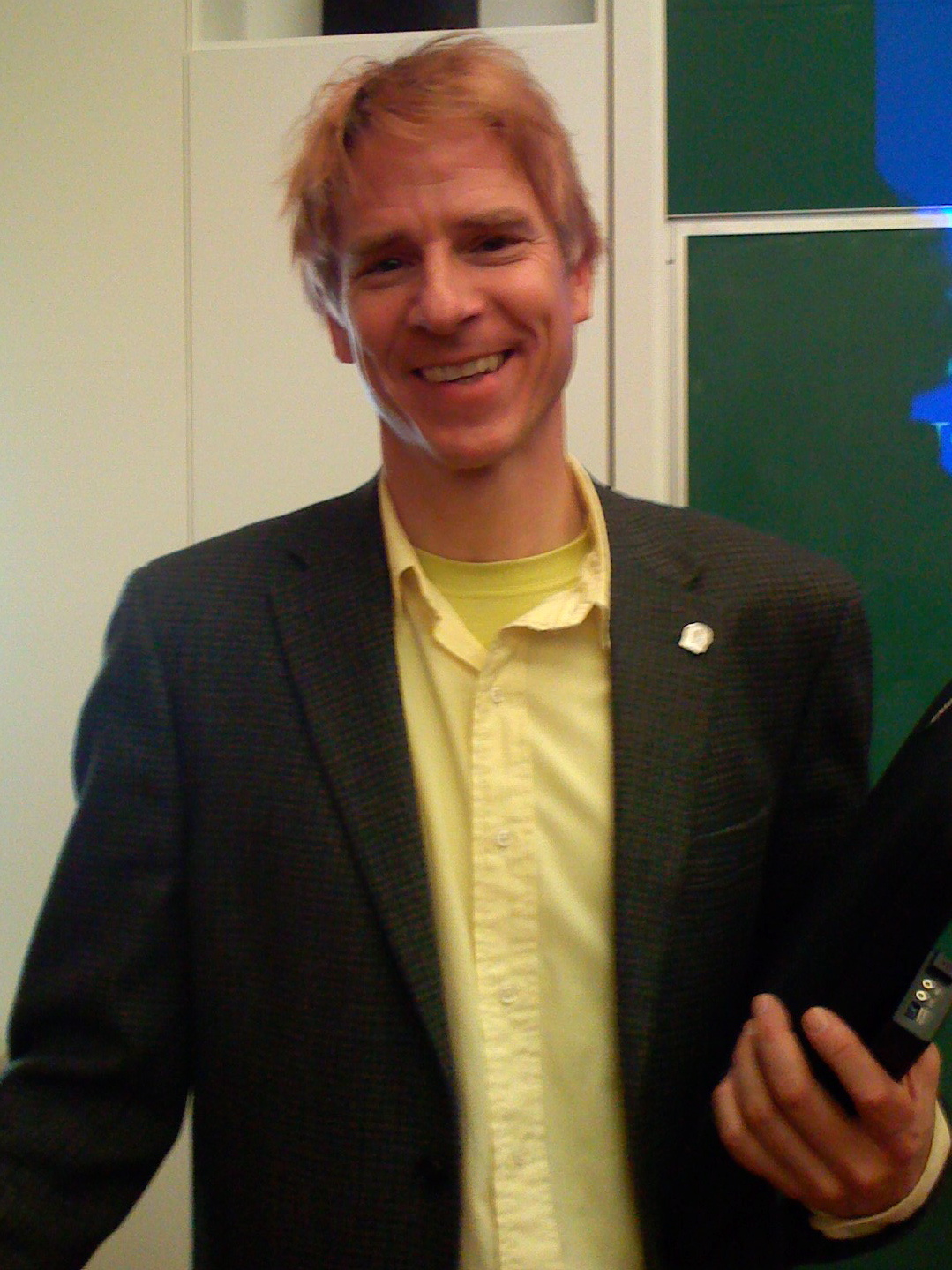

The original bet was made in 1998, in a bar in Bremen, Germany, after a conference on the science of consciousness, and its terms were straightforward: within twenty-five years, Koch wagered, a clear neural correlate of consciousness would be identified, a specific and agreed-upon mechanism running from cell to circuit to felt experience. The Australian philosopher David Chalmers, then thirty-one and already having named consciousness ‘the Hard Problem’, betted the opposite. In June 2023 Koch paid up with a case of Portuguese wine, including a bottle of 1978 Madeira, and immediately doubled down: another twenty-five years, same terms. ‘I hope I lose,’ Chalmers told the audience at NYU, ‘but I suspect I’ll win.’
Koch has always been known to have optimism, so the doubling down was not that surprising. But in this case, he was confident in what the twenty-five years of sustained, well-funded research had produced: multiple competing theories of consciousness, large-scale adversarial collaborations built to test them against each other, and clinical tools that could distinguish a conscious brain from an unconscious one at a hospital bedside. ‘Adversarial’, because these theories (not unlike most scientific theories about any subject) do not agree with each other, not only about where consciousness lives in the brain but also about what kind of question consciousness is. Are we exploring a functional problem to be solved by neuroscience, a structural property to be formalised by mathematics, or a philosophical puzzle that no amount of data will dissolve?
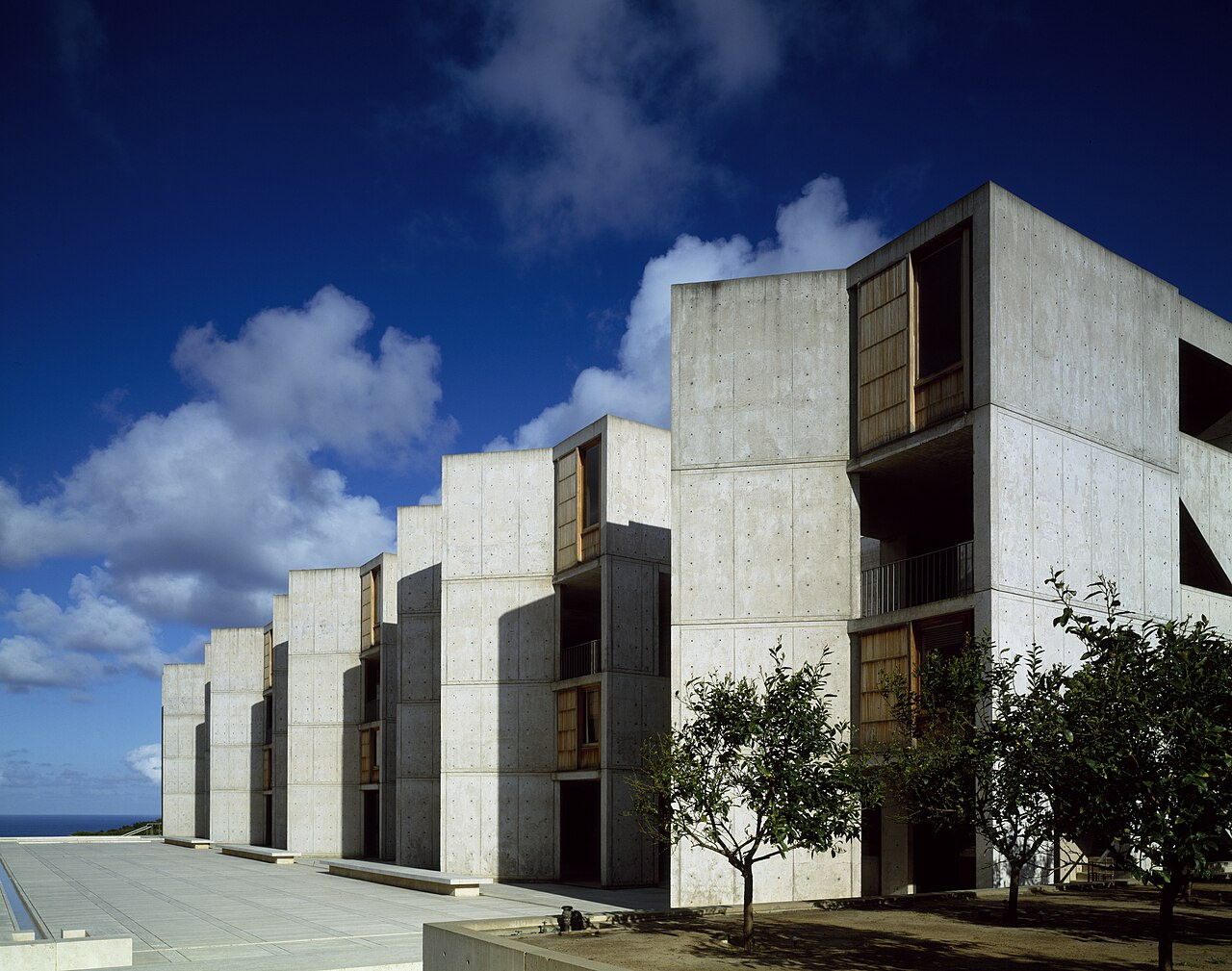

The disagreement has a history, and it begins with Francis Crick, who had already changed the world once and was, in the late 1970s, casting about for a second problem worth spending the rest of his life on. By the late 1970s, his (with a big asterisk, of course, dedicated to Rosalind Franklin) double helix and central dogma had revolutionised the field of molecular biology, which would become a field with a workforce, a budget, and problems that no longer required Crick’s particular gift for seeing through to the structure of things. This was probably why, in 1977, Crick moved from Cambridge to the Salk Institute in La Jolla, where the Pacific light and the Louis Kahn courtyard framed an intellectual freedom that the Medical Research Council had never quite offered. In the earlier years Crick read psychology and attended seminars in neuroscience. Then, in the late 1980s, a young Caltech neuroscientist named Christof Koch started joining Crick for Friday afternoon conversations in his office at Salk. Koch had trained as a physicist, earned his doctorate in nonlinear information processing at the Max Planck Institute in Tübingen, and arrived in California as a systems neuroscientist by ambition. Crick was in his early seventies and still the sharpest presence in the room.
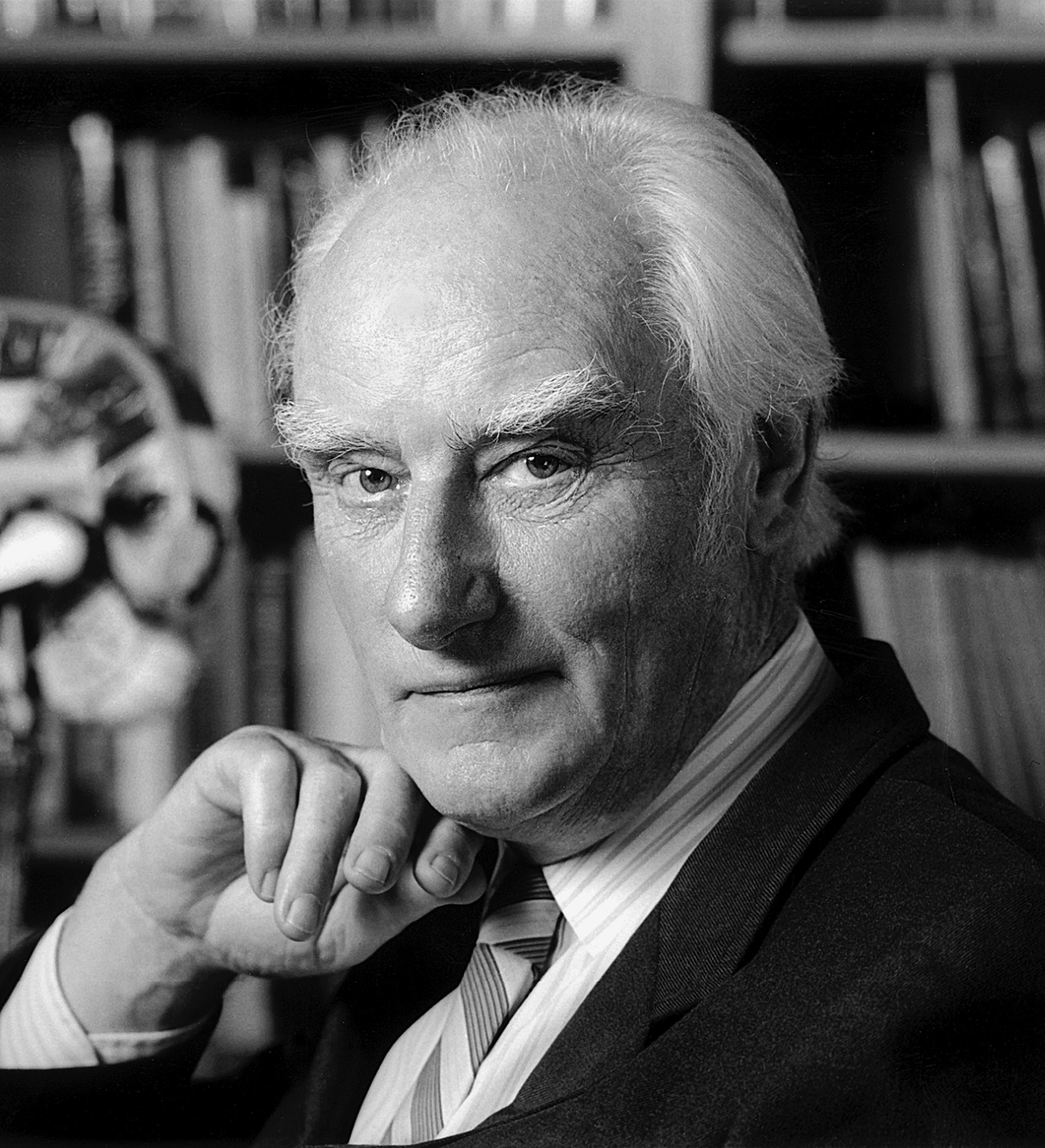

Their conversations, sustained over nearly two decades until Crick’s death on 28 July 2004, produced the research programme that has organised consciousness science ever since. In a 1990 paper in Seminars in the Neurosciences, Crick and Koch argued that the problem of consciousness should be attacked not philosophically but neurobiologically: find the minimal set of neural mechanisms sufficient for any one conscious experience, a.k.a. the ‘neural correlates of consciousness’ (NCC):
‘We suggest that the time is now ripe for an attack on the neural basis of consciousness.’
Importantly, they raised an empirical question: what does consciousness do in the brain, and where, leaving the metaphysical question of what it ultimately is for another day. The programme’s founding assumption was simpler than any of the theories it later generated, that consciousness is one question and the task is to find the mechanism; Koch’s bet with Chalmers, eight years later, rested on exactly this assumption.
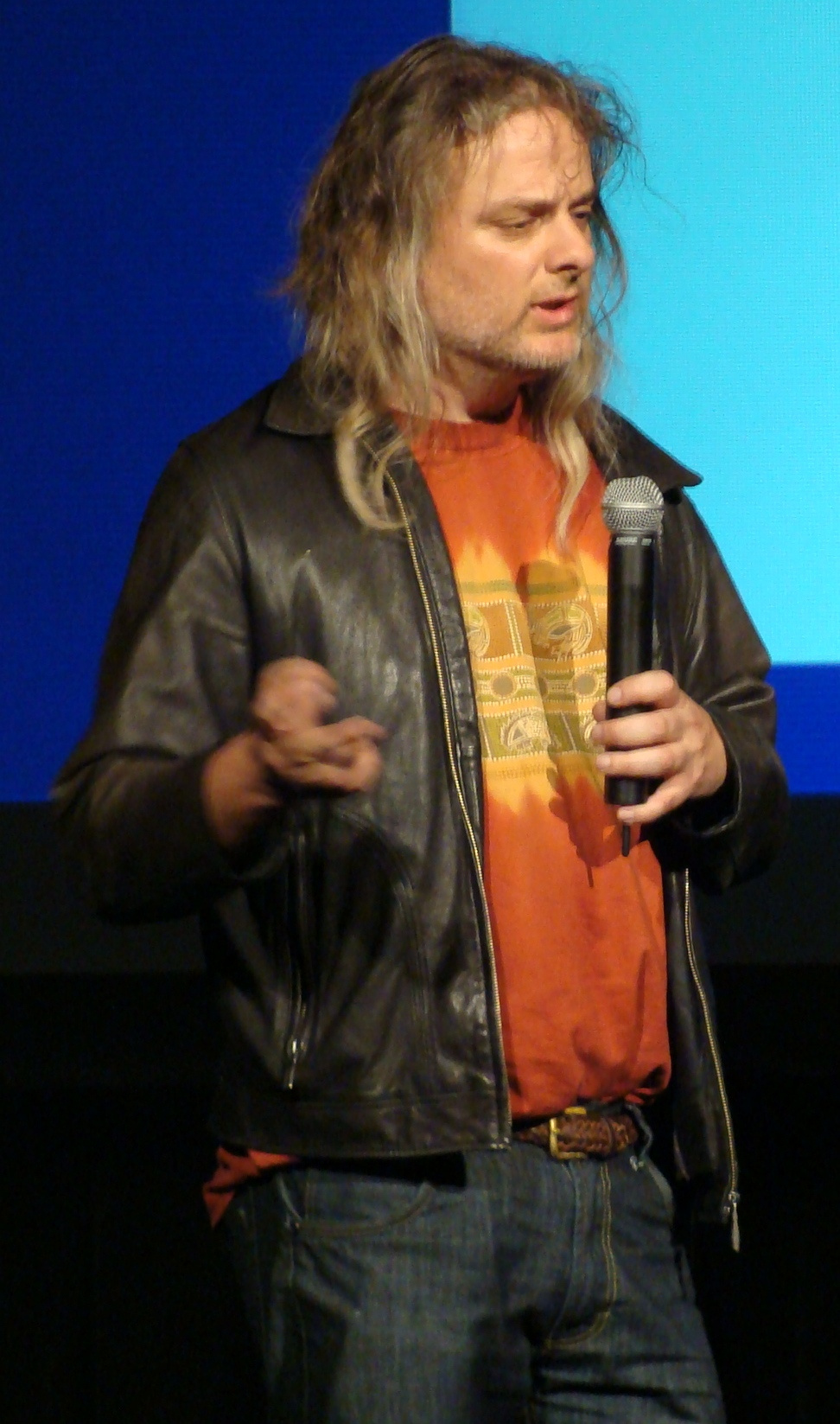

In April 1994, four years after Crick and Koch published their programme, a twenty-seven-year-old Australian philosopher named David Chalmers stood up at the University of Arizona’s ‘Toward a Science of Consciousness’ conference and named the problem the NCC programme had not solved. Long-haired and, according to John Horgan, uncannily resembling a look-alike of Gainsborough’s The Blue Boy, Chalmers set out a distinction that helped clarify the problem of consciousness.
The ‘easy problems’ of consciousness, Chalmers argued, are the functional ones, namely the ‘hows’: how the brain integrates information, how it directs attention, how it reports on its own internal states, and so on. These are hard engineering problems, but they are problems that neuroscience knows how to attack. The ‘Hard Problem’ is different. Even if one could explain every functional mechanism in the brain (every synapse, every circuit, every computation), a question would remain: just why is there something it is like to undergo those processes? Why does the redness of red feel like anything at all? Why isn’t the whole system running in the dark?
Koch was, of course, in the audience and he asked Chalmers how one might bridge the gap between neural mechanism and subjective experience. Chalmers proposed that consciousness might originate in information itself, drawing on Claude Shannon’s information theory, developed in the 1940s, which had made it possible to treat information as a physical quantity. An object with a great deal of integrated information (a brain) would possess a great deal of consciousness; an object with very little (the classic example being a thermostat) would possess only an iota of consciousness.
Now, around the Hard Problem formed a scientific and philosophical rivalry: one camp holds that the Hard Problem cannot be dissolved by any functional or mechanistic account of the brain, because no such account will fully explain why subjective experience exists in the first place. The other camp, in the tradition of the philosopher Daniel Dennett, holds that the Hard Problem is an illusion generated by the way the question is framed: we need only solve all the easy problems, and the Hard Problem shall fade away. Dennett, who died in April 2024 at the age of eighty-two, spent a career arguing that consciousness is not a mystery added on top of brain function but rather what brain function looks like from the inside. He did not live to see the day the debate resolves; but he did witness David Chalmers winning the Koch-Chalmers bet.
That the debate never resolved did not stop it from being productive. In the decades between Chalmers’ Tucson talk and Koch’s concession, three families of theory filled the space that the Hard Problem had opened, each with its own definition of what consciousness is, and each with its own claim on the mechanism.
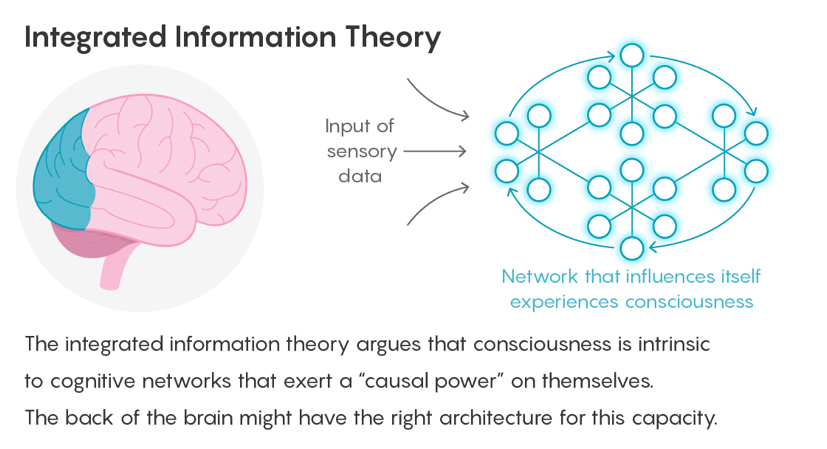
The most ambitious theory to grow from Chalmers’ information-based suggestion was Integrated Information Theory (IIT), developed principally by Giulio Tononi, a psychiatrist and neuroscientist at the University of Wisconsin-Madison. Tononi came to IIT by studying sleep, where he looked at the difference between the conscious waking brain and the unconscious sleeping brain and thought: what is it about the way information is organised that makes one state conscious and the other not?
That was where Tononi came up with the five axioms about the properties of any conscious experience (existence, composition, information, integration, exclusion) and derived from them corresponding postulates about the physical substrate that must produce such experience. Consciousness, on this account, is integrated information: a system is conscious to the degree that it integrates information in a way that cannot be reduced to the sum of its parts, and that degree is measured by a quantity called phi (Φ). The higher a system’s phi, the more conscious it is.
Koch drew out the logic in a 2009 Scientific American article: if consciousness is identical with integrated information, then any physical system that integrates information possesses some degree of consciousness…
A single hydrogen ion, a proton made up of three quarks, will have a tiny amount of synergy, of Phi.
Isn’t this our old friend from philosophy, panpsychism? Panpsychists believe that consciousness is a fundamental feature of the physical world, present wherever information is integrated, and not confined to brains. IIT, in other words, is simply an implementation of it based on modern information theory.
Tononi’s group has since developed the Perturbational Complexity Index (PCI), a measure that uses transcranial magnetic stimulation to probe how much a brain’s response to a zap spreads and differentiates, which serves as a proxy for how much phi the brain generates. PCI has since been validated across independent centres as a reliable bedside measure, and although IIT’s larger metaphysical claims remain in dispute, this narrow clinical form of the theory has already picked out patients whose behaviour was entirely vegetative but whose cortical response to the pulse still showed the complexity signatures characteristic of conscious brains.
As a theory of consciousness, though, IIT sits on shakier ground. Computing phi even for a small system is computationally intractable, which means that computing it for any system of realistic size is effectively impossible. The computer scientist Scott Aaronson published a 2014 critique (the title of which is quite amusing: ‘Why I Am Not An Integrated Information Theorist [or, The Unconscious Expander]’) arguing that IIT assigns high phi to trivially simple systems: a large grid of XOR gates, doing nothing interesting, would count as maximally conscious under the theory’s mathematics. Tononi responded that such grids lack the right causal structure (What does this mean?), but the exchange left visible the tension between IIT’s mathematical elegance and its empirical tractability.
The philosophical worry underneath the technical one is that phi is a structural measure telling us how much information a system integrates, and IIT asserts, without further mechanism, that this quantity is consciousness. Nobody has yet proposed a route from a particular value of phi to the felt quality of red, of pain, of a C-major chord, and until someone does, IIT stands as a mathematical description of a quantity claimed to be identical with experience, without an account of how that identification is possible.
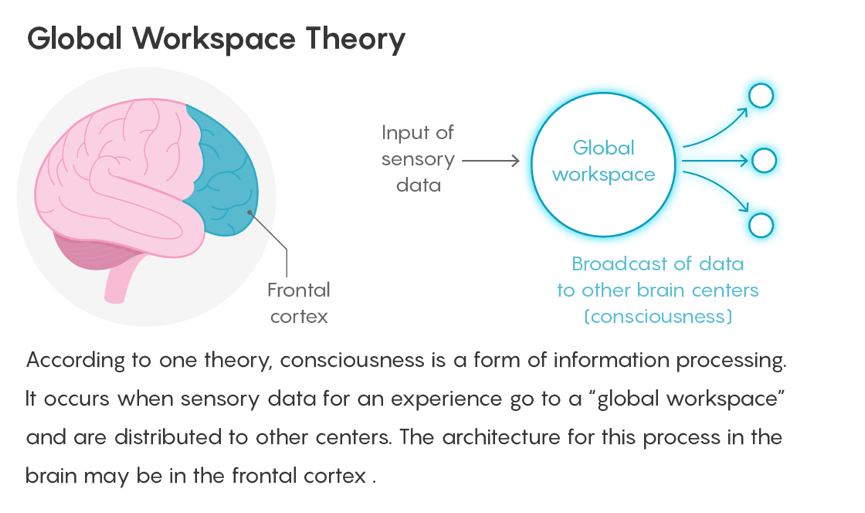
The most prominent rival to IIT is Global Neuronal Workspace theory, or GNW, which sprouted already in 1988, way before IIT took shape. Back then, the psychologist Bernard Baars at the Wright Institute in California proposed Global Workspace Theory, borrowing a concept from artificial intelligence: specialised processing modules in the brain (vision, language, memory, motor planning) operate independently and in parallel, but when information needs to be shared across modules for a complex task, it is broadcast to a ‘global workspace’, a kind of cognitive blackboard visible to all.
Baars proposed that consciousness might be, precisely, this broadcasting. The contents of the global workspace are precisely what one is conscious of at any given moment: the melody one is attending to, the face one is recognising, the sentence one is constructing. Everything else (the countless parallel computations humming along in specialised modules) remains unconscious. Consciousness, in this view, is a mode of information processing, arising at the moment when local signals go global.
The theory attracted the cognitive neuroscientist Stanislas Dehaene at the College de France, who, with colleagues including Jean-Pierre Changeux, proposed a neural mechanism for Baars’ workspace. In a 1998 paper in PNAS, they argued that long-range connections between prefrontal, parietal, and temporal cortex form the physical substrate of the global workspace. When sensory input is strong enough, it triggers an ‘ignition’, a sudden, nonlinear amplification that broadcasts the signal across these long-range networks. Ignition is the neural signature of a percept becoming conscious. Below the ignition threshold, the same sensory input can be processed (one can respond to a subliminal stimulus, prime a motor response, even influence a later decision) but it never enters awareness.
Dehaene’s group has identified four signatures of consciousness: a late P3b wave in event-related potentials, a sudden nonlinear amplification of neural activity, late sustained activation in a network of prefrontal and parietal areas, and long-distance synchronisation between distant brain regions. These signatures have been replicated across modalities and paradigms, and they provide GNW with a degree of empirical specificity that few competing theories can match.
IIT and GNW make directly opposing predictions about where consciousness lives in the brain. IIT holds that the posterior cortex, where neural connectivity supports rich information integration, is the primary seat of consciousness. GNW holds that the prefrontal cortex, where long-range broadcasting and ignition occur, is critical. The two theories generate what the neuroscientist Cyriel Pennartz, in an interview for the original version of this article, called a ‘differential hypothesis’: directly opposing predictions that can be tested experimentally. That possibility made adversarial collaboration attractive.
Outside the IIT-GNW axis sits another family of theories that begin from a different question altogether. Higher-Order Theories (HOT), developed most fully by the philosopher David Rosenthal at the City University of New York, ask what makes a mental state conscious rather than unconscious in the first place.
Rosenthal’s answer invokes the transitivity principle: a mental state is conscious when and only when the subject is aware of being in that state. Seeing red is a first-order mental state. Being aware that one is seeing red, having a thought about the seeing, is a higher-order state. Without the higher-order representation, the first-order state can still influence behaviour (one might dodge a red object reflexively) while remaining unconscious. Consciousness, on this view, lives in the monitoring of processing: cognition about cognition.
The distinction is not confined to the seminar room. Hakwan Lau, then at UCLA, and Joseph LeDoux at NYU have both developed higher-order approaches with distinct neural predictions. Lau’s Perceptual Reality Monitoring model gives the prefrontal cortex the job of monitoring lower-level representations and deciding which ones ‘feel real’, a very different role from the one GNW assigns it as the site where conscious content itself is generated. LeDoux, a fear-conditioning researcher who converted to higher-order theory after a visiting fellowship at All Souls College, Oxford, argues that subjective emotional experience requires a higher-order representation of the lower-order survival circuit. Fear, in his account, is the cortical monitoring system representing the amygdala’s output as ‘something I am feeling’; the amygdala firing by itself is a subcortical reflex.
HOT can explain the transition from unconscious to conscious processing, but it has not yet given a full account of why higher-order monitoring should produce subjective experience at all, and not just a more elaborate form of information routing that never breaks into feel.
The problem, by 2019, was that the theories had been arguing past each other for decades. IIT, GNW, HOT, and several others had each accumulated supporting evidence, refined their predictions, and built loyal research communities, but they had rarely been tested against each other using the same experimental paradigms, the same stimuli, the same participants. Each laboratory tested its own theory on its own terms. The field had grown rich in theories and poor in arbitration.
Anil Seth, a cognitive and computational neuroscientist at the University of Sussex and a participant in the adversarial collaboration programme, warned that the competing theories ‘often make different assumptions, and attempt to explain different things’. The theories, in Seth and Tim Bayne’s formulation, might not even be answering the same question. Rosenthal argued that the supposed ‘competition’ between IIT and GNW was partly illusory:
‘IIT addresses creature consciousness’ (whether a whole organism is conscious) ‘whereas GNW addresses state consciousness’ (what conditions a particular mental state must satisfy to be conscious).
Lau, on the other hand, was more pointed. Although he admired Koch, Lau wrote in an interview that Koch’s role chairing the adversarial seminars naturally troubled scientists supporting theories other than IIT. ‘His attitude toward IIT is certainly not neutral.’ Seminar decisions, Lau said, were ‘basically biased. We could indeed propose our own ideas, but ultimately, Tononi and Koch would directly veto proposals they disliked and suggest that everyone investigate the questions they had wanted to investigate all along.’ The level playing field, in practice, tilted.
Others considered these concerns overstated. Liu Ling, a postdoctoral researcher in Luo Huan’s laboratory at Peking University, which participated in the adversarial collaboration, said that ‘different theories do have their own definitions of consciousness, but they can find common ground to some extent’. Pennartz, at the University of Amsterdam, agreed: what supporters of different theories needed to do was identify ‘differential hypotheses’, directly opposing predictions. ‘Is consciousness located in the prefrontal cortex or in the posterior cortex?’ was precisely such a hypothesis. The competition, Pennartz said, could be settled by experiment.
Seth and Rosenthal, then, diagnosed an incompatibility that ran deeper than any particular experimental prediction: the theories disagreed about what they were for. Pennartz and Liu Ling accepted this incompatibility but argued that it could still be forced into testable form. In 2019, the Templeton World Charity Foundation launched a $20 million initiative called Accelerating Research on Consciousness, or ARC, to try.
ARC’s concept was ‘adversarial collaboration’: bring proponents of competing theories to the same table, force them to preregister opposing predictions derived from their theories, then test those predictions using the same experimental design, the same data, and theory-neutral assessors. ARC would fund the experiments, fund replication studies, and make all data openly available. The ambition was considerable. If it worked, ARC would demonstrate that the adversarial model itself was superior to the traditional publish-and-hope approach.
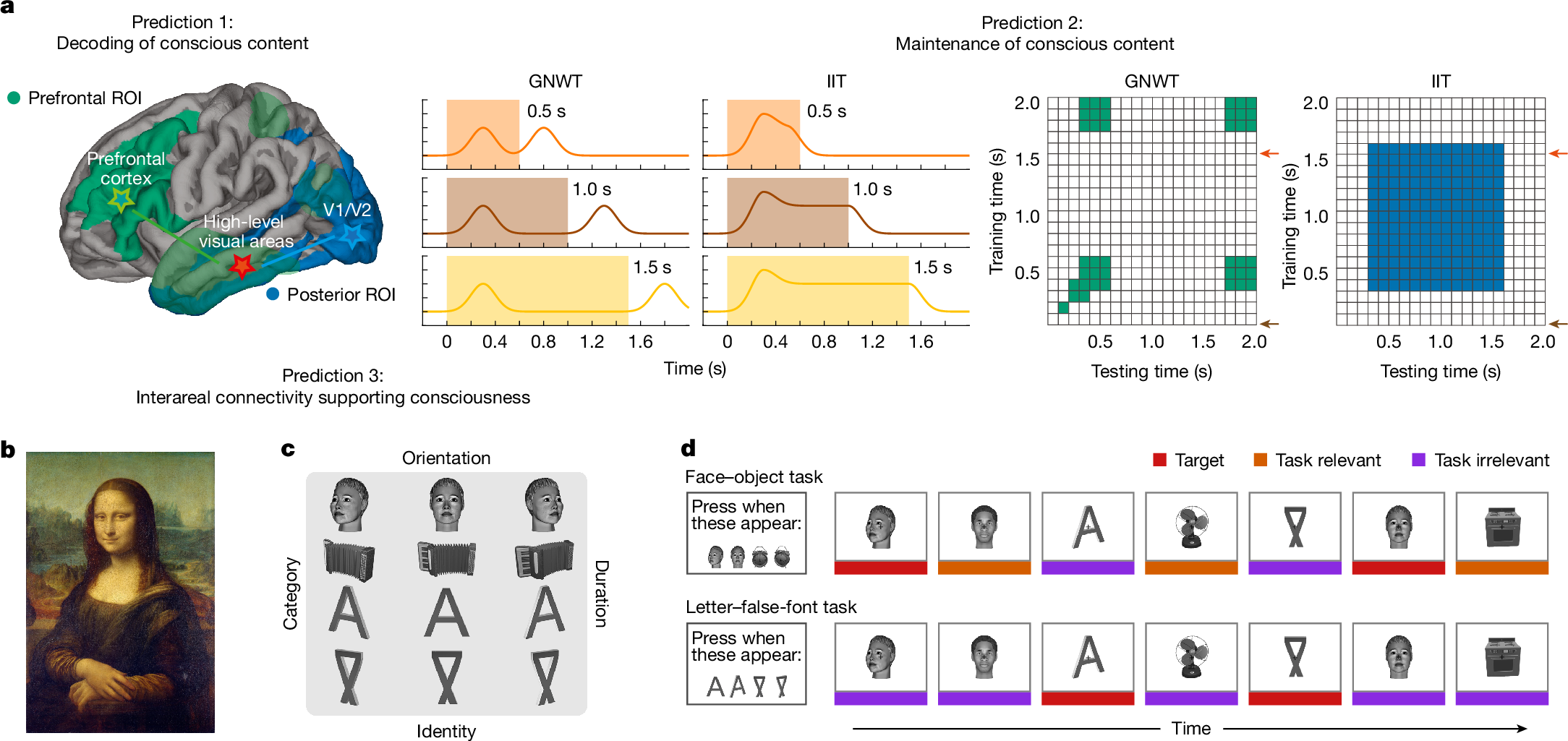
The first and largest adversarial collaboration was COGITATE (Collaboration On GNW and IIT: Testing Alternative Theories of Experience). It recruited 256 participants across six laboratories on three continents. Participants viewed visual stimuli while their brain activity was recorded using fMRI, MEG, and intracranial EEG. Before data collection began, proponents of IIT and GNW preregistered their predictions in detail, specifying not just which brain regions would be active during conscious perception but how that activity would unfold over time, and what patterns of connectivity would be present.
The results, published in Nature in April 2025, were neither a clean victory for one theory nor a simple refutation of the other.
IIT had predicted that conscious perception would be associated with sustained activity in the posterior cortex, with rich connectivity patterns among visual and temporal regions reflecting the integrated information structure that the theory considers identical with consciousness. Two of IIT’s three preregistered predictions were supported: consciousness was indeed more closely linked to posterior cortical activity than to prefrontal activity, and the sustained temporal profile predicted by IIT was observed. But the third prediction, that synchronised connectivity between early visual and mid-level visual areas would track consciousness, was not confirmed. The specific signature of information integration that IIT considers its deepest commitment was absent from the data.
GNW had predicted a rapid ‘ignition’ signature in prefrontal and parietal regions, with content-specific information broadcast from posterior to anterior cortex. The results were less kind. Ignition following stimulus onset was observed, but no corresponding signal appeared at stimulus offset, when, according to GNW, the workspace should also fire. More damaging, the prefrontal cortex showed minimal representation of the identity and orientation of the consciously perceived stimulus. The content of consciousness, according to the COGITATE data, was not in the place that GNW said it would be.
Neither theory came away fully supported, and neither came away fully refuted, and the result was underdetermined in the strict methodological sense: the data narrowed the field without closing it, and made the field’s ignorance a good deal more specific. Before COGITATE, one could gesture vaguely at the prefrontal cortex or the posterior cortex and claim support for one’s preferred theory; after COGITATE, the gestures must answer to data.
Three months after Koch’s concession in New York, the theoretical peace collapsed. On 15 September 2023, 124 researchers posted an open letter on PsyArXiv belligerently titled ‘The Integrated Information Theory of Consciousness as Pseudoscience’. The signatories included Hakwan Lau, Joseph LeDoux, Bernard Baars, and Daniel Dennett. Their primary target was IIT’s panpsychist commitments: the claim that consciousness is a fundamental feature of matter, present in protons and thermostats and photodiodes, seemed to the letter’s authors to place the theory beyond the reach of scientific refutation. ‘As researchers, we have a duty to protect the public from scientific misinformation,’ they wrote.
The response from within the field was swift. Anil Seth, who had not signed, called the label ‘inflammatory’. A Nature editorial stated that ‘such language has no place’ in collaborative science. Tononi’s group responded that the letter ‘had much fervor and little fact’. Koch pointed out that panpsychism, whatever its empirical status, is a position with a serious philosophical pedigree stretching from Spinoza through Whitehead to Chalmers himself.
Reading through the letter and the responses, one can see a fault line that had been sitting under the theory disputes for years finally break the surface. Its signatories were challenging IIT’s status as a scientific theory, not disagreeing with it about any particular experimental prediction. The pressure point was panpsychism itself: if consciousness is truly a fundamental property of integrated information, it pervades nature, a conclusion that strikes many neuroscientists as unfalsifiable mysticism and IIT’s defenders as a straightforward consequence of taking the Hard Problem seriously.
An adversarial framework like ARC’s has its limits, and this was one of them. ARC was designed for theories that had agreed, at least in principle, to be tested by the same empirical rules. But the deepest disagreements in consciousness science are not about which brain region lights up during which task; they are about what kind of question consciousness is, a functional problem to be solved by neuroscience, a structural property to be formalised by mathematics, or a philosophical puzzle that no amount of data will dissolve. The tension Chalmers named in Tucson thirty years earlier had returned, this time as a crisis about what the field itself was for.
Koch, for his part, remains convinced that consciousness will yield to science. In an interview with John Horgan, he cited the nineteenth-century philosopher Auguste Comte’s infamous claim that humanity would never know the chemical composition of the stars, a claim spectroscopy demolished within decades of Comte’s death; consciousness, in Koch’s view, is a question of the same kind, one that feels permanently closed until the right instrument arrives.
Chalmers, on the other side of the bet, is more patient. He has moved on to virtual reality and simulation, questions he considers, by his own admission, easier. If a problem is hard enough to lose twenty-five years on, one might not want to lose the next twenty-five to it as well. The Cajal drawing on Koch’s shoulder, meanwhile, does not age; nor, so far as anyone can tell, does the question it is meant to answer.
Interviews with Anil Seth, Cyriel Pennartz, Hakwan Lau, David Rosenthal, and Liu Ling were conducted by me for the original Chinese-language feature in Scientific American China, March 2021 print issue. The English translation, revision, and expansion draw on Crick and Koch’s 1990 programme and Koch’s account in The Quest for Consciousness (2004); Chalmers’ formulation of the Hard Problem (1995); the canonical IIT 3.0 paper (Oizumi, Albantakis, and Tononi, 2014); Mashour, Roelfsema, Changeux, and Dehaene on GNW in Neuron (2020); Brown, Lau, and LeDoux on HOT in Trends Cogn. Sci. (2019); Casali et al. on PCI in Sci. Transl. Med. (2013); the COGITATE results in Nature (2025); Scientific American’s report on the Koch-Chalmers bet (2023); and the open letter on IIT (2023). Aaronson’s critique of IIT appeared on his blog (2014); Tononi’s response in BMC Neuroscience (2014). The ARC initiative is funded by the Templeton World Charity Foundation. The original 2021 article (titled 〈理论对抗:意识从何而来〉 in Chinese) can be read here.