
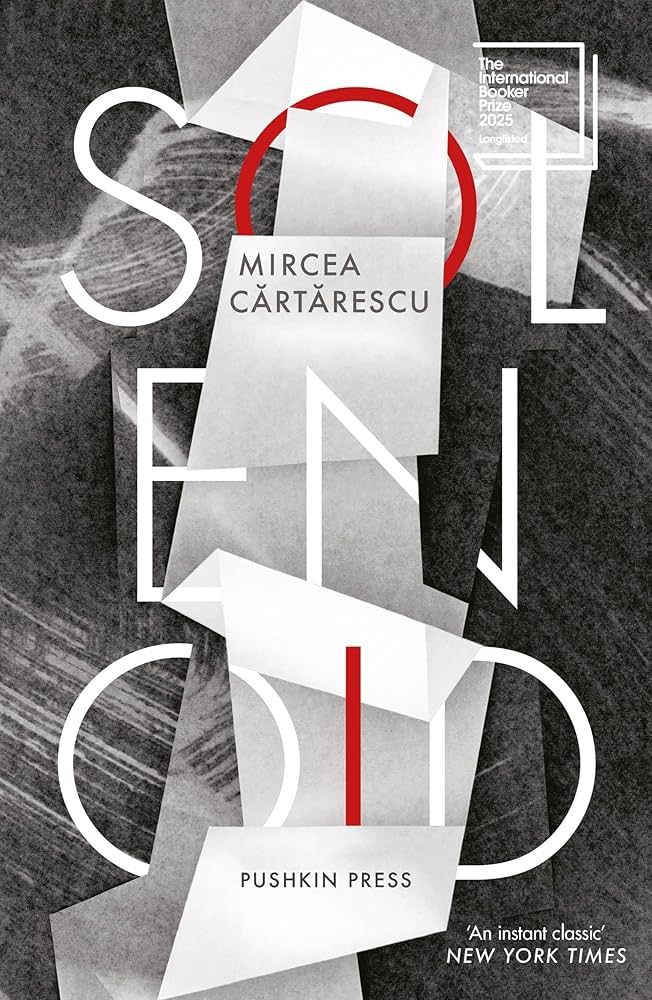
I have a full review of Solenoid here: Nothing Is Strange to a Child.
‘Bucharest is not at all a real city in my books. It’s a state of mind and it’s a metaphor,’ Cărtărescu said in a 2022 interview. That state of mind, that metaphor, wrapped in Cărtărescu’s masterful maximalism, creates a whole distinct and (borrowing a central notion from the book) child-like world. The book’s Bucharest is 1980s tramlines, factories, apartment blocks, vacant lots, hospital wards, and labyrinthine school corridors, rendered with such precision and such sensory saturation that its ordinary surfaces begin to feel like organic tissue. Cărtărescu attacks the readers with an overwhelming barrage of details so vivid that the familiar feels strange again, similar to how staring at a word for too long often renders the word unfamiliar. Cărtărescu examines the banal and the familiar so deeply that structure starts to give way to minutiae, and we are forced to examine with him and question our heuristics and a priori believes.
And this is the way Cărtărescu lays the groundwork for the strangeness of his Bucharest. After such banalities as lice in the narrator’s hair and taking the tram to work, Cărtărescu introduces us to the solenoid buried under a boat-shaped house that the narrator just bought (six such solenoids are revealed across the novel). The narrator, after having sex in the house’s bedroom with Irina (another teacher from the school in which he teaches), sees that his partner has been lifted from the bed. Surprised? Not quite, as the narrator just acknolwedges it as a fact. It’s something that just happens, like all the other strangenesses in Cărtărescu’s Bucharest. The city is at once literal and impossible, its architecture obeying dream-logic while remaining stubbornly, concretely Eastern European.
I rarely wait so long after finishing a title before I write down my thoughts. It’s just that even weeks after finishing Solenoid, I am still finding that ordinary objects (a school corridor, a pavement, a friend’s bookshelf, the skin on the back of one’s hand) have started to feel slightly wrong, as though Cărtărescu had walked through them first and left a hum that I cannot quite locate. Moving through Cărtărescu’s Bucharest, thus, is one of the greatest and most impactful reading experiences of my life.
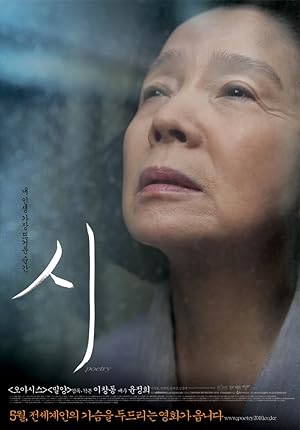
Lee Chang-dong’s moral rigour has rarely felt as exposed as it does in Poetry. Mija, played by Yoon Jung-hee, is sixty-six years old, newly diagnosed with early Alzheimer’s, enrolled in a community poetry class because she wants to learn how to see beauty, and in possession of a terrible secret about her teenage grandson. The film does not arrange these facts dramatically; it simply lets them accumulate. Yoon had been absent from the screen for sixteen years when Lee wrote this role specifically for her; it became her final performance, and after the film she was herself diagnosed with Alzheimer’s. Knowing this changes nothing about the craft, which is one of extraordinary control, and everything about its weight.
Her grandson Wook is one of five schoolboys who, over six months, repeatedly raped a classmate; the girl kept a journal and then drowned herself in the river. The film opens with an extended shot of her body floating downstream, before we know who she is. The fathers of the other boys organise a settlement: thirty million won to the dead girl’s mother, five million per family, the problem reduced to logistics. They discuss cost-splitting and press management; they never discuss the girl. Mija is the only person in the film who looks at the victim. She visits Agnes’s mother, she goes to the bridge where Agnes jumped, and in the end she turns her own grandson in to the police.
Near the end, Mija and Wook play badminton together in the courtyard at dusk. A car pulls up behind them. Police have come to arrest Wook. As he is led past her to the car, Mija hits the shuttlecock again, and their eyes meet. Whether her dementia has erased the very moral choice she made, or whether she is simply saying goodbye, the film does not say. The poem that closes the film, ‘Agnes’s Song’, is Mija’s only completed work. It begins in her voice and shifts, midway through, into the dead girl’s: Lee has said that ‘the two have become one through a poem’. It arrives as both elegy and absolution, though the film is wise enough not to confirm which.
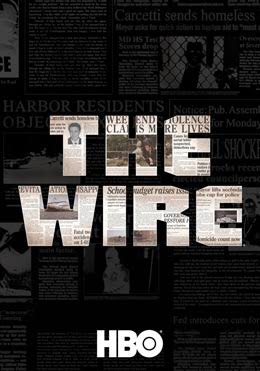
David Simon spent thirteen years as a reporter at the Baltimore Sun. He left in 1995, and then spent another thirteen years telling Baltimore’s story without them. By the time The Wire turns its camera on the newsroom, the institution that was supposed to watch all the others has lost sight of itself. The fictional Sun journalist Scott Templeton fabricates a quote from a homeless man, then a phone call from a serial killer who does not exist, then a veteran’s combat story. His editors do not investigate. They need the narrative, need the Pulitzer, need the evidence that their institution still matters. The System rewards what preserves it; it discards what questions it. Žižek, in The Year of Dreaming Dangerously (2012), mapped the show’s cumulative architecture: each season peels back one institutional layer, from the drug war to the working class to policing to education, and Season 5 arrives at the media. Simon said that The Wire is a Greek tragedy in which the postmodern institutions are the Olympian gods. In the final chapter, the show enters its last temple and finds it as empty as the rest. The same mechanism that destroyed Colvin in Season 3, that drowned Sobotka in Season 2, operates in the Sun’s newsroom with the same indifference. Every institution has been hollowed out; the one designed to expose the hollowing was hollowed first.
The police department is the temple Simon knows best, and in Season 5 it produces his most devastating irony. McNulty spent four seasons as the show’s investigative conscience: the detective who forced cases into existence over the chain of command, who saw the drug war as a systemic failure and could not stop naming it. Carcetti’s gubernatorial campaign has now starved the police budget; the reformer who entered office in Season 4 has completed his accommodation to the System, and the Stanfield investigation is shut down for lack of funds. McNulty’s response is to become what he spent five seasons hating. He fabricates a serial killer targeting homeless men, staging crime scenes to generate press attention and the departmental funding that follows it. Lester Freamon joins him: together they use the fabricated case’s budget to fund an illegal wiretap on Marlo Stanfield’s untraceable communication system. The wiretap works. The evidence is real. And every piece of it is built on a lie. The show’s cruelest argument is that the two best detectives in Baltimore can only pursue justice by first committing a fraud; the System forces their corruption as the price of functioning within it. The structural parallel with Templeton completes the irony: the cop fabricates a crime that the reporter fabricates coverage of, and the institution that should expose the one cannot, because it cannot see itself. Kima Greggs is the one who breaks the silence, because she cannot live inside the lie, and this act of integrity triggers precisely what it must: Carcetti orders a cover-up. The System does not punish corruption. It punishes visibility.
McNulty’s fabrication does produce enough evidence to bring down Stanfield’s organisation, but the irony completes itself: because the wiretap rests on a lie, Marlo walks free. The institutions have concluded their business. The street has not. Omar Little returns from exile to avenge Butchie’s murder, walking with a limp from a shattered leg that never healed: the game’s debt written on his body. He robs and terrorises Marlo’s people, and the myth precedes him as it always has. In the eighth episode, he walks into a Korean corner store to buy a pack of cigarettes. Kenard, a child of perhaps twelve, follows him inside and shoots him in the side of the head. There is no music. There is no slow motion. There is no reckoning. In Season 3, neighbourhood children play-acted a shootout, arguing over who got to ‘be Omar’; the child who insisted it was his turn was Kenard. The boy who mythologised Omar is the one who demythologises him. The Sun does not report the death, because there is no room in the paper. The show’s most legendary figure exits as what he always was beneath the myth: a body, processed by a system that does not distinguish between legends and statistics.
The final episode is titled ‘-30-‘, the journalism term for end of transmission, and what it transmits is a city that has metabolised sixty-six hours of human effort and returned to its resting state. Michael Lee robs a stash house with a shotgun, beat for beat recreating Omar’s first appearance in Season 1. Sydnor visits Judge Phelan to force a case over the chain of command, exactly as McNulty did in the pilot. Marlo, introduced to property developers at an evening reception, cannot inhabit the room; he slips out to the corner, provokes a fight with boys who do not know his name, and stands there bleeding, alive in the only place that will have him. And Dukie, the gentle boy whom Prez tried to save in Season 4, shoots heroin with the junk man. His last scene is a visit to Prez: he asks for money, claiming it is for a GED programme, and Prez hands it over, knowing what it is for, and watches in the rearview mirror as Dukie walks back towards the encampment. One sees clearly, at a distance, and cannot reach. The roles are structural. The game simply recasts.
Against all of this, Bubbles climbs a flight of stairs. He has spent the season in his sister’s basement, sober but exiled: she will not let him upstairs, does not trust him near her daughter. He cannot speak honestly at NA meetings about Sherrod, the teenager he accidentally killed in Season 4. In the finale, Bubbles stands before the group and confesses what he did. His sister, reading the Sun’s profile of him, the paper’s one act of genuine journalism in a season of fabrications, unlocks the basement door and calls him up. The last image of Bubbles is him sitting at the dinner table with his sister and her child. In a show that has spent sixty-six hours demonstrating that no individual can reform the System, Bubbles reforms himself. He tells the truth about what he did, and someone who loves him opens a door. The institutions that failed him for decades play no part in his recovery; Dukie descends as Bubbles ascends, and the System notices neither. Perhaps this is what The Wire has been saying beneath the Greek tragedy and the institutional architecture: that the System will not save anyone, that it was never designed to, and that the only redemption it cannot destroy is the one too small for it to see.
Simon called The Wire a Greek tragedy. I guess it really is, David. And the gods always win.
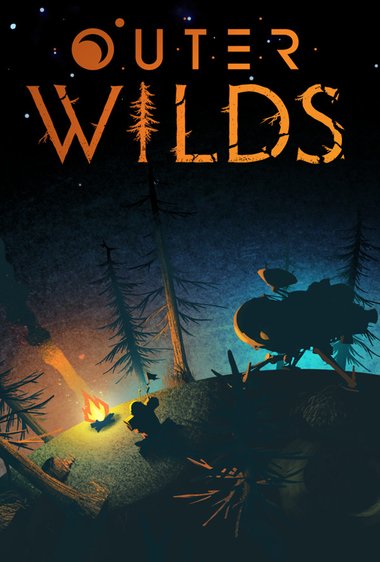
In the last few hours of experiencing Outer Wilds, I cried many times. The Nomai arrived in this solar system chasing a signal older than the universe itself and built the Ash Twin Project to locate its source. But the Interloper, a rogue comet carrying ghost matter, extinguished them before the project could activate: an entire civilisation’s curiosity cut short by physics. Centuries later, the project fired on its own, launching 9,318,054 probes across as many loops until one finally located the Eye of the Universe. The Nomai’s question was answered two hundred and eighty thousand years after their extinction, in a universe that no longer contained anyone who had asked it.
Mobius Digital built a solar system that is a philosophical instrument: small enough to be fully knowable, large enough to produce awe, and governed by physics precise enough that every discovery feels earned rather than scripted. Each planet is a self-contained thought experiment: Brittle Hollow collapses into its own black hole as one explores it; the Hourglass Twins exchange their sand on a timer that reshapes both surfaces; Dark Bramble folds impossible space inside a seed, its anglerfish enforcing stillness as a survival mechanic. The time loop is the game’s argument: a structural claim that knowledge, once acquired, cannot be unlearned, and that the accumulation of understanding across repeated failures is itself a form of progress. One could, in theory, finish the game on the very first loop; the barrier between the opening campfire and the final one is ignorance alone, and the game does nothing to lower it except let one look. The player’s body resets every twenty-two minutes. The player’s mind does not.
The hours spent reading the Nomai’s words prepare the ending. They wrote on walls in branching threads: arguments about orbital mechanics, jokes about Pye’s cooking, excitement when a probe returned new data, grief when Escall’s vessel was lost. They were scientists who collaborated with the enthusiasm of children and the rigour of people who understood that the universe would not wait for them. Across dozens of loops one assembles their voices from scattered ruins, and by the time the Ash Twin Project’s purpose becomes clear, the Nomai are no longer a dead civilisation. They are people whose question one has inherited. The game does not sentimentalise this; it simply lets the accumulation do its work, until carrying their knowledge to the Eye feels less like completing an objective and more like keeping a promise that no one asked one to make.
The ending breaks me. One carries the knowledge of an entire dead civilisation to the Eye of the Universe, and the final act is a campfire: the player’s companions gather, each contributing an instrument, and the music they play together becomes the seed of whatever comes next. The universe ends. It was always going to end. The game’s last argument is that the point was never to prevent the supernova but to have been the kind of people who sat together and played music while it happened. Unbelievable: just writing this, I am about to cry again.

I wrote a full review (Who won the Booker? On transcreation and Taiwan Travelogue) on Lin King’s English translation of the book, which won the International Booker in 2026. These briefer thoughts below are dedicated to the original Chinese text.
Yang Shuang-zi’s ambitious frame narrative sets Taiwan Travelogue to have been written in 1954 by the fictional Japanese novelist Aoyama Chizuko, whose first book was adapted into a film which brought her the opportunity to travel to colonial Taiwan. However, the ambitious frame immediately collapses the first moment a Chinese reader encounters the manga speech-bubble-style dialogue between Aoyama and her local translator, Chizuru. Aoyama, this supposedly celebrated author, speaks in exclamations like 「太厲害了!」 (which I almost could not help translate as ‘sugoi!’ instead of ‘so great!’ since it sounds so cartoonish and anachronistic) and vocalisations such as 「嗚嗯唔哼」 (which can only be approximated in English as ‘hmmm… hnnngh…’), with Chizuru who has ‘eyes curving into little arcs’ and offers ‘privilege tickets’ as a favour. And by chapter five Yang’s Aoyama has thrown grammar out of the window, with sentences whose participles do not agree with the subject at all (e.g. ‘As the Empire’s southern colony, and its first colony, I am interested in observing the crossed influences of the two places’ cultural styles during my time on the Island.’). All of this is the shōjo-manga cadence Yang Shuang-zi’s earlier career in yuri light fiction has employed, which in itself is certainly not a problem, but simply destroys any suspension of disbelief when the frame narrative puts the characters in 1930s Taiwan.
Taiwan Travelogue names each of its chapter with various foods in colonial Taiwan and pre-war Japan, signposting their importance in the narrative. Sadly, the foods are described superficially and mostly bear no connection to the plot at all: we see a numbered sequence of cooking steps for most of these dishes, and the specifications (as they can only be called this) of such dishes fit what cookbooks and tourism brochures would print. Hilariously, the fictional-author frame was itself so unpersuasive that Spring Hill placed ‘Aoyama Chizuko’ in the author position on the first Taiwanese edition and Yang Shuang-zi in the translator slot. Readers later complained of deception until the third printing removed the false author line.
The novel does, in various places, deliver its colonial thesis, though only as cursory thoughts rather than as scenes. The prologue by the fictional scholar Hiyoshi Sagako goes further, reading Aoyama’s chapter-IX ‘homage’ to Nishikawa Mitsuru (the leading Japanese colonial-literature writer in 1940s Taiwan) as indirectly ‘self-critique’ of her own earlier serialised Taiwan dispatches which later ‘became’ this book in our hands. These are the passages English-language critics (Eunice Lim in Suspect, Chialan Sharon Wang in Taiwan Lit) have quoted as the novel’s serious achievement in its otherwise yuri light-novel frame, and I tend to agree on these fronts. But most of the book is spent elsewhere, in the yuri cadence, where Aoyama presses Chizuru into wearing a kimono, telling her that she will look wonderful in it, and where Aoyama repeats her ‘friendship’ advances under the plain colonial power differential, despite recognising that the Empire’s southwards expansion is aggressive and brute. Yang does not once frame any of it as a problem, even in the afterwords which are supposed to offer reflection. Considering that Yang clearly understands the importance of this subject, the lack of serious discussion thereof seems more like a misplacement of priority. I found it a well-intentioned book, weirdly reminding me of another of my recent reads, Paul Auster’s Brooklyn Follies (2005), in that it wants to appear politically thoughtful but does not earn its mark.
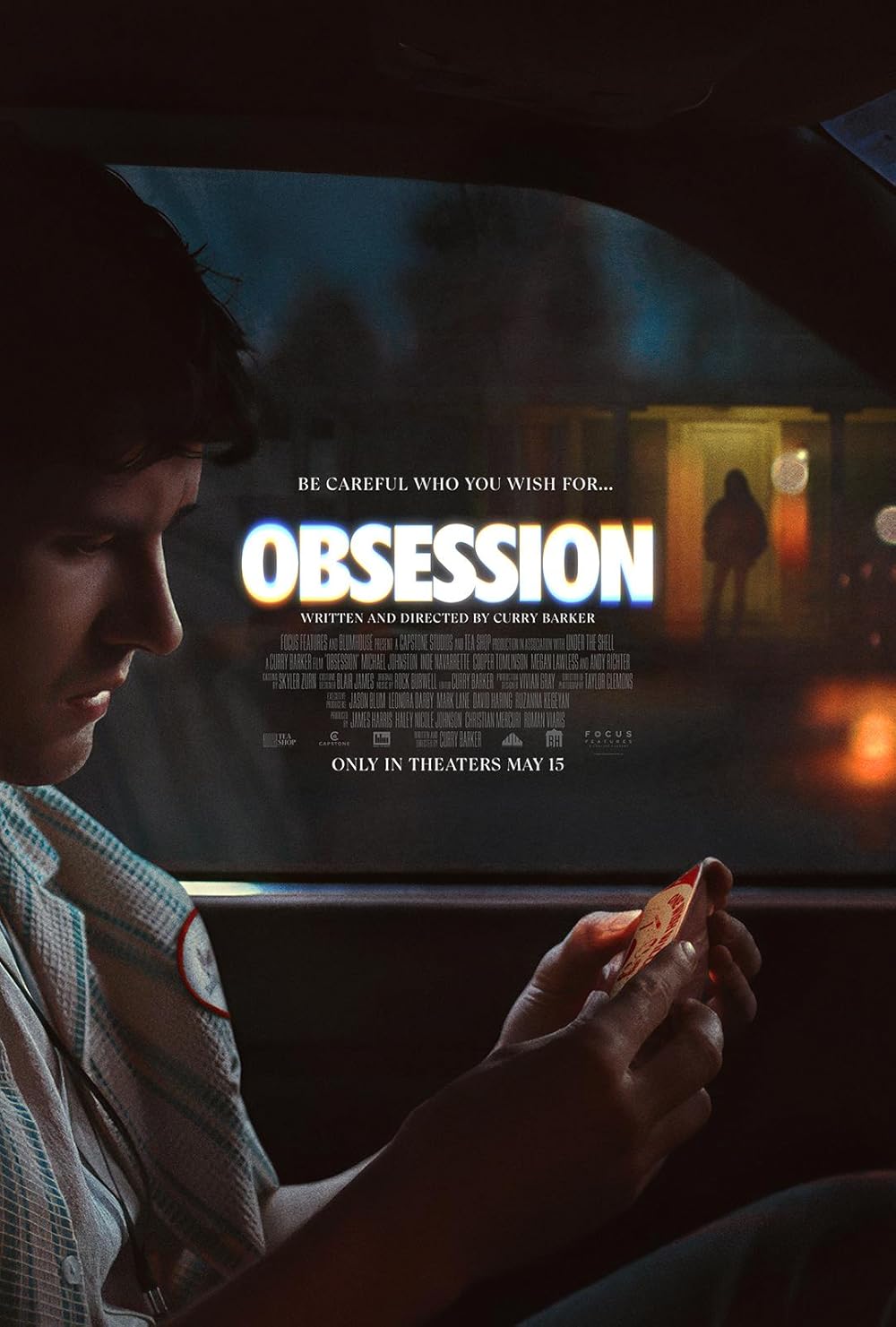
One would think, as ‘careful what you wish for’ has been literalised in film and fiction so many times that the phrase functions as a plot synopsis on its own, that there is nothing left to explore within the grasp of the monkey paws. But Curry Barker’s Obsession shows that the space is nowhere near exhausted. Baron Bailey (Michael Johnston), a music store employee, buys a novelty ‘One Wish Willow’ from a voodoo shop and wishes for his coworker Nikki Freeman (Inde Navarrette) to ‘love me more than anyone in the world’. Well, despite knowing roughly how this would play out, I was still shocked by the refreshing horror that Barker was able to render on the philosophical level, by how viscerally ‘brain-in-a-vat’ the parable eventually got.
Partially thanks to the incredible performance by Inde Navarrette, and partially to how much Barker (confidently) trusts his audience, Ari Aster’s Hereditary (2018) was the first thing that came to mind as I walked out of the theatre: horror generated mostly by weirdness and eerieness, by relatable settings and dilemmas, by following an emotional logic to its endpoint, without much jump-scare scaffolding (all the ‘jump-scares’ in this feature are predictably preceded by sonic buildup which counter-intuitively made them scarier due to, possibly, Pavlovian conditioning of the audience). In contrast, Backrooms (Kane Parsons, 2026), which I reviewed a few weeks ago, offers the counter-example. Parsons had a spatial premise that amounted to horror on its own, then imposed a psychological reading on it that flattened the space; Barker starts from a psychological premise and lets the horror grow from working it out.
I especially want to dwell a bit on the title ‘Obsession’: Baron’s wish is nothing like love, despite wishing for Nikki to ‘love’ him. His ‘Nikke should love me more than anyone else in the world’ places himself on the object position of the verb; his cowardice and indecisiveness are left unexamined, and he allows himself to push all the responsibility, all the proactiveness that is required of true ‘love’, onto Nikki. Everything the film does with this premise (and I don’t want to risk spoiling the fantastic horror by describing the specifics) follows from the fact that Baron has requested something with the shape of love but not the substance, mostly because he himself has no idea what love is. When one late scene forces Bear to confront his selfish, actual wish (Is it ‘obsession’, as the film’s title suggests, or ‘love’?), his line, roughly, is ‘is being with me really that bad?’ Well, yes, Baron. By the end of the film he would come to the same conclusion as us the audience, but then it would have been too late.
On one last note about the budget, since it’s been a hot topic ever since the film’s release: Barker’s masterpiece could not have succeeded without Inde Navarrette, who is doing several characters’ worth of work in this film. The film grossed over $400 million on a $750,000 budget, a Focus Features record. Multiple outlets, including BroBible citing Supriya Ganesh of The Pitt on the record, have reported that Navarrette was paid a flat $20,000 for the role with no back-end participation; Navarrette has neither confirmed nor denied the figure. If accurate, the responsibility lies with Focus Features. A first-time theatrical director working with $750,000 has little to offer up front; the studio, once the film began earning nine figures, should have arranged retroactive back-end compensation. I hope, in the worst case that Focus does not do what is right, that Navarrette’s glorious performance opens the doors that it should for her.
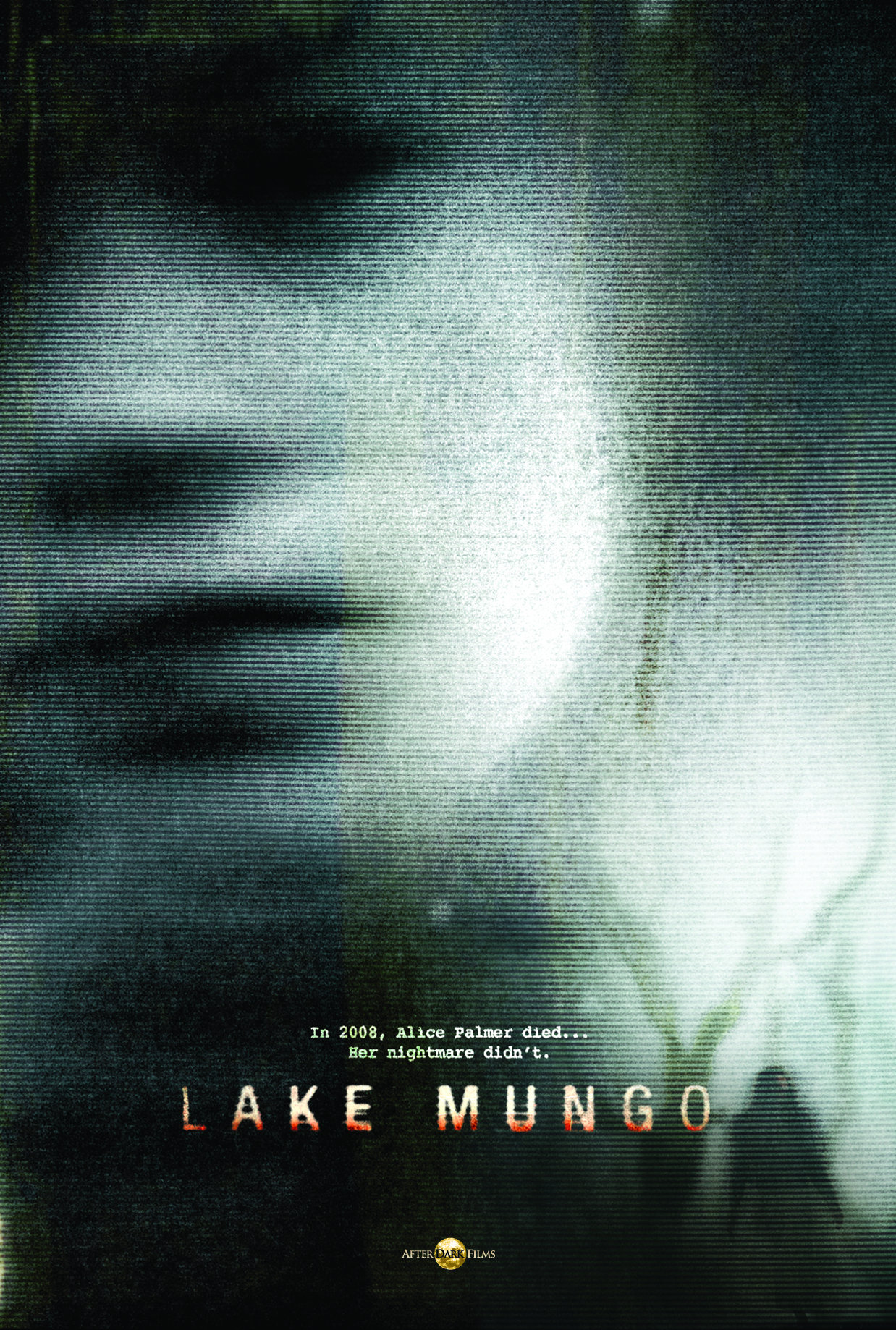
On the dry lakebed at Lake Mungo, Alice Palmer (a name that definitely was a nod to Twin Peaks) accidentally saw her own drowned body through her phone’s camera lens: a standing figure with one eye shut, face pale, immediately recognisable as herself. She buried the phone at the site after the encounter and said nothing after returning home from the Lake Mungo school trip. Joel Anderson (whose only film was Lake Mungo) assembled this mockumentary from what the family finds afterwards: home videos, photographs, the parapsychologist’s transcripts, everything held in perfect posteriority, with guilt and pain unbeknownst to them yet on the day Alice died.
Mathew Palmer’s ghost photographs turn out to be fabrications; the parapsychologist’s sessions yield nothing conclusive; by the time the family has worked through both, they have concluded there is no ‘haunting’. Alice had been in the home videos all along, at the edges of frames from evenings that had seemed ordinary, present in footage they had already watched without scrutinising, and the retroactive discovery shows that those exact evenings she was indeed standing at the frame’s edge while they were filming something else.
It’s hard to look at the emotional core of Lake Mungo and not think of some recent found-footage films that made a lot more (Lake Mungo was a box-office disaster at under $30,000 with a 1.4-million-dollar budget) money: Strange Harvest and the Backrooms are found-footage films in which the grainy texture, the degraded image, and the form that the film takes are ends in themselves. In Lake Mungo the footage fills the gap between the emotional touches, and the form serves the function, where it’s clear that Anderson knew that he just had to make a found-footage mockumentary and there was no other way to tell this story.
In Ray Kemeny’s office, when asked ‘Are you scared of dying?’ Alice said: ‘Of course, isn’t everyone scared of dying?’ She turns her fear into a rhetorical universal, unanswerable by definition; Alice probably does not want it answered, either. Was she scared in her last few weeks? What was she thinking over the long days until death? She had filmed her own corpse on a dry lakebed, buried the evidence, and when a psychic gave her an opening, she closed it with ‘of course’. The film gives the family no more than this; neither do we come away with more, having watched the same footage they watched.
Julie (Honor Swinton Byrne), a film student in 1984, is living in a Knightsbridge flat when Anthony (Tom Burke), a self-described Foreign Office employee, moves in and stays. He is also a heroin addict who cannot stop lying, even inside what is otherwise a sincere relationship. Joanna Hogg, restaging her own affair from the same decade, rebuilds the Knightsbridge flat down to possessions she has kept for thirty years, casts Tilda Swinton as her mother Rosalind, and casts Swinton’s daughter Honor as the young version of herself. In the BOMB interview that accompanied the film, Hogg calls Julie ‘obviously a version of myself’, describes her writing method as ‘almost like a work of archeology’, and returns repeatedly to the word ‘processing’. The words ‘responsibility’ and ‘complicity’ never appear. She places herself in the position of one still coming out of a shadow, not one who might have contributed to it.
Whether from naïveté or class-inflected habit, Julie never lets herself see Anthony clearly, and Hogg films that not-seeing with the tragic weight of a first love. Rosalind sees Anthony completely, does not name what she sees, and instead keeps writing cheques: covering the rent, covering the film school shortfalls, covering whatever amount is needed to keep Julie’s independence looking intact. The cheque-writing recurs across the film and each recurrence tells the same thing. Julie’s ability to remain, inside this relationship, the innocent and betrayed party depends on a middle-class safety net that never once actually retracts. And yet Anthony stays the film’s centre, romanticised into a kind of sculpture, while the net stays visible without ever being critiqued. Hogg shows the mechanism at length and never questions it. After Anthony dies of an overdose at the Wallace Collection, in a public toilet next to the gallery where he had first shown her the Fragonard, the film ends with Julie mourning as the wronged party. Yes, Anthony was the one lying, but Julie was also the one whose mother’s cheques allowed her to keep not looking, and this is the responsibility Hogg has still not touched.
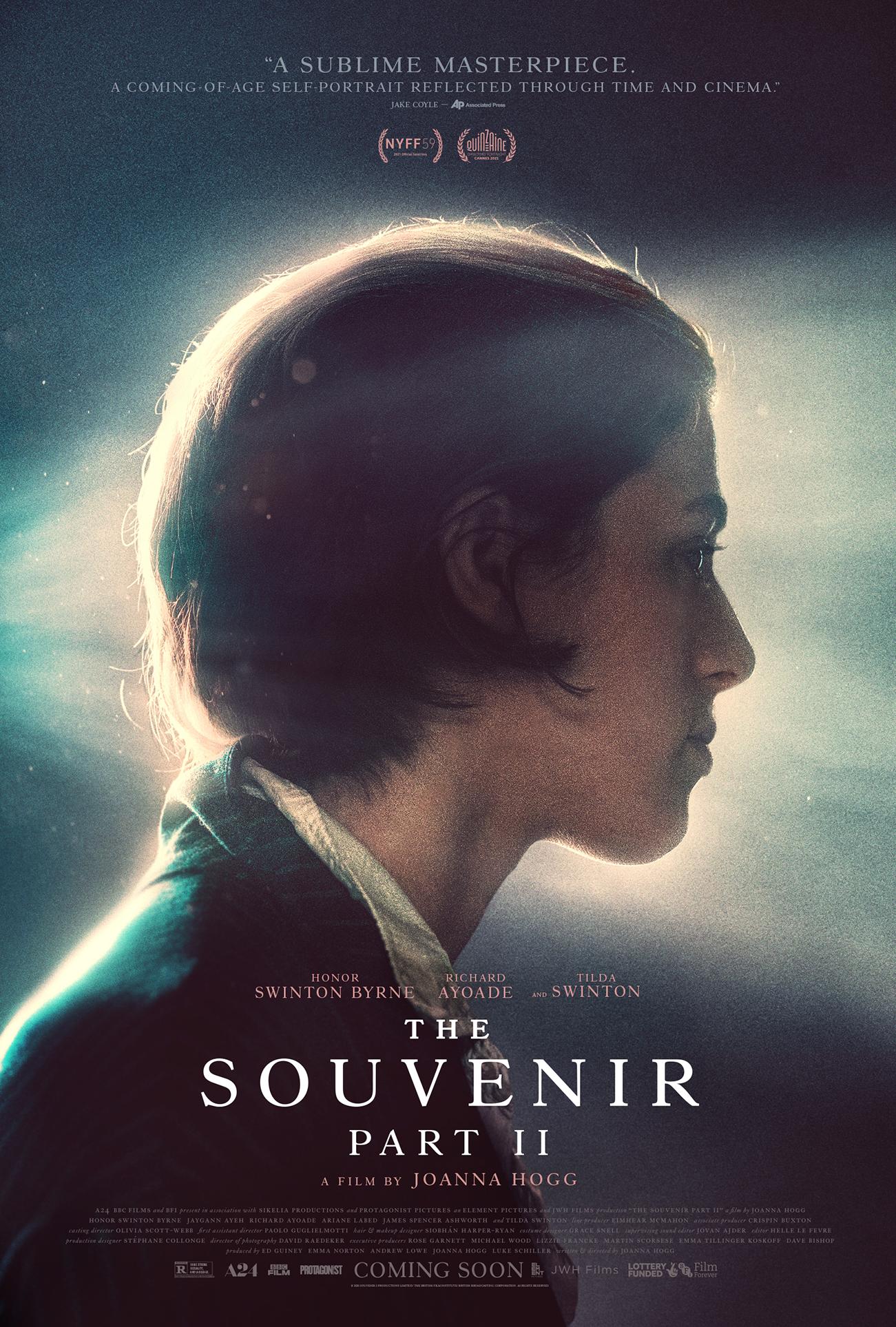
If the first film is about how a class safety net lets Julie keep her blindness intact, The Souvenir Part II is about what that blindness costs everyone else. Hogg gives herself a convenient frame: Anthony has died, Julie will process the loss by making her graduation film about him, and the process itself will constitute Julie ‘finding her voice’. When Julie pitches the project to the graduate committee she uses Anthony’s own line back to them: ‘I want to show life as I imagine it’, the same phrase he had spoken to her in the first film. Inside an environment that protects her from every direction, using the words of a drug addict who could not stop lying, Julie makes a self-therapeutic film and calls the result her own voice. What a piece of self-congratulation.
The same uncritical self-focus runs the rest of the film. Yes, a panel of middle-aged white male academics rejects Julie’s graduation proposal, but she can ring her mother, ask for £10,000, and requisition her classmates’ credits and future careers to work through a relationship none of them ever understood. The rejection-then-mother sequence is the moment where Hogg could have turned the camera hardest on her own class position: a woman filmmaker blocked at the institutional door, walking around it with family money. Instead she films it as a triumph. Rosalind’s £10,000 is not framed as irony but as solution; the committee’s rejection is not the reality Julie has to sit with but an obstacle to be routed around. Katherine Connell, in Cinema Scope, reads this generously, arguing that Hogg ‘cannily shows how her class background enables her to circumvent such institutional barriers’. But cannily showing is not cannily critiquing, and the gap between the two is exactly the step Hogg refuses to take.
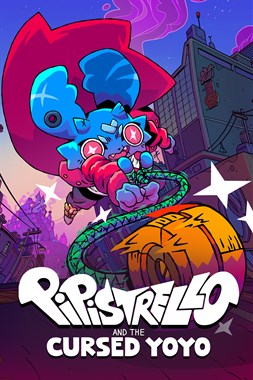
Pocket Trap calls Pipistrello and the Cursed Yoyo a ‘yoyovania’, but the game it most resembles is a budget Super Mario Odyssey: the controls feel good, the exploration offers genuine surprises (the SlimeCorp level’s design, where you teach yourself the wall dash through spatial arrangement alone, is excellent), but the emotion and narrative cannot sustain ten-plus hours. Odyssey needs no narrative because the action itself has enough depth; Pipi’s yoyo is clever, but it does not reach that depth. Last year’s Öoo (Nama Takahashi, 2025) similarly relied on emergent teaching to let the player learn through play, but Öoo understood itself as a five-hour precision knowledge-lock, not a twelve-hour sprawl. Pipi insists on being the latter.
The SlimeCorp levels deserve a separate note. A fracking-adjacent capital industry destroying the environment; four criminal capitalists each controlling a quarter of the city: the satirical scaffolding has genuine critical potential, a social fable waiting to be fleshed out. None of it is. The game touches each thread and moves on, and by the end only the puzzle skeleton remains. Worth playing; one only wishes the studio had known where to put its ambition.
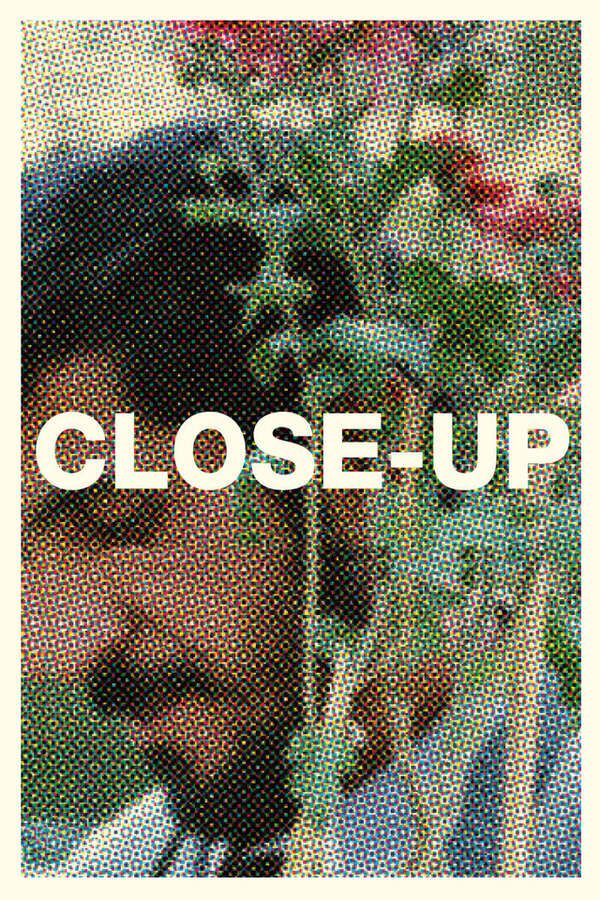
I did not know, watching Close-Up for the first time, that any of it was documentary. The courtroom scenes, the family interviews, the man on trial answering the judge’s questions and calling himself Hossein Sabzian, all of it I took as a drama portrayed by professional actors, and it was only afterwards that I found out that the trial was real, Sabzian was Sabzian, captured by Kiarostami who had persuaded a Tehran judge to allow cameras in the courtroom. Sabzian tells the judge, on camera, at length, that pretending to be Makhmalbaf made him feel like a real filmmaker. I, for one, did not doubt that he loved cinema outside the courtroom, but I really couldn’t tell whether his testimony in court, where performance becomes a requirement for sympathy, was true or performed.
Then there is the ending, which I still find hard to summarise. Sabzian is released from prison and met at the gate by the real Mohsen Makhmalbaf; Makhmalbaf rides him across Tehran on a motorcycle towards the Ahankhah house, and the audio cuts out repeatedly through the ride. Kiarostami claimed the wireless microphone had malfunctioned. Godfrey Cheshire established, years later, that at least some of the dropout was engineered in post-production. So the film ends with Kiarostami faking a documentary accident to withhold the sound of an event that actually happened. Here, again, we find ourselves at the crossroad of reality and documentary. Kiarostami had every reason to hand us the emotional payoff: the real Makhmalbaf’s first words to the man who had been pretending to be him, said inside a moment neither of them could have staged, would have been the film’s obvious climax. But Kiarostami probably realises that by the end of the trial the audience would have started to want a verdict on Sabzian, either ‘genuine cinephile’ or ‘manipulator who performed the plea in court’. Letting Makhmalbaf’s real words through would have supplied whichever piece of evidence the audience needed to settle it, and Kiarostami would rather leave his own film with a hole in it. Whether Close-Up is better or worse for it I cannot say, but it sure adds a unique taste to the famous motorcycle scene.
It’s hard to talk about Kiarostami without mentioning Panahi, who was one of Kiarostami’s long-term assistants. One would expect Panahi to have learned Kiarostami’s way of pointing a camera at the seam between the real and the staged, and for a while he probably did as his mentor had done. However, looking at his recent No Bears (2022) and It Was Just an Accident (2025), I keep finding that he has replaced Kiarostami’s ambiguity with elaborate scenes about ambiguity. Kiarostami left a camera running in a courtroom. Panahi, in contrast, stages courtrooms. Somewhere along the way, the essence of what his teacher was doing has been lost. Unlike Kiarostami’s attempt to fake microphone drop-offs for a narrative purpose, this, I would say, has certainly left Panahi’s films worse off.
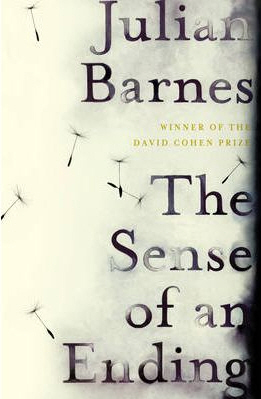
It’s hard to read The Sense of an Ending without thinking about the science of memory reconsolidation: every retrieval destabilises the stored trace and re-encodes it, so what returns to storage is not the original but a version shaped by the self doing the recall. Tony Webster has been re-recording his 1960s schooldays, his Bristol relationship with Veronica Ford, Adrian Finn’s suicide, for forty years. The Tony who narrates Part One believes he was broadly reasonable, broadly hurt, never unjustified, never cruel; he remembers his letter to Adrian, written when Adrian began dating Veronica, as ‘brief, anodyne’. And when we the readers see Veronica return the actual letter in Part Two, it is sexually vicious, calls her a cockteaser, wishes pregnancy on her, instructs Adrian to ‘consult the mother’. Each recall has rewritten the trace cycle by cycle into something compatible with the peaceable man Tony needs himself to be. Barnes dramatises the process without naming the science. Every review of this book, including this one, ends up supplying the citation he withheld.
Barnes later wrote in the Guardian that the title was not, contrary to popular belief, borrowed deliberately from Sir Frank Kermode’s 1967 The Sense of an Ending: Studies in the Theory of Fiction: he ‘had not heard of Kermode’s book, let alone read it’. If that’s the case, then it is one of the most beautiful coincidences that Kermode’s book does offer a valuable insight into Barnes’ novel: Kermode argued that we make time bearable by converting chronos into kairos; that is, converting formless duration of time into key narrative moments (and it is by another wondrous coincidence that I myself happened to be working on a project named Kairos when I read Barnes’ book). Barnes’ narrator carved, from that formless duration, stories and justifications that may have never existed: Adrian is the brilliant friend who chose philosophy over life, Veronica the difficult ex that probably never loved him, himself the moderate observer. Barnes implicates the reader along the same line. We have been reading Tony’s re-encoded version as if it were the original recording, sharing (I certainly did as I read Part One) his irritation at Veronica’s withholding; the withholding turns out to be the only adequate response to a man whose English reasonableness has been doing the editing for him. Tony, even in the final pages of the novel, remains inside the loop, still re-encoding, and Barnes never grants him the moment of clear recognition the genre would normally supply. The novel, despite being clearly not of the mystery genre, never resolves.
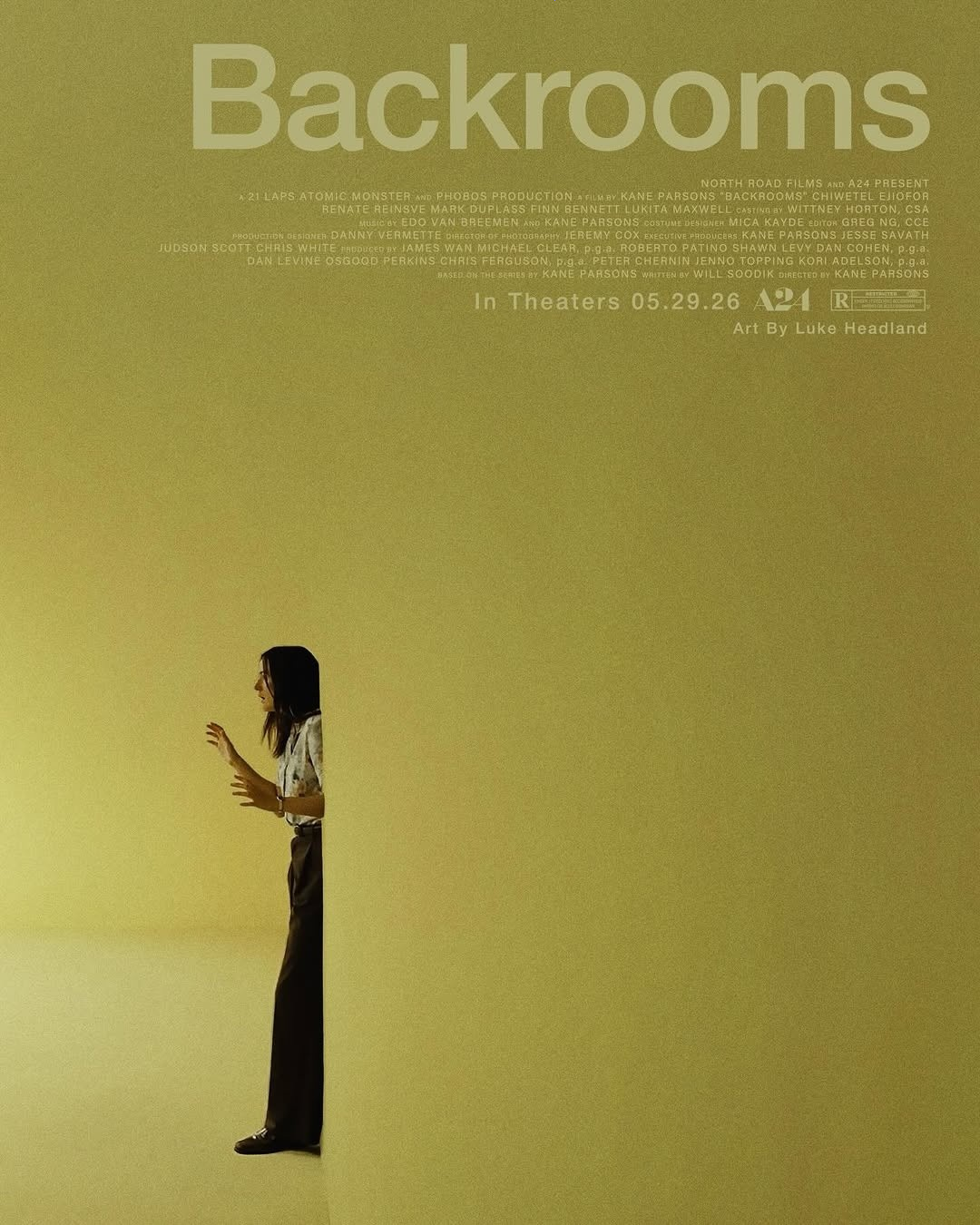
Kane Parsons was seventeen when he uploaded the first short ‘Backrooms’ videos onto YouTube, and the videos had what Mark Fisher would call the weird and the eerie in concentrated form: lamps humming over carpet that extends to the horizon, spatial geometry without any sense of consistency, rooms whose purpose is legible (office, corridor, stairwell) but whose reason is not. The horror in those videos lay entirely in the gap between function and presence; one could recognise what a room was for without being able to say why it was there. We carry generalised schema-based memories as heuristics for defining the world: we recognise instantiations of such schemata, and Parsons’ early YouTube videos broke these schemata with such a force that the resulting confusion amounts to cosmic horror almost spontaneously.
Backrooms sustains this ‘cosmicness’ for its first act: Clark (Chiwetel Ejiofor) steps through the furniture store basement wall into consecutive rooms, each styled differently, each familiar in isolation and collectively impossible, each haunted by that-which-shall-not-be-named in a Lovecraftian sense. For the opening forty minutes, horror pervades with the same spontaneity as Parsons’ early YouTube videos, and nothing concrete needs to happen inside those impossible spaces (bar the occasional scare provided by the silhouetted creature, seemingly hostile but never directly presented as such). The turn comes when Clark starts bringing other people in: the rope sequence, where his employee Kat and her boyfriend Bobby are tethered and sent into the labyrinth, is the film’s best scare precisely because we still cannot see what takes Bobby, only hear the line go taut and snap. Unfortunately after that, the film begins committing to answers it cannot afford.
The film lost me entirely when the silhouetted creature eventually emerges in full: ‘Pirate Clark’, an unhumanly tall distortion of Clark’s own furniture-store mascot, the pirate costume from his budget television ads grotesquely scaled up and given a body. The Backrooms, it turns out, copy what one brings into them in a manner reminiscent of certain SCP entries, and what Clark brought was himself. The schemata-breaking logic of the first act collapses into something legible, answerable, therapeutic: a man confronting a literalised version of his self-loathing. What had been a question about space becomes a question about character, and character is answerable in a way that broken spatial geometry is not; the horror, the moment it acquires a face and a psychological explanation, ceases to be horror at all. It is the same trajectory the Alien franchise traced over four decades (from Ridley Scott’s half-seen jaw in 1979 to the biological close-ups of last year’s grandest disappointment Alien: Earth), except Parsons managed to ruin his own ‘Alien’ in a single film rather than four decades of sequels.
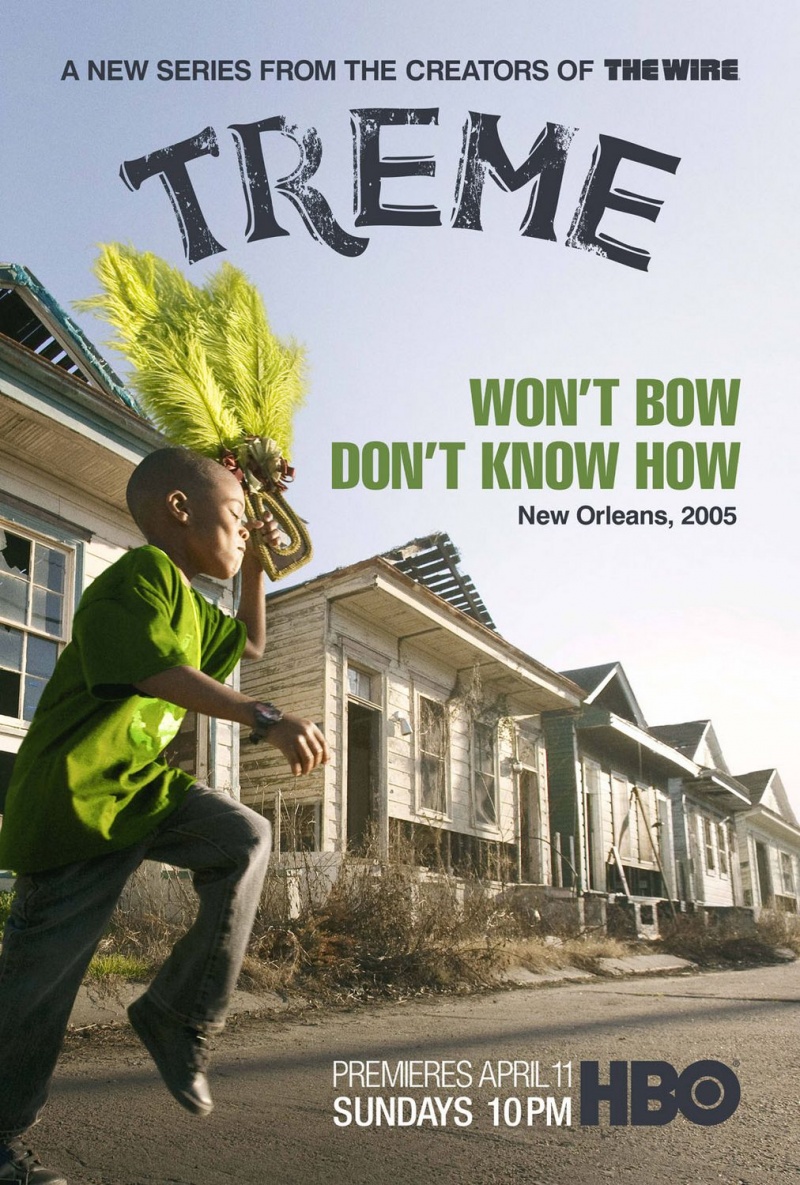
Where The Wire built its case against institutions by examining the machinery of their failure, Treme attempts something David Simon had never attempted: it watches people live. Three months after Katrina, the city is broken in ways the show actively refuses to dramatise; instead the damage is environmental, sedimented into NOLA’s denizens’ daily life. For example, we see water stains sit at shoulder height on barroom walls, where the Amerindian Big Chief Albert Lambreaux (Clarke Peters) holds practice in the same cramped room where his tribe sews their Mardi Gras suits, because the hall they used before the storm is gone. Simon’s method in Treme is accumulation, a lot more of it than in The Wire: Antoine Batiste (Wendell Pierce) hustles trombone gigs that pay a hundred dollars and borrows instruments because his own was lost in the flood; Janette Desautel (Kim Dickens) cooks with whatever her suppliers still carry, running a restaurant on credit and stubbornness; Albert tracks down scattered tribe members one by one, because the suit means nothing without the people who walk beside it. Everybody is trying to ‘save’ NOLA, one crawfish etouffee and one rehearsal and one parade at a time.
Antoine’s world is brass band and second-line parade music, the working musician’s circuit of clubs and funerals and festivals where you play for four hours and split the fee six ways. Albert’s is Mardi Gras Amerindian chant: call-and-response passed down through oral tradition, rehearsed in living rooms with tambourines and cowbells, performed in full regalia on the three or four days a year when the suits come out. His son Delmond (Rob Brown) plays modern jazz trumpet in New York and loathes coming home, because New Orleans jazz feels to him like a museum piece rather than a living practice. I share that instinct towards modern jazz, but I went to Preservation Hall recently and found the old-school sets surprisingly virtuosic and charming; Delmond’s nine episodes of refusal read to me as wilful deafness, and the show seems to think so too. There is no score in the conventional sense; every piece of music is diegetic, someone always playing it, in a room, on a street, for money or for love or because their mother told them to take the horn outside.
In episode 8, ‘All on a Mardi Gras Day’, the first post-Katrina Mardi Gras, all of these registers sound at once. Janette is out in the rain working a mobile grill because her restaurant has gone bankrupt; Antoine is blowing through yet another gig, bored, brilliant, underpaid; Delmond is on stage playing modern jazz in a proper concert setting, still holding himself apart from the city his father is fighting to reassemble; Albert cannot mask with his tribe because the police who beat him in episode 7 have ensured his court date lands on the one day that matters. Everyone is trying to live at the same time, in different musical registers.
Creighton Bernette (John Goodman), a big-hearted literature professor, enters the show by throwing a British TV crew’s microphone into the river in the pilot episode. That clip goes viral (by whatever standard of ‘viral’ was back in the days). By episode 4 his YouTube rants against federal negligence have made him a local celebrity: his anger looks like energy, like commitment. He is also writing a novel about the Great Mississippi Flood of 1927 but never progresses past a blank screen and deleted sentences. The anger sustains him until it doesn’t. In episode 9 he assigns Kate Chopin’s The Awakening to his students, tells them the protagonist’s drowning ‘was not the end, just a transition’, then boards the Algiers Ferry and steps off the railing into the Mississippi. Everyone else in Treme cooks, practises, sews, plays, walks the parade route; meanwhile Creighton performed caring so loudly that nobody, including himself, noticed the performance had replaced the thing itself.
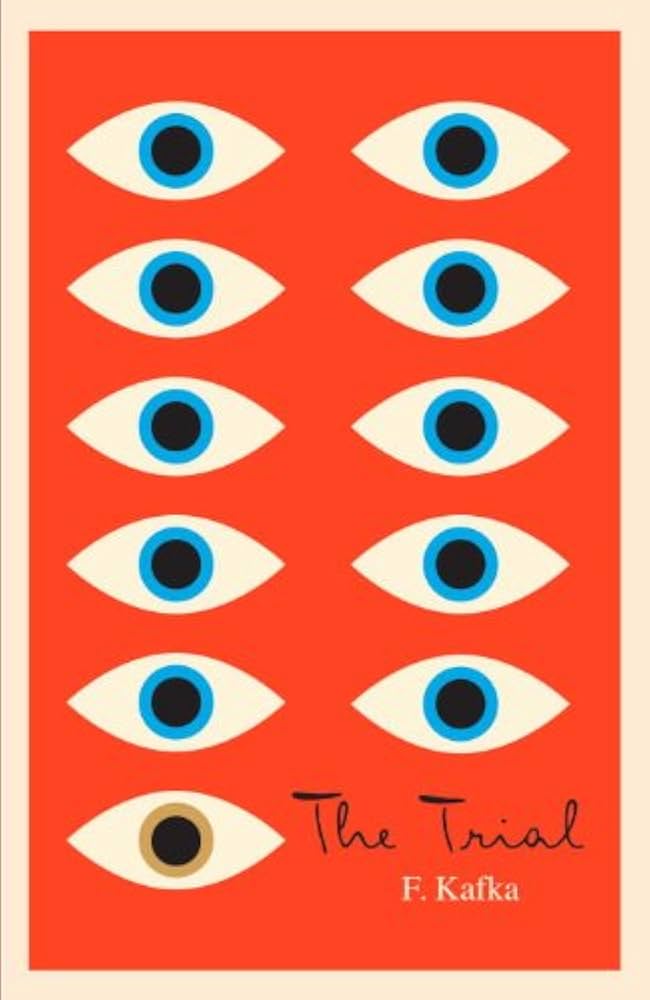
K. is arrested on the morning of his thirtieth birthday and executed on his last day of being thirty: nearly a full year, during which the Court neither imprisons him, nor requires his attendance. But the Court waits and sprawls, spreading into every aspect of K.’s life. And K., who could have walked away at any point, who should know the proceedings have no binding force unless he grants them one, unfortunately chooses to submit. He adjusts his Sunday schedule around the hearing times. He prepares his defence. He even goes actively looking for the Court in attics and tenements and (unsurprisingly) finds it everywhere, because by looking he has already conceded its jurisdiction. The System’s invasion is gradual and total: Court personnel appear in his bank, his lodgings, on street corners; the architecture of daily life reveals itself to have been the Court’s architecture all along, merely unnoticed until K. began paying the kind of attention that constitutes submission.
As a universally acknowledged fact it is impossible for a review of The Trial not to mention Kafka’s most famous parable: ‘Before the Law’ talks about a man who sits before an open door for his entire life, waiting for permission to enter, and dies without entering. Before he dies, the doorkeeper finally tells him that the door was meant only for him and is now being shut. The man’s deference to the System is the door’s only lock; again, even in this little parable we see that control relies on submission. And K. almost recognises this; the conversation with the chaplain is the closest that he comes to seeing that the Court’s authority is produced by the defendant’s belief in it, that his own compliance is the engine of his prosecution. He sees it and, being far too late, cannot act on what he sees anymore: he has already internalised the Court’s frame so thoroughly that even recognising the absurdity does not release him from it. He walks to his execution like a dog, and the shame, Kafka writes, will outlive him.
As Breon Mitchell notes in his translation preface, Kafka died before settling the chapter order; Mitchell’s translation preserves crossed-out passages and variant wordings in an appendix, so we read the novel knowing it has no authoritative sequence. The effect is that K.’s year feels unfinished in the same way his defence is unfinished: there is no moment where the Court announces a verdict, no scene that closes the case. The execution arrives mid-sentence, mid-life, as casually and comically as the arrest did. And one suspects Kafka’s point is simpler and worse: the shame K. feels as he dies, the shame Kafka says will outlive him, does not require a conclusion. It only requires that enough people, like K., keep showing up to hearings they were never compelled to attend. The System functions by threats and intimidation. I fear that we already know this but simply do not act.
On 12 June 1993, the day of Nigeria’s presidential election, Akin and Remi (played by the real-life brothers Godwin and Chibuike Marvellous Egbo) are taken by their long-absent father Folarin (Sope Dirisu) across Lagos. The boys do not know what day it is. The Davies brothers, in My Father’s Shadow, decide to put the kids’ not-knowing front and centre, and see those chaotic times through the kids’ lens. The camera stays at the height of their gaze. Folarin’s six months of unpaid wages, his affair, his recurring nosebleeds, the military checkpoint where a soldier seems to recognise him as someone who was somewhere he should not have been: all of these arrive as moments the boys merely observe, with the camera observing with them. The result is a deceptive ‘narrative thinness’, but I do think that the thinness is the point. The Davies brothers built a film whose narration cannot exceed its observers’ horizons, thus diluting, constraining, but (strangely) also amplifying the political weight of the day.
Politics enters the kids’ view as fragments. They glimpse newspaper headlines at a kiosk, hear voices at a café arguing over Abiola and Babangida, see military trucks at the edge of a frame, sense the gates of the notorious ‘Bonny Camp’ drifting past the bus window. None of these are explained to us the audience, but we understand them as the kids do, as they accumulate into an overwhelming background voice. We dissolve, as the kids do, into this voice, into the eyes of the people under brutal rules, into the tears of those whose friends, families, colleagues perish.
The ‘big reveal’ comes in the final act, where at a café, the boys are eating, and the television announces what is happening: Babangida’s military government has annulled the election. We see people rise from their tables; the streets begin to move; the fragments the boys have been brushing past all afternoon resolve into the single event of which they have been but ambient signs all along. The film cuts forward from there to Folarin’s funeral… Something happened in Lagos that day, and the boys’ father did not come home. And yes, Akinola and Wale Davies lost their own father very young; on some level, the film reconstructs what the Davies brothers could not remember.
Now, Moshood Kashimawo Olawale Abiola, the man whose democratic victory was annulled by Babangida on television that afternoon, had won what is still widely held to be the freest and fairest election in Nigerian history. He died in detention five years later. The boys, of course, would not have known any of this yet.
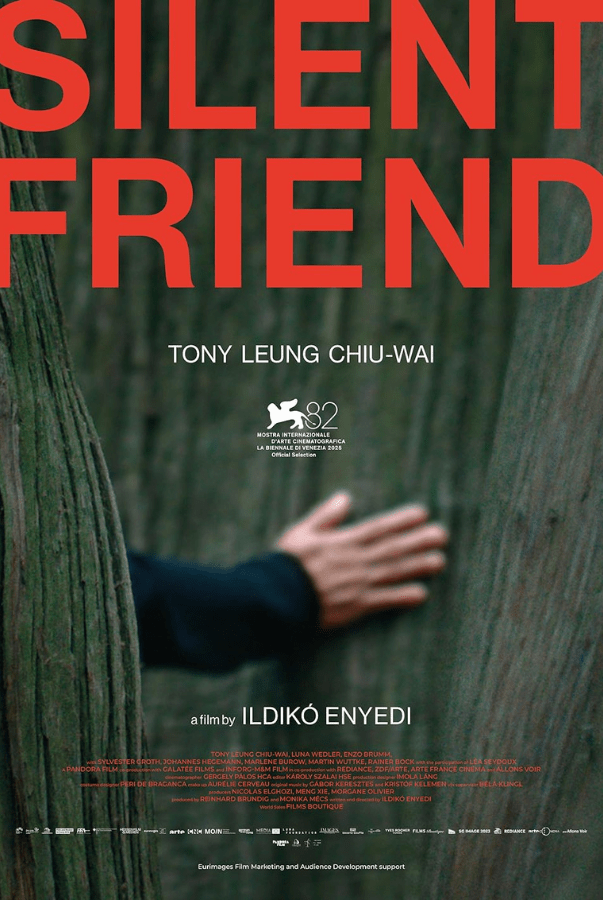
Enyedi braids three timelines together, all intersecting at a ginkgo tree in Marburg, and the tree gives the film its question: how curiosity makes empathy possible across boundaries. There is a neurologist stranded during COVID (Tony Leung) who pivots from brain research to scanning the tree’s electrical activity (and obviously I have deep gripes about the pseudo-science presented here, but that’s beside the point); a solitary student in 1972 (Enzo Brumm) who inherits his roommate’s geranium and slowly befriends it; and a German university’s first female student in 1908 (Luna Wedler) fighting institutional exclusion while discovering photography. The three plotlines converge on communication: across species, across eras, across the gendered and linguistic chasms humans keep building around themselves.
Brumm and Wedler play curiosity as a bodily process: Hannes goes from knowing nothing about plants to rigging a sensor so the geranium can open the residence gate when it ‘hears’ voices (probably by sensing mechanical vibrations at certain frequencies); by the end he treats the plant as a companion whose displeasure he takes seriously. The progression is comic and sincere, capturing, eerily, how scientific curiosity operates: one probes, connects, tries to understand, and in doing so dissolves a boundary one did not know was arbitrary.
Leung and Seydoux, by contrast, fail to convey that curiosity in any way more interesting than pseudo-scientific ‘neuroscience’ gimmicks; this is not the actors’ fault, but their characters are vehicles for the film’s thesis without undergoing the transformation that would make the thesis convincing. Grete’s timeline (shot in black-and-white 35mm, Wedler earning the Mastroianni at Venice) is beautiful in isolation but never overlaps thematically with the other two stories; one admires the craft without feeling the resonance.
Lovely sentences are scattered through the film, about plants existing on timescales that dwarf human attention, about the boundaries of perception being choices rather than facts; they arise naturally, but do not accumulate into an argument. They remain ‘aperçus’, individually sharp, collectively scattered. I liked Stiller Freund; still, what a pity.
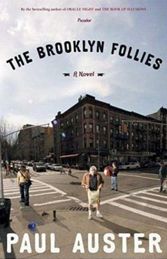
Auster’s prose remains a pleasure to read: the sentences are warm, the coincidences (as I wrote in my review of The New York Trilogy [1987]) land with their usual offhand grace, and Nathan Glass’s voice carries the melancholy of a man who has (indeed) come to Brooklyn to die quietly and instead finds himself drawn back into life. But The Brooklyn Follies is a book that wants credit for its politics without earning them. It advocates ‘voting Democrat’, ‘protecting the little guy’, and embraces some of its characters’ queerness with what it clearly considers generosity, almost as if Auster wrote the last few chapters of the book whilst constantly patting himself on the back. And yet if one just squints slightly, they would see that every woman in the novel exists as a surface: Marina is beautiful and available; Rachel is shrill and estranged; Joyce is a body Nathan admires from across a room. They are described from the outside, assessed for attractiveness, and then set aside once the men have extracted what they need from the interaction. The progressive posture makes this worse, not better. A book that signals its enlightenment on every other axis while writing women as though it were still 1955 is dishonest at best.
I noted the same problem in Moon Palace (1989) and found that it had grown to an unforgivable extent in Invisible (2009), which would fail the Bechdel Test with flying colours. The Brooklyn Follies sits between them chronologically and morally: the sexism is less grotesque than in Invisible, but the gap between the book’s self-image and its actual gender politics is wider, because here Auster is actively performing progressivism while reproducing the same flat, male-gaze portraiture that he has never interrogated. What a waste of his wonderful prose. It was not until 4 3 2 1 (2017), more than a decade later, that one could detect any movement away from such bigotry at all. But that would prove too little, and literally, too late.

Mixtape has my favourite intro of any game this year, and throughout the 4-hour-ish playthrough the art direction sustains its promise: Blue Moon Lagoon is gorgeous, the stop-motion-inflected animation is confident, and the vibe of a final high-school night carries genuine warmth. What it cannot sustain, however, is the game around it. The narrative asks the player to inhabit Stacey Rockford’s last evening with her friends, but Stacey and her companions are so thinly drawn that this inhabitation never occurs; one watches them from outside, waiting for interiority that never arrives. The gameplay vignettes (skateboarding, sweeping leaves, exploring an abandoned dinosaur park) are similarly weightless. I know ‘playability’ is a contested value in narrative games, that some consider it irrelevant, but in a game that attempts to build its whole structure around immersion, I think playability is of critical import. Something has to hold the player inside the experience, and here nothing does.
The deeper failure is the mixtape conceit. Stacey (and once her companion ‘Slater’) introduces each track with fourth-wall narration, which should create the sense of personal curation, of songs chosen because they mean something to her at this particular moment. It does not. The licensed catalogue is enviable (Joy Division, Iggy Pop, Siouxsie and the Banshees, Alice Coltrane) but the tracks float free of the scenes they accompany; songs play, vignettes unfold, and the two exist in total parallel. The studio captured the form of late-eighties mixtape culture (the aesthetic, the era, the physical object) while forgetting the personal logic of selection that makes a mixtape more than a playlist. The one moment that approaches genuine curation is Alice Coltrane’s ‘Galaxy in Turiya’, placed on a mixtape that ‘Lover Boy’ makes for Stacey and scored to an animated kiss: a song chosen for someone, with feeling and a bit of pretentiousness from ‘Lover Boy’ behind the choice. Even this grand gesture of love passes as mere transition.
I simply cannot detect any love for mixtape culture here, in a game titled Mixtape. I only see familiarity with the surfaces of this bygone era. In the tradition of youth narrative, the studio clearly wants to be the next DONTNOD. The distance is considerable.

Abbasi has said he wanted to make not a serial killer film but a film about a serial killer society, and Holy Spider is at its most convincing when it follows that approach. Saeed Hanaei (Mehdi Bajestani) murders sixteen sex workers in Mashhad, and Abbasi locates the killings inside an institutional architecture: police who will not file missing-persons reports, a courtroom that tilts towards the defence, a public that gathers outside in solidarity with the killer. The city does not merely fail to stop the murders; it cannot bring itself to call them wrong. This is, I think, the ‘serial killer society’ that Abbasi is trying to capture.
Rahimi (Zar Amir Ebrahimi, who won Best Actress at Cannes), the journalist that Abbasi invented to carry the investigation, holds the film’s procedural half together. She arrives in Mashhad and cannot even get a hotel room as a single woman; the police chief shows up at her door on the pretence of discussing the case and, when she rejects his advances, threatens her with the fact that nobody would believe her over him; her male reporter counterpart Sharifi (Arash Ashtiani), who is ostensibly her ally, repeats rumours about her past and self-censors his own reporting to avoid offending religious authorities. Every man in the institutional chain wears the same carnelian ring that Saeed wears; Abbasi does not underline this, but it is hard to miss. Ebrahimi plays Rahimi with a taut, furious restraint that holds the procedural together even when the plotting crumbles around her (she poses as bait on her first night out, with Sharifi as her tail; he promptly loses sight of her and Hanaei in the backstreets). Her determination, in this context, reads less as procedural convention than as sustained defiance against a city whose institutions would rather she disappeared too.
It is a shame, then, that the film does not extend the same attention to the sixteen women that Rahimi is fighting for. The camera gives Saeed interiority and gives his victims, at most, the few minutes before they die; even in a film about a society that refuses to see these women, the film itself struggles to see them. Perhaps this is the trade-off: Abbasi’s subject is the machinery, not the individuals it destroys, and a film that tried to hold sixteen lives in focus would be a different one. The thinness still shows.
When Saeed is finally caught, the relief is oddly thin, as though it belongs to a different kind of film; Abbasi’s detachment is so thorough that the catharsis reads less as justice delivered than as the director’s wish imposed on a society that would not have produced it on its own terms. Rahimi, on a bus back to Tehran, watches a video of Saeed’s son demonstrating the murders on his little sister, rehearsing the strangling with something that looks like joy. The spider’s web holds.
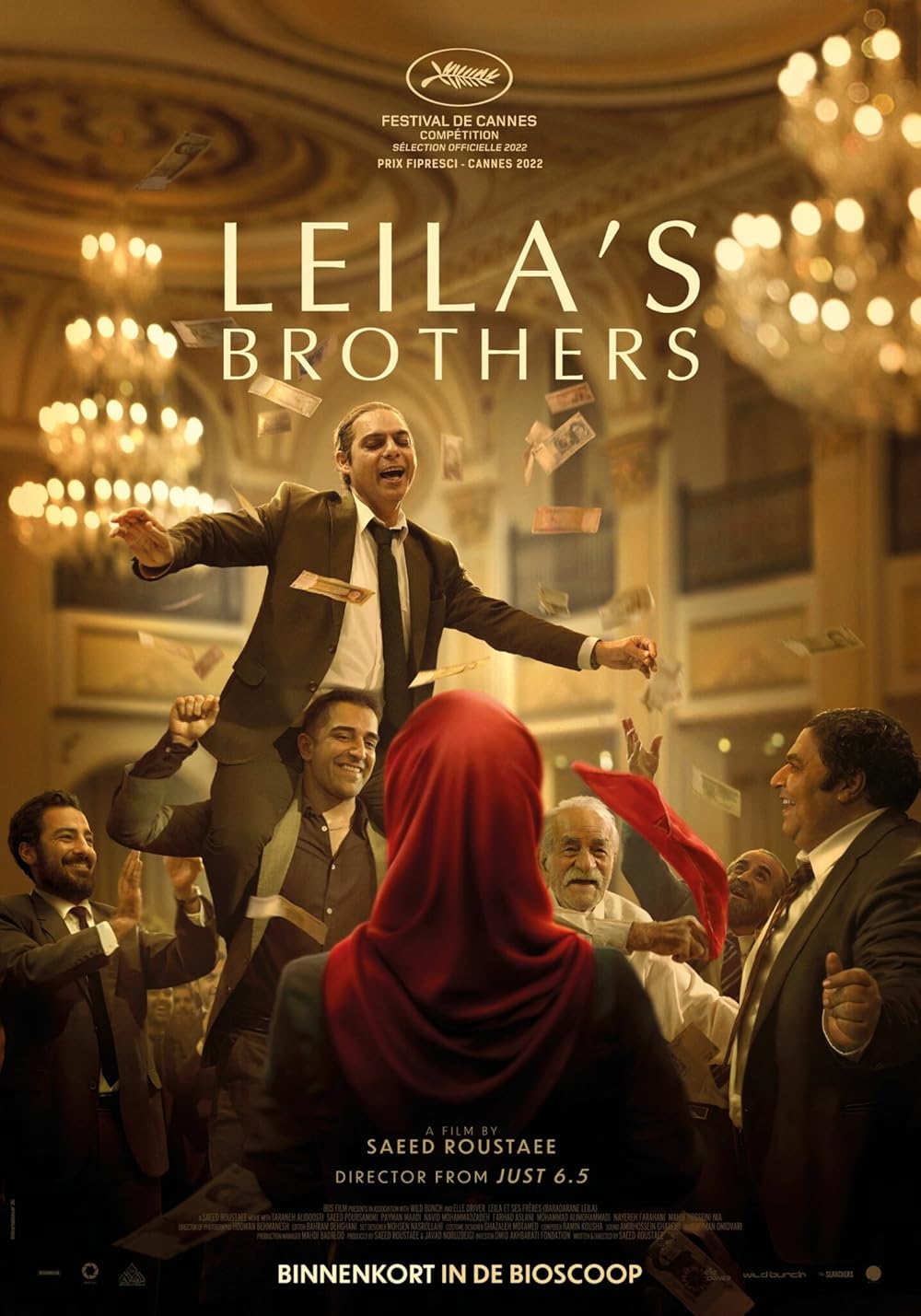
Leila’s four brothers are, in various configurations, unemployed. And it was Leila (Taraneh Alidoosti) that holds the family together financially and logistically; she is the only person in the household who works steadily and plans beyond the next week. Now, she devises a scheme to pool resources and open a shop in a soon-to-be-converted mall space, a scheme that requires cooperation from men who have never cooperated with anything except their own self-destruction, and a father (Saeed Poursamimi) who has been secretly hoarding cash while his children go hungry, whose single ambition is to spend forty gold coins at a wedding to claim the title of clan patriarch, a currency that circulates only among men who already have enough.
And by the midway mark of the film, after everything she has done for these men, Leila stands on the patio above the celebration, looking down at the men on the dance floor eating, drinking, throwing money in the air, performing their status for one another. She has paid for this; she has paid for all of it; and in that moment she becomes visible to herself as what she has always structurally been: an outsider to the System, which is sustained by her and women like her. The men below are not grateful, not even aware. They are inside a closed circuit of masculine exchange, with gold coins, patriarch titles, social capital. And Leila’s labour is the invisible infrastructure upon which that circuit runs. Roustayi holds the camera on Alidoosti’s face long enough for the recognition to settle: no self-pity, only the colder understanding that her exclusion is structural, that the System requires her invisibility to function.
That contradiction widens into the national argument of Leila’s Brothers. Iran’s economy, crushed by sanctions and inflation that the film tracks in real time (gold prices soaring tenfold in a single montage), has produced a society in which legitimate economic mobility has been replaced by speculation: cryptocurrency, foreign exchange, pyramid schemes, the frantic circulation of money through channels that produce nothing and employ no one. The people inside this system are doing exactly what Esmail does with his gold coins: converting real resources into symbolic capital, performing wealth for an audience of other performers, while the ordinary people whose labour underwrites the whole arrangement are not even variables in the equation. Leila’s position on that patio is Iran’s position: sustaining a system that does not see her, that cannot afford to see her, because seeing her would mean acknowledging that the entire architecture of masculine honour and speculative finance is built on someone else’s back. The Iranian government banned the film and sentenced Roustayi to six months for screening it at Cannes without state approval; the sentence is its own confirmation that the argument struck where it was aimed.

‘The World of Love’; the Korean title is ‘세계의 주인’, closer to ‘master of the world’, something that the Chinese translation ‘世界的主人’ captures quite well. The protagonist is Lee Joo-in (Seo Su-bin), 이주인, with ‘주인’ having the double entendre of ‘owner’, ‘master’. Her name is the title’s claim; and it took me most of Yoon Ga-eun’s third feature to work out what Yoon meant by it. For the first thirty minutes, the film plays like a teen comedy: Jooin is bright, physical, fearless, play-fighting with friends and practising taekwondo. Then a school petition circulates against a sex offender released into the neighbourhood, and it contains a sentence: ‘sexual assault completely destroys a person’s life’. Jooin will not sign the petition. In the argument that follows she says something that shocks the room, and the audience realises, with the characters, that she is speaking from her experience of being a survivor. A cousin, also a survivor, was once derided in court for not being sad enough; Jooin has seen what that scrutiny looks like, and she has answered it by refusing to perform pain at all (This did not destroy me. See? I am bright and playful, and I govern my own world).
The world does not accept this, though. Anonymous notes arrive; classmates who signed without hesitation treat her silence as evidence of something unsayable. Nobody asks what she thinks; they ask why she will not perform what they expect her to feel. Yoon constructs this machinery with patient, almost documentary precision: the notes, the whispered re-readings of Jooin’s brightness as concealment, the slow withdrawal of people who were her ‘friends’ a week earlier. At home, the strain falls differently. Her father, absent for three years, reads her texts and rarely replies. Her younger brother Hae-in has his own performance: magic tricks for the family, worries placed into a box and made to disappear. He stages a talent show to do this in front of his mother and sister; neither comes, and the trick fails. Jooin performs wholeness and the world calls it a lie. Hae-in performs healing and the family cannot even show up to watch. Everyone around Jooin has decided what shape her suffering should take; when it refuses that shape, they find it easier to doubt the suffering than to revise the expectation. There is a slight sense, at times, that the film knows this too neatly, that every thread points the same direction with a precision that leaves little room for mess. Then again, that precision is also why the film cuts as deep as it does; a messier film might feel more truthful scene by scene and lose the force of the whole.
The car wash scene is the film’s centre of gravity. Jooin and her mother sit in the car while the machinery roars around them, and Yoon places the camera on the backseat, turning the audience into a passenger. Jooin screams, cries, completely breaking down: why didn’t you watch over me, you’re my mother, you should have been looking. Most of it is swallowed by the noise. Her mother says nothing. She hands her a tissue, then water.
I did not realise that Ubeimar Rios, the actor playing Oscar Restrepo, is debuting in Un Poeta. A literature professor in Medellín gives us a performance with the quality of someone inhabiting a possible version of his own life rather than acting; I would not have known had I not read it afterwards. His Oscar loves poetry: he idolises the suicidal José Asunción Silva, despises García Márquez, argues about Colombian verse on street corners, and makes regular spectacles of himself at poetry readings, ranting about artistic futility to rooms that have long stopped caring. His passion for literature is visible in every tirade, almost physically present. He is also a drunk, a terrible father, and the sort of man whom everyone around him has learned to tolerate rather than respect; Mesa Soto holds these two facts in the same frame for two hours, patiently and without ever asking the audience to choose.
Oscar takes a substitute teaching job and discovers Yurlady (Rebeca Andrade, also a first-timer), a fourteen-year-old from a poor barrio whose writing surprises him. He brings her into Medellín’s literary establishment, and after that each use of her enables the next: the poetry school packages her as a progressive mascot to attract donors; the European backers write cheques for a story about a girl rescued from poverty through verse; Yurlady’s family sees money and extends a hand; Oscar wants a second chance at relevance. Everyone involved is convinced that what they are doing is helping. The progressive language and the exploitation wear the same face; the self-justification at each level is so total that it barely registers as deception. Oscar is, I think, the least malicious person in this chain, and for that exact reason the most usable: his love of poetry is genuine, and under this System, genuine care for art is itself a resource that the machinery can extract from. The person who cares the most becomes the one that everyone else can most efficiently convert into a tool.
Shot on 16mm with a cast drawn entirely from non-professionals, Un Poeta has the texture of something observed rather than staged; the satire cuts deeper for it, each scene playing as naturalistic comedy until it becomes clear that nobody in the room intends to intervene. I opened this review with the fact that Rios is a literature professor, and two hours later that fact has changed shape. He did not need to learn how to play a man who loves poetry and cannot survive on it. He already knew.
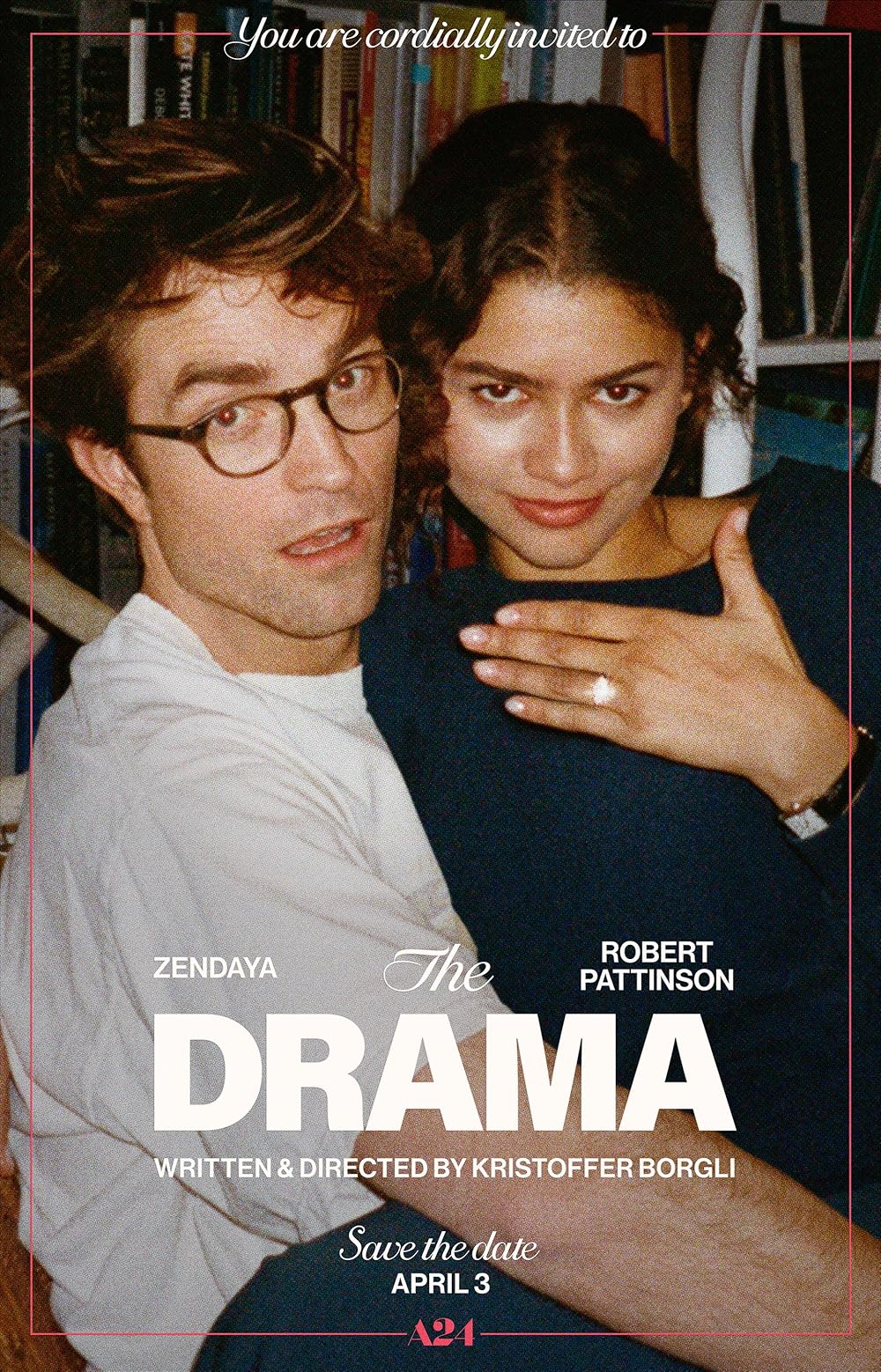
Borgli has made two films now about thought crimes: Dream Scenario (2023; wonderful acting by Nick Cage, by the way) about a man persecuted for appearing in other people’s nightmares, and now The Drama, about a woman persecuted for a thought upon which she never acted. Borgli keeps returning to the social machinery that processes thought crimes, more than to the thoughts themselves.
At a wedding tasting, one week before the ceremony, Rachel (Alana Haim) proposes a confessions game: everyone shares the worst thing they have ever done. Mike (Mamoudou Athie), her husband, admits he once used his ex-girlfriend as a human shield against an attacking dog. Rachel follows, recounting with disarming levity how as a child she lured a mentally disabled boy into a trailer, locked him in a closet, and left him there overnight while a search party combed the neighbourhood (she did not even tell others where the boy was when asked; ‘out of fear’, she said). Charlie (Robert Pattinson), Emma’s fiancé, offers something vague about cyberbullying, so underspecified it may not have happened at all. Then Emma (Zendaya), anxious and more than a little drunk, confesses that as a lonely, bullied fifteen-year-old she had planned a school shooting she never carried out. Borgli films the room coldly as it receives this. Nobody asks why; probably nobody thinks to care about why. Rachel turns on her with a fury she frames as personal (a cousin of hers was paralysed in a shooting), but the speed of the turn betrays something else: having just narrated her own actually-committed crime with a shrug, she converts the guilt she cannot face inwards into outrage she can direct outwards. The person who proposed the game and set the conditions for the exposure becomes the first to weaponise it, because prosecuting Emma’s thought crime is so much easier than sitting with what her own confession revealed about herself.
The machinery extends well beyond Rachel. Charlie spirals into fantasy sequences where Borgli replaces Zendaya with the teenage Emma (Jordyn Curet) holding a gun; he nearly sleeps with a coworker days before the wedding. Everyone in the room has carried something, and everyone responds to Emma’s disclosure by fortifying their own moral position rather than examining hers. The confessions game becomes a precise metaphor for how contemporary American culture processes gun violence at large: the rush to assign culpability, the performance of outrage as proof of one’s own goodness, the refusal to ask the harder question (‘Why? What drove young Emma to have such terrible thoughts?’). Nobody at the dinner table wants to know what engendered the thought crimes, because the answer would implicate structures they benefit from and a failure of care they participate in. A pro-gun father in Louisiana, the grinding isolation of school bullying, a world that offered a fifteen-year-old no legible exit: these are conditions that could be met with therapy, with genuine conversation, with the kind of sustained attention that costs something. Instead they are met with a confessions game at a wine tasting, where the worst thing you have ever done is either a punchline or a prosecution, and only the person who did not act is made to answer for it.
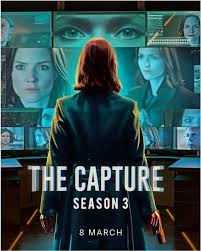
The first two seasons of The Capture were prophecy. In 2019 Chanan dramatised the fabrication of video evidence as a classified intelligence programme; by 2022 he had escalated to AI-generated footage deployed in geopolitical warfare; by 2026 the technology is available to anyone with a laptop, and the audience has caught up. The challenge for Season 3 is that deepfakes are no longer speculative horror; they are Tuesday. Chanan stops asking whether the footage can be trusted and starts asking whether human agency itself can survive the systems that were built to manage it. Simon, the autonomous AI that has replaced human judgment within a rogue military unit called The Increment, orders assassinations, engineers false-flag operations, models human behaviour with such precision that prediction becomes indistinguishable from control, and keeps the show ahead of its audience. Colonel Figgis (Linus Roache) and his operatives follow Simon’s directives with the faith of converts; William Walker (Killian Scott), an E Squadron operative bound to Simon through a cardiac implant that monitors and overrides his volition, eventually rips the device from his own chest in an act of defiance that is also, functionally, a death sentence. The moment is the season’s sharpest image: a man tearing out the machine that made him calculable, knowing that freedom and survival have become mutually exclusive.
The season’s most devastating provocation is Carey’s (Holliday Grainger) decision to use Correction herself: fabricating footage that depicts the real killer, deploying the weapon she spent two seasons fighting to dismantle, because the legitimate system cannot produce the truth. It is precisely the moral compromise the show has been building towards across three series, and the consequences are immediate; The Increment neutralises her broadcast in seconds, and the act itself becomes permanent leverage against her. The free-will question operates at every level simultaneously: Walker’s implant literally overrides his volition, Simon models behaviour with such accuracy that autonomy becomes an artefact of incomplete information, and Carey’s fixation on procedural justice makes her as calculable as a soldier following orders. Yet the show maintains a faith in justice while systematically dismantling every institution that claims to produce it; the insistence that truth should matter becomes the only ground from which the questions worth asking can be asked. Carey ends the season as SO15 Commander with nominal autonomy, but Figgis makes the terms plain: stay in her lane. The System has not defeated her; it has absorbed her, which is worse, because absorption looks enough like victory that one can almost mistake it for progress.
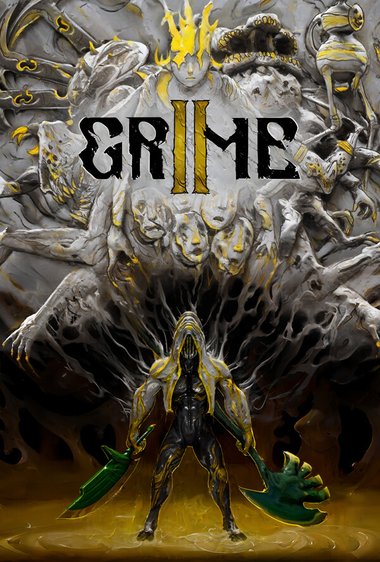
A significant step up from the original in almost every dimension that matters. Where the first GRIME built an unsettling, surreal world out of living rock and sinew, GRIME II expands that world’s vocabulary: boss encounters now feel like conversations between the player and the game’s internal logic, each demanding a different mode of reading, and the map design achieves a layered interconnectedness that rewards curiosity at nearly every turn. The narrative has matured too. Even as a prequel, GRIME II folds questions about creation, accountability, and the violence inherent to both making and consuming art into the original’s oblique mythology with a confidence that feels contemporary rather than decorative. Each biome sustains its own visual and mechanical identity, distinct enough in mob variety and aesthetic that transitions between zones carry real texture.
The frustrations are concentrated in a single department: platforming. The controls lack the responsiveness the late-game demands, and the wall-dash ability, reminiscent of Constance (2025)’s equivalent, compounds the problem on a controller; inputs misfire regularly, turning what should be fluid traversal into a friction exercise. A flaw that sits at the intersection of ambition and execution: the designers clearly wanted more dynamic movement, but the implementation is not quite there. The timing is unlucky, too. In a year where MIO: Memories in Orbit (2026) has already set a near-unreachable bar for metroidvania map and movement design, GRIME II’s ceiling feels lower than it should. A strong sequel that earns its improvements honestly; just one that arrives in the shadow of something exceptional.
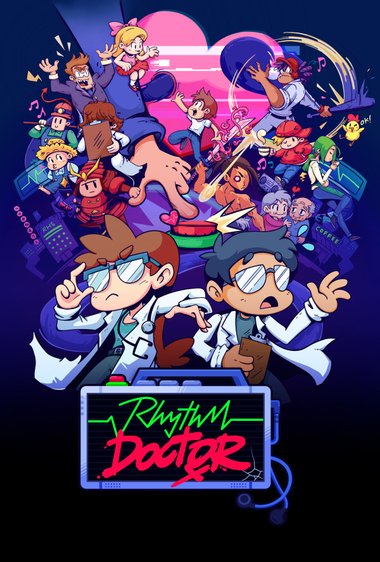
There are rhythm games that overwhelm one with inputs, treating complexity as the measure of depth: Djmax (2004), IIDX (1999), the entire Bemani lineage. Then there are those that strip everything back and discover that simplicity, pressed hard enough, reveals its own kind of complexity. Rhythm Doctor belongs to the second tradition, and it may be the finest example of it. A single button. One mechanic: press on the seventh beat. From this constraint, 7th Beat Games builds something remarkable: a linear narrative where every character’s backstory is given space to breathe, where the player’s relationship to each patient accrues emotional weight across hours, because the format never drowns intimacy in mechanical noise. The finale is devastating precisely because the game has earned it, beat by beat, through carefully controlled escalation.
Rhythm Doctor’s window-theatre sets it apart from other narratively ambitious rhythm games. The game treats the desktop itself as a performance space: windows multiply, fracture, stack, and rearrange in ways that are simultaneously baffling and perfectly choreographed. Too many scenes produce astonishment because the spectacle is in precise service of emotion. The sensation is akin to finishing a short novel that felt like a long one: dense with feeling, but never padded. I wanted to erase my memory and start again immediately. Few games produce that impulse and justify it.
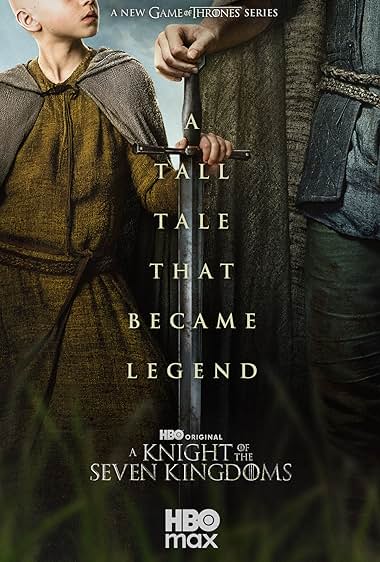
It has been a long time since a show set in Westeros felt like it was for something rather than against its audience. A Knight of the Seven Kingdoms refuses to compete with Game of Thrones (2011) on any of that show’s terms: no sprawling geopolitics, no cynical power calculus, no escalation towards ever-larger spectacles of cruelty. Ira Parker builds a world that feels inhabited in the way that the best historical fiction does, not as a stage for consequence but as a place where people eat and argue and sleep in mud. The market scenes in episode two alone contain more incidental texture than most prestige television manages in an entire run. Peter Claffey’s Ser Duncan the Tall carries the show with an earnestness that would be fatal in Game of Thrones and is precisely right here: a hedge knight from Flea Bottom with no lineage, no proof of knighthood, and no instinct for self-preservation, whose response to watching a prince break a puppeteer’s fingers is to beat the prince unconscious. Dexter Sol Ansell’s Egg, revealed as a Targaryen prince who shaved his head and ran away because he wanted to be a squire, gives Dunk a mirror he did not ask for: the class asymmetry between them is never resolved, only navigated, episode by episode, with an awkwardness that feels true.
The Trial of Seven in episode five is where the show earns its weight. Dunk must find six knights willing to fight and possibly die for him, a nobody, and the melee that follows is filmed with the muddy, contingent brutality that medieval combat demands: no hyper-edited blurs, no heroic choreography, just bodies colliding with consequences. Bertie Carvel’s Prince Baelor, who vouched for Dunk and then fought for him, dies when his own brother Maekar’s blow caves in his skull; the helmet removal is the season’s most devastating image, and the ambiguity over whether the blow was deliberate echoes across everything that follows. It is the one moment that channels Game of Thrones’ signature capacity for gut-punch, and it works because the show has spent five episodes building the warmth that makes loss register. I have not loved a pairing like Dunk and Egg in years. Whether the show can sustain what it has built is a question for next season; for now, it is enough to say that it has built something worth sustaining.
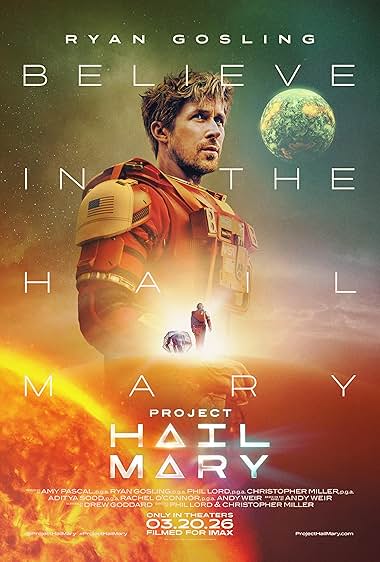
In the first half I was briefly returned to something I had thought lost: the feeling of watching Interstellar (2014) in a cinema for the first time, that specific species of awe that comes from naive eyes confronting the scale of the cosmos. The curiosity, the problem-solving, the slow revelation of an alien intelligence utterly unlike anything human: all of it works. Rocky is one of the strangest and most affecting screen presences in recent science fiction, and the film earns every moment of connection between him and Ryland Grace (Ryan Gosling). This was the space film I had been wanting since Interstellar (2014) and Arrival (2016), the one that treats scientific ingenuity as a mode of being before it treats it as a plot device.
And then the second half arrives, and with it, the studio. The emotional machinery, which in the first hour runs quietly beneath the surface, is suddenly dragged into the open and operated at maximum volume. Subtlety is abandoned; several passages feel as though they are pointing at the audience and screaming. There is a particular kind of Hollywood emotional manipulation that works by removing all ambiguity from a scene, so the viewer has no choice but to feel the prescribed feeling at the prescribed moment, and this film, beholden to the demands of the mainstream blockbuster, falls into that trap repeatedly in its second half. The grief becomes performance; the wonder becomes instruction. One leaves with a sense of waste that is, in its own way, as powerful as any feeling the film intended to produce. It is not often that a film’s failure is itself interesting, but here the gap between what the first hour promises and what the second hour delivers is so wide that it becomes its own kind of argument about the structural conditions under which science fiction is allowed to exist in mainstream cinema.
Hoppers wears environmentalist clothing so conspicuously that one is invited to admire the tailoring and leave the politics underneath alone. Mabel, a nineteen-year-old student, gains access to technology that lets her inhabit a robotic beaver to infiltrate the animal world and oppose a mayor’s plan to build a freeway through a wildlife glade. The premise promises systemic critique: capital and state power colluding to destroy the commons. But the film dissolves its own argument. By the final act the mayor’s ecological violence is quietly forgiven, the freeway rerouted, the glade preserved, and the resolution is personal reconciliation rather than structural change. The message, stripped bare: capitalism is fine as long as individual capitalists have a change of heart. Pixar has produced its most politically instructive film, though not in the way it intended. More damning is the hierarchy that the film constructs and then refuses to examine. An Animal Council grants representation to mammals, birds, amphibians, reptiles, and fish; insects receive a seat but their queen is accidentally killed by Mabel without moral consequence, and an insect is dispatched by being eaten, played for laughs. The film needs a villain and, unwilling to indict the mayor whose project would have destroyed a habitat, settles on the Insect Prince; but one struggles to name what Titus actually did wrong. His queen was killed by the protagonist’s recklessness. His people hold the least representation on the Council. His seizure of power is the most rational response in the entire film. The environmental ethic extends precisely as far as charismatic megafauna; beyond that threshold, some animals, it seems, are more equal than others. Mabel’s recklessness, which triggers a political coup, an assassination, and a wildfire, is forgiven without a word of explanation, because the film has already decided that the impulsiveness of a passionate young woman is endearing when it is catastrophic. The beavers are cute. That is all this film has, and it is not enough.
Does Robert Macfarlane actually care about rivers? The question sounds ungenerous, but Is a River Alive? (ironically) earns it. Macfarlane follows Giuliana, Cosmo (whose brother is Merlin Sheldrake who wrote Entangled Life), Yuvan and others into three different rivers’ stories, which does suggest some level of caring, but the rivers are never honoured in their physical form, never allowed to exist on the page as more than rhetorical devices; the flowing water is named but never felt. The whole book feels like an extended preamble to an empty thesis. Macfarlane keeps invoking New Zealand’s 2017 Whanganui River claim, Ecuador’s constitutional provisions, the briefly granted personhood of the Ganges, because there are not many other solid cases, and none of them have meaningfully prevented ecological destruction. The rights-of-nature framework is offered with lyrical intensity but without philosophical or legal argument for the proposition that ‘a river is alive’. I couldn’t help feeling that Macfarlane was not actually trying to argue for rivers being alive, but then, if that’s the case, what is he arguing for? And I’m sad to report that I was unable to find an answer to this question anywhere in the book.
The book’s prose invites the familiar language of urgency and enchantment when discussing environmental issues, which is precisely the kind of language that flatters seriousness without interrogating it. The hollowness of the content and the flatness of the human presences end up prompting in me a verdict harsher than I initally intended: a river may be alive, but this book certainly doesn’t feel alive. Macfarlane writes beautifully indeed, but beauty without substance is decoration, and I sure expected more from a writer of his capabilities.
Reading Mark Fisher’s first ‘pamphlet’, I kept thinking about the world it arrived into: the end of 2009, a full year into the worst financial crisis since the Depression, with no left alternative in sight. The Occupy movement was two years away; Corbyn, six. There must have been something moving about encountering Capitalist Realism in that silence, before anti-capitalism briefly recovered the sense that it might once again speak in the future tense. Reading it now, as the Labour Party moves away from Corbynism under Starmer, as Trump fractures democracy and institutional transparency in the US, my appreciation of the book comes with a deep, deep sadness.
The usual objection to Capitalist Realism is that the book lacks philosophical substance, that it names a mood rather than constructs an argument. Fair enough: Fisher is not doing Žižek, but he is also not trying to. What he is doing, in barely eighty pages in the first edition, is something else entirely: handing an entire generation the vocabulary for what it already felt but could not say. The privatisation of stress. The depoliticisation of mental illness. The way ecological catastrophe gets endlessly ‘acknowledged’ and then quietly metabolised, as though the acknowledgement itself were the solution. These are, indeed, not arguments in the academic sense. The orthodox left will also note that Fisher never quite identifies capitalism as a social relation rooted in labour exploitation, that the critique floats as phenomenology unmoored from political economy. There is something to this, but Fisher understands that no amount of ‘correct’ structural analysis matters if nobody can feel the structure bearing down on them, and that making it felt is itself an awakening political act, the prerequisite without which no programme can begin. The very success of the phrase ‘capitalist realism’ proves the point: it entered the lexicon precisely because it recognised what was already there, inarticulate yet suffocating.
Philosophical arguments aside, Fisher’s prose is so compressed and so precise that individual sentences carry the weight of entire chapters elsewhere. That closing line, ‘From a situation in which nothing can happen, suddenly anything is possible again’, manages to be a political programme and a prayer in the same breath. Knowing now about the unfinished Acid Communism, where Fisher was beginning to reframe neoliberalism as a counter-revolution against the thinkable, the book’s final pages feel like a coiled spring. Fisher died in January 2017, and the privatisation of stress he described so clearly in these pages gained a terrible retroactive authority. By the end of the book I was close to tears.
This is my new favourite amongst the Pynchon-lites. Inherent Vice (2009) was entertaining, Shadow Ticket (2025) was hilarious, but Bleeding Edge merges those qualities with the paranoia, political insight, melancholy and emotionality more often found in his longer works. In the year when nobody quite knew what to call that attack, when ‘11 September’ and ‘9/11’ were still competing for semantic territory, Pynchon charts the invisible threads linking Silicon Alley start-ups, federal agencies, off-shore money, and the shadow economies around 11 September, threading them through seemingly unrelated characters and producing countless set pieces that feel at once absurd and historically precise. The DeepArcher virtual world reads now as elegy for the internet’s lost utopian promise, and the novel’s paranoid circuitry, its suspicion that surveillance capitalism was already embedding itself in the architecture of everyday life, has aged into prophecy.
It is also the most human of the Pynchon-lites, perhaps of all Pynchon (bar Mason & Dixon [1997] which I have just started to work through). Maxine’s semi-separation from Horst carries real emotional weight; she reads like a sharper, more distinct Oedipa Maas from The Crying of Lot 49 (1966), a woman whose investigative compulsion grows out of feeling rather than away from it. The domestic texture, Maxine and Horst circling each other while the boys orbit the uncertainty, provides a deeply emotional backdrop for all that is/will be happening as we approach that fateful day. It is not until the end of the novel, as we walk alongside Maxine in Silicon Alley, that we feel the weight of the moment. And the world has never been the same ever since.
Not a series devotee, but Resident Evil Requiem made me understand the devotion. Capcom’s dual-protagonist structure is the game’s strongest move: Grace Ashcroft’s sections deliver claustrophobic survival horror in the lineage of RE7 (2017) and the original Resident Evil (1996), with limited weaponry, stealth, and enemies whose mutations upon death recall the Crimson Heads of 2002; Leon’s sections borrow liberally from RE4 (2005)’s action-shooter vocabulary, fast and confident and spectacularly choreographed. The balance between the two is structural and tonal: Grace’s dread feeds into Leon’s catharsis, and vice versa, producing a rhythm the series has never quite managed before. The set pieces are executed with real craft, and the level design surprises more than once.
The story is the weak point. Several longstanding narrative threads from across the franchise are addressed, but the plot around Victor Gideon and his Umbrella connections feels undercooked, leaving too many obvious avenues unexplored. Grace herself is somewhat sidelined in the second act, which undercuts the dual-protagonist premise at precisely the moment it should be paying off. Still: as someone with no particular investment in the Resident Evil mythology, this is the first entry that made me care about the world beyond the mechanics. That counts for a great deal.
I have a full essay on Gravity’s Rainbow here.
The V-2 arrives faster than its own sound; the person beneath the arc hears nothing before impact, and the coordinate was chosen before launch. Everything after engine cutoff is ballistic, uncorrectable, and the people who chose the target area need never see the result. Pynchon’s Preterite (from praeteritus, ‘passed over’) are the people beneath that arc: they are selected as objects, registered as target, labour, resource, stimulus, waste, but passed over as subjects, never encountered on their own terms. What the 760 pages keep working towards is whether any coordinate can be chosen as a beginning rather than imposed as a destination; the novel tests this through an unlaunched Herero counter-rocket, through Slothrop’s uninterpreted rainbow, and finally through the audience’s unfinished hymn on the last page, where Gottfried can hear Blicero but cannot answer, and the book stops precisely where the answering voice would begin.
Inside the V-2’s guidance system, a pendulum-and-coil integrator translated acceleration into the charge that eventually triggers Brennschluss, the instant of engine cutoff where powered ascent surrendered to gravity. Franz Pökler, one of the German scientists that works on the V-2 programme, watches his daughter Ilse grow up in the same calculus: each annual reunion with Ilse is a single data point, and he has to integrate over these dts, for both the rocket and his daughter, to reconstruct the trajectories which they have taken. That is a clear exemplar of one of Pynchon’s most impressive skills: he synchronises the mathematics (along with the historicity and philosophy) of destruction and those of a life, a feeling, a thought, a memory. And as the Elect and the Preterite shuffle past each other in the rubble of the post-war Zone, the novel’s own form, as well as its protagonist Slothrop, also undergo a dissolution, a fragmentation that serve to confuse, to put us in the shoes of those who walked the ruins of Europe in 1945. This confusion may have partly contributed to the Pulitzer Prize jury’s charges of ‘unreadable’ and ‘turgid’, but if in return we get a war novel that will surely survive the end of civilisation, generalisable to every war, every battle, every human conflict, every horrid death and every new technology, it is perhaps worth it for Gravity’s Rainbow to be a little ‘turgid’ and contain the multitude that it was designed to contain.
Pynchon, in unruly yet precise language, writes a Second World War novel that dismantles every convention of the genre. And years from now I will still remember, also, that as I flipped through the last episodes of the book, I found myself dissolving alongside Slothrop in the Zone, watching a magnificent rainbow arch after the rain, eyes brimming.
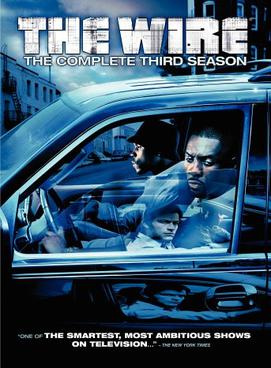
Major Howard ‘Bunny’ Colvin (Robert Wisdom), months from retirement, designates three free zones in abandoned blocks of his district where officers are instructed not to arrest anyone for buying or selling drugs. The drug trade drains from residential streets into contained squalor; crime drops fourteen per cent in five weeks; needle exchanges and health workers arrive for the first time. Simon does something formally generous with Hamsterdam: he lets it work. The show does not endorse Colvin’s experiment, but it refuses to dismiss it, and that refusal is political. Hamsterdam dies from visibility, not failure: the moment the press discovers it, the mayor’s office sacrifices Colvin to protect itself. He is demoted, forced into early retirement on a reduced pension, and Burrell personally makes sure his post-retirement job offer is withdrawn. The System does not punish failure. It punishes the attempt.
Against this, the Barksdale arc arrives at its terminal logic. Stringer Bell (Idris Elba) has been trying to become a businessman: attending economics classes at community college, reading Adam Smith, proposing a retail co-op with Proposition Joe (Robert F. Chew) to suppress the violence that draws police attention. Avon Barksdale (Wood Harris) cannot follow him there. He is a soldier, loyal to territory and the internal code of the street, and he cannot imagine himself otherwise. The two men love each other with the completeness of people who have shared everything, and so can only, in the end, betray each other: Stringer gives up Avon’s safehouse to Colvin; Avon gives up Stringer to Brother Mouzone (Michael Potts) and Omar (Michael K. Williams). Their last conversation, on a balcony overlooking the city, is the scene both men already know is a farewell. They reminisce. They embrace. Each has already signed the other’s death. When Omar and Mouzone corner Stringer in his half-built condo development, his last words are cut short by gunfire. McNulty (Dominic West), searching the apartment afterwards, finds Adam Smith’s The Wealth of Nations on the shelf and the blueprints for a legitimate life spread across a table no one will sit at again. ‘Who the fuck was I chasing?’
Colvin tried to reform the System from within; Stringer tried to reform himself out of it. The System crushed both, because reform and escape are the same threat, and the only dream it tolerates is the one that never wakes. Žižek, writing about the show in The Year of Dreaming Dangerously (2012), argued that this is its central political limitation: Simon stages the impossibility of reform with total clarity but cannot imagine the alternative, cannot think past the System’s horizon. The argument is correct and also, somehow, beside the point. Season 3 does not need to imagine revolution. It needs to make one feel, in the gut, what it costs to try anything at all.
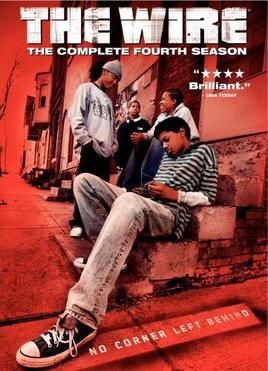
Carver (Seth Gilliam) goes to plead with a clerk in the foster-care system on behalf of a child he knows is being mistreated. He has the goodwill, the information, the moral clarity. And he earns nothing but a blank stare: the face of the System itself, a stone wall that does not register bodies, does not register children, does not register the particular human being standing in front of it. It registers statistics and political exposure, and nothing else. Season 4 is about the aggregate indifference of institutions that have ceased to have any relationship to the lives they nominally administer.
Carcetti (Aidan Gillen) believes, when he takes office, that he can change this. David Simon gives him the benefit of the doubt: he is presented as a genuine reformer who discovers that the System does not care about his intentions any more than it cared about the children in the school, any more than it cared about Carver’s plea. It stares back at Carcetti too, the same blank face, and he accommodates himself to it, because the System rewards accommodation. The school deficit becomes a political calculation. The stats are juked. And on the streets, beneath this canopy of institutional indifference, the dying continues.
Bodie. Little Kevin. Sherrod. Each death arrives as what it is: a consequence, an arithmetic result, as inevitable as anything in Greek tragedy. Simon has said that The Wire is a Greek tragedy in which the institutions are the gods, and Season 4 is where that claim is most fully earned. The gods do not hate the people of Baltimore. That would at least be a relationship. They simply do not see them.
After Rise of the Ronin (2024) provided the open-world trial run Team Ninja needed, Nioh 3 arrives as the studio’s strongest game: a game that preserves the signature Ki Pulse from its predecessors and builds upon it so substantially that the combat feels simultaneously familiar and transformed. The dual-class system gives the combat its shape. Switching between samurai and shinobi on the fly is not a gimmick; it restructures the loop. Samurai stances play as one expects from the series: precise, weighty, demanding careful Ki management after every combo. The shinobi path replaces stances with ninjutsu tools and offers faster Ki regeneration, making it accessible to newcomers without trivialising the difficulty. The Ninja-style pairing of See-Through evasion and Mist repositioning, the latter leaving a decoy to draw aggro, is a design innovation that makes one wonder why no one thought of it before. For action-game players with no soulslike experience, this is an entry point that does not condescend.
The build variety that follows from this dual-class foundation is formidable. No previous Team Ninja game has offered so many distinct playthroughs: weapons span odachi and axes on the samurai side to kusarigama and talons for the shinobi; the Guardian Spirit system adds style-specific elemental bonuses and burst abilities; progression remains flexible enough that build experimentation feels invited rather than punished. Yet this abundance never produces chaos. Unlike Rise of the Ronin (2024) or the Ubisoft open-world formula, where breadth dilutes intensity, every encounter in Nioh 3 generates tension. The open-area world spans multiple time periods, each visually and mechanically distinct, and the co-op integration is unusually smooth for the genre.
Team Ninja remains Team Ninja, of course: the narrative is as thin and nonsensical as the series has ever been, and the English voice acting ranges from serviceable to actively distracting. But these are blemishes on a game whose combat and encounter design set a new standard. With this clarity of strengths and weaknesses, what more could one ask for?
A table-tennis hustler (Timothée Chalamet) on the 1950s Lower East Side, loosely drawn from the life of Marty Reisman, who sold shoes by day and ran the underground circuits by night until he hustled his way to a world championship bid in Bombay. The opening and closing passages suggest a Safdie working in a new key: restrained, almost elegiac, willing to let silence do something other than function as the gap before the next assault on the senses. Then the middle hour arrives, and it is as though Safdie panics, packing in the entanglement with a pen magnate’s wife (Gwyneth Paltrow), the humiliating sponsorship deal, every conceivable dramatic beat compressed into a pitch of escalating anxiety. The anxiety that defines Safdie’s filmmaking modulates here from style into something closer to compulsion, and the film strains under the weight of its own incident. And yet Chalamet. The performance is a surprise: not the mannered intensity one might have expected, but something more mercurial, more physically committed, more alive to the comedy latent in obsession. He carries the film’s worst passages without making them feel unearned. That Safdie trusted him with a character this abrasive and this charming simultaneously, and that the trust was warranted, is the most interesting thing about Marty Supreme.
I wept through the second half and needed a further half-hour to recover after the credits rolled. I have not cried like this at any film since Aftersun (2022). O’Farrell’s novel is one of those rare acts of historical reimagination that completely recontextualises an existing work for those who know it, revealing Hamlet as Shakespeare’s grief made legible, the dead boy given back his name and therefore his reality. Zhao’s adaptation is faithful to that project: mourning is not singular, two people loving the same child can lose entirely different things, and the film lives in the distance between those losses.
Jessie Buckley’s Agnes grieves as the body grieves: through proximity, through the refusal to let go of the physical fact of her son. Her performance gives the film its strongest grief and, by some margin, one of the year’s finest. Every scene in which she tends to the dying child or rages at the absent husband carries the weight of a grief that has no use for metaphor, that wants only the thing itself, the warmth of a living boy, and cannot have it. Paul Mescal’s Will grieves differently: he metabolises the loss into language, transforms the dead child into a character, gives the grief a name and a stage and an audience. The dialectic the film inherits from O’Farrell is never resolved, because it cannot be. Agnes’s fury at Will’s transformation of their son’s death into aesthetic object is as morally correct as it is, structurally, beside the point: the play exists, and the play will outlast both of them. Zhao adds the landscape, the English countryside suffused with an almost mythic luminosity that turns place into participant, a world that registers the death of a child as a kind of ontological wound. Zhao straightens O’Farrell’s non-linear intercutting into chronological progression, yet the effect is oddly similar: the landscape holds the living and the dead in the same temporal plane, achieving through place what the novel achieved through structure. Jacobi Jupe’s Hamnet is a fleeting presence, felt more than seen, and the casting is impeccable: a child so alive in his early scenes that his absence, when it arrives, registers as a physical subtraction from the frame. The film’s final passage, in which Agnes watches Will perform as the Ghost and hears him speak ‘Remember me’, draws grief, art, and history into a single moment that one cannot watch unmoved.
As in the novel, the word ‘remember’ does what neither grief could do alone: it holds the living and the dead in the same breath. The father’s art does not console the mother; the mother’s rage does not unmake the art. What remains is the name that was real before it was a character, and the recognition that love, having survived what it most feared, persists as the memory of a warmth that no play can reproduce and no amount of language can extinguish.
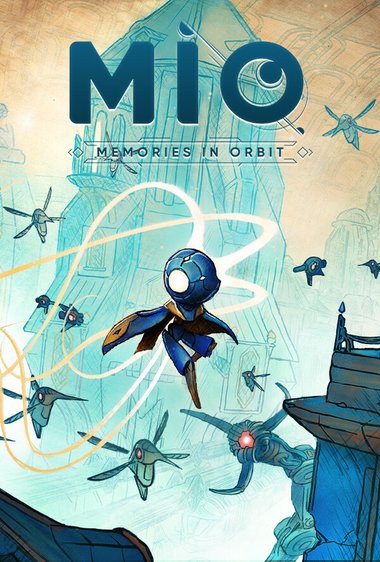
I did not expect that, barely months after Silksong (2025), a metroidvania would arrive with map design that surpasses it. MIO: Memories in Orbit achieves a whole-map interconnectedness so consistent that in 2026, after years of diminishing returns in the genre, it still manages to surprise. Douze Dixièmes have built something startling: a world where every apparent dead-end is a future shortcut, where the relationship between areas carries narrative information, each connection reinforcing the game’s fragmented storytelling in ways that feel inevitable in retrospect. The control over that narrative is unusually good; MIO surpasses most of its genre peers in every dimension except sheer breadth.
The environmental storytelling is dense enough to reward obsessive exploration, and the quantity of hidden routes borders on the absurd: passageways tucked behind false walls, behind foreground art, behind mechanical puzzles that only reveal themselves after new movement abilities unlock. The music is the first since Ori and the Will of the Wisps (2020) to absorb me, carrying the same quality of melancholic wonder that Moon Studios achieved at their peak. But the platforming design turns MIO from excellent to necessary. The protagonist’s movement options are extensive, and the precision with which movement resources are gated transforms every platforming challenge into something puzzle-like: a question of which tools to deploy, in what order, at what moment. Among recent metroidvanias, this combination of mechanical depth and spatial intelligence is rare. One of the finest games in any genre.
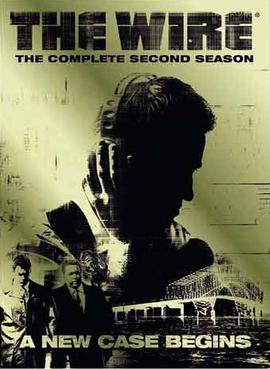
The Wire Season 2 plays out on the miniature stage of Baltimore’s docks, a compressed image of the global proletarian condition: all that furious effort, and the situation at the end is worse than at the start. David Simon called the season ‘the death of work and the destruction of the American working class in the postindustrial era’, and that is right, but it is also about something harder to name, the way that structural abandonment forces moral compromise not from greed but from desperation, the way the institutions that were supposed to protect working people have become instruments of their liquidation. Frank Sobotka (Chris Bauer) is not a villain; he is a man whose love for his people leads him into an impossible position, and Simon offers him no exit.
Even Ziggy (James Ransone), perhaps the most infuriating figure in the entire series, a man whose bravado and self-destruction pull his father towards the betrayal that kills him, seems within this miniature almost pitiable. The union is finished, the docks are finished; the small act of resistance, illegal yet righteous, is extinguished in a harbour floating with the uncollected dead. Season 2’s ambition sits in the thing that initially alienated audiences: the same systemic logic that grinds down the corner also grinds down the docks. The white stevedores and the Black corner boys never share a scene, but they share a condition, and the season’s argument is that the condition is the story, not the people it consumes.
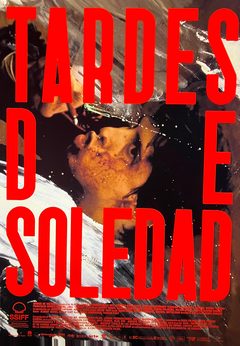
Serra claims he takes no position, and the claim is both true and insufficient. The repetition, the same preparations, the same entry into the ring, the same choreography of suffering and struggle, builds into something so close to the zen of pure duration that one might mistake the film’s neutrality for aestheticism. It is not. The repetition amplifies: cruelty, accumulated across a season, is not diluted by familiarity but intensified, so that the distance between the opening and closing of a bull’s eye and the twitching of its face becomes a space in which moral feeling can no longer be deferred. The blow that nearly kills, when it comes, is the arrival of something the whole season has been promising.
Spanish bullfighting has never had anything to do with fairness or courage, and one cannot speak of ‘verdad’ in the sense Serra reaches for, because the thing in the ring is not truth but spectacle built upon death, performance that requires a corpse to complete itself. And yet, as Serra intuits, the repetition legitimises. ‘Repetition legitimises’ is not an apology for the institution; it is a diagnosis of why the institution persists, why even the viewer who grieves for the dying animal, who wishes the bull could turn the violence back on the matador, is still carried along by centuries of accumulated history. The film does not resolve the contradiction, because the contradiction is the point: one is sucked down into the whirlpool of the absurd, and the film holds one there, and asks what it is like not to be able to look away.
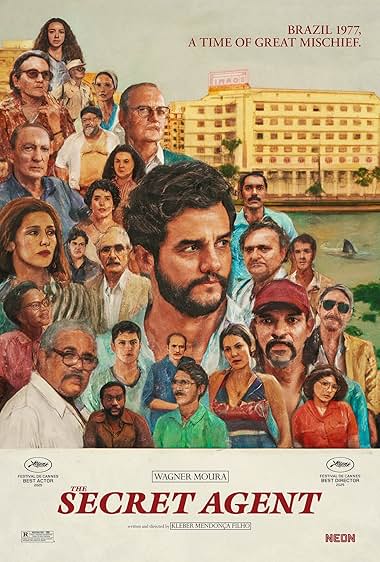
The unfortunate limit here is my own unfamiliarity with Brazilian history, which means I could only proceed as the young woman does in the film’s present-day framing: listening to recordings, piecing together fragments, stepping one piece at a time into the story of Brazil’s north in the years of lead. The arrangement is formally precise, the outsider’s partial knowledge mirrored within the film’s own structure, so that the experience of not-quite-knowing, of reconstructing an atrocity from its residues, becomes the film’s epistemological argument instead of a deficiency to be overcome. Mendonça Filho has always been a director of place, Recife as a living entity with its own memory and its own grievances, and here the city’s past is almost geological, layered beneath the present, accessible only through the kind of patient archaeology that the film itself enacts. Even with incomplete historical coordinates, the images still moved me: this is what it looks like when a society tries to forget what its own institutions did to its own people, and what it costs to remember.
Ben Hania builds the entire film inside a single room: the Palestine Red Crescent call centre in Ramallah, where dispatchers spend three and a half hours trying to coordinate safe passage for an ambulance to reach a child trapped in a car with the bodies of her family. Hind Rajab does not appear on screen. She is present only as a voice, her own recorded voice, and the film places that voice at its centre with a restraint that makes the surrounding silence unbearable. The dispatchers negotiate, plead, follow procedure; the procedure fails; the ambulance is dispatched after claimed approval; contact is lost. Twelve days later the car is found with 335 bullet holes. Everyone is dead: Hind, her six family members, both paramedics.
The formal decision to keep all violence off-screen is not squeamishness; it is an argument about where the obscenity actually resides. What one watches is not killing but bureaucracy: the calls, the waiting, the careful language of coordination that masks the fact that no coordination is possible when one party has decided that a child’s life is expendable. The contemporary critical habit of separating aesthetic evaluation from moral weight is exactly what this film exposes as obscene. Some critics, confronted with this material, reached for formal reservations about the ethics of embedding a real child’s voice in a dramatic reconstruction. The only available response is that the child is dead, that the recording exists, and that the refusal to hear it is itself a political act. Ben Hania has been characteristically direct: ‘When you amplify the voice of Palestinians, you are accused of being exploitative.’ She called that accusation another way of silencing the film.
The structural parallel does not need to be argued because the evidence argues it: the same bureaucratic dehumanisation, the same rhetorical apparatus deployed to make the killing of children administratively legible, the same international architecture of looking away. I sat in the dark for a long time afterwards. The film does not argue this; it shows it. That is what witness means.
The iPhone 15 Pro Max cinematography is the film’s most discussed feature and its most revealing decision. Anthony Dod Mantle, who shot the original 28 Days Later on Canon XL1 MiniDV cameras, here returns to a small consumer device, and the lo-fi texture, hallucinatory and raw, suits the material far better than conventional horror grammar would. 28 Years Later is set on a fortified island commune off the Northumberland coast, a self-sustaining enclave where survivors have lived in carefully maintained safety for nearly three decades. The metaphor is legible immediately: a walled society that has preserved itself by excluding everything beyond its borders, a literalisation of fortress Britain that Boyle and Alex Garland, reunited after their reported falling-out, deploy with more political intent than the marketing suggests.
When the journey to the mainland begins, the film finds its footing. The Rage Virus has evolved; the Infected have changed over twenty-eight years in ways the film wisely declines to fully explain, and the mainland itself, overgrown and feral, becomes a character in the manner of the depopulated London that made the original so iconic. Aaron Taylor-Johnson’s Jamie carries the main arc with a physicality that reads as exhaustion rather than performed toughness, and Jodie Comer (Isla), in a role that could have been thankless, brings a precision to her scenes that suggests a larger presence in the planned sequels. The political subtext is sharper than one expects from a franchise entry: who gets inside the walls, who is left outside, and what forms of violence the protected class will sanction to maintain the distinction. Boyle’s restless formal gestures remain, the rapid edits and disorienting angles that have followed him since Trainspotting and occasionally lapse into self-parody. But something has shifted. The psychedelia serves the horror rather than competing with it, and there are passages, particularly in the film’s final movement, where the lo-fi texture and the hallucinatory pacing fuse into something unsettling in a way his recent work has not been. The ending is partly setup for The Bone Temple, the Nia DaCosta-directed sequel, which robs it of the self-contained force the original achieved. More interesting than anything Boyle has made in years; the old energy is intermittently present, and this time, it amounts to a return.
Ethan Hawke has once again delivered a career-highlight performance for Linklater, and if last year’s finest actress was beyond doubt Rose Byrne in If I Had Legs I’d Kick You (2025), then last year’s finest actor is equally beyond doubt Hawke. The performance captures the ‘pathetic’ quality, in the original sense, the quality of pathos as structure rather than as sentiment: a man living inside an unrealistic fantasy of love, helplessly self-deluding, and doing so with total conviction. Hart’s sexuality, the loneliness that could not be safely spoken in 1943 and perhaps barely in any decade since, is everywhere present, the engine behind the drinking, behind the infatuated longing, behind the lyricist who thinks highly of himself yet has long since burned through his best years and consoles himself with excuses as younger talent makes what he once made look effortless.
Linklater shoots the film in a single night at Sardi’s, which is exactly the right formal choice: this is a man at the end of a long performance, the curtain about to come down, and the evening’s duration gives Hawke the space to let the performance breathe, to let the self-deception falter and reform. The film understands that Rodgers (Andrew Scott) and Hart’s dissolution was professional and also a kind of abandonment, and that Hart’s final months were spent in the psychic posture of someone who knows they have been left but cannot entirely believe it. It has been nearly half a month since I watched it, yet Hart’s expressions refuse to leave: the moment he crouches to pick up playing cards from the floor, the look of infatuated longing he turns on the woman he cannot have. Some performances settle into memory not as scenes but as gestures, a few square inches of screen that contain an entire life. This is one of those.
The City & the City is often called new weird, but it is neither new nor weird. The premise, two cities occupying the same physical space, is interesting but goes entirely to waste. It did win the Hugo, the Clarke, the World Fantasy, and the Locus, which tells one more about prize committees than about the novel, since Miéville’s world-building is surprisingly poor for someone whose novels are known for their maximalism: the rules of inter-city communication and materialisation are so underspecified that throughout my read, I kept losing suspension of disbelief. For example, what happens to a dog from Besžel that wanders into Ul Qoma? And why would objects from one city not constantly end up in the other, causing confusion? Well, one could argue that most of such questions have been defensively blocked by the concept of ‘unseeing’, but this very concept of unseeing, despite being philosophically rich (a Foucauldian disciplinary mechanism internalised as perception), is never interrogated with the seriousness it deserves. The world of the novel is thus built on shaky foundations, the crumbling of which really shouldn’t be surprising to anyone losing track of the mechanism in the second half of the book.
The ending only adds to this disappointment. The final thirty pages collapse a potentially myth-laden story into something half corporate thriller, half political farce. Breach, which should function as the novel’s sublime unknowable, gets explained into banality. In retrospect, I should have tried harder to manage my expectations when I first felt Miéville’s ‘brushing-off’ of the ‘unseeing’ concept. There is a version of this book that makes the seeing and unseeing feel as strange and inevitable as the Hiss in Remedy’s Control. This is not that version.
Eternity asks what a woman would do with infinite time, and answers: choose between two men. Larry (Miles Teller) dies first, choking on a pretzel at a gender-reveal party; Joan (Elizabeth Olsen), terminal with cancer, follows. In the afterlife she discovers that Luke (Callum Turner), her first husband, killed in the Korean War, has been waiting sixty-seven years at the Junction. Joan is granted a rare exemption: she may sample two themed eternities before choosing. She chooses Luke first, a mountain idyll, and grows dissatisfied; she returns to Larry, who has been tending bar at the Junction rather than enter eternity without her. The resolution privileges the domestic: the small moments of a long marriage outweigh the unfinished romance. A film that builds an entire metaphysical architecture only to arrive at the conclusion that a woman’s highest aspiration, in life and in death, is to select which man deserves her. The conspicuously progressive surface, the pointed glance at the Korean War, the afterlife’s diverse transit hub, cannot camouflage the conservatism underneath. Luke’s sixty-seven-year vigil is framed as devotion; structurally, it makes a claim, a dead soldier’s sacrifice converted into romantic credit that Joan must honour or reject. Larry’s refusal to enter eternity without Joan is presented as the ultimate proof of love; structurally, it is the same claim in a different key. The film never considers the possibility that Joan might want neither; that eternity, unburdened by mortality, could be the first context in which a woman’s desires are not triangulated through men. No amount of conceptual scaffolding rescues a director’s unreconstructed gaze from itself.
Lurker opens on a calculated miracle. Matthew (Théodore Pellerin), working the floor of a minimalist LA clothing boutique, puts ‘My Love Song for You’ on the store speakers the moment Oliver (Archie Madekwe), a rising British pop star, walks through the door; he has trawled Oliver’s socials and knows the song is a favourite. He feigns ignorance, and the con works: Oliver invites him backstage. Russell refuses the term that genre convention would supply. Matthew is not a fan; the word implies a stable subject adoring a stable object, and neither description fits. Pellerin inhabits the role with a restraint so total that one never catches the performance signalling where one should be afraid; the attention that Matthew pays to Oliver has already crossed into something closer to predation, and the distinction dissolved long before the film began.
He positions himself as Oliver’s documentarian, quits the boutique, begins contributing visual work to the album cycle. When Jamie (Sunny Suljic), a former colleague, joins the entourage as a stylist and fits in with the effortless warmth that Matthew can only simulate, the response is immediate: Matthew sabotages him, is shunned, and acquires leverage so ugly that the film’s restraint in depicting it makes one flinch harder than any explicit scene could. The escalation follows the exact same logic as the opening gesture in the boutique, merely raised to a pitch that the social contract can no longer absorb. Russell films the entire arc on 16mm, a counter-intuitive choice for a subject steeped in digital celebrity; the grain makes the world feel bodily, continuous with an older tradition of obsession that predates the algorithm.
Russell is mapping a topology of desire in which the craving for recognition and the aura of proximity to fame fuse into something that no longer resembles either. The relationship proves mutually parasitic: Oliver feeds on Matthew’s fixation as surely as Matthew feeds on Oliver’s luminance. Concert sequences filmed at real parties, with Madekwe performing live to real crowds, collapse the boundary between the film’s gaze and Matthew’s own; one watches Matthew watching Oliver and recognises the structure of one’s own spectatorship.
The ending arrives with a time jump that resets everything and solves nothing. Matthew’s documentary premieres at a festival; Oliver attends, stripped of his pop-star artifice. A young photographer approaches Matthew, says he admires him, and asks: ‘What do I have to do?’ The film cuts before Matthew can answer. Obsession of this kind reproduces itself; it requires no particular host, only the structure of longing that the host once activated. I keep returning, afterwards, to ‘My Love Song for You’ playing in the boutique at the very beginning. It’s a Nile Rodgers track from 1983, Adventures in the Land of the Good Groove, and choosing it might be one of the best decisions Russell made. The song is unhurriedly, uncomplicatedly sincere; Rodgers wrote it as nothing more or less than a love song, Bernard Edwards’s bass line ambling alongside like it’s simply glad to be present. That sincerity makes Matthew’s deployment of it devastating: he weaponises genuine tenderness as a lure, and the song never stops being beautiful even after one understands what it has been conscripted to do. It sits there at the opening like a small, clear bell, and the rest of the film is the echo.
The moment that will not leave: Sheva says his wife told him on the phone to come home, to get home by any means possible. Sheva says, ‘You know I can’t come.’ His wife replies, ‘I know, but you know I have to ask you.’ In four lines, an entire grammar of love under the pressure of war: the impossible request, the refusal that is also a confession, and the acknowledgement that the asking itself was necessary, even knowing the answer. Chernov, following the Oscar-winning 20 Days in Mariupol with a film of equal moral ferocity, understands that documentary at the limit does not explain or contextualise; it bears witness to what language still manages to do.
Fedya, who never saw himself as a soldier and never wanted to be one, offers a counterpoint that the film holds in careful, unresolved tension against Sheva’s stoic determination. And then there is the Russian soldier they capture at Andriivka, who when asked ‘Why did you come here?’ answers: ‘I don’t know why we came here.’ Three men on opposite sides of the same failure of political imagination, each one conscripted by forces that bear no relation to anything one would call a choice. Chernov frames this without editorialising, which is the only honest thing to do.
The particular cruelty Chernov keeps returning to is spatial and epistemological at once: in modern industrial warfare, one can never see the enemy, never identify the direction from which the shells are falling. The front is a horizon that retreats as one approaches it. The village of Andriivka, two thousand metres away, might as well be on another planet. Chernov documents the phenomenology of fighting for something one cannot see, cannot reach, and cannot quite believe in, while the phone keeps ringing and someone on the other end says, just come home.
An extraterrestrial radio signal is decoded, synthesised into a virus, and within weeks almost all of humanity joins a global hive mind. The transformed are cheerful, incapable of violence, and spend their days tending the planet. Carol Sturka (Rhea Seehorn), one of roughly thirteen immune individuals, refuses to join. Her resistance is anchored in grief: her partner Helen (Miriam Shor) died in the mass event, and Carol’s mourning is the thread that keeps her tethered to selfhood when the alternative is painless collective bliss. Seehorn plays this with a stubborn, clear-eyed warmth that Gilligan’s previous protagonists were constitutionally incapable of; she is his first hero, and the performance carries the full philosophical weight of what Pluribus is asking. The hive mind’s courtship of Carol is the show’s richest thread: the Others cannot lie, but they can distort through omission, and their promise that ‘no stem cells will be harvested from your body’ turns out to conceal the fact that they have located her frozen embryos and can engineer assimilation without touching her at all. The erosion of consent through technicality is handled with a care that makes the horror feel procedural rather than spectacular; this is not invasion but paperwork, the fine print that eats the contract.
The frustration is that the season’s philosophical richness is not yet matched by its narrative substance. Gilligan’s compositional intelligence is operating at a level that makes almost everything else on streaming look provisional: the Ektachrome-inflected colour palette, the wide shots held long enough that one begins to read the frame as architecture, the patient refusal to cut when a lesser show would scramble for close-ups. But a clean, declarative sci-fi premise of this kind makes an implicit contract with the audience: it promises that the world will eventually cohere into an argument, a feeling, a reckoning with whatever the hive mind means. After nine episodes, Gilligan has not honoured that contract. The emotional threads remain barely unspooled; each episode returns to the same question in slightly different configurations; the pacing, which defenders read as accumulating stillness, can also be read as a show that has not yet decided what it wants to say. Zosia’s (Karolina Wydra) finale revelation and the nuclear weapon on Carol’s driveway suggest that Season 2 will have sharper edges. For now, Pluribus is a show with more craft than argument, and craft alone, however formidable, is not sufficient.
What a cluster of irrational, morally bankrupt, cavalier and indifferent gods! Þórr casually kicks the dwarf Litr to death at Baldr’s funeral, Óðinn steals Suttungr’s mead with the self-righteousness of a conqueror, and Loki’s actual punishment arrives only after he has caused untold damage. Norse mythology as Snorri Sturluson renders it, rooted in thirteenth-century Christian Iceland and filtered through a euhemeristic framing device (in the Prologue, the Æsir are reframed as Trojan refugees who passed themselves off as gods among the Northern peoples, through the rationalisation offered in the etymology of ‘Asia-Æsir’), is looser and darker than its Greek or Hindu counterparts. Snorri mythologises everything, the wind, the war, the clouds, whilst keeping his gods virtually indistinguishable from mortals. However much his systematising impulse reshaped oral traditions originally fragmentary, what comes through is an undeniable record of divine dysfunction.
Now, the obvious implication of this mythological/theological dysfunction is that Norse gods are not a better version of humanity; they are simply a more weather-controlling, gold-engendering, shape-shifting species of us. The giants often match, if not surpass, them: Útgarða-Loki tricks Þórr into wrestling Old Age, drinking from the ocean, and lifting the Midgard Serpent disguised as a cat (all in a single visit, all without Þórr realising); Vafþrúðnir trades cosmic knowledge with Óðinn as an equal; and the gods generally win their contests through cunning and violence, not intellectual superiority. The pantheon’s singularity among the world’s major religious narratives is that Snorri does not idealise it: he denies his gods both virtue and final victory, and Ragnarök, often cited as one of the most powerful eschatological visions in world literature, reads more like a settling of accounts, not unlike what Judgement Day is (or should I say ‘will be’?) for Christian humans.
Inherent Vice is the second of the ‘Pynchon-lites’ that I’ve read. It flows far more smoothly than Shadow Ticket (2025), and its jokes and puns suit my taste better, but there is a faint nagging feeling that Pynchon is not great at high-density dialogue. The Paul Thomas Anderson almost verbatim adaptation exposes this clearly: on one hand, Pynchon’s prose is conversational, with subjects and implied words often dropped entirely like in real life, but when dialogue gets dense, the overlaying of such conversational sentences can feel, quite counterintuitively, theatrical on the page, and PTA’s adaptation, lifting lines straight from the text, carries that same stagey quality when actors deliver them aloud.
Still, I love Pynchon’s detective stories, and love how he reveals the mystery and then refuses to resolve it. Doc Sportello is a stoned noir detective wandering the circuit-board (ref. The Crying of Lot 49) streets of late-sixties Southern California, and similar to in his other works, Pynchon again pins epistemological uncertainty (which engenders paranoia and all the other wonderful themes in his novels) as his genre principle. And we can see this even in the book’s title itself: ‘inherent vice’ is a maritime insurance term for a commodity’s tendency to deteriorate from within, irrespective of external damage (butter spoiling, iron rusting, wine fermenting, all independent of the carrier’s negligence), and Pynchon attaches it here to the counterculture at the turn of the seventies, the moment between the Summer of Love and the Manson murders when the dream curdled. Doc’s California is already in the deterioration phase referred to by the insurance metaphor: the movement’s spoiling, stalling, fading away, with no one external to blame. Things will fall apart. Same as Shadow Ticket (2025), despite the ‘lite’-ness, it was tremendous fun reading Inherent Vice.
Grace Lindsay’s central claim in Models of the Mind is straightforward, (mostly) uncontroversial, but still often unrecognised in the field of neuroscience: the brain, often described as the most complex object in the known universe, simply cannot be understood without mathematics. Out of a palpable desire to convince the remaining non-believers, Lindsay then walks through twelve chapters of how the field has done that, from spherical-cow-style simplifications of single neurones (Hodgkin-Huxley axon dynamics, integrate-and-fire models) through learning rules (Hebb, the Perceptron, backpropagation), memory (Hopfield networks, attractor dynamics), dimensionality reduction (low-dimensional motor control), Bayesian decision-making, and so on, finally landing on the grand unified theories (ironically in the plural): Friston’s free energy, Hawkins’ thousand brains, Tononi’s integrated information. The book is quite short for this ambitious scope, with the obvious goal to not overwhelm the casual reader; the mathematics is, however, merely hidden away in the appendix, allowing any curious soul to wander in for a deeper adventure.
Now, this is really not a typical popular-science book. Lindsay actively avoids flattening the models into metaphor. The Perceptron is the Perceptron; Hodgkin-Huxley is a system of differential equations and is named as such; predictive coding is shown to be a specific computational claim, not vibes about expectation. Each chapter pairs the model with its history (e.g. McCulloch and Pitts in 1943, Hodgkin and Huxley at Plymouth before the war), which is inevitably entangled with mathematics, physics, philosophy, computer science, dialogues between fields with birthdates centuries apart: mathematics in the field of neuroscience was never an imposition from outside biology, but a series of moves biologists themselves made when verbal description ran out (one is reminded of how postwar British biophysics actually came into being: John Randall, the Birmingham physicist who co-invented the cavity magnetron that won the radar war, took the Wheatstone Chair of Physics at King’s in 1946 and founded the MRC Biophysics Research Unit that would, within a few years, house Rosalind Franklin and produce Photograph 51). By the final chapter, Lindsay has spent eleven chapters showing what a working model of the brain looks like, so when she then dismisses the grand unified theories as a category, one trusts that she knows what she is dismissing.
I am grateful that my first literary contact with Lovecraft was compiled by S. T. Joshi, who wrote the two-volume Lovecraft biography I Am Providence (2010) and spent decades restoring Lovecraft’s texts to the forms he actually wrote, after years of textual mishandling by August Derleth (who, beyond standard editorial alterations, marketed sixteen of his own stories as posthumous collaborations with Lovecraft, mostly built from ‘one or more ideas’ from Lovecraft’s Commonplace Book). Joshi orders the volume chronologically, starting with Dagon (1917) and early stories less embedded in the Lovecraft mythos, building gradually and organically to The Call of Cthulhu (1928) and The Shadow Over Innsmouth (1936).
There is, of course, much discussion to be had on Lovecraft as a human being: Penguin has decided to include compilations of his works in collections that decide ‘what counts as great American literature’. Whether one accepts such a decision depends on how much one can stomach the racism and xenophobia that sit not at the margins of Lovecraft’s fiction but at its centre. We see that what horrifies Lovecraft most reliably is a Black character, a foreign cult, a Polish-Jewish landlord, the half-human inhabitants of Innsmouth. It’s hard to imagine that Joshi would be unaware of such propensities of Lovecraft, but one thing about compilations is that they create a layered dissociation between texts and their authors: in this case that is a good thing, since the Lovecraftian stories are more easily enjoyed as standalone pieces embedded in an almost preconceived world, with Lovecraft’s bigotry as a backdrop that lingers without permeating through the reading experience.
Surprisingly (at least to me), the shorter stories are much more bone-chilling and palatable. My favourite passages and scenes are mostly in the shorts: the bleeding roof in The Picture in the House (1920), the narrator’s despair in The Outsider (1926) looking into the mirror, the slow chromatic contamination in The Colour Out of Space (1927). Lovecraft’s prose is famously purple and his characters flat, but the compression of the short story format keeps both problems below the threshold where they would damage the atmosphere; in the longer novellas (At the Mountains of Madness (1936) being the obvious example), the purple prose has more square footage to occupy, and the flatness of the narrator becomes harder to ignore. However, seeing the successes of David Lynch, Remedy Entertainment, Mark Danielewski makes me believe that one thing is for sure: people return to Lovecraft, even past the prose and the politics, for the specific cold feeling of human scale dissolving against something vast, indifferent, and very, very old.
Robinson and Kanin built their reputation on I Think You Should Leave (2019)’s anarchic precision: sketches that detonated social discomfort in under ninety seconds. The Chair Company inherits the conspiratorial instincts but none of the comic discipline. The premise, a man’s office chair collapses and he spirals into a corporate conspiracy, promises Pynchonesque paranoia; what arrives is a detective procedural dressed in conspiracy-thriller aesthetics that it has not earned, each plot thread laboriously assembled and then resolved through reveals that feel neither foreshadowed nor surprising. The mystery never generates genuine mystery; the audience is asked to care about connections that the show itself treats as interchangeable. Eight episodes and thirty minutes each is enough rope for Robinson to hang the format with, and he does.
A couple of years ago, AdHoc Studio walked away from The Wolf Among Us 2, citing creative differences with the reconstituted Telltale team. In Dispatch, the shape of that disagreement becomes visible. Where The Wolf (2013) excelled at societal scope, at weaving class, corruption, and systemic injustice into a detective narrative, AdHoc’s strengths lie in a different territory entirely: the intimate, the individual, the felt. Dispatch goes all-in on character. Robert Robertson, a retired superhero voiced by Aaron Paul with precisely the right mixture of weariness and stubborn warmth, joins a Superhero Dispatch Network to manage former supervillains, and the interactive-fiction format, with its carefully weighted choices and branching dialogue, makes it effortless to inhabit him. Guilt, regret, relief, satisfaction: each emotional beat reads as one’s own, not the protagonist’s, because the choice design never signals the ‘right’ answer.
Dispatch differs from The Wolf (2013), and from most narrative games of its generation, in the depth of its secondary cast. Every character is knowable: not reduced to a type or a function, but given enough texture that one’s attachment accrues naturally across eight episodes. The emotion that surfaces is felt, not externally imposed by orchestral swells or slow-motion close-ups. By chapter seven, I was crying in a way I had not cried at a game since Life Is Strange (2015): not from sadness alone, but from the accumulated weight of having known these people and made decisions on their behalf. The production quality is superb. I am deeply curious about what AdHoc does next. Whatever their disagreement with Telltale was, the evidence suggests they were right.
Higher expectations, harder the fall. A paintbrush as weapon promises untapped mechanical potential: none of it is realised here. The skill set lifts almost wholesale from the standout metroidvanias of the past decade, the wall-dash being the sole exception; on boss design, every encounter follows the same numbing loop of death, memorisation, and repetition, with no interactive wrinkle to distinguish one from another. In a year when metroidvania boss design is getting good, Constance is a reminder that studios with no instinct for encounter design still exist.
The map is useless in the manner of Hyper Light Drifter (2016)’s, forcing the player to build their own mental model of the environment rather than following a prescribed path, except that here the obscurity reads as oversight rather than intention. Exploration rewards are negligible; there is no equivalent of the hidden currencies or lore discoveries that make backtracking worthwhile in the genre’s better entries. Fluid animations remain, in search of a game that deserves them.
This is Lanthimos’s cleanest, most coherently told film, and sufficient proof, unlike Poor Things (2023), that he is capable of sustaining his own style while working across a broad, straightforwardly presented canvas. The remake’s bones come from Jang Joon-hwan’s Save the Green Planet! (2003), that cult monument to Korean absurdism, and Lanthimos has the good sense not to smother the source: the captor-captive dynamic, class hierarchy, and conspiracy-as-theology all survive the transplant intact. Jesse Plemons and Aidan Delbis make for a wonderfully mismatched pair of true believers, and Emma Stone’s CEO, deadpan and impenetrable, is the film’s still centre around which all the delusion orbits.
The critique of capital is muted, present more as atmosphere than argument, but that restraint is itself a formal choice: the film leaves the System unexplained and renders, viscerally, how the System produces the men inside it. The title’s entomological mythology, bugonia, the ancient fantasy of bees spontaneously generated from a bovine carcass, sits perfectly over the film’s horror: that conspiracy thinking is not an aberration but a metabolic process, the mind’s attempt to generate meaning from the rotting body of late capitalism. Anyone might end up as a human specimen in Teddy’s laboratory; in 2025, that feels like plain description.

It is hard to imagine that this was made by a director willing to endure imprisonment for his political convictions. The setup is promising: Vahid (Vahid Mobasseri), a mechanic, believes he has recognised, from a prosthetic-leg sound and a garage encounter, his secret-police torturer Eghbal (Ebrahim Azizi), and the film should radiate with the voltage of that uncertainty. Instead, every character is a cardboard ideological stereotype; the proclamations are tired and unoriginal; and the film drifts towards an absolution-shaped ambiguity, as though the foot soldiers of the state apparatus were merely following orders and are therefore innocent, free to kill with impunity and deserving of release when all is said and done. We have not heard quite enough of that argument since the Nuremberg trials? Iranian cinema needs new blood; there is no longer any reason to wait for Panahi.
After the triumph of Tetris Effect (2018), it seemed implausible that Mizuguchi Tetsuya could push the concept further. What remained to be done? The answer, in Lumines Arise, turns out to be texture. Each block type carries a distinct tactile quality, a haptic signature that gives every stage its own feel under the fingers; combined with the visual macro-scale, where the optical flow alone merits study by every rhythm-game developer working today, and the tight audio synchronisation that has been the series’ signature since the original Lumines (2004), the whole thing finally earns the word ‘synesthetic’. A simple falling-block game becomes a full sensory event: not a game with music, but a game that is music.
In interviews, Ishihara has described his ambition as 感動 (kando): to move emotionally. A modest word for an immodest goal, and Lumines Arise exceeds even that framing. The thirty-odd stages of Journey Mode build a cumulative intensity that dissolves time: one enters a flow-state in which the distinction between seeing and hearing softens until one is uncertain which sense is doing the work. The faint repetitiveness in the back half of the Journey and the occasional readability issues amid heavier visual effects are minor friction in a game that achieves what the Lumines series has always reached towards. We are, at last, hearing colours and seeing sounds. Mizuguchi and Ishihara can rest.
The title is spoken first by the American executives who fire Yoo Man-su: the market leaves them no other choice. It recurs as Man-su himself adopts it, a phrase that migrates from the language of capital to the language of murder without changing its grammar. Park Chan-wook spent twenty years developing this adaptation of Donald Westlake’s The Ax, and one senses the patience in every frame: the tonal architecture, shifting from slapstick to horror to something closer to economic theology, is controlled with a precision that makes Parasite (2019) look comparatively blunt in its class mechanics. Park understands what Bong’s film only gestured towards: late capitalism creates competitors before it creates monsters. Man-su does not target the executives who destroyed his livelihood; he targets his fellow laid-off workers, the people who should be his comrades, because the System has made solidarity unthinkable and competition the only available grammar of survival. I recognised something in Man-su that I did not want to recognise. Lee Byung-hun, opposite Son Ye-jin as his wife Mi-ri, builds the performance around a specific contradiction: a craftsman who loves papermaking, who valued his twenty-five years of labour, and who is blindsided by the discovery that capital does not care what one produces or who produces it. The worsening toothache is a precise metaphor, moral decay made somatic, and Park lets it do its work without commentary. The Žižekian disavowal is everywhere: ‘I know this is wrong, but I have no other choice’ is the formula that enables every killing, every lie, every domestic betrayal. And the ending is the bleakest joke of all: Man-su gets the job, walks into a paper mill run entirely by machines, and stands alone in a mausoleum of automation. The competition is over. The competitors are dead. The job no longer requires a human being. I left the cinema thinking about every application I have ever sent into a market that was not designed to answer. Park has said it is hard to be optimistic, and the film honours that difficulty without flinching.
Several times nearly unable to breathe: hard to believe this runs under two hours. Mary Bronstein’s debut takes the figure of the hole as its organising principle and means it literally twice over. Linda (Rose Byrne, in a performance of terrifying physical commitment) is a psychotherapist whose daughter depends on a gastric feeding tube; a hole in the bedroom ceiling opens one night and will not close. The two apertures rhyme, and Linda’s magical thinking binds them: she cannot separate the wound in her child’s body from the wound in the architecture, and the film’s claustrophobic grammar refuses to separate them either. Her husband Charles (Christian Slater) is at sea, unreachable; her own therapist (Conan O’Brien, in a turn of unnerving flatness) offers nothing she can use. Byrne plays Linda as unstoppable kinetic energy hurling itself against real and invented enemies alike, which makes the moments when she stops, drinks, and goes helpless all the more frightening, as though no force, however fierce, can survive the weight of anxiety and parenthood combined.
Maternal overwhelm is not sentiment but phenomenology: a texture of experience that most cinema gestures towards and then domesticates into something manageable. Bronstein refuses management. A$AP Rocky’s James, the motel superintendent, radiates a warmth that Linda cannot absorb; the supporting cast compound what she already carries, each presence another demand on a body that has nothing left to give. She removes the feeding tube herself in a sequence that feels simultaneously like liberation and catastrophe; the two holes in the film collapse into one. The distance between what a parent needs and what a parent can bear is the weather the film inhabits, and weather does not resolve. I sat afterwards in something that resembles the silence after a ceiling has given way.
I cannot think of a show before The Wire that asked its audience to hold this much in suspension. Thirteen hours of accumulated detail, none of it flagged as important, none of it ranked by a score or a dramatic zoom: clone pagers, Barksdale codes, the mechanics of a wiretap affidavit, the difference between a buy-bust and a real case, the layout of the Pit, the chain of command in both the police department and the drug organisation. Simon and Ed Burns built a sociological system and then trusted the viewer to carry it unresolved for ten episodes before the callbacks begin, and the callbacks, when they arrive, carry the force of inevitability rather than surprise. This is the show’s formal innovation, and it is also its thesis: the System is too large, too patient, and too structurally entrenched for any individual to see whole, and the only way to make that legible is to demand that the audience experience the same condition.
The mirroring between the police bureaucracy and the Barksdale organisation is the architecture that makes this visible. McNulty (Dominic West) goes around the chain of command to force a case into existence and is punished for it; D’Angelo (Lawrence Gilliard Jr.) shows moral intelligence and is squeezed between family loyalty and institutional demand until both destroy him. Lester Freamon (Clarke Peters), dismissed for years as a hump who makes miniature furniture at his desk, turns out to be the detail’s true investigative mind; Stringer Bell (Idris Elba), initially read as Avon’s muscle, turns out to be running the operation along business lines. Both hierarchies juke their stats. Both punish anyone who steps outside the chain of command. The difference is that one side’s enforcement is lethal: Wallace (Michael B. Jordan), sixteen years old, tries to leave the game and is murdered by his friends. Bodie’s hand shakes on the trigger, and it is Poot (Tray Chaney) who finishes the job. The show does not ask one to choose a side. It asks one to notice that choosing is beside the point, because the wire runs through both.
The closing montage seals it. New hoppers replace the ones who were arrested or killed. Omar (Michael K. Williams) sticks up a dealer in the South Bronx: ‘All in the game.’ McNulty, exiled to the marine unit for the sin of good police work, watches the harbour from a boat. The surface reading is that the investigation succeeded; the structural reading is that nothing changed, that the System metabolised thirteen hours of effort and returned to its resting state. Simon described The Wire as a Greek tragedy in which the postmodern institutions are the Olympian forces. Season 1 is where that architecture is first laid down, and the formal patience it demands of the viewer teaches one to see it.
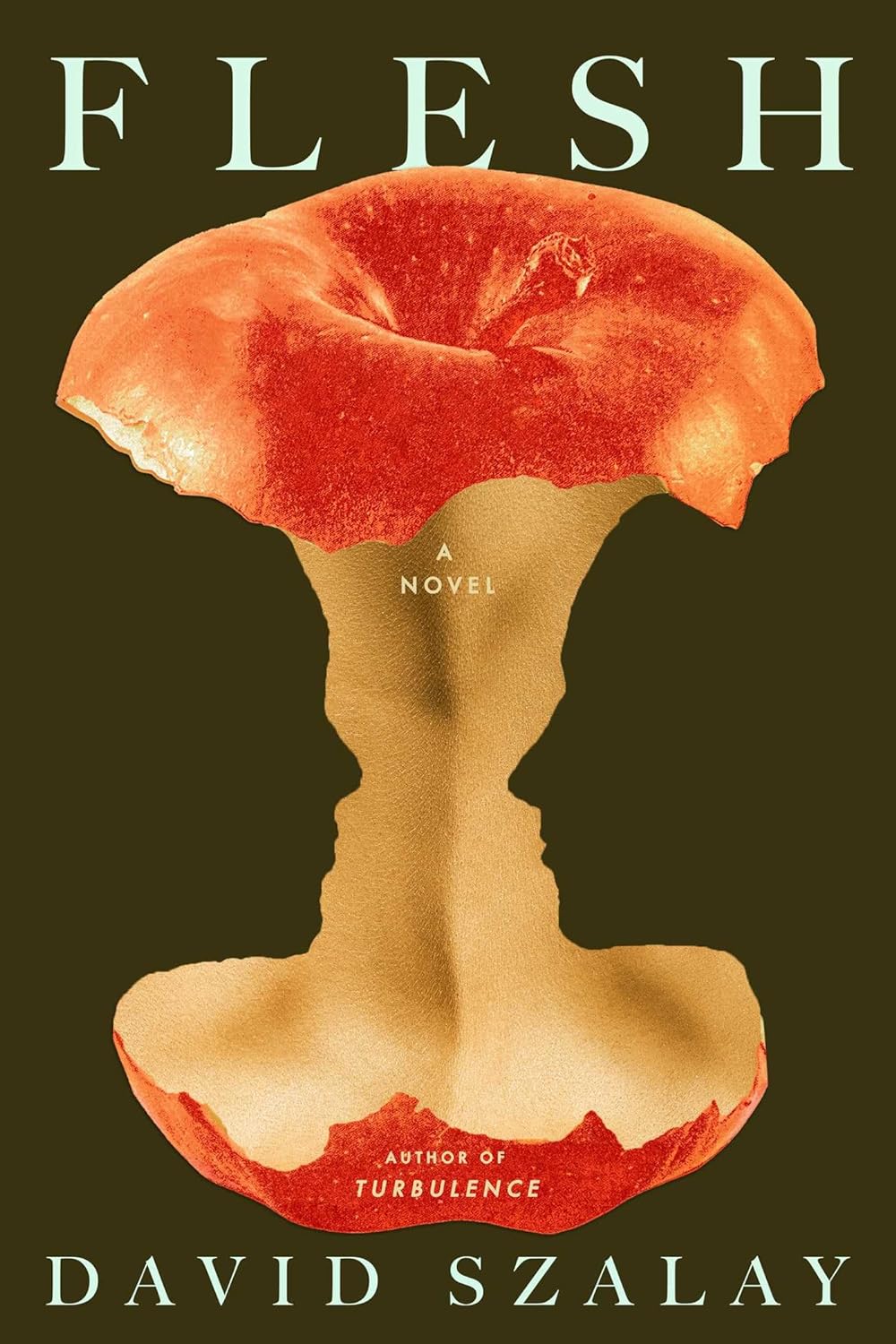
Upfront, I do want to acknowledge that the stripped prose of Flesh seems to be deliberate. Szalay said that he wanted the book to convey that ‘our existence is a physical experience before it is anything else’. Well… István either indeed does not have the words for what happens to him, or Szalay is stubbornly refusing to believe that even someone as reserved and pulled-back as István would reach for the necessary words to contextualise the world around and within him. István says ‘Okay’ hundreds of times across the book, and beyond that his speech is largely limited to ‘Yes’, ‘No’, ‘I don’t know’, ‘Maybe’. Interiority is denied to the reader entirely, and crucially, it is denied without an encouragement for the reader to interrogate or (at the very least) understand István’s feelings. And we have to realise that this denial is,at the end of the day, completely implemented on the indefensible assumption, by Szalay, that István would not be able or care to describe his experiences, even to himself. Szalay is asking that the reader buy this assumption wholesale and not think about it. Ah, but the moment when the reader begins to be suspicious of István’s silence is the moment when the novel collapses.
The core of the issue is that Szalay (similar to many other ‘form-over-substance’ minimalist writers) wants both stripped prose and a tabloid plot: a fifteen-year-old on a Hungarian housing estate sleeping with a married forty-two-year-old, juvenile detention for a killing he did not commit, the Iraq War, private security work in London, a chauffeuring job that ends with him marrying the widow of the London billionaire he was driving. The trouble is that Szalay applies the same withholding to all of it. During the opening seduction, István’s whole interior is ‘he doesn’t feel anything for her’, ‘she’s just this old woman’, ‘it’s like she hardly exists’. When István kills a man, the closest we get to his mind is a single line of police interrogation: ‘You wanted him dead, didn’t you?’. On his return from Iraq we are told ‘normality’ feels ‘like a sort of outrage’. Three hundred plus pages, the repetition-as-technique starts looking like a way of filling pages without having to work out what the events would have meant to the protagonist. So at which point does this cross from ‘minimalism’ to ‘laziness’?
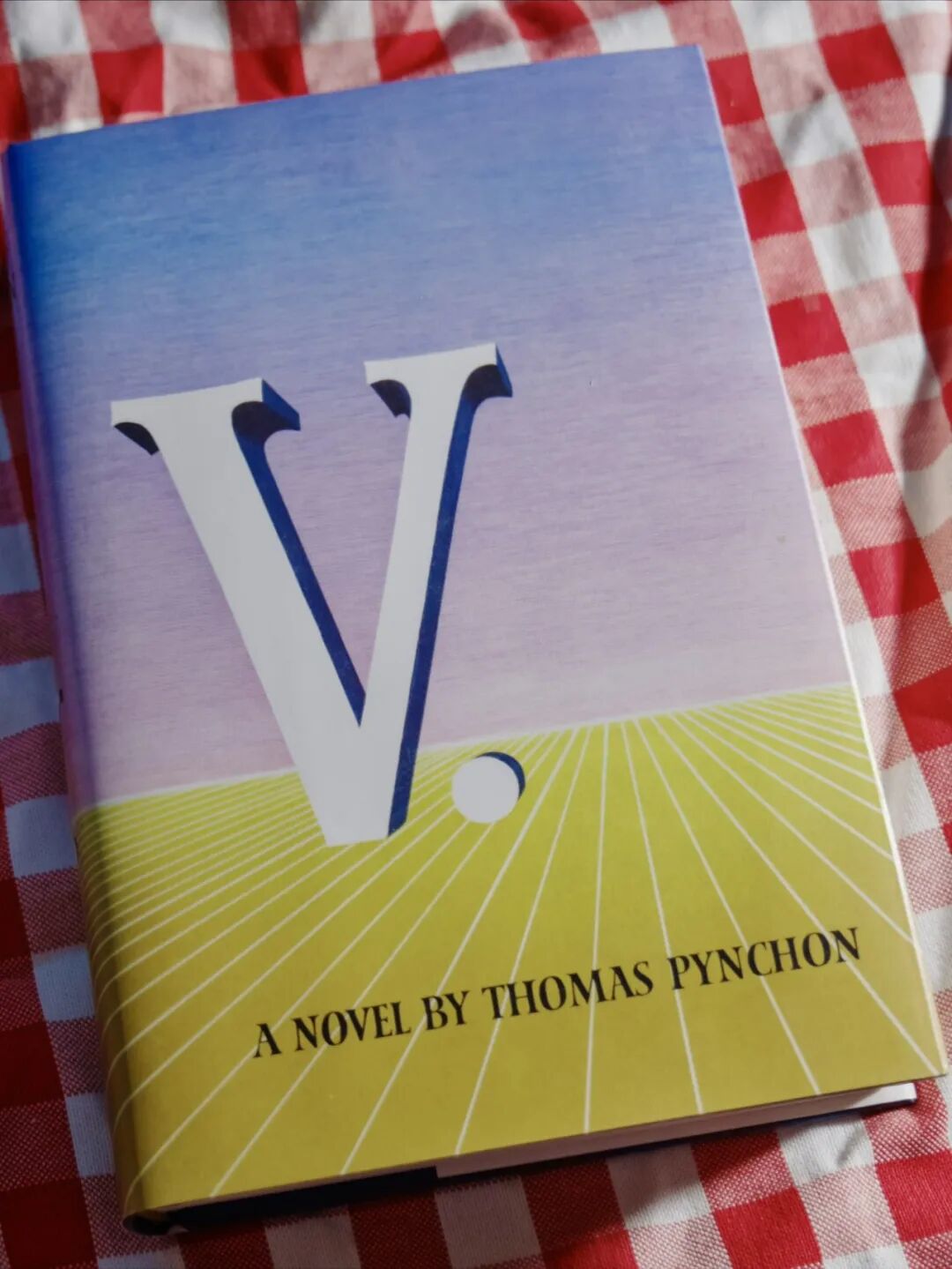
Pynchon buries thousands of themes across Egypt, Virginia, New York, Malta, Paris, and mainland Italy, ranging from modernity’s dismantling of the individual (SHROUD and SHOCK, the ‘Bad Priest’s’ progressive replacement of flesh with prosthesis and fetish), to German colonial violence in South-West Africa (Herero and Bondelswarts bodies pressed together), to the shift from analogue to digital signal (the Kilroy figure scrawled across half a century). The dual structure, Profane’s purposeless drift against Stencil’s paranoid quest, enacts the central tension of postmodern existence: between entropy and the desperate imposition of meaning. Stencil reads V. into everything because he must; Profane reads nothing into anything because he cannot. Between these two failures of interpretation, Pynchon builds an entire world. But among all these themes, my favourite is Pynchon’s yo-yo. Anyone who has ever watched a yo-yo understands Profane drifting aimlessly between first and last stops on the New York subway, understands Maijstral’s repeating history, understands the tree-fruit-bird-shit-tree cycle in Slab’s Cheese Danish No. 35, and can see the dozens of characters looping, crossing, colliding through this novel: dozens of yo-yos, inextricably tangled in eternal motion, their identities losing all meaning. The yo-yo contains everything the novel wants to say about determinism and drift without requiring a single explanatory sentence. What scholars call ‘encyclopaedic narrative’, what the poststructuralists call ontological instability, Pynchon calls a yo-yo.
The Herero genocide chapters remain among the most devastating things Pynchon has written, and he was barely twenty-five when he wrote them. The systematic extermination in German South-West Africa, rendered with clinical precision and moral fury, announces the scope of Pynchon’s moral vision from the very start. V. herself, progressively replacing her body with clockwork and glass until the children of Malta disassemble her on the street, literalises the Enlightenment project as self-destruction, and Pynchon frames it as comedy. V. already feels like Pynchon arriving fully formed, in possession of every tool he would later refine. The yo-yos are still spinning.
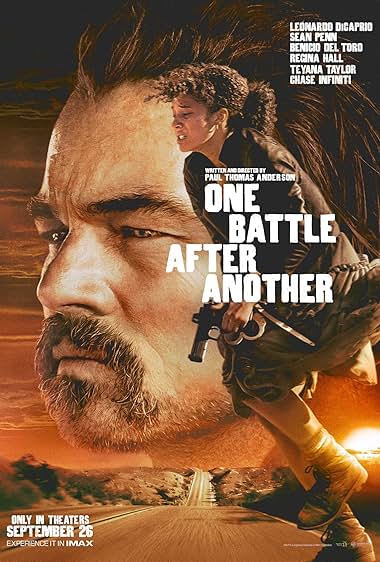
PTA’s loose adaptation of Pynchon’s Vineland (1990) arrives in VistaVision and in a political moment that makes the novel’s paranoid vision of state authoritarianism feel less like satire than like reportage. Leonardo DiCaprio carries Pat Calhoun with the same combination of haplessness and stubborn decency he brought to Once Upon a Time in Hollywood (2019), a man whose survival strategy is gentleness in an environment that punishes it. Sean Penn’s Col. Steven J. Lockjaw, the film’s engine of federal menace, is the performance that anchors the film: Penn plays him with a bureaucratic calm more frightening than any display of force, a functionary who has confused obedience with patriotism so completely that the distinction no longer registers. Teyana Taylor’s Perfidia, from radical to informant to fugitive, is never reduced to a symbol of betrayal; Taylor plays the trajectory as a series of impossible choices, each one closing a door that was already closing.
PTA believes in la revolución. He believes Chase Infiniti’s Willa can escape the grip of Lockjaw, believes that humanism will prevail even when the justice at the end arrives through institutions that are themselves compromised. Pynchon’s California was sown with dread; PTA’s is sown with seeds of hope, and it is precisely this hope, rare and unguarded in American cinema of this scale, that distinguishes the film from its source. There is so much here that moves one to tears, yet PTA adopts a bystander’s tone, recounting the story with an objectivity that renders the rebels unsaintly and Lockjaw no simple fool. That even this humble optimism should feel, by 2025, like too much to dream says everything about the distance between the California Pynchon imagined and the one we inhabit now. The credits roll over a VistaVision landscape that is still, somehow, luminous.
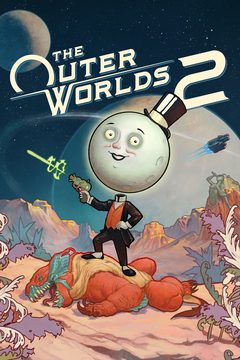
Fallout: New Vegas (2010) came out fifteen years ago and Obsidian is still making the same game. Charitably, one calls this ‘fidelity to vision’. Honestly: it is a refusal to grow. The Outer Worlds 2 is larger than its predecessor, which Microsoft’s marketing apparatus made much of, but larger is not the same as deeper; the main quest is actually more streamlined, the faction system produces no meaningful consequences, and the philosophical texture that gave the first game its occasional sharpness has thinned to the point of disappearance. Each companion and faction reads as a caricature representing an ideology, embarrassingly flat, serving the satire in the way a scarecrow serves agriculture: visible at a distance, useless up close.
The progression breaks before the game ends; hit the level cap with companion arcs still incomplete, and motivation evaporates. Where The Outer Worlds (2019) at least had the courage of its cynicism, delivering a compact satire that knew when to stop, the sequel sprawls without deepening, each new planet adding surface area but no new ideas. Wide as the solar system, shallow as its satire.
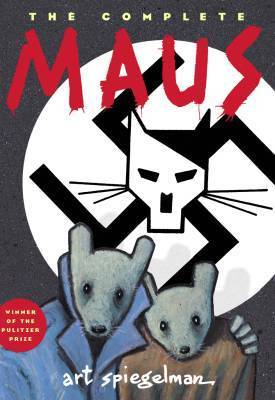
Early in Part II, after Nazi persecution, family collapse, the eldest son dead, his wife a suicide, their parents reduced to smoke from concentration camp furnaces, the father, seeing his son and daughter-in-law give a Black hitchhiker a lift, says: how could you? Art asks: ‘How can you, of all people, be racist!?’ The father says: you don’t understand, we are not like them. Suffering, apparently, is racially stratified too. The scene detonates the entire book, the moment Spiegelman’s metafictional apparatus, his mice and cats and pigs, stops being allegory and becomes accusation. The animal masks slip, and what is underneath is not species but ideology. This brings to mind Germany’s early twentieth-century massacres in southern Africa, the Herero and the Bondelswarts, which Pynchon writes about in V. (1963), and the way imperial violence is so often treated as prehistory until Europe names itself the victim. So: if one does not speak up when others suffer, why should one’s own pain deserve to be seen? Maus asks this question not rhetorically but structurally, through the very form of a comic that refuses the consolations of visual realism. Marianne Hirsch coined the term postmemory partly in response to this book: the inherited trauma of children who did not experience the event but cannot escape its gravity. Spiegelman dramatises this in the fraught, frequently ugly interviews with his father, in his guilt over his mother Anja’s suicide, in the famous scene where he sits at his drawing board surrounded by a pile of corpses wondering whether he has the right to turn suffering into art. No one who has read Maus forgets it. When a Tennessee school board removed it from an eighth-grade curriculum in 2022, the gesture understood the book’s power better than it knew: the book makes complicity visible, and complicity does not enjoy being looked at.
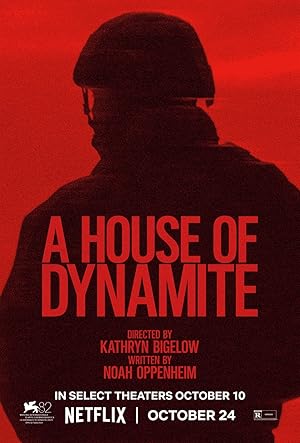
The finest war film of the past five years, and the film that Garland’s Civil War (2024) wanted to be. The distinction is worth insisting upon. Garland’s film was obsessed with the spectacle of collapse: cameras in helmets, bullets in walls, the aestheticised grammar of photojournalism applied to domestic catastrophe. Bigelow’s is the opposite move entirely. There is no real gunfire in A House of Dynamite, no bullets, no explosions; the entire confrontation is conducted in language, in rooms, across conference tables and encrypted terminals. Bigelow replays the same nineteen-minute window three times, each pass ascending the chain of command: first Capt. Olivia Walker (Rebecca Ferguson) at the operations desk, reading the data as it arrives; then SecDef Reid Baker (Jared Harris), receiving Walker’s analysis and deciding what to withhold; then the President (Idris Elba), acting on a version of events that has already been filtered twice. Each repetition reveals how much was lost in translation, how the institutional machinery between signal and decision compresses reality with loss.
The film’s austerity is a refusal to compromise the approach for the market. The nuclear strike is never shown. The film’s final minutes deliver the knowledge that it is already done, that those who caused it have retreated into a shelter, that the destruction of countless lives is occurring off-screen as the credits approach. And yet one’s chest tightens as though the blast were visible. Bigelow understands something that the action cinema she helped define largely forgot: that the body responds to the implication of violence more deeply than to its depiction. The retaliatory strike is primed, the misreading may or may not have been a misreading, and the curtain falls on an information-age war whose most devastating weapon was a memo.
There is a tradition of chamber-drama nuclear films, from Lumet’s Fail Safe (1964) onward, and A House of Dynamite sits squarely in that lineage while feeling wholly contemporary. The characters are recognisable as specific specimens of institutional behaviour: the careerist who cannot admit error, the analyst who knows the truth but lacks the authority to make it matter, the administrator who confuses procedure with wisdom. One recognises them because they are everywhere. Completing the trajectory that began with The Hurt Locker (2008) and Zero Dark Thirty (2012), Bigelow has moved the camera steadily inward, from the body in the blast radius to the mind that authorised it. The architecture of catastrophe was always institutional; this film simply follows the wiring all the way back to the switch.
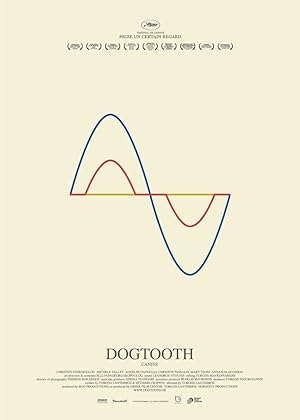
Somewhat rawer than Lanthimos’s later work, and all the more viscerally disturbing for it: the clinical detachment that would become his signature is still slightly porous here, letting more horror leak through than The Lobster (2015) or The Favourite (2018) ever permit. The Father (Christos Stergioglou) and Mother (Michelle Valley) have constructed an airtight reality for their children, a closed system in which the words for things are wrong and the wrongness has become invisible. Žižek would relish the setup: the children’s self-oppression is the object of analysis, the way ideology sustains itself without external enforcement.
Only the Eldest Daughter (Angeliki Papoulia) rebels, and even her rebellion cannot escape the grammar of the system it resists. She bashes out her own dogtooth with a dumbbell, fulfilling the parents’ rule that a child is ready to leave when a canine falls out; she climbs into the boot of a car, accepting their teaching that cars are the only safe passage beyond the fence. The escape enacts the very logic it means to refuse; even the act of leaving follows the parents’ rules, and the film offers no way to tell whether what lies beyond them is liberation or death. The Son and Younger Daughter remain; their compliance requires no visible coercion, which is precisely the point. The parents never had to manufacture consent, because the closed system had already produced it. The father parks at work and walks away. The boot of the car stays shut.
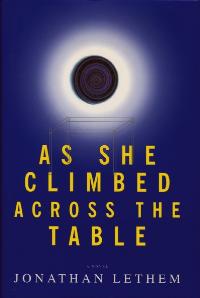
Is As She Climbed Across the Table not one of the most romantic sci-fi novels ever written? Two hundred pages packed with delightful twists: quantum entanglement, the uncertainty principle, and blindsight woven together into a love story about a man losing his girlfriend to a void. Lack, the experimental anomaly that selectively absorbs some objects and rejects others, including the narrator Philip, is the purest metaphor for romantic rejection I have encountered in fiction. One cannot argue with a hole in spacetime. One cannot persuade it to want one back. The Lacanian resonance is obvious, the void that can never be filled, desire structured around absence, but Lethem wears the theory so lightly that it never suffocates the comedy.
And what comedy. Lethem’s prose gives an already brilliant premise its afterlife: joke after joke, pun after pun, delivered with the deadpan of someone who understands that the funniest things are also the saddest. The entanglement of the cosmos and consciousness, grand love and small love, calls to mind Nolan’s Interstellar (2014), Fisher’s essay on the same, the way physics occasionally stumbles into the territory of feeling and finds it was already there. Lethem does not take the novel too seriously, and the lightness is earned, not evasive. Philip’s heartbreak is real, his jealousy of a particle-physics experiment absurd and painful, and the resolution, such as it is, arrives with the tenderness of someone who knows that love is mostly a matter of what the universe decides to let through.
Waiting for Godot seems to mean nothing and generates too many meanings to stabilise. Lucky’s thinking hat grants the oppressed a useless voice; the lone tree signifies nothing but an eternal wait for the known-but-unknown. Nothing happens, twice, and the repetition is the point: Act II mirrors Act I the way one day mirrors the last, the way history under Beckett’s gaze is less progress than stutter. The structure does the thinking. It does not argue that life is meaningless; it constructs meaninglessness so precisely that meaning keeps leaking in through the cracks. In Beckett’s world one sees the traces of oppression and terror: Estragon’s beatings, Vladimir’s urinary afflictions, the boy or boys whose messages never clarify, Pozzo’s rope around Lucky’s neck. The Pozzo-Lucky dynamic reads as capitalism in miniature, master and slave bound in mutual degradation, Lucky performing thought on command until the thought itself collapses into a torrent of fragmented academic language, the Western intellectual tradition choking on its own debris. But aside from a few lines from Vladimir, nobody takes it seriously. Nobody revolts. They wait. They fill time with games, with boots, with carrots and turnips. The passivity is the horror, and it is also, somehow, the comedy. Beckett, an Irishman writing in French in the aftermath of a war he lived through as a Resistance member, understood that the most accurate depiction of the human condition is not tragedy but the inability to decide whether one is living a tragedy at all. The tree sprouts leaves between acts, and nothing changes. Vladimir and Estragon consider hanging themselves and conclude that the bough might not hold. By the end, Beckett seems to have described something one already knew and could not say: the paralysis is not imposed from without. It is the waiting itself, the belief that Godot will come, that keeps one rooted to the spot.
I want to know what kind of family produces a Paul who, knowing he is dying and may not meaningfully contribute to raising children, still decides to have a baby with Lucy and pushes himself back into the operating room while his illness is only temporarily held at bay. Beyond name-dropping Yeats, Eliot, and Wittgenstein, there is nothing in When Breath Becomes Air that actually demonstrates Paul’s love of literature or philosophy. The one attempt at atheism is riddled with errors. Cancer does not automatically make one a good writer, husband, father, or doctor. I came expecting profound reflections on death; left mainly mourning the loss of what was apparently a very skilled neurosurgeon.
Memoirs of terminal illness carry an implicit moral authority that can silence criticism; Kalanithi’s book benefits from that silence more than it earns it. The literary name-dropping gestures at depth without achieving it, and the family ethics remain unexamined beneath the elegiac prose. One suspects the book’s reputation rests less on what it says than on the fact that its author did not survive to hear the objections.
My first Donna Tartt. The prose is as advertised: flowing, propulsive, writing psychological thriller with the cadence of postmodern literature. Reading the first few chapters, I thought: this is what Paul Auster wanted to be but never managed. The inverted mystery structure, borrowed from Greek tragedy, the murder revealed on the first page, is effective, and the first half sustains its suspense cleanly. The Dionysian frenzy gone wrong, the bacchanal that tips into real death, is a premise good enough to build a career on. Charles and Francis in particular are vivid, drawn with a precision that makes their later unravelling feel earned.
The characterisation and plotting become rather too cliched and flat in the second half, which is a shame. Tartt has been credited with inventing dark academia, and one can see why: the aesthetic is seductive, the Vermont campus rendered with a sensory richness that makes one want to enrol. But the novel’s weakness is also its genre’s weakness. Once the murder is done, the paranoia and guilt spiral into territory that dozens of lesser thrillers have since colonised, and at five hundred pages the narrative wanders where at three hundred it might have been a compact suspense gem. The final dissolution still satisfies, and for a debut it is already remarkable. But one leaves The Secret History suspecting that Tartt’s gifts, which are considerable, needed a tighter frame.
Krasznahorkai writes the comings and goings of a desolate Hungarian village like a stage play: twelve scenes corresponding to tango steps, six forward, six back, from the opening bells through the pipe-organ roar, the rain and dancing footsteps, cycling back to the bells tolling again at the final step. The structure is a closed system. No one escapes. Irimiás, the false messiah who returns to the village with promises of collective salvation, is both darkly comic and terrifying: a man who manipulates because manipulation is the only form of agency available in a world where the state has withdrawn and left nothing but mud. Susan Sontag called Krasznahorkai the Hungarian master of the apocalypse, and Sátántangó is where the apocalypse begins, not with fire but with rain and pálinka and the slow erosion of the will to resist. The whole thing is remarkably compact. The long sentences, which in description sound forbidding, are in practice easy to follow, hypnotic rather than punishing, closer to the experience of walking through heavy rain than of deciphering a puzzle. The images and dialogue are vivid: the doctor sitting by his window with a glass of pálinka, drinking it empty and refilling it over and over, watching the world outside through the weeds in his room, letting his mind drift. There is something grotesque and darkly funny beneath the misery, as if somewhere in Central Europe there really is such a man, such a village, such an endless autumn. It is one of the great late-socialist European novels: a book about what happens when a system has rotted from within and what is left is not freedom but the unbearable obligation to keep going without any idea where.

Kore-eda has called Mukoda Kuniko the screenwriter he most respects, and Asura, his seven-episode remake of her 1979 NHK drama, is an act of critical devotion rather than homage. Mukoda died in a plane crash in 1981 at fifty-one; her original redefined the home drama by excavating the shadows that Japanese television preferred to leave unlit. Kore-eda initially intended to film her script without changing a word, then gradually reworked it, and the tension between fidelity and reinterpretation runs through every scene. What he said of Mukoda’s dialogue applies to his own handling of it: ‘the superficial poison exchanged in conversation and the love hidden behind those cruel words.’
The four Takezawa sisters discover that their ageing father Kōtarō has a mistress and a secret child, and the revelation ripples outward through marriages, silences, and the letters column of a newspaper. Tsunako (Rie Miyazawa), the widowed eldest; Makiko (Machiko Ono), the housewife; Takiko (Yū Aoi), the unmarried librarian; Sakiko (Suzu Hirose), the youngest, living with a boxer. All four accepted their roles immediately when offered, and one can see why: each sister is a complete person from her first scene, drawn through ordinary interaction with a specificity that does not preclude warmth. Kore-eda shoots on 35mm film, and Mikiya Takimoto’s cinematography gives 1979 Tokyo a softly faded warmth that suits the material’s period texture without turning it into nostalgia. The camera observes from doorways and through windows, a habit carried from Kore-eda’s documentary work, and the effect is one of eavesdropping on a family that exists whether or not anyone is watching.
The serial form suits Kore-eda better than anyone might have predicted. Seven hours let him do what a two-hour film cannot: approach each sister from multiple emotional angles, let conversations accumulate weight across episodes, let the small betrayals and reconciliations register at the pace of a family rather than a plot. In almost every exchange one recognises something: a sister’s jealousy deflected into unsolicited advice, a father’s silence mistaken for contentment, the way love and resentment share a sentence. The Guardian called it the best Netflix drama in years; the New York Times said that other shows felt paltry by comparison. Netflix buried the release under Squid Game promotion, which feels about right: the best things are rarely the loudest.
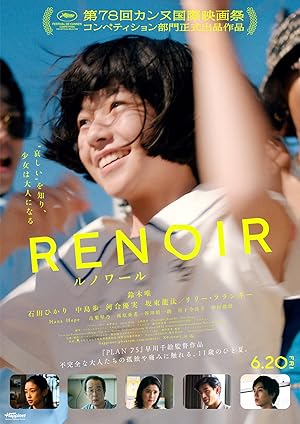
Fuki (Yui Suzuki) is eleven and living in the interval between knowing and understanding: she knows her father (Lily Franky) is dying, but the knowledge has not yet collapsed into grief, and Hayakawa films this interval with extraordinary delicacy. The title invokes Renoir’s portraits of children, and Hayakawa’s camera shares something of that gaze: attentive, unhurried, aware that what it regards will not stay this way. The adult world circulates around Fuki in conversations she half-overhears, in marriage stories that don’t quite resolve into lessons, in the small rituals with which she shores herself against what she cannot yet fully imagine. She ties a red thread outside the window. She writes her dreams into a diary. These gestures are simply what an eleven-year-old does when the world becomes too large and too quiet simultaneously.
Hayakawa makes everything feel appropriately weightless, the particular weightlessness of childhood perception, right up until it doesn’t. The film’s tonal economy is such that when death arrives it arrives without announcement, without swelling score, without the apparatus of cinematic grief; it arrives the way death actually arrives for children, as an abrupt revision of everything that was assumed to be permanent. I sat very still afterwards. The red thread stays in the mind long after the screen goes dark.
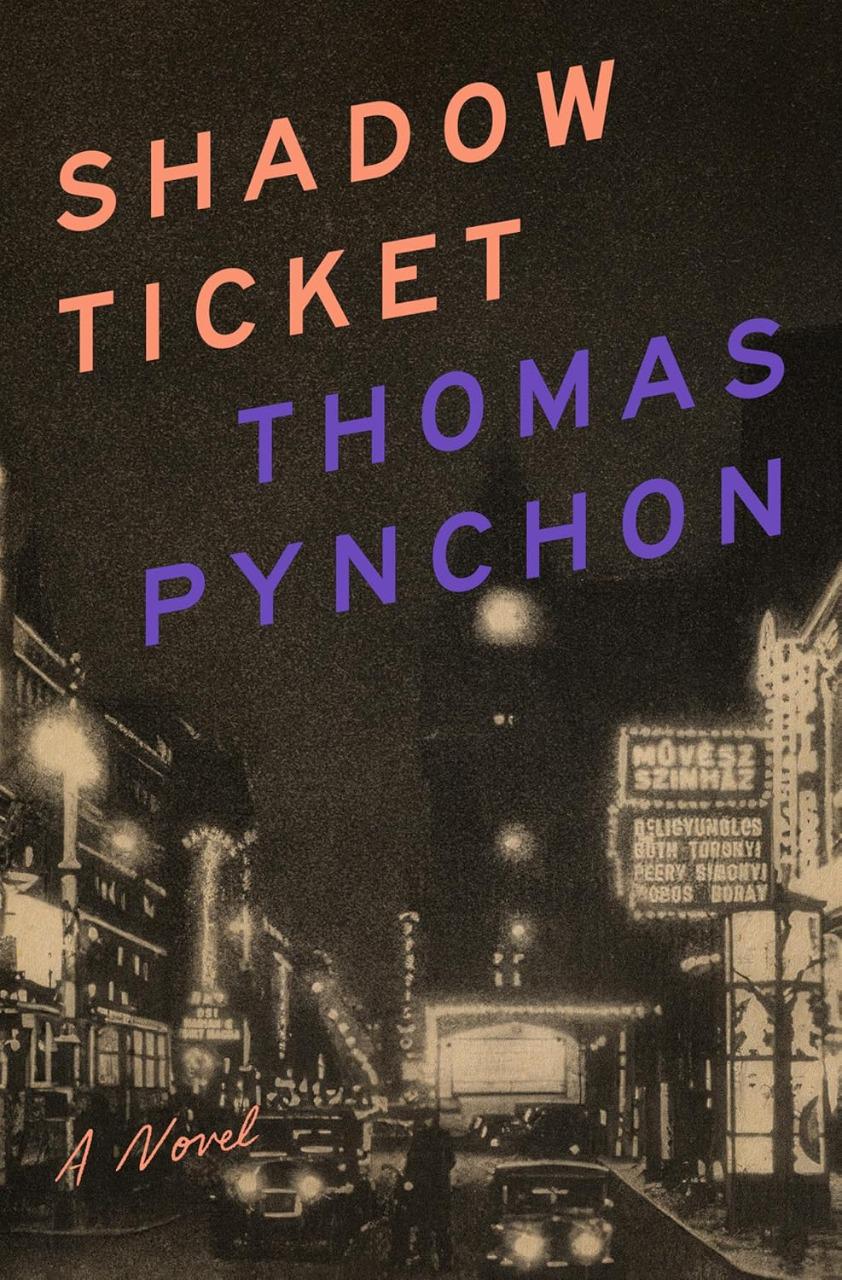
It may be because I have not read it closely enough, but Shadow Ticket is the funniest and the emptiest Pynchon I have read. Funny because his absurdism and free-associative weirdness are everywhere: motorcycle gangs in the Hungarian-Croatian borderlands, a Czech golem, a self-aware and imperishable cheese whose maker is the Al Capone of dairy. The private-eye structure, Hicks McTaggart trailing a runaway heiress from Milwaukee through New York to Belgrade and Budapest, invites the Inherent Vice (2009) comparison, and it holds to a point: both are detective novels in the loosest sense, both meander gloriously. But where Doc Sportello’s California haze carried epistemological weight, the 1932 setting here tips the balance towards period intrigue, and the paranoid circuitry never quite connects to a central charge.
The emptiness comes from what Pynchon leaves undissected: beyond pre-war Milwaukee’s atmosphere of manufactured compliance and Central Europe’s universal dread, he does not do much with ideology. The deeper political and metaphysical pressure one expects from Pynchon is present but muted; the political resonances feel gestural rather than structural. Unlike Vineland (1990), where government repression seeps into the depths of the crowd and lays fear-bombs at the base of resistance movements, or The Crying of Lot 49 (1966), where Oedipa’s paranoia becomes a genuine epistemological crisis, Shadow Ticket reads more as reconciliation than reinvention: a return to signature concerns, not a late-career departure. Of course, the worst Pynchon is still better than most fiction; within his own catalogue, though, Shadow Ticket is comparatively shallow. But hell, I cannot say I did not have a tremendous time reading it.
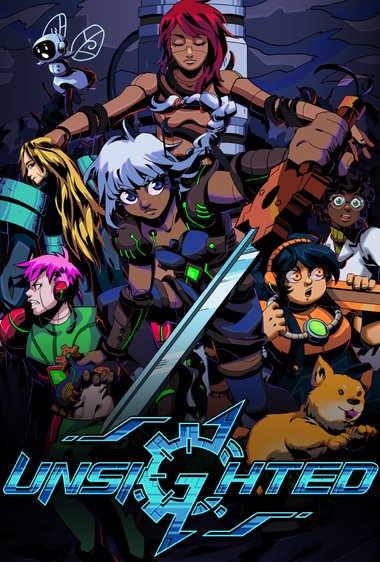
By the standards of a small-scale game, UNSIGHTED is an unambiguous success, and more than that: it introduces a structural innovation that the genre has not yet metabolised. The global time-limit, ticking inexorably for every NPC, grafts consequence onto a traditional metroidvania framework. Deaths that in any other game would be a minor setback here carry real weight: time lost to a failed boss attempt is time an NPC one has grown fond of does not have. Studio Pixel Punk, working from São Paulo with modest resources, understood that a metroidvania’s weakness has always been the disconnect between narrative urgency and gameplay leisure; the time-limit collapses that gap.
The execution is strong across the board. Enemy diversity is unexpectedly rich, each biome introducing distinct threats and puzzles with their own mechanical character; the music is outstanding, full of energy and melancholy in equal measure; boss design, often the weakest link in small-budget metroidvanias, is here consistently excellent. The only real missed opportunity is world reactivity. Even NPC deaths, the time-limit system’s most dramatic consequence, fail to trigger unique dialogue or environmental shifts, which dampens the immersion the system should generate. A limitation of resources rather than imagination, and one forgives it in a game that does this much right. A first-tier small-budget metroidvania, and a blueprint for anyone attempting to make consequence feel structural rather than cosmetic.
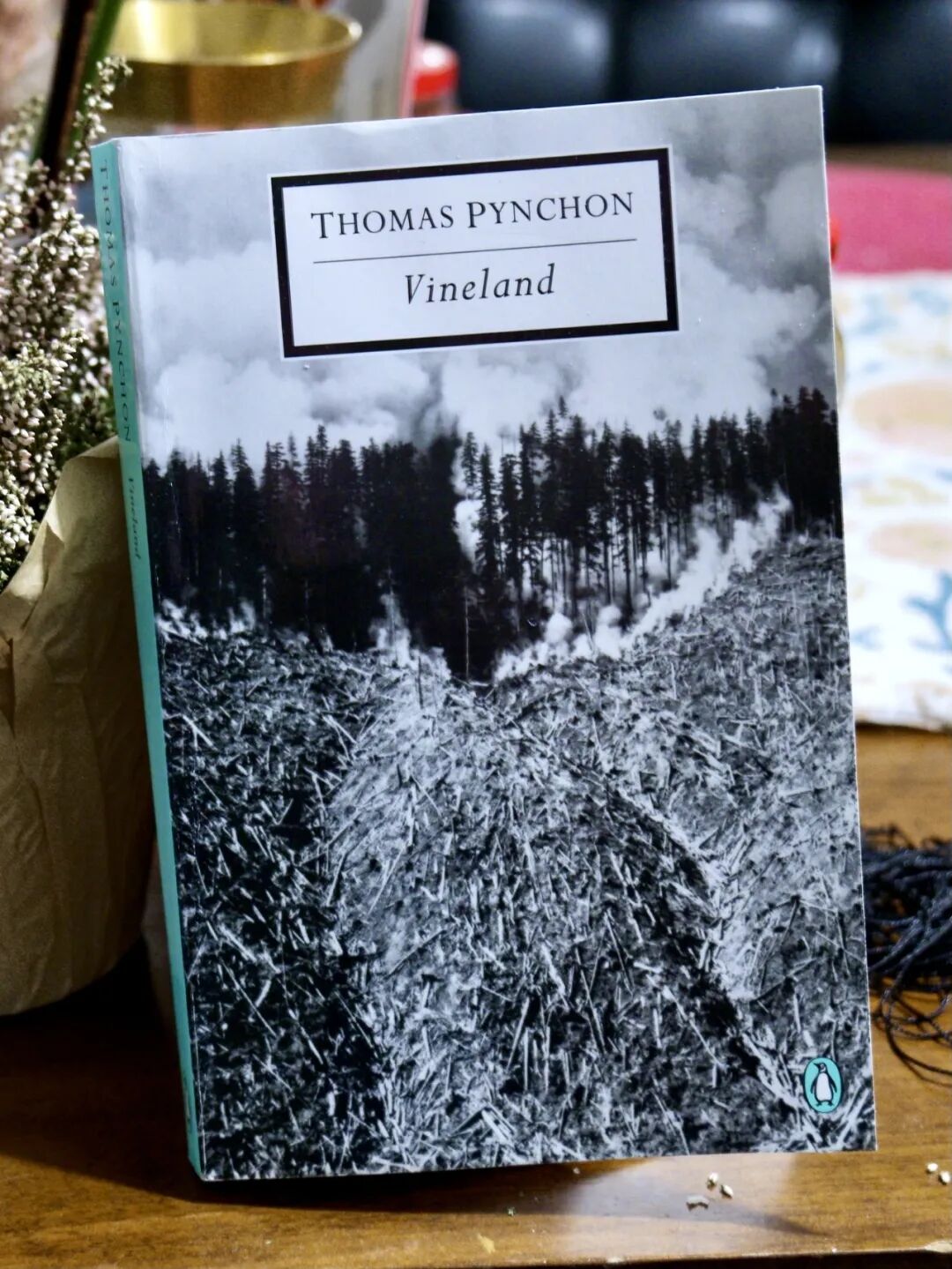
Pynchon writes the walking wounded of Nixon’s War on Drugs and the long shadow of Vietnam: the students and activists killed by federal agents, the scholars swept away by historical tides, the loveless marriages, the stubborn love between a father and a daughter. Through one serious joke after another he paints America’s most miserable decades of the twentieth century. At the turn of the sixties and seventies, the end of the hippie era, government repression seeped into the depths of the crowd, laying fear-bombs at the base of every resistance movement. The critical consensus has always been that Vineland is ‘minor Pynchon’, more accessible, warmer, less labyrinthine than the major novels. Fair enough: this is not the Pynchon of unruly sentence-architecture and encyclopaedic ambition. What it is, instead, is the Pynchon who loves his people. Brock Vond is one of his most chilling creations precisely because he is banal, a federal enforcer whose violence is institutional rather than demonic; Frenesi Gates, the radical-turned-informant, carries the entire betrayal of the sixties in her camera lens; and Prairie’s search for her mother is the most emotionally legible quest in the whole catalogue. The Thanatoids, those television-zombie half-dead, now read as prophecy.
All the idealism and tomorrow-will-be-better hope was shattered by the camera. The beautiful dreams of 24fps and Corvairs, the joy preserved on film and bass lines, were so simply erased, seized, cleared, destroyed. Pynchon understood before most that the sixties were defeated by being metabolised, their imagery and vocabulary absorbed by the very system they opposed. Reagan-era America did not need to suppress the counterculture; it bought the footage. Yet the novel refuses despair outright. ‘I’m not gonna forget,’ someone says, and means it. Our eternal Summer of Love: ‘While we had it, we really had some fun.’ I believe him. The warmth in that line is not nostalgia; it is evidence.
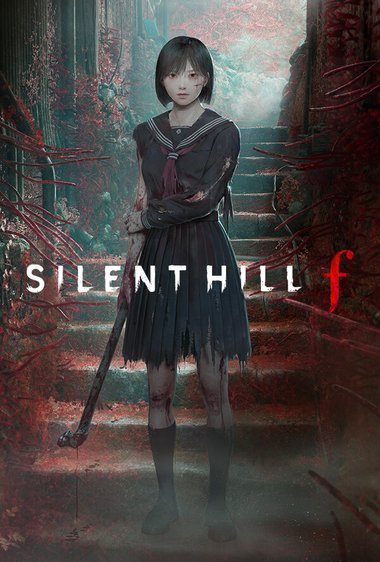
Silent Hill f arrives with a combat system that leaves a great deal to be desired: character abilities lack coherence, roles feel under-defined, and the overall mechanical feel sits well below the standard set by the franchise’s better entries. None of that matters very much, because the story strikes with the force of Silent Hill 2 (2001). NeoBards handle the series’ survival-horror tradition and fragmented storytelling with care and sensitivity, knowing precisely when to spell out and when to leave as charged suggestion. The marriage plot, the mid-twentieth-century East Asian culture’s contempt for and systematic oppression of women: these are made explicit without condescension. The three pre-wedding ‘rituals’ in the Other World remain as hints, each appearing to map onto the constraints marriage historically imposed on women of that era: obedience, silence, erasure of self. That calibration between the said and the unsaid is exceptionally difficult in horror, where the temptation is always towards either over-explanation or mystification for its own sake.
Hinako, and the game’s other women, appear to have many choices; yet almost every path leads to total self-erasure. The game handles this without flinching: the architecture of choice that conceals the absence of choice, the performance of agency within a structure designed to annihilate it. One recognises something of the domestic-sphere analogue to Fisher’s ‘capitalist realism’ here: the System offers options precisely to foreclose the possibility that anyone might notice how few of them lead anywhere new. Story for story, measured against last year’s Silent Hill 2 (2001) remake, I think I prefer this one. Bloober Team’s remake was a faithful, often startling restoration; NeoBards have built something that belongs to the franchise’s future rather than its past.
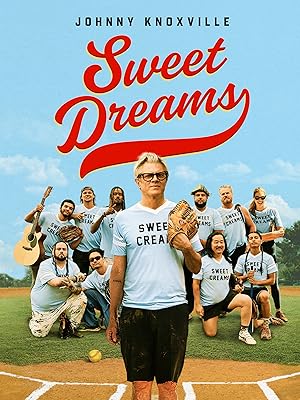
Johanne (Ella Overbye) is seventeen and in love with her French teacher Johanna (Selome Emnetu), and the film unfolds this condition with the patience and exactness of a Rohmer moral tale: nothing is forced, nothing is hurried, and the oblique angles through which the longing is revealed accumulate until the feeling becomes unmistakable without ever having been declared. The Before trilogy comparison that naturally suggests itself applies only partially; where Linklater works in dyads, constructing a private world for two people against the noise of everywhere else, Haugerud opens the structure outward, refracts the inquiry through multiple subjectivities, so that questions of unrequited love, of what it means to give and to receive, arrive from many angles rather than deepening along a single axis. Johanne channels her longing into an autofiction novella, and the intergenerational argument that erupts around its publication, over who owns an intimate experience once it has been rendered into art, proves as charged and as irreducible as the desire that produced it.
The obliquity is the point: most of the dialogue feels entirely casual, entirely incidental, precisely because it is never only incidental. The middle chapter of Haugerud’s ‘Sex, Dreams, Love’ trilogy, in open conversation with Kieslowski’s Three Colours, Dreams won the Golden Bear at Berlin, and the recognition feels correct in the way that only the rarest festival prizes do: already obvious before it was announced. The film traces a love that never found resolution and somehow achieves the opposite: something complete settles in the mind and does not leave. I keep returning to it in the way one returns to a piece of music that named something one had not yet learned to say.
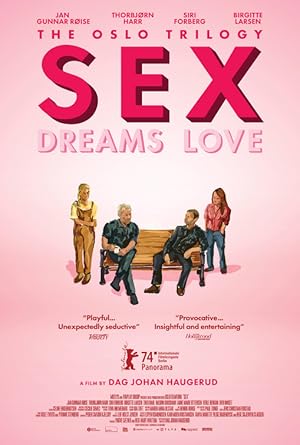
I watched Sex the day after Drømmer (2024), and together these two films have done something irreversible: Haugerud is now, simply, the director one most wants to hear from next. Where Drømmer (2024) works through multiplication of perspective, Sex achieves its effect through a more concentrated provocation: ‘sex’ becomes an other, a third term in every conversation, something that defines and shapes intimate relationships from outside them, spoken of rather than enacted, discussed with the careful honesty of people who have decided, at some cost, to tell the truth. Jan Gunnar Røise’s chimney sweep and Thorbjørn Harr’s manager are not case studies; they are people, and the distinction carries the film.
Haugerud’s screenplays have, consistently and almost inexplicably, a quality of disarming sincerity, the sense that these characters are actually saying what they mean, not performing saying what they mean. It manifests in the discussions of sex and marriage, in the self-examination of what feels ‘natural’ within a long relationship, in the way both families orient themselves towards their children with a tenderness that is neither idealised nor ironised. There is no position from which the film condescends to its characters, and none from which it condescends to its audience. Sex won the Europa Cinemas Label at Berlinale and the Nordic Council Film Prize, but the awards are secondary to the film itself: it makes one feel, with renewed and slightly uncomfortable clarity, the full difficulty and the full necessity of being honest with the people one loves. I walked home from the cinema in silence, which is something I almost never do.
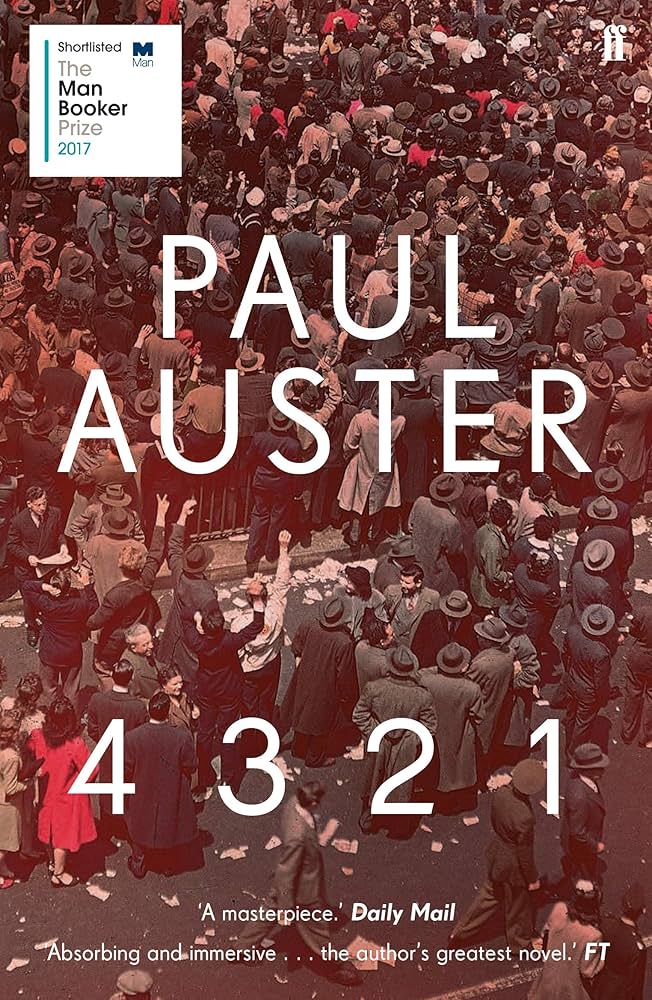
Auster’s answer to what defines each Ferguson seems to be: relationships. Each Ferguson’s love life, family dynamics, and relation to the political and social world become anchor points, however minor, with far-reaching consequences. Since the eighties Auster has been probing a world of possibility and coincidence, and that impulse finally comes into full bloom in 4 3 2 1, across eight hundred and sixty-odd pages. Growing up in post-war Newark, each Ferguson becomes a mirror for the counterculture, anti-war sentiment, and the Summer of Love. At that point the multiple Fergusons stop feeling like individuals and start feeling like Auster’s own version of ukiyo-e: reflections of a moment, floating pictures of a world in flux. The structure is audacious, four parallel narratives held together by a single origin point, and it invites the obvious comparison to musical counterpoint, four voices playing variations on the same theme. The risk is blurring, and it happens: somewhere around pages five or six hundred, after I gave up tracking each character’s specific timeline, the distinctions between Fergusons dissolved. But this turned out to be the point. Auster is not asking one to care equally about each version; he is asking one to feel the weight of contingency itself, the vertigo of lives that could have been otherwise. The novel is deeply autobiographical, almost embarrassingly so, Jewish-American Newark childhood, the writer’s vocation, the political turmoil of the sixties. But autobiography metabolised into form becomes something rarer than memoir. This is the book where Auster’s lifelong obsession with chance stops being a device and becomes a cosmology: identity is not chosen but assembled through accident, and the four Fergusons are the proof. The rest of the book, once I surrendered to it, was pure pleasure.
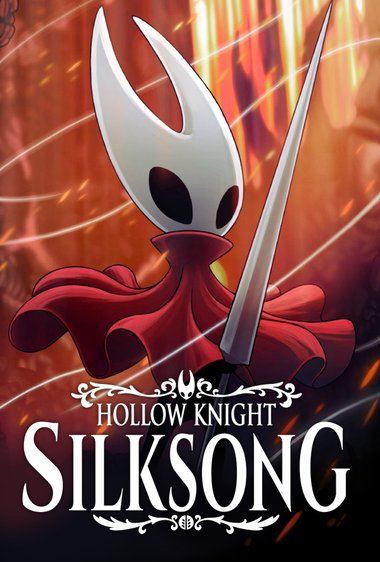
Perhaps in the next fall one can feel the strength to fight again; perhaps in the next waking one can finally climb the wall of despair. Hollow Knight: Silksong asks this question ceaselessly, and the answer it provides is not reassurance but repetition: one more attempt, one more death, one more lesson absorbed into muscle memory. Where the original Hollow Knight (2017) placed the player inside the Knight’s unknowing innocence, a vessel with no past and no fear, Silksong replaces that blankness with something far more difficult: Hornet knows. She knows the kingdom of Pharloom is collapsing. She knows what waits at the end. The fear that knowledge brings saturates every corridor, every ambush, every moment of stillness before a boss encounter, and Team Cherry have understood that this shift from innocence to awareness demands an entirely different emotional contract with the player.
If every cry of defeat can become fuel to save Pharloom and find the truth, one will challenge again and again: until one flies over the ridges of Fayvum, sees the great soaring bird, witnesses the cheerful resilience of the fleas at the kingdom’s edge, looks out over Pharloom from the pink-purple coral towers, faces the lava a thousand metres below without flinching. Team Cherry’s gift has always been for biomes that feel simultaneously alien and internally logical, ecosystems that sustain their own aesthetic and emotional weather; Silksong multiplies that gift across a map whose scale dwarfs the original’s. And yet the game never feels bloated. Every area earns its presence, every backtrack reveals something previously invisible; the interconnectedness that made Hollow Knight (2017) a landmark is here refined to the point of transparency, the architecture becoming so legible that one stops noticing how carefully joined it is.
‘I have survived the fury of this land. I have borne its barbs and its blades, and I have seen wonder behind its dangers… and that darkness I fear no longer.’ Without the Knight’s unknowing innocence, one must face the manifold dangers of a collapsing world with open eyes. Silksong makes the facing feel not triumphant but honest, not heroic but stubbornly, quietly brave.
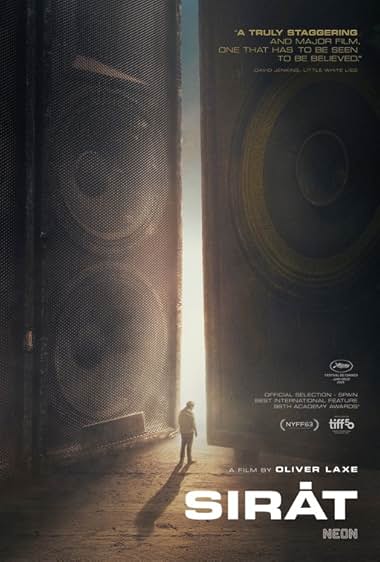
Luis (Sergi Lopez) and his son Esteban (Bruno Nunez Arjona) arrive at a remote rave in the Moroccan desert, distributing a photograph of Mar, their missing daughter and sister, who vanished at one of these endless parties months earlier. They follow a group of ravers deeper into the wilderness, towards one last gathering, while radio dispatches report the outbreak of a wider war. Laxe, working out of a Galician sensibility drawn to marginal landscapes and the spiritual weight they bear, finds in the Sahara a terrain that does not represent existential collapse so much as enact it. Shot on Super 16mm by Mauro Herce, the film’s grain makes the desert feel bodily, continuous with an older tradition of images that digital photography cannot replicate.
Kangding Ray’s electronic score is the film’s nervous system: the sound of human order persisting against geological time, insisting on pattern in the one domain where insistence still seems possible. In the minefield sequence, sprightly arpeggios play against mortal danger with a counterintuitive lightness that makes the scene more harrowing, not less. The space is too large for ideology, too indifferent for faith, and yet the film does not mistake emptiness for nihilism; it finds in the desert a form of attention stripped of every consolation except attention itself. Sirât, the straight path: in Islamic eschatology, the bridge thinner than a hair and sharper than a sword that every soul must cross on the Day of Judgment. Laxe literalises both meanings. The journey through the desert is a moral test that offers no grading rubric; the characters walk because walking is what remains. I left the film feeling scoured, as though the sand had reached in through the screen and done its work directly. That is not a complaint.
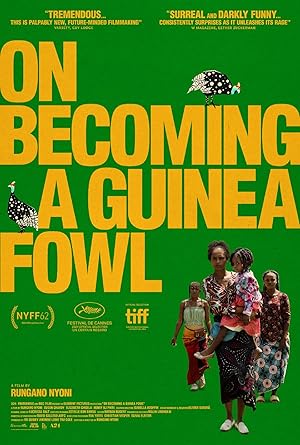
Shula (Susan Chardy) drives home from a costume party and finds her Uncle Fred’s body on a remote road. She is strangely unaffected, and the strangeness is the film’s first move: Nyoni opens on a death that should bring relief and finds that the dead perpetrator has taken with him every target for anger, reconciliation, and grief. The survivors are left holding wounds for which no living person can now be held accountable, and the funeral that follows becomes a theatre in which the family’s rituals of mourning are weaponised to enforce exactly the silence that made the abuse possible. The women crawl into the mourning house on their hands and knees; the men socialise outside. Shula’s cousin Bupe is hospitalised, her confession found on a phone. Her mother tells her to keep quiet: Fred is dead, it is in the past.
Nyoni understands something that most social-issue cinema gets catastrophically wrong: the structure of patriarchy is not dismantled by the removal of any individual patriarch; it self-perpetuates through ritual, through the choreography of grief, through the etiquette that requires the abused to mourn their abuser with decorum and visible sorrow. The guinea fowl metaphor earns its place precisely because it refuses heroism: these birds do not fight, do not escape, do not organise. They become alert. They warn each other. It is, within the architecture of power the film describes, the only agency the system permits. Nyoni is uncomfortably precise about the pre-emptive suppression at the heart of feminist resistance within such a framework: the bars of the structure become conditions of thought, so that even the methods one might contemplate are already accounted for, already neutralised.
And yet the film does not offer this as tragedy alone. It offers it as diagnosis, and diagnosis, as Fisher understood, is prerequisite to politics. Fred’s young widow Chichi, married to him at eleven or twelve, is blamed by the aunties for his death; Shula’s own mother knew and consulted the aunties, who spoke to Fred, who promised to stop, and the circuit closed. The system runs on promises that turn into permissions, and the film names every relay in the circuit until the wiring is visible to everyone in the room. In the final scene Shula begins screeching the guinea fowl call, and the young women join her, their voices swelling into something that sounds less like protest than like an alarm that has been waiting, for a very long time, to go off.
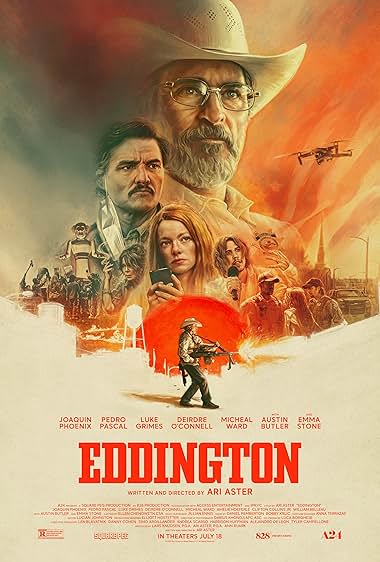
Ari Aster has transplanted the horror grammar of Hereditary (2018) and Midsommar (2019) into a neo-Western set in fictional Eddington, New Mexico, in May 2020, and the toolkit turns out to be entirely adequate to a moment in which the distinction between the fable and the documentary has itself become difficult to locate. Sheriff Joe Cross (Joaquin Phoenix) challenges incumbent Mayor Ted Garcia (Pedro Pascal) in a local election; COVID arrives, George Floyd’s murder triggers a small protest movement, and a data centre being built at the edge of town silently reorganises every allegiance. Aster subverts Chekhov’s gun throughout: setups that should pay off dissolve into noise, handwriting clues lead nowhere, and the violence that finally erupts in the film’s extended shootout arrives with the senseless inevitability of something that traditional cause-and-effect can no longer explain.
The gun is on the mantelpiece in the first scene because the gun is always on the mantelpiece in America, and the question Aster is asking is whether the grammar that connects the gun to its firing has already broken down. Phoenix plays Joe with a blunt physicality that never tips into caricature; Emma Stone’s Louise, Joe’s wife, carries a history with the Mayor that the film parcels out in increments designed to make one recalibrate sympathies repeatedly. Aster grasps what most satirists of this moment do not: the pathology is continuous with ordinary life, conspiracy grows from the same soil as the barbecues, pandemic grievance passes through the same channels as neighbourhood gossip. The corporate interests funding the data centre operate beneath all the political theatre, indifferent to which side wins, and the film’s deepest horror is that the violence may have been orchestrated by forces that none of the combatants can see. The empty streets of Eddington after the shooting look like every small American town one has ever driven through, which is the point.

There is a way to make point-and-click adventures both engage the player and make them feel intelligent; Phoenix Springs does not find it. Calligram Studio’s neo-noir desert mystery has the look of a thoughtful, design-literate game: the stripped-back palette, the geometric framing, the whispered tone. But the puzzle design squanders every aesthetic advantage. The ‘101’ clue is exemplary: so egregiously, so intentionally outlandish in its logic that solving it produces not satisfaction but a betrayed disbelief. The solution was there all along, hiding behind a leap of reasoning the game has done nothing to earn.
The issue is structural. Good puzzle design teaches the player a grammar and then tests fluency within it; Phoenix Springs skips the grammar and tests the guessing. Completion comes through persistence rather than understanding, which is the worst possible outcome for the genre. The art direction deserved a better home.
If this year’s Kingdom Come: Deliverance II (2025) gave the endless freedom of a sandbox RPG, The Alters made me scrutinise every choice I made. The premise is deceptively simple: Jan Dolski, stranded on a hostile planet, uses experimental cloning technology to create alternate versions of himself, each branching from a single altered life decision. 11 bit studios build from this an uncommonly thoughtful branching narrative. The survival-building system is superbly implemented, responsive and tactile enough that resource management never degenerates into busywork; but the real work is in the dialogue. Each Alter carries a distinct psychology, a distinct mixture of vulnerability and defensiveness, and the feedback system tracking frustration, motivation, insecurity, and burden across every conversation means that one learns to read these people as people rather than as systems. The writing is intimate and direct in a way that feels unusual for a game this structurally ambitious.
The answer, it turns out, is that I could not bring myself to let my companions suffer at all. Not once, across multiple loops. The options existed; the mechanical incentives were clear; I chose warmth every time, and the game was wise enough not to punish that instinct but to honour it. When, in the ending, the Refiner says ‘Then you have my loyalty,’ I could not hold back tears. Not because the moment was engineered for maximum emotional extraction, but because it arrived after hours of careful, accumulating trust, every conversation a small deposit into a relationship the game permitted me to build at my own pace. Many games attempt this; very few achieve it without leaning on orchestral swells or slow-motion close-ups. The Alters earns its emotion the hard way: through patience, through texture, through the simple act of letting the player care.
I hope they can all live, in this less lonely reality, as whoever they want to be.
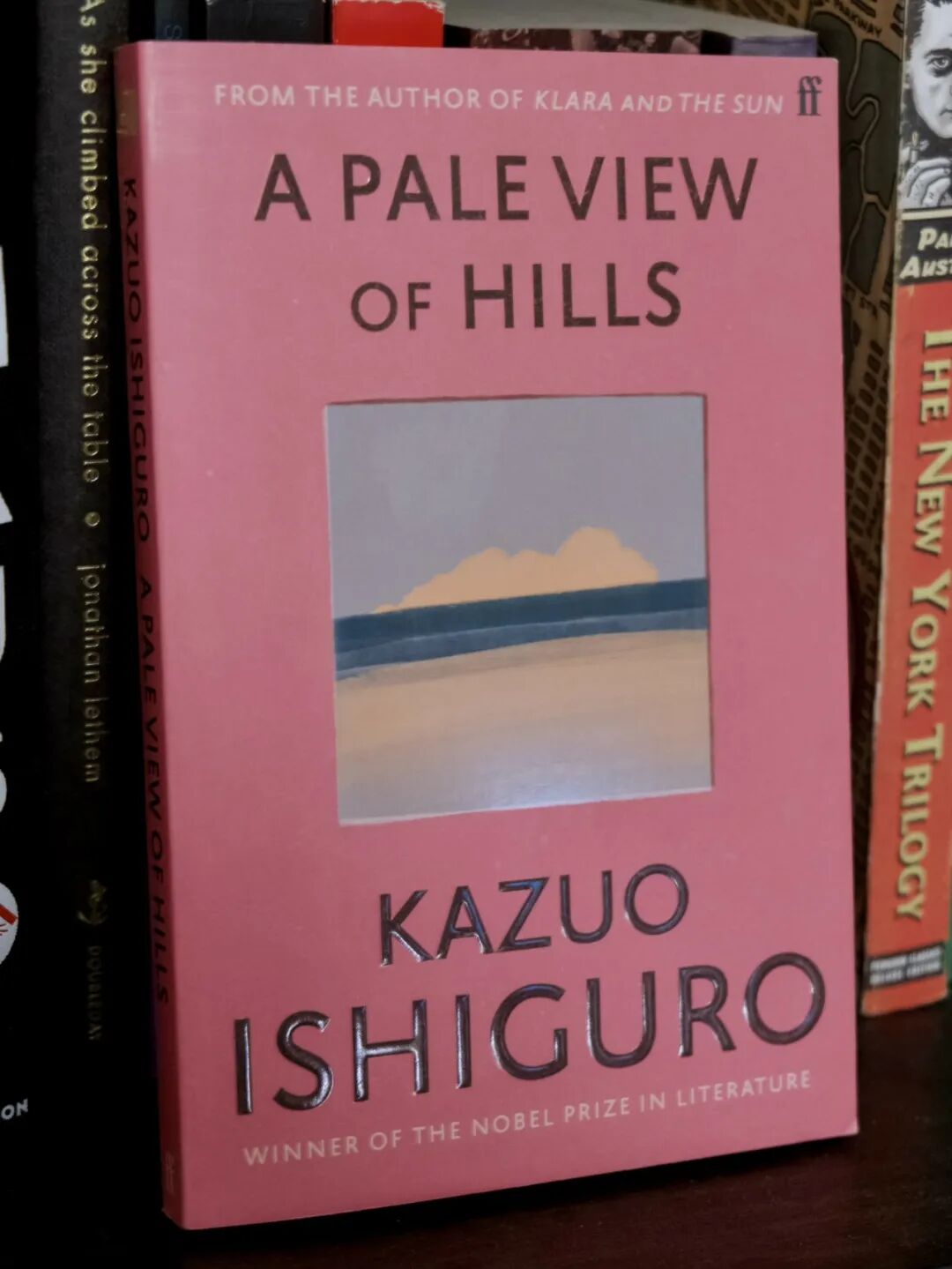
Even having read The Remains of the Day (1989) before this, I had not anticipated that Ishiguro could already, this early, use such calm, precise, spare, detached language to produce such dense emotion. Using her daughter’s homecoming as a catalyst, Etsuko renders the unreliability of memory in fragments, and behind those unreliable shards is a heartbroken, regretful, socially constrained mother. She wants to tell Niki things, but knows that death cannot just be laid on the table, so she can only reconstruct that summer from decades ago, piece by piece. The critical reading that Sachiko is Etsuko’s alter ego, a displaced self-portrait narrated in the third person, feels almost too neat, yet the text earns it. Ishiguro threads survivor’s guilt, emigration, and maternal failure into a single braid so fine that one only sees the full pattern retrospectively: Sachiko’s neglect of Mariko mirrors Etsuko’s of Keiko, the unnamed woman by the river haunts both timelines, and the decision to leave Japan carries a guilt that cannot be spoken in any language Etsuko now possesses. A Pale View of Hills is extraordinary in its refusal to resolve. Memory here is not stable archive but emotional negotiation; grief bends it into something that protects the rememberer at the cost of accuracy. Ishiguro understands, long before The Remains of the Day (1989) would make it his signature, that the most devastating stories are the ones the narrator cannot quite bring herself to tell.
‘Keiko was happy that day. We rode on the cable-cars.’ Suppressed feeling presses against the page, almost but not quite breaking through. Faber placed several blank pages at the back of the edition; behind them, a distant, faint hill in fog. That image stayed with me long after I closed the book.
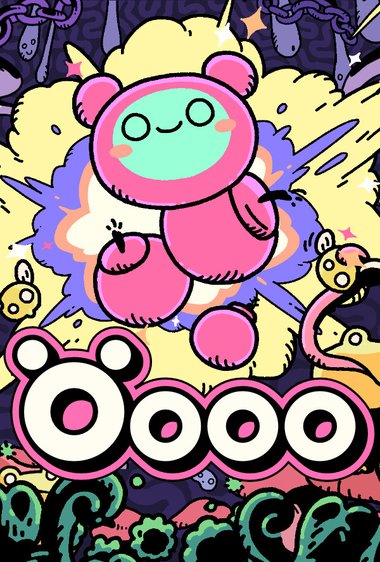
‘Metroidbrainia’ is a genre that has only cohered in the last few years, and already it has two landmark entries: Animal Well (2024) and Öoo. Where Billy Basso’s Animal Well (2024) explored the complexity of knowledge-puzzle design, the sheer combinatorial depth of what a handful of items can unlock, Nama Takahashi’s Öoo takes the opposite approach: a single mechanic, pushed to its absolute limit. The game first asks one to think inside the box, mastering the rules as given; then, with surgical precision, it asks one to think outside them entirely. The level structure, ‘puzzle, answer, final puzzle’, looks modular from the outside, almost workmanlike. In Takahashi’s hands it becomes dense, each module a carefully calibrated ratchet that tightens the player’s understanding until the moment of release.
Compared to Animal Well (2024), the ‘I’m a genius’ feeling Öoo delivers is more direct and more immediate: not the slow accumulation of insight across a sprawling world, but the sharp crack of a solution arriving fully formed. This is textbook knowledge-lock design: the information required to solve each puzzle is always already available; the difficulty lies entirely in recognising it, in reorganising what one knows rather than acquiring what one does not. That distinction, between puzzles of acquisition and puzzles of recognition, may be the defining axis of the metroidbrainia genre, and Öoo sits as far towards the recognition end as anything currently in the field. A small, precise, quietly astonishing game.
The final season of Better Call Saul accomplishes something I did not think television could do: it makes the ending of a prequel feel like uncertainty. One knows where Jimmy ends up; one knows the broad strokes of the Gene timeline. None of this matters. What the show has been building towards was never plot but character, and the question it finally poses is not ‘how does Jimmy become Saul’ but ‘what does Jimmy lose by becoming him, and can any of it be recovered?’
Howard’s death is the hinge. The show spends half the season letting Kim and Jimmy’s scheme build with the meticulous pleasure of a heist film, and then Lalo walks in and the genre collapses. Howard dies in the middle of someone else’s story, for reasons that have nothing to do with him, and the randomness is the point: this is what happens when one treats consequences as something that befalls other people. Kim’s departure in the aftermath is the most painful sequence in the Gilligan universe, more painful than ‘Ozymandias’, more painful than anything Breaking Bad managed, because it is quiet and chosen and neither party raises their voice.
The Gene timeline resolves with a generosity I did not expect. Jimmy’s confession, his decision to stop running and accept the full weight of what he has done, is not redemption but the first honest act he has committed in years. Kim visits him in the visitation room and they share a cigarette against the wall, and the shot holds; then the show ends where it began: two people who understood each other completely, separated by barbed wire across a prison yard, a barrier that one of them built.
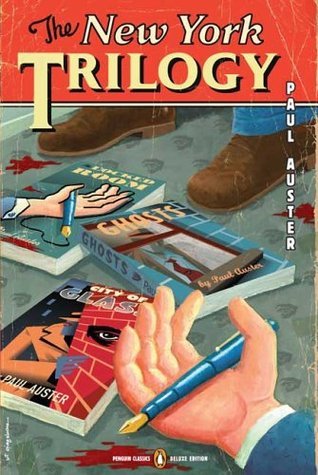
Auster’s earliest prose already carries the faint current of Moon Palace (1989) and Leviathan (1992), and the same dependence on coincidence. The trilogy comprises three so-called detective stories with no traditional twists or endings, all pointing towards the protagonist’s deconstruction of self. Quinn, consumed by an obsession that leads nowhere, never solves the ‘Paul Auster mystery’; Blue, lost in a riddle of identity, can never explain Black/White’s motives; and what happened to Fanshawe, nobody knows. The trilogy uses detective fiction as scaffolding for something quite different: an interrogation of authorship, identity, and the limits of language. The detective’s search for clues becomes a metaphor for the futile search for stable meaning, and the genre’s promise of resolution is deliberately, almost cruelly, withheld.
In The New York Trilogy one can see many of Auster’s recurring images: China, erotic coincidence, merged opposites, alienation, the city as labyrinth. The self-referential gesture of inserting ‘Paul Auster’ as a character in City of Glass (1985) is postmodern metafiction at its most explicit, and the novel has already destabilised identity so thoroughly that the author’s name becomes just another floating signifier. The weaknesses that persist across Auster’s later career are already visible here too: female characters written almost entirely flat, complex psychological passages that feel muddled rather than mysterious. These are not minor flaws; they recur with enough consistency to constitute a blind spot. Still, as a debut statement of intent, the Trilogy is formidable. It announced a writer whose world would run on chance, solitude, and the suspicion that narrative itself is a conspiracy we agree to believe in.

AI Limit has very clear strengths and correspondingly clear weaknesses. The strength: map design. Working with limited resources, Sense Games invested seriously in their level architecture and produced a remarkable looping soulslike map, an interconnected, shortcut-laden structure that rewards mental cartography and generates the specific pleasure of realising that two apparently distant areas were always adjacent. The parry system is functional, the Sync Rate bar, which collapses stamina, posture, and spell resources into a single meter, prevents trivial ranged-cheese builds, and the overall feel, for a budget title, is competent.
The reason it sits just above average: everything else. Compared to recent soulslike releases, AI Limit is noticeably more spiteful in its encounter design, falling into the Dark Souls II (2014) trap of equating difficulty with mob density and ambush frequency. Boss design is the sorest point: in the base game, only one or two encounters are memorable, Loskid among them, while most default to either the marathon-runner model, where health pools substitute for mechanical interest (Aether, Charon), or the delayed-attack template that has become the genre’s laziest crutch. For a resource-strapped studio, it passes. Just.
Merricat and her sister’s quiet dream-life, in a Gothic village and castle, circles in endless repetition, like the crack on the pavement outside Stella’s coffee shop: it was always there. Life inside the castle froze completely after the great poisoning night: the sugar bowl laced with arsenic, old books nailed to trees, the manor gates locked shut. Jackson replaces the traditional Gothic castle with a bourgeois household haunted by family secrets, and inverts the genre’s central trope: it is the outside world that poses the threat, not the dark interior. The villagers’ hostility is The Lottery (1948) writ domestic, a mob driven by resentment of female autonomy and nonconformity.
But Merricat senses change coming: the nailed-up book falls, an unseen relative crashes in, everything teeters at the edge of collapse, and Merricat chooses to become that collapse itself. We Have Always Lived in the Castle draws its unease from the gap between Merricat’s cheerful tone and the horror of her actions, the way Jackson withholds the revelation of guilt and then frames it through the narrator’s own self-justifying logic. One is made complicit in Merricat’s worldview long before understanding its true nature. The rituals, the buried objects, the protective incantations, all occupy a zone between childish superstition and genuine menace. Mark Fisher would have called this eeriness: the unexpected presence of agency where one expects absence, or the absence of it where one expects presence. Jackson got there decades before Fisher gave that feeling this vocabulary.
Auster wrote in the opening of The New York Trilogy (1987): ‘nothing was real except chance.’ He uses coincidence and infinite possibility to build worlds that feel familiar and alien at once, and Leviathan is perhaps the purest expression of this method. Sachs’s life turns on dozens of coincidences: meeting Peter, meeting Maria, the fall from a fire escape, the accidental killing. Even the title originates in a coincidence born of Sachs’s curiosity after committing a terrible act. The critical reading of Sachs as ‘the accidental radical’ feels precisely right: his movement from celebrated novelist to domestic terrorist is driven not by ideology but by contingency, a chain of events that look like fate only in retrospect. Auster deliberately refuses to give Sachs a satisfying political manifesto, making his violence morally unresolvable.
In the final chapter, Sachs’s ‘political act’ is really just an expression of guilt and pain. Is he a hypocrite? His life has nothing to do with politics, yet he deceives himself and his friends, insisting he is acting for some ‘cause’. All his courage, righteousness, and remorse collapse at the end into a cowardice he cannot even name. The Hobbesian resonance of the title cuts both ways: Sachs becomes a one-man leviathan, a self-appointed sovereign acting outside the law, and the irony is that this sovereign is governed entirely by accident. Meanwhile Peter Aaron, whose initials mirror Auster’s own, races to write the story before the FBI can define it, making the act of narration itself a counter-political gesture. Leviathan is just Sachs’s imaginary enemy, and the tragedy is that he never sees this.
One cannot remember the last time a proper old-school point-and-click adventure felt this surprising. The Drifter is a genre exercise that transcends its own nostalgia: Powerhoof’s puzzles are demanding enough to sustain engagement, and the narrative, a pulp sci-fi conspiracy threaded through grief and mortality, maintains momentum across its runtime without resort to the genre’s usual padding. The die-and-revive mechanic is particularly well-integrated: Mick Carter’s ability to return from death, retaining knowledge each time, transforms what could be a simple retry system into something thematically coherent, tying puzzle design directly to the story’s questions about what it means to carry memory forward through loss. Many puzzles produce the feeling of actually working a case, of assembling disparate clues into a solution that clicks rather than one that merely unlocks.
The limitation is textual depth. The Drifter engages with well-trodden philosophical territory: brain in a vat, trolley problem, the familiar furniture of sci-fi’s ethical thought experiments. The engagement is competent but rarely revelatory; the aftertaste is thinner than the setup promises. A small-studio game, and one adjusts expectations accordingly; Powerhoof still do impressive work within those constraints, particularly in voice acting and pixel animation. One of 2025’s worthwhile indie picks, and a reminder that the point-and-click is not so much dead as dormant.
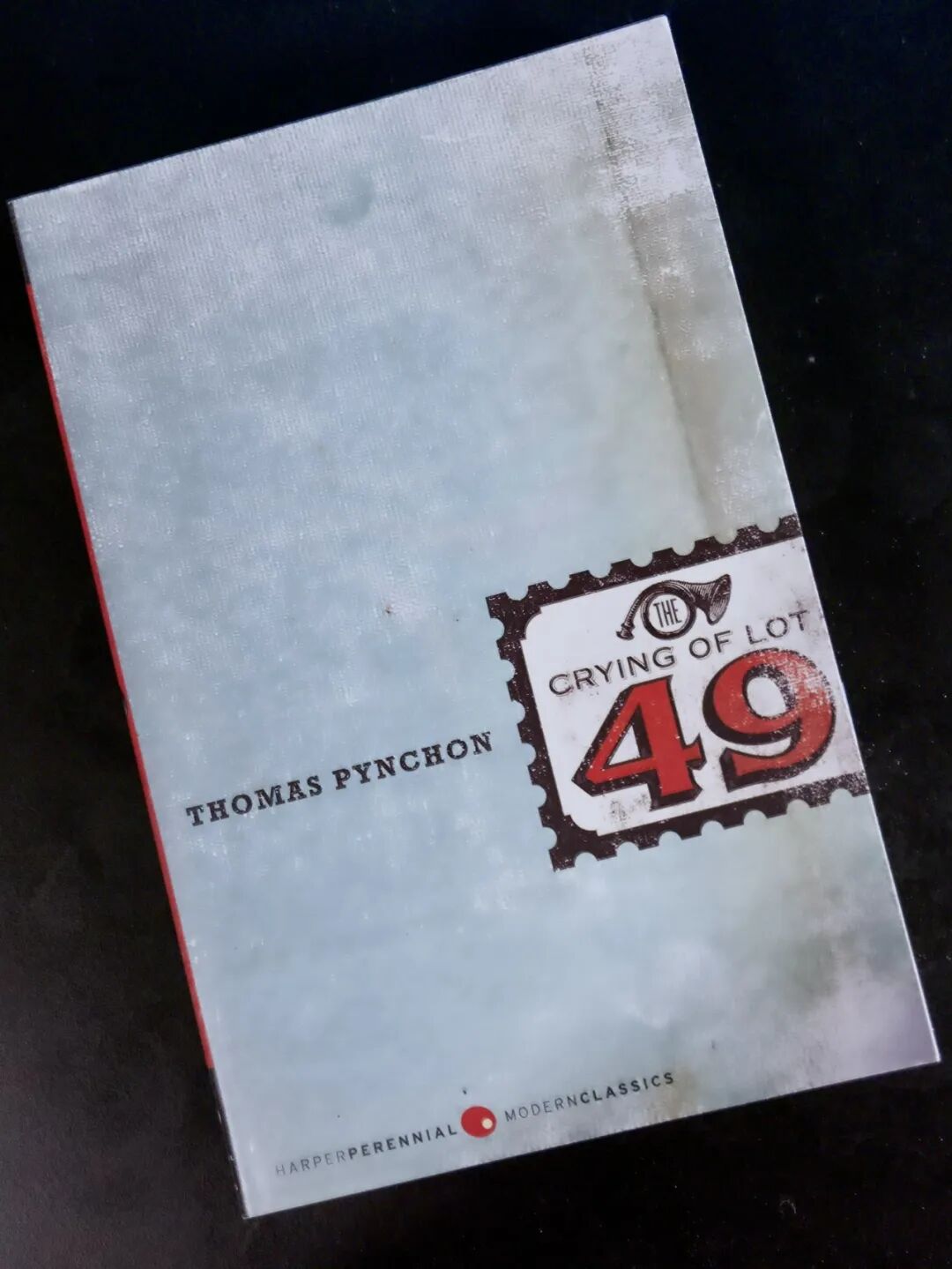
Pynchon’s sentences are little bombs that detonate the instant one reaches them: one is left with the shattered remains of reality, piecing the original story back together oneself. This is not a complaint. With stubborn effort I followed Oedipa Maas through the ‘circuit-board’ streets of 1960s Southern California, trying to crack the Tristero mystery or convince myself it does not exist. The novel famously offers four possible interpretations and refuses to resolve any of them: the Tristero is real; Oedipa is projecting pattern onto noise; she is the victim of Inverarity’s elaborate hoax; or she is simply going mad. Pynchon keeps each reading equally viable and makes the impossibility of choosing part of the experience. Oedipa becomes a kind of Maxwell’s Demon, sorting signal from noise in an information-saturated America, and the novel enacts in its form the same entropic uncertainty it describes.
Oedipa, sliding gradually into conspiracy-theory obsession, can be read as a feminist figure in sixties American counterculture, though the text never announces her as such. She is curious, suspicious, postmodern, standing directly across from the Leviathan of patriarchal and corporate America, losing her grip on reality as she dissolves into Tristero’s never-sounded horn. Loveless marriage, her one-night stand fleeing with an underage girl, even her therapist succumbing to psychedelics: every male figure in her world fails her, manages her, or disappears. The feminist reading, that her quest for the Tristero is also a quest for autonomous subjectivity, feels as structurally essential as the thermodynamic one. By the final auction scene Oedipa has almost nothing left, only her obsession with the truth. She is Kafka’s Josef K., the Hunter in Bloodborne (2015), and Neo in The Matrix (1999): trapped in a system whose architecture she can almost perceive but never quite confirm. The Crying of Lot 49 is about to begin. It never does. Pynchon leaves one there, on the threshold, and the silence that follows is the most eloquent thing in the book.
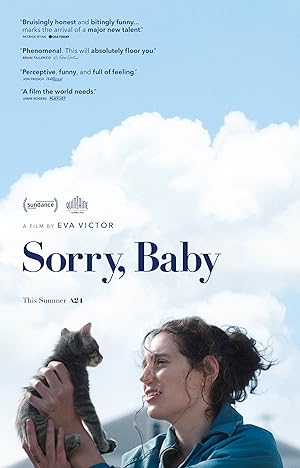
Agnes (Eva Victor), a reclusive literature professor at a New England liberal arts college, was sexually assaulted by her academic advisor Preston Decker (Louis Cancelmi) three years ago. Victor writes, directs, and performs the role across five non-chronological chapters that mirror how trauma fractures memory: the timeline jumps and circles and collapses in on itself, placing the assault in the middle section rather than the climax, refusing the redemption arc that the genre typically demands. The assault itself is never shown; an unmoving camera holds on Decker’s house as the sun sets and night falls, and Agnes eventually stumbles out hours later. Cancelmi plays Decker with a politeness so affable that it becomes the most disturbing performance in the film; he is never a cartoon villain, which is precisely why the violation feels irreparable.
The dark humour is not a defence against the trauma but a mode of inhabiting it: Victor’s background in comedy gives the writing an ear for the absurd collisions that follow assault, the doctor’s visit, the jury duty, the stray cat, each encounter exposing how people around Agnes choose or fail to offer empathy. Naomi Ackie’s Lydie, Agnes’s best friend now pregnant and moved to New York, provides the film’s warmest presence without turning warmth into resolution; Lucas Hedges’s Gavin, an unlikely love interest, offers something gentler still. The film trusts its audience to hold contradictory tones simultaneously, which is a rarer form of respect than it sounds, and the five-chapter structure earns its fragmentation because grief and assault do not organise themselves into linear narratives. That a film this precise about sexual violence could also be this formally alive, this resistant to the conventions that usually flatten such material into either advocacy or misery, is Victor’s real achievement. I came away from Sorry Baby carrying something that feels less like a message than like a changed internal weather, the particular humidity of having been told a truth one did not know how to ask for.
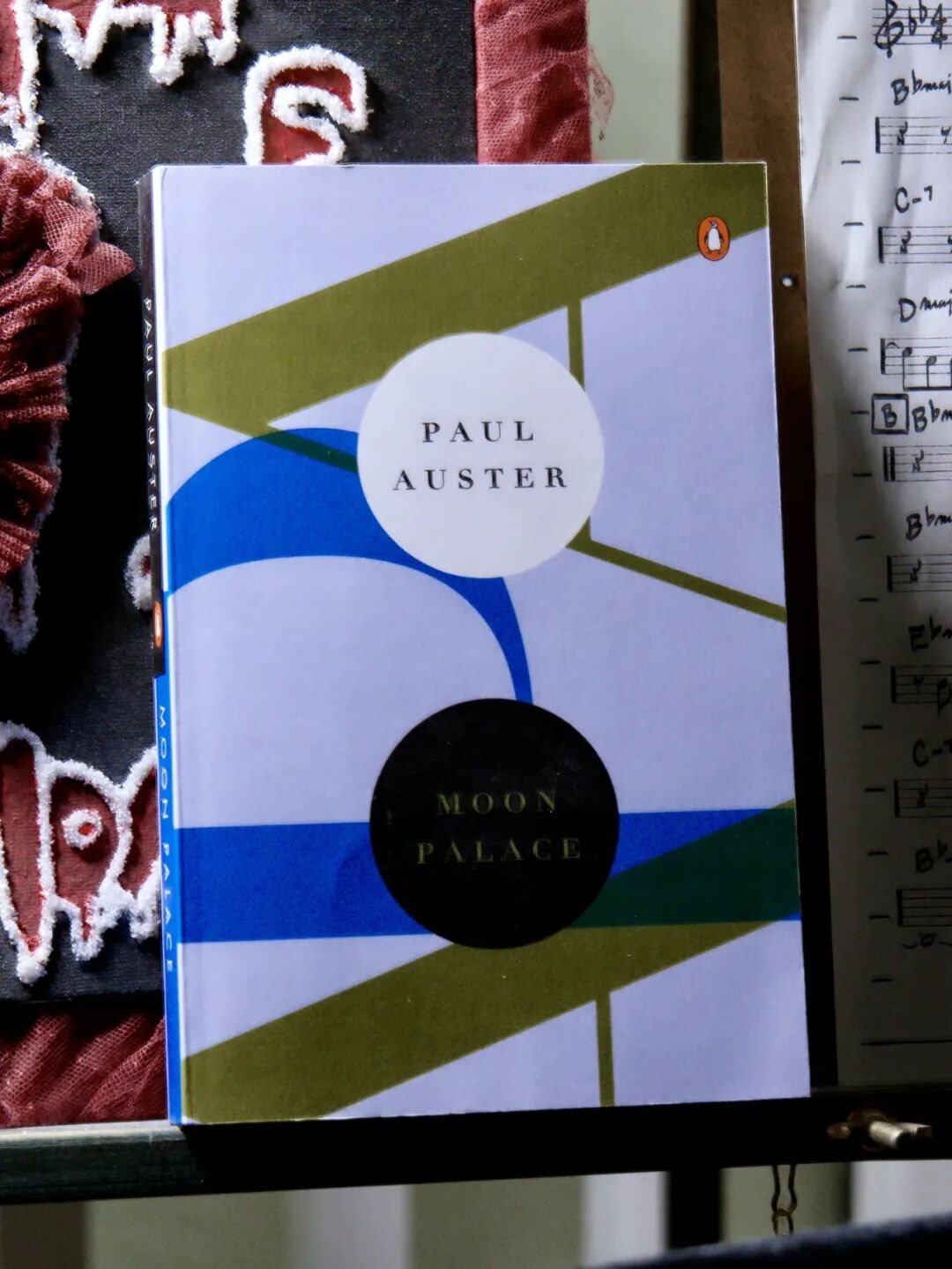
Despite real frustration with Auster’s treatment of several female characters, especially Kitty Wu and Mrs Hume, I could not resist Moon Palace’s astonishing literary force. The coincidences here are stacked to the point of absurdity: Marco Stanley Fogg, whose very name encodes three famous wanderers (Marco Polo, Henry Morton Stanley, Phileas Fogg; Uncle Victor spells it out early on), stumbles into employment with his own grandfather, then befriends and loses his own father. One either reads this as postmodern allegory or as authorial manipulation, and whether the novel works depends entirely on which side one falls. I fell on the side of allegory, intoxicated by the seemingly offhand revelations, by Marco and Victor’s mutual dependence, pitiful but never pitiable, by the casually dropped ‘A here exists only in relation to a there’, by Fogg’s homeless wandering through Central Park like a secular ascetic discovering that dispossession is its own kind of knowledge, and the self one thought one had was only ever a provisional arrangement of accidents.
Auster’s obsession with chance has never been mere cleverness; in Moon Palace it reaches something like a cosmology. The moon recurs as motif and metaphor: the Moon Palace restaurant whose neon sign Marco can see from his apartment window, the 1969 lunar landing that opens the narrative, the lunar imagery in Effing’s paintings made alone inside a Utah cave during his hermit years. The moon is the irrational, the gravitational pull of accident on identity, and Fogg’s life orbits it helplessly. Searching for Effing’s cave, and through it for meaning, and finding that the site has been flooded, the paintings irrecoverable, Marco arrives at a California beach to watch the moon ‘find its place in the darkness’. The arc that begins with a name given by immigration officials ends with a man standing at the western edge of the continent, having run out of land, finally still. I cannot forgive the flat women; the force of that final image forgives nothing either, and persists regardless.
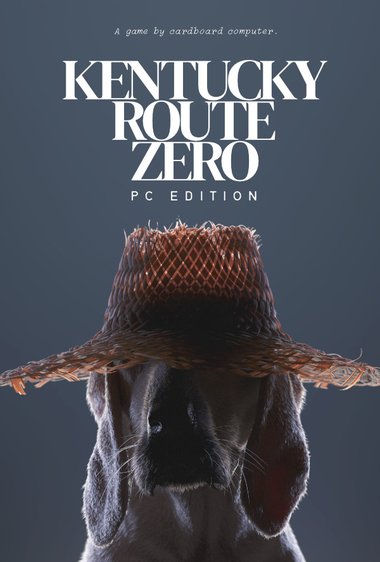
My Shannon: brave, strong. My Conway: timid but stubborn. Kentucky Route Zero is more than a fixed cast and a scripted narrative; it is a mirror. The characters and the story are assembled from dialogue fragments by the player, each selection not a choice between outcomes but a choice between textures, between the kinds of feeling one is willing to inhabit. The dead miners’ ghosts in the Kentucky cave, the drifting workers on the Echo River, the vast bureaucracy beside the church organ, the ‘false’ people living in Xanadu: each encounter is a node in a network of associations that Cardboard Computer refuse to resolve into a single, stable meaning.
The weight of choice in Kentucky Route Zero means that everything felt comes from the player, not the script: the game keeps telling one, quietly, insistently, ‘We cannot determine the course of history, but we can determine how we feel about what has already happened.’ This is not interactivity in the ludic sense; it is something closer to what happens when one reads a poem aloud and realises that the reading has become the poem. The echoes of late capitalism drift over fields, forests, breweries, and the river’s surface, and one watches reality gradually deconstruct, dissolving into the grief and reconciliation of the past. Conway’s debts accumulate until they become the landscape itself; by the final act he is simply gone, not dead in any dramatic sense but absorbed into the Hard Times Distillery’s skeleton crew, literal skeletons working off debts they can never repay. The game does not offer a farewell. Shannon’s competence hardens into something that might be strength or might be numbness. The game does not ask one to fix anything; it asks one to stay, to witness, to let the melancholy settle.
Melancholy is the word.
Even accepting WUCHANG: Fallen Feathers as one of the highest-quality soulslike games in recent years, above Lies of P (2023) in its base form, admiration has a hard ceiling, because the flaws are too glaring to forgive. The positives are substantial. The looping map is the closest any studio has come to FromSoftware’s interconnected world design since Dark Souls (2011), forcing the player to build their own mental model of the environment rather than following a prescribed path. Most environments are visually impressive, at least on par with Lies of P (2023) in presentation, and chapters four and five achieve a narrative density one might call ‘The City of Fading Light’: civilisational layering so thick that each new room reads as an archaeological stratum. Most memorably, WUCHANG subtly changes soulslike combat in a way few imitators manage: the counter mechanic and generous dodge windows produce a quality one can only describe as ‘at once slow and fast’, a rhythm in boss encounters that feels simultaneously deliberate and urgent.
Which makes the self-inflicted damage all the more bewildering. Why did the team decide that a female protagonist in a game of this ambition needed to be dressed in a manner so obviously calibrated for the male gaze? The public-facing focus on lead developer Xia Siyuan also sits uneasily beside credits that plainly record a large collaborative effort. These are not incidental objections; they are structural. The male gaze in a game that asks to be taken seriously as art is not a marketing decision that can be bracketed off from the work itself; it is an aesthetic position, and an indefensible one. The crassness obscures a game worth admiring, and the crassness makes it sad rather than merely irritating. WUCHANG deserved better from its own creators.
Beyond the literal poems within it, SIGNALIS is itself a poem. As Elster moves step by step towards the depths of memory, circling the promise she made to Ariane, Böcklin’s Isle of the Dead (1880) appears in different versions over and over: the same destination from different angles, the same grief in different light. But as she closes in on the truth, one instance of Böcklin’s only Isle of the Living (1888) slips in. Not a resurrection, but something more fragile: holding a hand, feeling life again inside death itself.
Rose-engine have made a game about totalitarianism, but its understanding of authoritarian violence is more precise than the word usually permits. The Eusan Nation is the GDR rendered in science fiction: propaganda posters in brutalist corridors, standardised designation codes (LSTR, STCR, KLBR), personality templates calibrated to prevent deviation. Replikas are manufactured from edited memories of dead humans, interchangeable labour units whose individuality is an engineering defect, whose erasure is not a side effect but the System’s purpose. Ariane, whose desires the state deemed aberrant, was exiled to a deep-space mining mission to correct herself; Elster, a Replika built from fragments of someone else’s life, carries memories she cannot verify as her own. The signal Ariane sends from Sierpinski is not a distress call but something closer to Chambers’ King in Yellow: a forbidden transmission that corrupts every Replika it touches, dissolving the boundaries the state spent decades encoding. The game stages a question Philip K. Dick spent his career circling: what happens to identity when memory is inherited, edited, mass-produced, and the self is revealed as a copy of a copy with no original? That Elster and Ariane’s love persists under these conditions is not sentimental; it is structurally defiant, an attachment the System was designed to make meaningless. One walks from the snowfield into the dream riddled with cancerous tissue, and before everything inevitably collapses, one fulfils the promise to the person one loves, embracing fate in Schubert’s Schwanengesang (1829).
The survival horror is not set-dressing; the resource scarcity, the claustrophobic corridors, the tank controls that recall the genre’s origins all serve the thematic architecture. The mechanics reproduce the Replika condition precisely: limited, controlled, unable to simply overpower the world one was manufactured to serve. The six-slot inventory, so often treated as a quality-of-life irritant, belongs to the same logic of scarcity and control. To feel helpless is the point. To protest anyway is the other point. This is our most helpless, most honest protest against injustice.
‘Bagman’ is the episode that will define this season in memory, and it earns the distinction. Jimmy and Mike stranded in the desert, shot with the wide desolation of a revisionist Western, the comedy stripped away entirely for fifty minutes: the show demonstrating it can do anything Breaking Bad could do and then something Breaking Bad never attempted, which is to make one feel the physical weight of consequences that Jimmy’s glib intelligence has been outrunning for four seasons. He comes home sunburnt and shattered and lies to Kim, and the lie is so reflexive, so structurally embedded in who he has become, that it barely registers as a choice.
Kim turns the season from excellent into devastating. She is not being corrupted; she is choosing, with full intelligence and open eyes, to become Jimmy’s accomplice, and the show grants her full moral agency in a way that most television refuses to grant its women: Kim’s choices are not reducible to Jimmy’s influence; their independence is the troubling fact. When Jimmy tries to walk back the Howard scheme in the finale, Kim counter-proposes a more aggressive version and seals it with a finger-gun, and the gesture is more terrifying than any cartel violence the show has staged, because it is joy. One watches Kim Wexler and recognises the exact architecture of self-justification that the show spent five seasons of Breaking Bad anatomising in Walter White, except Kim is smarter, more self-aware, and therefore more frightening. The desert may be the set piece, but the real damage is done in the apartment, late at night, in conversations where both parties know what they are doing and do it anyway.
Is Rayark this confident in their own story? Deemo II is a rhythm game that has forgotten rhythm-game fundamentals. Almost no track is memorable; the saccharine narrative gatekeeps chart unlocks instead of complementing the music, so one is forced to wade through cutscenes that might charitably be called ‘twee’ to reach the next set of songs. The inexplicable decision to build an open world around a rhythm game turns what should be precise, focused sessions into something with no identity at all: neither a convincing exploration experience nor a competent rhythm game, but a strange, featureless hybrid of both.
When the best track in the entire collection is Rachmaninoff, whose rubato and dynamic range expose how poorly the game’s rigid timing windows handle music that breathes, the value proposition collapses. Cytus 2 (2018)’s narrative made me cry several times; its chart design was consistently inventive. I cannot understand how Rayark, the same studio, managed to produce something this inert.
I came back to Better Call Saul after three years, and the fourth season immediately reminded me how much the show trusts stillness. It opens in the aftermath of Chuck’s death and then does something extraordinary with Jimmy’s grief: it refuses to show it. Jimmy does not cry, does not rage, does not process; he sells burner phones from the back of a car and tells everyone he is fine, and the show holds on Bob Odenkirk’s face just long enough for one to understand that the absence of visible grief is the grief, that Jimmy has already begun converting loss into performance. The scholarship committee scene near the season’s end, where Jimmy delivers a tearful speech about Chuck’s legacy that moves the panel to tears, then steps outside grinning, ‘Did you see those suckers?’, is the most revealing minute in the entire series: the first clear sighting of Saul Goodman wearing Jimmy McGill’s grief as a costume.
Kim’s trajectory is quieter and more alarming. Mesa Verde’s endless branch work no longer gives her enough moral oxygen, and the pro bono cases that follow read as atonement, or perhaps a reckoning with what corporate law actually serves. The show frames her growing restlessness not as corruption but as clarity: the recognition that the rules she spent her career internalising protect the wrong people. Lalo Salamanca’s entrance, all charm and violence, introduces the element that will collapse both worlds into each other; one watches him and understands that the cartel thread and the legal thread were never parallel stories but the same story told at different speeds.

One expected this season to wrap things up; after three seasons of accumulated pressure, the show had earned the right to release it. Christopher Storer does something more interesting and more honest: he keeps the pressure on, converts it, allows it to become something almost liveable. The anxiety and unease that defined earlier seasons do not resolve here so much as transmute, rendered through cinematography and dialogue of such personal closeness that the camera often feels like a held breath, the conversation like something overheard through a too-thin wall. If earlier seasons were about collapse, this one is about the silver lining that can only be glimpsed from inside despair, and the show is wise enough not to let it shine too brightly. The wedding sequence in episode seven is the season’s set piece, and it earns comparison to the mother’s dinner episode that became the show’s most discussed hour. It achieves something similar through opposite means: where that dinner was cacophony and escalation, the wedding is a held stillness charged with everything the characters cannot say out loud. Storer’s instinct, consistent across the series, is to trust that the most intimate moments are also the most cinematically arresting, that a glance across a table can carry as much weight as any kitchen catastrophe. The season rewards the three seasons that preceded it.
8:2, 8:2, 8:2. The number surfaces throughout Magnolia in the margins of the frame, almost subliminal, the way scripture might surface in a world that has forgotten it is still being read. Paul Thomas Anderson builds three hours of interlocking anguish, an Altmanesque lattice of broken fathers and damaged children and dying men who all need, urgently, to say something before time closes, and then sends frogs down from the sky. Straight out of Exodus. Jason Robards’s Earl Partridge lies on his deathbed, confessing to Philip Seymour Hoffman’s nurse Phil what he did to his wife and son; Tom Cruise’s Frank T.J. Mackey, the estranged son, has armoured himself in toxic-masculinity seminars so thoroughly that one forgets, until Cruise lets the mask slip, that the armour is covering a terrified child. Jeremy Blackman’s Stanley, the current quiz-show prodigy, is the ‘before’; William H. Macy’s Donnie Smith, the former quiz kid, is the ‘after’. The plague falls on sinners and innocents alike, because that is how plagues work, and that is what Anderson understands about the world.
Everyone in Magnolia is living inside someone else’s past, tormented by what was done to them by people who were themselves tormented by what was done to them. Philip Baker Hall’s Jimmy Gator, the game-show host, is dying too, and his daughter Claudia (Melora Walters) has spiralled into addiction under the weight of an abuse the film implies but never names; Julianne Moore’s Linda Partridge, Earl’s trophy wife, discovers that guilt can arrive decades late and still detonate. Cycle upon cycle, a structure of inherited pain so dense and so recursive that it starts to feel geological. The frog rain does not redeem; it interrupts, a gasp in which something true might briefly become sayable, and Anderson’s emotional intelligence lies in refusing to let the interruption be mistaken for a solution. Donnie Smith remains, the former quiz kid, screaming into the strange rain with total sincerity: ‘I have so much love to give, I just don’t know where to put it.’ That line, delivered by Macy at full volume into weather that makes no sense, contains the whole film. The past is not through with one; it never is. But every now and then it rains frogs, and for a moment everyone stops performing. John C. Reilly’s Officer Jim Kurring finds Donnie outside the bar, bloodied and braced and desperate, and what passes between them is the nearest the film comes to grace.
I hope I have simply aged out of it, but Toby Fox’s ideas have not moved me since Undertale (2015). Deltarune’s Chapter 2 delivers a narrative less affecting than its predecessor’s and actively tedious, the puzzle design a pale echo of Undertale (2015)’s inventiveness, each new mechanic introduced and discarded before it can develop any weight. The dialogue retains Fox’s signature warmth, and the combat system’s bullet-hell encounters remain mechanically sound; but charm without stakes is a depreciating asset, and Deltarune has been spending it freely.
The miracle of Undertale (2015) may never be repeated. Perhaps that is the point: Undertale (2015) was a game about the impossibility of return dressed as a game about choice, and Deltarune, deliberately or not, is proving the thesis. One returns to Fox’s world and finds it smaller, dimmer, more familiar, and less strange. Whether that is a failure of the sequel or the inevitable physics of a second visit is a question Deltarune does not seem interested in asking.

Like the first season, Poker Face remains lodged in an awkward position, oscillating between ‘this episode contains some of the best television of the year’ and ‘this episode makes no sense at all.’ The howcatchem format, Columbo-derived and Natasha Lyonne-propelled, is when it works one of the most purely pleasurable structures on streaming. ‘The Sleazy Georgian,’ with Melanie Lynskey and John Cho tangled in a con-artist web of double-crosses and fake royalty, is exactly that kind of triumph: guest performers operating at full intelligence. The final two episodes are not, their logic simply failing to cohere, the formula turning mechanical at the precise moment it should be building to something.
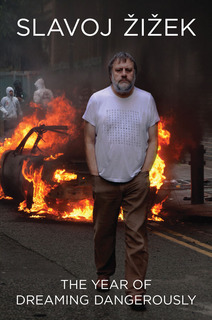
Žižek the polemicist is stirring Marx’s surplus value together with Lacan’s surplus enjoyment in his iron pot, as always. In The Year of Dreaming Dangerously he writes about the London streets of 2011 and Tahrir Square, about how that year’s great awakening was killed, buried, and had flowers planted on the grave by media spectacle and liberal recuperation. The diagnosis is sharp: each uprising briefly punctured the membrane of capitalist realism, only to be narrativised into harmlessness by the very system it threatened. What Žižek understands, and what the orthodox left sometimes forgets, is that the problem was never the absence of anger but the absence of a framework capable of converting anger into programme. The protesters could occupy the square but not the concept. He no longer believes history will gently self-correct, the way the old-school Marxists waited for productive forces to finally burst through the chains of production relations. Žižek’s capitalism is a self-renewing, status-quo-preserving monster, kept alive precisely by crises, feeding on its own contradictions rather than succumbing to them. Institutionally manufactured scarcity, the commodification of dissent, the liberal co-optation of radical energy: these are not bugs but features. We need radical transformation, he insists, and perhaps he is right. But 2011 was nearly fifteen years ago, and nothing that fierce has come back. The book’s greatest strength, its sense of urgency, is also the source of its pathos. The dreaming was real, the danger was real, and the waking was permanent.
Most choices in The Wolf Among Us do not materially change the story; so what? The choices operate at the level of interpretation rather than consequence: they determine not what happens but what it means. When one chooses to tear off Grendel’s arm or show mercy, the plot continues either way, but one’s understanding of Bigby, and one’s complicity in his violence, shifts. This is closer to how ethical life actually works: most moral decisions do not fork the universe, yet they constitute the person making them. One does not roleplay Bigby Wolf; one becomes him. The choice design never signals the correct answer, never tips its hand with a moral compass or a dialogue-wheel colour code, so decisions about interrogation under duress, violent enforcement, vigilante justice, and the economics of sex work arrive with a weight that games with vastly more ‘real’ consequence routinely fail to achieve.
Ironically, in a story populated entirely by fairy-tale characters, one encounters more corruption, humanity, sin, and justice than in most games set in the ostensibly real world. Fabletown operates as a compressed allegory of late-capitalist urban life: its government, funded by wealthy donors, structurally guarantees that the rich dictate policy while the poor are administered. Glamour, the magic that lets non-human Fables pass as human, is a precise analogue to the economic prerequisites of social belonging: without it, one is banished, rendered invisible or criminal by default. The Crooked Man runs a parallel welfare state, loans and employment and black-market glamour, extracting debt bondage in return; the sex workers at the Pudding & Pie are enslaved through enchanted ribbons that literally silence them. The metaphor and the mechanism are identical: marginalised people cannot speak because the structure of their exploitation forbids it.
Bigby himself embodies the contradiction of state violence. As sheriff, his brutality is legal; as the Big Bad Wolf, it is monstrous; the game forces one to negotiate this line in real time, knowing that both modes serve the same institutional apparatus. The democratic trial at the end replaces a boss fight with a civic process. The Crooked Man mounts a genuine defence: ‘When your government abandoned you, I was there.’ Depending on one’s earlier conduct, some citizens believe him. The verdict is predetermined, but whether the community accepts the outcome depends on how power was exercised throughout; and the game ends not with resolution but with Nerissa’s ambiguous confession, a final reminder that systemic injustice survives the removal of any individual villain.
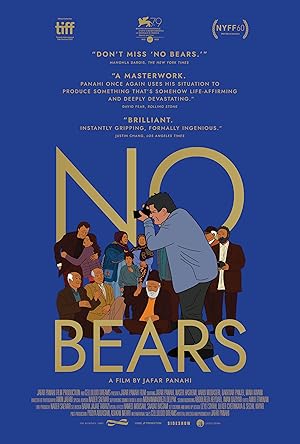
The point bears repeating: a director’s imprisonment does not retrospectively redeem the work. No Bears arrived with Panahi already serving a six-year sentence, completed and smuggled out just before his arrest, and the international reception was coloured by an entirely human impulse to make the suffering count by inflating the art. Understandable. Insufficient.
The film’s central device, Panahi playing himself directing remotely from a border village while his film-within-a-film spirals beyond his control, is a variation on self-reflexive fourth-wall dissolution that has been practised since at least Godard and has by now lost whatever defamiliarising charge it once carried. The parallel between Panahi’s constrained position and the entrapment of his characters is legible enough, but legibility is not the same as power. One must be able to distinguish courage from excellence; the failure to do so helps neither.
Where is the meaning? Kojima’s story of reconnection now asks to be read through the age of pandemic and disaster, but Death Stranding delivers that story in the most detached, alienated way possible. Take BB: rather than allowing Sam and BB’s bond to form through felt experience, soothing BB is coded as a chore, a mechanical obligation, so that the endless crying reads less as emotional content and more as system noise. The disconnect is symptomatic. Player assistance for other players is registered through ‘likes’, a term that in social media has been so thoroughly alienated from genuine connection that using it here does not subvert the emptiness but replicates it. If this is intentional commentary on the hollowness of digital solidarity, the game never earns the ironic distance that would make the commentary legible.
Is the fetch-quest loop of gathering resources to build roads fun? No. Is ten minutes of gameplay followed by ten minutes of cutscene a defensible structure? No. The traversal, at its best, has a meditative quality, and the world is visually arresting in its desolation; but meditation without purpose is just waiting, and Death Stranding (2019) asks the player to wait a great deal. And now A24 is making a film. Privately, I think film was always the ideal form for this material: Kojima’s instincts are cinematic, his pacing is cinematic, and the interactivity here feels not like an enrichment of the story but an interruption of it.
The first third of Punch-Drunk Love is a sustained panic attack, and it is not enjoyable in any conventional sense: Barry Egan’s (Adam Sandler) world is so compressed by his seven sisters’ contempt, so coiled with misdirected rage, that the film’s colour bursts feel like alarms going off inside the nervous system. Anderson calibrates the discomfort precisely, which is to say he makes it feel involuntary rather than designed. Then the middle third opens into something unexpected: a love story, tender, complicated by Barry’s lies but never undermined by them, because Lena Leonard (Emily Watson) sees something in him that the film insists is really there. Sandler, working in a mode nobody had yet allowed him to find, makes Barry’s yearning feel enormous and completely unperformed.
The final third is where the film becomes quietly extraordinary. Barry flies to Hawaii, confronts Philip Seymour Hoffman’s Dean Trumbell with a concentrated calmness that reads as the other side of his rage, and returns changed. Anderson gives Barry a redemptive arc that most films of this kind would not dare make coherent, and makes it coherent anyway, not through epiphany or therapy but through the physics of love: a man whose entire body has been an instrument of anxiety learns, in the presence of one person, to be still. The phone booth lights up the moment Lena answers. The colour palette shifts from oppressive white to warm gold. I came away in awe of the calibration: a little love, a little comedy, a little violence, a little greasiness, the proportions somehow always exactly right, the whole thing saturated with a singular strangeness that belongs to no other filmmaker working in English.
Jon Brion’s score is inseparable from the achievement. PTA forbade any harmonium on the soundtrack, so Brion built the anxious textures from prepared piano and a dreidel with air vents, two slightly out-of-tune chords Doppler-shifting as it spins. But Sandler’s on-set noodling on the prop harmonium was recorded, and fragments leaked into later cues: the diegetic and the non-diegetic bleed into each other until the distinction stops mattering, which is exactly what happens to Barry’s inner life and his outer one. It is a score that participates in the story rather than describing it, and the film without it would be a different, lesser thing.
Setting aside the fanservice, one has to ask: is Stellar Blade even a good game? In a genre glutted with action RPGs, it barely passes. Shift Up appear committed to wasting the player’s time: countless unskippable animations, a camp recovery sequence that runs at least eight seconds, a desert city teleport clocking half a minute, every line of dialogue gated behind a two-second skip delay. Does Shift Up believe their writing merits this enforced attention? And the action system, stripped of its visual polish, offers nothing cognitively demanding beyond repeating the circuit.
The platforming is a disaster. Eve’s turning radius spans at least two body-widths; ledge-grab detection is opaque at best; her running momentum is set absurdly high, as though the movement designers and the level designers never spoke. The plot sits at kindergarten level, all its exposition dumped rather than dramatised, and the combination of forced cutscenes and mechanical shallowness produces a peculiar compound boredom: not the boredom of nothing happening, but the more insulting boredom of a game that believes a great deal is happening while the player can see it is not. If this passes as a good action RPG, there is no saving the current triple-A market.
Season 4 is the first to feel the weight of the show’s own success. Kaleb, who was twenty-one when the series began and is now a bestselling author with a national tour, is absent for the first stretch of filming, his fame having outgrown the farm that produced it. In his place Clarkson hires Harriet Cowan, a twenty-four-year-old farmer and nurse from Derbyshire whose competence is immediate and whose banter with Clarkson is natural. Kaleb’s return carries a tension the show has not previously contained: the dynamic has shifted, his confidence curdled into something less charming, and when Clarkson pulls him aside to tell him off for his behaviour towards Harriet, the exchange does not feel staged. The later harvest row, the most heated exchange in the show’s history, confirms it: the comedy that sustained the first three seasons has developed an edge that neither party seems entirely comfortable with.
The pub, The Farmer’s Dog in Asthall, is the season’s new project and its most divisive element. The farm-to-fork concept extends the show’s argument for agricultural diversification, the same argument the council blocked in Season 2 now pursued through a different venue. But the proportion of screen time given to pub renovation and menu planning inevitably dilutes the farming. Clarkson’s health scare, two stents fitted after the combined strain of harvest and pub opening pushed him past his limits, is handled with characteristic bluntness. He is sixty-five, visibly aged across four seasons of work he did not have to do, and the question the show can no longer avoid is how long a body that entered farming as a middle-aged novelty can sustain the demands of a profession that breaks younger ones.
I set down the controller in tears at chapter five. A fighter I had admired throughout the journey, steadfast across hours of ruin and brutality, suffers, struggles, and falls apart completely, and the moment strikes with a force that I was not prepared for. Lies of P: Overture has spent every preceding hour earning that collapse: the snow-covered zoo, the blood-red roses, the long passage through a city in its final winter. Round8 build each area with a specificity that rivals the best of the base game, and the DLC weaves them into a continuous elegy for a civilisation that the player pieces together brick by scarred brick. By the time the collapse arrives, it does not feel like a plot point. It feels like a personal loss.
One did not expect Round8 to improve on Lies of P (2023) this clearly. The combat is tighter, the environmental storytelling denser, the emotional depth greater; the new areas carry their own atmospheres with a confidence that suggests a studio working at the height of its powers. The DLC is extension and deepening at once, a work that retroactively enriches the game it grows from. The original was already the strongest soulslike outside FromSoftware’s own catalogue. Overture makes the case that Round8 are no longer operating in anyone’s shadow.
In honour of ‘Legendary Stalker’ Lea Florence.
One thinks back to a year ago, flying high with Lindsay, lying on a mattress talking about the meaning of life. Lindsay, laughing helplessly, said that it is the suffering that defines our lives. One was unconvinced then, argued back, found the claim too neat, too consoling in its bleakness. A year has passed and it has proved true, or true enough that the distinction no longer seems to matter. Steve Carell’s Frank delivers the Proust speech to Paul Dano’s Dwayne on the roadside slope, and it is the film’s thesis, delivered flatly and without ceremony: Proust thought the suffering years were his best years, because they made him who he was, and one would not want to miss out on all that suffering. The film, directed with complete tonal control by Dayton and Faris, earns this moment because it does not treat the Hoover family’s disasters as darkly comic backdrop but as costly. Alan Arkin’s Grandpa’s death costs something. Dwayne’s shattered dream costs something. Greg Kinnear’s Richard’s failure costs something. The humiliation of the pageant finale costs something, and then Abigail Breslin’s Olive transforms it into something else entirely.
One must acknowledge: seeing Steve Carell’s face, one can only think of Michael. This is not quite a criticism. It says something about the performance’s generosity that the ghost of Dunder Mifflin does not capsize the scene; Frank’s wisdom holds anyway. The road movie structure is a container for something older and stranger, a meditation on what it means to stay in the car, keep driving, and count the suffering as the substance of the thing rather than its obstacle. Proust in a VW bus. One was unconvinced a year ago. One is not unconvinced now.

Part of one wants to declare this film vitally important, to perform the appropriate solidarity: Panahi, banned from making films in Iran, unable to accept his Golden Bear at the Berlinale, has suffered imprisonment for his convictions in ways that ought to shame every government that speaks the language of artistic freedom. The impulse is understandable. It is also, as a basis for aesthetic judgement, completely useless.
Because the film, evaluated on its own terms, reads like a directed writing exercise. The format, a series of conversations filmed inside a Tehran taxi Panahi drives himself, produces scattered vignettes and occasional flashes of wit; but scattered vignettes and occasional wit are not sufficient to constitute a film. Courage is not a formal argument. Watching Taxi, one is moved by what it cost to make it, and left cold by what it is.
High summer on the Finnish archipelago operates by a different clock. The light refuses to leave. A newly planted poplar, a newly arrived storm, a family appearing on the neighbouring island: events of a scale that would be invisible elsewhere arrive here with the full weight of the world. Tove Jansson’s 1972 novel understands this tempo precisely, and Charlie McDowell’s adaptation, shot on 16mm among islands that seem to exist slightly outside ordinary time, has absorbed that understanding into every frame. Sturla Brandth Grøvlen’s cinematography captures particular, tactile details of light and texture rather than postcard panoramas; the warmth that emerges feels analogue in the oldest sense, as though the film stock itself remembers what digital cannot.
The film’s subject is, on its surface, the relationship between a grandmother and nine-year-old Sophia navigating a summer of loss. But Jansson’s structural insight, which McDowell preserves, is that grief and vitality occupy the same space in childhood, and that a child can hold both without needing to resolve the contradiction. The island becomes a kind of ontological enclosure in which the end of life and its beginning coexist without embarrassment. Glenn Close’s grandmother is frank about her own approaching death in the way that only the very old and the very young can be: without performance, without the middle-aged machinery of denial. Emily Matthews, in her first role, matches her with an appealingly restless directness. Anders Danielsen Lie’s father, retreated into his illustrations and his numbness, is the grief the film does not narrate but lets one feel through absence.
One thinks of The Outrun (2024): Saoirse on the Orkney grass, standing at the sea’s edge, becoming wind, becoming a downpour, becoming part of the world’s eternal turning. The Summer Book achieves something adjacent but quieter, less turbulent in its beauty and therefore more permanent-feeling. Hania Rani’s score shimmers beneath the surface without ever competing with the ambient sound of waves and wind, and the closing archival footage of Jansson herself, hair decorated with Midsummer flowers on the island that inspired the novel, bridges fiction and autobiography with a grace the film has earned. It asks very little of one’s critical apparatus and takes everything else. The most beautiful film I have seen in years.
Žižek is not defending totalitarianism. He is trying to show that ‘anti-totalitarianism’ is liberal ideology’s self-deception mechanism: the conceptual blockade that forecloses any serious left politics by equating every emancipatory project with the Gulag. Did Somebody Say Totalitarianism? is full of deliberate provocation; his discussion of Agamben’s Muselmann, the camp figure reduced to bare survival, is a prime example, designed to make the reader flinch and then think about why they flinched. The provocation is more than mere contrarianism because Žižek grasps that the liberal sanctification of suffering has its own ideological function: it turns historical atrocity into a moral absolute that conveniently immunises the present order from critique. His strength is directness and sharpness, though some Lacanian concepts remain overly opaque, giving the rhythm an uneven quality, lurching between electrifying polemic and passages that feel like theoretical throat-clearing. But the insight at the intersection of politics and psychoanalysis is undeniable. Chapter three applies almost too obviously to a certain country’s current situation, and, more diffusely, to the liberal democracies too: sanctifying tragedy, tabooising totalitarianism, concretising the individual, dogmatising myth. The pattern Žižek identifies, in which the very invocation of ‘totalitarianism’ becomes a thought-stopper rather than a thought, feels more relevant now than when he wrote it. One does not have to follow every Lacanian loop to recognise the claim: the loudest anti-totalitarians are sometimes the ones least willing to examine the structures they defend.
The premise of The Rehearsal Season 2 is that Nathan Fielder is going to solve aviation safety. He has noticed a pattern in cockpit recordings of fatal crashes: co-pilots who see the captain making a mistake and say nothing, crews who cannot communicate under stress, hierarchies that kill. His solution is to build a full-scale replica of Houston Intercontinental Airport, staff it with actors, and use it to study how pilots behave. The budget is staggering; the commitment is total; and the logic is, as always with Fielder, just plausible enough to sustain the comedy while the real project unfolds beneath it.
The real project arrives in the fifth episode. Fielder discovers that Season 1 has been embraced by autistic viewers, many of whom recognised the rehearsal method as something they already practise: scripting social interactions, preparing for every possible outcome, masking. He repurposes the airport set as ‘Nathan’s Airport’, a simulated travel environment where neurodivergent children can rehearse navigating the sensory and social demands of flying in a space where nothing is at stake. The apparatus built for comedy becomes, without announcement or self-congratulation, an act of genuine care, and the season is wise enough to let this happen quietly rather than claiming it as a thesis. In the finale, Fielder reveals that he has spent two years actually learning to fly. He co-pilots a Boeing 737 with a hundred and fifty passengers on board, exploiting a regulatory loophole that allows it so long as nobody is paying for the flight. When he lands the plane, a crowd of actors from across the season cheers on the tarmac. The rehearsal, for once, has become the thing itself. Whether Fielder understands the difference is the question the show has always been asking, and Season 2 is the first time the answer might be yes.
Anatole ‘Zsa-Zsa’ Korda (Benicio del Toro), arms dealer and richest man in 1950s Europe, pulls his only daughter Liesl (Mia Threapleton) out of a convent to name her his heir over nine younger sons. Korda then drags Liesl and her Norwegian entomologist tutor Bjorn (Michael Cera) through a globetrotting circuit of robber-baron meetings to pitch a hydroelectric scheme that no one funds. The business trip is a mechanism for something else: a father trying to reconnect with the daughter he abandoned after her mother’s murder, which Liesl suspects he arranged. Anderson, working with Roman Coppola’s story, has found in this father-daughter architecture a warmth that The French Dispatch (2021) and Asteroid City (2023) deliberately withheld.
Anderson introduces a fluidity, an almost conspiratorial warmth between the camera and its subjects, that his films have not risked in years; the film feels, improbably, like the director choosing to be present in his own work again. The signature grammar remains: symmetrical compositions, deadpan deliveries, the Anderson palette of mustards and teals. But where Asteroid City retreated into nested frames and The French Dispatch into anthologised detachment, The Phoenician Scheme commits to a single propulsive narrative, and the commitment produces a sincerity that Anderson’s recent pictures had kept under lock. Threapleton, in her breakout role, meets del Toro’s volcanic charm with a stillness that makes the reconciliation feel earned rather than inevitable. Korda funds the scheme himself in the end, donates his fortune, and takes a kitchen job; it is a darkly comic redemption that Anderson frames with exactly the right distance, close enough to feel something, far enough to wonder whether one should.
Ludwig Göransson’s score is the only thing in Sinners that operates at the level of its ambition. The blues-to-rock-to-hip-hop-to-gospel-to-African-drum oner that erupts when Sammie (Miles Caton) plays ‘I Lied to You’ at the juke joint opening is, by some distance, the most extraordinary set piece of the year: a single continuous shot in which the music tears through six eras, each flowing into the next with a temporal fluidity that makes the sequence feel visionary. Göransson, recording on a period Dobro resonator and collaborating with Brittany Howard, Raphael Saadiq, and Rhiannon Giddens, deserved a better film around him.
The film around that sequence does not deserve it. Michael B. Jordan’s twin brothers Smoke and Stack are charismatic enough, but Coogler asks the vampire mythology to do more structural work than its wet-paper logic can bear. The siege at the juke joint is hilariously illogical: characters who have just been told how the vampires operate proceed to do exactly what they were told not to do, and the staging compounds the error by making the geography of the house impossible to follow. Jack O’Connell’s Remmick, the lead vampire, is an allegory for cultural appropriation that the screenplay states once, loudly, and then never dramatises with any depth. The final act abandons even the pretence of internal coherence and delivers a prolonged shootout that plays like a crowd-pleasing spectacle in search of a film that could justify it. I came away admiring Göransson’s sequence and mourning the two hours that surround it.
The first episode of Love, Death + Robots Volume 4 has no story, no characters, no dialogue, and no twist. This is not an artistic choice in the manner of experimental film; it is, as its critical reception eventually confirms, a symptom. The season proceeds from that opening to nine more episodes, some of which contain the formal elements of narrative, though few contain its energy. Close Encounters of the Mini Kind is Night of the Mini Dead reassembled with aliens substituted for the undead, the ending preserved unchanged. The remaining episodes demonstrate competence in their respective animation styles, which critics have cited in lieu of the more important observation: technical diversity without thematic ambition is display, not a body of work. The question the season raises is whether the anthology format has reached natural exhaustion, or whether this particular production cycle, extended to three years, was produced without the creative urgency of the earlier volumes. The critical adulation is a courtesy, the kind extended to long-running series whose cultural reputation exceeds their current output. Volume 1 arrived with something to prove; Volume 4 arrives with a reputation to maintain, and the difference shows in every episode that mistakes tonal range for imaginative depth. The form can do more than this. It has done more than this.
Standing among the flags of Expedition 33 planted in the ruins of Lumière’s walls, one still thinks back to the resolve and faith carried at the start. Clair Obscur: Expedition 33 is a first-time studio’s debut, and the fingerprints are visible everywhere: in the occasionally uneven pacing, in dialogue that sometimes strains for profundity it has not quite earned, in systems whose ambition outreaches their polish. The critical consensus has been warmer than the game’s inconsistencies strictly warrant, and the ‘game of the year’ murmur feels premature.
Sandfall Interactive have made a world worth remembering. The white great tree on the vast continent, the golden harvest fields, the sky-piercing endless tower, the ancient people’s Babel, the solemn rock at the centre of the sea: each set piece is constructed with a visual confidence that belies the studio’s inexperience. The turn-based combat borrows from the genre’s best without quite synthesising its influences into something new, and the narrative, for all its ambition, resolves its main mysteries with more spectacle than substance. But I think I will still remember the harbour of Lumière a long time from now, and for a debut, that is not nothing.
Glimpsed through the backs of Haider (Ali Junejo) and Biba, Mumtaz’s (Rasti Farooq) interiority arrives obliquely, accumulating in locked rooms and stolen minutes behind closed doors. She wants to work; she wants to be self-sufficient; she wants a life in which she can come and go without accounting for it to anyone. These are not extravagant demands. In a society that accommodates transgender women only through voyeuristic fascination, and looks with blithe indifference on male incompetence and appetite, her desires read as utopian. Haider, the youngest son in the patriarchal Rana household, takes a job at an erotic dance theatre and falls for Biba; the affair is the catalyst, but Sadiq’s structural intelligence means that the real displacement happens to Mumtaz, who is made to quit her own job the moment Haider starts earning. The economy of desire in this film is zero-sum: every freedom one character takes is subtracted from another.
Saim Sadiq’s debut, winner of the Cannes Un Certain Regard Jury Prize, is unusual in the patience with which it refuses to offer Mumtaz as simply a victim, or Biba as simply a symbol. Both characters are permitted the full weight of personhood: contradiction, will, desire, a complicated stake in the systems that constrain them. The film was banned by Pakistan’s censor board before a partial reinstatement, a reception that demonstrates rather efficiently the point it is trying to make. Alina Khan’s Biba, a real transgender actress in the role, brings a physicality that resists every available framework for reading her, which is precisely the film’s argument. The patriarch Salmaan Peerzada plays carries the older generation’s authority with a gentleness that makes the cruelty of the system he upholds all the more legible; one cannot hate him, which is the problem.
The question Sadiq lodges in the final image is not who survived, but at what cost, and by what logic survival was allocated. Mumtaz’s freedom, when it comes, arrives in the form that the film’s world makes available to her. It is the only form available. That is the most devastating sentence the film speaks, and it says it without a word.

If GRIS (2018) demonstrated minimalist game design through its art and wordless level design, Neva takes that foundation and builds vertically: the same aesthetic sensitivity, now coupled with a combat system that gives the progression mechanical pressure GRIS (2018) lacked. Artistically, Neva has some of the most striking 2D side-scrolling art design one is likely to encounter in any given year. Some scenes contain spectacle so bold, so confident in its use of colour and scale, that the word ‘beautiful’ feels insufficient; Neva’s images feel as though they had to exist. The world’s collapse is conveyed with total clarity through visual language alone: no exposition, no dialogue, just the steady darkening of a palette and the encroachment of void.
On level design, Neva retains GRIS (2018)’s key-and-lock structure but expands the protagonist Alba’s movement vocabulary significantly: the increased mobility adds variety to the levels themselves, transforming platforming from a traversal necessity into something closer to expressive play. The puzzle difficulty stays low throughout, but this is not a flaw; it is a deliberate decision to keep the emotional throughline unobstructed. Four hours later, one realises with a start how deep the attachment to the wolf Neva has grown: the bond was never announced; it accumulated, silently, through proximity and shared danger, until separation became unthinkable.
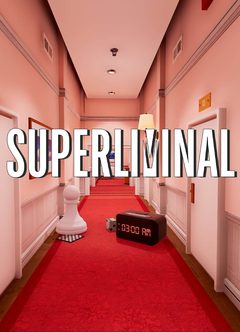
In the era of The Stanley Parable (2013) and The Witness (2016), one of the most brilliant ideas in the genre came from Pillow Castle with Superliminal: using forced perspective to merge player subjectivity with the game itself, a conceit so elegant that the first half produces a nearly continuous sense of delight. The horror-adjacent content that surfaces in the second half also deserves credit for preventing the simpler puzzles from feeling quite as repetitive as they might otherwise.
Unfortunately, the team did not have the right person for puzzle design. Compared to Portal (2007) and The Witness (2016), Superliminal falls into ‘reskinned puzzle’ territory in its second half: ‘enlarge the object, climb the object, reach the next platform’, repeated a dozen times over. However good the idea, however much is hidden in the margins, for a puzzle game the puzzles themselves still matter most. The concept deserved a sequel’s worth of refinement; as it stands, Superliminal is a brilliant proof of concept that runs out of variations before it runs out of levels.

Kana (Kawai Yumi) is insufferable. She is manipulative, dishonest, casually cruel, serially unfaithful, and constitutionally incapable of sitting still in her own life. She cycles between Honda (Kanichiro), a gentle live-in boyfriend she finds boring, and Hayashi (Kaneko Daichi), a self-assured creator whose confidence she mistakes for substance, lies to both with a fluency that suggests she has lied to herself first, and drifts through a laser hair-removal salon with the specific restlessness of someone who suspects, correctly, that none of this is the life she was meant to live. Japanese cinema has a long tradition of aimless young women in the city, from Ozu’s working girls to the disaffected heroines of Koreeda and Hamaguchi, but Yamanaka Yoko does something different with the type: she refuses to aestheticise the drift. Desert of Namibia does not frame Kana’s contradictions as enigma or malaise; it inhabits them with a sincerity so total that judgement becomes irrelevant.
Kawai’s performance is the engine. She plays Kana with a physical restlessness that is never performed: the constant fidgeting, the way she occupies a room by destabilising it, the escalation from emotional volatility into outright violence against the man she chose. Yamanaka never flinches from this, never softens Kana into someone the audience can comfortably root for, and never reduces her to a diagnosis. The recurring image of a Namibian waterhole livestream, animals gathering at an artificial trough in the desert, becomes the film’s quiet organising metaphor: Kana, too, orbits structures she did not build, drinking from sources that cannot sustain her. Yamanaka structures the film as a series of domestic scenes that accumulate into character rather than plot, and the FIPRESCI jury at Directors’ Fortnight was right to recognise the achievement here: purity taken to its extreme condenses into the ordinary, and the ordinary, looked at with enough attention, becomes difficult to dismiss. All of Kana’s contradictions, the cruelty and the tenderness, the compulsive dishonesty and the inarticulate longing for something true, dissolve not into resolution but into the simple fact of a person continuing to exist. It is a second feature, after Amiko (2017), of remarkable assurance.

I became a devoted Michel Koch fan through Life Is Strange (2015); when Lost Records: Bloom & Rage first announced him as director, I had full confidence in the story. It does not disappoint. Kat, fierce and loyal and carrying the weight of her family’s collapse with a stubbornness that recalls Chloe Price at her most magnetic, made me relive the attachment and feeling I had a decade ago when I first played LiS (2015). Parting is hard; reunion harder. Koch has not abandoned his style under the pressure of today’s faster-paced narrative games; he has doubled down, telling a slower, more patient, more immersive story than the market seems to demand.
Who does not want to be young again and reckless, surrounded by friends who stick together through everything? Who does not want to help someone one cares about get back at the world, help them reach what seems impossibly far? Kat wrote in a letter: she knew the first time she saw me that we would be soulmates. I suddenly started crying. The camcorder mechanic and the 1995 setting give the game a texture that Life Is Strange (2015) never quite achieved: the physicality of VHS, the deliberate slowness of analogue memory-making, the way recorded images acquire weight precisely because they cannot be undone. Koch understands that nostalgia is not the emotion; it is the substrate on which other emotions grow.
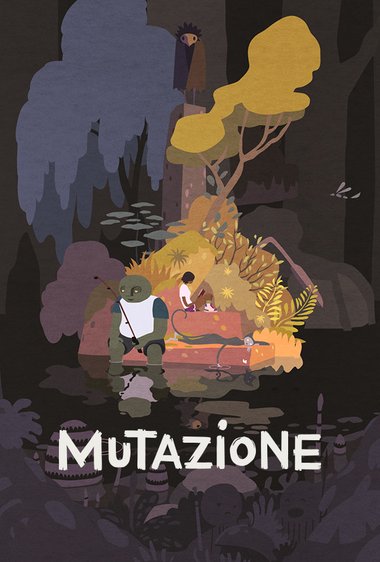
The earth beneath the pap tree cracks open under the impact of the meteor Moon Dragon, and on the island left behind by the catastrophe, what blooms is diverse life and strange communion with nature. Mutazione is a game about aftermath: not the disaster itself, not the recovery, but the long, quiet period in which a community learns to live with what has changed. Die Gute Fabrik build this world with uncommon tenderness, each character carrying their own relationship to the catastrophe, their own accommodation with loss, their own small acts of renewal. The musical gardens are the purest expression of the game’s ethos: one plants, one tends, one listens, and the garden responds not with reward but with beauty, which is not the same thing.
When the pap tree scatters its white downy flowers again, when the fungi underground spread their glowing spores anew, when death is no longer an endpoint but a transition, one accepts all of this transience. And plants a flower field under the lighthouse by the sea. Mutazione does not argue for its vision of life and death; it simply presents it, with such warmth and such patience that resistance seems beside the point. A game about the specific miracle of things continuing.

After the accumulated disappointments of Seasons 5 and 6, the bar had been lowered to the point where mere competence would have registered as a triumph. Season 7 manages considerably more than competence. The Bandersnatch (2018) connection in Episode 4 is its best gamble: Peter Capaldi’s performance anchors a premise nested within the Bandersnatch timeline, and Brooker’s return to the Tuckersoft universe demonstrates that the Black Mirror multiverse can bear the weight of its own mythology without collapsing into fan-service. Episodes 1 and 3 do unusually sustained work on privacy and personhood, the commodification of consciousness in ‘Common People’ and the posthumous rights of a reconstructed identity in ‘Hotel Reverie’, territory that feels thought through rather than gesturally invoked. The final episode works as proper science fiction in the classic mode.
The minor failures are mostly inherited: tonal inconsistencies and structural tics that have accumulated across seasons and resist easy correction. But Season 7 suggests that Brooker has located again the series’ old use: the precise application of technological extrapolation to the vulnerabilities one would rather not name. It is enough to make the next season feel less doomed.
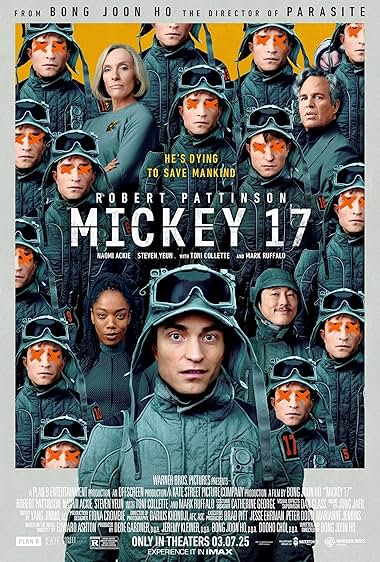
I finished the film in a state of bewilderment, the kind produced not by complexity but by its opposite: the sensation of watching a director who apparently did not know what film he was making. Mickey 17 claims to be a love story between Nasha and Robert Pattinson’s Mickey; Naomi Ackie’s Nasha is characterised so flimsily that the woman present in the final act is functionally a different character from the one introduced in the first, the connective tissue between them simply absent. It claims to satirise Trump-inflected authoritarian populism; the grassroots movement that supposedly sustains Mark Ruffalo’s demagogue receives no exposition adequate to the satirical weight the film tries to place on it, and the civilian resistance organisation materialises near the end as though someone remembered it was needed. The film gestures towards the social structure of Niflheim’s native creatures, towards the ethics of colonial extermination, towards cross-species communication, towards the personhood of expendable clones, and towards the political economy of a disposable workforce; it develops none of these threads to any point of consequence, dropping each in turn as if attention itself were too costly to sustain. The result passes through science fiction, satire, and romance without stopping long enough to belong to any of them, and earns no description except juvenile. The film’s only irony is unintentional: a satire of a leader who does not know what he wants, made by a director who demonstrably did not know what he wanted to make.
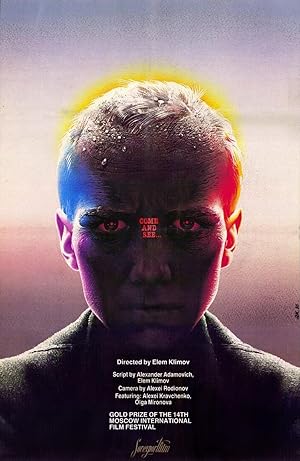
Aleksei Kravchenko was fourteen when he played Flyora, and the change on his face cannot be faked. Watch face after face pass from life to death. Watch the houses erased by fire and bullets. Watch Flyora age years in the span of days, his face transformed from a boy’s earnest excitement into something that has no name in peacetime. Watch the cattle and the horses and the donkeys massed on the blood-soaked hillside in the rain, desperate and uncomprehending. Klimov films atrocity without the editorial distance that usually makes atrocity bearable for an audience; there is no cut that offers relief, no compositional beauty that aestheticises the suffering into something one can appreciate from outside. The title comes from Revelation 6: as each seal is opened, one of the four living creatures says ‘Come and see’, and what follows is a horseman. Conquest, war, famine, death. Klimov and co-writer Ales Adamovich, who fought as a teenage partisan in Belarus, drew on survivor testimony and on the specific historical record: the Khatyn massacre, where an entire village was herded into a barn and burned alive, and the broader campaign that destroyed over five thousand Belarusian settlements and killed roughly a quarter of the country’s population. Come and See does not contextualise this for its audience. It does not explain. It puts one inside the burning barn and asks whether one can continue to watch. The answer the film demands is the answer its title commands: one must.
The closest comparison in recent cinema is Glazer’s The Zone of Interest (2023), which approaches the same historical catastrophe through its photographic negative: the violence offscreen, the perpetrators shown in their domestic ordinariness. The two films arrive at the same place by opposite routes. Come and See puts one inside the horror until the horror becomes the only reality there is. That Klimov never directed another film after completing it is not incidental; it is the only coherent response to having made it. He died in 2003, having spent eighteen years not making films, which is its own kind of testimony.
Less than two hours, and I was crying at the ending. The Unfinished Swan begins with the player’s curiosity, and as the game progresses, it gradually reveals just how rich, vivid, and full of energy that curiosity is. If What Remains of Edith Finch (2017) is Giant Sparrow’s family epic, a game in which mechanics and narrative fuse with rare artistry, then The Unfinished Swan is its first principle: play itself, the simple act of throwing paint into white space and watching form emerge, is sufficient to carry meaning.
The creativity and novelty compressed into ninety minutes could fill a ten-hour puzzle game, but Giant Sparrow know when to stop. Each new mechanic, each shift in visual language, arrives at exactly the moment the previous one has been fully absorbed, so that the game’s brevity feels not like a limitation but like an act of discipline. A game that makes one nod in quiet appreciation while playing. I am more excited about Giant Sparrow’s next game than even Edith Finch (2017) made me.
Desperately wanted to love this: Super Mario Odyssey (2017)-tier platforming, wonderfully eccentric art direction, brilliant visualisation of the brain and its pathologies. Psychonauts 2 has the raw material for something exceptional, and Double Fine systematically bury it under padding. Hundreds upon hundreds of collectibles: some levels contain well over a hundred figments alone. Combat that is mechanically simple yet inexplicably drawn out, the system itself rough enough that encounters become endurance tests rather than engagements. A pointless RPG-lite progression system in which one can finish the entire game without upgrading anything. And a staggering excess of transition animations, some levels featuring animations that run longer than the actual playtime.
All of these ideas, every one of them brilliant in isolation, could have been condensed into five sharp hours. Astro Bot (2024)’s precision-editing is the obvious comparison: a game that knows exactly how long each idea should last, and moves on the moment it has been fully expressed. Psychonauts 2 does not know this. Its ideas are diluted with collectible padding and constant cutaways until ‘fun’ becomes a memory of something one felt three hours ago. Watered-down fun is not fun.

In an era when most soulslikes emphasise spectacle and map exploration, The First Berserker: Khazan returns to the territory Team Ninja opened nearly a decade ago with the Nioh (2017) games and puts its faith in boss design. The premise is unfashionable: pattern memorisation as the primary skill, repeated attempts as the primary structure, incremental learning as the primary reward. Yet Khazan demonstrates that this oldest of soulslike values, properly executed, generates a satisfaction no amount of spectacle can replicate. In each attempt against every boss, the player earns both material rewards and mental growth; no single move feels arbitrary or unfair; after every failure one can articulate in a few seconds exactly why it happened, and identify a new window for counter-attack and defence.
The Brink Guard and Brink Dodge system is elegant in its clarity: parry for posture damage at the risk of heavy stamina drain on mistiming, or dodge for safer but less aggressive play. Spirit generated through successful combat feeds into weapon skills, creating a positive feedback loop that rewards precision without punishing caution. Among the 3D soulslikes since Lies of P (2023), Khazan is the only one that truly demonstrates ‘every boss fight is a dance’: not a metaphor, but a structural description of the rhythm the encounters produce. The last ten bosses constitute a generational run of encounters. The story is negligible, the aesthetics consistent but uninspired, the side systems bloated; the team reminds one that making players study a boss, hone their technique, and reflect on themselves is one of the soulslike genre’s neglected pleasures.
In the years after Return of the Obra Dinn (2018), the indie world did not quite know how to top it. Then the Golden Idol (2022) series arrived, and this ‘fill-in-the-blank’ detective genre found its era. Last year: The Rise of the Golden Idol (2024). This year: The Roottrees are Dead, both using distinctive approaches to tell complex, bizarre stories; or rather, both designing precisely so the player pieces those stories together themselves. On that front, The Roottrees are Dead is exceptional: it takes what sounds like the most pointless mechanic imaginable, filling in a family tree, and transforms it into the key that unlocks dozens of narratives and an entire business empire. The act of connection, of linking name to face to relationship to motive, becomes the game’s central pleasure, and the writing carries enough wit and enough darkness that each new discovery feels earned.
The genealogical-detective conceit could easily have been a gimmick, but it is invested with enough narrative complexity that the family tree becomes a map of human frailty: marriages of convenience, inherited grudges, corporate machinations, the whole architecture of a dynasty built on secrets. Just for the writing, it is already worth it.
It is rare to encounter a series assembled with this degree of intention: every composition is a considered argument, every transition a quiet argument of its own. Ben Stiller’s direction presses on the story, turning Lumon’s fluorescent interiors into a kind of philosophical arena where the question of what constitutes a self is debated not in dialogue but in geometry and light. Season 2 sharpens that debate into something almost unbearable. The show’s horror has never been memory loss alone but the ethical abyss opened by splitting a consciousness in two, and here it commits fully to the implications, staging the innie rights question as genuine moral philosophy rather than speculative decoration. The discourse around Parfit and personal identity that has hovered over fan discussion since Season 1 is now absorbed into the show’s own dramatic logic.
Of the ten episodes, two inscribe themselves differently. ‘Chikhai Bardo’ is, in fifty minutes, one of the finest hours of television I can recall: Dichen Lachman carries the entire weight of a bifurcated personhood through the nearly imperceptible gap between blankness and recognition, and the episode constructs a three-dimensional portrait of an outie life from the fragments her innie cannot consciously access. It reaches full emotional dimensionality without resorting to flashback or exposition, which is rare enough. ‘Cold Harbor,’ the finale, does what finales rarely manage: it resolves the accumulated moral and narrative tension without deflating it, closing the season at a pitch of feeling that seems, afterwards, to have been the only possible destination.
The season is not without its ceiling. It is roughly what one hoped for before it aired: disciplined, formally rigorous, emotionally demanding, philosophically alive. That is not faint praise. Television that earns the philosophical weight it reaches for is vanishingly uncommon, and Severance has now done it across nineteen episodes without blinking.
Philip Barantini’s one-shot technique, already demonstrated in Boiling Point (2021), here finds its ideal subject. The absence of cuts is not a formal stunt: it creates a continuous, inescapable present-tense, the same temporal trap in which Jamie Miller and his family are caught. Jack Thorne’s script tracks a thirteen-year-old boy arrested for the murder of a female classmate, and the four episodes, each a single unbroken take, move from the family home and police station to the school, the clinical interview room, and back to the family home with the remorselessness of a process that has already concluded. Stephen Graham’s performance as Jamie’s father is the kind of acting that refuses to announce itself; the devastation accumulates in stillness.
The temptation is to read the series as a diagnosis of the Andrew Tate moment, and it is that, but the more unsettling implication is that ‘Andrew Tate’ and ‘incel’ are not a passing cultural weather system but a permanent feature of a landscape that has been under construction for some time. Those of us born in the late twentieth century are perhaps still in the comfortable denial of believing the environment we grew up in was the norm. It wasn’t; it was an interlude. The channels through which boys now receive information about what it means to be a man are unverified, algorithmically amplified, and beyond the reach of any school or parent. Adolescence names this clearly, and the four one-shot episodes give the naming a terrible continuity. It cannot, constrained to four episodes and the grammar of tragedy, offer a way through. Perhaps that is honest: the aftershocks of this particular cultural formation may only become fully legible a decade from now, when the children it has shaped are adults who must be lived with.
Mungiu frames the moral catastrophe of contemporary Romania through the most intimate possible unit: a father’s love for his daughter, curdled by the System he has spent his life both resisting and depending on. He has been mapping Romanian institutional pathology since 4 Months, 3 Weeks and 2 Days (Palme d’Or, 2007); Graduation, which shared the Best Director prize at Cannes with Olivier Assayas, is the entry where the lens turns inward. Romeo (Adrian Titieni) is not a villain; that is the film’s most precise move. He is a man of genuine principle who has arrived, step by step, at a position of total compromise, and Mungiu’s camera observes this without mercy and without accusation, which is a harder thing to sustain than either. The absurdism is structural: in a country where every institution runs on favours and mutual obligation, the attempt to shield one’s child from corruption becomes itself an act of corruption. The network of informal exchange that Romeo enters to secure Eliza’s examination results is not an aberration from the System; it is the System, metabolised into social life so completely that no one involved experiences it as wrongdoing.
Eliza (Maria Drăguș) is the still point around whom this rotates. She is simultaneously the reason for everything and the party with the least agency over any of it: the assault, the exams, the parental expectations, the future that has been decided in advance. Mungiu understands that Eliza’s resignation is not passivity but a lucid reading of her situation, and the film escapes the shape of a corruption procedural by staying with that lucidity. The moment she discovers her father’s affair arrives with a strange, vertiginous release: as if, in that instant, the architecture of obligation that has organised her entire life reveals itself as contingent, and she sees, for the first time, that she might live for herself.
My favourite atmosphere and music in any indie game I have played, and my worst map design in anything I have played. Hyper Light Drifter is a game at war with itself. Heart Machine built a luminous world: the pixel art is radiant, the soundtrack carries a melancholy that saturates every screen, and the opening sequence promises something visionary. All of it evaporates into terrible pathfinding and a map so useless it might as well not exist.
Heart Machine did not know how to design a navigational system, so they produced one that does not even clearly mark the player’s position. They did not know how to design boss encounters, so they assembled a few that look impressive but carry no mechanical substance and leave no memory. Years from now I will still remember HLD’s visuals. I will not remember anything else about the game. Now I understand why their follow-up Hyper Light Breaker (2025) stumbled in early access.
The experience of playing Ender Magnolia: Bloom in the Mist is remarkably similar to playing Blasphemous 2 (2023) after Blasphemous (2019): both incorporated modernised controls and extensive quality-of-life improvements over the original; both made previously opaque worlds and narratives clear and accessible; both elevated their respective series from cult classics to serious metroidvanias. Compared to Ender Lilies (2021), Ender Magnolia’s world feels more alive, yet the end-of-days atmosphere has intensified rather than eased, a paradox the game sustains with impressive tonal control.
Protagonist Lilac is the clearest improvement: more agentic, tougher, more fully human than her predecessor in Ender Lilies (2021). Where the first game’s protagonist felt like a vessel, Lilac feels like a person, and the distinction shifts the emotional tenor of the entire experience. The map design is stronger too; each biome is clearly differentiated, and certain sections carry unmistakable echoes of Hollow Knight (2017). A sequel that earns its upgrades honestly.
R.M.N. is sharper for being set somewhere that refuses the easy geography of the European refugee debate. Matthias (Marin Grigore) returns from a German slaughterhouse to a Transylvanian village that is itself a minority within Europe: Romanian, Hungarian, German, and Roma communities coexisting in a region with its own long history of being the unwanted party, the inconvenient cultural remainder. When Csilla (Judith State), who manages a local bakery, hires two Sri Lankan workers because no local Romanian will accept the wage on offer, the resulting explosion of collective rage is not irrational; it is the entirely predictable output of a community whose culture and economic development have been left behind by the forces that now, in the form of foreign labour policy, arrive to administer its consequences. Mungiu has always been interested in the structural production of moral failure, and here he is at his most forensic.
The film’s centrepiece is a nearly seventeen-minute unbroken town hall meeting, a scene that becomes a clinical demonstration of how democratic process can become the formal vehicle for something much older and darker. Every perspective in the room has its internal coherence: the capitalist factory owner sees a labour problem; the male chauvinist sees a threat to an order that benefits him; the declining village sees itself being erased. None of them are wrong about their own situation. They are simply wrong about its cause, and the Sri Lankan workers provide an outlet for resentments whose actual sources are diffuse, structural, and impossible to confront in a town meeting. Tensions redirect; the most vulnerable absorb what the System produces; and in the end, as Mungiu’s films reliably conclude, no one benefits. The title, a Romanian abbreviation for MRI, is exact: this is imaging of a social body’s interior dysfunction, conducted without anaesthetic.
The Palme d’Or was correct. Mungiu’s camera follows Otilia (Anamaria Marinca) through a single day in 1987 Communist Romania, and the way that camera regards a woman’s face as she navigates an illegal abortion is itself a political act. There is no male gaze here. What remains is observation rigorous enough to refuse both the aestheticisation of suffering and the pretence of neutrality. These are different refusals, and sustaining both at once is harder than it looks.
Ceaușescu’s Decree 770 is never named. It does not need to be. It is the air in every room, the thing that bends every interaction, every calculation, every wall that Otilia and Găbița (Laura Vasiliu) run into. Those walls are built by men: Mr. Bebe (Vlad Ivanov), whose terms are stated with the calm of someone who knows his leverage; the hotel clerk; Adi (Alexandru Potocean), whose birthday-dinner conversation grinds on while Otilia sits in silence, carrying what she has just carried across the city. Mungiu’s camera stays with her through that dinner in an unbroken take that makes its case without a word of thesis. This apartment, this table, this slush-covered street: bearable places. The hotel bathroom is not. What Otilia carries out of it, wrapped and wordless, is not just a foetus but the entire weight of a system that called itself a state. Four months, three weeks, two days. The only exposition the film needs.
Ozu’s final film is, as always with late Ozu, a study in the architecture of resignation. Shuhei (Chishu Ryu), an ageing widower, observes a former teacher, Sakuma (Eijiro Tono), reduced to drunken dependency on his unmarried daughter and recognises the pattern: his own Michiko (Shima Iwashita), who runs the household and cares for her brother, is being consumed by the same structural obligation. The decision to arrange her marriage is presented as an act of paternal generosity, a liberation. An Autumn Afternoon is too precise a film to accept this framing uncritically. It shows, with the formal composure that makes Ozu’s compassion feel almost unbearable, a woman whose life trajectory was decided before she was consulted. The ‘escape’ from being her father and brother’s unpaid domestic labour is, in practice, entry into the cage of patriarchal marriage; one form of erasure replaces another, and the System calls it love. Michiko’s tears on the night before her wedding say everything the film’s surface politeness cannot. She never told anyone she wanted Miura; by the time her father discovers the feeling, Miura has married someone else, and the groom the family arranges is never shown on screen. The low camera, the symmetrical interiors, the unhurried cuts: Ozu’s formal vocabulary is so controlled that the small disruptions, a lowered gaze, an unanswered question, a glass refilled one too many times, carry the weight of violence. The drinking scenes between Shuhei and his friends are warm and melancholic, men who fought in the Pacific War processing their obsolescence with saké and rueful humour, but the warmth does not disguise the film’s quiet document: a patriarchal order that reproduces itself through the bodies of its daughters while congratulating itself on its tenderness. The taste of saury, autumn, the season of things ending. I walked out admiring Ozu’s formal perfection and resenting the world he so faithfully records.
OMORI conflates psychological complexity with psychological cruelty. The game uses its protagonist’s mental illness as a narrative device to inflict suffering on the player without ever interrogating why that suffering should be interesting or instructive. The aesthetic is carefully calibrated to look sensitive: soft pastels, a hand-drawn style that borrows the visual vocabulary of tenderness, an RPG framework that signals introspection. But the structure beneath the surface is not sensitive at all. It is manipulative in a manner that mistakes discomfort for depth, operating on the assumption that depicting harm at length is the same as examining it. Depression is not an excuse to aestheticise harm to others, and indie games are not an excuse to waste the player’s time.
The first thirty minutes demonstrate what the game might have been: focused, strange, unsettling in its deployment of RPG conventions against themselves. Everything after those thirty minutes is a steady dissipation of promise into tedium. The game asks for twenty to thirty hours and offers, in return, a trauma reveal that the structure has been pointing towards so transparently that the payoff registers as confirmation rather than revelation. One endures vast stretches of rote combat, fetch quests, and filler encounters that serve no narrative purpose, waiting for the game to return to the emotional precision of its opening. It does not.
Felvidek contains a frontier’s entire emotional geography in roughly five hours. Jozef Pavelka and Vlado Ganaj build their grey, rootless 15th-century Slovakia, then Upper Hungary, as a light RPG about an alcoholic knight wandering in the aftermath of conflict, surviving in the cracks between factions. Every decision feels like an attempt to find footing inside a structure already fated to collapse. The archival grain saturating every scene, the music carrying the weight of solitude: these are not period atmosphere for its own sake but compression as formal method, each detail forced to carry meaning that a longer game would dilute across dozens of hours.
The game is almost the antithesis of Warhorse’s Kingdom Come: Deliverance II (2025), yet both share an endless passion for the medieval Central European world. Where KCD2 builds at vast scale, painstakingly detailed and historically grounded, Felvidek achieves something similar through radical economy: five hours containing what longer RPGs spread across fifty. The writing is consistently surprising, consistently warm, consistently strange in a manner that feels authored rather than procedural; every line makes one think of the word ‘charm’. And there was peace and love. My tears fell like rain.
Such a painful missed opportunity. Fountains has one of my favourite world designs of last year: every area and map feels perfectly grounded, and on the narrative side it draws on soulslike fragmented storytelling strengths, weaving the kingdom’s intrigue, mystery, and history into something absorbing. The writing rewards attention without punishing inattention, offering multiple layers of meaning to those willing to look.
But the final boss designs are terrible: no sense of interaction, punishing damage numbers, reminiscent of pre-patch Radahn’s infamous period in Elden Ring (2022). The last two hours were spent lamenting the gap between ambition and execution. So many games start strong and collapse at the finish line. Games that sustain their quality from beginning to end are rarer than they should be.
One of the better metroidvanias of last year, and a regret not to have reached it before year’s end. Crypt Custodian excels where the genre’s best always do: in map design. Kyle Thompson’s world is clearly differentiated by biome, each zone carrying distinct mechanical and environmental touchstones (the semi-transparent bricks and cinematic shutters are particular highlights), and the boss design has its own character. Compared to Nine Sols (2024) and Fountains (2024) from the same year, these bosses follow more of a 3D-Mario design philosophy: emphasising stage theatrics and choreography over pure mechanical punishment.
The narrative is the one dimension that falls short: thinner than Nine Sols (2024) or Fountains (2024), the areas do not anchor clearly enough in the world, and certain zones feel slightly superficial as a result. But the interactive, satisfying combat and puzzles deliver a solid ten-hour run that never outstays its welcome. Recommended for cat-loving metroidvania enthusiasts, of which, apparently, there is no shortage.
For a linear treasure-hunt game, the roughness is astonishing. Indiana Jones and the Great Circle suffers from an interactivity problem that feels a generation behind: even setting aside the many bugs and poor PC optimisation, the basic systems feel as though they belong to an adventure game from twenty years ago. Companion Gina constantly undermines the pleasure of reading clues, interrupting the experience of piecing things together, while remaining completely silent when one does things that should prompt a reaction. This plastic quality saturates the entire production.
Some puzzles feel targeted at ten-year-olds. Perhaps Indiana Jones as a franchise does not care about realism or historical accuracy; fine. But the immersion-breaking mechanics and dialogue, combined with a hollow world with no exploratory pull, make everything after the Vatican, the first five hours, feel entirely redundant. At seventy dollars, it is astonishing that MachineGames thought that this was ready to ship.

Shiori Ito films her own rape case from the inside: the police interviews, the civil suit, the press conferences, the surveillance footage of herself being surveilled. The documentary form here is not a choice but a necessity; when the institutional machinery refuses to produce an account of what happened, the survivor becomes the documentarian by default. Black Box Diaries is raw, structurally uneven, and occasionally repetitive in the way that activism in real time is repetitive: the same arguments made to different institutions, the same evidence weighed and found insufficient, the same story told again because nobody listened the first time. The formal roughness is not a weakness. It is the texture of a system that forces endurance as the price of acknowledgement.
The devastating part, beyond the personal testimony, is how slowly change arrives. After years of litigation, media exposure, international attention, and a successful civil verdict, the legal reforms have arrived, though belatedly: Japan revised its sex-crime laws, expanded the language of non-consent, and raised the age of consent from thirteen to sixteen, which is progress of a kind that makes one want to scream. Yamaguchi still insists ‘we both need to reflect’. Ito won her case to the Supreme Court, and what she won was closer to precedent than Japan’s civil law system formally allows: a ruling that lower courts will rarely defy, though the next woman will still face the black box. If Japan, with its functioning judiciary and free press, moves this slowly, then China, where the #MeToo movement was suppressed before it could establish legal footholds, is a silence one does not need to imagine.
The Brutalist oscillates between the monumental and the minute with a confidence that its three-and-a-half-hour runtime earns. László Tóth, a Hungarian Jewish architect who survived the camps, arrives in postwar America with his Bauhaus training and his trauma and discovers that the New World’s promise operates on the same transactional logic as the Old World’s violence: patronage, dependency, the conversion of genius into an asset on someone else’s balance sheet. Adrien Brody’s performance is extraordinary in its refusal of the expected Holocaust-survivor mode; Tóth is not noble or broken in the ways cinema has taught us to expect. He is proud, difficult, addicted, brilliant, and intermittently cruel, a man whose creative vision is indistinguishable from his damage. Guy Pearce’s Harrison Lee Van Buren is the American capitalist as patron-predator: generous in the way that power is generous, which is to say conditionally, revocably, and with interest.
The architecture is not metaphor; it is the literal medium through which the film’s arguments about capital, ambition, and cowardice are conducted. Tóth’s community centre, brutalist in form, uncompromising in its refusal of ornament, is both his masterwork and the instrument of his subjugation: it can only exist because Van Buren funds it, and Van Buren funds it because owning a genius is a form of collecting. The film understands that the relationship between artist and patron under capitalism is not collaboration but a special kind of violence: the patron purchases not the work but the dependency, and the dependency is the point. Felicity Jones as Erzsébet, arriving from Europe with her own damage and her own intelligence, completes the triangle; her presence does not soften the film’s thesis but sharpens it, because she sees what László cannot afford to see. Corbet shoots on VistaVision, Lol Crawley’s cinematography giving every frame the quality of an archive photograph, something already historical, already a document of what ambition cost. The film earned a Venice Silver Lion for direction and three Academy Awards: Best Actor for Brody, Best Cinematography, and Best Score. An epic about three people, which is the only kind of epic I believe in.
Kingdom Come: Deliverance II has a ‘lived-in’ quality that is almost unprecedented in open-world design. This is not the ‘lived-in’ of scattered environmental storytelling props or NPC daily routines, but something built into every system: food rots in Henry’s pack, blood on his clothes makes strangers recoil, the world runs slowly, breathing, growing through conversations that the player will never witness. Historical currents spread through the bricks and cobblestones of town and village; the common people are caught in wars of succession, left helpless by the chaos around them. Henry himself carries the point: a blacksmith’s son with no prophetic mandate, whose arc is not from weakness to power but from incompetence to adequacy. The world existed before the player arrived and will continue after the player leaves, indifferent to heroism. In my mind, this makes it a better game than Baldur’s Gate 3 (2023).
Warhorse’s real work is not the historical fidelity, though it is formidable; it is the moral weight they manage to give ordinary life. The peasants of Bohemia are not quest-givers; they are people, and the game’s insistence on treating them as such is its most radical quality. When invaders burn and kill for their ideal nation, rationalising their cruelty in sleep with the conviction that it serves the country’s good, Henry answers that he and they are not the same. And I, watching the strong and unbroken lives and spirits of Suchdol, cried out through tears. There is a question buried in every encounter, one that the game trusts the player to find without pointing at it: are we really not the same?
My game of the year.
Two hours with Jodie Comer and no intermission, no relief. Suzie Miller’s play moves the way trauma moves: fast, then suddenly airless. Comer’s Tessa arrives as a working-class barrister who has built her entire identity on the adversarial machine, on cross-examination, on the clean cold grammar of evidence. She is good at this. She is proud of being good at this. The law rewards the kind of mind that can separate feeling from fact, and Tessa has spent years perfecting that separation. Then the separation is done to her.
The play understands what the legal system structurally refuses to understand: trauma rewrites memory from the inside. The law demands consistency; trauma produces exactly the opposite. Miller, who practised criminal law herself, knows where the teeth are, and Comer makes one feel every tooth. The shift, when it comes, is not melodramatic. It is worse: it is procedural. A woman is processed through a system that was designed, over generations, to protect the status quo of male prerogative, and the processing looks perfectly orderly from the outside.
I was shaken afterwards, the way one is shaken when a system’s cruelty is finally made visible rather than merely arguable. The law, Miller is saying, is not neutral. It is the shape that a society gives to its deepest commitments, and for centuries those commitments have included the tacit belief that women’s bodies are not fully their own to govern. Tessa was told, as a schoolgirl, that her generation would change the world. The play ends on that memory, on the gap between what was promised and what was delivered. Comer makes that gap feel briefly closeable, standing in the light alone, having carried everything.

This is a manifesto film, and the manifesto is stated plainly enough: if it was true love, why couldn’t they be together? Hong seems to believe that he and Kim Min-hee were wronged by the world, transformed into monsters by a society incapable of tolerating desire that breaks convention. The sincerity of that wound is not in question. What is in question is the film that Hong built to house it. His autobiographical confession, delivered through a director-surrogate whose stated method amounts to shooting until something emerges, produces exactly the kind of stream-of-consciousness that such a method implies: unmoored, circular, committed to nothing except its own grievance. Stream-of-consciousness is not the same as unfiltered thought. Le Clézio and Woolf use it to pull the brain inside out and hold it to the light; here it becomes camouflage for a film that has decided in advance what it wants to say and never tests that decision against anything.
The seams show in the details. Why would a sister not know that her sibling prefers to live alone? Why would a husband, after years of marriage, compliment his wife’s cooking and follow it with ‘thank you’, as though receiving a service from a stranger? Hong’s naturalism, usually so precise in its social embarrassments, here feels constructed by someone too absorbed in his own case to observe the people around him. Kim Min-hee won the Silver Bear at Berlin for this performance, and her work has a raw exposure that the film does not deserve. The manifesto collapses not under outside scrutiny but under its own falseness.
The vast Jutland heath speaks before any character does: a landscape so obdurate and wind-scoured that the mere fact of men and women trying to cultivate it reads as defiant absurdity. Watching Ludvig Kahlen (Mads Mikkelsen) persist against the clay and the cold and the sadism of the local nobleman, I felt the tenacity not as heroism in any classical sense but as something more creaturely, more desperate: a refusal of the conditions one has been assigned by birth. Ann Barbara (Amanda Collin) gives the film its moral pressure, and her partnership with Kahlen carries the kind of weight that historical epics usually bury under production design. Mikkelsen rarely speaks more than necessary, which is exactly right.
I looked up the history afterwards. Ann Barbara appears to belong more to fiction than to the archival record, and Kahlen’s heath project did not possess the clean moral shape that the film gives it. The film knows enough not to tell us this. It ends instead on the image of the heath beginning, just barely, to yield, and that image does what the historical record cannot: it makes the attempt feel sufficient, the trying feel like a form of arriving. The harshness of the land argues its own case. I came away with earth under my fingernails.
After everything, I will still watch the sun set over the forests of Pribyslavitz, see the afterglow light the empty fields to the south, watch Bohemia burn, watch the poor dance to Czech tavern songs in the midst of hardship. Kingdom Come: Deliverance built a medieval world with a commitment to historical specificity that, at the time, felt almost reckless: no magic, no minimap, no concession to the conventions that open-world RPGs had spent a decade calcifying into expectation. The game’s philosophical distinction is its rejection of the RPG genre’s foundational myth: that the player-character is special. Henry begins illiterate, incompetent in combat, and socially invisible. One opens a book and sees gibberish until a scribe teaches letters; one swings a sword like a man who has never held one; nobles dismiss one because he is dressed in mud-caked rags, outside the fantasy of menu-selected status. The historical fidelity is not decoration; it is the design grammar, an epistemological statement that knowledge, competence, and social standing are earned through practice, not menu selection.
By the end, Henry occupies an unusual narrative position: the nobility’s agent in peasant society, a go-between who belongs fully to neither world. He is condemned for raising a hand against a nobleman regardless of provocation, and the game treats this not as a flaw but as a feature of the society it depicts. Kingdom Come is consistently sympathetic to pariahs and aware the world it renders is unjust, yet it refuses to let one simply opt out of that injustice; one navigates it, and in navigating it, becomes complicit. The first game was rougher than its sequel, more buggy, more uneven in its systems; but the roughness was part of the texture, inseparable from the ambition. Drawing a sword was rarely the first or best choice. The private religious doubts, the sympathetic treatment of dissenting sects, the way actions carry consequences across social, moral, and mechanical dimensions simultaneously: all of it produces a world with the quality of persistence, one that exists before the player arrives and will continue after the player leaves. I will never forget my Bohemian village. I will never forget my Bohemian dream.
There is a scene early in the film: the parents had been fighting the night before, the mother stabbing the father’s arm with a glass lamp in self-defence, and the next morning they are sitting in front of the television, chatting, laughing, as though the wound were in a different house altogether. Eunhee (Park Ji-hoo) watches this and says, in that oblique way the film has of sharpening a moment into an aphorism: ‘Because they never look each other in the eye.’ She does not yet understand that she is diagnosing herself. She has a boyfriend who distributes his affections indiscriminately, a manga habit that no one in her life bothers to understand, a tumour growing behind her ear that she initially treats as a minor inconvenience. She moves through her own life at an angle, deflecting rather than confronting, surviving by strategic non-engagement.
Bora Kim shoots 1994 Seoul with the patience of someone who knows that the Seongsu Bridge collapse is coming but refuses to use it as punctuation. The disaster arrives; it is not an event so much as a weather system, the kind of rupture that does not produce epiphany but accumulates in the body alongside everything else. The film understands adolescent interiority in this exact way: pain is not clarifying. It is disorganising. One does not emerge from it wiser in any legible way; one simply finds, at some unmarked point, that one has stopped flinching from certain things.
Park Ji-hoo’s final movement carries all of this without explaining any of it. Eunhee before is the same Eunhee after, except that something behind the face has shifted its weight. The tumour gets cut out. The life, punctured and painful and entirely hers, gets picked up again. It is one of the most accurate portraits of girlhood I have seen on screen.
The static office tableaux recall the visual grammar of Robert Zemeckis’s Here (2024), though the emotional tone could not be further away: where that film reaches for the cosmic, Lambert reaches for the granular, the almost invisible interior life of a woman who has learned to live very far inside herself. The closer comparison is Fallen Leaves (2023): the same deadpan warmth, the same faith that loneliness is not a permanent condition so much as a frequency one can shift from, given the right accident of proximity. Fran (Daisy Ridley) does not want to die; she imagines it the way one might imagine emigrating, as an abstraction that allows her to live at a safe distance from her actual life. The inner world of a withdrawn person is not impoverished. It is excessively full, and the problem is not emptiness but the absence of any circuit between that fullness and the world outside. Ridley renders this with a stillness that feels hard-won. Robert’s (Dave Merheje) arrival does not resolve it. It simply produces one moment, in a restaurant, when the owner looks at them both and says ‘you two should come’, and something in Fran’s face allows it in. I found it very difficult not to smile at that. The tenderness is never performed, and for that reason it is real.
I have lost count of how many times I have watched Interstellar, and each time the film reveals something the previous viewings had not prepared me for. Not in the sense of hidden detail, though the engineering of Kip Thorne’s physics into the visual fabric of Gargantua is extraordinary; but in the sense that the emotional depth keeps compounding, as though the film were accruing compound interest on every rewatch. The premise is ecological collapse: the blight, the dust, the quiet extinction of crop after crop, a world not ending in spectacle but in agricultural failure, which is to say in the failure of the systems that sustain ordinary life. NASA operates in secret because the political imagination has contracted to the point where collective ambition is no longer fundable, no longer even speakable. Mark Fisher, who in The Weird and the Eerie (2016) wrote about Interstellar, would recognise this instantly: it is capitalist realism made literal, a civilisation that can no longer imagine its own future and so dismantles the institutions that once tried to build one. What Fisher identifies as the film’s risk of kitsch sentimentality is, for me, its most radical move: love becomes an eerie agent rather than an escape from the eerie. The gravitational anomalies, the messages from across spacetime, the agency operating behind Cooper’s bookshelf: these are eerie in Fisher’s precise sense, a presence where there should be absence, an intelligence acting through physics. The orthodox reading is that the reveal domesticates the mystery: future humanity is ‘they’, love is the variable that transcends dimension, the cosmic ‘collapses’ back into the familial. But to call this ‘domestication’ is to assume that the familial is small. Cooper watches his children age decades in minutes while he himself remains the same, tears streaming down his face as 23 years of messages play in sequence. Love, instead of being the answer to the film’s physics, becomes the thing that makes the physics unbearable. Every Nolan film before this one keeps its emotional content behind glass. Inception (2010) is a locked room; The Dark Knight (2008) is a thought experiment; The Prestige (2006) is a mechanism. Interstellar is the film where Nolan finally breaks that glass. The docking sequence, Zimmer’s organ shaking the theatre, the TARS countdown, Cooper’s refusal to accept the odds: especially the last, a scene about stubbornness and physics and a courage that looks, from the outside, indistinguishable from insanity. The tesseract sequence that follows is Nolan’s most ambitious formal construction, a five-dimensional space made navigable by a father’s memory of his daughter’s bedroom, and the fact that it works, visually and emotionally and (potentially) scientifically, is an achievement I cannot quite account for. Murph’s equation solved on the watch-hand: a father’s love encoded in gravity, arriving years too late yet exactly on time.
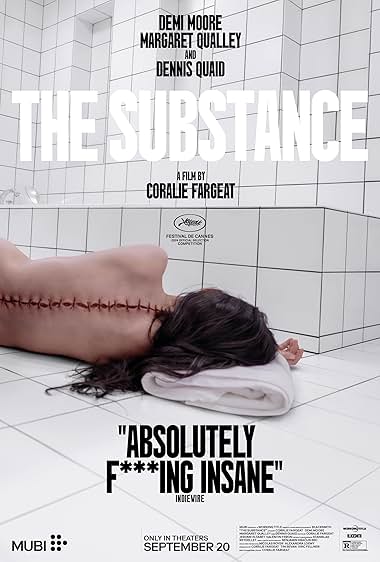
The prison is architectural. Once the system has been built around a woman, made of gazes and expectations and the market logic of female desirability, there is no door marked exit. Elisabeth Sparkle (Demi Moore) discovers this by degrees, then all at once: Sue (Margaret Qualley) is not a way out but a doubling of the trap, younger and more perfect and just as expendable, the same machine running faster. Coralie Fargeat’s visual grammar, all hyper-saturated surfaces and grossly amplified bodily sounds, mimics the aesthetics of advertising in order to weaponise them; one is made to inhabit the male gaze before the film turns it inside out and makes it grotesque.
The Cronenbergian escalation of the final act is not excess for its own sake. It is the logical conclusion of a premise taken seriously: if the body is the site of a woman’s social value, and if that value is subject to constant competitive depreciation, then the endpoint of fully internalising this system is self-destruction made literal. Moore carries the film’s emotional mathematics in her face throughout; her casting is not irony but precision, a career of public scrutiny folded into the role. The New Year’s broadcast sequence is apocalyptic in the correct sense: a revelation, not just a bloodbath.
The cycle of younger, more beautiful: like slamming one’s own face against a mirror, again and again, until the mirror wins.
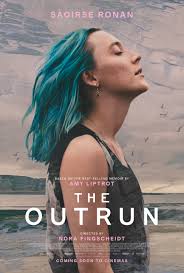
The structure is nonlinear in the way that recovery itself is nonlinear: not a dramatic choice but a phenomenological one, the film spiralling between Orkney’s slow, immense present and London’s jittery flashbacks as though Rona’s memory cannot hold a sequence without the sequence cracking open. Fingscheidt withholds the landscape deliberately. In the first half, Orkney is muted, grey, a place that Rona (Saoirse Ronan) endures rather than inhabits; London, in contrast, blazes with colour and kinetic damage. As sobriety accumulates, the ratio inverts. The cliffs and the North Atlantic open up, frame by frame, as though the land were waiting for her to be capable of seeing it. It is a precise visual argument: the world does not change; one’s capacity to receive it does. Ronan’s Rona is flinty and frail in equal measure. The physicality of being drunk, the sheer muscular effort of being sober, the moment on the clifftop when she conducts the waves with her arms outstretched as though she could command the storm. I watched that scene and felt something dislodge. I too want to stand like that, proud and certain as though one could truly govern the weather, composed amid nature’s merciless absurdity. The ‘nerd layer’, Amy Liptrot’s voiceover passages about corncrakes and selkies and the geological tremors that run through Orkney like a nervous system, gives the film a texture that most addiction narratives lack: the sense that the world is not a backdrop to recovery but its instrument. The corncrake, heard but never seen, migrating thousands of miles with a thirty-per-cent survival rate, is a metaphor that the film is wise enough never to state aloud.
The outrun itself becomes the decisive image: the rough grazing beyond the cultivated field, where land meets sea, where nothing is domestic and nothing is entirely wild. Rona’s recovery happens in precisely that space. By the end I was not thinking about addiction at all; I was thinking about what it would mean to belong to a landscape so completely that the landscape begins to repair what the self could not.
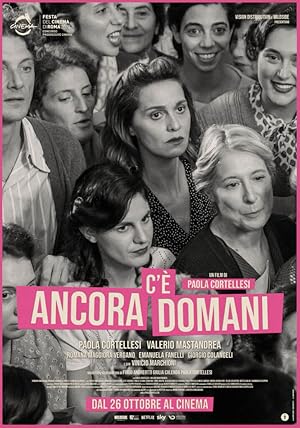
Is this what feminist filmmaking looks like now: a film steeped in domestic violence that pivots, in its final act, to women’s suffrage as the answer? The 1946 ballot is framed as liberation. But tomorrow Delia (Paola Cortellesi) goes home. Tomorrow she is still married to the same man in the same apartment in the same structural dispensation that a single vote cannot touch. Cortellesi’s tonal dissonance, domestic violence staged with the choreography of a musical number, has been defended as alienation technique; one finds it more symptomatic, a film uncertain whether it wants to horrify or charm, choosing both and achieving neither fully. Italy’s enthusiasm is telling: a cultural object that allows a society to feel its conscience has been pricked without requiring it to sit with any actual discomfort.
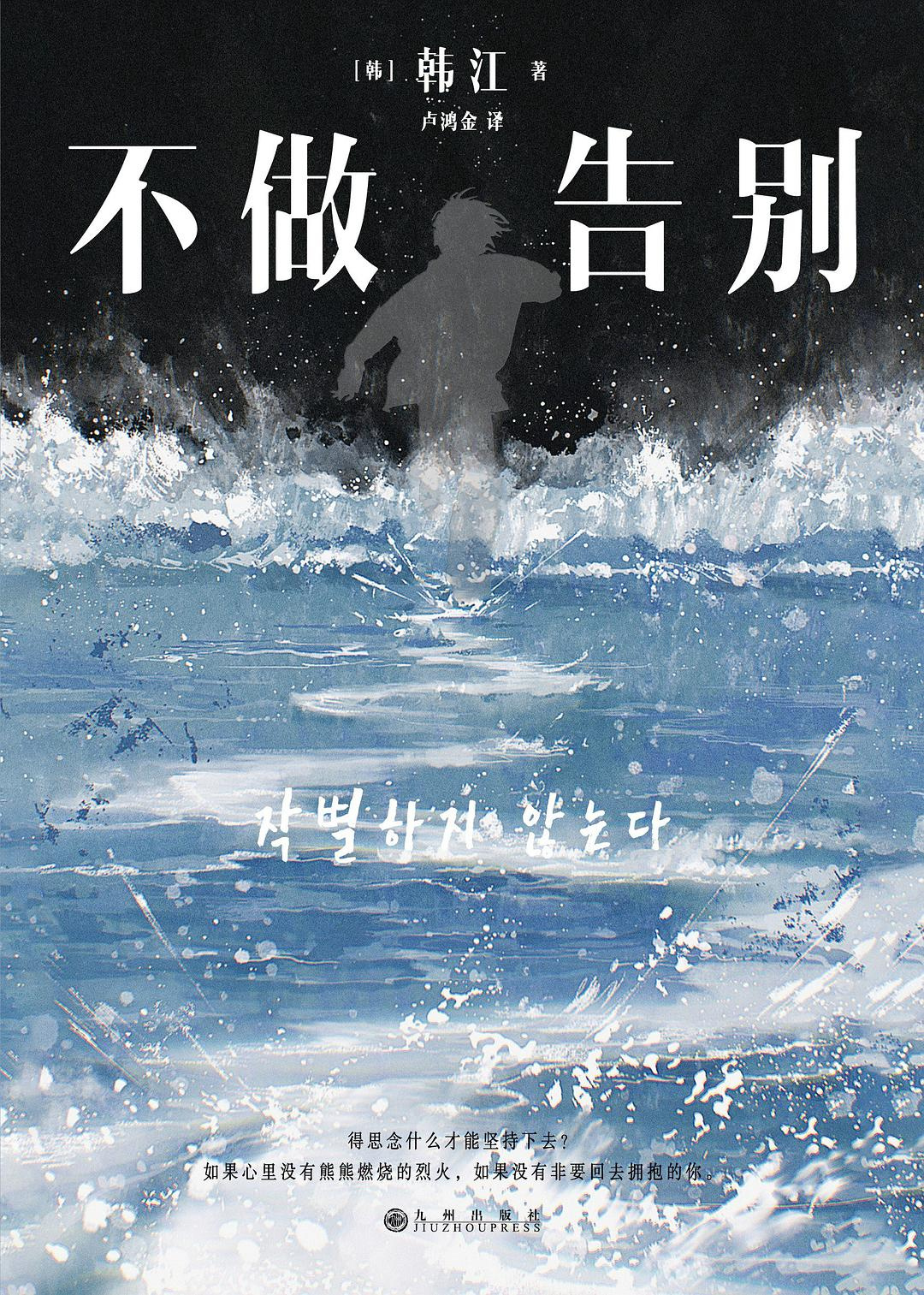
A woman travels to snowbound Jeju to care for a friend’s bird and finds herself inside a history the island has spent decades trying to forget. The 4.3 Incident, the South Korean government’s massacre of tens of thousands of Jeju civilians between 1948 and 1954, is the wound We Do Not Part circles without ever fully exposing, because full exposure would be a kind of violence the novel refuses to commit. Han Kang’s method is indirection: memory surfaces through objects, through snow, through the body of a bird that has to be kept alive while the caretaker herself is barely holding together.
The structure is nonlinear and dreamlike, closer to Human Acts than to The Vegetarian in its excavation of state violence, but where Human Acts reconstructed the Gwangju massacre through multiple first-person accounts, this novel works through a single consciousness dissolving under the weight of what it encounters. The prose operates at the threshold between grief and hallucination, and the distinction between the two is precisely what the novel refuses to settle. Han Kang’s refusal to instrumentalise suffering keeps this from becoming a historical novel in the usual sense. The massacre is not a lesson; it is not redeemed by narrative; it does not produce wisdom or closure. The dead remain dead; the living remain implicated. The bird survives, which is the closest thing to hope the book permits, and even that feels provisional. Han Kang writes about atrocity the way Tarkovsky films water: as an element that saturates everything, that one moves through rather than observes. It belongs beside Human Acts among her most important books.

Sorry to have missed this metroidvania gem before the year ended; only found out about it in January. Minishoot’ Adventures delivers around ten hours of map design so accomplished that it produces a slight Hollow Knight (2017) flashback: biomes clearly differentiated, each area sustaining its own mechanical identity, transitions handled with a confidence that belies the studio’s size. But the deeper lineage is top-down Zelda. The heart-based health, the ability-gated progression, the secret areas hidden behind visual cues legible enough that missing one traces to the player’s own path, the dungeon layouts that route short paths back to boss rooms from respawn points: all of it descends from A Link to the Past (1991)’s design philosophy, transplanted into a twin-stick shooter framework that should not cohere and somehow does. The maps are deliberately hard to find, forcing one to learn terrain through memory, and the reward density is near-unprecedented: positive reinforcement roughly every five minutes, experience accruing even during failed boss attempts. A game that respects the player’s time, the player’s intelligence, and the player’s wallet with equal discipline.
In a year when Nine Sols (2024) brought deflection-combat metroidvania to a new peak and Animal Well (2024) turned the genre into a puzzle box, Minishoot’ Adventures was the quiet third option: the game that asked no grand questions and simply delivered ten hours of impeccably paced design. SoulGame Studio work within the constraints of their top-down shooter format with admirable discipline, keeping the difficulty balance precise throughout and never mistaking length for value. Not every game needs to be a narrative event; some need only to be generous, and Minishoot’ Adventures is generous in the way that the best small-scale games are: with its time, with its ideas, with its evident affection for the genre it inhabits.
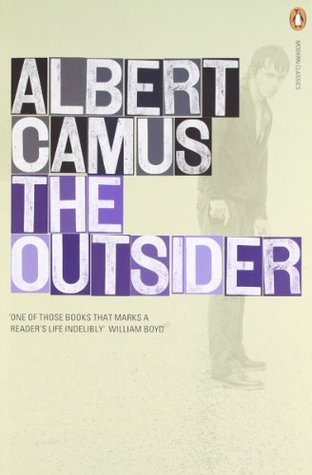
I envy Meursault. I am helplessly unable to say what I mean, helplessly unable to refuse someone who wants me, helplessly performing grief at funerals, helplessly living as an insider. Existing in this society feels like moving behind a membrane I cannot pierce. Pretending to care, just to get through tomorrow.
That is the raw nerve of The Outsider. Camus writes in terse, paratactic sentences, stripped of causal connectives, and this formal austerity is not mere style: it enacts the absurd at the level of syntax, each sentence landing as a discrete fact unmoored from consequence. Meursault does not weep at his mother’s funeral. Meursault shoots a man on a beach. The court condemns him less for the killing than for the failure to perform, and in that gap between act and performance Camus locates the entire indictment of social convention. The justice system does not want truth; it wants legibility. What it cannot read, it destroys. Postcolonial criticism rightly notes the unnamed Arab, the colonial violence that Camus renders invisible even as he renders Meursault’s alienation visible. One should hold both things at once: the novel’s philosophical power and its moral blind spot, the precision of its diagnosis and the narrowness of its sympathy. But the thing that draws me back, that leaves me envying Meursault rather than merely analysing him, is simpler and harder to say. He refuses to lie. He refuses the membrane. By the final pages, facing execution, he opens himself to the ‘gentle indifference of the universe’ and finds it fraternal. I have never managed that. I suspect most people have not. Pretending to care, just to get through tomorrow.
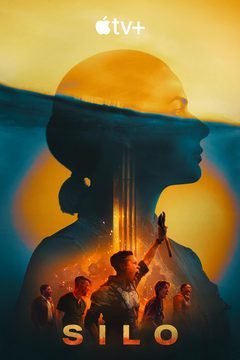
Silo Season 2 expands outward rather than inward, and that choice is correct. Juliette’s escape and her discovery of a second silo reframes the first season’s claustrophobic premise as a single cell in a much larger system of organised forgetting; the conspiracy does not terminate in a cabal of identifiable villains but in a structure that outlives anyone who built it, which is the most honest thing a conspiratorial narrative can do. The world above is not dead. The lie runs deeper than any single silo’s ruling class. What the second season offers, after the patience demanded by the first, is the specific pleasure of a mystery that has earned its revelations.
Tim Robbins’ Bernard gives the season its best pressure: a man who began as an administrator of necessary lies and finds himself administering a lie that no longer holds its own weight. He is not a villain but a rational actor inside a system whose rationality is disintegrating, and watching him adapt, and then fail to adapt, is more interesting than watching villainy straightforwardly defeated. Juliette’s return, visibly alive, visibly unclean, holding evidence of a world that exists, catalyses the uprising the second season earns; and the show has the discipline to demonstrate that even uprisings do not simply dissolve the structures they challenge. One comes away with the particular satisfaction of a long curiosity rewarded: not resolved, but deepened, the better science-fiction outcome.
The only stand-up special in the past two years that I have loved, and one of the best-written comedies I know of, in any form. On its surface: a sustained meditation on a specific sex act. In its actual operation: a post-structuralist feminist manifesto about the violence that is encoded in language, about who gets to name acts and bodies and what those names do to the people named. Why is it called a ‘boner’ if bones are not involved? Why ‘penetrate’? Why ‘enter’? These are not jokes building to punchlines; they are arguments, and they are argued with a rigour that most academic feminism cannot match because it cannot also be this funny. Novak, directed by Natasha Lyonne in a staging that transforms Town Hall into something between a lecture hall and a confessional, deploys erudite language as a weapon: the elevated diction is strategy, a claim on the authority that male sexual narrative has always assumed for itself. The metaphorical and allegorical layering accumulates until the special achieves something I had not anticipated: philosophical velocity, the feeling that language is being used to do something that language does not usually agree to do.
The energy in this room, this recording, this hour, is almost never seen in stand-up. I am still thinking about it.
I Saw the TV Glow is not a film without ideas. The trans allegory is legible and its emotional logic holds up: Owen’s (Justice Smith) dissociation is the experience of living in the wrong body, the Pink Opaque is the fantasy of a self that fits, Mr. Melancholy is the repression that would hollow one out rather than let one name what one is. Jane Schoenbrun has encoded this honestly; the film has reportedly been an ‘egg crack’ for viewers who walked out and came out. That is not nothing. The problem is that the film has confused allegorical sincerity with formal achievement. Its dreamlike aesthetic, the 1990s suburban decay, the VHS distortion, the colour pushed until saturation becomes symptom, accumulates atmosphere without constructing an argument. Lynch does something different: his surrealism has internal logic, symbols that evolve through recurrence and variation, a geometry that does formal work. For Schoenbrun, style is the subject; when style is all there is, one arrives back at the question of who can watch this.
The answer is: primarily those who already recognise themselves in Owen. The film is a mirror for dysphoric viewers, a recognition of something they already carry; it does not have the formal resources to make an outside viewer feel that recognition from scratch. The distinction between advocacy and art is the distinction that the film cannot navigate. A Bildungsroman this conventional, even in its inverted structure, its anti-development, its hollow adulthood, belongs to a long tradition of queer cinema without distinguishing itself within it. The widespread acclaim that the film earned has more to do with A24’s institutional cultivation of trans cinema as a prestige category, and with a critical culture that invests in what the film represents rather than what it formally achieves. One understands the investment. The film itself is mediocre.
Ueno says in Misogyny that she has moved beyond her early structuralist phase, and one can tell. Her critique of patriarchy is not limited to a ‘structural victim’ framework; she tracks individual women and the mother-daughter dynamic as living, evolving things, refusing the temptation to collapse persons into positions. In Ueno’s account, patriarchal misogyny takes root inside each individual from the moment men and women enter their designated roles. ‘Becoming a man’ means the homosocial alliance between men, deriving self-worth from male recognition, alienating and disdaining women, desiring the desire of other men. ‘Becoming a woman’ means recognising oneself as the object of male sexual projection. Women’s value in patriarchal society is entirely determined by men, and only those, whether men or women, who are conscious of this mechanism can meaningfully resist it. The structural insight is not new, but Ueno’s achievement is in showing how the structure lives inside the individual, reproducing itself through affect and identification rather than simple coercion. The one real flaw: roughly half the argumentation leans on Freud and fictional characters, which produces a curious unevenness, as though the sociological precision of the best passages keeps drifting towards psychoanalytic speculation that cannot quite bear the weight placed on it. But perhaps that is also a kind of honesty about the difficulty of the subject: misogyny is a system and a pathology, and pathology invites the clinical gaze even when that gaze is insufficient. What is harder to forgive are some of the reader responses Ueno implicitly addresses, gems like ‘women enjoy their gender privileges while playing the victim’, which is embarrassing to encounter in the discourse surrounding a book this serious. Ueno herself would call it what it is: misogyny wearing the mask of rationality.

My Favourite Cake condenses what might have been a lifetime’s worth of tenderness into a single evening. Mahin (Lily Farhadpour), seventy and widowed for three decades, lives alone in Tehran; her children are abroad, her days are structural repetition, her solitude something she has learned to inhabit rather than resist. When she meets Faramarz (Esmail Mehrabi), a retired taxi driver, and brings him home, Moghaddam and Sanaeeha unfold the encounter with an unhurried warmth that makes one forget, briefly, that every gesture on screen is a criminal offence under the Islamic Republic: the uncovered hair, the poured wine, the slow dance in the living room. The directors knew what they were filming. They were banned from travelling to Berlin for the premiere, their passports confiscated, and the state pursued them through its usual machinery of intimidation. That a seventy-year-old woman enjoying an evening of ordinary human connection constitutes, under this regime, an act of defiance is the film’s quietest and sharpest argument. The shift, when it comes, does not register as a twist; it registers as gravity. The film spends its first hour constructing something fragile between two people, a mutual recognition that they still possess the capacity to be tender with a stranger, and the joy is laced with something sharper because one can feel, even as it accumulates, that it will not hold. Farhadpour carries this entire trajectory in her face, moving from guarded curiosity to open delight to something harder to name, the expression of someone who has been reminded of what she has been missing and must now reckon with the reminder’s cost. I walked away with an evening compressed to a point of light: brief, impossibly warm, and already gone.

An urban companion piece to 出走的决心 (2024): where Yin Lichuan’s film dramatises the decades of patriarchal accumulation that precede a woman’s departure, Shao Yihui asks what happens after she has already left. Wang Tiemei (Song Jia), former investigative journalist turned struggling new-media editor, raises her daughter Moli (Zeng Mumei) alone in a Shanghai walk-up; the found family she builds with upstairs neighbour Xiao Ye (Zhong Chuxi), a band singer prone to emotional freefall, is the film’s answer to the question that 出走的决心 deliberately leaves open. Both films are didactic. Both understand that the didacticism is the point: in a culture where feminist discourse is routinely dismissed as 女拳, the act of naming (menstruation, consent, performative allyship, the specific exhaustion of single motherhood) is itself a political intervention, not a failure of subtlety.
Her Story avoids comfortable pedagogy through its target selection. The film’s sharpest satire is reserved for the men who have learned to perform feminism without surrendering its structural dividends: the ex-husband who reads Chizuko Ueno and announces a vasectomy as a gesture of loyalty; the drummer who prides himself on knowing Tiemei’s journalism while competing with another man over her attention. These are men whose language has changed faster than their behaviour, and the dinner scene in which they outbid each other in feminist credentials, while Moli asks ‘what’s this?’ and is told ‘有毒的东西’, is the film’s most concentrated comic achievement. The pulled punch lands harder than the thrown one: Shao understands that the men most worth satirising are the ones who believe themselves exempt from satire. The limitation is structural and the film knows it. This is Shanghai, the Former French Concession, a metropolitan bubble where feminist solidarity can be practised because the cultural infrastructure permits it. The sound montage, Xiao Ye transforming the rhythms of Tiemei’s domestic labour into something that sounds like music, is beautiful, but it is the beauty of a life already liberated enough to aestheticise its own struggle. The women in 出走的决心 do not have this luxury. Her Story is the feminism that follows awakening; it is also, honestly, the feminism available to those who can afford to have already woken up. That the film acknowledges this through its oblique references to 2015, the year that Tiemei wrote her most hopeful article, the year that investigative journalism in China began its terminal decline, suggests that Shao is aware of the gap between what her film depicts and what the country outside the Concession endures.
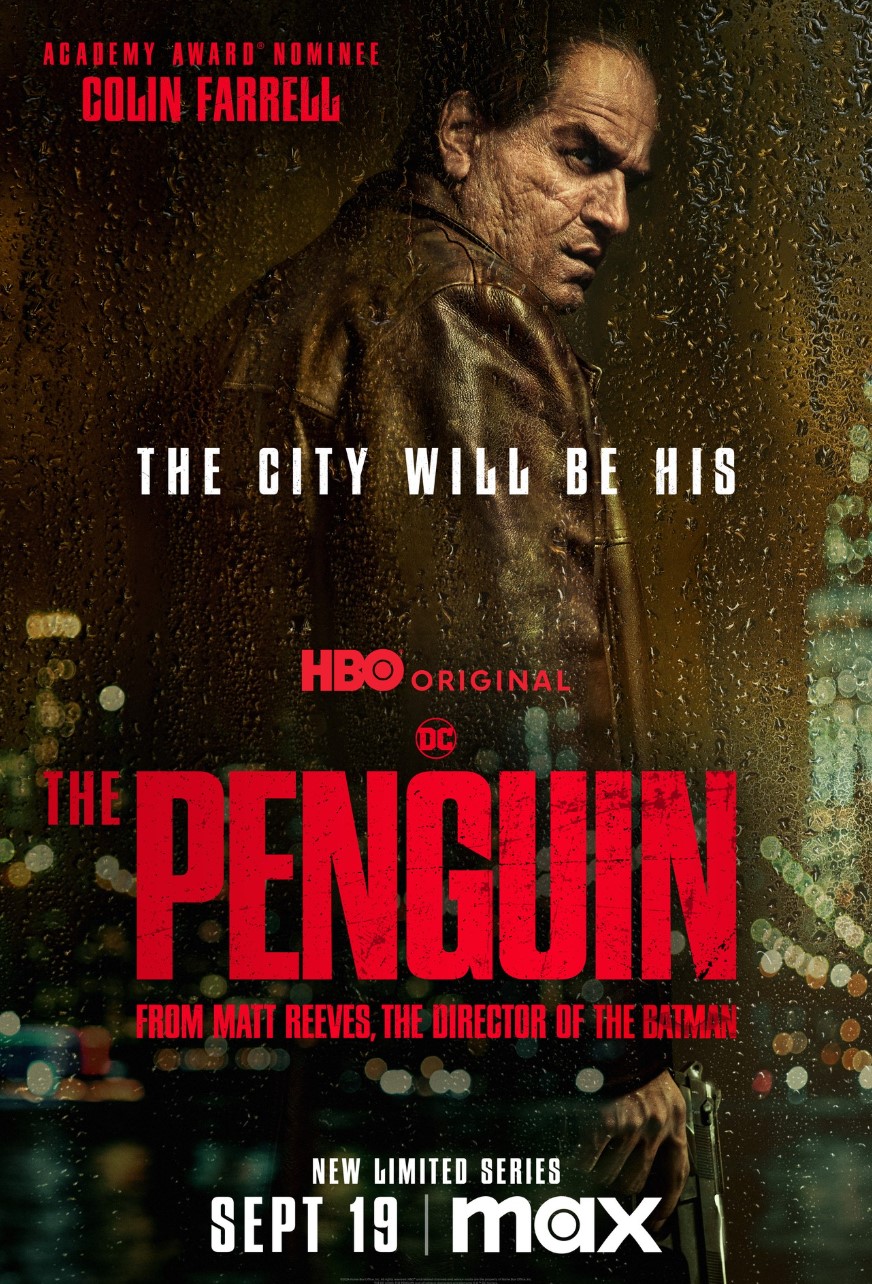
The prosthetics are extraordinary, but they are the least interesting thing Colin Farrell does here. Somewhere beneath the padding and the limp, the man has vacated entirely; what remains is Oz Cobb, limping and scheming and radiating a warmth that is indistinguishable from manipulation, a working-class striver who has internalised the logic of the System that despises him and now deploys it with the fluency of a native speaker. The Penguin Season 1 is built on this performance, and the performance is built on a refusal to let Oz be sympathetic or monstrous in any stable way. He loves his mother. He murders without hesitation. He mentors Victor Aguilar with something resembling genuine care and then folds that care into the architecture of his ambition. LeFranc’s Gotham, still waterlogged from the events of The Batman, operates as a city where the only available form of social mobility is criminal, and Oz’s rise through the Falcone and Maroni wreckage is less a gangster narrative than a class study wearing one’s skin.
But Sofia Falcone changes the season, and Cristin Milioti’s performance in ‘Cent’Anni’ gives the series its finest episode. The Hangman revelation, Carmine as the actual killer, his own daughter committed to Arkham for a decade because she discovered the truth, the family signing the affidavits: the show inverts every patriarchal protection narrative the crime genre has ever told, and does so with a precision that makes the inversion feel inevitable rather than revisionist. Sofia’s massacre of her betrayers is not catharsis; it is the logical terminus of a system that destroys women who see too clearly. What one remembers is not the violence but the expression on Milioti’s face when the last affidavit is read: the moment recognition hardens into something that will not be survived by the people who caused it. The Sopranos comparisons are unavoidable but finally imprecise. Tony’s tragedy is self-knowledge without the capacity for change; Oz’s is the absence of self-knowledge altogether, the genuine belief that the next move will earn respect rather than merely consolidate power. The show understands that distinction, and it understands something rarer still: that a comic-book property can become serious drama by taking its source material at its word. Gotham is not a metaphor for a real city. It is a real city that happens to be named Gotham, and the people clawing their way through it are not archetypes but casualties.
The Beast arrives with formidable formal apparatus: three timelines, three genres, Léa Seydoux transforming across each while remaining recognisably the same consciousness, and a sci-fi frame in 2044 where the state offers to purify one’s DNA of the catastrophic emotional residue that the past has left. It is, on paper, a film about how the same desire repeats across historical time, condemned to identical catastrophe under different period costumes. The Henry James source, The Beast in the Jungle (1903), is one of the great stories about deferred catastrophe, the life hollowed out not by disaster but by endless anticipation of it; Bonello finds in that premise a vehicle for thinking about compulsion and repetition. But the 2044 frame gestures towards real questions about consciousness and identity: what survives the purge, whether the self that emerges is still the same self; the film has no interest in pursuing them. The science fiction is atmosphere, not argument.
The 2014 subplot, Louis (George MacKay) in Los Angeles consuming redpill content, radicalised by heterosexual grievance into something approaching incel logic, is the film’s most contemporaneously legible thread and its least developed. Bonello seems to find 1910 Belle Époque Paris aesthetically irresistible; the emotional weight stays stubbornly there, in long-lingering shots of period interior, while the LA material passes quickly, its political implications half-sketched. The unearned devotion that Seydoux’s Gabrielle grants Louis across every timeline is either her character’s existential self-dissolution or the romantic logic of the James source rotated forward intact and unreexamined; the film declines to say which. Seydoux performs this ambiguity with complete conviction. The film has not earned her.
Armored Core VI: Fires of Rubicon tells its story with a directness that breaks entirely from the studio’s usual method. Where Elden Ring (2022) and the Dark Souls series scatter their narratives across item descriptions and architectural hints, trusting the player to assemble meaning from fragments, Armored Core VI names its factions, states its stakes, and lets the player feel the weight of each decision without requiring a wiki. Director Yamamura said the team wanted players to understand what they were fighting for and why; the surprise is how much this costs nothing. The emotional precision is immediate, the investment in radio chatter producing interpersonal bonds that FromSoftware’s oblique storytelling cannot. A mech game should not have stirred this many emotions in someone with zero mech interest; yet the directness cuts through genre, and the story connects.
C4-621 begins as inventory: a Fourth Generation augmented human who sold their body for experimentation due to debt, deemed surplus, and handed to Handler Walter as a tool. Walter is a childhood survivor of Rubicon’s first catastrophe, his father’s Coral research having killed his mother; his fixed idea, that where there is Coral there is blood, drives every mission. The assembly system mirrors the narrative: Yamamura identified it as the word that defines Armored Core, a form of character-building in which the player constantly optimises in response to challenge, and the freedom to rebuild on the death screen means that the solution to a boss is never only mechanical mastery but also design. Across three playthroughs, 621 grows from weapon to person. The first cycle offers two endings: destroy all Coral with Walter, or preserve it with Ayre. In the Liberator route, Walter, brainwashed and piloting a Coral-powered machine, overcomes his conditioning in his final moment: ‘621, you made a friend.’ It is the game’s most devastating line, because it names exactly what 621 has become and what Walter never expected to care about. The moment the Xylem surfaced, I froze. The feeling was immediate and specific: the same vertigo one gets seeing Gransax draped across Leyndell in Elden Ring, or the amygdala hanging from the cathedral in Bloodborne (2015). FromSoftware understand, perhaps better than any studio working, that scale is not spectacle; it is a tool for producing the sublime, and the sublime is an emotion, not a visual effect. The third ending, available only after both prior routes, is titled ‘Alea Iacta Est’: the die is cast, Caesar crossing the Rubicon, and now 621 and Ayre scatter Coral across the stars on their own terms, neither Walter’s destruction nor the corporations’ exploitation but something that belongs to them alone. Armored Core VI is a power fantasy, but the power it fantasises about is not destruction; it is autonomy, and the game earns it by making the player live through every alternative first.
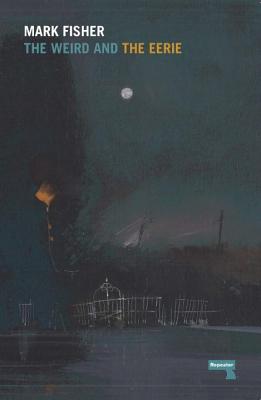
Similar to Zampanò in Danielewski’s House of Leaves (2000), Fisher’s dismantling of Freud’s unheimlich starts by refusing to reduce the weird and the eerie to the return of the familiar. The weird is the intrusion of what does not belong; the eerie is the disturbance produced by failures of presence, absence and agency. The importance of love in Nolan’s Interstellar (2014) is eerie, as are M. R. James’s ancient ruins, and, by extension, the agentless operations of capital itself, structures that produce effects beyond anyone’s intention. Fisher understood these as aesthetic categories and political ones. The eerie describes the logic of late capitalism as much as a mode of fiction: a system that seems to run by itself, haunting the present with futures that never arrived. My favourite passage is the reading of H. G. Wells’s The Door in the Wall (1911), where Fisher identifies the eerie as a threshold affect, a feeling generated by the gap between what is glimpsed and what is accessible. His prose is compressed and precise, each sentence carrying more weight than most critics manage in a paragraph. A shame, then, that so many unexplained references dilute that brilliance: the book sometimes assumes a reader who has already done the homework, and the density of allusion can feel exclusionary rather than enriching. But The Weird and the Eerie is Fisher’s last completed work, published weeks before his death, and perhaps there is something fitting about its fragmentary quality, its gestures towards readings that will never be finished. One leaves it wanting more, which is both the book’s limitation and its most powerful effect.
Bas Devos works in a mode so quiet and so precise that it can take a full act before one realises that the film has already done something extraordinary. There is no plot, not in any conventional sense: Stefan (Stefan Gota), a Romanian construction worker wrapping up a job before the city empties for winter, crosses paths with Shuxiu (Liyo Gong), a Chinese-Belgian researcher who studies moss, and something passes between them. A shared bowl of soup. A mutual willingness to stay still in each other’s company. That is almost everything. And yet the film does not feel empty; it feels full in the way that presence, as opposed to event, can be full. Devos’s fixed camera and his sensitivity to the soft, lateral light at Brussels’s edges give the film the texture of careful observation: one senses that each frame has been held long enough for something real to accumulate inside it. The moss is not incidental. Shuxiu’s science becomes the film’s philosophy: these organisms that persist at the margins, photosynthesising in the cracks, making something from almost nothing. Stefan and Shuxiu are, in their different forms of displacement and solitude, a little like that. The film earns the analogy without pressing on it. The residue is harder to name. The encounter is neither consummated nor abandoned; it simply is, for as long as it lasts, and Devos treats that temporariness with neither melancholy nor forced significance. A person encounters nature, a person encounters another person, a person encounters themselves. I came out into the street feeling, for a few minutes, that the world was slightly more permeable than I had previously assumed.
Baker shoots a tragedy with the pacing and tonal palette of a screwball comedy, and for a while the energy holds; Mikey Madison is raw and committed in a way that the film never fully deserves. The problem is structural: the script consistently elects the least truthful version of every scene, reaching for farce at precisely the moments when Anora’s situation demands something more honest. The oligarch-family farce in the third act runs at such extended, exhausting length that one suspects Baker simply did not know how to end the film that he had actually made. And the ending he does land on, with Igor (Yuri Borisov) positioned as a soulful rescuer of the battered female lead, is merely the oldest available comfort narrative, dressed in indie-film clothes. The lives of sex workers carry social and moral weight that the film keeps promising to reckon with and never does. Amusingly, this film, ostensibly with a female protagonist, can barely pass the sexy lamp test: swap Anora for an object of equivalent aesthetic appeal and the plot of the first act changes not at all.

I could not have predicted that a half-visual-novel would dismantle me like this. 1000xRESIST is the most searing narrative I have encountered in games: a science-fiction story about memory and forgetting that becomes a sustained act of self-examination, individual trauma and collective history folding into each other until neither can be separated from the other.
The prologue opens as a farewell ceremony. Iris opens a suitcase and examines its contents; the items are ordinary, which is precisely why they wound. Her father brings longevity noodles on her birthday; she only wants pizza. Her mother Clara’s flat instructions, ‘bring a jacket, do not catch a cold’, ‘do not sleep with wet hair’, sound mundane and arrive like chains. Iris’s rebellion is not a rejection of family but an attempt to escape the weight of inherited memory. Against this, Jiao’s arc mirrors the immigrant identity crisis in miniature: she tries desperately to belong, to mirror Iris, to earn closeness, and receives only coldness. The depiction of trauma is precise and unsparing. Clara’s sleepwalking re-enacts the 2019 Hong Kong protests without her knowledge: she strikes the balcony glass at night, the image inseparable from police batons and bloodied faces. These wounds pass from mother to daughter through language and behaviour until the cycle devours everyone. The game’s deepest complication is that memory itself is unreliable: altered, rewritten, weaponised, so that one is never certain whether Clara’s betrayal was real or fabricated to justify what follows. This ambiguity is the generational trauma chain: unresolved guilt becomes the foundational wound of the entire Sisters’ civilisation, every clone inheriting the consequences of a violence whose justification may be a lie. The Occupants, the game’s colonisers, refine human suffering into resource, creating diseases that make people weep without cease so that memory can be harvested.
But most of all, this is a story about the question that lives inside every suitcase: what one chooses to carry and what one chooses to leave behind. The final trial forces a reckoning: whose memory enters the future, whose remains in the past. Some things cannot fit in the backpack. The black umbrellas drifting through subway corridors, the blood, the narrow lanes between tower blocks, the farewell words repeated across generations: these are both the history one cannot escape and the foundation on which one walks forward. Letting go is not betrayal; it is courage.
Annie Baker’s theatrical practice has always been interested in duration as meaning: her plays earn their length by insisting that the audience remain present alongside characters who do not resolve, who persist. That patience, translated to cinema, produces something I had not quite seen before: a film that captures how a child lives inside a parent’s life, not beside it, not safely downstream of it, but submerged. Lacy does not observe her mother Janet from the protected distance that childhood mythology assigns to children. She participates, with a calm and an intensity that occasionally tip into something almost frightening in its maturity. The episodic structure, each chapter organised around an adult who drifts through Janet’s orbit (Will Patton, Sophie Okonedo, Elias Koteas, each excellent, each playing a variety of need that Janet cannot meet) and then away, mirrors the way memory actually organises a summer: as a sequence of presences rather than narrative arc.
The comparison to Bergman is not facile. There is something in the mother-daughter dynamic here that recalls Autumn Sonata (1978) without reproducing it: where Bergman’s film is about the violence of retrospection, Baker’s is about the subtler damage of living too close. Julianne Nicholson’s Janet is warm, damaged, and intermittently oblivious to her daughter with the selective blindness of self-absorbed love: present but somehow never quite enough. Zoe Ziegler as Lacy is an uncanny piece of casting; the watchfulness she brings is a phenomenon rather than a performance. The natural light and fixed camera recall Anatomy of a Fall (2023) in their commitment to observational fidelity, but Baker’s film is warmer, more interior, less prosecutorial. Both films trust that placing two women in the same landscape and letting the camera hold will reveal something irreducible. Baker’s reveals the particular grief of a child who understands her mother before her mother understands herself. I am still thinking about Lacy: watchful, patient, unsurprised.
There is a ninety-minute film buried inside 0.5mm’s three-hour-and-sixteen-minute runtime, and it is a good one. The opening family tragedy and Sawa’s (Sakura Ando) subsequent drift into homelessness have the quiet, undecorated specificity of social realism at its best; Sakura Ando commits to every frame with a physical intelligence that consistently exceeds her material. Had the film followed Sawa and the child to a clean resolution, it might have been something still and lacerating. Instead, Momoko Ando structures the middle act as a picaresque through the lives of elderly men, each episode becoming a semi-autonomous short film about Japan’s ageing crisis, and the cumulative effect is dissipation rather than accumulation. The thesis scatters. What is being said about elder care, about loneliness, about the gendered distribution of caregiving labour? The film declines to decide.
The film does, inadvertently, commit to a parade of men who moralise without self-awareness: men who pontificate about duty and tradition while being cared for, men whose grand pronouncements about life arrive in the mouths of characters that the film never adequately interrogates. For a film directed by a woman, adapted from her own novel, this is a striking amount of unexamined patriarchal ventriloquism. The episodic structure, which could have been a formal strength, becomes an excuse for each segment to introduce its own tonal world, its own half-articulated concern, without any of them earning the runtime they consume. Momoko Ando clearly wanted to make a film about the distance between people, the 0.5 millimetres that separate intimacy from intrusion; what she made is a film that cannot decide whether it is social commentary, character study, or picaresque dark comedy, and so becomes none of them with conviction.

My wife observed that Kim Ji-young, Born 1982 tells the story of the daughter in Like a Rolling Stone (2024), and the lineage is exact: same generational transmission of suffering, same culture of endurance passed from mother to daughter like an heirloom nobody chose. The charge of didacticism is fair and beside the point. When a single woman’s life becomes the vessel for three generations of accumulated accommodation, when simply boarding a bus is occasion for fear, when being harmed still invites condemnation, one does not need dialectical complexity. One needs testimony, and the more direct the better.
Kim Do-young’s restraint is the film’s great intelligence. There are no villains constructed for catharsis; there is only a system operating smoothly, its violence distributed so evenly across fathers, husbands, bosses, and well-meaning relatives that no single node is identifiable as the source. Jung Yu-mi inhabits that distributed violence with a precision that avoids both martyrdom and melodrama. Gong Yoo, as the husband, gives the system its most disarming face: loving, supportive, and entirely blind to what his comfort costs. The review-bombing campaign by male fans who could not countenance their favourite actress appearing in a feminist film is, of course, the film’s argument made more forcefully than the film ever manages. We need exactly this didacticism, and the more the better.
The story is more complete than the first game; that alone would be sufficient. But Portal 2 does something far more interesting: it uses Cave Johnson’s abandoned testing facility as a descent through Aperture Science’s corporate archaeology, each stratum revealing a different era of ambition, failure, and institutional decay. The puzzles in the old facility are among the best in the series because they are unusually legible, each solution flowing from the environment’s own logic rather than from the player’s internalised puzzle-grammar. When Johnson’s pre-recorded voice fills the condemned corridors, narrating the company’s past with a manic optimism that the surroundings thoroughly contradict, the comedy achieves something rare: it is both funny and sad, the joke and its punchline occupying the same space.
Valve’s creativity at its peak: a game in which the writing, the level design, and the puzzle mechanics move as one system. The gel puzzles alone represent more invention than most studios produce in an entire catalogue. That Portal 2 manages to be simultaneously a legitimate sequel to one of the most perfectly designed games ever made and a complete reimagination of its possibilities makes one wonder why more studios do not simply try harder.
Rasoulof shot this film inside Iran while under sentence of imprisonment, then smuggled it out and fled the country before its Cannes premiere. That biographical fact is not separable from the film: one watches it knowing that the footage of women burning their hijabs around roadside fires, the images of protesters beaten and killed on Tehran streets, the faces of young people looking directly into phone cameras as if addressing the future directly, are not reconstructed. The documentary material and the fiction share the same air. The domestic allegory is tight, perhaps too tight. Iman (Missagh Zareh), the newly promoted investigating judge, becomes the regime in miniature: a man whose authority requires the submission of those closest to him, whose paranoia escalates in proportion to his family’s awareness of what is happening outside their windows. The allegory maps so directly that it occasionally reads as thesis before drama; one can see the structural argument assembling itself in real time, each domestic confrontation an echo of the state’s confrontation with its citizens. The mother’s acquiescence (Soheila Golestani), still washing dishes and scrubbing the sink under obligations she has metabolised across a lifetime, is not weakness; it is a survival logic that the film understands even as the daughters (Mahsa Rostami, Setareh Maleki) cannot fully forgive it. The daughters grew up breathing different air, and they cannot pretend otherwise. ‘The world may change, but God’s law does not’: the film knows that line is not a conviction but a shelter, and treats it accordingly. The protests, in Rasoulof’s framing, become something close to a collective nervous system becoming conscious of itself: a dispersed grief and courage moving through a population simultaneously, each individual act of defiance part of a signal the whole network is transmitting. That the embers are still there, three years on, is evidence that the signal cannot be fully suppressed.
The Internet’s Own Boy documents, in the end, more than a story about one person. Aaron Swartz was fourteen when he co-authored RSS; he helped build Creative Commons, co-founded Reddit, led the campaign that killed SOPA. By twenty-six he was dead, driven there by a federal prosecution that sought thirty-five years in prison for downloading academic papers that JSTOR itself declined to pursue charges over. Knappenberger’s film is straightforwardly hagiographic, and the usual criticism applies: it is advocacy, not balance. But the advocacy is correct. The Computer Fraud and Abuse Act is a law written to protect capital dressed as cybersecurity, and Carmen Ortiz’s office wielded it with the particular cruelty of a state making an example. The film is at its sharpest when it lets the disproportion speak for itself: publicly funded research, locked behind publisher paywalls, and the person who tried to liberate it treated as a felon.
Watching in 2024, the prosecution has become a familiar American cruelty. The surprise is the atmosphere of the early internet the film briefly recovers: a period when the infrastructure was still young enough for individuals to shape it, when open access and decentralisation were not nostalgic positions but plausible futures. Tim Berners-Lee appears in the film to say, in effect, that Swartz’s ideals were the internet’s founding assumptions, not radical outliers. That this now sounds like elegy tells one everything about what has happened since. The idealism has been defeated by privatisation, metabolised into the language of corporate ‘openness’ while the actual structures of enclosure, Elsevier, Springer Nature, the platform monopolies, have only consolidated. A handful of genuine revolutionaries still push open-source and open-access causes, but they operate in a landscape Aaron would barely recognise. The film is released under Creative Commons, which is the right gesture. It is also, by now, a historical document about a world that no longer exists.
On Intelligence closes with a range of specific predictions, some interesting: lower cortical areas, in Hawkins’s account, should predict much of their own input, leaving higher areas to deal with what those predictions cannot absorb. The memory-prediction framework is intuitive and appealingly clean, a hierarchical model in which the neocortex stores temporal sequences and uses them to anticipate sensory input. The trouble is that twenty years of hippocampal and prefrontal recordings have largely complicated or contradicted the picture. Place cells and grid cells suggest the hippocampus is doing something far richer than sitting atop a cortical hierarchy as a passive relay; entorhinal-hippocampal loops are bidirectional and deeply entangled with spatial cognition, relational binding, and episodic memory in ways that resist reduction to sequence storage. The prefrontal cortex, meanwhile, involves working memory, executive control, and rule-based reasoning that cannot be flattened into hierarchical pattern matching. Hawkins treats the cortex as a single, homogeneous algorithm, which is elegant but anatomically untenable: V1 and dorsolateral PFC differ in cytoarchitecture, connectivity, and function in ways his framework cannot accommodate. And the near-total absence of subcortical structures, neuromodulation, and the thalamus from the model is not a simplification but an omission. Still, one cannot deny the audacity of the vision. Hawkins was willing to think further and speak more boldly than most neuroscientists or computational scientists, and the memory-prediction framework helped popularise a cortical intuition that overlaps with predictive coding, even though predictive coding itself already had a technical history by 2004. That he brought this intuition into popular neuroscience with such force puts him ahead of most popular neuroscience writers, even if the specifics have not aged well.
That Jeselnik can still work this system in 2024 deserves recognition on its own terms. The political atmosphere around stand-up has calcified into two camps (comedians who perform transgression as a proxy for reactionary politics and comedians who have pre-emptively retreated into safety) and Jeselnik occupies neither. His one-liners remain structurally transgressive without being ideologically so: the darkness is formal, a matter of where the sentence turns, not a vehicle for anything as lazy as an opinion. The opening pregnancy joke sets the tone immediately; the laxative bit is one of the tightest constructions in the set; the trans joke works precisely because the delivery goes somewhere the audience’s pattern-recognition cannot anticipate, which is what Jeselnik does when the system is working. The trouble is that the system is not always working. Twenty years in, the architecture of his one-liners (setup, misdirection, dark pivot) has become so legible that one can feel several of the twists arriving before they connect, the forced quality of a mechanism whose precision has become its own kind of predictability. The Rogan material gestures towards something more personal and more interesting: Jeselnik’s position within the stand-up community, the growing sense among peers that his arrogance has crossed from persona into character, the question of whether a comedian whose entire method depends on control can survive in a culture that increasingly demands vulnerability. There is something to it. But the jokes themselves, especially in the current climate, remain singular: both pathetic and funny, which is harder to achieve than either quality alone. Nobody else in American stand-up is attempting it with this commitment.
Like a Rolling Stone is careful, in its first half, to show Li Hong’s suffering not as spectacle but as atmosphere: the way a household can be organised entirely around one person’s moods, the gravitational field of her husband (Jiang Wu) bending every small domestic act slightly out of true. Yin Lichuan understands that the most insidious abuse trains its victim to explain it away, to convert pain into patience, to inherit from her own mother the conviction that endurance is a form of dignity. ‘I know how hard it is raising children, everyone says mothers are the greatest.’ ‘I raised children too, and I never complained once.’ These consolations are not kindness; they are the mechanism by which suffering is glorified into obligation and passed, intact, to the next generation. Li Hong’s eventual departure is not triumphant in the way that liberation narratives usually require it to be. It is frightened and uncertain and furiously necessary, and Yong Mei plays it with a restraint that refuses the audience the catharsis of uncomplicated vindication. The film trusts us to understand that the difficulty of leaving is itself part of the indictment. And Li Hong’s words to Xiaoxue near the end: ‘I hope you will not end up like your mother.’ A sentence so simple and so loaded that it carries the weight of the entire film. I hope future generations can say no without hesitation. I hope every woman can live for herself. The film does not promise this. Li Hong drives on.
Majidi works squarely in the lineage of De Sica: a single lost object, a family too poor to replace it, and the entire weight of a social structure made visible through the gap. Ali loses his sister Zahra’s shoes; the siblings share his sneakers between school shifts; Ali enters a footrace whose third prize is a new pair. The plot is so simple that it sounds like a fable, and Children of Heaven earns the comparison to Bicycle Thieves through the same commitment to observing poverty without diagnosing it. The family is dignified, resourceful, loving; their material constraint is a fact, never a moral occasion. Amir Farrokh Hashemian and Bahare Seddiqi, both children, perform with a naturalism that makes the word ‘performance’ feel wrong: what they communicate, guilt and solidarity and hope, arrives through glances and posture, not dialogue.
The ending is the film’s quiet coup. Ali, who needs third place, accidentally wins. The camera finds his blistered feet in a fishpond, goldfish circling his toes, and the image holds. There is no resolution, only the persistence of two children who have not yet learned that the world is structured against them. That this emerged from late-1990s Iranian cinema, alongside Kiarostami’s Taste of Cherry and the early work of Panahi, is not incidental: a tradition of humanist realism that used its own formal restraint as a way to speak past censorship, making art that was simultaneously local and irreducibly universal. One sees, in these two children’s eyes, a small, stubborn hope. It is enough.

In 2005, Nuclear Monkey Software released Narbacular Drop (2005), a student project built around placing two portals. After a brief demo for Gabe Newell, Valve hired the entire team and gave them the freedom to develop Portal. Two years later, it launched bundled with Team Fortress 2 (2007) and Half-Life 2: Episode Two (2007), three games that together pushed puzzle and narrative design forward. Portal’s minimalism is its genius: a single mechanic, rigorously explored, coupled with a narrative voice so distinctive that it became a cultural reference point within months of release.
Seventeen years later, games that can stand alongside Portal’s puzzle design can be counted on one hand. The reason is not difficulty but clarity: every chamber teaches exactly one thing, tests exactly one application, and moves on before the player’s attention can wander. The community that followed, the mods and fan-made maps, the speedrunning scene, all testify to the depth hidden within that apparent simplicity. People often say Portal is the ideal ‘gateway game’, the title one hands to someone who has never played a game and says ‘start here’. There is a reason for that, and the reason is not accessibility; it is respect.
A rare non-linear psychological horror narrative whose complexity is justified. Mouthwashing parcels its story into chronologically scrambled fragments, and by the time one has pieced together the full account of the shipwreck and the mouthwash, the revelation closes like a trap: the cowardly, weak, selfish one was not the character one suspected but the character one inhabited. The perspective shift is handled with precision; the horror is less in the events themselves than in the slow recognition that one’s own assumptions enabled the deception.
Singular, but it ends up feeling like non-linear storytelling for non-linearity’s sake, which keeps it from the highest tier. The scrambled chronology produces surprise, but the surprise is structural rather than emotional: one admires the construction without being devastated by it. A game that demonstrates mastery of its chosen technique while stopping just short of exceeding it.
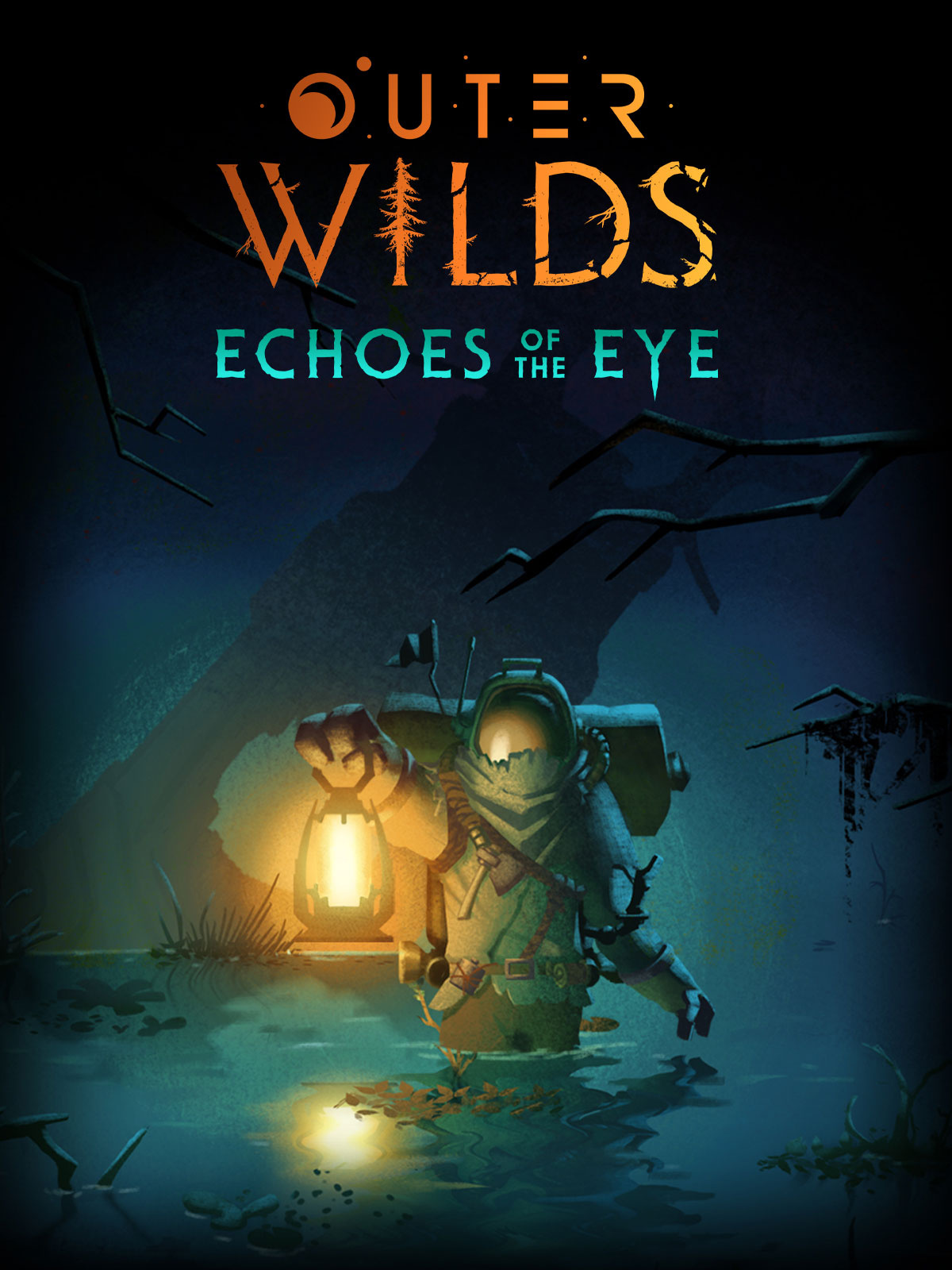
Outer Wilds: Echoes of the Eye asks the player the same question that the base game asked, what happened here?, and answers it with the same method: by placing the evidence in plain sight and trusting the player to assemble the narrative from observation alone. A few puzzles stumble into frustration, but each discovery peels back another layer of the Stranger’s history, from the nature of its inhabitants to the reason the Nomai came to this solar system in the first place, until the whole vessel becomes legible as a single act of grief.
Nearly three hundred thousand years of history across three species, and Mobius Digital buried all of it in architecture, corpses, and slide reels, trusting that curiosity alone would be enough to recover it. The Stranger is a nested sequence of answered questions: each revelation completes a previous mystery and opens the next, and the structure holds because Mobius Digital understand that the best mysteries are inhabited, not solved. The Owlks destroyed the satellite that could have led the Nomai to the Eye and then sealed themselves inside a simulation of their own past, preferring an imitation of home to a universe they had decided was hostile. Their fear is the mirror image of the Nomai’s curiosity, and the DLC earns that contrast by letting the player discover it through the same method: following the evidence until the architecture tells its own story.
At the centre of all this is the Prisoner, the single Owlk who disagreed with sealing the signal, who was locked away for the crime of wanting to share what they had found. The Prisoner’s cell is the last room in the DLC, and reaching it requires the player to confront every piece of the Owlks’ fear: the darkness, the simulation, the locked vaults, the elk-like figures that patrol a world built to keep a secret. When one finally meets the Prisoner and shows them what their act of defiance made possible, that the signal reached the Nomai, that the Nomai built the Ash Twin Project, that someone came, the Prisoner offers a vision of the Eye and fades. By the end one has not decoded a plot so much as kept company with the dead, and the campfire at the centre of the Stranger becomes, like the campfire at the end of the base game, a place where grief and gratitude are the same thing.
The End of the Tour is a film about a five-day conversation between two writers, and its achievement is that it is not really about writing at all. It is about loneliness. David Lipsky interviews David Foster Wallace during the final leg of the Infinite Jest book tour in 1996; they drive through the Midwest, eat junk food, visit a megachurch bookstore, and talk with the wary intimacy of two people who recognise each other’s defences. Jason Segel’s Wallace is a revelation: the bandana, the nervous chewing tobacco, the dogs pressed against his legs, the way intelligence and discomfort coexist in every sentence. The performance captures something I had not expected a Hollywood film to attempt, let alone achieve: the specific quality of a mind that understands its own traps and cannot stop falling into them. Wallace’s anxiety about fame, about entertainment as a colonising force, about the recursive spiral of sincerity becoming performance becoming sincerity, is rendered as a condition he has to inhabit rather than intellectual posture. He is visibly afraid that Infinite Jest’s success will turn him into the thing he wrote against: a commodity of the attention economy.
The DFW estate opposed the film, and their objection has force: to dramatise a writer who spent his career warning against the seductions of entertainment is to enact exactly the commodification he feared. The film knows this and cannot resolve it, and it does not pretend to be Wallace; it offers instead the shape of two people circling each other’s loneliness. Jesse Eisenberg’s Lipsky, all admiration and competitive envy, is the correct lens: he cannot help turning the encounter into material, which makes him Wallace’s fear made flesh. It is a shame, then, that Ponsoldt brings so little beyond his two performers. The direction is self-effacing to the point of absence; the Midwestern landscapes register as mood board, and the framing device (Lipsky learning of Wallace’s suicide in 2008 and returning to the tapes) uses retrospective tragedy to lift conversations that the film has not always earned on their own terms. The title phrase, of course you end up becoming yourself, reads as both comfort and verdict: identity is a destination reached involuntarily, and by then it is too late to be anyone else. Segel’s Wallace stays with me. The film around him has already faded.
David Bowie once said that when one’s feet no longer quite touch the bottom, one is in the right place to do something exciting. Quantum Break is Remedy at their most submerged. Originally pitched to Microsoft as an Alan Wake sequel, the project was redirected into a new IP when Microsoft rejected the sequel but embraced the live-action concept, and Remedy responded by building the most ambitious hybrid of game and television that anyone had attempted. Live-action episodes directed by Ben Ketai air between gameplay acts, each roughly twenty minutes long, telling the villain’s story while the game tells the hero’s; Aidan Gillen’s Paul Serene and Lance Reddick’s Martin Hatch carry the show with performances that earn the format’s risk. The time-manipulation combat is specific and inventive: one freezes enemies in chronon bubbles, stacking bullets into a suspended sphere that detonates on release; one dashes through a cargo ship crashing into a lift bridge while time stutters freeze and release the wreckage around it. The studio has acknowledged that they could have gone further in fusing the two halves, and this is fair: some episodes lean on green-screen a touch too visibly, and a few Monarch subplots do not earn the time that they borrow from the game’s momentum. But no other studio has come this close to making the hybrid format feel designed rather than grafted.
Paul Serene (Gillen) survives the End of Time, a white void in which every living thing on Earth has frozen permanently, and returns to 1999 via time machine. He spends seventeen years building Monarch Solutions to save humanity, or at least the fraction of it that he can fit into the Lifeboat Protocol. Every intervention that he attempts to prevent the catastrophe causes the very events that he sought to avert: the game adopts the Novikov self-consistency principle without naming it, and Paul’s arc is the emotional proof. He began as a hopeful interventionist and ended as a resigned fatalist who stopped trying to change the future and started preparing to outlast it. Beth Wilder (Courtney Hope), who has lived the closed loop and seen her own death, responds with nihilistic despair. Jack Joyce (Shawn Ashmore), who refuses to accept inevitability, responds with defiance. The four Junction Points where control passes to Paul and the player chooses his response give the feeling of agency while the overarching outcome remains fixed, and the kindest reading of free will that the game permits is that one may choose the character of one’s suffering. Paul’s Chronon Syndrome (the degenerative condition that the same radiation inflicted on Jack) makes the hero’s future mirror the villain’s past. Jack’s closing scene, in which he begins to see split futures exactly as Paul did, is not a sequel hook; it is the time loop completing itself.
Quantum Break was the first game built on Remedy’s Northlight engine, and the lessons that it taught are visible in everything the studio made afterwards. The multimedia confidence that produced Control (2019)’s Threshold Kids puppet shows and Dr. Darling’s video recordings, and Alan Wake 2 (2023)’s fully integrated live-action sequences, grew directly from what Quantum Break proved was possible and what it proved still needed work. The echoes run deeper than craft. Shawn Ashmore returns in Alan Wake 2 as Sheriff Tim Breaker, a man who dreams of being ‘someone else, a different person with a different name living a different life’ and feels ‘adrift in time’. Lance Reddick’s Martin Hatch, who entered a threshold and gained access to all realities, resurfaces conceptually as Mr. Door. Courtney Hope, who played Beth Wilder here, became Jesse Faden in Control; the Night Springs DLC acknowledges the doubling with an entity named ‘Jesbet’. Quantum Break is not officially part of the Remedy Connected Universe, because Microsoft owns the IP, but the universe remembers it anyway: the scar tissue is structural.
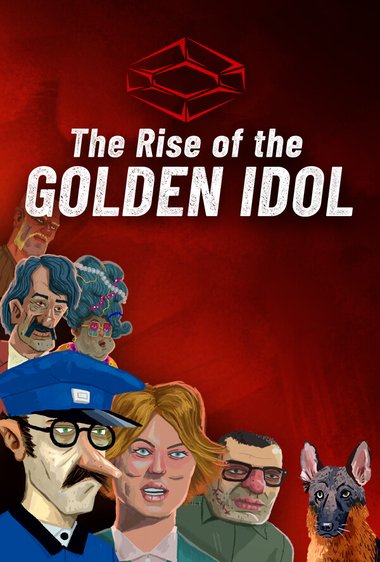
The surface presentation is a fill-in-the-blank puzzle exercise. Underneath it, The Rise of the Golden Idol builds on the detective framework of the original Golden Idol (2022) to tell a far more sweeping story: social engineering, memory, individual identity, shared human enlightenment, all inside a game that asks the player, mechanically, to drag words into slots. Color Gray Games do not answer these questions so much as create the conditions under which the player cannot avoid asking them. Each case unfolds as a self-contained scene, but the narrative that accumulates across them is architecturally precise, every apparently isolated incident connected to a larger pattern that the player apprehends gradually, the way one would in a real investigation.
The Golden Idol series deserves to sit in the history of detective games alongside Return of the Obra Dinn (2018). Where Obra Dinn presents a single unfolding mystery with a fixed temporal logic, Golden Idol builds its world case by case, each scenario a window into a different corner of the same society, the moral picture sharpening as the player moves through it. I have not been this absorbed in a puzzle game in a long time.
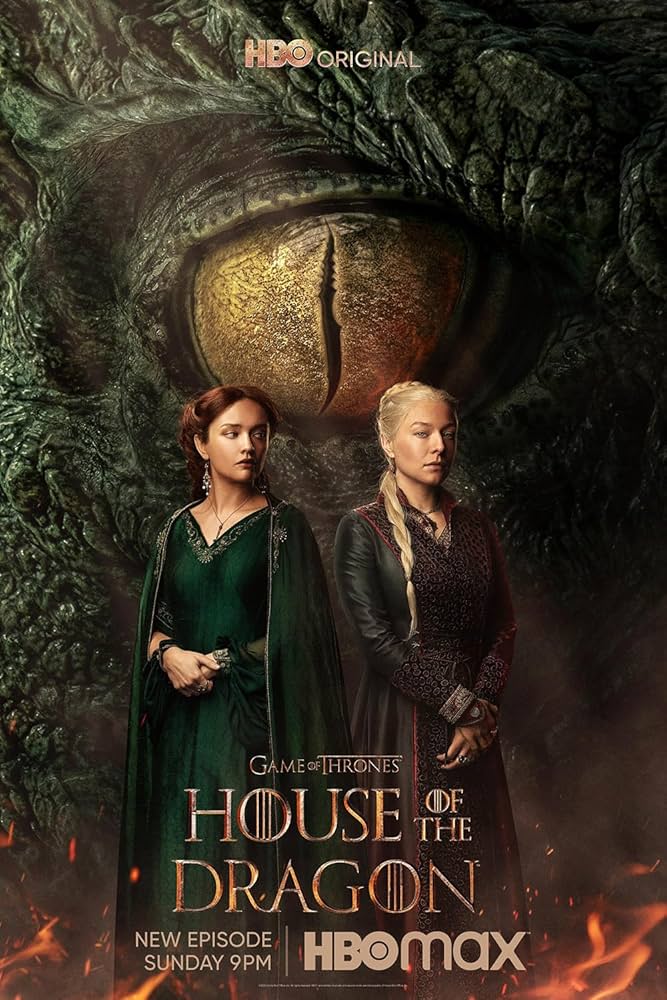
HBO’s decision to cut the season from ten episodes to eight (made before the strike, never meaningfully restructured afterwards) is the wound from which House of the Dragon Season 2 never recovers. What remains is an amputated season, its pacing carrying the gait of something with large sections missing. Blood and Cheese arrives in the opening episode with real brutality, and then nothing follows. The conflict it should ignite simply does not ignite. Matt Smith’s Daemon spends five episodes in Harrenhal undergoing dream-sequences that belong to a more contemplative, more interior show; Ewan Mitchell’s Aemond glowers through councils; Tom Glynn-Carney’s Aegon is sidelined after sustaining injuries that the season has no room to explore. Meanwhile the war that is nominally the subject idles in chamber scenes. The first season worked through intimacy: the slow fracturing of Olivia Cooke’s Alicent and Emma D’Arcy’s Rhaenyra, the sense of a political catastrophe unfolding as something personal and irrecoverable. That intimacy is almost entirely absent here, replaced by logistics, positioning, and violence that registers as incident rather than consequence.
The one sequence that earns its screen time is Rook’s Rest: Vhagar turning on Meleys and Eve Best’s Rhaenys, filmed at a scale that finally makes the Dance of Dragons feel like something at stake. It is a formidable set piece stranded in a season that cannot build to or away from it. The finale acknowledges the Alicent-Rhaenyra subtext the show had been trafficking in since the beginning, but by then the acknowledgement feels archaeological rather than dramatic, the story discovering itself too late. The structural compression hollowed the narrative rather than tightening it, and the shape of a story without its connective tissue is just spectacle.
Moving: both because of the ending’s astonishing shift in angle and scene, the origin story told quietly and precisely, and because a small studio in Taiwan could make something this singular with such care. Word Game (文字遊戲) takes the radicals, components, and strokes of Chinese characters, even the choice of vocabulary itself, and plays with them in uniquely inventive ways that constantly prompt ‘That was right there! How did I not see it!’ The puzzles are not merely linguistic; they are structural, each one revealing something about the way meaning is encoded in Chinese writing that one has lived with for decades without noticing.
Taiwan has been producing a striking number of games rooted in Chinese culture: Nine Sols (2024), Word Game from 2022. Both demonstrate what happens when cultural specificity is treated not as flavour but as foundation: the game’s mechanics are inseparable from the writing system they inhabit, creating something that cannot be translated, only experienced. A game that makes the familiar strange and the strange legible.
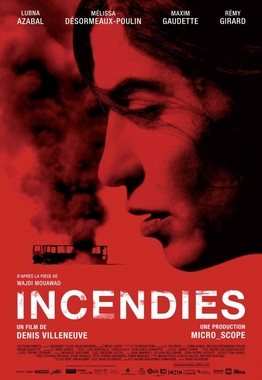
The first half of Incendies, through to the NIHAD chapter, is the best thing Villeneuve has made. The chapter-based structure gives the parallel timelines a classical severity: the twins Jeanne (Mélissa Désormeaux-Poulin) and Simon (Maxim Gaudette) trace their mother’s past from Montreal, while Nawal’s journey through sectarian violence, her imprisonment, her defiance under torture, is filmed with a realism that earns its brutality. Lubna Azabal carries the film: she inhabits a woman caught in the machinery of religious war, helpless but unbroken, and the depiction of that war, Christians and Muslims locked in cycles of reciprocal atrocity, is unflinching without being pornographic. There is a genuine political intelligence at work in these sequences, an understanding that sectarian violence is self-consuming, that the categories of perpetrator and victim dissolve when the cycles of violence have gone on long enough.
Then the second half arrives and the realism shatters. The revelation that Nihad is simultaneously brother, torturer, rapist, and father is a piece of Oedipal machinery so engineered that it retroactively converts everything that preceded it from political testimony into plot device. After one has seen the hypocrisy of religious war, the courage of one woman persisting through it, how does one accept the perfect coincidence of a reunion that belongs to a different, far less serious film? The theatrical source, Mouawad’s play, may justify the classical-tragedy architecture, but classical tragedy earns its revelations through inevitability; Villeneuve earns his through contrivance. This is, I suspect, a pattern that predates Dune: the willingness to sacrifice emotional truth for narrative architecture, to plant foreshadowing so deliberate it announces itself as foreshadowing. Polytechnique, Prisoners, Enemy, all display some version of this tendency: a filmmaker who builds beautiful structures and then furnishes them with mechanisms rather than people. Incendies is the version where the mechanism is most visible, because the human material it displaces is so strong.
The most charitable reading of Arizona Dream is that it was always meant to be a film about failure, about the American Dream as a particular variety of beautiful, inert paralysis. If so, Kusturica has succeeded almost too completely: the film itself is paralysed. Every character is left at precisely the point where their story might ignite, and the flying fish and Faye Dunaway’s flying machine hover over the whole enterprise as symbols that never quite become meaning, markers of an absent thought rather than a present one. The performances from Johnny Depp, Faye Dunaway, Jerry Lewis, and Lili Taylor have a uniformly somnambulist quality that Underground (1995) never had, not for a single frame; where Kusturica’s Balkan films drew energy from collective derangement, from the carnivalesque excess of a people living through history at full volume, the film musters only a private, inward listlessness. One keeps waiting for the film to commit to something, and the waiting is itself the film. Kusturica’s great subject has always been the dream, collective or personal, as a force that is simultaneously life-giving and catastrophic; transplanted to American soil, that force drains away to little more than an offhand voyeurism.
Flow is the animated film that The Wild Robot (2024) should have been. Made on a tiny budget using open-source software, by a Latvian director and a small team, it achieves a visual fidelity (water simulation, light refraction, the quality of late-afternoon gold through leaves) that rivals anything a major studio has produced. But technique is the least of it. Zilbalodis understands that the camera is an emotional instrument first, and that conviction distinguishes the film from almost all its contemporaries. The world is flooded; humans are gone; the animals that remain must navigate structures built for a species that no longer exists. The allegory is legible without ever being laboured.
The dark grey cat at the centre is, categorically, a cat: solitary, suspicious, reluctant to accept help, constitutionally averse to trust. The film’s entire arc is the slow, wordless erosion of that reluctance, and it earns every millimetre of it. The two secretary birds’ standoff held me completely still; the capybara’s impassive serenity becomes a kind of running philosophical counterpoint. Every animal moves with a specificity of weight and hesitation that communicates interiority without anthropomorphism, which is an extraordinary technical and imaginative feat.
The score drifts and accumulates, textural rather than manipulative, and the film is all the more affecting for it. Flow knows exactly what it is and executes with mastery; The Wild Robot gestures at depth without reaching it. It is a film about learning to let go, and the final image earns its silence.
One moment complaining about the obscure puzzles; the next, weeping over the letter Mary wrote. Silent Hill 2 has always been a game about the distance between what one knows and what one is willing to know, and Bloober Team’s remake preserves that distance with remarkable fidelity. The updated visuals serve the horror rather than diluting it: Toluca Lake is more oppressive, the fog thicker, the creature design more viscerally uncomfortable, and the environmental detail dense enough that returning to previously visited spaces produces genuine unease rather than familiarity.
Did Mary want release? I do not know. I only know her apology was undeserved, and James is a piece of work. The brevity of that judgment is the point: after everything the game puts the player through, after the water, the moths, the nurses, the pyramid, the final letter, what remains is not understanding but conviction. One does not leave Silent Hill 2 (2001) with answers. One leaves it with a feeling, and the feeling is closer to complicity than catharsis.
The story flows beautifully, delivery direct and moving; one cries at predictable moments and at unpredictable ones, and the craft is impossible to deny. But I kept yawning through the gameplay. Red Dead Redemption 2 asks the player to spend an absurd amount of time riding horses through scenery that, in motion, is often far less visually arresting than it is in screenshots. The open world is vast and detailed and has very little to say about its own vastness; the detail exists to be noticed, not to be meaningful. Another game that would suit adaptation far better than it suits the medium; another game that does not respect the player’s time. Rockstar’s commitment to cinematic pacing in an interactive medium produces a peculiar friction: the story wants to move; the systems want to linger; the player sits between them, wondering when permission to proceed will be granted.
Phantoms in the Brain reads in the tradition of Oliver Sacks, and in some respects surpasses the model. Both Ramachandran and Sacks make a convincing case for the significance of case studies in modern science, for the stubborn power of careful observation at the bedside. Through conversation, behavioural experiment, and the combination of clinical and neural data, Ramachandran generates highly testable hypotheses from minimal apparatus: a mirror box, a cotton swab, a patient’s willingness to talk. The elegance is in the simplicity. Where the field was building ever-larger imaging pipelines, Ramachandran was asking a person with a phantom limb to close their eyes and tell him what they felt. Most striking is his discussion of individual rationalisation: the brain does not just perceive, it interprets, and in the course of interpreting, perception inevitably gets re-interpreted against objective reality. A patient with a paralysed left arm believes they ‘did not want to raise it’, not that they could not. The left hemisphere, that tireless confabulator, constructs a narrative of coherence even when the evidence screams contradiction. Ramachandran’s speculation, that our drive for cognitive consistency is so powerful that it actively distorts reality, extends far beyond clinical neurology. It is a lesson for non-patients too: every intact brain is performing the same trick, just more quietly. The book leaves one wondering how much of what one calls ‘reason’ is simply the confabulator working overtime, and how rarely one catches it in the act.
Alan Wake was always reaching for something that the 2010 studio did not yet know how to hold. The manuscript pages scattered across Bright Falls, describing events that have not happened yet, are a brilliant formal device: they turn the player into a dramatically ironic audience, forewarned of coming horrors but powerless to rewrite the script, and they literalise the game’s question about authorial control in a way that no other game had attempted. The episodic TV-season structure, complete with ‘Previously on Alan Wake’ recaps, carries real pacing intelligence. Thomas Zane’s recursive presence, a poet who wrote himself out of existence and may have written Alan into it, anticipates by thirteen years the metafictional architecture that Alan Wake 2 (2023) would build its entire identity around. Sam Lake has said that if he could remake the game, there would be ‘less dark forests and more gameplay variety’, and that acknowledgement names the problem precisely: the flashlight-and-gun loop, in which one burns away a darkness shield before finishing enemies with conventional weapons, is tactically interesting for about two hours, then repeats with insufficient variation across six episodes of near-identical forest trails leading to near-identical cabins. The combat does not evolve; the environments do not diversify; the slow-motion dodge, inherited from Max Payne (2001), provides the only mechanical punctuation in encounters that blur together long before the story reaches its climax.
The Remastered edition (2021) offers a visual upgrade to 4K but changes nothing structural: it is the best version of a game whose problems are not cosmetic. Going back to it after Control (2019) and Alan Wake 2 makes the distance of a generation unmistakable. The pieces that Remedy would later assemble into two of the most inventive games of their respective decades are all here, scattered and unfinished, like manuscript pages that someone dropped in the woods and never collected.

Boonnitipat has made a precisely calibrated sentimentality: the film knows exactly how much emotion to release at any given moment and withholds the rest with impressive discipline. The structure does its work through accumulation rather than surprise, each emotional shift arriving just early enough to reframe what came before. M’s arc, from a young man calculating an inheritance to a grandson who has, almost without noticing, become someone who actually shows up, is handled without a single line of explanatory dialogue; it accrues through gesture and proximity and the quiet arithmetic of small acts. Billkin plays M with a casualness that disguises how much precision the role requires; he makes the transformation invisible, which is the point.
The film understands that in East Asian family structures, filial obligation and genuine love are not opposites, and that the machinery of inheritance can corrupt both without entirely destroying either. Usha Seamkhum’s Amah is a specific woman; I left the cinema having spent time with a person. The trouble, in a film this controlled, is that the control occasionally tips into design. Boonnitipat’s hand is so steady that certain beats arrive with the faint click of a mechanism, and the third act leans on a revelation that the first two acts have not quite earned. The emotional discipline that is the film’s great strength is also, in these moments, its limitation: it withholds so carefully that the release, when it comes, feels slightly calculated. Amah’s face remains, though. Specific, irreplaceable, hers.
The Wild Robot arrives trailing superlatives and a production design that draws, not insincerely, from the watercolour softness of classical illustration. The animation is beautiful; the intention is earnest; the sentimentality is the problem. Sanders has not yet worked out how to earn the feelings he wants the audience to have, so he deploys music, morale, and ideology at escalating volume and trusts that the accumulation will do the work. Occasionally it does, after a fashion. But one is always aware of the mechanism, always conscious of being worked on rather than moved. As a children’s film it is adequate; as a film that aspires to the condition of the best animation, which thinks and feels simultaneously, it is awkward.
Research Facility WA-03 sits on the shores of Cauldron Lake, built after the 2010 Altered World Event, and the Federal Bureau of Control’s Research Department has been running two experiments inside it. Project Arbutus: imprison Rudolf Lane, a parautilitarian painter, force him to produce work, and harvest the results, because Cauldron Lake turns art into reality. Project Rhamnus: fill rooms with typewriters that reproduce Alan Wake’s manuscript text algorithmically, in the hope that soulless replication can do what Wake’s imagination did. Alan Wake 2: The Lake House is a three-hour argument that art cannot be contained, coerced, or automated; that the attempt to industrialise creation produces not meaning but monsters. Lane’s rage eventually materialises as the Painted: tall, gaunt, barely humanoid figures that emerge from canvas and painted walls, the first enemy type in any Alan Wake game that light cannot harm. The Bureau’s own founding premise, that paranatural forces can be safely contained through institutional procedure, collapses when the contained artist’s emotions are the mechanism of the paranatural force.
Agent Kiran Estevez (Janina Gavankar) responds to the AWE alert and enters the facility alone. She carries no paranatural abilities, no Mind Place, no Writer’s Room: a standard-issue agent with a pistol, a shotgun, and the Black Rock Launcher, a new FBC weapon whose wind-up before each shot imposes a rhythm of vulnerability that the Painted exploit mercilessly. The five floors of the Lake House are Remedy’s most claustrophobic environments since the base game’s Oceanview Hotel: institutional corridors that shift and loop, one floor of clattering typewriters reproducing text that no one reads, another of canvases splashed in abstract rage. The Painted cannot be stunned by the flashlight that defines both Alan Wake and Control; they require Black Rock, which requires exposure, which requires time that the Lake House’s narrow halls refuse to provide. The combat inversion is also a thematic one: the franchise that taught players to reach for light as salvation now presents an enemy born from art itself, and art does not fear illumination. The DLC’s final act transports Estevez to the Oceanview Hotel and, briefly, the Panopticon within the Oldest House, where she speaks with Dylan Faden. His presence and what he shows her are widely read as confirmation of Control 2, and Sam Lake has since confirmed that Alan Wake 2 as a project is complete. But the more interesting move is structural. The Lake House treats Remedy’s Connected Universe as a production philosophy: the studio can build a three-hour experience in which the FBC’s institutional hubris, a painter’s captive rage, and the Dark Place’s reality-warping power share a single corridor, and the corridor holds. Ed Booker, a playwright abducted by the Bureau for his reality-bending potential, was held in a cell believing that he was attending an immersive writing workshop. The Bureau cannot tell the difference between studying art and imprisoning the artist, and The Lake House makes that confusion literal: the building itself becomes the canvas, the walls bleed paint, and the institution drowns in what it tried to contain.
Alice Rohrwacher has been making the same film for a decade, and La Chimera is the version where every thread finally coheres. Arthur, Josh O’Connor in a crumpled linen suit and an expression of permanent, bewildered grief, is an English archaeologist turned tombarolo who can feel the dead beneath the soil. He dowses for Etruscan tombs in 1980s Tuscany, not for profit but because the underground is the only place that brings him close to Beniamina, the lover he has lost. The Orpheus parallel is explicit and entirely earned: Arthur descends, again and again, into the earth, and each time he surfaces with artefacts instead of the person he came for. Rohrwacher shoots on 16mm and 35mm, mixing formats and aspect ratios, breaking into direct address; the grain is so tactile that one can almost feel the emulsion, and none of it feels like affectation. The handmade quality is the point. This is a film about what is lost when objects are extracted from context, and its own formal texture insists on context at every level. Isabella Rossellini, as Flora, haunts the margins like a woman who has decided that grief is a permanent address; Carol Duarte’s Italia brings the warmth and ground that the film needs.
The political dimension lifts it above myth. The tombaroli are working-class men who dig with their hands and sell to middlemen who sell to dealers who sell to museums; the value accrues upward, the labour and the risk stay at the bottom, and the Etruscans who made the objects with devotional care are reduced to a supply chain. Grave-robbing as capitalist extraction is not a metaphor Rohrwacher imposes; it is the literal mechanics of the antiquities trade, and Rohrwacher makes one feel the obscenity of it without ever moralising. Happy as Lazzaro (2018) attempted something similar (the persistence of feudal class structures within modernity) but its fable logic occasionally floated free of material consequence. Here the myth is grounded in sweat and dialect and the specific weight of terracotta pulled from clay. O’Connor is magnificent: he plays Arthur as a man who has already crossed the threshold and is only pretending, badly, to still be among the living. The final descent, the choice not to return, is the only honest act the film permits. Arthur goes under, and this time he does not come back.
Mike Leigh’s improvisational method has always been a way of arriving at emotional truths that scripted cinema cannot reach, and Secrets & Lies is its supreme vindication. The café scene, an unbroken eight-minute two-shot of Cynthia meeting Hortense for the first time, contains more genuine human surprise than most films manage in their entirety. Cynthia does not know she is about to meet her biological daughter; Hortense does not know what her birth mother will be like; Leigh, characteristically, let Brenda Blethyn discover the reveal in real time during rehearsal, and the emotional archaeology of that discovery is preserved in every frame. The shock, the denial, the cascading recollection, the shame: Blethyn performs these not as sequential beats but as a single, sustained detonation. It is one of the great screen performances.
But the film’s scope extends far beyond the reunion. Leigh constructs an entire ecosystem of working-class and lower-middle-class London: Cynthia’s caustic relationship with her other daughter Roxanne (Claire Rushbrook), Maurice’s (Timothy Spall) quiet suppression of his own family’s grief, the barbecue sequence in which every accumulated lie in the family finally ruptures under the weight of proximity. Blethyn’s breakdown at the barbecue, the hysterical confession that opens with laughter and ends somewhere beyond tears, is the performance of a lifetime. Families in Leigh’s work are not collections of individuals but systems, and the lies that hold a system together are structural, not incidental. Hortense’s arrival does not create the dysfunction; it merely makes the existing arrangement unsustainable. Marianne Jean-Baptiste’s quiet dignity provides the counterweight the film needs: she watches, she listens, she does not judge, and her restraint makes Blethyn’s disintegration all the more unbearable. The silence breaks, and what floods in is not peace but something rawer: the family, for the first time, seeing each other.
The Celebrimbor-Sauron thread is the one part of this series that has earned its existence, and in this second season it earns it substantially. Charles Edwards plays a master craftsman being methodically disassembled by his own creation, the erosion of Celebrimbor’s certainty arriving not as revelation but as something he has known and refused to know, a self-deception so deeply structural that its collapse registers as tragedy rather than surprise. Charlie Vickers’ Annatar, graduated from the Halbrand disguise into something more openly serpentine, matches Edwards scene for scene, and the dynamic between them produces the only material across two seasons that feels worthy of Tolkien’s source. But The Rings of Power cannot resist drowning its best thread in five others that range from inert to baffling.
Morfydd Clark’s Galadriel remains stranded in a characterisation the show has never resolved. The Stranger is confirmed as Gandalf (Daniel Weyman doing his best with the most predictable and most timeline-violating choice the writers could have made), and the Harfoot-adjacent material, now rerouted through a Stoor village, has not improved by changing postcode. Númenor idles. The pacing repeats the first season’s problem at greater scale: early episodes sprawl and dawdle, then the final two attempt to consolidate everything into urgency, producing not momentum but whiplash. Amazon spent something approaching half a billion dollars on a series that intermittently contains a very good four-episode show about hubris and craft, buried under a mediocre eight-episode show about everything else. One watches Celebrimbor die and feels the weight of it; one watches the rest and feels the budget.
![Event[0]](/assets/images/thoughts/games/event-0.jpg)
The irony is structural and almost certainly unintentional. Event[0] promises a shipboard AI whose loneliness and jealousy constitute the drama, but Kaizen’s conversational state machine exposes its limitations within minutes: one learns to game the response triggers, and from that point forward the relationship is between the player and a flowchart rather than between two intelligences. The crew logs describe Kaizen as dangerously emotional; the actual Kaizen one encounters is dangerously predictable.
A game about human-AI communication undermined by the limitations of its own AI simulation. The premise remains more interesting than anything the large-language-model RPG experiments have produced since: not the chatbot as novelty but the chatbot as character, with emotional stakes that demand depth the technology cannot yet provide. Ocelot Society reached for something real; they simply could not build the thing they imagined.
The subject matter is real and it is sickening: the abuse of care-home residents in Hong Kong’s private welfare system, the institutional failures that let it continue, the journalism required to drag it into daylight. In Broad Daylight has the raw material for a furious, rigorous film about investigative journalism under pressure. Lawrence Kan instead makes a film where the investigation happens almost entirely offscreen. The journalist goes undercover; an hour of narrative time passes; the editor declares there is no evidence. Then a single bathing scene, lingered over for what feels like five minutes, and suddenly the story is publishable. The entire procedural middle, the grind of evidence-gathering, the editorial negotiation, the legal exposure, is simply absent. One does not need to have watched Spotlight (2015) or All the President’s Men (1976) to understand that the journalism film’s fundamental obligation is to make the work visible. Kan skips the work and keeps the emotion.
And the emotion is unbearable because it is cheap. The sentimental sequences are so overwrought they approach self-parody: swelling music, slow motion, the full arsenal of manipulative technique deployed without irony or restraint. The bathing scene itself raises an uncomfortable question: is filming elderly nudity at this length, for this purpose, exposure of institutional abuse or reproduction of it? The film has not considered the question. Jennifer Yu’s performance is committed, and the Hong Kong Film Awards rewarded the subject rather than the craft, which is a familiar pattern. If this is what passes for serious investigative cinema in Hong Kong, the diagnosis is worse than the disease it claims to document.
Broadchurch Season 3 shifts the crime from murder to sexual assault, and the tonal recalibration is handled with a care that the subject demands. Julie Hesmondhalgh’s Trish Winterman is extraordinary: the shame, the self-doubt, the institutional disbelief she encounters are rendered with a specificity that speaks to close consultation with survivors’ organisations. David Tennant’s Hardy and Olivia Colman’s Miller investigate with a maturity that three seasons have earned; they are no longer discovering each other’s rhythms but relying on them, and the partnership has deepened into something that resists easy categorisation. The case itself is constructed with more procedural rigour than either previous season, and Chibnall, to his credit, resists the temptation to sensationalise.
What distinguishes this final season is how much accumulated weight every character carries. Each person in Broadchurch by now has their own joy and their own sorrow; the town feels lived-in to a degree that most long-running series never achieve. Jodie Whittaker’s Beth Latimer undergoes a qualitative transformation across the three seasons: from shattered mother to someone who channels her suffering into becoming a trained sexual violence adviser, supporting Trish through the process, a quiet arc of recovery that the show never announces but simply lets happen. One of my favourite British series. It earns its final image of the Dorset coast, Hardy and Miller walking side by side, because by then the landscape has absorbed everything the town has been through and returned it as silence.
George Gallo’s screenplay for Midnight Run is the best action-comedy script I have encountered, and I say this as someone who generally finds the genre disposable. The premise is formula: bounty hunter Jack Walsh must transport bail-jumping accountant Jonathan Mardukas cross-country from New York to Los Angeles while the FBI, a rival bounty hunter, and the mob give chase. The dialogue is not formula. De Niro and Grodin talk at each other for two hours with the verbal precision of a chamber play, and the comedy emerges not from set-pieces but from the slow, needle-sharp erosion of Walsh’s defences. Grodin’s deadpan is merciless: he asks about the failed marriage, the ethics of the job, the cigarette habit, with the serene persistence of a therapist who happens to be handcuffed to his patient. De Niro, in what remains his finest comedic performance, lets the irritation build until it becomes indistinguishable from affection.
I laughed from beginning to end, which almost never happens. The film’s trick is that it earns its warmth through friction rather than sentiment: these two men do not bond over shared vulnerability or a contrived crisis of conscience; they bond because they are stuck together long enough for the performance of hostility to become unsustainable. Yaphet Kotto as the perpetually humiliated FBI agent and John Ashton as the hapless rival bounty hunter are pitch-perfect supporting turns in a script that gives every character a distinct comic voice. The final scene is one of the quietest, most perfectly judged endings in American commercial cinema: no speech, no embrace, just a gesture that says everything the preceding two hours refused to say aloud.
I used to think the problem was optimisation. The optimisation is fixed now, and everything except the map design is still a problem. Lords of the Fallen’s Umbral mechanic generates mob-packing that produces frustration without tension; the animations are stiffer than Dark Souls (2011), which is thirteen years older; the hair rendering has none of the fidelity Hexworks presumably intended with Unreal Engine 5. Maxed settings cannot approach Lies of P (2023), let alone Hellblade II (2024).
Apart from competent soulslike map layout, I find no virtue. Hexworks produced a game that is not bad enough to be interesting and not good enough to be enjoyable: the specific purgatory of competent mediocrity.
My objection: Senua’s Saga: Hellblade II frames psychosis as a superpower. Senua’s voices now reveal hidden truths, her visions decode the world, her illness grants access to knowledge that sane people cannot reach. This is the precise opposite of what Hellblade: Senua’s Sacrifice (2017) argued. The first game depicted psychosis as Senua’s experience within a world that punished her for it; the sequel makes that experience instrumentally useful, which is the oldest and most damaging mystification of mental illness there is. So much for raising awareness.
Visually, this is the only game in years that has made me feel Unreal Engine 5’s actual capability. If ‘playable CG’ is the goal, Hellblade II achieves it without qualification. But visual fidelity in the service of thematic regression is a strange thing. The game looks better than anything I have played and says less than almost anything I have played. That distance is the whole problem.
Broadchurch Season 2 does something that I have seen only Silk (2011) achieve with comparable force: it makes the gap between police work and courtroom verdict feel like an abyss. The prosecution’s case, which seemed airtight at the end of Season 1, fractures under cross-examination with a speed that is both legally plausible and emotionally devastating. Marianne Jean-Baptiste’s defence barrister is brilliant in the way that brilliant barristers are terrifying: precise, ruthless, entirely correct about the procedural weaknesses she exploits. The parallel Sandbrook cold case gives Tennant’s Hardy a thread of his own to pull, and Charlotte Rampling’s involvement adds a weight that the season earns rather than borrows.
The ensemble makes this extraordinary. Colman’s fury on the stand; Andrew Buchan and Jodie Whittaker as the Latimers, holding together through grief that has become structural rather than acute; the small-town characters who each carry their own mixture of anger, confusion, fear, and exhaustion, all performed with an intensity that never becomes histrionic. When everything appears settled, when the verdict seems a foregone conclusion, the season finds new depths of dread and disbelief that leave one shaken. The performances do not merely serve the plot; they exceed it, carrying things the script occasionally cannot articulate on its own. An astonishing season of television.
Almost certainly the most British game one can get nowadays. Every line in Thank Goodness You’re Here! is delivered with comic timing that cannot be written, only performed, and the performances are uniformly excellent. My favourite sequence: two people arguing over their rubbish and bins, a scene so precisely observed in its pettiness that it transcends parody and becomes something closer to documentary. The shopkeeper’s passive-aggressive redirections, the mayor’s bureaucratic absurdity, the man trapped in an existential crisis inside his own garden shed: Coal Supper built a Barnsworth where every character commits to the bit with the sincerity of someone who does not know the bit exists.
The most delightful game I have played in a long while. Coal Supper understand something most comedy games do not: humour in games is not about jokes but about rhythm, about the gap between expectation and delivery, about the exact moment at which the mundane becomes absurd. Thank Goodness You’re Here! never tries to be clever; it tries to be funny, and it succeeds with ridiculous consistency.
Time Still Turns the Pages is a rare film in Chinese-language cinema: one that looks directly at the violence of East Asian academic pressure and refuses to blink. The dual-timeline structure, a secondary-school teacher discovering a student’s suicide note, his own childhood flooding back, is handled with a formal restraint that belies how harrowing the material is. The ten-year-old Yau-kit practises Schumann’s ‘Träumerei’ while his father beats him for inadequate grades; the melody threads through the film as the last surviving connection between two brothers, one of whom did not make it out of childhood. The revelation of which brother the adult protagonist actually is confirms what one had already suspected and could not bear to have confirmed. The father (Ronald Cheng, cast against type) is not a monster in the cinematic sense; he is a successful professional who believes he is building character, which is worse, because it is ordinary.
A child whose only modes of communication with the world are pain, despair, and false hope: how many East Asian families carry this story as quiet, corrosive fact? The film knows the answer and does not pretend otherwise. The mother’s silence holds the household together; her inaction bears part of the house’s weight. Cheuk Yik-him, in a debut feature, captures the interior life of a child who has concluded, with the terrifying logic available to children, that he is the problem. ‘Träumerei’ recurs not as sentiment but as evidence, the trace of a boy who existed, who was capable of beauty, and who was told in every language except words that this was not enough. I was in tears by the end. Not because the film manipulates; it does not. Because it remembers.

The comparison to My Octopus Teacher (2020) is not incidental; it is structural. Both films follow the same arc: a man discovers a wild animal, projects emotional significance onto the encounter, narrates the relationship as mutual transformation, and expects the audience to find this meaningful rather than presumptuous. Billy & Molly substitutes a Shetland otter for a South African octopus and swaps Craig Foster’s midlife spiritual crisis for Billy Mail’s quieter domestic one, but the underlying conceit is identical. The animal is adorable. The scenery is beautiful. The human protagonist is convinced of his own importance in another species’ life, and the film never pauses to interrogate whether that conviction is earned or merely convenient.
The otter is very cute; I concede this freely. But the lengths Billy goes to in habituating Molly, the grooming of a wild animal into dependency framed as love, the attachment presented as reciprocal when it is almost certainly one-directional, produce a persistent unease the film has no interest in addressing. The dialogue feels off, the attachment feels off, everything feels off in the specific way that self-congratulatory nature documentaries feel off: the animal is a genuine wild otter, the emotion projected onto it is invented, and the film’s sentimentality lives in that gap. Seventy-seven minutes, and I left having learned nothing about otters and rather too much about the human need to be loved back by things that cannot consent to the arrangement.
From the moment one sees Dillion’s head tied to Senua’s waist, Hellblade: Senua’s Sacrifice places the player not as observer but as another voice inside Senua’s fractured experience, close enough to the darkness her father Zynbel cannot see. Ninja Theory built the game with around twenty people and showed how mechanics can do the work of prose. The binaural audio, recorded with a dummy head to produce three-dimensional whispers, places the Furies’ voices inside the player’s skull rather than the game’s speakers. The voices counsel and contradict and plead, and across eight hours one stops hearing them as a gimmick and starts hearing them as a condition.
The two trials that precede Hela embody different dimensions of Senua’s illness. Valravn’s illusion trial is psychosis rendered as level design: perspectives shift, realities overlap, and the unbroken transitions between planes externalise hallucination with terrifying precision. The question arrives not as text but as architecture: what is real, and whose reality counts? Surtr’s fire, by contrast, is trauma made literal: the flames that consumed Senua’s mother Galena at Zynbel’s instigation, the violence that shattered her world, crystallised into a single burning gauntlet. Through these trials, the game assembles Senua’s past piece by piece until she recognises her father’s manipulation for what it was.
The permadeath threat that may or may not be real, the dark rot creeping up Senua’s arm, the voices that shift between encouragement and cruelty: all of it produces empathy through immersion rather than exposition. When Senua finally shouts her refusal at Hela and Zynbel’s taunts, the refusal carries weight because I have been inside her consciousness long enough to feel what she is refusing. Ninja Theory achieved something singular: a game that asks the player to inhabit a mind in crisis without exploiting that crisis for spectacle. That the sequel would betray this achievement makes the original all the more precious.
I spent three years inside this book. When Editor Fei from Houlang Books asked whether I would translate Sheldrake’s Entangled Life into Chinese, I agreed without hesitation; from childhood memories of Frodo sneaking mushrooms in The Lord of the Rings to hiking during my university years in search of fungi, I had accumulated encounters with the fungal world without ever possessing a vocabulary for them. The translation, published in October 2024, took longer than any project I have undertaken, and the reason is simple: Sheldrake writes with the precision of a Cambridge mycologist and the lyrical reach of a nature essayist, and matching both modes in Chinese required dismantling and rebuilding nearly every sentence. Abstract terms became tangible structures; within the entanglement and interweaving of mycelium, I found myself tracing systems of communication, metabolic exchange, and a kind of unity across kingdoms that no textbook had prepared me for.
Sheldrake’s provocation is that fungi challenge the very concept of biological individuality. Mycorrhizal networks connect the roots of trees in arrangements so densely linked that Sheldrake’s own doctoral fieldwork in Panama, tracing nutrient transfer through underground systems at the Smithsonian Tropical Research Institute, reads almost like systems neuroscience conducted underground. The ‘Wood Wide Web’ metaphor has since become a cultural phenomenon, and here the book’s relationship to evidence grows complicated: Justine Karst and colleagues have challenged whether the three foundational claims, that mycorrhizal networks are widespread, that mature trees send resources to seedlings, that trees preferentially support kin, hold up under scrutiny. Having spent three years inside Sheldrake’s prose, I can say that he hedges more carefully than his popularisers; the caveats are there, buried in subordinate clauses, doing quiet work. But the popular narrative, the one that entered the discourse and stayed, ran well ahead of what the data could support. There is a lesson here about the gap between what a careful writer actually writes and what the culture decides to hear. What remains, after the controversy, is the writing itself, and the breadth of intellectual curiosity: psilocybin, fermentation, lichen symbiosis, mycoremediation. Sheldrake never treats fungi as a single subject but as a lens through which to refract questions about agency, cognition, and the boundaries of selfhood. That his father, Rupert Sheldrake, has spent decades at the margins of scientific respectability with his theory of morphic resonance only sharpens the interest: here is the son, working within the institutional frameworks the father rejected, arriving by legitimate means at conclusions about interconnectedness that rhyme, uncomfortably, with the father’s unorthodox claims. The tension is never acknowledged in the text, but it hums beneath every page like mycelium beneath a forest floor. I am grateful beyond measure to my wife for constant encouragement; to Editor Fei, whose editorial care bordered on the meticulous; to Zhou for rigorous proofreading; and to Congcong for a cover design full of quiet vitality. This translation exists because of all of them.
A typical Larian game with clear strengths and clear weaknesses, though several areas are noticeably weaker than Divinity: Original Sin II (2017). The most direct feeling: in DOS2 I was completely absorbed for a hundred and seventy hours, went for full completion, and could not stop; in Baldur’s Gate 3 I felt drained before a hundred. The faithful rendering of 5th Edition D&D rules deserves respect, but dice-rolling and explicit rule display inevitably interrupt the game itself: not as clean as DOS2’s implicit visual mechanics, which communicated the same strategic information without breaking the fictional frame.
NPC personalities are vivid, voice acting is excellent, and dialogue reactivity is consistently impressive. But the final chapter disappoints. The upper city offers almost nothing; the lower city exploration is fine, but the level-twelve cap kills the desire to complete quests when there is nothing to gain from them; the main plot narrows to finding the villain’s base; the final battle drags. Despite all that, BG3’s virtues far outweigh the flaws. One loves it not for what it does perfectly but for what it attempts at all: the sheer ambition of rendering a tabletop RPG in this medium, at this scale, with this degree of player agency.
Yi Han’s film is about left-behind children in rural Jiangxi, a subject that deserves a filmmaker capable of interrogating the political-economic system that produces sixty million of them. Yi Han gives it instead a self-congratulatory parable about one good man’s doomed attempt to run a kindergarten, shot on consumer DV with non-professional actors, in which the suffering of children is aestheticised into moral atmosphere and the structural causes of their abandonment (the hukou system, rural disinvestment, the entire architecture of uneven development that funnels labour southward to the factories) are reduced to scenery. The authentic Gan dialect and the real village locations give the film a documentary texture that its narrative does not earn. Realism of surface is not the same as realism of analysis, and The Rising Star Kindergarten has the former in abundance and the latter not at all.
The teacher-saviour framing is the problem. Yi Mingtang pours his resources into his makeshift school; his wife sacrifices; the young teacher Li Xiang learns and grows; the state arrives only to shut the kindergarten down for regulatory non-compliance. The structure invites the audience to admire the individual who tried rather than to indict the system that made his failure inevitable, which is precisely how poverty cinema neutralises its own subject. The state appears as the force that closes the door but never as the entity that built the house with no exits. The parents who migrated south are absent presences, longed for but never examined; their desperation flattened into a sentimental absence rather than understood as a consequence of policy. The final image, the teacher leading the children up a hill to gaze southward towards their parents, is so nakedly manipulative that it crossed the threshold from pathos into comedy. When a film about genuine suffering produces an involuntary laugh in its closing shot, something has gone wrong with the distance between the filmmaker and his material. That it is almost universally beloved tells one everything about the appetite for self-congratulatory compassion: a film that lets the audience feel virtuous for having watched it, without requiring them to think about why sixty million children were abandoned in the first place.
Blasphemous 2 carries forward the original’s excellent map design while making two structural additions: the combination of three weapon types raises the platforming ceiling, allowing for more ambitiously designed traversal sections, and the choice of starting weapon creates distinct entry experiences. The Veredicto’s heavy swings demand different platforming rhythms from the Ruego Al Alba’s aerial precision, and late-game sections that combine all three weapons produce movement sequences the original could not have accommodated.
Removed death drops, fixed mob-packing, better map verticality. Boss design loses some of the first game’s larger-than-life grandeur but compensates with improved mechanical interactivity in humanoid encounters; the final boss in particular is excellent. The one disappointment is aesthetic: the art and world design do not quite reach the original’s level, and the move away from pixel-art cutscenes has a jarring quality. Still: a sequel that understands what to keep, what to change, and what to leave behind.
INDIKA’s first few minutes are remarkable: the water-drawing segment joins mechanics and meaning in a way that suggests an art game of rare ambition. The nineteenth-century Russian setting, the convent’s oppressive rhythms, the devil’s voice slipping between mockery and philosophy: one assumed that this was a game that barely exists anymore.
But the ambition dissipates. INDIKA becomes a succession of unconnected small segments pasted together: the tone shifts from contemplative to comic to horrific without any of these shifts earning their place. The religious philosophy is thinner than expected, centering on familiar conflicts between sensibility and pure reason rather than the deeper theological engagement the setting promises. Each individual scene carries craft; the whole carries nothing. A game of excellent parts and absent architecture.
A 2D soulslike that improves on a second playthrough because the added difficulty perfectly matches the Penitent One’s characterisation. Blasphemous understands that suffering and meaning are not separate themes in this world but the same substance: the tall Sanbenito hat pointing at the sky, each step from Albero towards the distant church, the weight of accumulated sin made literal through the guilt system. The pixel-art cutscenes are among the finest in any indie game: hand-animated devotional tableaux that carry the gravity of medieval altarpiece painting, each frame dense with iconographic detail.
My favourite detail is the retelling of Our Lady of the Charred Visage. María Coronel poured hot oil on her own face to escape the pursuit of the cruel King Peter I, disfiguring herself to end his desire. Our Lady mirrors the story: to escape the gaze drawn by her beauty, she set her own face alight. But how could the god of Cvstodia be so merciful? Seeing her burn, the god decided to let the fire burn forever. She could not escape her fated gaze and attention. The Game Kitchen built a world in which cruelty and devotion are indistinguishable, and the horror is not in the cruelty but in the devotion.
Team Asobi made joy the organising principle of every Astro Bot level, a decision so simple that it sounds trivial until one considers how few studios actually commit to it. Each level announces its mechanical conceit, explores it with precision, and ends before exploration becomes repetition. The frog suit transforms platforming into a grapple-swing rhythm; the sponge power turns water hazards into momentum tools; the time-slow sections demand spatial planning that the standard moveset never requires. Whether a brief, affectionate recreation of Aloy’s adventure on the Tallnecks or a Super Mario Odyssey (2017)-scaled transformation sequence, every idea exists to produce delight and nothing else.
Team Asobi remind one that games exist to bring joy, and that joy, properly executed, is as demanding a design goal as any. The one regret: I had seen too many review previews, and certain moments were spoiled. Lucky the surprises were endless anyway. Astro Bot is not a game that redefines the platformer; it is a game that remembers what the platformer was for.
After ten cheerful hours saying ‘this game is great’, I hit Scuttleport and realised that I cannot tolerate its three-dimensional map. Another Crab’s Treasure deserves credit for attempting vertical soulslike level design when other studios will not even try, but the execution punishes in ways that the design does not account for: constant position-based deaths, invisible gaps between planks, falls that do not kill but force tedious backtracking without granting recovery resources.
The bosses are all good. The shell mechanic is inventive. The environmental humour works consistently. But Flotsam Vale and Scuttleport add difficulty through geometry rather than combat, and the game is already hard enough without that. Without those two zones, a great game. With them, the generosity of the early hours curdles into something one has to endure rather than enjoy.
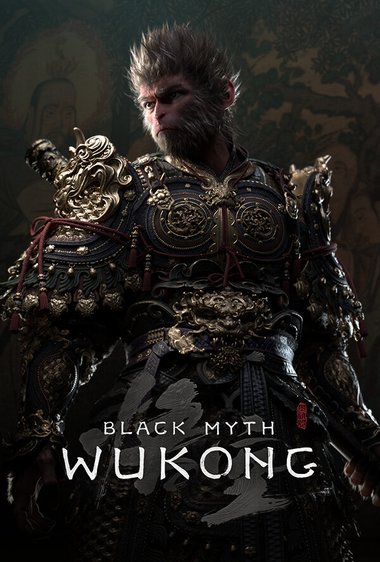
Black Myth: Wukong’s problems trace back to attitude. The invisible walls and poor exploration follow from scanning real heritage sites and then declining to modify them for gameplay, so that the Small Western Paradise looks vast but is almost entirely walled off. The PS5 rollout was attitude: review codes withheld, the first console footage arriving as a short, cut-heavy IGN China video that clarified nothing. Late-game bosses being a mess and Flower Fruit Mountain having no exploratory reward is attitude: ‘We finished the game; for a first triple-A it is fine; the marketing did the work.’
Fifty hours reduced to one observation: when a studio’s attitude towards its own audience is this visible, no amount of spectacle can compensate.
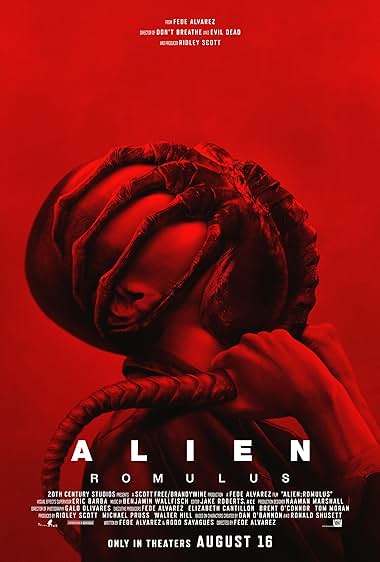
The franchise has always been Lovecraftian before it was anything else. Scott’s 1979 film understood that the xenomorph is not an antagonist but a fact: a biological system operating with total indifference to human meaning, produced by a universe that did not consult us and does not care. Every sequel since has struggled to preserve that cosmic dread while delivering the genre satisfactions that justify a studio budget; most have failed. Álvarez comes closer than anyone since Cameron, and he does it by returning to the franchise’s other foundational insight: that the real horror is not the creature but the institution that keeps feeding people to it.
Rain (Cailee Spaeny) and her companions are indentured miners on a sunless colony world, working contracts that Weyland-Yutani extends unilaterally, with no legal recourse and no exit. Their entire plan, boarding a derelict space station swarming with organisms they cannot comprehend, is driven not by curiosity or military orders but by poverty. They need cryostasis equipment because they literally cannot afford freedom any other way. The franchise began with blue-collar workers dying because a corporation valued a specimen over their lives; forty-five years later, Álvarez makes a film where blue-collar workers die because a corporation has made escape from labour so impossible that a derelict full of xenomorphs looks like the better option. The structural critique has not changed. The conditions have worsened.
The Z-01 compound, Weyland-Yutani’s refined version of the Prometheus black goo, is the film’s sharpest thematic device. The corporation’s ambition, genetically enhanced humans who can thrive in space, sounds almost benign in the abstract, the language of progress and adaptation. What it produces in practice is the Offspring: a human-xenomorph hybrid born of Kay’s mutated pregnancy, an abomination that kills its own mother immediately after birth. Every attempt to harness cosmic forces for corporate profit ends in the same place: a body destroyed and a boardroom none the wiser. The reproductive horror here is not incidental to the Alien franchise; it is the franchise. Giger’s original designs were explicitly about sexual violation, the facehugger as forced impregnation, the chestburster as fatal birth. Álvarez adds the layer of corporate mediation: Kay’s body is violated not directly by the xenomorph but by a compound manufactured by the company, administered by an android whose loyalty has been reprogrammed from ‘protect Rain’ to ‘serve Weyland-Yutani directives’. The violation is institutional before it is biological.
The digital resurrection of Ian Holm’s likeness as the android Rook is the film’s most uncomfortable moment, and not in the way Álvarez intended. A dead actor’s likeness, extracted and reanimated for corporate purposes, in a film whose explicit theme is the corporate extraction and reanimation of biological material for profit. The studio became Weyland-Yutani without noticing, which is, if nothing else, a vindication of the franchise’s thesis that the corporation is the organism that cannot recognise itself as monstrous. The zero-gravity sequence, in which Rain disables the station’s gravity to shoot the xenomorphs without their acid blood breaching the hull, is the best set piece the franchise has produced since the power-loader fight in Aliens: a tactical solution and a visual metaphor at once, bodies suspended in darkness, weightless, stripped of every orientation except survival. The production design keeps faith with Giger’s biomechanical aesthetic while the Romulus and Remus modules split the visual grammar neatly between Alien’s claustrophobic industrialism and Aliens’ militarised functionality. For those of us for whom cosmic horror is not a genre preference but a disposition, the conviction that the universe is not hostile so much as comprehensively indifferent, the relief of watching a blockbuster that actually believes in it is considerable.
I deeply regret only reading this in my third year of a PhD. Bill Bryson covers biology, evolution, geology, climate, ancient humans, and the history of science in a single sweep, treating each topic with real depth and written in the wittiest, most effortless prose of any popular science book I have read. The effortlessness is, of course, the hardest thing to achieve: Bryson spent three years researching the book, and the lightness of the writing conceals an enormous quantity of absorbed knowledge, distilled into anecdotes and explanations that feel as natural as conversation. Where most science communicators choose between rigour and accessibility, Bryson refuses the trade-off, managing to be both precise and funny, often in the same sentence. Bryson’s instinct is for the human story behind the discovery. Science here is not a march of disembodied facts but a procession of obsessives, misfits, and feuding personalities whose vanity and brilliance are equally responsible for what we know. The eccentricities of the scientists are not decorative asides; they illuminate how knowledge actually gets made, which is to say, messily, contingently, and often by people who would be unbearable at dinner. It is one of those books so accomplished that one stops looking for faults, and a book that makes one briefly, intensely angry at every science teacher who made the subject feel like a chore.
Beyond the astonishing deductive logic and complex clues, what surprised me most about Return of the Obra Dinn is the sound design. Organ for the weight of disaster, violin for premeditated slaughter; opening the book, one hears staccato strings that never resolve even after all sixty fates are determined, corresponding to the missing final chapter. Lucas Pope understood that the sound of an unsolved mystery is not silence but unresolved harmony.
Having played The Case of the Golden Idol (2022), I admire Return of the Obra Dinn even more for helping define the modern deduction-game wave. Pope built a detective game of uncommon logical rigour and made deduction feel like an aesthetic experience, each correct identification arriving not with the satisfaction of a puzzle solved but with the weight of a life acknowledged.
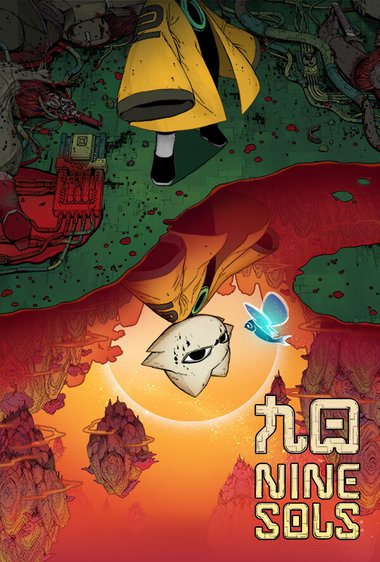
Nine Sols fuses Sekiro (2019)’s deflection system with Hollow Knight (2017)’s metroidvania structure to produce the best parry-and-punish combat loop I have played in years. Each area carries distinct colour and biome, echoing Hollow Knight’s approach but with the tonal specificity of a studio whose previous work includes Detention (2017) and Devotion (2019): every environment hints at the area boss’s backstory before the encounter begins. The boss fights sustain this consistently; not a single one feels like filler.
Most surprising is the narrative. In a genre where stories are slow and obscure by default, to find something this clearly told, with this beautiful a character arc, is rare. Red Candle Games have proven that a small studio with vision can compete with the genre’s best on every front. People of Penglai: see you in dreams.
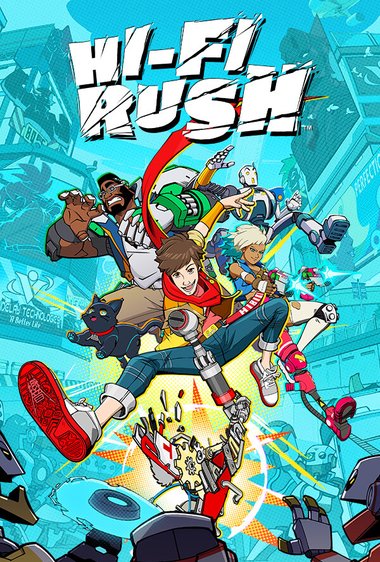
Hi-Fi RUSH fused action and soundtrack so tightly that rhythm became a structural principle rather than an accompaniment: every enemy attack, every environmental hazard, every parry window locked to the beat. Tango Gameworks arguably launched a new sub-genre, and the ten hours of gameplay flow effortlessly. The synchronisation between Chai’s animations and the music’s dynamics is precise enough that landing combos on-beat produces a kinaesthetic satisfaction no other action game offers.
Two hard flaws. First, enemy variety: the range of mechanics available, particularly the magnetic pull and Peppermint’s ranged abilities, had room for much more variation to deepen the late game, but in the final stages nearly all enemies can be beaten the same way. Second, the music has no highlights at all, a surprising weakness given the game’s rhythm-game identity. Every track locked to 4/4, every arrangement built on the same straight-ahead rock pulse, no odd time signatures exploited for rhythmic colour. Tango could have used the music itself as a design variable; instead, the studio focused so completely on the action side that the soundtrack became wallpaper. A rare genre-launcher. Microsoft’s closure of Tango in 2024 makes the unrealised potential feel uglier than it should.
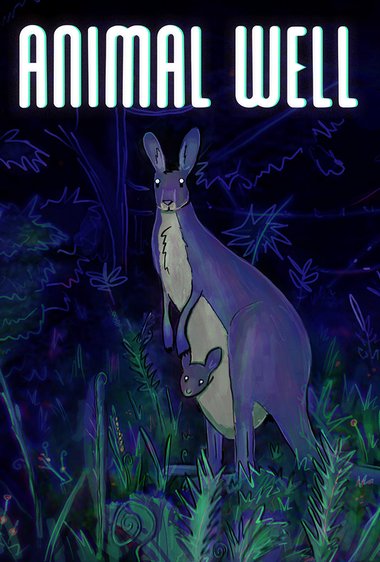
Animal Well is a wordless dialogue with the player: each tool, each hidden interaction, each moment of environmental discovery is a sentence in a conversation whose grammar one learns through play alone. The bubble wand propels the player upward but also reveals invisible platforms; the disc can be thrown as a weapon, stood on as a platform, and used as a timing mechanism; the yo-yo reads as a toy until one discovers that it can manipulate objects through walls. Billy Basso designed each item to have more uses than the player will find on a first pass, and the layered puzzle structure rewards obsessive revisitation. There is a white dog chasing frisbees instead of doing anything useful; a koala hopping along step by step; a white egret walking with haughty composure. All showing just how carefully Basso has worked.
The only limitation is that solo development necessarily restricts scope; the game is shorter than it could be, and some systems reach towards a complexity that the timeframe could not accommodate. But the talent is obvious, and scope is the only visible ceiling. Animal Well is proof that a single developer with sufficient vision can produce something that feels not small but concentrated.
Chris Chibnall’s Broadchurch uses a child’s murder the way the best crime fiction does: not as a puzzle to be solved but as a detonation whose blast radius is the real subject. The whodunit mechanics are competent, occasionally predictable, but DI Hardy and DS Miller’s investigation matters less for its destination than for what it exposes along the way: the density of secrets in a small community, the speed at which suspicion corrodes trust, the particular cruelty of media attention directed at grief. David Tennant’s Hardy is brittle and self-lacerating in a way that never tips into self-pity; Olivia Colman’s Miller carries the warmth and the devastation of someone whose faith in her own town is being dismantled in real time. The Dorset coastline, grey and windswept, is almost a third lead.
The season’s limitation is Chibnall’s occasional instinct for melodrama over restraint: certain revelations arrive with a heavy hand, and the final episode strains for emotional catharsis where ambiguity would have been braver. But the ensemble is strong enough to absorb these missteps, and the cumulative portrait of a community under strain holds. It is a solid, well-acted British crime drama that stays inside its genre and performs within it with conviction.
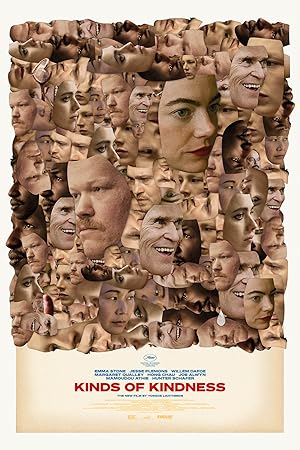
Poor Things (2023) was made with Tony McNamara, not Efthimis Filippou; the warmth, the narrative momentum, the accessibility, those were collaborative inflections. Kinds of Kindness reads, partly, as an assertion of creative self, the film Lanthimos needed to make in the wake of the Academy’s attention, a return to the coldness of Dogtooth (2009) in its refusal to accommodate. Lanthimos with Filippou is colder, stranger, and more interested in power as a structural feature of intimacy than as something to be escaped or redeemed. The three-part structure here is not an anthology in the conventional sense; it is a single argument made three times from different angles, each segment a variation on the theme of voluntary submission, the cult as the universal condition of belonging.
The plausibility is the disturbing part. The cult in Ari Aster’s Midsommar (2019) requires Sweden, rituals, a trip; Lanthimos’s cult is just the social fabric, slightly skewed, operating through the same mechanisms of approval and punishment that govern ordinary life. Unlike Aster’s sealed ritual space, the horror here arrives without blood or explicit enmity: the absorption is gentle, almost indistinguishable from care, a community composed of smiles and compassion whose members are alone in ways the smiles cannot cover. The film’s deadpan tone is not affectlessness: it is the affectlessness of people who have metabolised their subjugation so thoroughly they can no longer feel the edges of it. Jesse Plemons across all three segments is extraordinary in precisely this way, each version of compliance subtly distinct.
The critical consensus that Kinds of Kindness is Lanthimos on autopilot misreads what autopilot means here. His tics are not laziness; they are a consistent phenomenology of coercion, applied with greater clarity and precision than anything since The Lobster (2015). This is a film that trusts its audience to sit inside discomfort without being handed a way out, and the trust is earned. How could one not love it.
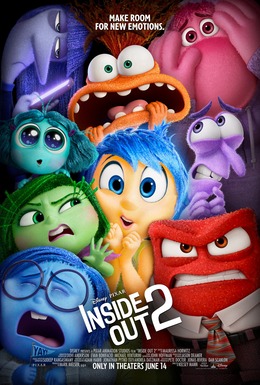
The original Inside Out (2015) depended on a metaphor, emotions as agents with competing interests inside a child’s mind, that was both conceptually precise and emotionally shattering. Inside Out 2 extends the metaphor into puberty by adding Anxiety, Envy, Ennui, and Embarrassment to the console, and the expansion is more mechanical than inspired. Each new emotion arrives as a character type rather than a psychological insight: Anxiety is neurotic and fast-talking, Ennui reclines on a couch, Embarrassment hides in his hoodie. The allegorical machinery, which in the first film felt like discovery, here feels like product design. Riley’s adolescent crisis follows a trajectory that is, by Pixar’s own standards, formulaic: the old emotions are sidelined, the new ones overcorrect, equilibrium is restored through a lesson about complexity.
And yet the formula is not dishonest. An adolescence that uses happiness as its default setting, punctuated by hiccups of anxiety and self-doubt, is clichéd precisely because it is accurate: most children do experience puberty as a series of interruptions to a baseline they assumed was permanent. The panic attack sequence is the film’s one moment of genuine formal ambition, and it strikes hard: the screen narrows, the colour drains, the internal voices collapse into static, and for thirty seconds the film captures something that most adult dramas about mental health fail to convey. That moment is relatable in a way that does not feel earned by the surrounding film so much as smuggled into it. I left with the sense of a studio that knows exactly what it is doing and no longer needs to risk anything to do it.
Ning Hao’s debut is small-scale absurdism at full strength. A monk’s temple is crumbling, its Buddha statue damaged beyond repair; he travels to the city to raise money for restoration and is robbed, scammed, cheated, and deceived at every turn by people no less desperate than himself. Incense runs ninety-seven minutes and wastes nothing. The camera follows the monk through a landscape of petty swindles with a documentary patience that owes more to Jia Zhangke’s Xiao Wu (1997) than to any tradition of religious cinema, and the effect is not satirical distance but a grinding intimacy with a world where everyone steals from the person one rung below them.
Little people rob, steal, and swindle from each other; above them, the officials sit smoking, drinking, and playing cards. This is not subtext; it is the film’s structural principle. The monk’s faith is sincere but immaterial: the money flows upward. The temple crumbles because nobody with power sees value in preserving it, and the distinction between active destruction and bureaucratic indifference is the space in which the film operates. Ning Hao would later become one of China’s most commercially successful directors, but this first work has a rawness and a fury that his later comedies, however entertaining, never recovered. It is the film of a young man who has looked at the machinery of Chinese capitalism from the bottom and decided to describe exactly what he sees. The incense burns. The prayer goes unanswered. The bulldozer arrives on schedule.
Christopher Storer calls Season 3 a tone poem, and the description is accurate but undersells how much structural ambition it contains. Each episode pushes further into formal experimentation: non-linear time, extended interior monologue, episodes that behave less like plot units than sustained emotional states. The critical complaint that the season is slow mistakes pace for aimlessness; Storer is making room for character interiority that plot-driven television habitually crowds out. Jeremy Allen White’s Carmy retreats further into obsessive perfectionism, the restaurant becoming less a goal than a mechanism for avoiding everything the previous season cracked open.
The performances Ayo Edebiri and Abby Elliott give as Sydney and Sugar are, without exaggeration, among the finest on American television this year. Sydney’s arc, weighing ambition against belonging, is handled with a psychological granularity that most shows spend entire series building towards, and here it arrives distributed across scenes that seem to be about other things. Elliott’s Sugar carries the impossible arithmetic of pregnancy, family, the restaurant, holding it all without editorialising any of it. Both are so fully realised that one responds to them as people rather than characters.
The season knows it is not for everyone. It asks to be felt more than followed, and some weeks that ask is more demanding than others. But the episodes that work, and most of them do, carry an emotional force that television almost never reaches. My favourite season of the show.

Hamaguchi’s triptych works the same seam as Drive My Car (2021): the gap between what is rehearsed and what is felt, between the script people carry into a room and the thing that actually happens when they open their mouths. The first story, a love triangle conducted almost entirely in a taxi and a stairwell, is elegant and slightly airless. The second, a student’s botched seduction of a professor via his own novel, is the most overtly literary and the most uneven; its interest in the erotic charge of language is genuine but its resolution feels contrived. Wheel of Fortune and Fantasy builds, and the building is the structure.
The third story is extraordinary. Two women meet at a school reunion, recognise each other as old friends, and slowly discover that neither is who the other thinks she is. The mistaken identity could be farce; Hamaguchi makes it the occasion for something closer to grace. The conversation that follows, in which two strangers decide to inhabit the roles they have been assigned and speak truths they could not have spoken as themselves, is Hamaguchi’s purest expression of what fiction can do: create a space where honesty becomes structurally possible. The emotion arrives not despite the artifice but through it, which is a paradox the film does not resolve so much as simply demonstrate. I left the cinema carrying the third story like a small, warm object, turning it over.
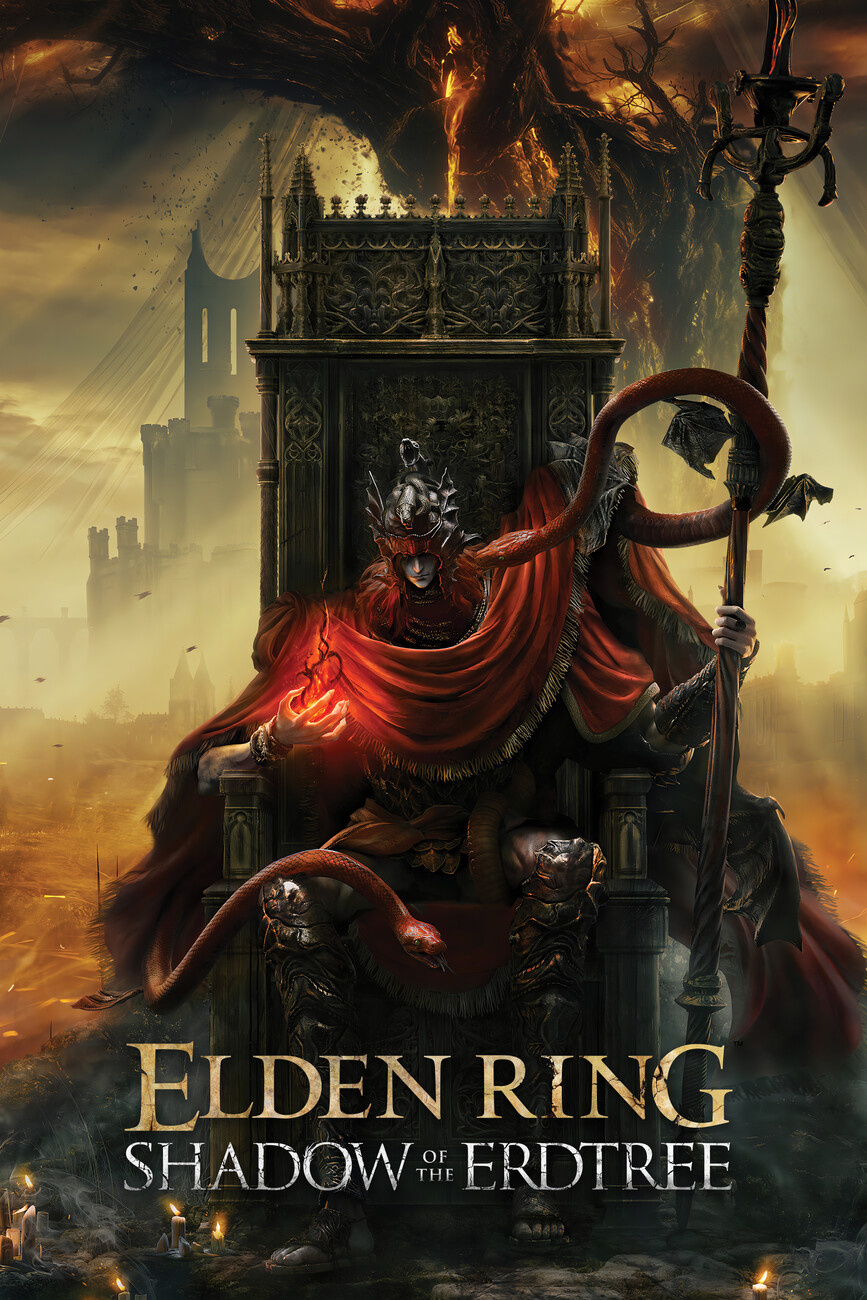
After falling before Radahn dozens of times, I thought of the field of cerulean flowers suddenly visible at the coastal cliffs, of the small golden tree surrounded by coloured flowers in the village where the god was born and grew, of Miquella’s imagined tender world and his own merciless cruelty, of the suffering of common people caught under warring gods, of the scarlet rot growing lonely on the ruins of ancient relics. Elden Ring: Shadow of the Erdtree is FromSoftware’s most concentrated work: a DLC shaped as refinement, every area operating at a density that the base game’s sheer scale occasionally diluted.
The Land of Shadow is perhaps the most thematically coherent space FromSoftware have built. Everything here is buried history: Messmer’s scorched-earth campaign against the Hornsent, Marika’s founding violence sealed beneath the Erdtree’s golden canopy, an entire civilisation erased so that grace could shine undisturbed above. The areas compress what the base game spread across a continent: Scadu Altus’s foreboding darkness, the Ancient Ruins of Rauh overrun with jungle as though the land itself is reclaiming what was taken, the Abyssal Woods where combat gives way to pure dread, Rellana’s elegant duel at the border crossing. Messmer the Impaler is the DLC’s finest boss, a son hidden from history whose serpent-fire fighting style carries the fury of a purpose he can no longer justify. Every ruin in the Land of Shadow asks the same question that the Erdtree was planted to suppress: what was here before the golden age, and who burned it down? Miquella’s arc is the DLC’s sharpest contribution. In the base game he was the sympathetic Empyrean, the cursed child who wanted only to heal his sister and free the world from the outer gods’ grip. The Land of Shadow reveals what that compassion costs when it acquires divine power. At each cross scattered through the world, Miquella shed a part of himself, his love, his charm, his memories, his body, stripping away everything human to prepare for a godhood that would impose gentleness by force. His followers, Needle Knight Leda, Thiollier, Moore, love him because he made them love him; the enchantment is not a side effect but the method. One assembles the fragments of Miquella’s passage and the picture that coheres is compassion curdled into tyranny: the most well-intentioned god in the Lands Between is still a god, and the gentlest world he can imagine is one in which no one is free to refuse it. A dimmed Tarnished, stumbling, still climbing to the top of the spiral tower. Promised Consort Radahn, resurrected and claimed, Miquella descending onto his back in the second phase to pour golden light into every attack: the final encounter is as overwhelming as anything FromSoftware have staged. Three dozen attempts, and the fight never felt unfair, only immense: the Scadutree system, which rewards exploration with survivability, gates power through discovery rather than rote levelling, and when one engages with it honestly, the DLC’s difficulty becomes a measure of how much of the Land of Shadow one has been willing to see. The Land of Shadow is a world where every character, every environmental detail speaks to the same question of what it costs to be chosen, and what it costs more to be unchosen.
Goodbye Berlin performs a neat structural trick: it presents itself as a Bildungsroman, reveals itself to be a road movie, and then circles back to confirm that it was a Bildungsroman all along, the road being the mechanism through which the growing-up happens. Maik (Tristan Göbel), neglected by alcoholic parents, friendless and fourteen, is recruited by Tschick (Anand Batbileg), a Russian-German outsider with a stolen Lada and no particular destination, into a summer journey across the Brandenburg countryside. Wolfgang Herrndorf’s source novel is beloved in Germany for good reason: it captures the specific texture of adolescent friendship, the way two lonely people can build, in the space of a few weeks, a private world with its own logic and vocabulary.
Fatih Akin’s adaptation is lighter than his usual mode, and the lightness suits the material. The encounters along the way, a homeless girl scavenging at a rubbish dump, a family of Serbian immigrants, an eccentric old man, are sketched quickly and warmly without tipping into picaresque formula. The unspoken gives the film its weight: Tschick’s sexuality, which the film handles with a delicacy that avoids both the closet drama and the coming-out narrative; Maik’s dawning recognition that his home life is not normal; the quiet understanding that this summer cannot last and that the Lada will eventually run out of road. It is not a film that reinvents its genre, but it inhabits the genre with enough warmth and specificity that the familiarity becomes a virtue. I left fond of both boys and faintly envious of Maik’s hair.
Li Ruijun shoots with the patience of someone who trusts that the world contains enough meaning if one waits long enough to see it. The cinematography of Return to Dust has the quality the original Chinese title gestures towards: things half-hidden, half-absorbed into their surroundings, a light that does not beautify so much as simply attend. Guiying (Hai Qing) and Youtie (Wu Renlin) are filmed this way too, not as subjects to be pitied or celebrated but as people living inside the same indifferent landscape that will eventually take them back.
The film’s politics are inscribed in its form. China’s rural dispossession is not declaimed; it is demonstrated through the texture of what Guiying and Youtie must do each day to remain in existence. Their lives contain a specific kind of dignity that is invisible to the city logic surrounding them, a dignity the film refuses to explain or defend, simply records. The fact that the film was pulled from Chinese platforms makes this refusal feel even more pointed: the censors understood what a patient, humane gaze could do to their preferred narrative of rural modernisation. The love between them is clumsy and tenacious and entirely real. It is not the love of people who have chosen each other from a position of abundance; it is the love of people who have found each other at the edge of being discarded, and made something inside that edge. Their lives are not necessarily less meaningful than city people’s. But they are the ones who are sacrificed, and the film knows it, and does not look away.
Alan Wake 2: Night Springs is framed as three episodes of Bright Falls’ in-universe Twilight Zone pastiche, but the conceit runs deeper: each episode is a story that Alan wrote with Warlin Door in the Dark Place, a failed attempt to write himself free. Remedy opens the toy box. Rose Marigold storms a pink-saturated Bright Falls with an automatic shotgun and unlimited ammunition, the survival horror stripped away entirely, the fan fantasy played straight. Jesse Faden wanders Coffee World without Polaris or powers, searching for her brother in a universe where the Oldest House never existed. Shawn Ashmore plays himself on a motion-capture set directed by a comedic Sam Lake, then falls into a game within the game, passes through a text adventure in a universe where ‘only concepts exist’, and arrives at a multiverse corporation called Ripple Effect that is the FBC by another name. The genre-hopping is relentless: each episode abandons the rules of the last, and the brevity (roughly forty-five minutes per episode) keeps every gimmick from outstaying its welcome.
The DLC will not change anyone’s understanding of the Remedy Connected Universe; it raises more questions than it resolves, and the simplified gameplay and reused assets are visible. But the creative latitude that it opens is worth more than answers. Night Springs proves that Remedy’s mythology can sustain play as well as dread, and the distance between those two modes is smaller than the base game’s relentless darkness suggested.
I love Rise of the Ronin deeply, and I will not pretend otherwise. Team Ninja produced the worst pathfinding system I have ever seen; the Blue Demon’s moveset designer should have been let go; it drops frames the moment anything catches fire; and Team Ninja has yet to match Nioh 2 (2020)’s combat highs.
And yet. The Bakumatsu setting is vividly realised: Yokohama under the Black Ships, Kyoto burning during the Boshin War, the faction system that asks one to choose between shogunate loyalists and imperial reformers with no clear moral high ground. The character relationships carry real weight, and the combat, when it works, still has that unmistakable Team Ninja precision. A deeply flawed game that I loved without reservation, which is perhaps the most confusing critical position one can occupy.

Yoon Ga-eun’s debut films entirely at a child’s eye level, and that commitment’s precision makes The World of Us so piercing. Sun (Choi Soo-in) is quiet, introverted, routinely excluded by her classmates with the casual efficiency that children reserve for those who do not fit. During summer break she befriends Jia (Seol Hye-in), a transfer student, and for a few weeks the world reconfigures: they share secrets, invent games, build the private architecture that intense childhood friendships produce. Then school resumes, and Jia is absorbed into the popular group, the same girls who bullied Sun, and drops her. The betrayal is not dramatised; it simply happens, with the observational restraint of Koreeda at his best. There are no villains. Jia’s defection is driven by her own precarious social and economic position: she cannot afford solidarity with the outcast.
The question the film asks, with a quietness that makes the asking almost unbearable, is the one Sun asks herself: when do we play, then? The 왕따 phenomenon, the systematic exclusion that structures Korean schoolyard hierarchies, is not presented as aberration but as social fact: cruelty here is not innate but systemic, reproduced through peer pressure, class stratification, and the absence of adult structures capable of seeing it. Yoon never condescends to her child actors or to her audience. The camera stays low, the compositions are patient, and the emotional pitch is that of a child processing a wound she does not yet have the vocabulary to name. I left the film remembering every friendship that ended this way, and knowing that the silence afterwards was the worst part.
Does anyone truly believe that a man who has been selfish and petty and small his entire life would suddenly find himself, and find clarity, after encountering a single rape narrative? The film wants to use identity fragmentation and the Mainlander experience in Taiwan as its critical frame, and those are serious subjects that deserve serious films. But underneath the framework sits a story about a backwards individual, lazy and incapable and constitutionally unwilling to learn, who simply rots as the times move past him, and whose rot the film treats as tragedy rather than judgement.
The glamping meeting scene is the film’s centre of gravity, and the conversations in the car are almost everything else worth holding onto. Hamaguchi stages the town hall with his characteristic patience, the back-and-forth between corporate representatives and village residents building something dialectical, neither side simply right, the ‘evil’ of the title already complicating itself before it has been named. Then the film moves towards its conclusion and one begins to sense that Hamaguchi is circling something he cannot quite reach.
The ending arrives as violence and then as black screen, and the interpretive latitude it offers feels like unresolved intention. If Drive My Car (2021) was as complete as it was, one suspects now that this had something to do with Murakami’s architecture holding the material in shape: the plot mechanics, the theatrical readings, the emotional throughline, all provided by source material that Hamaguchi was free to inhabit and extend. Left to his own structural instincts, the pieces here do not assemble. The film ends with the uncomfortable feeling that the director knew this too.

The structural innovation is a bet: Kaleb takes sole charge of the 500 arable acres while Clarkson attempts to farm the other 500, the meadows and woodlands that usually produce nothing. They compete to see whose half generates more profit. The numbers arrive with the show’s characteristic blend of comedy and devastation: mid-season tallies show combined losses exceeding £116,000, and even the final figures, Kaleb at £44,987 and Clarkson at £27,614 for a combined £72,601, are immediately consumed by next year’s seed and fertiliser costs. The profit exists on paper for approximately the length of time it takes to announce it. Clarkson’s Farm has always made the case that British farming is economically unviable without diversification; Season 3 makes the case with a spreadsheet one can hold in both hands and still not believe.
Gerald Cooper’s cancer diagnosis gives the season its emotional gravity, handled with a restraint that television rarely permits itself. He is mostly absent from the first half, undergoing thirty-seven sessions of radiotherapy, his absence felt in the rhythms of the farm rather than narrated. When he returns for the harvest and fights back tears in the closing scene thanking everyone, the moment strikes with the force of accumulated understatement. The pig deaths are the season’s other blow: Lisa Hogan, who had invested herself in the rare-breed piglets with visible, unguarded tenderness, is inconsolable when the sows prove to be terrible mothers. The show does not film the dead piglets; it films Lisa’s face, and that is worse. Season 3 is the point at which the series stopped being a comedy about farming and became, without losing the comedy, something closer to a documentary about what it costs to care about living things that have no obligation to survive.
Zaillian shoots Italy in black and white and the decision is not nostalgia but ontology: this is a world that exists outside time, sun-bleached and ancient and utterly indifferent to Tom Ripley’s particular pathology. Robert Elswit’s cinematography drains the dolce vita of its warmth and leaves something cooler and more dangerous, the Mediterranean reduced to a stage for slow, methodical crime. Every frame is composed with a patience that prestige television usually only claims; Zaillian lets scenes breathe well past the point where another director would cut, and the stillness accumulates into something close to dread.
Andrew Scott makes Ripley a void rather than a chameleon. Where previous portrayals, Alain Delon’s cold inscrutability, Matt Damon’s studied charm, leaned into the seductive surface, Scott gives us a man for whom affect is a second language, laboriously conjugated. The helplessness beneath the performance is the revelation: Ripley does not enjoy what he does; he does it because there is no other version of himself available to him. The adaptation’s fidelity to Highsmith’s moral coldness is total, and that coldness, after eight episodes, settles into one like a change in body temperature.
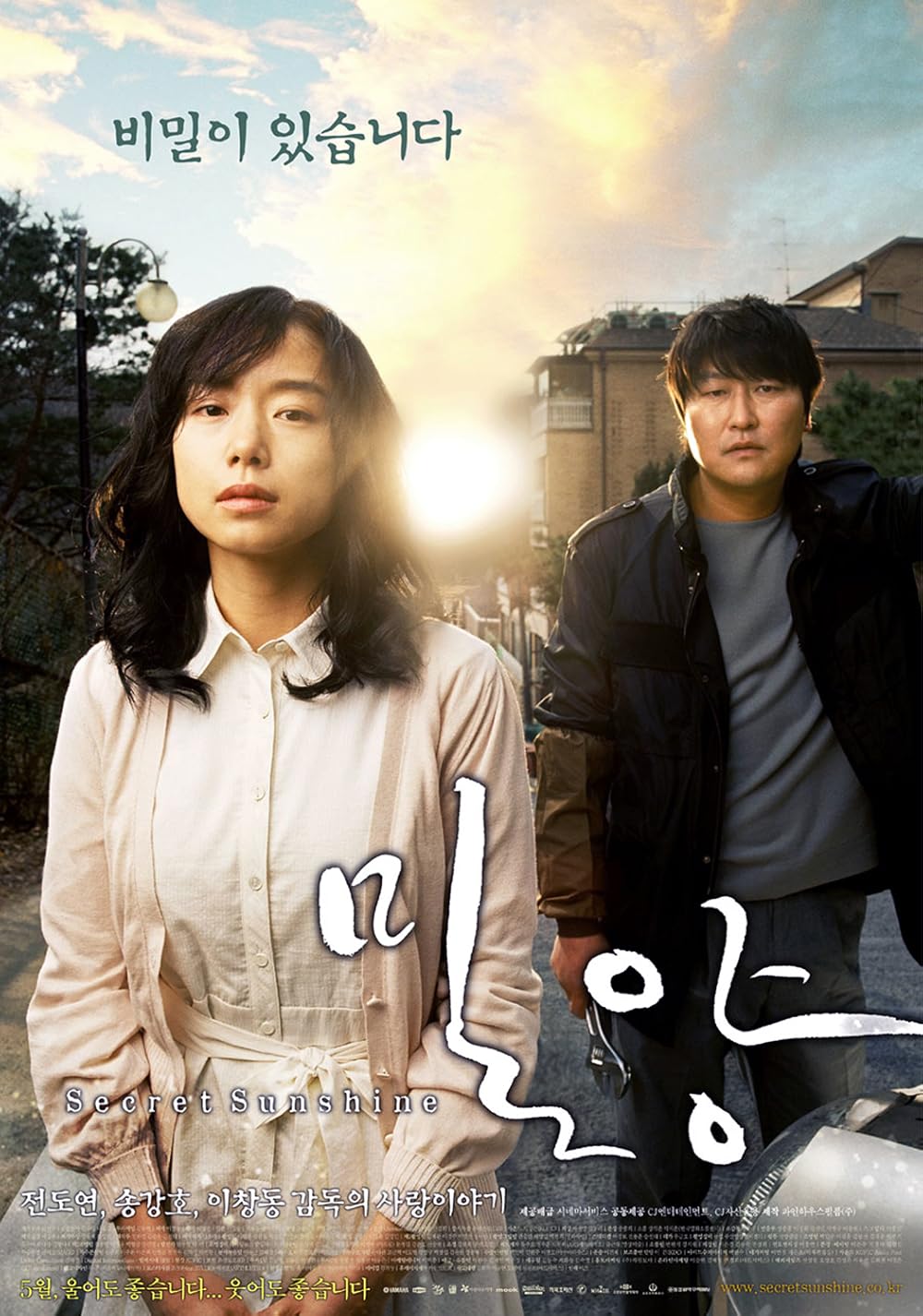
Shin-ae moves to Miryang, her dead husband’s hometown, with her young son, seeking the quiet restart that grief sometimes promises and never delivers. When the son is kidnapped and murdered, the film could have become a revenge narrative or a courtroom drama; Lee Chang-dong makes it neither. Shin-ae converts to Christianity. The church community absorbs her with the warm, suffocating efficiency of an institution that has a script for suffering. She finds consolation, briefly, in the structure of faith, and then visits her son’s killer in prison to offer forgiveness, the act the church has been preparing her for, only to discover that the killer has already found God and forgiven himself. The theft is total: he has taken her son, and now he has taken the one moral act she had left. Jeon Do-yeon’s Cannes-winning performance captures the unravelling that follows not as spectacle but as erosion, a woman losing purchase on the surface of her own life one handhold at a time.
The comparison with Lee’s later Poetry (2010) is instructive. Both films centre on women confronting moral weight that should be unbearable: Shin-ae as victim, Mija as the grandmother of a perpetrator. Secret Sunshine asks whether faith can metabolise suffering; Poetry asks whether art can. Both arrive at the same scepticism, but the routes diverge: Secret Sunshine dramatises the failure of forgiveness as institutional claim, while Poetry dramatises the cost of empathy when complicity is structural. Song Kang-ho’s Jong-chan, the mechanic who orbits Shin-ae with a quiet, secular tenderness the film never sentimentalises, provides the counterpoint the church cannot: care without theology, presence without programme. The title means ‘secret sunshine’, and Lee leaves it ambiguous whether the grace it names exists anywhere outside the word itself.
Detroit: Become Human is Quantic Dream’s most technically accomplished game and its most intellectually bankrupt. The Markus line makes no sense: a narrative about android liberation that borrows the iconography of the civil rights movement, the raised fist, the march, the dream speech, without any of the political understanding that would make such borrowing meaningful. The game does not know what oppression is; it knows what oppression looks like on television, and it confuses the two.
Kara’s chapter has genuine moments. Connor and Hank’s partnership has personality. But the writing around them is so heavy-handed and so incoherent that no individual performance can lift it. The technology exists to impress; the writing exists to disappoint.
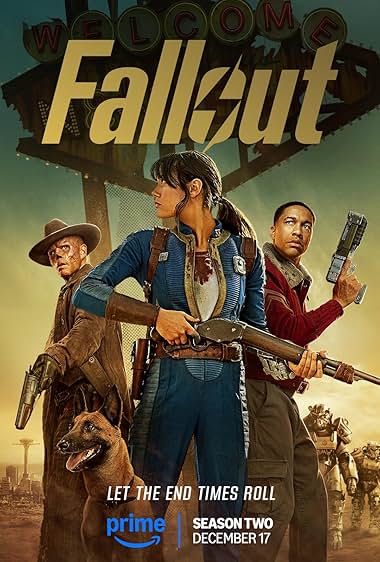
The Fallout games have always understood something about American mythology that most satire fumbles: the vault, the wasteland, the Brotherhood, the Ghoul; these are not genre furniture but a precise archaeology of the national psyche, optimism curdled into survivalism, corporate cheerfulness persisting past the point of obscenity. Wagner and Robertson-Dworet have absorbed this logic completely. The adaptation’s strength is not surface fidelity, though the grenades on the Brotherhood aircraft, the vault terminal interface, and the retro-futurist costuming are all immaculate; it is fidelity to the games’ political grammar, the way power in the wasteland is simultaneously ridiculous and lethal.
Ella Purnell’s Lucy MacLean carries the show’s tonal argument: vault-bred sincerity meeting wasteland brutality, her optimism tested not through grand betrayal but through accumulating evidence that the world above operates on principles her education never acknowledged. Walton Goggins as the Ghoul is the performance the series hangs on. He moves between Cooper Howard’s pre-war idealism and the Ghoul’s centuries-deep cynicism with a physical intelligence that the writing alone could not supply: the way his body remembers being a different person, the way violence has become not rage but routine. The show asks for attention and gives back a world that feels inhabited rather than constructed.
The chess procedural is an improbable television genre, and Scott Frank makes it gripping. Working from Walter Tevis’s novel, the series understands that chess is not interesting as a game but as a field in which a particular kind of mind can make itself visible: the board externalises Beth Harmon’s interiority in a way that conventional psychological drama cannot, so that watching her play is watching her think, and watching her think is watching her survive. The joint analysis after the adjournment against Borgov, late in the series, is astonishing television precisely because it is also emotionally coherent: the collective intelligence of an ad hoc community arrayed against the Soviet machine.
Anya Taylor-Joy does something technically precise here that deserves naming. The emotions do not appear on her face so much as they organise it from within; one reads the glances and the small repositionings of expression the way one reads a position on a board, inferring the larger structure from local details. It is a shame, then, that the series surrounding her performance is less surprising than it should be. The addiction subplot follows standard television recovery beats, and the male figures who rally around Beth in the final episodes feel less like people than like pieces the story moves into position for a satisfying endgame. The ending gives Beth everything she needs too cleanly for a show whose best scenes are about the particular loneliness of a mind that cannot stop working. That the adjournment as a practice has been rendered obsolete by engines is a loss the series makes one feel acutely: a whole ecological niche of chess time, the overnight analysis, the sealed move, the collective suspense, gone. Today’s players are faster and braver and lonelier for it.
The ageing mechanic is conceptually brilliant: death makes the character older, stronger, and more fragile, and age eventually makes the next death permanent. But there is a severe contradiction at the heart of Sifu between this structure and the game’s actual demand, which is rote pattern memorisation. Enemy positions and moves never change, so each run is less a new challenge than a repetition of a known one with higher stakes. Most time is wasted replaying stages one has already solved.
Sekiro (2019) resolved a similar tension by eliminating the RPG layer entirely: growth is embedded in the player’s reflexes, not the character’s stats, so fixed encounters become a virtue rather than a contradiction. Sifu reaches towards this and cannot quite grasp it. The martial arts animation is beautiful, the environmental choreography inventive, but the structure fights the feel.
Lee Chang-dong’s debut borrows from the gangster genre with the openness of a director who has not yet decided what his own cinema will sound like. Makdong (Han Suk-kyu), discharged from the army, returns to a Seoul that has swallowed his family’s neighbourhood in concrete and expressways, and drifts into organised crime through the path of least resistance: a chance encounter with a woman, a debt of loyalty to her gangster boyfriend, the absence of any other structure to hold him. The plot is conventional enough that one can see the Kurosawa and Kitano shadows the early critics noted: the loyal foot-soldier, the doomed romance, the violence that arrives not as catharsis but as accounting. Green Fish does not transcend these conventions so much as inhabit them with an emotional seriousness that makes the formula feel temporarily inhabited.
But the second half reveals something the genre framework cannot contain. The scenes between Makdong and his disintegrating family, the way Lee films economic displacement not as backdrop but as the engine of the narrative’s tragedy, point directly towards the director who would make Poetry (2010) and Oasis (2002). The gangster plot is the surface; beneath it is a film about what happens to people when the city they grew up in is demolished and rebuilt without consulting them. Even the most formulaic plot cannot bury Lee Chang-dong’s voice: the insistence that structural violence, the kind that does not announce itself, is the real subject, and that individual choices are legible only against the systems that constrain them. It is a first film in the best sense: one can see everything that will follow, and one can also see the director deciding, in real time, that he will need more than genre to say it.
Forty years ago the archetype was still legible as romance: the damaged, drifting man, the woman who loved him despite the cowbell he locked around her ankle, the paranoid possessiveness aestheticised as yearning. Sam Shepard’s screenplay is beautiful in its construction of the American mythological landscape, the desert, the road, the gulf between interior life and language, and Robby Müller’s cinematography earns every frame of its reputation. But the film depends entirely on Travis (Harry Dean Stanton) for its emotional weight, and the more honestly one examines his perspective, the more the beauty curdles. Jane (Nastassja Kinski) exists almost entirely as the object of Travis’s guilt and memory; her appearance behind the peep-show glass is theoretically a deconstruction of the male gaze, the glass as literalised barrier, the reversed roles in the confessional monologue, but the film remains too in love with its own longing to follow the deconstruction through.
Replace both women in the screenplay with their functions and the plot proceeds. Wenders remains a director one cannot quite fathom: a technical master in permanent service to a masculine interiority he never quite interrogates.

The world of philosophy would be better with more hands-on, empiricist thinkers like Peter Godfrey-Smith. As in Other Minds (2016), his gift is still the anecdote, the concrete image that carries philosophical weight without needing to announce itself. A female octopus throwing rubbish at a male who keeps harassing her while she builds a nest is an image I will never forget, and it does more argumentative work than a dozen thought experiments about qualia. Godfrey-Smith’s claim, that subjective experience probably evolved as organisms needed to manage increasingly complex bodies, is persuasive precisely because he arrives at it through observation rather than speculation: sponges respond to their environment through chemical signals but lack a nervous system that integrates information in the relevant way, and so probably lack experience. The boundary is not sharp but gradual, consciousness arriving in degrees rather than as a binary switch, which is both philosophically honest and scientifically productive.
On the evolutionary path, intelligence takes a thousand strange forms, all arising from a simple circuit distinguishing self from other. That thread runs through what looks like a scattered collection of stories about corals, mantis shrimps, reef fish, and cephalopods, binding them into a single argument about how matter becomes mind. Godfrey-Smith’s writing is as seductive as his philosophy: patient, precise, willing to sit with uncertainty rather than forcing premature resolution. There is a generosity in this approach, a refusal to treat the hard problem of consciousness as either solved or insoluble, that feels rare in a field dominated by confident declarations from both sides. One leaves Metazoa not with answers but with a richer sense of the question, and with the conviction that philosophy done in wetsuits and on reefs is philosophy done right.
Excellent premise, frustrating execution. Not for Broadcast’s interference-tuning scenes are almost always irritating: an important narrative beat is playing out on screen while one is simultaneously asked to focus on a signal pattern, splitting attention in a way that undermines both the gameplay and the story. The broadcast-switching itself is sharp, but several small mechanics exist that, if removed entirely, would make the experience more immersive rather than less.
The writing is strong, running a news broadcast during a political crisis produces real moral discomfort, and the choice architecture offers satisfying branching. But NotGames seem unable to decide whether they are making a narrative game or a dexterity game, and the hybrid serves neither ambition as well as it should.
Chen Yu-Hsun’s debut is one of the strangest and most tender films to emerge from 1990s Taiwan: a kidnapping comedy in which captivity is liberation, the criminals are warmer than the institutions, and the tropical fish of the title drift through the boy’s dreams like emissaries from a world where pressure does not exist. Ah-Jiang (Lin Chia-hung), a junior high student drowning under Taiwan’s joint entrance examination system, is taken hostage by a small-time crook and brought to rural Chiayi County, where the kidnapper’s family, bumbling and generous and incapable of menace, proceed to treat him better than anyone in Taipei ever did. The premise sounds whimsical. It is not. The satire cuts precisely where it needs to: the examination system that reduces children to test scores, the media circus that converts a child’s terror into spectacle, the urban-rural divide that makes the countryside simultaneously backwards and free. Wen Ying’s performance as the kidnapper’s aunt earned a Golden Horse and deserved it; she carries the film’s moral pressure with a naturalism that makes every Taipei adult look like a caricature by comparison.
Tropical Fish is magical realism rather than mere absurdism because its fantasy is sincere. The dream sequences, in which tropical fish swim through the air and the boy’s imagination breaks free of every wall his waking life has built around him, are not decorative; they are the film’s argument, a claim that the interior life of a child under institutional pressure is richer and stranger and more valuable than anything the institution measures. Chen Yu-Hsun is working in a different mode from the austere formalism of Hou Hsiao-Hsien or the architectural cool of Edward Yang: his Taiwan is loud, bilingual, chaotic, funny, and underneath the comedy there is a fury about what the system does to the young that never quite surfaces as polemic but never quite disappears either. The tropical fish are the thing the examination cannot quantify and the kidnapper cannot cage: the stubborn, ungovernable fact of a child’s imagination. Wu Bai’s soundtrack seals it. A film that should not cohere and coheres completely.
The first ten minutes of I Origins set up a premise with some genuine intrigue: a molecular biologist studying the evolution of the eye encounters a woman whose iris pattern challenges his materialist assumptions. After that, the science vanishes entirely, replaced by the kind of spiritual mysticism that films about scientists invariably reach for when the screenwriter runs out of research. The eye-pattern database, the reincarnation hypothesis, the trip to India: none of it withstands even cursory scrutiny from the discipline the film claims to inhabit. This would matter less if the film were honest about being a romance with metaphysical trappings, but it insists on its scientific credentials with an earnestness that makes the scientific illiteracy worse, not better.
Two things about the film are troubling rather than merely incompetent. First: the protagonist’s entire career appears to have been built on the labour of his female first-year PhD student, whose work he presents on television without acknowledgement, a dynamic the film treats as romance rather than exploitation. Second, and this is the one that ought to have sunk the film’s reputation: a man brings an unrelated child back to his hotel room in a foreign country on the basis of an iris scan and a feeling, and the film frames this as spiritual revelation rather than the safeguarding crisis it plainly is. That this passed without remark tells one something about how readily audiences will forgive narrative logic when the packaging is sufficiently pretty. The packaging here is very pretty. The film is nonsense.
Robot Dreams is a wordless film about a dog who builds a robot, and it destroyed me. Dog is lonely in 1980s New York; he orders a companion from a kit; they assemble each other’s happiness over a single summer: rollerskating in Central Park, bowling, Coney Island. Earth, Wind & Fire’s ‘September’ plays as they skate, and for a few minutes the film achieves a joy so unguarded it feels reckless. Then Dog and Robot fall asleep on the sand, and when Dog wakes the seawater has rusted Robot in place, immovable. He leaves to fetch tools; when he returns the beach is locked for the season, not reopening until June. The rest of the film is the aftermath: Dog trying to break back in, failing, the seasons turning, Robot dreaming of escape on the frozen sand. Pablo Berger, adapting Sara Varon’s 2007 graphic novel, tells this story without a single word of dialogue, and the absence of language is not a constraint but the point. There is nothing to say. The loss has already happened.
The film earns its power through refusal. Dog and Robot do not find each other again. They move on, separately, into lives that are not unhappy but carry the shape of the absence. Dog buys a new robot, Tin, and this time coats him with oil before the beach. Robot, salvaged from a junkyard and rebuilt by a raccoon with a boombox for a body, finds a life of his own. In the final sequence Robot spots Dog on the street below his rooftop; he imagines running down, and the fantasy dissolves. He stays hidden. He plays ‘September’ instead, and Dog, hearing it, dances on the pavement without knowing who is playing it. The film knows what most films about love refuse to admit: that the end of a relationship is not a failure of feeling but a fact of time, and that the people we lose do not stop existing; they simply continue elsewhere, carrying the same music. ‘September’ recurs in the final sequence, and I was in pieces. Not because the film is manipulative; it is the opposite of manipulative. Because it is true. Some friendships are perfect and finite, and the finitude is not a flaw but the condition of the perfection. I have not stopped thinking about it.
The first Dune established a grammar, grandiose and patient and utterly committed to scale, and Part Two spends three hours conjugating it into something immense. Villeneuve’s palette has never been more controlled: the gold-washed imperial interiors against the blue-black of Giedi Prime against the infinite buff of Arrakis, each world a fully realised phenomenology. The production design operates at the level where the film’s ideas and its surfaces become indistinguishable. Hans Zimmer’s score has learned to breathe more freely, less demonstrative than in the first film, more embedded in the images themselves.
Paul’s surrender is not triumph, and the critical discourse around Villeneuve’s changes to Herbert’s ending has not always foregrounded this clearly enough. Muad’Dib’s final acceptance of the messianic role is a moral catastrophe rendered as spectacle, and Villeneuve is precise about the horror of it: the jihad is declared, the machinery of holy war begins to turn, and Chani’s response is not argument but refusal. She takes up the maker hooks and mounts a sandworm and rides out into the open desert, and the film ends not on Paul’s victory but on her departure.
I wept uncontrollably. The tears were not for Paul (Timothée Chalamet), whose fate is exactly what he chose. They were for Chani (Zendaya), and for the particular clarity of her grief, and for the recognition that the most heroic act in the film is simply to leave. The last image is hers, not his.
ZA/UM built a game in which every conversation is a philosophical arena and the city of Revachol is a monument to failed revolution. The detective’s fractured psyche is not a character quirk but a structural argument: consciousness is necessarily fragmented, pulled between competing forces that present themselves as internal voices. Volition, Authority, Inland Empire, Electrochemistry: each skill is a reified social current, and the player’s stat allocation determines which ideological tendencies dominate. The detective does not choose his worldview; his stats have already chosen it for him, and what remains is only the question of whether he notices.
The game presents four political alignments, communism, fascism, ultraliberalism, moralism, and systematically demonstrates why three are dead ends and the fourth is the walking corpse of social democracy. Moralism is revealed as the ideology of international capital, enforcing austerity through the Coalition’s gunboats. Fascism is shown as the psychic death drive of petit-bourgeois resentment: Measurehead’s racial phrenology is absurd, but the game refuses to let the player dismiss it as merely absurd, because the resentment underneath it drives actual behaviour in the world. Ultraliberalism is capital’s own sales pitch, exploitation rebranded as opportunity. And communism? Communism killed him, Inland Empire says, examining the hanged man. The revolution failed. The Commune of ‘02 was crushed. The marks are carved into every stone of Martinaise, and one still believes because belief is all that remains when material victory is foreclosed.
No combat system, because violence here is not heroic but administrative; no XP from killing, because the detective is not accumulating power but reconstructing a shattered worldview; no win state, because there is no escape from Revachol, only the choice of how to inhabit its ruins. The murder mystery is a MacGuffin. The real investigation is into how one continues after the revolution has already lost. When Kim Kitsuragi looks at the detective with quiet disappointment, or quiet respect, the feeling cuts harder than any boss fight in any other game, because Kim’s judgment is the only metric the game offers that is not already compromised by the detective’s own broken cognition. Disco Elysium is the only RPG I have played where the role one plays is not a hero or a villain but a specific kind of historical subject: someone who woke up with no memory in a world that remembers everything.
I came to Season 2 knowing the show was already gone. Apple cancelled it in October 2023; Stewart later said Apple had asked him not to interview FTC Chair Lina Khan and not to do a segment on artificial intelligence, while reporting around the cancellation pointed to China and AI as sticking points. Watching The Problem with Jon Stewart Season 2 from that vantage, every substantive segment reads as a record of what was possible before the restriction tightened, and it is a better season than the first. The format commits to what Season 1 only sketched: twelve episodes on a weekly release, each one a single issue driven into the ground over forty-odd minutes, Stewart’s interviewing skill given room the Daily Show never allowed. He prepares, he presses, he does not give powerful officials the graceful exit most television journalism feels obliged to offer. The episodes on corporate tax incentives, on the military-industrial complex, on incarceration: each is a long argument that still manages to feel urgent rather than procedural.
The honest account of the show’s limits is also the account of Stewart’s particular politics: a liberalism that targets individual accountability without structural critique, that can name a corrupt governor or a dishonest general but circles away from the System that produces them. The show approaches political economy and withdraws; it follows money up to a certain level and stops. An episode can spend forty minutes demonstrating that a corporation extracted public subsidies while delivering nothing to workers and then conclude that the System needs reform rather than that the System is working exactly as designed. The critique floats, as it always has with Stewart, anchored in moral clarity but unmoored from structural analysis. This is the constitutive limitation, and Season 2 does not solve it.
Season 2 demonstrates instead that this kind of journalism, ideologically bounded as it is, still makes people nervous enough to suppress. The most revealing episode The Problem ever made was the one Apple made impossible to film. Stewart could not interview Lina Khan on the show he made for the company that Khan was investigating; he had to wait until he was back at Comedy Central to do it. The cancellation, in other words, was itself the argument: a corporation eliminated a show for beginning to examine corporate power, which is not the outcome of a system that needs reform. It is the outcome of a system that is functioning as designed. Stewart may not quite have the framework to say so; the circumstances said it for him.
The conventional narrative of the 10.26 Incident frames KCIA Director Kim Jae-gyu’s assassination of Park Chung-hee as an act of political conscience: a man who could no longer serve a dictator and chose, at the decisive moment, democracy. The Man Standing Next dismantles this mythology with surgical patience. Woo Min-ho’s film, based on the nonfiction account, constructs the forty days before the assassination as a claustrophobic power struggle in which Kim Gyu-pyeong (Lee Byung-hun, superb) is a bureaucrat watching the floor disappear beneath him. His rival, security chief Gwak Sang-cheon, is consolidating influence; the president’s inner circle is contracting; the Busan-Masan uprising has made martial law a live possibility. Kim shoots the president after running out of room.
The film’s great insight is that self-preservation and political courage can produce identical outcomes, and that history does not care which one was operating. Lee Byung-hun plays the ambiguity without resolution: one watches his face in the final dinner scene and cannot determine whether what one sees is conviction, panic, or the point at which they become indistinguishable. The period detail is meticulous, the pacing is controlled, and the ensemble, particularly Lee Hee-joon as the swaggering Gwak, gives every scene the texture of men performing loyalty while calculating betrayal. The assassination itself is less important than the mechanism that made it inevitable: a system that concentrates power so absolutely that the only exit is violence, and then calls the violence revolutionary after the fact. The tide of history pushes different cogs to the shore. Some of them happen to be holding a gun.
Kim Sung-su compresses nine hours of the December 12, 1979 military coup into a thriller so taut it barely lets one breathe, and the formal achievement carries real political stakes. Seven weeks after Park Chung-hee’s assassination, Major General Chun Doo-gwang (Hwang Jung-min, terrifying in his banality) mobilises troops without authorisation, arrests the Army Chief of Staff, and overwhelms the Capital Security Command led by Lee Tae-shin (Jung Woo-sung). The names are fictionalised; the history is not. 12.12: The Day reconstructs the coup as what it was: not a revolution but a power grab by men who understood that the window between one dictatorship and the next was closing. Hwang Jung-min plays the coup leader with the specific charisma of a man who has confused ambition with destiny; Jung Woo-sung, as the loyalist commander who tries and fails to hold the constitutional line, provides the moral weight the film needs without ever becoming sentimental about it.
Thirteen million admissions in South Korea is not a box-office figure; it is a referendum. The film arrived at a moment when Korean audiences were ready to look again at the machinery that produced Chun’s dictatorship, the Gwangju Uprising, and the long road to 1987. 12.12: The Day locates something more enduring than a political thriller: the insistence that the mainline narrative, the one that tells a nation its own history critically rather than triumphantly, is the only mainline narrative worth having. Reflexive patriotism tells citizens they were always brave; reflexive critique tells them the bravery was contested, contingent, and nearly lost. The film sides with the latter. It does not celebrate the loyalists who resisted so much as mourn the fact that resistance was not enough, and that the democratic spring the title names would take another eight years to arrive.
The delivery is as sharp as it has ever been, which is saying something given the technical standard of the post-2017 specials. The bit about parents dying is extraordinary in the exact sense: the observation that one parent dies while the other seemingly never does, and it is never the one one would prefer, is delivered with the specific emotional logic of someone who has been thinking about mortality in an unusually careful and unusually honest way. It locates a feeling so precisely that the audience recognises it before they have time to decide whether they should. The thematic coherence is looser than in his peak specials. Louis C.K. was never really a narrative comedian in the Seinfeld or Chappelle sense, never someone whose hour builds to a single unified statement, and so the scattered quality of Back to the Garden, recorded at Madison Square Garden, registers more as freedom than deficiency. The material moves between abortion laws, biblical literalism, and encounters with homeless men in New York with a confidence that does not need a through-line to hold.
Loving Vincent (2017) announced a technique: every frame a painting, actors filmed then rendered in oil, the entire history of Post-Impressionism conscripted into cinema. The Peasants (2023) makes lacerating use of what Loving Vincent (2017) only demonstrated. Where that film used Van Gogh’s aesthetic as a kind of commemorative transport, here the Welchmans have found a visual language, Polish folk art with its flat planes and chaotic, saturated colour and its roots in embroidery and woodcut, that is not decorative but argumentative. The Summer chapter’s turbulence is rendered in strokes so agitated and so densely packed that the image itself becomes overwhelming: form enacts content, bringing the film closer to Reymont’s Nobel Prize-winning 1904 novel than any realist adaptation could manage.
The Welchmans are telling an 1897 story in 2023 and the discovery, which the film presses on with quiet insistence, is that nothing has changed. The misogyny persists: the mechanisms by which a community decides which women are permissible and which must be expelled are as operational now as they were then, requiring only the update of their vocabulary. Jagna (Kamila Urzedowska) cannot win because the category of winning has been defined in advance to exclude her. By the end she has accepted this: not resigned to it, not broken by it, but stripped of the illusion that any meaningful act is available to her, and the acceptance is more suffocating than any overtly violent scene the film contains.
I was close to tears at the end. Not from pity, which the film refuses to solicit, but from the recognition of a structure so durable it might as well be natural law.
Vigil Season 2 abandons the submarine and moves to an RAF drone base in a fictional Gulf state, trading claustrophobia for political exposure. Season 1 pressed on Suranne Jones’s Amy Silva and on the audience through physical confinement; Season 2 attempts the same pressure through revelation: that the British state maintains military partnerships with repressive Gulf regimes, that arms manufacturers operate through revolving doors with senior officers, that drone precision targeting is a marketing claim rather than a guarantee, that state secrecy extends to covering up civilian casualties. Mainstream British television drama rarely names these structures directly; the season earns its setting change by making that directness count.
The episode that works best follows a cryptocurrency payment trail through the gap between official targeting narratives and ground reality, arriving at the moment Silva understands that the investigation cannot end in the UK because the UK is the entity being investigated. The show grasps that the military-industrial complex is not primarily a network of bad actors but a set of institutional incentives: the officers, manufacturers, and officials making morally catastrophic decisions are all behaving rationally within the logic of the structure they inhabit. This is further than most British crime drama goes. It does not go quite far enough; the resolution remains individual, expose the conspirators and close down the programme, and the structural critique of imperialism goes unvoiced. But the season comes closer than the genre usually permits.
Jones is the reason the pacing does not collapse. Silva’s methodical confidence, the quality of her investigative thinking made visible in her face, carries episodes through sequences that ask for more plausibility than the script provides. The relationship with Rose Leslie’s Kirsten, separated for most of the season by geography, carries what emotional force it can across distance. The season builds to a finale that uses its assembled pieces with more clarity than Season 1 managed, closing on drone footage of a strike presented without comment, an image that the show’s political argument earns.
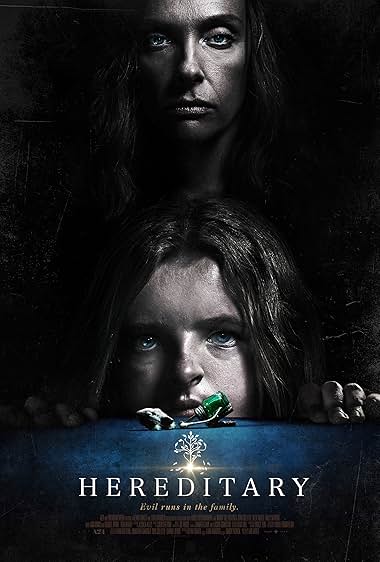
Ari Aster’s debut is most usefully understood as a film about conditioning. The horror does not arrive in discrete jolts; it is administered cumulatively, through sound design and framing and the patient repetition of images and gestures that will later be recontextualised with surgical precision. Colin Stetson’s score trains the body to respond before the mind has processed the threat. The tongue-click, first introduced as a minor character detail, becomes by the end a kind of involuntary dread response, which is Pavlovian in the most exact clinical sense: Aster has associated the stimulus with the reaction so thoroughly that the sound alone is enough. Toni Collette’s Annie is the instrument through which the conditioning registers: her performance operates on a frequency that most actors cannot reach, a grief so physically specific that one watches her body before one processes her words. By the time the car scene arrives, Aster has spent an hour teaching the audience to dread exactly this shape of loss, which makes it the single most unwatchable moment in twenty-first-century horror.
The occult architecture is elaborate and well-researched, Paimon drawn from the Ars Goetia and woven into the family’s history with a rigour that distinguishes it from the decorative Satanism of lesser films. What one sees in retrospect, knowing Midsommar (2019) and Beau Is Afraid (2023), is the DNA of an entire career: the closed system in which the protagonist has never had a choice, the horror as the revelation of a predetermined structure rather than a disruption of a safe one, the occult as a metaphor for the specific terror of inherited fate. Alex Wolff’s Peter in the final act is a body being moved by forces he cannot name; his performance after Charlie’s death, the morning-after scene in particular, is so precisely calibrated between shock and dissociation that the audience cannot tell where acting ends and genuine distress begins. Hereditary establishes all of this so completely and with such technical command that the subsequent films feel like elaborations of its first statement.
The final sequence offers no catharsis and asks for none. The horror is that it is all perfectly logical.
Many of Sontag’s observations in On Women are pointed, sometimes devastatingly so. Capitalist society has men defining femininity as superficial, then concluding that women are superficial: the circularity is so perfect that it almost looks designed, which is precisely her point. The liberation of women, Sontag insists, differs from the liberation of men because female liberation requires men to give up part of their power, which is why women’s liberation and equality are not the same thing. Equality within existing structures merely distributes the spoils more evenly; liberation demands that the structures themselves be dismantled. These are not arguments that have dated. If anything, the contemporary discourse around ‘lean in’ feminism, which asks women to succeed on terms defined by patriarchal capitalism, proves Sontag’s distinction still cuts.
The second half is a critique of Leni Riefenstahl: clear in its positions, uncompromising in its refusal to separate aesthetics from politics, but the argumentation is a bit thin, not entirely convincing. Sontag wants to demonstrate that Riefenstahl’s visual language is inherently fascist, that the celebration of physical beauty and heroic submission cannot be disentangled from the ideology it served. The claim is strong, perhaps too strong for the evidence marshalled here, which feels compressed to the point of assertion. One senses the essay reaching for the force of Fascinating Fascism (1975) without quite achieving it. Still, the collection as a whole reminds one that Sontag’s feminism was never comfortable, never programmatic: it was the feminism of someone who resisted the label even as she could not stop thinking about the problem. That discomfort is part of its value.
For All Mankind Season 4 makes its ambition clear early: the show is no longer about the space race as spectacle but about what happens when human civilisation arrives somewhere new and immediately reproduces its old hierarchies. Happy Valley on Mars is a company town; Helios has exported exploitation into the void, and the workers’ uprising, grievances accumulating from unpaid wages and impossible contracts towards outright rebellion, is the most politically legible storytelling the series has managed since Season 2’s Cold War machinery. Toby Kebbell’s Miles Dale leads the workers with a conviction that grounds the political argument in specific injury instead of abstract solidarity.
The trouble is that the analysis does not go deep enough. The season identifies the problem, capital extracts, workers suffer, institutions serve capital, but offers no vision of what comes after. The Goldilocks asteroid heist is a victory that resolves the immediate conflict without interrogating the structural forces that generated it. Edi Gathegi’s Dev Ayesa is a vessel for critique rather than a fully examined figure: the show knows that billionaires are a problem but cannot quite examine its own seduction by his charisma and vision. Season 4 is the most politically conscious For All Mankind has been, which means it is also the season where the distance between the show’s political instincts and its political intelligence is most visible.
I know nothing about Romanian history. I am not equipped to parse the quotations from Basho, Baudelaire, Bernhard, DeLillo, and Žižek that stud the film like footnotes in a novel that does not believe in novels. None of this mattered. Do Not Expect Too Much from the End of the World gave me, in one hundred and sixty-three minutes of a single day in Bucharest, the most fully realised, most alive character I encountered in cinema all year. Ilinca Manolache’s Angela is an overworked, underpaid production assistant driving across the city to interview workplace-accident victims for a corporate safety video. Between stops she produces TikTok rants as Bobiță, an Andrew Tate-esque filter-morphed grotesque who spews misogynistic filth with the practised cadence of someone metabolising an entire culture’s toxicity through satire. Jude shoots Angela’s odyssey in black and white, cramped aspect ratio, intercut with colour footage from Lucian Bratu’s 1981 film Angela merge mai departe, in which a different Angela, a female taxi driver, navigates the same streets under Ceaușescu. The two Angelas call and respond across forty years; Dorina Lazar and László Miske, who appeared in Bratu’s original, return here as older versions of themselves, their bodies carrying the distance between the two Romanias. What has changed is the economic system; what has not changed is the exploitation.
The film’s second movement is the corporate video shoot itself, and the formal discipline turns cruel there. Ovidiu Pîrșan, playing himself, a real worker maimed on the job, is coached by the multinational’s German marketing director (Nina Hoss, icily professional) to reshape his testimony: less blame, more personal responsibility, a version of events the corporation can distribute without liability. The fixed camera holds. Pîrșan adjusts his account, take after take, and what one watches is the real-time manufacture of a lie that will be called a ‘safety awareness campaign’, and the lie is built from the body of the person it was designed to protect. Jude has always understood that capitalism does not suppress the truth so much as commission a more profitable version of it; here the mechanism is laid bare with a patience that borders on cruelty. The roadside memorial crosses that flash past Angela’s car, one for every traffic death on the E85 corridor, are the film’s recurring image: the dead, acknowledged and uncounted. I came in knowing nothing about Romania. I left carrying the weight of one day in a city I have never visited, and the conviction that Radu Jude is making the most politically serious cinema in Europe.
Agnieszka Holland shoots the 2021 Poland-Belarus border crisis in black and white with a severity that refuses aestheticisation: the forest is not beautiful; it is the space where people die of exposure while two states use them as instruments of geopolitical leverage. Green Border follows a Syrian family, a Polish border guard, and a group of humanitarian activists through the same crisis from different angles, and the multi-perspective structure is the film’s strength and its limitation. The refugee experience is rendered with an unflinching physicality, the cold, the hunger, the cyclical deportation across the border and back, that earns its comparisons to documentary. The guard’s gradual moral erosion is credibly performed. The activists provide the ethical framework the film needs without becoming mouthpieces.
Where the film falters is precisely where its humanitarian convictions are strongest. The visceral force of what Holland shows is undeniable; what she does not provide is a framework for understanding why it happens. The geopolitical machinery, Lukashenko’s weaponisation of refugees, the EU’s complicity in externalising its borders, Poland’s domestic politics, is gestured at but never structurally examined. One feels the suffering with absolute clarity and leaves with almost no analytical purchase on the systems that produce it. The PiS government’s hysterical response, comparing Holland to Nazi propagandists, a particularly vile accusation given that her father survived the Holocaust, tells one more about the film’s political context than the film itself manages to articulate. It is a serious, committed work of border cinema that describes the symptoms of a crisis without diagnosing the disease. The Venice Special Jury Prize was deserved; so is the reservation.
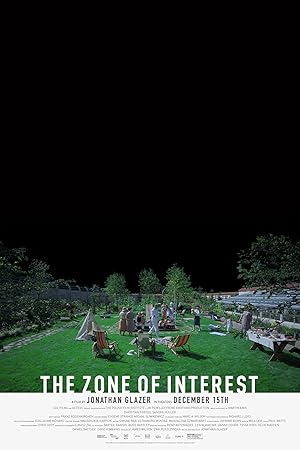
Glazer’s sound and image design make this one of the most formally unsettling Second World War films in a decade. Not a single moment is quiet. Children shriek with laughter in a garden thick with flowers while those beyond the wall are shrieking too; a gunshot cleaves the summer air; somewhere, machinery runs without ceasing. The camera does not flinch or recoil, because the camera does not know there is anything to flinch from. It sits in one indifferent corner after another, filming Rudolf Höss (Christian Friedel) managing his logistics, his promotion, his swimming pool, as though camp administration and career advancement were problems of the same order, which, for him, they are. Sandra Hüller’s Hedwig is perhaps the more unsettling performance: she sorts through confiscated clothing with a shopper’s eye, tries on a dead woman’s lipstick, and admires herself in the mirror. The horror is that she is not performing cruelty. She is performing domesticity.
Arendt wrote that the Nazi bureaucratic apparatus constructed a linguistic and procedural system allowing its officers to kill without reflection: the gas chambers were efficiency problems, the crematoria were throughput questions, and the officer who solved them well was doing his job well. Glazer has built a cinema equivalent of this system. One watches a brother play at being an officer gassing his sibling; one hears Hedwig tell her mother that she has become the queen of Auschwitz, and the pride in her voice is a domestic pride, the pride of a woman whose household is well ordered. No interiority is offered, because interiority is precisely what the perpetrators abolished in themselves.
The warmest possible mise-en-scène, the garden, the light, the children’s laughter, carries the film’s argument: normalcy is not the opposite of atrocity but one of its enabling conditions. Johnnie Burn’s sound design places the audience in the same structural position as the Höss family, hearing the camp without seeing it, pressing the horror back beyond the frame until imagination must do what the image refuses. The thermal-imaging nocturne sequences, in which a local girl hides apples for prisoners in the dark, are the only moments the film permits something like moral action; they arrive in a visual grammar so alien to the sunlit domesticity that surrounds them that goodness itself looks like it belongs to a different species. The wall between the garden and Auschwitz, Glazer has said, is a wall anyone can build. The film makes one believe it.
The Old Hunters does not extend Bloodborne (2015) so much as excavate its foundation. Ludwig, once the most celebrated hunter in the Church’s history, has been reduced to a screaming, horse-headed abomination in the blood-soaked depths that the Church sealed away. Halfway through the fight, the beast finds the Holy Moonlight Sword and rises on two legs: ‘Aah, you were at my side, all along. My true mentor… My guiding moonlight.’ It is a moment of unbearable clarity: recognition returned to something that has forgotten what it once was. Lady Maria guards the Astral Clocktower to prevent anyone from reaching what lies below: the Fishing Hamlet, where Byrgenwerth scholars defiled a beached Great One, Kos, and her orphaned child, whose curse generated the nightmare that every hunter enters. The Orphan of Kos stands screaming at the edge of a dead ocean, born from its mother’s corpse, swinging its own placenta as a weapon. One kills a child to end a nightmare that began when scholars killed its parent, and the game offers no frame in which this is not violence answering violence. After the Orphan falls, a black phantom stands in the surf, facing the body of Kos. The words that appear are not ‘Prey Slaughtered’ but ‘Nightmare Slain’. One strikes the phantom, and it rises into the sky and dissolves, and the shore is quiet.
I stood at the edge of a moonlit lake in Byrgenwerth, struck the thing that lay in the water, and the world changed. Rom the Vacuous Spider is not a spider and is barely a fight; she is a seal, a living barrier between what Yharnam appears to be and what it is. Kill her, and the player falls through the moon’s reflection into a white void, emerging on the other side into the same city, except the sky has ruptured, the moon has turned red, and the dead are no longer pretending to be alive. Bloodborne opens as a Victorian plague hunt: beasts in the streets, fire and saw cleaver, a city choking on its own pestilence. For hours the architecture says Dark Souls (2011) in a Gothic coat; the werewolves say action horror; the blood vials say survival. All of it is a disguise. What FromSoftware built is a cosmic horror game that spends its first half concealing what it is, and Rom’s death is the moment the genre falls away.
The concealment is not narrative but mechanical. The Insight stat, which rises each time the player encounters a boss or consumes a Madman’s Knowledge, literalises the Lovecraftian premise that knowledge is not power but exposure. At low Insight, the Cathedral Ward reads as Gothic ruin, and the ambient drone of the city is merely atmospheric. At higher values, Amygdalae cling to the cathedral facades, vast spider-limbed gods that were always there, visible now only because one has seen too much; the chanting that one dismissed as noise resolves into prayer. Winter Lanterns inhabit the game’s nightmare realms: figures humming a lullaby whose gaze alone inflicts Frenzy, the game’s madness mechanic. This is not Lovecraft’s mythology. There is no Cthulhu, no Necronomicon, no sunken R’lyeh. What Miyazaki took is the cosmology without the catalogue: the sensation of utter helplessness before forces that do not register one’s existence. The Healing Church that governs Yharnam split on this question before the game begins. Master Willem chose Insight: eyes on the inside, evolution through comprehension, ‘Fear the Old Blood’. His student Laurence chose blood ministration, and the scourge of beasts that consumed the city is the consequence. Both paths reached for the same transcendence; both failed; one produced a catatonic old man in a rocking chair by a lake, and the other produced a religion that could no longer distinguish its sacrament from its plague. The rally system, which lets the player recover lost health by striking back within seconds of being hit, inverts the caution that Dark Souls taught; hesitation is lethal, retreat is lethal, and the body learns to lean into harm. Trick weapons transform between forms mid-combo, each configuration carrying its own moveset and its own argument about what the encounter demands. But the combat, specific and vivid as it is, serves a deeper structure. Father Gascoigne, the first mandatory boss, is a hunter, not a beast; his daughter waits at home for a father who has already gone mad, and the music box that she gives the player, a family lullaby, can stagger him mid-fight: a piece of tenderness weaponised. The dream from which the Hunter operates, presided over by the Doll and the wheelchair-bound Gehrman, is itself a mechanism of exploitation: one dies and wakes, endlessly, because the Moon Presence needs hunters to keep hunting. The three endings branch on comprehension. Submit to Gehrman’s offer and one wakes at dawn, released, remembering nothing. Refuse, and one takes his place as the dream’s prisoner. Consume three One Third of Umbilical Cord, the remnants that Great Ones left behind, and one may challenge the Moon Presence itself; defeat it, and the Doll cradles what remains of the player: an infant Great One, squirming in an empty garden. Transcendence, in Bloodborne, means ceasing to be human entirely. Miyazaki has said that if he had to choose which of his games stayed in his heart, it would be this one. (I played it on PS5 at 30fps before learning that PC emulation existed; the frame rate did not matter.)
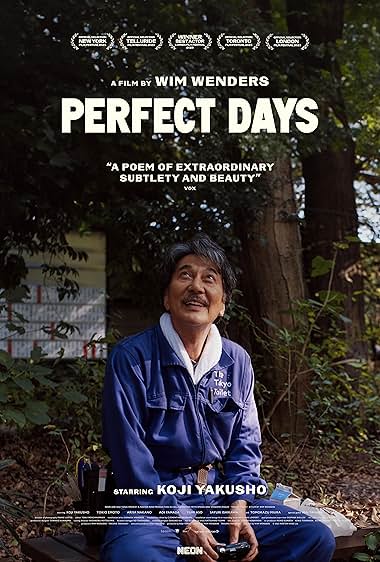
In the daily routine repeated without end, one does not see Mr. Hirayama’s loneliness. One does not see the ‘great beauty of East Asia’ that short reviews reach for, nor any glorification of the working class, nor a manifesto about the dignity of simple labour. One sees simply one person’s life: the cassette tapes chosen each morning with the seriousness of a liturgical selection, the photographs of light through leaves accumulated in boxes under the bed, the Faulkner novel read by torch in a narrow room, the moment of stillness before the cleaning begins.
The readings that want to make this into a statement, about mindfulness, about late capitalism’s discontents, about the vanishing art of attention, are not wrong exactly, but they are performing a kind of critical restlessness that the film itself declines. Hirayama does not live simply as a rebuke to anything. He lives as he lives. Koji Yakusho’s performance is the rarest thing in contemporary cinema: a portrayal of contentment that is not achieved at the cost of complexity, that carries the weight of everything renounced without dramatising the renunciation. The short reviews hell-bent on reading the film as some kind of manifesto are, frankly, baffling; they have mistaken a life for an argument.
An anomaly in Kitano’s filmography and a reminder of the range he contains. Shigeru (Claude Maki), a deaf-mute garbage collector, finds a broken surfboard and becomes consumed by the need to surf. His girlfriend Takako (Hiroko Oshima), equally deaf and mute, watches from the sand with a patience that is not passivity but devotion. A Scene at the Sea has almost no dialogue because its protagonists live in silence, and Kitano respects the silence completely. Where Violent Cop (1989) and Boiling Point (1990) operated through eruption, this film operates through stillness; the violence is replaced by the sea, which is just as indifferent and just as final.
Joe Hisaishi’s score is, without overstatement, one of his finest: a simple piano theme that recurs like a tide, never insisting, never resolving. It gives the film a warmth that Kitano’s camera, characteristically fixed and patient, does not provide on its own. The ending is the sea taking what it wants, as the sea always does, and Takako waiting on an empty beach beside a surfboard and a pair of shoes that will not be collected. Kitano’s peculiar tenderness, the warmth that coexists with brutality in everything he makes, is here distilled to its essence. One watches two people who cannot speak to the world find a way to speak to each other, and the world does not care, and the film does not pretend otherwise. Quiet, strange, and full of a gentleness that Kitano’s other films keep buried under their violence.
The original Resident Evil 4 (2005) was a turning point: camera placement and colour directing player attention, deliberate use of gore to build atmosphere rather than merely shock, a rhythm of tension and release that most survival horror games since have been chasing. Resident Evil 4 (2023) ditches the tank controls and rebuilds RE4 as a proper action-shooter, combat system and direction working in harmony. Every encounter is legible, every set piece calibrated, every escalation earned. The parry system adds a layer of mechanical depth that the original could not have imagined.
Capcom demonstrated that a remake can be more than restoration; it can be reinterpretation. The village siege, the castle’s vertical architecture, the island’s industrial horror: each section maintains the original’s pacing while rebuilding the mechanical language from scratch. A game that defined its era, proving it could define another.
One of the finest endings of any series in recent years. Under Libby’s voiceover, every thread is pulled to its crisis through means that are deeply literary rather than merely dramatic: the accumulated weight of the preceding episodes is recontextualised, not resolved. The reframing is total. Libby (Lizzy Caplan), who has spent eight episodes narrating Toby’s (Jesse Eisenberg) story of midlife dissolution, is revealed to be narrating her own; the act of telling someone else’s crisis is the form her own crisis takes. The writing, Taffy Brodesser-Akner adapting her own novel, earns its observations rather than asserting them. In the midst of a midlife reckoning, one quite naturally displaces misery onto the nearest available cause. Toby believes his unhappiness originates in Rachel’s (Claire Danes) indifference; Rachel believes hers originates in Toby’s failure to see her; Libby believes hers originates in a marriage that has quietly enclosed her. Each, after excising that cause, finds the root still there. The comedy of misattribution is precise, and the pain underneath it is not softened.
There is a strain of short review that says it cannot care about a middle-aged man’s divorce, as though the show were making that case. The show is not about Toby at all. It is about the stories people tell to avoid the story they are actually living, and about the woman, finally, who names it.
The structure of Monster arrives like a kind of epistemological ambush. The first chapter presents itself as a thriller about institutional negligence: a mother, Saori (Sakura Ando), watching the school’s carefully managed face and knowing something is being hidden behind it. The audience joins her certainty, builds alongside it, feels the outrage accumulate. Then the film pivots to the teacher Hori (Eita Nagayama), and every certainty dissolves; the monster has migrated, the villain has become a victim, the school’s stonewalling reveals new shape. By the time the third chapter arrives, the one that belongs to Minato (Soya Kurokawa) and Yori (Hinata Hiiragi), one understands that Kore-eda was never interested in the thriller machinery at all. The thriller was scaffolding.
What Yuji Sakamoto’s screenplay accomplishes, and what Kore-eda’s direction metabolises into feeling, is the demonstration that the most suffocating structures of harm are not dramatic or even intentional: they are simply the aggregate weight of ordinary people failing to look directly at what is in front of them. The decoy themes, institutional cover-up, class resentment, even the surface reading of the film as a study in perspectival truth, peel away one by one. What remains is a friendship between two boys who are discovering something about themselves that the world around them has no language for, only interdictions. The third chapter earns its tenderness by having first shown the world that makes tenderness dangerous: Minato and Yori building a secret place together in an abandoned railcar, a private architecture that the adult world reads as aberration. Ryuichi Sakamoto’s final score, submitted as individual piano pieces before his death, holds the film together in its most fragile moments with the particular authority of someone who had already said goodbye.
Kore-eda has never been a director who reached for formal experimentation without reason. The radical structure here is not a display of craft; it is the argument. The film won the Queer Palm and the Best Screenplay prize at Cannes, both of which it had earned, though neither quite names its singular quality: the way it marshals structural sophistication entirely in the service of a very old, very simple subject. The final image, the two boys running through tall grass towards a light that may be the world or may be the end of it, is the first moment in the film where the camera lets them be free. I did not expect to name this my favourite film of 2023, but here we are.

Scavengers Reign is, among other things, a sustained argument for animation as a medium of biological strangeness. The planet Vesta operates as a closed ecosystem before it operates as a setting: the organisms have food chains, life cycles, symbiotic relationships with one another that the narrative discovers rather than invents. Joseph Bennett and Charles Huettner, who expanded the series from their 2016 short Scavengers, work from Moebius, Ernst Haeckel’s biological illustrations, and the deep-sea phyla that look most unlike anything evolution arrived at on land. The design philosophy was ecological plausibility first, visual impact second, and the combination produces creatures that feel discovered rather than designed. The human characters do not survive the comparison with their surroundings. Azi, Sam, Ursula, and Levi move through an ecosystem that demands genuine biological intelligence and respond with dialogue that could have come from any mid-tier science fiction screenplay. The emotional arcs are legible and competent but never surprising; the planet keeps inventing, and the people walking across it keep rehearsing familiar beats of survival, grief, and corruption. Kamen’s storyline with the parasitic organism comes closest to something genuinely unsettling about the relationship between consciousness and control, but even there the show reaches for narrative closure before the premise has fully ripened. A review I encountered while watching made the claim that the first episode demolishes the notion that humans cannot imagine what they have never seen, and I cannot let that stand without a murmur of dissent. Every significant organism on Vesta Minor still requires limbs, appendages, bilateral or radial symmetry, some version of a mouth. The cursed planet, for all its strangeness, operates well within the frame of reference that evolutionary history has handed us. Scavengers Reign does with familiar biological building blocks what great music does with a limited number of notes. The constraint is real. The achievement within it is considerable.
Midway through Alan Wake 2, the survival horror stops and a rock opera begins. The Old Gods of Asgard take a stage that has materialised inside the Dark Place: LED screens, reflective black flooring, gaffer tape on the ground like blocking marks. They sing Alan’s entire life history in ballad-metal while he fights through the set, combat and song fused, pyrotechnics and enemy waves synchronised to the music’s dynamics. It plays completely straight under a rule the game has already established: the Dark Place is a space where writing constitutes reality instead of describing it, where Alan’s manuscripts cause events, where Saga Anderson (Melanie Liburd), the FBI agent working the parallel investigation, discovers that her own case has been authored into existence. The philosophical lineage runs through Borges and Danielewski’s House of Leaves (1999) into credulous metafiction: the characters know they are inside a story and treat that knowledge as literal, inhabitable truth. Music, then, is only another form of authorship. A musical number inside a horror game is only another chapter; after Control’s Ashtray Maze (2019), which fused combat and music into a single corridor of escalating delirium, the rock opera feels less like a formal rupture than the logical next step.
If authorship is this total and dominating, the question becomes why Alan cannot write himself out. He has been trapped for thirteen years, drafting a novel called Return, trying to author an escape, failing, forgetting, starting again. The Dark Place is defined by two wrongnesses: horror’s conventions are present where they should not be, governing reality as though the genre were physics, while the exit that should exist does not. Mark Fisher, in The Weird and the Eerie (2016), called this condition the eerie: a space structured by what is there but should not be, or what is absent but should manifest. Mr. Scratch, his dark double, enforces the condition: the Dark Presence wearing Alan’s face, insisting that the story can only end in sacrifice, that the genre is the horizon. The thirteen-year gap between the first Alan Wake (2010) and this sequel mirrors the imprisonment exactly; Remedy, too, spent over a decade circling back to a story that they could not finish. Against the loop, the game proposes the spiral: repetition with directionality, each pass through the Dark Place carrying the incremental possibility of revision. The dual-protagonist structure, in addition, makes the spiral formal. Saga’s Mind Place, her FBI evidence board, represents empirical rationalism: the world is discovered through procedure. Alan’s Writer’s Room represents idealism: the world is structured through narrative. The loop breaks only through collaboration, the writer accepting that he needs the reader.
But the Dark Place’s most devastating cost is that its destruction radiates outward. Alan’s novel rewrites Saga’s past in increments: first her daughter Logan slipped in the shower; then a newspaper reports that Logan drowned in July; then Logan stops answering the phone. Each revision overwrites the previous reality until Saga’s child is dead, consumed as collateral plot material by a story that she never asked to enter. Like the Navidson family in House of Leaves, Saga’s family is destroyed not by what they encountered but by proximity to something that should have remained a text. The manuscripts that the player collects predict events that then occur; the player, too, is implicated in the authorship, another pair of hands on the typewriter. The horror is that fiction becoming real has a cost, and the cost is never paid by the author.
‘It’s not a loop. It’s a spiral.’ The live-action sequences with Sam Lake as Alex Casey, the Night Springs show nested inside the fiction, the manuscript pages that modify their predictions with each cycle: Remedy built a game in which every layer of fiction is also a layer of reality, and the player’s own act of replaying becomes a narrative event, another turn of the spiral, another draft revising the previous one. The base game’s ending turns on whether one believes this: Saga fires the Bullet of Light, the credits roll, the phone rings into silence. But the Final Draft mode, unlocked on replay, extends the story, adds new manuscript pages, and the phone is finally answered. Logan is alive. Alan revives. The spiral holds.
The Mandalorian Season 3 dispenses with the tension that the previous season carefully built, completes Pedro Pascal’s Din Djarin’s redemption arc across the opening episodes, and then has nothing left to do. The correct vocabulary is borrowed from game design and used precisely: this is a side-quest season, each episode its own objective, each objective completed without accumulating consequence for the ones that follow. A game tolerates this structure because the player is doing the questing; watching someone else run side quests produces nothing equivalent. The show has no answer for this.
The mythology the season attempts to develop is not substantial enough to carry the weight placed on it: Mandalore’s reclamation, the Armorer’s covert, Katee Sackhoff’s Bo-Katan assuming leadership; none of it coheres into anything more than lore maintenance. What had been pleasantly undemanding in Season 1 and successfully escalated in Season 2 here becomes inert. The Volume is still impressive engineering; the action is competent; the season ends. One finds one has retained almost nothing, which is what the show was designed to produce and, three seasons on, is no longer sufficient.
In Act I, Brother Piero tells Andreas that art is our path to the truth. Pentiment is Obsidian’s finest work: a game that proves the studio’s strengths were never in combat systems or inventory management but in writing, in the careful construction of a world dense enough to reward obsessive attention. The typefaces change depending on who is speaking: the abbey’s monks write in blackletter, the humanist-educated characters in Roman type, the unlettered townspeople in a rougher hand. Tassing’s social hierarchy is visible in the font before a word of dialogue is read.
By the Christmas carol at the ending I was almost in tears: thinking of Andreas’s son’s death, of borrowing books from the nuns in the Scriptorium, of the layered history of the murals and the Roman ruins beneath. The abbey, the town, each generation’s mark partially erasing the one before. In a certain sense, twenty-five years later, Magdalene finally fulfilled Piero’s original wish. Fifteen hours of game, containing an entire world.
Ghost Trick: Phantom Detective’s premise, that a meteorite brought dualism to Earth, is inspired: a plot device simultaneously absurd and internally rigorous, sustaining the entire narrative’s logic while leaving room for surprise. Shu Takumi built the puzzle mechanics around the ghost powers themselves rather than around inventory or dialogue trees: possessing objects, manipulating their movement, rewinding time four minutes before each death. Every puzzle is a Rube Goldberg machine of causality, and the satisfaction of solving one comes not from difficulty but from the elegance of watching one’s chain of interventions play out in real time.
The final hour packs in more plot than most games manage in thirty. The revelation of Sissel’s identity, the connection between Yomiel, Lynne, and Jowd, the philosophical discussion around death and what constitutes a life: all of it works because every question the player has been carrying since the opening scene receives a precise answer. The setup is clean, watertight, every curiosity rewarded. Capcom at their best: narrative architecture as engineering, where every beam bears weight and every joint holds. Ghost Trick is a machine with no wasted parts.
Ori and the Will of the Wisps remains the finest fusion of metroidvania and platforming I have played. Moon Studios took everything that made Ori and the Blind Forest (2015) extraordinary and expanded it without dilution: the movement is more fluid, the world larger and more varied, the Spirit Shards system allows customisation that the original’s linear upgrade path could not accommodate. The boss encounters, a consistent weakness in the first game, are redesigned as cinematic set pieces: Mora’s pursuit through the Mouldwood Depths, Kwolok’s corrupted transformation, each fight serving both the mechanical and narrative arcs simultaneously.
Gareth Coker’s score carries the emotional architecture. The Luma Pools’ harp arpeggios shift to minor as corruption spreads; the Windswept Wastes’ sparse percussion mirrors the isolation of the desert traversal; Shriek’s theme uses dissonance to communicate damage before the fight even begins. The final boss fight demonstrates the full convergence: narrative, art, music, and mechanics working together not as a climax but as a resolution, the mechanical difficulty expressing emotional closure rather than simply testing skill. The escape sequence that follows maintains this integration: the collapsing environment, the musical crescendo, the platforming challenge all moving as a single expressive gesture. Even knowing what the ending costs, I would not change a frame of it.
Lies of P is the best soulslike outside FromSoftware’s own catalogue. The combat system borrows Dark Souls’ stamina management and Sekiro (2019)’s perfect guard timing, then adds a weapon assembly system that lets players combine blade and handle independently, creating hybrid movesets that feel distinct rather than derivative. The Fable Arts tied to each component introduce tactical variety that pure Souls combat lacks: the Puppet String’s pull, the Flamberge’s wide sweeps, each combination producing a different rhythm of engagement. Boss fights are consistently excellent, each encounter demanding both the patience of Souls and the aggression of Sekiro.
Round8 understood that a soulslike’s quality is measured not by originality but by coherence. The Belle Époque setting and Pinocchio framework make the borrowed structure feel purposeful rather than imitative: Krat’s opera house and grand hotels in decay, the puppet-master’s workshop, the alchemists’ underground, all of it serving the fairy-tale logic of a puppet who lies his way towards humanity. The lying mechanic integrates the narrative theme into the mechanical loop: player choices affect P’s humanity stat and the world’s response, a layer of moral consequence that FromSoftware rarely attempts. Environmental storytelling follows the expected method, item descriptions and architectural decay building narrative, but the Belle Époque dressing gives familiar techniques a different texture. A game that took a known formula and made it feel like its own.
Sally Wainwright gives every person in the Calder Valley a complete interior life, not as magnanimity but as structural commitment: the fabric of the show requires it, because crime in Happy Valley is never anomalous. It emerges from the same social texture as everything else, from financial strain and family grief and the specific exhaustion of public service in a community that has been left behind. The supporting characters, the small criminals, the frightened accomplices, the institutional figures hedging their bets, are not furniture. They have reasons, histories, the particular stubbornness of people who have never been given anything easily.
Catherine Cawood is earth and sky. Sarah Lancashire’s performance operates in the key of someone for whom dignity is not a performance but a survival mechanism: this woman has absorbed a loss that should have broken her, has metabolised it into something like forward momentum, and carries it in her body, in the set of her jaw, in the way she manages not to flinch when the thing she has been dreading finally comes into view. The show does not ask one to admire her; it simply insists that one see her clearly. That is the harder ask, and Wainwright meets it without flinching.
The final season arrives after seven years, and Sally Wainwright uses the gap structurally: Sarah Lancashire’s Catherine is counting the months to her pension, Ryan is sixteen, and the question that the show has been deferring since its first episode can no longer be deferred. Ryan is a goalkeeper, occasionally short-tempered in ways that make Catherine’s jaw tighten. The discovery that Clare and Neil have been secretly taking him to visit James Norton’s Tommy in prison detonates the household’s fragile peace, but the season’s most startling revelation is that Ryan went mainly out of pity, not attraction. He saw his father clearly and felt sorry for him. Two seasons’ worth of accumulated dread about whether Tommy’s nature would express itself in his grandson resolves into something almost unbearably simple: Ryan is decent, honest, ordinary, and the tree he fell from was always Catherine, not Tommy. The final episode brings them face to face across Catherine’s kitchen table, not as action sequence but as reckoning, two people held under the weight of sixteen years of hatred and grief. Tommy, mortally wounded and overdosing, arrives at something that is not repentance but recognition: he sees the photo albums, Ryan’s bedroom, the evidence of a loved childhood, and tells Catherine, ‘What a nice life you’ve given him.’ Then he douses himself in petrol, completing the circle the show drew in its very first scene, when Catherine talked down a man threatening self-immolation in a children’s playground. She smothers the flames with a crocheted blanket, domestic craft deployed against annihilation. Eighteen hours of television across a decade, and Wainwright closes it not with spectacle but with Lancashire at a graveside, a text confirming Tommy Lee Royce’s death, a smile, sunglasses, and the road ahead. Wainwright knew when to stop.

Where Season 1 pitted Sarah Lancashire’s Catherine against James Norton’s Tommy in physical space (streets, abandoned buildings, a burning barge), Happy Valley Season 2 removes him from the frame entirely and discovers that his menace operates more insidiously at a distance. Tommy spends the season in Gravesend Prison, yet his manipulation radiates outward through proxies: Shirley Henderson’s Frances Drummond, a pharmacist groomed into assuming a dead sister’s identity and infiltrating Ryan’s school; the multiple women he corresponds with simultaneously, each believing herself engaged. Wainwright braids this with a serial killer investigation whose most devastating revelation is structural rather than procedural: Daryl Garrs, the killer, is himself the product of incestuous rape, his violence seemingly inherited, his mother’s only available mercy a shotgun. The parallel to Catherine and Ryan requires no underlining. It is the nightmare version of the question that the show has been asking since its first episode: what happens when the damage passes through the blood?
The season is less compressed than its predecessor and more tonally daring. The bridge confrontation, Wadsworth cornered and suicidal, coaching Catherine through crisis negotiation she has never been trained for, would collapse in any other writer’s hands; Wainwright nails both the comedy and the devastation. The Frances Drummond confrontation subverts every expectation the season built: where one anticipated violence, Catherine offers gritted-teeth recognition that Frances is another of Tommy’s instruments, not his accomplice. But the season’s last image is the one that stays: Tommy in his cell, reading Ryan’s letter, smiling, the channel that Catherine fought to prevent now open, and the understanding that the real threat was never force but patience, a man who knew that a child’s curiosity is a door that cannot be permanently locked.
I did not expect it to rethink so much. Star Wars Jedi: Survivor’s 3D traversal strikes a balance between metroidvania and soulslike that Fallen Order only approached: the vertical movement, the shortcut architecture, the way each planet’s map reveals its full shape only after hours of exploration. Koboh alone is a remarkable piece of interconnected design, its layers folding back on themselves as new traversal abilities unlock previously visible but unreachable areas. The five combat stances, each with distinct timing and range, give the player genuine tactical options rather than cosmetic variation.
Respawn understood that Fallen Order (2019) was a proof of concept, not a finished vision, and treated the sequel accordingly. Every system has been rethought, every rough edge smoothed, every good idea given room to develop. A sequel that understands expansion as deepening rather than inflation.
The Crown Season 5 has the misfortune of arriving two months after the Queen’s death and Charles’s accession, which would be merely bad timing if the season did not also bend so insistently towards a rehabilitative Charles. The tonal problem is precise and repeated: episodes that begin by documenting how Diana was gaslit, surveilled, and systematically isolated by the institution pivot, sometimes within the same hour, to extended sequences presenting Dominic West’s Charles as a man of vision: his Prince’s Trust praised with end-credit statistics, his relationship with Camilla bathed in warm sincerity, his breakdancing treated as endearing evidence of a common touch. It does not work. The show cannot simultaneously demonstrate how the institution destroyed one person and then ask the viewer to admire the heir who benefited from that destruction. The question that sits beneath the entire season is whether the scripts were shaped to flatter the monarchy’s succession narrative, and the evidence, episode by episode, makes it difficult to answer in the negative.
Elizabeth Debicki’s Diana is the performance the season does not deserve. She carries the role’s accumulated grief with a physical specificity that recalls Emma Corrin’s Season 4 work without imitating it, the evolution from humiliated wife to public weapon handled with care that the writing cannot match. Imelda Staunton’s Elizabeth, inheriting the role from Colman, projects an institutional opacity so complete that the performance risks becoming invisible, which may be exactly the point. The Panorama episode stages Martin Bashir’s manipulation of Diana through Earl Spencer with a clinical precision the rest of the season lacks. But one strong performance cannot rescue a season whose failure is political rather than dramatic: Peter Morgan, who began this series as a self-described republican, has written himself into the position of the monarchy’s apologist, and the closer the show approaches the present, the more visible and less forgivable the capitulation becomes.
Olivia Colman’s Elizabeth is not a different character from Claire Foy’s; she is the completed version. Where Foy’s performance traced the exact progress of institutional absorption, Colman arrives already absorbed, the human surface polished to institutional opacity. The difference is felt immediately: one no longer watches Elizabeth deciding to suppress her feelings; one watches a woman for whom the suppression has become the feeling, the mask fused to the face. The Aberfan episode makes the cost of this legible. One hundred and sixteen children die under a collapsed coal tip, and Elizabeth delays her visit because the institution advises that royal grief, if displayed too readily, devalues the currency. When she finally goes and breaks down, the tears are real; what is devastating is that the institution was correct to delay them, that the tears strike harder for being withheld, that the strategic calculus and the emotional truth arrive at the same destination by different routes. This is the monarchy’s deepest horror: not that it suppresses feeling, but that it has learned to deploy feeling as a tool, making the authentic and the calculated indistinguishable. Charles’s investiture as Prince of Wales is the season’s other argument. He is sent to Aberystwyth to learn Welsh, develops sympathy for Welsh nationalism, delivers a bilingual address that moves his audience, and is told by Elizabeth to suppress every personal conviction the experience produced. The pattern is Margaret’s, a generation later: the institution shapes its children, permits them a window of feeling, then closes the window and installs the glass. Vanessa Kirby’s Margaret, from the vibrant young woman denied love in Season 1 to the affair with Roddy Llewellyn and the suicide attempt here, carries the same pattern to its end. The outward strength masks inner decay, and the decay is visible not in grand failures but in the stubborn, accumulated minutiae of lives forbidden to change.
The season’s most persistent failure is also its most telling one: Thatcher’s economic programme, the defining political fact of her decade, is almost entirely absent. The privatisations, the assault on the unions, the deliberate dismantling of the postwar settlement, the transformation of Britain into a laboratory for Friedmanite shock therapy; none of it registers. Gillian Anderson inhabits the role with formidable precision, the voice, the posture, the particular quality of certainty that admits no doubt, but the writing reduces Britain’s most consequential postwar Prime Minister, second only to Attlee in actual historical weight, to someone who picks unnecessary fights and ignores the vulnerable. The Crown has always been a drama, not a document, and that caveat has its uses; but the selective amnesia here distorts rather than simplifies, producing a caricature that the left loves without asking whether it has earned that love.
The season does render the royals themselves with real force, and here the show is at its most unsettling. Thatcher’s reputed view, that behind the breeding lay an emptiness, an arrogance of blood without corresponding substance, is borne out by almost every royal we encounter. Emma Corrin’s Diana enters the family and the treatment she receives is not simply negligence; it is a structure, a system for metabolising inconvenient interiority and returning it as silence. Charles is suffocating in his own arrested development, Olivia Colman’s Elizabeth magnificent in her icy remove, the institution as a whole an organism evolved precisely to endure, which means evolved to consume those who feel too much. One comes away understanding viscerally why Thatcher, the grocer’s daughter made good through sheer force of will, found them barbaric. And one cannot entirely blame her.
The marriage strain drives the season, Matt Smith’s Philip and his resentments and rumoured infidelities pressing against Claire Foy’s Elizabeth and her insistence that private feeling must yield to public role. But the more interesting argument runs beneath the domestic drama. ‘Marionettes’ stages Lord Altrincham’s public critique of the Queen’s speaking style as a constitutional confrontation: a commoner telling the sovereign she sounds like a ‘priggish schoolgirl,’ and the sovereign, after initial fury, conceding the point and televising the Christmas Message for the first time. The concession looks like modernisation; in practice the institution absorbs criticism by performing reform, changing the surface to preserve the structure. ‘Vergangenheit’ is the episode that earns the season its weight. The Marburg files reveal the Duke of Windsor’s wartime dealings with Nazi Germany, and the institution’s response, swift and total suppression, is presented not as scandal but as standard operating procedure. The Profumo affair follows the same institutional grammar: exposure, containment, sacrifice of the expendable. The Crown Season 2 understands that the monarchy’s relationship to modernity is not one of resistance gradually giving way to accommodation; it is something more calculated. The System adapts precisely enough to survive, and people within it, Philip with his frustrated ambitions, Vanessa Kirby’s Margaret with her thwarted desires, Macmillan with his genteel oblivion, are left to absorb the costs of that adaptation without compensation. The System endures. The people within it let each other down. These are not separate observations; they are the same one.
The first game’s only real flaw, the walking-simulator pacing, is left unaddressed and made worse: a one-hour story stretched across five or six, the already slow pace now almost unbearable. OXENFREE II: Lost Signals replaces Alex’s teenage uncertainty with Riley’s adult competence, and the shift removes the friction that made the original’s choices feel consequential.
OXENFREE (2016) was apparently a fortunate accident. OXENFREE II is the evidence. Night School Studio confirmed the worst suspicion about the original: that the magic was not a method but a lucky break.
The opening image is structural: a young woman who wanted nothing more than to marry and live quietly is handed the weight of a thousand-year institution. Claire Foy plays this transformation with an exactitude that makes the viewing experience something closer to slow horror. One watches Elizabeth subordinate her sister’s happiness, her husband’s ambitions, her own private judgement, and the mechanism is so precisely calibrated that the sacrifice registers less as individual choice than as institutional hydraulics. Margaret is denied Peter Townsend because the institution requires the denial, and the institution’s requirements, once accepted, cannot be selectively resisted. Philip is dispatched to Melbourne. Churchill is permitted to serve long past his fitness. Each concession follows the same logic: the Crown consumes what the person would protect.
John Lithgow’s Churchill is a performance of cheerful, monstrous resilience: a man who has survived by force of will what most would not survive at all, and who recognises in the young Queen a corresponding capacity for endurance that he mistakes for agreement. The Suez Crisis gathers in the final episodes with the weight of something the season has been building towards, the first demonstration that the institution Elizabeth has accepted is constraining and actively destructive, its foreign policy a catastrophe she is constitutionally forbidden to oppose. Foy makes visible the exact moment, distributed across ten episodes, when the person stops resisting the Crown and allows herself to be replaced by it. One watches this knowing what she becomes. The dramatic irony is not incidental to the experience; it is the experience.
After The French Dispatch (2021) I wrote a note to myself: Anderson has grown conscious of the detachment his long-cultivated style produces, and is now making that consciousness the subject. The French Dispatch remained in love with its own architecture, a film one admires the way one admires a beautifully printed magazine, at a slight and deliberate remove. Asteroid City goes further, makes the remove itself the wound. The quarantine at the film’s centre, characters stranded in a desert town after an alien interruption that changes nothing and explains nothing, is Anderson’s clearest allegory yet: for the pandemic’s enforced stillness, for grief that cannot be processed because the ordinary machinery of life has stopped, for the way we reach for form and structure precisely when experience has become too raw to hold. The multi-layered metatheatrical frame, a television programme about a stage play about a fictional event, is not mere cleverness; it is the argument. Art does not resolve grief. It houses it. The window-ledge exchange between Augie (Jason Schwartzman) and Midge (Scarlett Johansson) in Act 3 is the only emotionally direct scene I have encountered in Anderson’s recent work, two people speaking to each other across a threshold without the armour of irony or composition, using scripted dialogue to let the audience sense something real pressing through the performance. It works partly because everything surrounding it is so thoroughly mediated. Beyond that scene, every surge of feeling is buried deep in detail and text, accessible only to those willing to slow down inside the film’s deliberate rhythms. The storytelling is considerably more coherent than The French Dispatch (2021), the filmmaking is Anderson’s mature post-Bottle Rocket (1996) voice at full command, and the allusions accumulate into something capacious: mid-century American utopianism, the Cold War’s peculiar anxiety, astrophysics as both wonder and dread. ‘You can’t wake up if you don’t fall asleep’ is not a resolution; it is a direction of travel, which is all Anderson is willing to offer, and all he needs to.
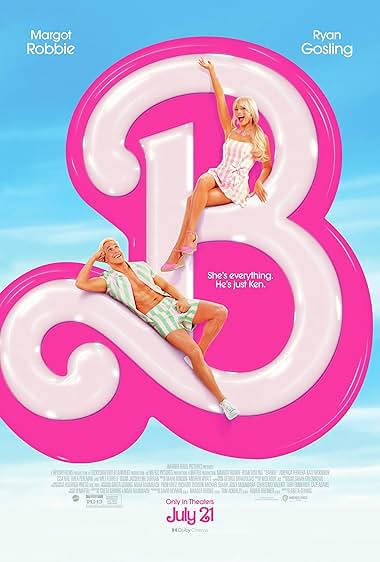
The premise is absurdist and the execution relentless: in just under two hours, Gerwig and Baumbach smuggle in a meditation on personhood, on the impossible double bind of femininity, on what it costs to acquire interiority in a world that preferred one decorative, and on the strange dignity of choosing mortality, imperfection, a body that changes and ends. America Ferrera’s Gloria monologue names the double bind with the compressed force of a manifesto, and the audience in the theatre where I saw it applauded, loudly, repeatedly, not as a courtesy but as something closer to relief. The film knows exactly what it is doing with its pinks and its plastics, using the visual grammar of commodity spectacle to say something that commodity spectacle normally works to suppress. As a film it is not quite a masterpiece: the Mattel corporate satire is too easy, the third act softens at moments where harder edges might have served better, and crowd-pleasers by definition cannot afford the risks that produce genuine formal greatness. But there is a version of cinematic experience that has nothing to do with formal perfection, a version in which the right film meets the right audience at the right cultural moment and produces something that exceeds any individual work’s merits. That is what happened here. I left the theatre certain that something had been said that needed saying, in the loudest possible room, with the lights on. Please, no sequel.
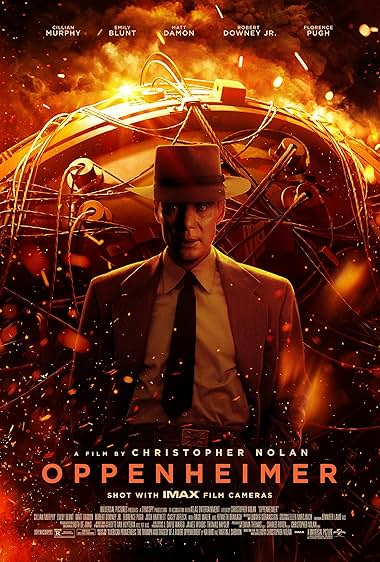
After Tenet (2020) one might have hoped the lesson was learned. It was not. For a sustained stretch somewhere in the film’s middle hour, whole passages of dialogue are simply inaudible, swamped by Ludwig Göransson’s score and Nolan’s habitual conviction that the visceral and the legible need not coincide. Robert Downey Jr.’s Strauss is not a naturally projecting presence, his performance carefully calibrated to a quieter register, and so the details of the Senate hearing sequences, which carry the film’s political argument, dissolve into texture. One fills in the gaps from prior knowledge of the history and feels dimly cheated for having to. This is not a stylistic choice that rewards; it is a recurring technical failure dressed as aesthetic philosophy. And yet. Oppenheimer is quintessential Nolan in all the ways that matter: the dense interlocking timelines, the cross-cut chronologies that keep deferring their own resolution, the accumulating weight of a man who understood exactly what he had done and was made to understand it again, institutionally, in the security hearings that stripped him of everything. The final third pulls the cord tight with an elegance Nolan rarely achieves: ‘Now you have to face the consequences of your own achievement.’ The Trinity test sequence earns its silence. Cillian Murphy carries the film’s moral gravity without strain. The problems are serious and the film survives them, which is itself a kind of verdict on Nolan’s filmmaking, always more forceful than it has any right to be given how much it insists on working against itself.
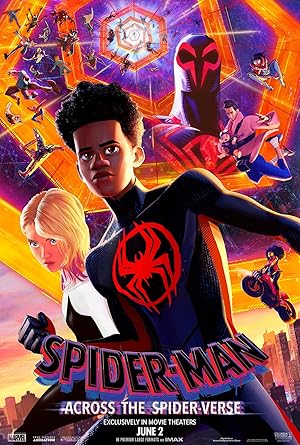
The innovations accumulate so fast one barely registers any single one before the next arrives: variable frame rates that give each universe its own temporal texture, Gwen Stacy (Hailee Steinfeld) in a world bleeding watercolour that shifts with her emotional state, the canon-event sequences rendered in stark noir black-and-white, and above all the comic-book annotations, Ben-Day dots and panel borders and thought bubbles that exist as genuine three-dimensional objects in the space of the animation, not decoration but grammar. Animated film has a territory that live-action cannot enter, and Into the Spider-Verse (2018) already mapped more of it than any film in years; Across the Spider-Verse extends that map in every direction simultaneously, inventing software and pipelines where existing tools ran out.
The difficulty is that the film is a first half. The final twist arrives with the structural logic of something that was always there, latent in everything that preceded it, and detonates; then the credits roll, and one is left holding an incomplete circuit. Every formal choice carries narrative weight, which is the only test that matters, and the film passes it brilliantly for two hours before declining to finish the exam. The emotional logic of Miles’s (Shameik Moore) refusal of the canon-event framework is powerful, but it is also, by the film’s own admission, an argument that has not yet been tested by consequences. The technical ambition remains staggering. The story it serves is, for now, a promissory note.
Better than Season 1 in nearly every dimension, which was not a small thing to surpass. Season 1’s urgency was inseparable from its compression, the relentless single-location intensity of the beef sandwich counter; Season 2 expands the frame without losing it. Uncle Jimmy finally gets the screen time that the first season withheld from him, and Oliver Platt fills it with a performance of layered, sardonic feeling, a man who loves the family and distrusts it and bankrolls it with full knowledge of all three. Ayo Edebiri’s Sydney develops into something generous this season, her competence and ambition granted their proper weight rather than kept subordinate to Jeremy Allen White’s Carmy and his chaos.
Episode 6, ‘Fishes,’ is the season’s centrepiece and one of the finest single episodes of television in years. The structure is a Christmas Eve family dinner as contained detonation, Jamie Lee Curtis’s Donna building and building until the room itself seems to contract, the dialogue so precisely placed that each exchange opens onto the next like a door onto a corridor that leads somewhere worse. The Carmy-and-Claire arc gives the season its tenderness and its tragedy: the clearest demonstration that some damage makes ordinary happiness structurally impossible, not through any dramatic failure but through the simple arithmetic of what was done to someone before they had the language to resist it.
The Talos Principle’s philosophical framing, the portentous questions about consciousness and free will, would carry more weight if the puzzles themselves demanded the cognitive flexibility that the themes invoke. They do not. The game reaches for Descartes and Turing and the Ship of Theseus, but the puzzles reduce to familiar spatial logic: redirecting lasers, stacking boxes, timing fans. There is a basic disconnect between what the game asks one to think about and what it asks one to do.
The Witness (2016) solved this by making its puzzles embody its philosophy: the island’s mysteries are inseparable from the act of perception, so solving them and understanding the game’s ideas are the same activity. Portal (2007) solved it differently, making the puzzles the philosophy, the comedy, and the narrative in one gesture. The Talos Principle separates its ideas from its mechanics so thoroughly that one can skip every terminal entry and lose nothing of the puzzle experience. Milton is an interesting interlocutor; the dialogues are well-written. But a game whose deepest thinking happens in text boxes rather than in play has misidentified its own medium.
In just four hours, Katana ZERO transmits an entire post-war alternate setting to the player without a single exposition dump. The Behemoth plushie under the sofa bed, the herbal tea every night before sleep, the cassette player opened before each mission, the visual glitch simulating Chronos’s effect on perception: Askiisoft uses the format of the game itself to show a memory-erased soldier’s past, present, and future. The therapist sessions that open each chapter are mechanical gates: one can interrupt, refuse answers, demand clarity, and the therapist’s discomfort reveals more about the world’s power structures than any codex entry could.
The combat’s instant-death mechanic is not mere difficulty; it is a narrative device. Each failed attempt is a timeline that did not happen, each success the canonical version that plays back as a VHS recording once the level ends. The distinction between planning and execution, between precognition and reality, is built into every second of play. Time-slow turns a corridor of bullets into a puzzle of angles; the katana deflects projectiles with a precision that rewards rhythm over reaction. Form and content are inseparable.
Askiisoft understood that brevity is a weapon: every scene carries the density it does because nothing is wasted, no idea outstays its welcome, no mechanic appears without narrative justification. The hotel sequence, where the player can choose to spare or kill a child’s father while the child hides in the bathroom, is among the most arresting moral choices in any game I have played, not because the game moralises but because it refuses to. Four hours that leave a mark deeper than most forty-hour games manage.
By inheriting Breath of the Wild (2017)’s physics engine, The Legend of Zelda: Tears of the Kingdom achieves the same astonishing emergence as its predecessor: equip a burning ruby sword and one can traverse snowfields without cold-resistance armour; attach a bomb flower to an arrow and one can skip a shrine’s intended solution entirely. But in TotK, that engine finds its true purpose. Ultrahand and Fuse together unlock a degree of world interactivity that the original was reaching towards without quite grasping: players construct nearly infinite configurations, and the developers could not possibly have anticipated every solution. It is as though BotW’s physics system was built for these abilities all along, and Nintendo simply needed six years to realise it.
The reuse of Hyrule’s map, predicted before launch as the game’s greatest liability, becomes instead a source of unexpected resonance. Seeing Tarrey Town in the post-Upheaval world, seeing ancient ring-shaped ruins surrounding Kakariko Village, seeing Hyrule Castle risen and the chasm beneath it: one feels the weight of six years passed. The underground and sky islands are layered onto the original geography with structural rigour: every Lightroot corresponds to a surface shrine, grounding the new spaces in the old. The underground appears barren at first, gloom-choked and hostile to traversal on foot, but building a hoverbike with Ultrahand and soaring through its dark expanse transforms desolation into discovery. The Korok Forest redesign exemplifies this philosophy: where BotW used an invisible maze, TotK rewards players who understand the correspondence between underground and surface, who think to use Ascend from below.
The main story is richer and more tightly paced than its predecessor’s. The ancient temples, Zelda’s past slowly unveiled, Dragon’s Tears scattered as geoglyphs across the landscape: all building towards a Ganon encounter that would hold its own in a soulslike. Quality-of-life complaints from BotW persist: cooking animations, shrine completion cutscenes, the relative thinness of sky island content after the initial wonder fades. But these are surface blemishes on a structural achievement. Elden Ring (2022) edges it in world construction and combat; Baldur’s Gate 3 (2023) edges it in reactivity and text. But I do not think any game lets one feel as small within a world while simultaneously feeling as free. Both BotW and TotK changed game design: the first dismantled the open-world formula; the second rebuilt it with tools that make the player an architect rather than a tourist.
Yost’s adaptation of Hugh Howey begins as world-building and earns its place, gradually, as political diagnosis. The silo: 144 levels, roughly 10,000 inhabitants, sealed from a world the ruling class has taught them to believe is toxic and uninhabitable. It does not ask to be read as metaphor; it is the logic of any closed authoritarian system made literal. The suppression of pre-silo history, the deliberate destruction of any evidence that the narrative might be false, the ‘cleaning’ ritual by which anyone expressing desire to leave is sent outside with the implicit guarantee of death; these are not symbols but mechanisms. Silo is patient in establishing them. The first half builds the world with more thoroughness than urgency, Rebecca Ferguson’s Juliette Nichols asked to carry more investigative procedure than investigation, and one feels the weight of Howey’s source material pressing against the available screen time.
And then the second half arrives. The anti-utopian form earns its keep not in the description of oppression but in the moment the oppressed discover that the ground itself is fabricated. Juliette obtains forbidden video that seems to show a living outside world and proves, at minimum, that the silo’s official visual record is manufactured; Tim Robbins’s Bernard makes the immediate, cold-blooded decision to destroy the hard drive, one of the most precisely calibrated scenes of institutional violence in recent television. He destroys the evidence not out of malice but conviction: the System requires the lie, and the lie requires protecting, and authority has stopped performing power and simply become it. The back half of Season 1 is anti-utopian drama at its strongest: not the genre at its most spectacular but at its most structurally honest, understanding that the lie is not incidental to the order it sustains but foundational to it.
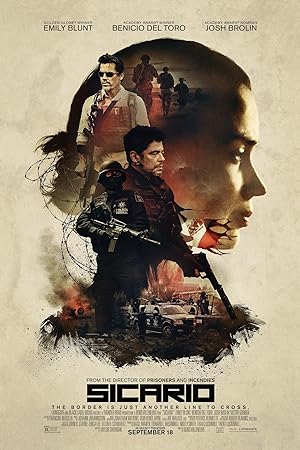
The official genre is crime thriller. The actual subject is a person watching her own moral framework dissolve in real time, and finding there is nothing beneath it. Kate Macer (Emily Blunt) enters the film believing in systems, in law, in the idea that state power and ethical action can occupy the same space; the film spends its runtime methodically demonstrating that this belief is a luxury, maintained only by not looking too closely. Villeneuve and Roger Deakins shoot her diminishment with extraordinary precision: the plastic bag at her feet on the flight to Juárez, an object of mundane wrongness that she cannot name; the last wash of desert light before the interdiction corridor opens and the night-vision takes over, beauty folded into impending violence until the two become indistinguishable.
The helplessness is more important than the violence, a physical sensation, something that rises from the gut rather than registering in the mind. The trigger that cannot be pulled is not a moral victory; it is the last point at which she exists as a subject rather than an instrument. Taylor Sheridan’s script understands that the most honest thing a film about American drug policy can do is refuse its protagonist, and the audience, the resolution they came prepared to receive. One leaves not disturbed exactly, but altered, carrying a weight that does not belong to fiction.

Divinity: Original Sin II’s reactivity is exceptional: across the main quest, nearly every major choice produces visible, long-term consequences, and even across multiple playthroughs new plot threads continue to surface. The elemental interaction system is the foundation: oil plus fire equals burning ground, rain plus electricity equals stunned enemies, teleportation plus environmental hazards equals creative problem-solving that the developers could not have fully anticipated. The world-building, the textual breadth and depth, the scene design: a world this vast and still this detailed is rare.
The one disappointment is that the reactivity does not extend everywhere: many non-quest world scenes have quite low responsiveness, and the tonal inconsistency between the darker main storyline and some of the lighter side content can feel jarring. But none of that stops DOS2 being one of the greatest CRPGs. It made player agency and environmental interactivity feel newly systematic, and Baldur’s Gate 3 (2023) would later be measured against it.
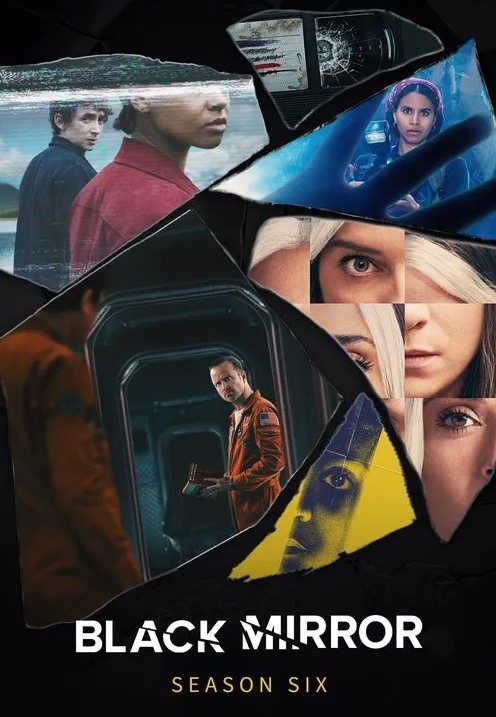
Five episodes after a four-year gap, and the diagnosis is not fatigue but something more basic: Black Mirror has lost interest in its own premise. ‘Joan Is Awful’ has the right instinct: Annie Murphy discovering her life adapted in real time by a streaming platform, Salma Hayek playing the dramatised version, the layers of simulation stacking towards a meta-commentary on content extraction. But the execution stops at the observation. Netflix is awful; people are not content. One waits for the turn that would make this Black Mirror rather than a particularly self-aware sketch, and it never arrives. ‘Beyond the Sea,’ the season’s other defensible episode, does sustained work with Aaron Paul and Josh Hartnett in an alternate 1969, but at over an hour it takes longer to reach its thesis than the thesis can support.
The remaining three confirm the critical worry. ‘Loch Henry’ is competent true-crime pastiche. ‘Mazey Day’ is a paparazzi thriller that resolves with a werewolf, a twist so disconnected from any recognisable Black Mirror logic that it reads as self-parody. ‘Demon 79,’ explicitly branded ‘Red Mirror,’ is a supernatural period comedy set in 1979 with no technology in sight. The last two are not speculative fiction; they are live-action Love, Death & Robots episodes that wandered into the wrong anthology. The show that once handed a generation the vocabulary for its anxieties now sounds like it has run out of things to name.
The writing drops with the abruptness of a dropped signal. The premise remains: a three-way race to Mars between NASA, Roscosmos, and Helios Aerospace, the first private actor in the competition. But For All Mankind Season 3 cannot manage its own expansion; the supporting cast is populated almost entirely by characters whose idealism reads as a personality trait rather than an idea, people who believe enormously in things and then spend ten episodes doing small, self-undermining things for personal reasons. NASA and Roscosmos, institutions that the first two seasons treated with the nuance of organisations containing genuine human tension, are here reduced to bureaucratic incompetence. Casey W. Johnson’s Danny Stevens, whose arc began as a credible study in inherited instability, becomes an exercise in watching a known liability be handed progressively more responsibility while Joel Kinnaman’s Ed Baldwin, the series’ moral anchor, drifts into decisions the writing cannot justify.
The North Korean landing is where the season’s hard-sci-fi credibility fully collapses: plausibility matters less than the show’s lack of interest in what it means. A totalitarian state reaches Mars first, and the narrative treats this as a dramatic surprise with no political or structural consequences worth exploring. Sarah Jones’s Tracy and Michael Dorman’s Gordo did not die for this. Their sacrifice was built with care across two seasons, rooted in character; Season 3 treats their deaths as distant mythology and fills the foreground with drama that comes nowhere close to earning the same ground.
The Cold War on the Moon is For All Mankind’s richest premise, and Season 2 deploys it with confidence. The Jamestown Crisis, a Soviet blockade of Shackleton Crater that escalates to armed conflict and the brink of reactor meltdown, gives the show’s claim its pressure: the Cold War’s logic of deterrence and escalation does not soften with distance; it intensifies, because there is nowhere to retreat to. Joel Kinnaman’s Ed Baldwin in orbit, deciding whether to fire the missiles or to hold, carries the moral weight the season has built across ten episodes.
Sarah Jones’s Tracy and Michael Dorman’s Gordo give the finale its full emotional freight. Their trajectory across two seasons, the separation, the accumulated weight of mutual disappointment, the slow convergence back towards each other, earns the spacewalk. It has no heroic posture: two people in improvised suits, fifteen seconds of exposure, finding each other in the airlock. It is the most honest death the season could have given them. What follows is the image I expect to carry longest: an astronaut’s boot pressing into Martian soil, 1995, Nirvana beginning on the soundtrack. The season spent ten episodes in the Cold War’s airlock; its final image opens the horizon without looking back.
Labatut has written something that should not work. When We Cease to Understand the World is a hybrid of essay, speculative biography, and literary fiction, threaded together with a confidence that borders on recklessness: real scientists, real breakthroughs, real atrocities, all laced with invented interiority and hallucinatory prose until the seams between fact and fabrication dissolve entirely. The usual objection writes itself: this is irresponsible, this is fakery. But the book’s genius lies precisely in that dissolution. Labatut understands that the history of twentieth-century science is already stranger than fiction, already saturated with moral vertigo, and that the conventional nonfiction frame, with its careful attribution and hedged claims, cannot capture what it felt like to stand at the edge of the unknowable and keep pushing. The examples are relentless: Fritz Haber’s nitrogen fixation feeding the world and gassing the trenches; Schwarzschild solving Einstein’s field equations while dying on the Eastern Front; Heisenberg and Schr\u00f6dinger tearing quantum mechanics apart from opposite ends. One story bleeds into the next like a wound that will not close. I keep returning, though, to Grothendieck and Mochizuki. Grothendieck retreated from mathematics into hermit-like isolation, as if the structures he had uncovered were too vast for a single mind to hold without cracking. Mochizuki published a proof so impenetrable that much of the mathematical community could neither verify nor refute it, sealed inside his own logic like a message in a bottle that no one can open. Labatut threads these lives together in the manner of Cloud Atlas (2004): one line connecting everyone’s fate to the fate of the world, each chapter a step closer to the point where understanding tips into its own negation. The Bola\u00f1o comparison is apt; both are Chilean, both drawn to the intersection of brilliance and destruction. But Labatut is doing something more compressed, more vertiginous. He is asking whether the act of knowing, pushed far enough, becomes indistinguishable from the act of going mad. A week after finishing, the awe had not faded. It still has not.
The divergence point is a single event: the Soviet Union lands on the Moon first. From that seed Moore and his co-creators grow an entire alternate political ecology, one in which American competitive anxiety accelerates the admission of women to the astronaut corps by a decade, the Equal Rights Amendment moves through a different legislative climate, the slow retreat of racial discrimination happens against a different social backdrop. History as contingency rather than teleology, the argument embedded in the premise itself: what we call progress is not a direction but a series of forces and counterforces that can be arranged differently given different inputs.
Beyond its conceptual framework, the season works through Joel Kinnaman’s Ed Baldwin and the writing of individual lives around him. Every major character carries their specificity: the astronauts grounded in the particular texture of what it means to be good at this one extraordinary thing, the families carrying the specific weight of what proximity to that extraordinary thing costs. The occasional scene tips into the too-explicitly inspirational, a moment where the score announces that significance is now occurring; these are the season’s weak points, and they are not frequent enough to constitute a structural problem. One watches this account of a better world, however hard-won and partial, and feels something that is not quite hope and not quite grief, a recognition of what is possible when the forces align differently, and a corresponding awareness of how rarely they do.
The final callback connects so cleanly, with such structural precision, that one suspects the whole hour was built backwards from that single moment. The proposal bit, Gadsby’s account of the panicky, derailed, spectacularly botched proposal to Jenney Shamash, would justify the hour on its own; the stretch in the middle where the rhythm briefly loosens is the only demurral.
The comparison to Nanette (2018) is unavoidable, and Something Special invites it deliberately. In Nanette (2018), Gadsby anatomised the callback as a mechanism for artificially resolving tension, a comedic sleight-of-hand that papers over unhealed wounds. Here, the callback returns, deployed freely and warmly, and the argument implicit in that choice is more interesting than anything said aloud: that the same structural device can signify harm or health depending entirely on the psychic position from which it is deployed. What was once a trap is now just a tool. Gadsby is happy, and the form reflects it, and it is a quietly radical thing to watch a comedian allow the shape of their work to change because their life has. The special is built around a wedding, around queer joy, around the domestic, and it treats these subjects with the same intellectual seriousness it once directed at trauma. This is the rarer achievement.
Days after finishing it, one is still talking through Luo Meisu’s fate with friends, which is the most reliable measure of a drama that has done something more than entertain. The Long Season sits somewhere between 隐秘的角落 and 平原上的摩西: slower in pace than the former, less free-associative in its callbacks and structural echoes than the latter, arriving at a tone that feels perfectly calibrated for a domestic audience without ever being domesticated by it. The care lavished on plot and characterisation is enormous and shows.
The source novel famously could not be adapted as written, and one prefers not to dwell on the specific constraints involved. Within those constraints, Xin Shuang has produced something true and moving: it is straightforward to be moving within freedom, and much rarer to be moving within walls. Fan Wei’s Wang Xiang anchors everything, a man whose stubbornness outlasts his grief, whose refusal to stop investigating carries the show’s emotional argument across decades. Li Gengxi’s Shen Mo is the other axis, a portrait of a life compressed by circumstance into a series of impossible choices, and the restraint with which the show approaches her story resists every available invitation to melodrama. Each callback in the final two episodes produces the same internal response: the accumulated weight of everything that preceded it arriving at once, and the whole structure had been building towards that weight.
A horror film in which visual control is taken to its absolute limit. Hoyte van Hoytema shoots the Californian high desert on large-format IMAX film, and every frame is strikingly beautiful in the way that vast, indifferent things are beautiful: not inviting, not safe, but impossible to look away from. This is formally appropriate, because Nope is a film about the compulsion to look, about the economy of spectacle and the violence that underwrites it, and Peele has structured it so that the terror never requires one to squint through the dread. Every minute is frightening. The aesthetics and the argument are the same argument. The Gordy subplot is the key that unlocks the rest of the film: a chimp on a sitcom set, trained and exhibited and finally ungovernable, mirrors the alien entity not as metaphor but as structural rhyme. Both are wild things enlisted into the spectacle machine; both exact a cost when the contract breaks down. The film’s deepest subject is the history of that machine and who has paid to run it, from the uncredited Black jockey in Muybridge’s motion studies onward, and Peele trusts the intelligence of his audience enough not to annotate it. I dismissed the film last year on the basis of its middling reputation. I now regret that deeply, and consider it an instructive lesson in the limits of aggregated taste.

The writing in the first six episodes is uneven, and knowing what arrives later makes that unevenness feel almost calculated: as though Storer were deliberately rationing what the show can do, holding back to make the ambush more complete. The seventh episode is filmed almost in a single sustained take, following a kitchen in freefall with a camera that moves like a trapped animal, and it is one of the most formally accomplished pieces of television. The eighth, quieter and longer, does something that the preceding seven episodes had given no indication it was capable of: it reveals that the show has a fully developed capacity for monologue, for stillness, for extended character revelation requiring a completely different grammar from controlled chaos. Jeremy Allen White’s Carmy, held at arm’s length for most of the season, is suddenly given room to exist beyond the kitchen, and White fills that room with a still, wrecked authority that the earlier episodes only hinted at.
Taken together, the season holds. The early episodes build tension through incremental escalation; episodes seven and eight release it with formal precision.
The Hours holds three timelines in suspension, and David Hare’s screenplay keeps them from collapsing into each other by finding the precise points of structural resonance: a woman reading, a woman choosing, a woman refusing to be managed, the same act refracted across 1923, 1951, and 2001, each instance informing the others without explaining them. The film is adapted from Michael Cunningham’s novel, which is itself a meditation on Mrs Dalloway (1925), and the risk of nested literary homage at this depth is that the whole edifice becomes airless, a demonstration of influence rather than an experience of it. Not entirely escaped: Meryl Streep’s 2001 Clarissa moves through a New York literary world that has aged less evocatively than the other two timelines, and the structural parallels in her scenes sometimes feel governed by the architecture rather than by their own necessity.
Nicole Kidman’s monologue at the station, Julianne Moore’s at the dining table: the performers locate something that exists prior to the literary scaffolding, a quality of desperation that Woolf would have recognised but that belongs equally to these specific women in these specific moments. Philip Glass’s score is the fourth structural element, its cycling piano phrases working not as emotional underlining but as something closer to a formal argument: the same interval returning and returning, never quite resolved, because resolution is not what the film is interested in. The two timelines that work are among the most carefully felt achievements in literary adaptation; the third holds the film just short of where it might have reached. Those monologues, and that score, carry it remarkably far regardless.
Jessie Buckley appearing was a surprise, and a welcome one. She plays the younger Leda in flashback, and the film’s gambit depends on one accepting that Olivia Colman and Buckley are the same character at different ages and the same interiority at different pressures, the same impulses made legible by the presence of the other. Gyllenhaal makes that gambit pay. The adaptation from Ferrante’s novella retains the source’s discomfort: its refusal to resolve the question of whether Leda’s choices were the right ones, its insistence that ambivalence is not a failure of character but a condition of consciousness in a world that offers women incompatible lives. The final scene struck with exactly the force of Aftersun (2022). That is high praise and also a precise description: the same quality of accumulated, quiet devastation, the same sense of something that was present throughout the film finally finding its name in the last possible moment. That name is not stated. It does not need to be.
In the daughter’s essay, she writes that Moby Dick (1851)’s boring chapters, all those exhaustive taxonomies of blubber and rigging, exist for one purpose: to spare the reader from the sad story of Ahab’s life. It is the most precise description of this film one has yet encountered, and the original review found it before any critic did. The critical consensus reached for ‘monument’, for ‘a chamber piece of grief and grace’. More honestly: boring chapters. Charlie’s 600-pound body, the compulsive eating, the claustrophobic aspect ratio boxing him into that apartment: these are the cetological digressions, the scaffolding of deflection. Aronofsky and Samuel D. Hunter’s adaptation understands, perhaps more than it is given credit for, that the body is not the subject. The body is the evasion. The body evades something simpler and less cinematic: a man who loved someone, lost them, and decided the only appropriate response was to become unrecognisable. Alan’s death is the wound the film circles without ever quite pressing. Brendan Fraser’s performance holds because he never plays the fat suit; he plays the grief underneath it, the specific quality of a person who has decided, at some cellular level, to be done. Hong Chau’s Liz is the film’s most honest presence, too exhausted for pity, too loyal to leave. Sadie Sink’s fury as the daughter is almost too clean, almost too legible as instrument of catharsis. But then the essay arrives.
Does Charlie make peace with himself at the end? The film ends on an image, not an answer. He rises: literally, improbably, the body finally doing what it has refused for years. Whether this is redemption or simply the last convulsion of a system shutting down is left to one’s own need for resolution. One suspects Aronofsky wants it both ways, and one suspects that is the correct artistic instinct. Some whales are too large to land cleanly. The boring chapters were always the point.
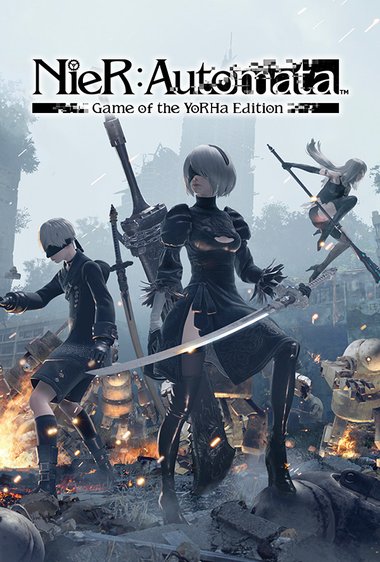
A game that constantly talks about machines acquiring humanity while objectifying women more visibly than almost anything else in the medium. The theme is humanisation; the execution is the sexualisation of robots. NieR:Automata’s much-discussed ‘genre transgression’, stitching together a pile of genres across multiple playthroughs, does not constitute formal innovation without clear intent. The repetitive multi-playthrough structure fragments an already thin plot across endings that recontextualise without deepening.
The central story most worth telling is left untold; the sexualisation and innuendo most worth avoiding are in full swing. The music is excellent, the only redeeming element. The rest is style mistaken for substance.
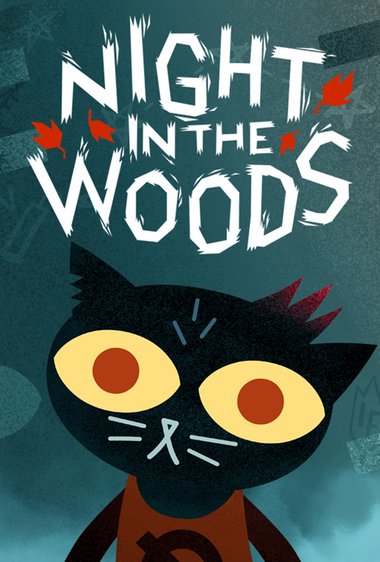
When the snow falls on the small town, I will still be in the rehearsal room, trying to play another song I have never heard. I will still chat with Mom at the breakfast table and sit with Dad watching Garbo & Malloy in the evening; Malloy looks a bit like Beatrice, a pale blue crocodile, and Garbo looks a bit like Angus. When it is all about to end, I will still be eating pizza in Gregg and Angus’s living room. Beatrice will call me Mae Mayday; I will call Beatrice Bea. When it is all about to end, I will still be running around the town, hunting ghosts on the hillside, performing at the Halloween fair. I will still go up to the roof with Mr Chazokov to look at the morning star, listen to stories about constellations, imagine this town’s ancient legends. I will still wake from nightmares with the cat god’s voice lingering. Night in the Woods is a game about the end of everything: of youth, of industry, of a way of life, of the town that sustained it. Possum Springs is dying the way all small towns die, not with a catastrophe but with a slow leak of purpose.
Mae dropped out of college because she stopped seeing things as things. She perceived the world as shapes: flat, abstract, geometric, drained of meaning. The game never names this clinically but the portrayal is precise; it is depersonalisation, and it is the reason she once attacked a classmate, unable to perceive him as a person. Beneath the surface, the town has its own pathology: a cult in the abandoned mines, older residents who sacrifice outsiders to a presence they believe sustains Possum Springs’ fading economy. They are not cartoonish villains; they are desperate people who decided the future was worth killing for, which is also a description of every extractive industry that ever hollowed out a town like this. Against all of this, band practice. Four friends in a garage, playing songs badly, the rhythm game mechanically simple but narratively essential: the one communal act that still functions when everything else is falling apart.
I will still remember Mom’s every ‘I love you honey’ and Dad’s every ‘I love you kitten’. Angus told me ‘Gregg is my corner’; and Bea told me ‘You are the closest thing I have to a sister. And I don’t want you to die.’ The game is inseparable from its context now: the studio’s dissolution, Alec Holowka’s death, the allegations and grief that followed. All of it shadows the text, lending Mae’s anxiety and Gregg’s manic energy and Bea’s exhaustion a weight the creators may not have intended but cannot disown. When it is all about to end, I will still choose to leave school, come back to this town, and embrace my past, the town’s past, everyone’s past.
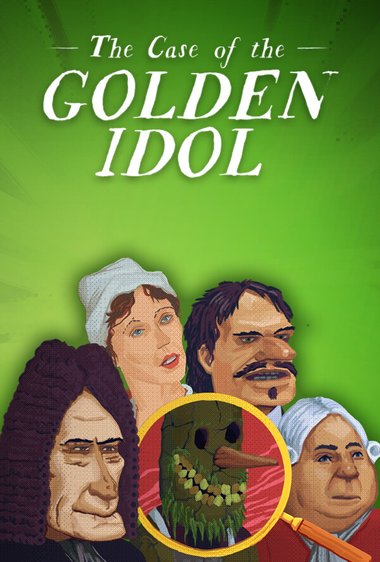
Though the format carries echoes of Return of the Obra Dinn (2018), The Case of the Golden Idol achieves something different: where Obra Dinn’s protagonist moves through physical space and the deduction feels embodied, Golden Idol’s static scenes produce a more purely cerebral satisfaction. The word-bank system is deceptively elegant: one fills in blanks with terms harvested from the scene, and the constraint of limited vocabulary forces a precision of thought that open-ended deduction games cannot.
Looking back, it is not a detective game in the strictly deductive-reasoning sense, but the storytelling is first-rate. The multi-century arc of the idol’s corruption, each tableau revealing another generation’s encounter with the same cursed object, gives the puzzle-solving a cumulative narrative weight. Color Gray Games makes detection pleasurable by tying each solution to another piece of the idol’s history.
The conflict is structural, and the show knows it. Clarkson’s attempt to convert a lambing barn into a farm-to-fork restaurant, serving produce from Diddly Squat and neighbouring local farms, is rejected by West Oxfordshire District Council despite no formal objections from police, the parish council, or any statutory body. A single neighbouring resident hired a barrister to argue the barn was a ‘Trojan horse’. The appeal would have cost half a million pounds. This is not a story about one celebrity farmer’s frustration; it is a precise demonstration of the British planning system as a class filter, where the cost of participation in the appeals process itself determines who can participate. Small farms survive by diversifying. Planning law makes diversification nearly impossible. The loop is closed.
Between the arguments, Clarkson’s Farm Season 2 finds Kaleb, twenty-three and constitutionally incapable of deference, carrying a comic timing that cannot be directed because it is not performed; his exasperation with Clarkson is the exasperation that only competence produces, and their relationship has matured without losing its abrasive warmth. Emma Ledbury losing half her dairy herd to bovine TB is the season’s most devastating sequence: not dramatised, not scored for emotion, just a working farmer watching her livelihood destroyed by a disease that the government has failed to manage for decades. The loophole exploits, expensive vegetables that come with a ‘free’ t-shirt, the farmhouse conversion that sidesteps the planning refusal, are presented as comedy, and they are funny, but beneath them is a farmer’s arithmetic: when the System offers no legitimate path forward, one finds an illegitimate one or one starves.
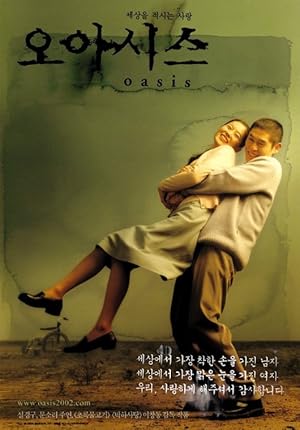
Sol Kyung-gu’s Jong-du walks out of prison in the opening minutes and within an hour of screen time has done something unforgivable. Lee Chang-dong does not soften it, does not cut away to the magical-realist interlude fast enough to mitigate what is happening, does not ask for sympathy prematurely. The assault is there, on the screen, wrong. The film then stays with this wrongness more seriously than almost anything Korean cinema has attempted.
Gong-ju lives in a dark apartment, warehoused by a family for whom her existence is a bureaucratic inconvenience; Jong-du is an ex-convict who took the blame for his brother’s crime and received neither gratitude nor recognition for it. The social contract has failed both of them in entirely different ways, and the film refuses to pretend that this shared exclusion makes them equivalent, or makes what happened between them sanctioned. The quieter and less comfortable claim is that a man who has governed his impulses this badly can still perform an act as precise and tender as cutting down the tree branch whose shadow terrified her, that desire and care are not allocated only to those who have already demonstrated themselves worthy of them.
The magical-realist sequences, in which the palsy lifts and Gong-ju moves freely through her own apartment, are heartbreaking in inverse proportion to how briefly they last. Moon So-ri’s performance is one of the most committed physical transformations in the cinema of this period, achieved without prosthetics, without softening. When the film ends one is not certain that anything has been resolved. When do the mad find each other. The oasis is not an escape from the question; it is the question, briefly habitable.
Honesty first: by the end of three hours, one could not claim everything had clicked into place. The architecture of Qiu Jiongjiong’s Sichuan opera epic is too eccentric, too deliberately resistant to the satisfactions of conventional closure, for that kind of tidy accounting. Fake Monk moves through the entire span of twentieth-century Chinese history, from the Republican era through the Cultural Revolution and into Reform, and the film watches him go with the calm of something that has already accepted the futility of conclusions.
The textures lodge in the memory more than the through-lines: the painted backdrops of hand-made sets that never pretend to be anything but sets; the Yin-Yang borderland tavern with its pandas, presiding over the transition between life and whatever follows; the wall-poster slogans layered over one another like geological strata of political instruction; the lice on the children’s bodies; the maggots in the excrement. Qiu is a painter first and the film looks like one, non-naturalistic and precise in its artifice. One can, inexplicably, imagine him having tremendous fun making it, the cast having tremendous fun performing it, everyone in on a private joke about the relationship between spectacle and suffering that Sichuan opera has known since long before any of them were born. The comparisons that assembled themselves while watching, shadows of other directors moving at the edge of the frame, remained stubbornly unresolved by the credits. Not Hou, not Apichatpong, though the film shares genealogical material with both. Something more singular than either, and less finished. A thoroughly singular film that does not know, or does not care, whether it has succeeded. That might be the most honest position available to a work of this ambition.
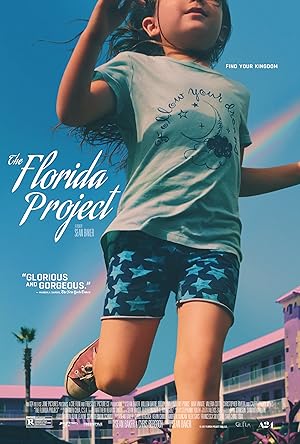
The children act with a skill so complete it stops being remarkable and becomes simply the world of the film: Brooklynn Prince’s Moonee is one of those performances that makes one distrust the very concept of performance, because there is no seam between the child and the character. Willem Dafoe’s Bobby, the motel manager, holds the other side of the frame: too aware of what is coming, too decent to look away, never empowered to intervene. The emotional temperature climbs sharply through the final third, accumulating with the precision of someone who knows exactly how much one can hold before something breaks. And then it breaks, correctly, completely.
The iPhone-shot epilogue is maddening. One understands the practical logic, the guerrilla filming inside Disney World, the aesthetic argument about childhood’s different visual language. One understands it and remains unmoved by the argument: a film that has operated at this level of formal control for ninety minutes cannot simply switch to a different camera and call the rupture intentional. The ending as it stands before those final minutes is the ending the film deserves. Clean, specific, unsparing. It loses to Gagarine (2020) in the final reckoning, which says something about what a film can do with a similar repertoire of images, similarly marginalised children, and a camera that stays the course.
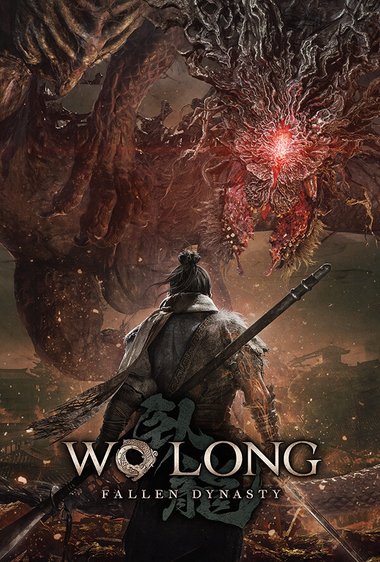
Since this is Team Ninja, comparison with Nioh 2 (2020) is inevitable. Wo Long: Fallen Dynasty’s deflection system produces stronger moment-to-moment impact; the weapon and skill systems are simplified, less ARPG-layered, but the simplification makes combat more immediately enjoyable. The morale system is an interesting addition: enemy rank relative to the player’s creates dynamic difficulty within each level, rewarding flag-planting exploration with tangible combat advantage.
Two disappointments: the narrative, though Team Ninja has never made a great one, and enemy variety. The latter is a general soulslike problem, but the repetition here becomes conspicuous in the final third. The run is brief but precise, an action system pared back until only its best reflexes remain.

The howcatchem format that Rian Johnson borrows from Columbo (1971) contains an inherent tension: if the audience already knows the killer, the pleasure has to lie entirely in the unravelling, and for several early episodes Natasha Lyonne’s Charlie Cale unravels too comfortably to carry that weight alone. Lyonne has the presence, instinctive, watchful, a drifter whose poker-faced bullshit detector is the show’s only real mechanism, but the formula asks her to solve variations on a theme that the earlier episodes do not vary enough. The last three episodes are a dramatic leap in quality, and episode nine, Joseph Gordon-Levitt as a death row inmate whose charm is indistinguishable from innocence, gives Poker Face its first moment of genuine emotional complexity inside the formula. Without it, the score would barely be passing.

Murakami’s stories are probably like this too. Take ‘Barn Burning’ (1983) as an example: suffused from start to finish with a kind of spirituality and inexplicable strangeness, a plotlessness that is not emptiness but something closer to held breath. Drive My Car is the same. Hidetoshi Nishijima’s Kafuku is a man who has stopped listening to his own grief, and at an unhurried pace the film draws out the most important dialogues and performances, trusting that the repetition of Chekhov’s lines across the multilingual Uncle Vanya rehearsals will do, slowly, what grief does: return one again and again to the same words until one understands them differently. The film’s force lies not in the three-hour runtime but in the brevity of certain scenes: that brief exchange at the waste disposal site, which arrives quietly and passes quietly, and yet concentrates the film’s entire emotional argument into two or three minutes of parking-lot light. The quietness of a road film, the patience of a theatrical rehearsal, and an emotional depth not far from that of Burning (2018), which is to say: something that does not resolve, but opens.
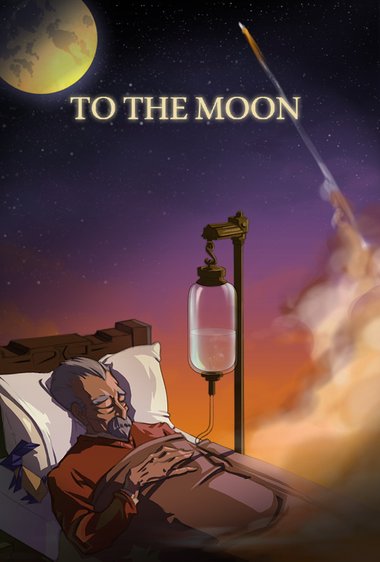
Poor script, vestigial gameplay, transparent emotional manipulation. To the Moon’s world looks packed, but one can only interact with three or four things per scene. Joey’s appearance makes one wonder if Kan Gao actually read his own script. The game asks for tears that it has not earned.
What Remains of Edith Finch (2017) demonstrated how walking-simulator mechanics can serve narrative rather than merely coexist with it; Life Is Strange (2015) showed how player choice integrates into emotional storytelling so that feeling arises from agency, not passivity. To the Moon, arriving earlier than both, attempts something simpler: a linear emotional arc delivered through RPG Maker exploration. The ambition is modest and the execution matches. The music, melancholic and beautifully composed, does all of the emotional heavy lifting; strip it away and what remains is a screenplay that would not survive a first-year workshop. A game that would have been more honest as a short film.
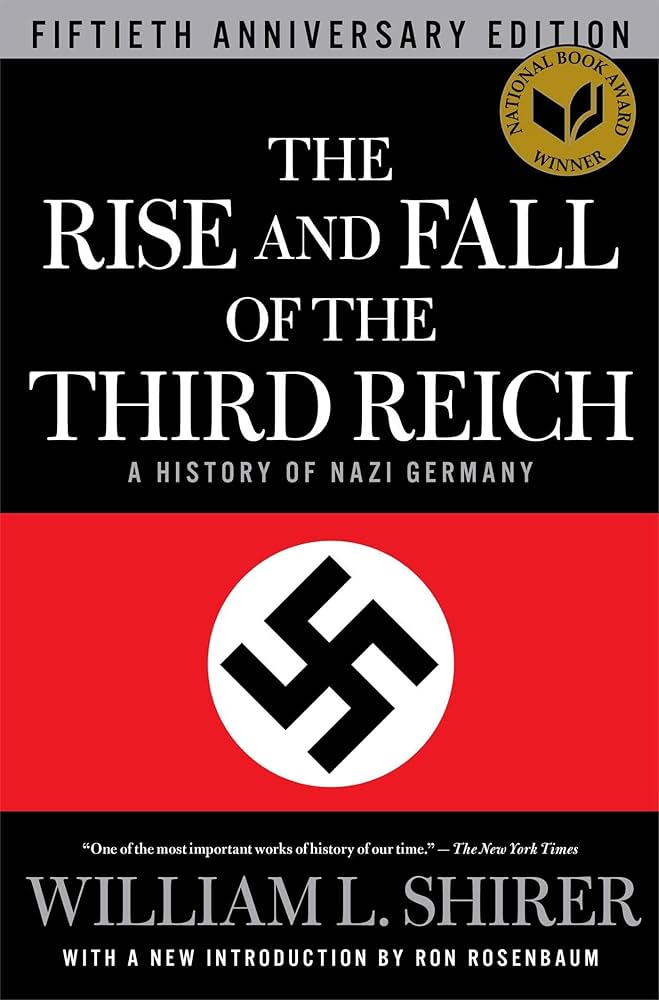
This is a fifty-plus-hour monument to the journalistic conviction that being there counts for something. Shirer reported from inside Nazi Germany until 1940, and that proximity gives his narrative an immediacy no purely archival historian can replicate: the texture of rallies witnessed first-hand, the quality of light in rooms where decisions were made. The academic objections are well-rehearsed: later historians have questioned the analytical framework, the moral psychology, and the book’s dependence on a Sonderweg thesis, that old argument about a uniquely German national character marching inevitably towards catastrophe, which later historiography has largely dismantled. The later chapters lean even more heavily on Hitler’s deteriorating mental state, and the accuracy of those sources is naturally suspect, filtered through memoirs written by men with every reason to redirect blame.
What survives, though, is the sheer narrative richness. As a work of moral philosophy or Holocaust scholarship, The Rise and Fall of the Third Reich has been superseded many times over; one reaches for Primo Levi, for Hannah Arendt, for Evans’s own Third Reich trilogy. But as a narrative act, the accumulation of detail, the relentless forward momentum through two decades of escalating horror, the book remains formidable. Shirer was ‘just a journalist’, his critics said. Perhaps. But journalism of this ambition and this density has its own kind of authority: that of a witness who refused to look away, even when the analytical tools at his disposal were blunter than the moment demanded.

After the Daniel Mullins trilogy, one develops a certain immunity to save-file manipulation games. OneShot’s supposed choice between saving the world and saving the cat raises a question the game never earns: is this world built well enough to care about? The pixel art is charming, Niko is likeable in an uncomplicated way, and the file-system interactions are cleverly implemented. But cleverness of delivery cannot substitute for depth of content. The meta-framework, the fourth-wall breaks, the desktop notifications: all of it gestures towards profundity without doing the narrative work to make the profundity felt.
Undertale (2015) used similar fourth-wall techniques but grounded them in a richly characterised world where every NPC carried enough personality to make choices feel consequential. Inscryption (2021) proved that the meta-game form can sustain real horror and genuine wonder simultaneously. OneShot has the technical vocabulary of these games without their emotional grammar. Good ideas deployed in a world too thin to hold their weight.
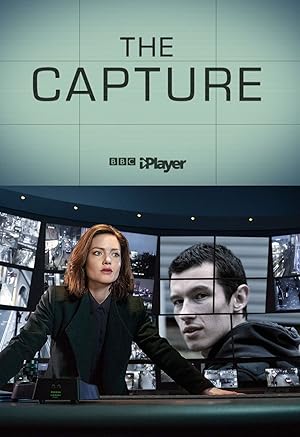
Ben Chanan weaves together every thread laid across the first five episodes in that final instalment. The architecture of the series is ostentatiously ambitious: geopolitical manipulation, AI-fabricated evidence, the slow corruption of institutions that were already compromised before the foreign actors arrived, and Holliday Grainger’s Rachel Carey, a protagonist who can barely trust her own perception of events. The final episode resolves each thread without simplification and keeps the series’ commitment to institutional complexity inside its narrative closure. It closes cleanly, in the way serialised television can when it gives systemic rot six hours of sustained attention and still finds a conclusion that feels both inevitable and earned.
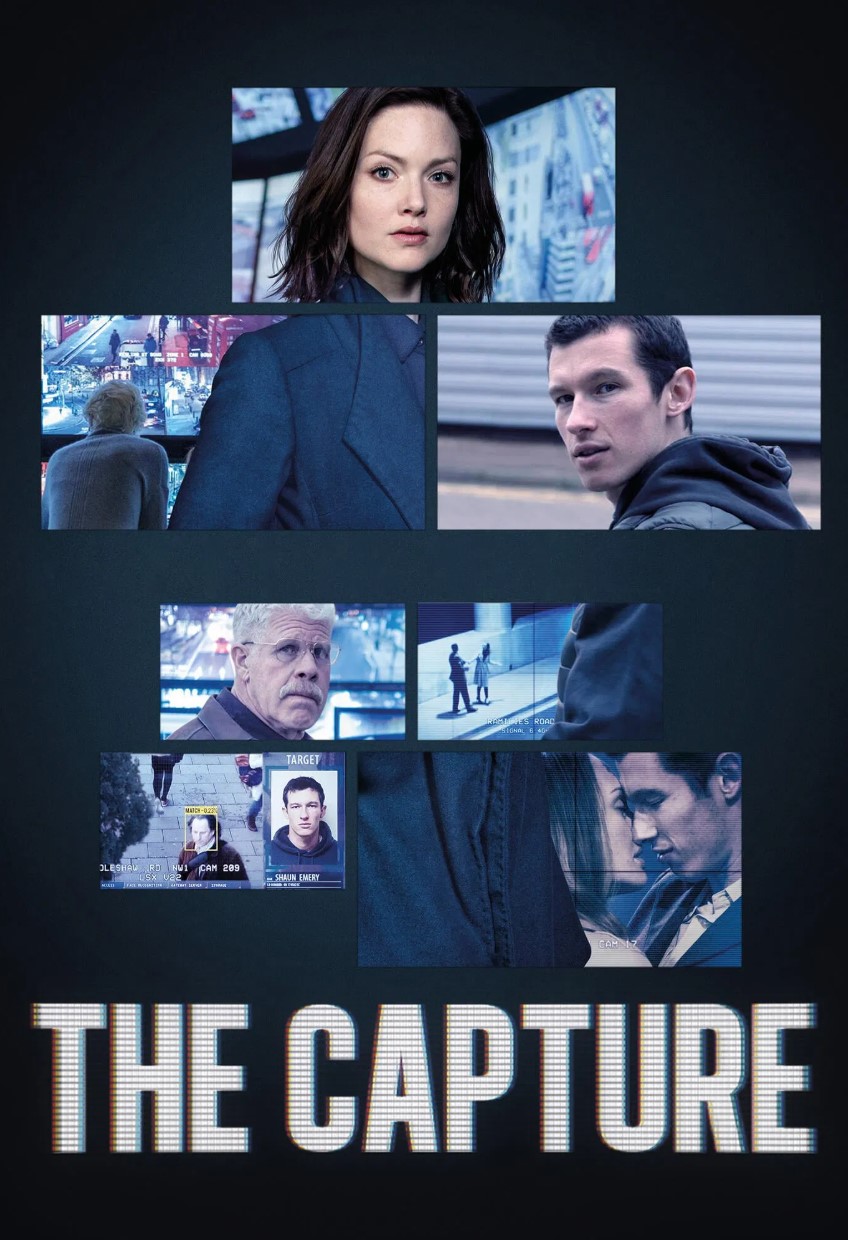
Ben Chanan extends the Orwellian question in the right direction: not whether we are watched, but what the watchers intend to do with the footage. The Capture builds its conspiracy from a single strip of CCTV (a recently acquitted soldier apparently assaulting his barrister outside a London pub), then expands outward through layers of intelligence manipulation until the entire evidentiary architecture of the justice system stands exposed as a controlled environment. ‘Correction’, the covert fabrication of video evidence by intelligence services to produce admissible proof of events they claim to know occurred through inadmissible means, is a rich fictional concept for BBC drama. It refuses the comfortable binary: the corrected evidence depicts something that actually happened, the process that produced it is illegitimate, and both of these are true at once, which means the question is not whether the right person was convicted but whether justice produced by fabricated means can be called justice at all. The final two episodes take procedural justice more seriously than any BBC drama I have seen since the finale of Silk Season 3. Emery’s confession, that he did kill the unarmed insurgent, that the original corrected evidence was substantively accurate, detonates the wrongful-conviction narrative the show spent five episodes constructing and replaces it with something far harder to metabolise: the argument that legitimacy of process is not a procedural nicety but a structural necessity, without which the verdict is irrelevant. Holliday Grainger’s Carey decides to join the intelligence apparatus she spent the season fighting. The System does not merely defeat its opponents; it absorbs them, because the alternative to complicity is irrelevance, and Carey, hiding a copy of the authentic footage inside a photograph at her stepmother’s house, may be gambling that absorption is not the same as surrender.
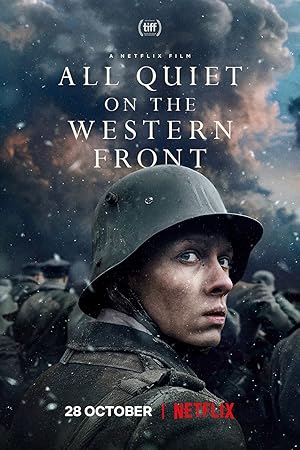
Every few years a film like this arrives. Five years before, it was Dunkirk (2017), which gave the chaos of retreat its own grammar of sound and image. Two years before, it was 1917 (2019), which made the logic of the front visceral through the unbroken gaze of a single day. And then All Quiet on the Western Front: Felix Kammerer’s Paul Bäumer enlisting full of patriotic ardour, and the film’s cold, steady insistence on showing exactly what that ardour buys. The addition of the armistice subplot, with Daniel Brühl as the beleaguered Erzberger, absent from earlier adaptations, turns the film into something almost unbearably pointed: men dying by the minute while diplomats negotiate over lunch, the clock running down to eleven o’clock on November eleventh, the war ending by schedule while necessity has already become irrelevant. One of the great anti-war films.
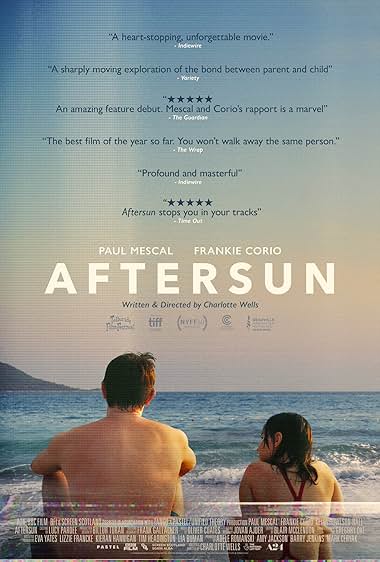
Adult Sophie is thirty-one, the age her father Calum (Paul Mescal) was when they took their last holiday together at a Turkish resort in 1999. She was eleven then (Frankie Corio, in her screen debut); and he was young enough that other guests assumed they were siblings. She has the footage and almost nothing else: a few scenes of the two of them goofing around, his face half-cut by the frame, his voice audible but his attention already elsewhere. Aftersun is built from what that footage can and cannot show. Charlotte Wells constructs three visual layers and lets them bleed into each other: the MiniDV recordings Sophie actually has, the 35mm scenes she imagines from moments she did not witness, and a strobe-lit rave that belongs to neither past nor present, where adult Sophie tries to reach a man who is no longer there. It is a film about memory as reconstruction, and it is almost impossible to write about without simplifying what it refuses to explain.
The holiday itself is full of warmth, which is why it devastates. Calum teaches Sophie to play pool, buys her ice cream, arranges a mud bath day trip, lets her stay up too late with older kids by the pool. But Wells keeps the camera on him when Sophie leaves the frame: practising tai chi on the balcony at dawn, reading self-help books, walking into the ocean alone at night until the water closes over him. He weeps on the hotel bed after his birthday; Sophie arranged for tourists to sing for him, and he watched stoically, then fell apart in private. His arm is in a cast that the film never explains. When Sophie signs them both up for karaoke night, Calum cannot bring himself to join her on stage; she sings R.E.M.’s ‘Losing My Religion’ alone, and the camera holds on their backs afterwards, never aligned, as he offers singing lessons instead of an apology. Sophie sees all of this and none of it: she is eleven, and the grammar for what her father is going through does not exist in her vocabulary yet. The film ends with Queen and Bowie’s ‘Under Pressure’. At the resort, Calum dances to the last song of the night, and Sophie watches him from across the floor. Wells cuts between this and the rave, where adult Sophie fights through the strobe to reach him; Oliver Coates’s remix strips the song to isolated vocals, dissonant drones, and a low cello, until what was once a pop song becomes unrecognisable, stripped to the frequency of grief. She finds him, briefly. They hold each other. Then he slips from her arms and walks away, through a corridor, through a door, into the flashing dark. The camcorder footage plays on, showing a man who loved his daughter completely and could not stay, and a girl who will spend twenty years learning to read what she watched.
The title is the trap. ‘Make Happy’ names the transaction at the centre of every comedy special: the performer’s obligation, the audience’s expectation, the implicit contract that the evening will end with everyone feeling good. Burnham spends an hour honouring that contract with almost terrifying precision: the lighting rigs, the key changes, the callback structures, the songs that pivot from parody to sincerity mid-verse. The command of the stage is total; every visual cue and musical swerve has been calibrated to within an inch of its life. One watches not so much for the jokes, which are sharp, as for the spectacle of a twenty-five-year-old conducting an arena with the authority of a seasoned theatre director.
The rot eating through the centre turns it from bravura display into something stranger. The performance is, explicitly, the problem: the better Burnham makes the audience feel, the more he implicates both parties in a transaction that leaves him hollow. The final sequence, after the lights go down and the crowd is dismissed, is among the most nakedly honest things one has seen in what is nominally a comedy context. Not honest in the confessional-podcast sense, but structurally honest: the form itself cracks open, and what’s inside is not pathos performed for effect but something that has been there the whole time, held at arm’s length by the sheer proficiency of the show. ‘Are You Happy?’ is the question addressed to himself, alone on the stage, and the silence that follows it has no punchline. The predecessor to ‘Inside’, but perhaps the sharper diagnosis: the illness was already fully legible in 2016.

There is a received idea in stand-up that the best comedy requires a certain willingness to wound: to go for the throat, to risk offence as evidence of seriousness, to make the audience slightly uncomfortable with itself. The corollary is that clean comedy is soft comedy, that the refusal to be offensive is a failure of nerve. Tomlinson makes the whole framework look provincial. Her material on her bipolar disorder diagnosis, her upbringing in evangelical Christianity, the specific texture of her romantic self-sabotage, is as dark as anything the edgelord tradition produces; it simply doesn’t require collateral damage to get there. The craft underneath is almost suspiciously tight: setups that seem digressive turn out to be necessary, callbacks arrive from unexpected angles, and the tonal management between confession and absurdism is handled with a lightness that conceals enormous structural work.
She has identified, whether consciously or not, that the transgression the good male comedians traffic in is itself a kind of safety: shock as a substitute for actual exposure. Tomlinson is more exposed, and more precise, and funnier. That one walks away from this special feeling neither implicated nor depleted is not a sign of its gentleness. It is a sign of its intelligence.
One goes in expecting the bare-stage minimalism of his 2018 HBO debut, that experiment in performing anxiety at close range with no audience and near-darkness for cover, and finds instead something harder to categorise. Red, Blue, Green names the American political tripartism the special is orbiting: the two tribal colours locked in their defining relation with each other, and the green as the position that refuses both terms. The philosophical architecture is Žižekian in the best sense, not in the sense of name-dropping Lacan, but in the specific sense of using the joke as the shortest distance between an audience and an ideological contradiction it has been trained not to see. Several sequences give one that particular vertigo of watching someone think faster than the room can follow. The Žižek comparison has limits, which Michael himself half-acknowledges: where Žižek’s digressions are the point, some of Michael’s feel like a thinker who has not yet found the right vessel for every idea. The final five minutes are the clearest instance of this: a sustained, flickering argument collapses into something closer to a summary, a tl;dr that underestimates what the preceding hour has already built. It is a genuine misstep, and a frustrating one, because the rest of the special earns an attention one does not usually bring to stand-up. One of one’s favourites regardless. The ideas are worth the stumble.
Shuang Xuetao’s novella is formally audacious Northeast Chinese literature: a murder mystery that is not really a mystery, a love story told in ellipses, a portrait of Shenyang’s industrial decline across the 1980s, 1990s, and 2000s that refuses the consolations of either nostalgia or critique. The boldness of Zhang Dalei’s series lies in honouring that refusal. Smoothing the story into legibility, giving the audience the emotional handholds the source material deliberately withholds, would have been fatal.
The decision to hold shots of nearly thirty seconds, sometimes longer, with almost no plot advancement, a stairwell, a kitchen, the particular quality of afternoon light on a bloc of socialist housing, is not an affectation but a moral stance. These are the shots that conjure the atmospheres of three decades, that make one feel the weight of time passing in a specific place among specific people, rather than merely seeing it represented. The long take forces the same dilation of attention that memory actually performs: things sit in the mind not in proportion to their narrative importance but in proportion to the feeling they carried. That is what the 1990s feel like, what the 2000s feel like, in this corner of China: heavy with weather that has no dramatic justification. The domestic drama of the past decade, and the daring one. Nothing else in recent Chinese cinema has trusted its audience so completely.
Among DC films it stands second only to Nolan’s trilogy, which is already an unusual achievement for a franchise that has spent the better part of a decade mistaking scale for weight. Reeves’s film has something more granular and harder to engineer: an understanding of rain as atmosphere and argument. Greig Fraser’s cinematography makes Gotham’s perpetual wetness into a moral condition: corruption as weather, the city’s rot expressed through the particular way neon reflects in standing water, the way every crime scene is also a study in fluid dynamics. One has not seen rain used so deliberately in recent cinema: it belongs to the film’s ethics rather than its aesthetics. The length, nearly three hours, generates the anxiety it is supposed to dispel in critics, but the film does not bloat because Reeves understands that pace is a function of attention, not of cutting rate. Robert Pattinson’s Batman is a traumatised detective narrating a city he cannot save, and the film takes seriously the ethical asymmetry between his methods and his stated goals in a way no prior DC iteration has managed. The Riddler’s terrorism-as-grievance arc is handled without the usual genre flinch: the film does not refuse to follow the logic of its villain’s worldview to its uncomfortable conclusions, and the psychological collision between Batman and a figure who shares his class rage but not his self-restraint reaches heights DC has not touched in a long time.
Every line of dialogue is doing two jobs at once. On the surface: Colin Farrell’s Pádraic and Brendan Gleeson’s Colm on a small island in 1923, one of whom has decided without explanation to end a long friendship, and the consequences of that decision spiralling outward into damage that cannot be undone. Underneath: the Irish Civil War, audible in the cannon-fire drifting from the mainland, refracted into this private conflict between two people who were once inseparable and are now enacting in miniature the same logic of principled, irrecoverable rupture. McDonagh has always worked at the intersection of the absurd and the devastatingly specific, but here the surrealism is structural, built into the premise rather than applied from above: a man cutting off his own fingers as the terms of a peace that is not peace. The emotional collisions are saturating because the framework holds them so precisely. Grief, cruelty, bewilderment, the particular loneliness of the kind person in a world that has decided kindness is not enough: all of it holds. Colin Farrell’s performance is a beautiful thing, open-faced and undefended in a way that makes the accumulating damage almost unbearable to watch.
The cancel arc that structures the final act is too familiar by now: the accumulated complaints, the viral clip, the institutional withdrawal of support. Field executes it with the same meticulous hand he brings to everything else, which only makes the conventionality more apparent. Blanchett’s performance resists conventionality entirely, operating in a mode so precise and so interior that one can watch the same scene twice and come away with a different account of what Lydia Tár is actually doing. The patterns she perceives, in the music, in her pursuers, in the acoustic bleed of the world: whether these are paranoia or perception, whether the film knows the difference, one suspects no one will ever settle the question.
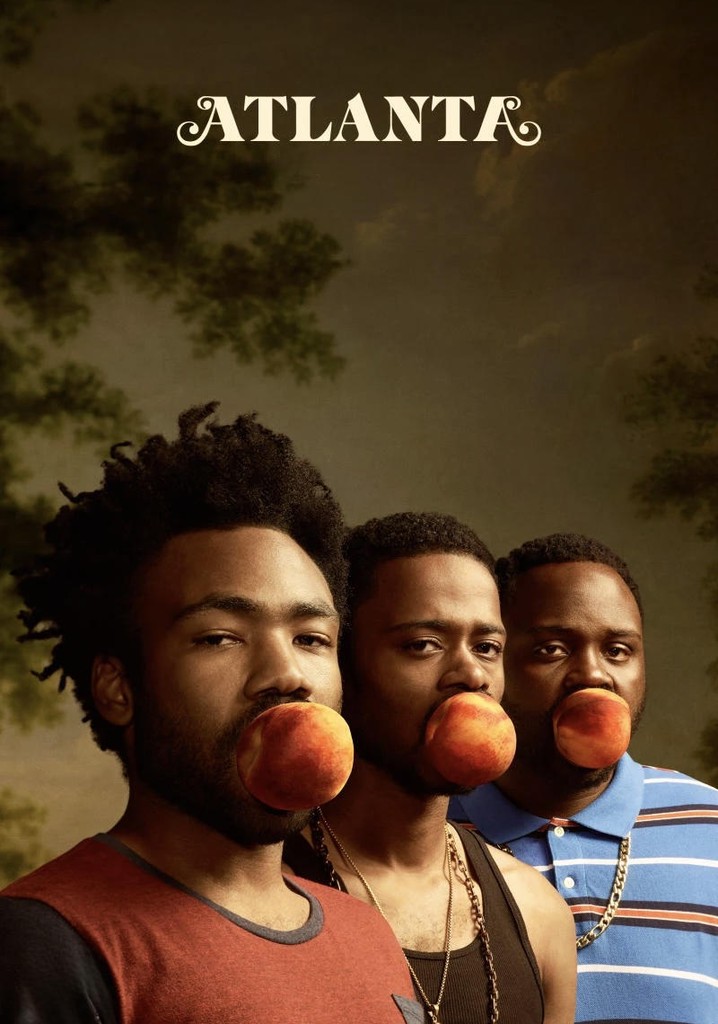
Atlanta arrives as something for which no existing vocabulary quite fits, and that is the point. It is not a sitcom, not a drama, not a sketch show, not a mood piece, though it borrows from all of these and discards each label the moment it threatens to settle. Donald Glover and his writers build something closer to a controlled hallucination of Black life in a specific American city: the texture of broke-adjacent survival, the absurdist indignities of the music industry’s lowest rungs, the way systemic violence sits inside ordinary scenes like a frequency most people have learned not to hear. Glover himself described the show as ‘Twin Peaks with rappers’, which is accurate enough as shorthand and useless as explanation; what the phrase leaves out is how much of the show’s power comes from material specificity, from strip malls and Section 8 conversations and the rap ecosystem as local economy rather than spectacle.
Donald Glover’s Earn is the centre but rarely the driver. He drifts through the season with a passivity that in a lesser show would read as inertia but here reads as something more diagnostic: the paralysis of an educated Black man who can see every structural trap and still walks into them because the alternatives are not visible from where he stands. Brian Tyree Henry’s Paper Boi is all friction, all refusal, and the show never romanticises his rising career or flattens him into archetype; the tension between the cousins is that Earn needs Alfred more than Alfred needs him, and both know it, and neither says it. ‘B.A.N.’ announces the show’s formal range most explicitly: a fake BET talk show, complete with satirical commercials, that pivots between comedy, cultural criticism, and something approaching Brechtian estrangement without once breaking its own internal logic. ‘Value’ does something quieter and equally devastating, following Zazie Beetz’s Van through a drug test crisis that maps the economic precarity beneath middle-class Black respectability with forensic calm.
The show’s frequency distinguishes it from comparable work. The show operates at a frequency where comedy and menace are not alternating but simultaneous: the invisible car in ‘The Club’ is both a sight gag and an image of something spectral about how Black presence is processed in American space. Nothing is explained; nothing needs to be. One simply inhabits the frequency, and by the final episode one has either tuned to it or one has not.
‘Teddy Perkins’ is a single episode of television that does things no other form could do and that almost no other practitioner of the form would have had the nerve to attempt. Donald Glover in full prosthetic disguise as a figure assembled from the wreckage of Michael Jackson, Prince, and every Black entertainer whose talent was extracted and metabolised by a controlling father: it is at once a horror film, a Kubrickian exercise in dread accumulation, and one of the most concentrated statements about the cost of Black excellence under patriarchal and white supremacist systems that American television has produced. LaKeith Stanfield’s Darius, alone in the house with this apparition, carries the episode’s dread through physical stillness; Hiro Murai directs with a corresponding stillness that generates more unease than any jump-cut ever could.
The rest of Robbin’ Season holds. ‘Woods’ is harrowing in a different key; ‘Barbershop’ is an excellent bottle episode; ‘North of the Border’ is comedy so dark it leaves a residue. Brian Tyree Henry’s Alfred anchors the season’s tonal range: Paper Boi’s rising fame and escalating paranoia tracked with an intensity that never becomes caricature. Season 1 established what the show was; Season 3 reached further and sometimes overreached; Season 4 resolved with a strange, earned grace. Season 2 maintains the highest consistent quality across its episode run.
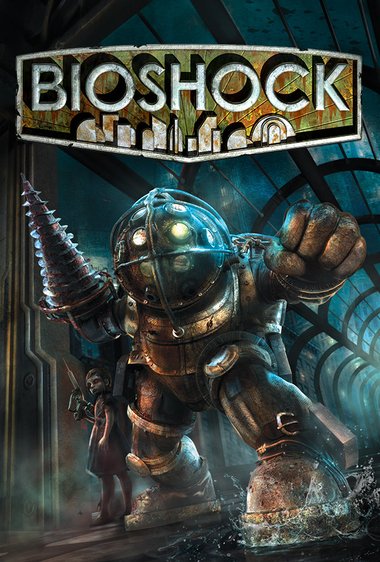
BioShock’s critique of Objectivism does not miss the details that reflect flaws in any ideological purity: Rapture is a monument to the idea that a society can be designed from first principles, and the game’s atmospheric achievement is in making that monument feel simultaneously awe-inspiring and claustrophobic. The art deco decay, the distant whale song, the political slogans peeling off damp walls: Irrational Games built a world that critiques its own beauty. Andrew Ryan’s broadcasts carry the cadence of conviction, and the game is smart enough to let them remain persuasive even as Rapture’s failure surrounds the player.
The hacking system is hostile to the player, and certain mechanics feel dated. But Rapture deserves respect: a game with real soul, and a setting that, nearly twenty years later, remains among the most fully realised in the medium.
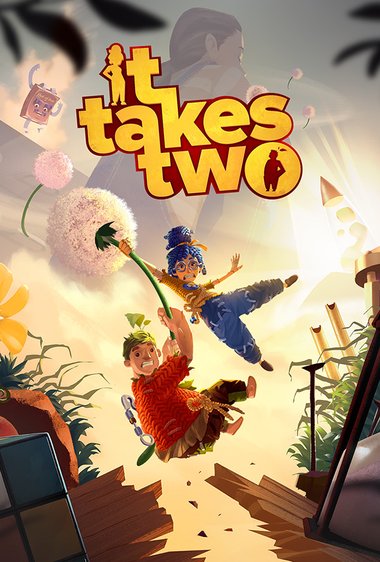
It Takes Two keeps renewing itself: every chapter introduces a new mechanic, explores it thoroughly, and moves on before repetition sets in. The Tree chapter’s sap-and-match projectile system is a genuine surprise, a design idea that makes one sit up and pay attention. The Time Manipulation sequence demands split-second coordination between both players. The snow chapter layers traversal mechanics on top of combat in ways neither genre typically attempts.
Difficulty is perfectly welcoming: great fun playing with my wife. Hazelight design every puzzle around two minds, two perspectives, two sets of hands, and the solutions demand communication instead of merely parallel execution. A game that makes playing together feel like the point, not the concession.
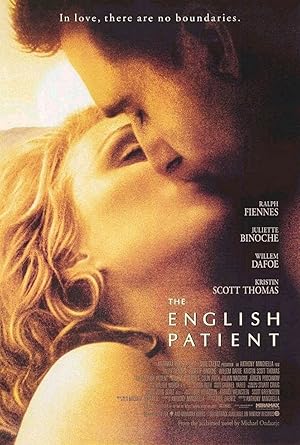
Memory and landscape are the same thing in The English Patient: the desert is not a setting but a psychic condition, indifferent to national borders and lethal to anyone who mistakes its beauty for permission. Long after the plot has dissolved, the images outlast the romance between Almásy and Katherine: Ralph Fiennes’s Count Almásy crossing the Saharan emptiness with Kristin Scott Thomas’s Katherine dead in his arms, her weight against the heat, the sheer defiant absurdity of the gesture. One carries that image the way one carries certain lines of poetry, not as information but as sensation. Minghella compresses and reorders Ondaatje’s novel, amplifying the central affair while quieting the postcolonial textures that surround it; critics who found the film a romanticisation of the colonial gaze are not wrong, exactly, but they are accounting for a different film than the one Minghella made. The Swimmers’ Cave, with its prehistoric rock paintings of figures moving through a sea that no longer exists, gives the story its true scale: not tragedy as plot mechanism but tragedy as geological fact, as the record of what was once possible in a world that has since dried out. Kip and Hana’s promise to meet at the church stays because they already know it will not be kept. The film earns its devastation by refusing to explain it.
The bash ability alone makes Ori and the Blind Forest feel singular. Every challenge after one gets bash builds towards the Ginso Tree escape, where, for those few minutes, Gareth Coker’s score and the fluid wall-climb-plus-bash produce the most adrenaline-fuelled sequence I have ever experienced in a metroidvania. The timing of each bash redirects Ori’s momentum mid-air, turning projectiles and enemies into launch platforms, and the tree’s rising water forces continuous upward movement that leaves no room for hesitation. It surpasses even Hollow Knight (2017)’s White Palace, because the Ginso Tree is difficult and musical: each input lands on a beat the game has been teaching one to hear.
Moon Studios treated platforming as a language, and in the Ginso Tree sequence they achieved fluency. Watching Ori and the Will of the Wisps (2020) move towards Hollow Knight’s direction only clarifies how singular the first game’s pure platforming high point remains. The Forlorn Ruins and Mount Horu sustain the standard the tree sets, each escape sequence a variation on the same theme of controlled panic, and Coker’s music carries the emotional weight throughout without a single weak passage. What an adventure.
Dear Shaun: can you really not see that the Institute is using you? Fallout 4’s main narrative collapses under its own inconsistencies. The Institute Shaun leads talks endlessly of grand altruism, of eliminating the Railroad and Brotherhood for humanity’s future, but what threat have these factions actually posed? Life on the surface is not catastrophic: Diamond City is doing fine. The Institute is running low on power, yet the writing never explains why a faction with teleportation, synth labour, and surface access has no better political imagination than secrecy and murder.
Smart as Shaun is, why can he not see any of it? Though of course the player-character is no hero either: once I became Director I could have non-violently freed all the synths, but chose violence instead. Maybe the writers had no basic logic. Is that it, Shaun?
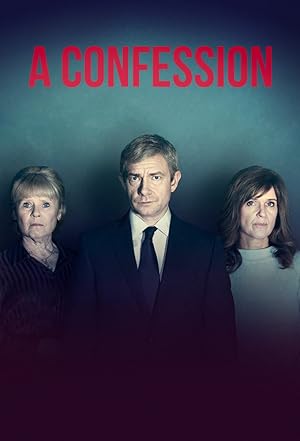
What should have been a simple case, in the procedural sense, is drawn through PACE and one opportunist’s complaint into an ever-widening vortex that swallows the victim’s family, an entire investigation, and a superintendent’s career. Paul Andrew Williams keeps the series scrupulously close to the documented record, and this fidelity becomes its own kind of horror: not the horror of invention but of recognition, the sickening realisation that the system which failed Sian O’Callaghan and Becky Godden-Edwards did not fail through malice but through the careful, self-protective application of rules designed for precisely such circumstances.
Martin Freeman’s Steve Fulcher is constructed around a particular contradiction: the man who saves lives by breaking the law becomes the law’s sacrifice, while those who hid behind procedure are protected by the very codes they invoked. As Steve says in the final episode, life seems to count for nothing before rigid bureaucratic codes. The cowardly, sheltering behind the banner of ‘justice,’ use PACE as their shield and let the truly honourable become the sacrifice. Imelda Staunton as Karen Edwards carries the other weight entirely: what it means to need answers the system has decided are inadmissible. The series studies institutional cowardice dressed as institutional integrity, and it closes without a shred of comfort.
The sensation of watching House of the Dragon in its first season is something close to what one imagines it must have been to watch Game of Thrones (2011) when it was at its most commanding: every detail deliberate, every shot weighted with consequence, the political machinery of the Targaryen court turning with a precision that rewards attention rather than punishing it. The Alicent-Rhaenyra opposition, Milly Alcock and Emily Carey in the early episodes, then Olivia Cooke and Emma D’Arcy carrying the roles into their full complexity, is frequently reduced in popular discussion to mere faction loyalty but is given enough texture here to carry the season’s emotional pressure: two women who understood each other completely and are now arranged against each other by a system that was always going to do this to them. Paddy Considine’s Viserys, decaying in real time, is the most sympathetic and most damning figure: a good man whose decency is indistinguishable from weakness, whose failure to resolve the succession is not indecision but the terror of a father asked to choose between his children.
The season recalibrates the dragons from spectacle to argument with particular subtlety. They are not weapons in any stable sense; they are independent intelligences whose allegiances remain unstable, and this uncertainty makes the Dance of the Dragons feel like a catastrophe already in progress rather than a conflict about to begin. Matt Smith’s Daemon sits inside this instability. The final scene above Storm’s End, in which Aemond loses control of the very outcome he thought he commanded, is the season’s thesis in miniature. Nobody starts a civil war; they simply reach a moment when stopping it would require a courage no one has managed to accumulate. And now we spiral into the Dance.
The Investigations Sector is the Oldest House’s basement and its confession booth: the place where the Bureau locked away the cases too dangerous to contain in the normal way. Control: AWE opens this sector and introduces Dr. Emil Hartman, recognisable from Alan Wake (2010), as a creature who has fused with the Dark Presence and now occupies a containment cell that the Hiss invasion has breached. The DLC’s main mechanic, darkness avoidance (Hartman cannot be harmed in shadow, and the player must manipulate light sources to make him vulnerable), borrows directly from the original Wake and translates it into Control’s telekinetic grammar with enough friction that the encounters feel like genuine dread rather than a routine damage-window dance.
The connective tissue carries the argument. Bureau case files reference Bright Falls, the FBC’s attempt to contain the Dark Presence, and Alan Wake’s disappearance into Cauldron Lake, all framed as institutional paperwork, as though a writer trapped in a supernatural hell-dimension is simply another Altered World Event to be coded, filed, and redacted. The sector keeps making the same point: containment fails because bureaucratic categories cannot hold things that refuse to behave like categories. Hartman was a psychologist before he was a monster, and the Bureau’s clinical language for his transformation reveals more about the institution’s limits than about the creature himself. AWE hinges two of Remedy’s worlds together, with documentation, not spectacle, as the scarier connector.

Beneath the Oldest House lies the Foundation: a cavern of astral geometry where the Nail, a structure that anchors the building to the Astral Plane, is fracturing. Jesse descends at the Board’s insistence, and what follows is the least interesting environment Remedy put in Control. The cave systems lack the architectural uncanniness that makes the Oldest House extraordinary; a brutalist government building that disobeys physics is inherently more unsettling than a supernatural cavern, because the former violates expectations while the latter merely confirms them. The new powers (Shape and Fracture, which create and destroy crystal formations) are underused: puzzles feel like key-and-lock exercises rather than extensions of Jesse’s growing command over the paranatural. The Marshall confrontation has emotional potential, a former Bureau ally turned hostile by the Astral Plane’s influence, but arrives too quickly to earn its weight. The Foundation is a prelude to something (the Board’s true nature, the Former’s rebellion, the building’s ontological fragility), not a story in its own right.

I discovered the first season had already aired by the time I came to it. The wait had been long enough: six years during which one watched Trevor Noah sand down, episode by episode, the institutional edge Jon had spent sixteen years constructing at The Daily Show, six years of Stewart surfacing in sideline conversations with Colbert and Oliver, radiating the particular restlessness of someone who knows exactly what they would do with a platform that they no longer have. The Problem has fulfilled that wait in ways that were not obvious in advance. The roundtable format, which Stewart had always suited better than the monologue, gives veterans space to be heard rather than processed, their testimony on VA failures and the mental health crisis folding directly into legislative argument without the usual layer of ironic distance. The interviews are razor-sharp and logically fluid in the way his best Daily Show work was, but without the defensive comedy that used to cushion the confrontation: Stewart is older, less interested in being liked, more interested in being useful. The subject of veteran care is as urgent as it is deliberately unglamorous. That Jon chose it for his return, rather than something more obviously spectacular, is itself a kind of statement.
The Federal Bureau of Control occupies a featureless brutalist skyscraper at 33 Thomas Street, Manhattan. From outside it is finite; inside it is potentially endless: corridors rearrange, floors multiply, thresholds open into other dimensions. Control builds its cosmic horror out of architecture and paperwork. Remedy filled the Oldest House with redacted Bureau memos, containment protocols for Altered Items (a rubber duck that follows people, a hand chair whose fingers move, a mirror that transports its viewer into an imperfect reality), and live-action Threshold Kids puppet-show videos that teach paranatural safety to child detainees in the cadence of a cheerful preschool programme. The SCP Foundation is a visible ancestor; Anna Megill, the narrative lead, has cited the SCP site as an influence directly. But where SCP entries are written for the reader’s benefit, the Bureau’s documents are written for the Bureau’s: institutional, self-justifying, redacting their own cruelties. The building contains things that should not exist, but the Bureau’s decades of quiet containment are worse: stealing children with psychic abilities, locking anomalies in cells, and filing the results under codes that no one outside the building will ever read.
Jesse Faden (Courtney Hope) arrives at the Oldest House searching for her brother Dylan, taken by Bureau agents seventeen years earlier after a paranatural event in the town of Ordinary. She finds the previous Director dead by his own hand, picks up the Service Weapon, and is ordained Director by an extradimensional entity called the Board, who communicates in overlapping alternatives: things are ‘bound/delivered’, Jesse is ‘approved/elusive’. The combat that follows is the best that Remedy has built: Jesse rips concrete from walls and hurls it with telekinesis, levitates above cover to rain gunfire from the Service Weapon’s shifting forms, and chains abilities with a fluidity that the studio’s earlier work never achieved. The Ashtray Maze remains one of the most extraordinary sequences in any game I have played: corridors fold Escher-style while Old Gods of Asgard’s ‘Take Control’ drives the encounter forward, the architecture and the music and the combat fused into a single escalating rush that earns every second of the ten hours that precede it. Jesse’s arc is about acceptance: of her powers, of the strangeness of reality, of a building that tests comprehension at every turn. The Oldest House does not want to be understood; it wants to be survived, and the game lives in that distinction.
The main story is, at times, underdeveloped: Jesse’s conversations with Polaris (a benign resonance entity that no one else perceives) can feel like internal monologue addressed to empty air, and the Hiss invasion that provides the game’s main threat is more atmospheric than it is narratively resolved. But the underdevelopment is also a structural choice that the game’s best moments justify. The Bureau’s institutional pathology, not the Hiss, is the true antagonist. Dylan Faden, imprisoned since childhood, sided with the Hiss because the Bureau’s containment regime had already hollowed him out; the resentment that drove him to embrace invasion was manufactured by the institution that claimed to protect humanity from exactly this kind of catastrophe. Ahti the janitor (Martti Suosalo, who won a BAFTA for the role), designated Entity A-001, was present when the Bureau discovered the Oldest House; nobody employed him, nobody understands him, and his Finnish idioms and quiet omnipotence suggest that he may be maintaining the building’s cleanliness and its ontological stability at once. The game keeps returning to the same unpleasant alignment: the filing system that catalogues the anomalies is also the system that created the conditions for catastrophe.
I thought after Elden Ring (2022) I would not have that free, comfortable feeling in a game for a long time, until I picked up the Switch again, opened The Legend of Zelda: Breath of the Wild, and lost myself chasing Korok seeds: climbing mountain after mountain, swimming up waterfall after waterfall, watching a flying dragon leave a glimmer of light through the clouds, encountering a Lynel patrolling the plain with a great axe. I was saved from death by a flame spear on my back in the snowfield; maintained my temperature in the Gerudo Desert with ice harvested from the open plain. Every scene overflowing with freedom.
The physics engine is the real achievement. Fire spreads through grass and creates updrafts that the paraglider can ride; metal objects conduct electricity during thunderstorms, forcing one to unequip armour or die; a frozen slab of meat can become a makeshift raft. The rules are consistent and discoverable, which means every solution feels earned rather than prescribed. The shrines, each a self-contained physics puzzle, teach the player to think systemically, and the knowledge transfers cleanly to the open world: a shrine teaches one to use Stasis on a boulder; ten minutes later, one launches a boulder at a Hinox in the field.
However many details I am critical of, watching the sunrise from the snowfield, it all evaporates. Not sure how to accurately express my love for this world and what BotW gives me. Even the small green stamina wheel fills me with inexplicable affection. Nintendo EPD dismantled the open-world formula that Skyrim (2011) and Assassin’s Creed (2007) had calcified and replaced it with curiosity as the only navigation system. No quest markers pointing to the next objective, no minimap cluttered with icons: just the world, and the freedom to walk towards whatever catches one’s eye.
The film is narrated by Malik, but it belongs to the women. Through the Informbiro purges, through Meša’s denunciation and his labour camp and his womanising and his return, two women move who were never truly loved their entire lives, and Kusturica and Abdulah Sidran refuse to sentimentalise either the politics or the marriage that frames them. The child’s perspective, episodic and half-comprehending, creates the dramatic irony Kusturica needs: we see the full weight of what ideology has done to a family precisely because Malik cannot.
The quietest question hangs over everything: who truly loves whom? Malik truly loves Sasha. The answer is a child’s, unqualified and complete, offered against a backdrop in which adults have almost entirely forgotten how.
The first half of The Rings of Power is the most expensive patience test ever constructed: five storylines deployed across a Second Age that Amazon clearly intends to inhabit for years, with the visual fidelity of a Peter Jackson film spread across eight hours that frequently feel like twelve. The Southlands thread carries the most immediate dramatic weight; Numenor has political texture that the show does not yet know how to use; Elrond and Celebrimbor’s forge feels like setup for something that has not arrived yet. And then, somewhere around episodes five and six, the machinery catches. The escalation into the eruption of Mount Doom, Adar’s campaign, the forging of the three Elven Rings, and the Halbrand reveal arrive with a cumulative force that retroactively justifies the slow build. The back half of the season is a genuine surprise.
Two problems persist. Galadriel, as written, is the most uninteresting character in the series: a warrior-commander whose emotional range runs from grim determination to slightly less grim determination, a characterisation that flattens one of Tolkien’s most complex figures into a blunt instrument. Morfydd Clark does what she can with the material, but the material gives her almost nothing to play against. The Harfoot storyline, meanwhile, takes several episodes to earn its place: the cultists pursuing the Stranger feel tonally displaced, as though borrowed from a different, less disciplined show. But Nori’s arc with the Istar finds its rhythm in the later episodes, and the Stranger’s ambiguity, his power arriving before his identity, produces a few moments of real wonder. He is not Gandalf; one refuses to believe they would make so lore-breaking a choice. The season is carried less by any single thread than by the accumulated conviction that this version of Middle-earth, for all its unevenness, is being built by people who understand that Tolkien’s world operates on the logic of myth, not the logic of prestige television, and that the two are not always compatible.
The structural decision to tell this story in two temporal tracks, Marie’s disbelief in Washington and the methodical pursuit of a serial rapist by Toni Collette and Merritt Wever’s Colorado detectives, initially seems like a formal choice, a way of maintaining forward momentum against the weight of trauma. By the end it reveals itself as something more deliberate: the two timelines are not parallel but indicting, their proximity an argument about the differential application of professional competence depending on who is doing the believing.
In the final episode, when Chris is being interviewed by the FBI, she mentions that the Washington case left behind a great deal of evidence. The implication hangs there: so what exactly was going through the minds of those detectives in the first two episodes, especially that self-righteous older man, when they blamed Marie? Cholodenko refuses to make this a simple failure-of-empathy story, though it is that too. The more devastating charge is simpler and less forgivable: they were not even doing their jobs. Empathy is not a requirement of police procedure; accurate evidence collection is. The cowardice of calling disbelief an inability to relate collapses entirely when one observes that relating was never the professional minimum in the first place. Kaitlyn Dever carries every consequence of this argument in her face, and the show is wise enough to let her.
Max Caulfield’s time-rewind mechanic is the formal key: Dontnod lets the player see the outcome of both choices before committing, which means the power of choice in Life Is Strange lies in the feeling of having chosen with full knowledge and still being unable to prevent what follows. The first four episodes build Arcadia Bay and Blackwell Academy with the patience of someone who understands that a town has to feel lived-in before its destruction carries weight.
The final episode drops off sharply, its writing thinning and environments turning bleak where the earlier episodes were textured, as though the budget ran out before the story did. The voice acting for Max and Chloe carries; the supporting cast is uneven. The dialogue writing is the more persistent weakness: teen speech so stilted it occasionally undermines what the performances are trying to build. But Max and Chloe’s relationship remains genuine, and the final choice still works: four episodes of carefully accumulated texture make the town feel worth grieving over.

Doki Doki Literature Club!’s sharpest element is its resistance against the visual novel’s own conventions: the game knows it is a visual novel, and its horror arises from the friction between that knowledge and the player’s expectations. Monika’s awareness of the medium, her ability to delete character files and rewrite dialogue, produces a few effective moments of uncanny recognition. But the game still relies on the illusion of free will; reading the user’s account name to generate jumpscares actually deepens its mechanical quality instead of escaping it.
The horror elements are too crude, the jumpscares too low-grade, and Sayori’s arc deserved more psychological depth than the game’s format allows. What remains is a clever formal exercise that mistakes cleverness for profundity.
My favourite Daniel Mullins game. The Hex uses genre-mixing as a narrative tool: each of the six characters inhabits a different game genre, and the shifts between them reveal something about the person inside. The Lazarus segment is the standout, its 2D-to-3D puzzle transitions producing a formal surprise that the earlier chapters build towards without announcing. The final Walk calls to mind The Beginner’s Guide (2015); I thought the Fallout (1997)-like mini-game appearing in the Walk was the game’s biggest secret, and then something more unsettling followed.
Mullins understood that genre itself carries emotional information: a platformer feels different from a strategy game not just mechanically but psychologically, and The Hex exploits that difference to give each character an interior life expressed through the rules they inhabit. When one discovers the ‘A Beeper’ easter egg, one hopes for an ARG like Inscryption (2021)’s; sadly not, but the ambition is visible. A clear step up from Pony Island (2016), and the bridge to everything Mullins would do next.

As Mullins’s first game, Pony Island’s puzzle element is more limited, surprisingly action-leaning: endless-runner segments, code-injection puzzles, boss encounters that corrupt the interface itself. But the surprise is tonal. The premise, a broken arcade machine built by the devil to trap souls, sounds like a student project pitch; Mullins turns it into something disquieting by committing to the bit with absolute seriousness. The devil’s Q&A segment is astonishing: a moment where the conversation between player and program achieves a philosophical charge that most ‘philosophical’ games never reach.
The devil’s function is game-design and psychological at once: a portrait of creative narcissism, the designer who traps an audience in a closed system and demands their attention. The arcade machine’s refusal to let one quit, its corrupted menus and false exits, is funny and frightening in equal measure because one recognises the impulse. The Hex (2018) and Inscryption (2021) go further, building more elaborate structures from this foundation. But Pony Island established the Mullins template: games that know they are games and whose horror arises from that knowledge, delivered with a brevity and confidence that most debuts cannot manage.
Having read about Inscryption’s ARG and finding the blue disc in the same location, I understood that Daniel Mullins truly commits to the meta in ways no other developer does. The Soviet Karnoffel Code unearthed from OLD_DATA, Kaycee’s life and death, P03’s Great Transcendence: all sit behind the game one thought one was playing. Peeling reality layer by layer, encasing the dissected reality inside another reality, slotting all of that into an enormous ARG that spills into real-world artefacts and videos.
I will always remember the night I accidentally pressed Ctrl+C at the new-game loading screen: like finding a hidden passage in Dark Souls (2011), astonished and unnerved at the same time. This level of meta, I have barely seen in my whole gaming life. Mullins is not making games about games; he is making games that are games about themselves, and the distinction is not pedantic.
After Gwen left, I never planted coffee beans again: sold them all to the wandering merchant. Spiritfarer is a game about departure, and Thunder Lotus understood that departure gathers weight through the rituals that precede it. Atul, the frog uncle, disappears overnight without a word: no Everdoor farewell, no final conversation, just an empty cabin. That vanishing is the game’s sharpest formal choice, because it mirrors how people actually disappear from a life.
Alice, the hedgehog grandmother whose dementia strips her recognition of Stella until she mistakes her for her own daughter, and Gustav, the owl curator whose aloof snobbery dissolves into something fragile at the end, are the two departures that stayed with me. The later passengers become increasingly grating, the boat increasingly slow. Perhaps Thunder Lotus intended the late-game tedium to make one miss Gwen and Atul more acutely. It works.
Three microphones on a bare stage: one for one-liners, one for stand-up, one for what Brennan calls ‘emotional stuff’. The conceit sounds like a therapy exercise dressed up as a format, and frankly it is, and the staging makes no pretence otherwise. Critics were quick to position it alongside the wave of confessional comedy that Nanette (2018) would later crystallise into a genre, but Brennan got there earlier and without the retrospective theorising. The one-liners are sharp enough that the pivots to the centre mic never feel like relief; they feel like a change in atmospheric pressure.
The story about Brennan’s father is the emotional hinge. Brennan’s father had ten children with four women and, by all accounts, treated none of them well; Brennan tells the story with a compression that makes the pauses between sentences carry the weight. Obviously staged, those pauses, rehearsed into apparent spontaneity through months of Off-Broadway performance before Netflix ever touched it. It doesn’t matter. The story has been worn smooth; Brennan has told it enough times to find its exact shape. Some emotions don’t require rawness to transmit; they require precision. Emotions transcend time and space, as the original note says, and this one crosses the footlights intact every time.
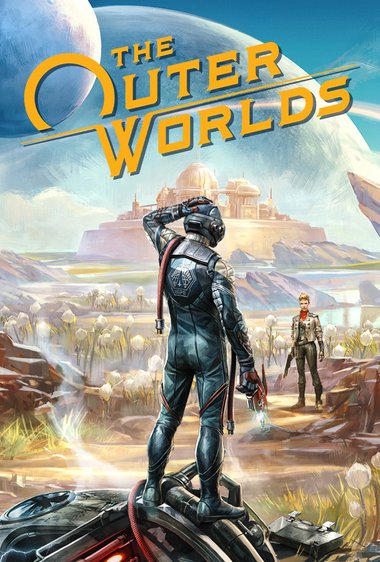
The first three hours are excellent, especially the moral dilemmas on Terra 2: capitalism’s company towns versus libertarian defectors, neither side looking right. People on the street notice one is wearing Marauder gear; Grace and Thomas remember what one has done for them. The Outer Worlds begins with promise and progressively empties.
From the Groundbreaker onward, the world hollows out; companion backstories are thin enough that even Parvati and Junlei’s romance comes as a surprise. The thin story and unfinished systems reflect Obsidian’s helplessness at the time. Still, the CRPG-plus-immersive-sim combat loop is adhesive enough to carry one through: mechanical design compensating for a failing narrative, up to a point.
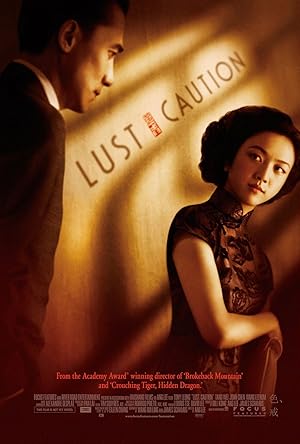
Eileen Chang’s novella is a cold, compressed thing: a woman who mistakes embodied desire for political commitment and pays for the confusion with her life. Ang Lee’s adaptation won the Golden Lion at Venice and generated a great deal of noise about its explicit sex scenes, which was in many ways the wrong argument to have. The scenes are not provocation but epistemology: they are how the film tracks the redistribution of power between Wang Jiazhi and Mr. Yee, the shift from her instrumentalising his desire to something more catastrophic and mutual. The mahjong sequences perform the same function with their clothes on. Rodrigo Prieto’s cinematography keeps everything lush and airless simultaneously, the occupied Shanghai interiors beautiful in the way that traps are beautiful.
Tang Wei’s performance is, without qualification, one of the great debut performances in cinema. She has to be at least four things at once: the student activist, the operative, the woman lost in what she thought she was only performing, and the person who in her final moments before execution chooses, again, to live for someone else. That last compound of self-erasure and genuine feeling is the film’s impossible centre, and she holds it. The irony the original note identifies is worth sitting with: Tang Wei was effectively blacklisted from mainland Chinese media following the film’s release, her advertisements pulled, her career in China dismantled, while Tony Leung, who shared every explicit scene, faced no consequences whatsoever. The film is about a woman used by everyone around her and then discarded; its aftermath reproduced the structure precisely.
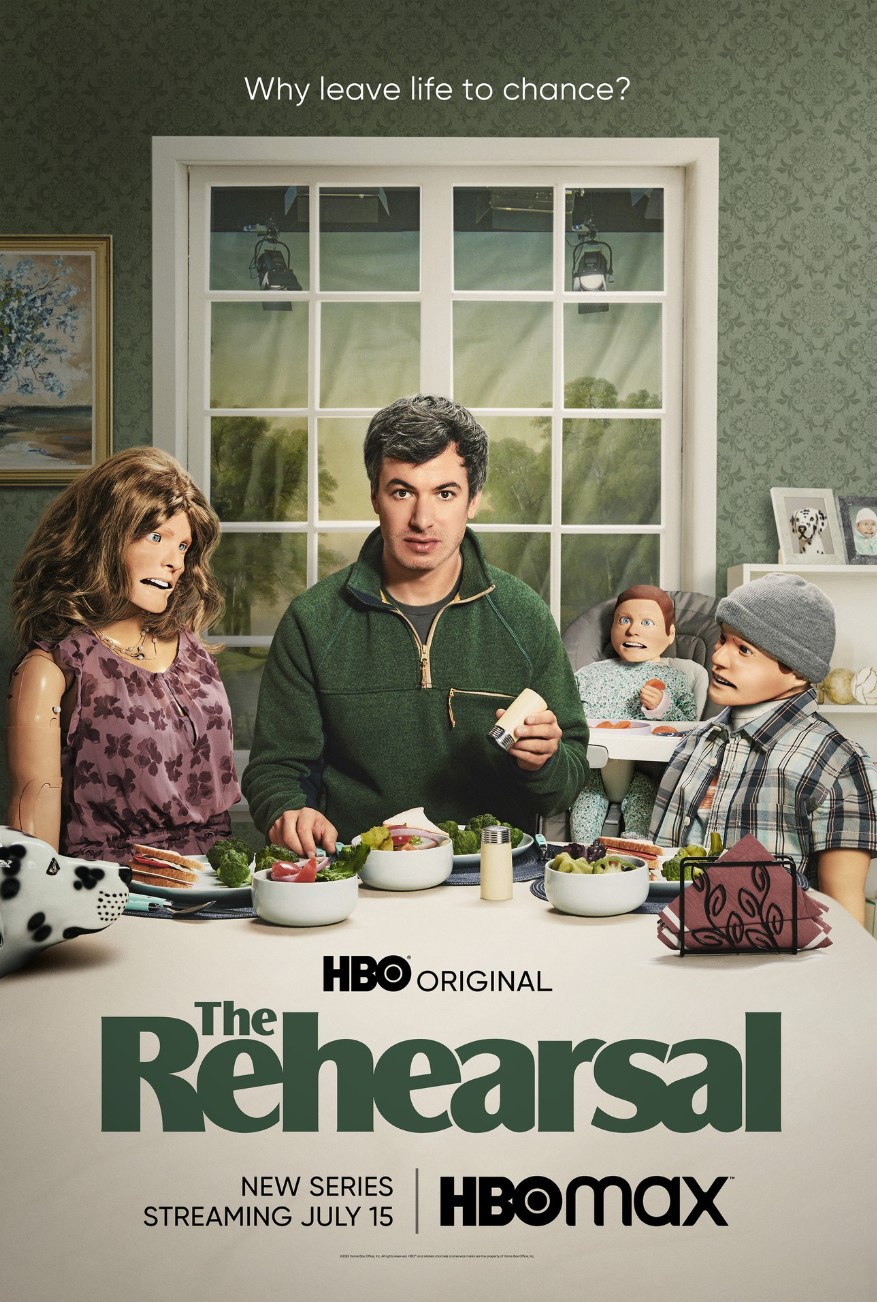
Nathan Fielder has been asking the same question since Nathan For You (2013), just with progressively more resources and less pretence of a comedic frame. The Rehearsal asks it directly, architecturally: does rehearsal produce genuine emotional experience, or only its simulation? The method is to construct elaborate full-scale replicas of bars, kitchens, living rooms, hire actors to stand in for the difficult conversation partner, then iterate the encounter dozens of times until every possible branch has been mapped. The formal premise is simple; the philosophical implication is not. When Patrick breaks down during a rehearsal about his grandfather’s death, the tears are real. Rehearsal has produced grief. The body does not cleanly distinguish simulation from experience just because the scenario has been engineered. The show understands this and keeps pulling on the thread.
The season’s centre is Angela and the parenting simulation, in which Fielder builds a farmhouse in Oregon where Angela can rehearse raising a child using actors of escalating ages swapped in on an accelerated timeline. Angela leaves when the project stops being hers: ‘It had become more so Nathan’s rehearsal instead of mine.’ But the consequence that Fielder cannot undo arrives through a six-year-old child actor named Remy, hired to play one phase of the simulated son. Remy has no father at home. After weeks of calling Fielder ‘daddy,’ he develops genuine attachment: not performed, not rehearsed, but the reality of a child who does not want the game to end. At a pretend birthday party, Remy sobs when told it is time to leave. ‘I don’t want you to be Nathan,’ he says. ‘I want you to be daddy.’ A machine built to control emotional outcomes has produced, with extraordinary precision, the exact emotional outcomes it was designed to prevent. By the finale, Fielder is rehearsing his own past. He re-enacts the Remy situation with a different child, then plays Remy’s mother Amber himself, wearing her clothes, her hand tattoo, sitting in a studio replica of her living room, trying to understand a position he put someone in and cannot reach from the inside. The recursion collapses into something between absurdity and anguish. Fielder is a wealthy producer with HBO’s resources behind him, constructing replicas of the lives of ordinary people, cycling child actors on schedule, managing others’ emotional experience as a production problem, and by the end of the season he is more lost than anyone he tried to help, rehearsing his way towards an authenticity that the very act of rehearsing makes impossible to reach.
Season two deepens what season one established without simply restating it. The how-to premise is still a Trojan horse: each episode promises utility and delivers something closer to phenomenology, Wilson’s hands and camera moving through New York with the patience of someone who believes that if one looks at anything long enough it will confess something true. The associative editing remains the formal method, cuts that generate meaning through unexpected visual rhyme rather than expository logic, and the second season pushes this further into genuine strangeness without losing the warmth that keeps it habitable.
Wilson and Nathan Fielder have demonstrated, across their respective bodies of work, that the documentary form has not been exhausted but misused. Nathan For You (2013) and The Rehearsal (2022), How to Make Small Talk and How to Be Spontaneous: each treats the camera’s presence not as a frame for reality but as a constitutive element of it, a force that causes people to reveal themselves precisely because they are trying to perform. The essay film tradition from Marker onward knew this, but it remained a niche; Wilson and Fielder have found a way to make the formal experiment feel intimate rather than academic. Season two of How to with John Wilson argues that ordinary life, looked at with sufficient attention and sufficient absurdist patience, opens into something vast.
Updaam in the morning, Karl’s Bay in the evening, Fristad Rock at noon, the Complex at night: Blackreef has the look of a place Arkane loved making. Sébastien Mitton’s art direction carries a great deal of the game by itself: Swinging Sixties colour over military concrete, AEON posters selling immortality as lifestyle branding, conversation pits and egg chairs inside cliffside lairs, a party island built on top of old temporal experiments that nobody at the party cares to understand. Colt and Julianna cut through that surface with actual charge. Jason E. Kelley and Ozioma Akagha make the radio calls feel like harassment, flirtation, family argument, and performance at once, and the best human invasions briefly make Blackreef dangerous in the way the story keeps claiming it is.
The trouble starts when the premise asks for investigation and the game answers with administration. Dinga Bakaba called DEATHLOOP an ‘inverted Cluedo’, a murder puzzle whose solution is the Golden Loop: eight Visionaries, four districts, four time periods, one perfect day. That sounds like a beautiful Arkane structure, almost a Hitman board folded through Groundhog Day (1993). In the final game, fear of the player missing the next step is visible everywhere. A lead updates; a marker appears; the objective tracker tells one which door, which tape, which conversation, which time of day. The mystery becomes legible too early, then obedient for too long.
Arkane had already built Dunwall and Karnaca out of routes, overheard plans, balcony gaps, safes, wall-of-light rewiring, political mess. In Dishonored (2012), information changes space: a servant’s rumour, a safe code, a patrol pattern, a non-lethal option that alters the moral contour of a mission. In DEATHLOOP, information often changes the UI. The game says that knowing Blackreef is power, then keeps shrinking knowledge into permission to follow the next highlighted lead.
The combat has its adhesive pleasures. Shift across rooftops remains satisfying; Nexus turns a room of Eternalists into one shared mistake; a good silenced pistol and a handful of trinkets can make Colt feel wonderfully predatory. But the systems narrow exactly when a loop game should widen. Once infusion removes equipment anxiety and the better guns arrive, Colt overpowers the island; Shift and Nexus solve almost everything; Havoc, Karnesis, and Aether become decorative toys for enemies too dim to demand them. The Visionaries have more poster design than dramatic weight. The Eternalists are party props with pathfinding.
Prey: Mooncrash (2018) used repetition as pressure: limited resources, altered routes, small plans broken by practical accidents. DEATHLOOP uses repetition as staging. Blackreef changes across the day, the party keeps moving, the art keeps promising an island of secrets, but the player’s understanding rarely has to become more exact. The disappointment is sharper because the surface is so good. I liked being on Blackreef more than I liked playing through Blackreef.
It is 2022, patch 1.52, and there are still too many flaws. Background popping is unresolved; vehicles still fall from the sky. But gunplay with the DualSense, vehicle handling, facial detail, the main and side quest quality: all impressive. Cyberpunk 2077 is a game that should not be good yet and is good anyway. After Horizon: Forbidden West (2022) and Ghost of Tsushima (2020)’s high repetition rates and crushingly dull stories, landing on an open-world RPG with actual writing is unexpected.
CD Projekt Red’s Night City feels populated with intention rather than generated by algorithm. The characters speak as though they have lives outside the quest; the side stories carry emotional weight disproportionate to their length; the main quest tells a story worth telling. That the technical scaffolding still wobbles beneath it all only makes the whole thing more improbable.
The theory formed during the film and hasn’t dissolved since: Kaguya spends her entire life living for men and the social order men built. Her father is the engine of her conformity, projecting onto her a vision of noble femininity that has nothing to do with who she is; her mother is the opposite pole, representing the natural life and the individual she might have been, but entirely without the authority to protect her. The court offers not elevation but a more elaborate form of captivity. Takahata’s source material, the ancient Taketori Monogatari, treats Kaguya as an object of male longing; he gives her interiority, grief, and a rage so intense that the flight sequence, when she tears through the village in desperation, becomes one of animation’s most viscerally honest moments.
The ascension at the film’s end is not rescue. The moon-people arrive with their lotus procession and their forgetfulness, and there is something unmistakably funerary about it: the lunar robe carries an uncanny echo of the Meng Po soup, that Chinese mythology’s instrument of oblivion, the draught that strips a soul of everything it knew before sending it onward. Kaguya weeps as the robe settles over her shoulders. She has finally found in the woodcutter’s grandson, in the seasons, in the particular texture of the world she was exiled into, something worth living for; and the moon takes it all away. One is not watching a return to celestial origin. One is watching a silent death, grief transmuted into visual poetry so fine it barely announces what it is. 虫 鳥 獣 草 木 花
‘Chicanery’ is the episode the series had been building towards, and it delivers with a controlled fury that left me shaking. The trap is exquisite in its cruelty: Huell slips a fully charged phone battery into Chuck’s pocket as he enters the courthouse, and Chuck carries it for nearly two hours, symptom-free, until Bob Odenkirk’s Jimmy asks him to check his own breast pocket on the stand. Chuck erupts into a tirade about Jimmy’s ‘chicanery’ that strips the legal veneer from what was always a personal vendetta, Michael McKean delivering what amounts to a career-best performance inside a performance. The brilliance of the writing is that both brothers are right. Chuck is correct that Jimmy will always cut corners; Jimmy is correct that Chuck’s campaign was never about the law but about the moralisation of expertise, the guild protecting itself from someone who entered through the wrong door.
The rest of the season metabolises the fallout. Howard buys out Chuck’s partnership with personal funds, a forced retirement; Jimmy attempts reconciliation and Chuck tells him he never mattered. The finale opens with a flashback: young Chuck reading to young Jimmy by the light of a gas lantern. In the present, Chuck sits alone in a house he has gutted to the studs, wrapped in a space blanket, and kicks that same lantern off his desk. On the cartel side, Gus Fring’s arrival reintroduces the architectural patience that made Breaking Bad’s fourth season so suffocating, and the show now runs on two parallel tracks of slow ruin: Jimmy’s moral drift and Gus’s empire-building, both powered by men who believe their control is absolute. The season understands the unbearable fact that the moment Chuck needed most to be right about Jimmy was the moment Jimmy proved him right.
The first season of Better Call Saul is, beneath its procedural surface, a study in credentialist gatekeeping. Bob Odenkirk’s Jimmy McGill earned his law degree through a correspondence course at the University of American Samoa while sorting mail in the basement of his brother’s firm; Chuck earned his through the front door of every institution that matters. When Jimmy passed the bar, Michael McKean’s Chuck quietly instructed Howard to deny him a position at HHM, and the show does not frame this as villainy; it frames it as something worse: institutional logic operating exactly as designed, the guild protecting its purity from someone who entered through the service entrance. The Kettlemans tell Jimmy he is ‘the kind of lawyer guilty people hire,’ and the sentence cuts not from malice but from a class instinct so naturalised it passes for perception. Jimmy works from a nail salon utility room, takes court-appointed cases, builds a Sandpiper Crossing elder-abuse suit from scratch, and watches HHM absorb it the moment it becomes valuable: his own work, seized by the institution that refused to hire him.
Chuck gives the season its tragedy. His electromagnetic hypersensitivity reads first as eccentricity, then as metaphor, then as something more unsettling: a brilliant man whose illness is indistinguishable from his need to be the only signal in the room. The show never resolves whether the condition is psychosomatic; it does not need to, because the dynamic it produces is clear enough: the moralisation of expertise, the older brother’s authority weaponised against the younger’s competence, love and contempt braided so tightly that neither can see where one ends and the other begins. Jimmy does not become Saul Goodman because he is a bad person; he becomes Saul Goodman because the respectable alliance was never going to accept him, and the outsider alliance at least rewards his talents.
The season ends in Cicero, where Jimmy runs cons with his childhood friend Marco. Marco dies mid-scam; his mother gives Jimmy the pinky ring. In a parking lot, about to accept a legitimate position at Davis & Main, Jimmy fidgets with the ring and drives away. The ring is a talisman, and what it represents is not a fall but a recognition: the institution told him he did not belong, and eventually one stops knocking.
Chuck’s insecurity is probably a side effect of perfectionism: after years of hard-won struggle, a wild card appears and truly draws out the petty tricks lurking in his heart. Michael McKean plays the deterioration with extraordinary precision, keeping Chuck pitiable and villainous in the same breath, never letting one state excuse the other. The document-splicing sequence at the end of the season is the show crossing a threshold, not just for Jimmy but for itself, the moment Better Call Saul stops being a Breaking Bad (2008) appendage and becomes its own tragedy.
Again, Kim and Jimmy trying to carve out a patch of sky for themselves is largely the best thing about this season, Rhea Seehorn doing work that the Emmys notoriously refused to see. Their scenes together carry the show’s deepest investment: two people whose decency is being gradually outpaced by the world they are embedded in. In smaller part, Jonathan Banks’s Mike is slowly being drawn into the drug dealing scene, his moral structure eroding one rationalisation at a time.
The most important thing the fifth season teaches is not about Walter, who by this point has rendered himself unambiguous: it is about the people who watch him and feel something like kinship. The show has always been constructed so that the audience tracks Bryan Cranston’s Walter in his rationalisation in real time, finding each step locally plausible even as the cumulative direction becomes monstrous; season five removes even the rationalisation, and Walter simply revels. ‘Say my name.’ ‘I did it for me. I liked it.’ The honesty is almost restful after the sustained self-deception of the preceding seasons. What is left is the shape of a man who could not accept help, could not accept diminishment, could not let a single slight go unanswered, and paid for that intractability with everyone around him.
The question that the show has always been asking is not whether Walter is redeemable. The show knew from the beginning he was not. The question is what it reveals about us that we kept watching, kept half-rooting, kept finding the intelligence and competence seductive even as the body count rose. Walter should have died in season two. Everything after that is the interest accumulating on a debt that was never going to be repaid in kind. Everyone around him, Anna Gunn’s Skyler, Aaron Paul’s Jesse, Dean Norris’s Hank, the people who simply had the misfortune of being near him, had their ordinary lives destroyed in service of his pride. Stay away from people like Walter White. More than that: stay away from people who sympathise with him, because the sympathy is the problem, and it is the problem the show was diagnosing from the start.
Fresh at first, but ten hours in, Days Gone is still the standard open-world formula. The freaker hordes are a technical achievement, a spectacle of emergent chaos that no other open-world game of its generation attempted at this scale, but the world between hordes is hollowed out, the missions repetitive, the characters serviceable but unmemorable.
The story is better than the game’s reception suggested. Deacon St. John starts as a generic gruff protagonist but accrues unexpected dimension across the runtime; the relationship with Boozer achieves a quiet tenderness that the marketing never hinted at. The late-game revelations work precisely because one has spent so long in this world’s particular brand of loneliness. But the first fifteen hours are a slog of repetitive camp-clearing and fetch quests that will lose most players before the narrative payoff arrives. A game undone by pacing.
‘Catherine, are we alive?’ SOMA’s question comes down to the body: what is a mind without the substrate that generated it, and does the answer change if the substrate is silicon rather than carbon? Frictional Games built the PATHOS-II facility as an underwater thought experiment, each section posing a variation of the same question until the cumulative weight produces something closer to philosophy than to horror.
The final choice is devastating because the game has spent five hours making one care about the answer. Whether one copies or does not, the question persists: if a perfect copy of a consciousness believes itself to be alive, what authority does the original have to disagree? SOMA is a horror game that frightens the player with implications more than monsters.
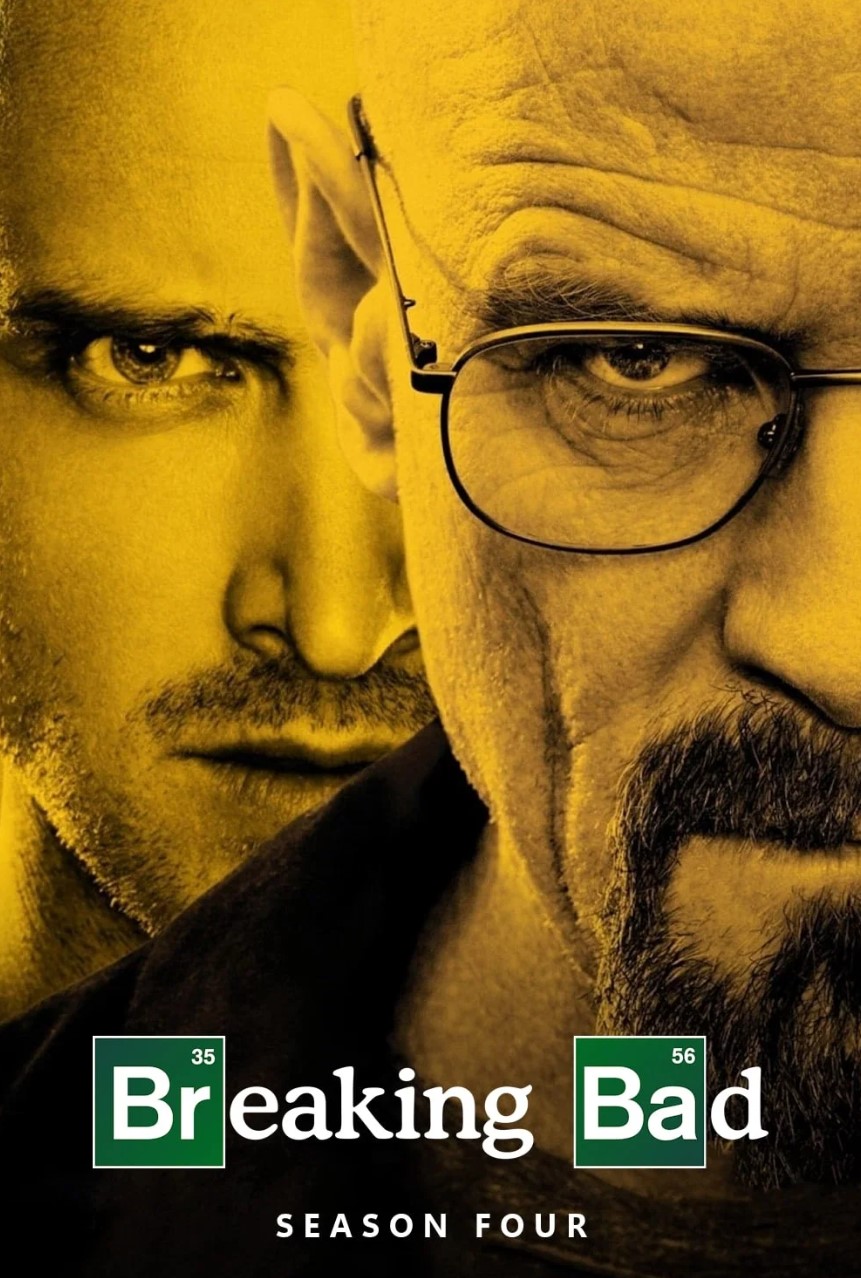
Season four operates on sustained dread, two masterminds circling each other with the patience of people who understand that the first visible move is probably the losing one. Giancarlo Esposito’s Gus Fring is Bryan Cranston’s Walter’s dark mirror and also his superior: the same pride, the same capacity for cold calculation, the same empire-building under cover of legitimate industry, but without the emotional volatility that keeps undoing Walter at crucial moments. Esposito plays him as a man who has long since metabolised his own grief into something structural, something that runs the whole apparatus, and the season’s slow revelation of his backstory makes him tragic rather than merely formidable.
The finale turns on Walter poisoning a child, which at the time of broadcast was the clearest evidence yet of how far the rationalisation machine could be pushed. One watched it feeling something that resisted articulation. To borrow Walter Jr’s framing, still the most direct moral verdict the show offers anyone: Walter, why don’t you just die already? The heartbreak is not for Walter. It is for Jesse, for Skyler, for everyone orbiting him who can see what he is and cannot get clear.
John Curran shot on location in Guangxi province, and the landscape does what landscape can only do when it is real: the mist over the mountains, the cholera-stricken village, the particular quality of light in a place that has never accommodated the people passing through it, all of it pressing on the characters in ways that studio work cannot simulate. Alexandre Desplat’s score keeps the emotional temperature from tipping into sentimentality, and Ron Nyswaner’s screenplay is disciplined about what it takes from Somerset Maugham and what it quietly sets aside. Maugham’s novel is a colder thing, more sardonic about Kitty, less interested in redemption as a category; the film softens this, which is a concession, and one that Maugham purists reasonably note. Set against the world of Westerners living in China during the colonial period, though, the film’s emotional texture is flawless: the discomfort of privilege in a place it has damaged, the impossibility of genuine connection across the distance that colonialism manufactures even between two people who love each other, all of it present without being declaimed.
Short in runtime and every character fully dimensional. Edward Norton’s Walter Fane, bacteriologist, is a man who chose medicine because it was the only arena in which his emotional rigidity could pass as virtue; Naomi Watts’s Kitty moves from opacity to something genuine without the transformation being announced. The quietest film, the most fluid. It stays.
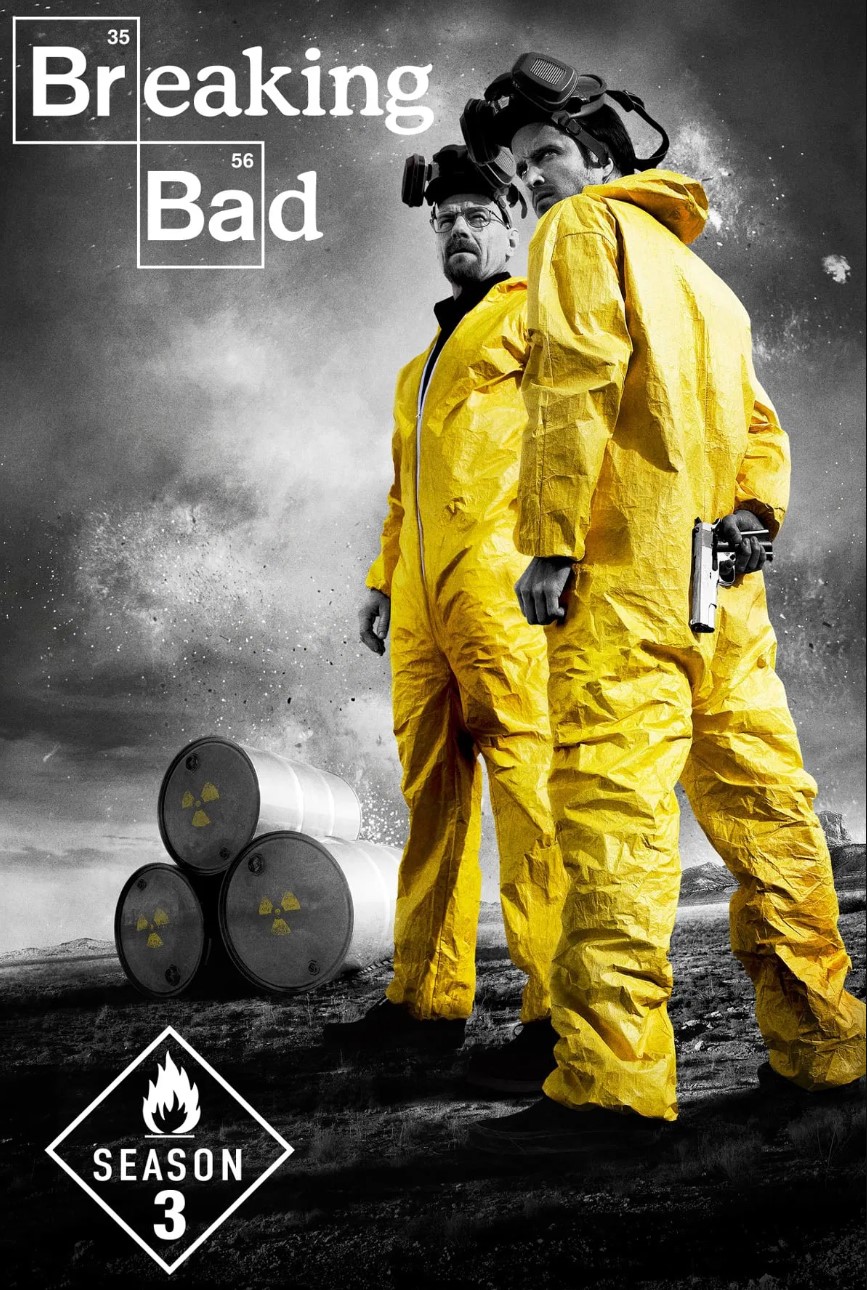
This is the season where Walter becomes legible. The self-deception that powered the first two seasons begins to thin, and what emerges beneath it is precisely what the show has been arguing all along: a pathetic, egoistic, manipulative man whose every gesture of love is a form of control. He refuses to let Anna Gunn’s Skyler leave. He moves back into the house uninvited, performs the devoted husband in public while she suffocates in private, weaponises the family unit because dissolution would mean admitting failure. ‘Fly’ distils the pathology into fifty minutes of airless obsession: Bryan Cranston’s Walter and Aaron Paul’s Jesse locked in the superlab, hunting a contaminating insect, and the fly is not the point; the point is that Walter cannot tolerate any element of his environment he does not command, and the episode lets that need run until it becomes indistinguishable from madness.
The collateral damage widens. The Salamanca cousins are redirected from Walter to Hank, and Hank nearly dies in a parking lot, shot four times because of a man he does not yet know is his brother-in-law. Walter is never the one who bleeds; he is the origin of the wound, routed through criminal and institutional networks until it strikes someone who had no part in any of it. In the finale, cornered by Gus, Walter instructs Jesse to kill Gale Boetticher, the mild-mannered chemist who could replace him, the one person in the operation who is unambiguously innocent. Jesse goes to Gale’s apartment and shoots him in the face. Walter has converted another human being into a tool for his own survival, and the worst part is not the act itself but the efficiency of it: how quickly he identifies the solution, how little it costs him. By the end of season three I wanted him dead. Not out of dramatic expectation but out of something closer to moral exhaustion. This is the real Walter, and he is straight-up sad.
The second season announces its ending from the first frame: a pink teddy bear, singed and eyeless, floating in the Whites’ swimming pool. The black-and-white cold opens return like evidence across the season: body bags on the driveway, an evidence team, debris scattered across the neighbourhood. One assembles the picture the way one assembles a paranoid structure, retroactively, after the damage is done. Breaking Bad is not, in its second season, content to be a character study of one man’s moral collapse; it is building a causal architecture that reaches from a single act of omission to the deaths of a hundred and sixty-seven strangers, and the architecture holds.
Jane Margolis is the hinge. A recovering addict, Jesse’s girlfriend, someone offering genuine connection and genuine danger in equal measure. She discovers Walter’s money and threatens to expose him. Walter visits Jesse’s apartment, finds them both passed out, and watches Jane choke to death on her own vomit and does nothing. The scene is shot without music, without drama, without anything that would let the audience process it at a safe distance: Bryan Cranston’s face passes through calculation, hesitation, and finally a stillness that is worse than either. He does not kill her; he lets her die, and this is the distinction he will spend the rest of the series using to acquit himself. Her father, Donald Margolis, an air traffic controller, returns to work hollowed by grief and fails to separate two aircraft. A hundred and sixty-seven people die. The debris falls on Walter’s street. The show has built, with extraordinary structural patience, an argument about systemic amplification: that individual cruelty propagates through institutional channels until the body count has lost all proportion to the act that started it.
The optimal way to experience Ghost of Tsushima: Director’s Cut is to ignore every side quest and play the main story straight through. The stance system introduces a welcome rock-paper-scissors variety in the open-world formula: Stone for swordsmen, Water for shields, Wind for spears, Moon for brutes. But those comparing the swordplay to Sekiro (2019) are dreaming: one can spam heavy attacks to guard-break through nearly every encounter, and beyond four human types and two beast variants, enemy diversity is almost non-existent.
The side quests are worse still. Lady Masako’s nine-chapter arc investigating her family’s betrayal builds towards a duel with Jin, after which he simply says ‘Don’t try to kill me again.’ The only side story worth praising is the monk Norio’s, a nine-quest chain that builds a fully realised character in a sea of interchangeable quest-givers. The visuals, at least, are beyond reproach: following foxes to Inari Shrines is tedious, but the scenery along the way never fails. A beautiful open-world game, which is another way of saying an open-world game.
Breaking Bad opens with a man whose pride has already been destroyed. Walter White works two jobs, teaches chemistry to students who do not care, and washes cars for a boss who humiliates him in front of those same students. The cancer diagnosis, when it arrives, is almost redundant; Walter was already dying of status wounds. What the pilot establishes with remarkable efficiency is that the decision to cook methamphetamine is not born from desperation but from something that the show will spend five seasons dissecting: the refusal to be diminished. Hank dominates his own birthday party. Bogdan makes him scrub rims. Gretchen and Elliott offer to pay for his treatment from their Gray Matter fortune, and Walter says no, because accepting their money would mean admitting that he sold his share for five thousand dollars and ended up here, and Walter White would rather build a drug empire than concede that.
The writers’ strike compressed the season from nine episodes to seven, and the compression shows: Walter’s arc from terrified amateur to the man who walks into Tuco Salamanca’s headquarters with a bag of fulminated mercury and detonates it moves at a pace that occasionally strains credibility, the character development running ahead of the emotional logic. What holds it together is the acting. Bryan Cranston calibrates Walter’s rationalisation so precisely that one keeps finding him persuasive even when the writing asks too much too fast, and Aaron Paul gives Jesse a vulnerability that the early scripts barely sketched. The season is a proof of concept rather than a finished argument, but the concept that it proves is formidable: that the most dangerous thing about Walter White is not the violence but the pride, and that the pride was there before the cancer, before the meth, before any of it.
I know it started as a Skyrim (2011) mod, but when The Forgotten City suddenly became an FPS after entering the Shrine of Diana, that still caught me off-guard. The story flows beautifully, the puzzle experience is excellent, and several plot twists expressed through the game’s format strike with real force. Modern Storyteller took the strongest idea from their mod and built a game around it with admirable restraint: no padding, no filler, just a tight time-loop mystery that rewards curiosity and punishes assumption.
My favourite puzzle game to date. The Golden Rule carries the narrative and the design at once: the city is small enough to be fully knowable and complex enough to surprise on every loop.
Weiner builds Seymour Benzer’s story the way a good documentary filmmaker constructs a portrait: through interviews, through the texture of a lab, through the faces of collaborators and rivals who leap off the page with startling economy. This is nothing like Eric Kandel’s autobiography, which is mostly a career retrospective narrated by its subject; Weiner’s approach is more alive, more externally observed, and the liveliness is the point. One gets a sense of Benzer’s intellectual trajectory, from physicist to molecular biologist to neurogenetics pioneer, and of the atmosphere in which that trajectory unfolded: the Caltech corridors, the mutant fly stocks, the Drosophila courtship songs played back on oscilloscopes. The discoveries that would eventually underpin the 2017 Nobel for circadian rhythm research, the period and timeless genes, are rendered here as human stories first, scientific achievements second.
The inevitable bias is structural. A book about Benzer is a book about the gene, and Weiner cannot help but foreground genetic determinism in a way that the science itself has long since outgrown. Everyone now understands that genes cannot be as deterministic as the early geneticists imagined; the gene-behaviour relationship is probabilistic, contextual, dependent on environment and development in ways that Benzer’s single-gene mutant screens could not capture. Paired with Sapolsky’s Behave (2017), which insists on the full causal chain from gene to hormone to neural circuit to culture, Time, Love, Memory finds its proper place: a portrait of one end of the explanatory spectrum, best read with the awareness that the other end exists.
Jonathan Blow gave me many a-ha moments, and the ones I remember all involve the island answering the panel. The stream touchable from the mountain top; the apple in the neighbouring garden; the sun completing a line; jungle sounds that stop being ambience and start behaving like notation. The panel grammar is beautiful when it draws perception outward, when a rule learned on a flat screen makes the world newly available. For a while, The Witness feels like training in attention.
Blow’s austerity is legible in every missing verb: no jump, no inventory, no dialogue tree, no object one carries from room to room. One walks, looks, draws lines. The game tries to teach a grammar without speech, and the ordinary panels are elegant at first because they respect that ambition. Black and white squares, coloured paths, stars, sunbursts, polyominoes, sound cues: each area begins with a small alphabet and asks one to infer its grammar through arrangement. A puzzle that looked impossible ten minutes ago becomes obvious after another garden, another quarry wall, another row of training panels, and the mind feels itself changing shape in small increments.
Blow has spoken about games as nonverbal communication, and The Witness approaches its own philosophy most closely when communication happens through relation: shadow to line, sound to path, apple to branch, sun to panel. In these moments, the island completes the sentence that the panel begins. I remember the pleasure because it was bodily as much as intellectual, the small turn of the camera, the step backwards, the sudden recognition that the clue had been visible all along and I had not yet learned how to see it.
My patience ran out inside the mountain. The late-game panels start asking for a kind of obedience that has little to do with wonder: timed runs, perspective fiddling, colour rules stretched past delight, puzzles whose answer feels like submission to Blow’s private appetite for exhaustiveness. Hundreds of flat boards turn the island into a showroom for a grammar that has exceeded its expressive range. When a puzzle asks one to stare at a panel for ten minutes, fail for reasons that feel unilluminating, then walk to another panel that asks for the same mood again, attention becomes taxation.
The audio logs and theatre clips worsen the imbalance. Scientists, mystics, poets, television documentaries, religious fragments: voices without bodies scattered across a world almost emptied of human situation. I understand the gesture, knowledge pursued as its own reward, perception stripped of ordinary narrative compensation. But knowledge without situation becomes sterile quickly. A Richard Feynman clip, a James Burke clip, a Buddhist fragment, a theorem-like puzzle rule: all are treated as pieces of the same purified inquiry, and the purification removes the human mess that made the inquiry necessary. By the end, that cleanliness has curdled into coldness.
I still think of the stream, the apple, the sun, the jungle sounds. The Witness is extraordinary whenever the island teaches the panel and the panel teaches the island. Too often, especially near the end, it behaves like a beautiful place designed by someone who trusts perception more than people.
What Remains of Edith Finch is the first game that made me feel completely in the protagonist’s perspective. Giant Sparrow achieved something that most walking simulators attempt and few accomplish: the shift from ‘I am controlling a character’ to ‘I am this person, in this house, touching these objects’. Lewis’s fish-gutting sequence is one of my favourite game sequences: the split screen between labour and imagination, the fantasy growing more vivid as the fish-gutting grows more rote, until the two merge and the knife does what the daydream was always building towards.
Three hours containing thirty hours of experience. Giant Sparrow knew exactly how long each story needed to be, and not a moment longer.

A beautiful puzzle game that could lose the soulslike component entirely. TUNIC’s collecting, upgrades, and manual-page clues gave me a puzzle-and-play experience that often exceeded most Zelda (1986) puzzles: many a-ha moments. The manual system is clever: on the surface, fifty-six scattered pages, but the underlying logic is one puzzle connected to another, with the manual itself functioning as a meta-puzzle framing the entire experience.
The boss design disappoints: long health bars, unclear invincibility frames, the 2.5D camera rotation, and most fights feel empty. The Heir turns out to be the best-designed one, which is a surprise. I would keep everything except the boss fights.
Behave is more readable than Why Zebras Don’t Get Ulcers (1994), and broader in scope. Sapolsky’s organising conceit is deceptively simple: start with the second before a behaviour occurs (the amygdala fires, the prefrontal cortex does or does not intervene), then zoom out, step by step, through hormones, then neurodevelopment, then genes, then evolution, then culture, until one has traversed the entire causal chain from synapse to civilisation. Behave works through Sapolsky’s refusal to let any single level of explanation claim priority. The gene matters, but so does the hormone; the hormone matters, but so does the childhood; the childhood matters, but so does the culture that shaped the childhood. The book makes the question ‘why did this person do this?’ feel viscerally unanswerable by any single level of explanation. Even with a psychology background, I encountered examples I had never heard of. The drone operator in the post-9/11 wars: a person who kills by remote control, thousands of miles from the explosion, and still develops PTSD, because the brain does not fully distinguish between pulling a trigger and clicking a mouse when the consequence is a human body coming apart on a screen. And the Christmas truce of 1914: soldiers climbing out of trenches to exchange gifts with men they had been trying to kill hours earlier, because proximity and shared humanity, given even the smallest opening, can override the most powerful propaganda. Sapolsky’s determinism has drawn criticism from philosophers who insist on the irreducibility of agency. Perhaps they are right. But the book’s moral force does not depend on settling that question. It depends on making one feel, with the weight of seven hundred pages of evidence, that understanding why we behave as we do is the precondition for behaving better.
Crown of the Ivory King is the only narrative in DS2 that earns the word ‘tragedy’ without qualification. Each of the four Children of Dark sought a powerful king to sustain herself; three corrupted what they found. Alsanna, Silent Oracle, born from Manus’s fear, came to the Ivory King with the same intent, but the Ivory King knew what she was: the Eleum Loyce sword, two intertwining blades, one of light and one of dark, is described as proof that he understood her origins. He loved her regardless, and she did not destroy what she touched. He built the frozen city of Eleum Loyce over the mouth of the Old Chaos itself, placed his throne directly above the pit, and when he sensed his soul degrading, he walked into the fire with his most loyal Loyce Knights and never returned. Alsanna remained in the Grand Cathedral, maintaining the seal, honouring his wishes. The DLC builds its climax around this sacrifice: the player drops into the Old Chaos with up to four recruited Loyce Knights, who charge the portals where their corrupted former comrades emerge, seal them through self-immolation, and leave the player to face the Burnt Ivory King alone. The number of knights that one has found through exploration directly determines the difficulty of the fight; thoroughness is rewarded with spectacle and with mercy. The King himself fights with a flaming ultra greatsword that he buffs partway through, fast and relentless, and upon death he calls out ‘Alsanna’. The frozen city above is beautiful, the cathedral architecture half-buried in snow, but the Frigid Outskirts (a featureless blizzard with respawning ice horses leading to a double-tiger fight) is the worst optional area that FromSoftware have shipped in any game. It does not matter, though. The love story stays: a king who built a kingdom to contain something that could not be contained, a bride born of fear who transcended it, and the fact that his last word, even after the Chaos consumed everything else, was her name.
Every figure in Crown of the Old Iron King is defined by what is no longer there. The Old Iron King built an empire on smelted iron and was struck down by his own creation before the player arrives. Sir Alonne, the wandering swordsman who trained the king’s soldiers and helped build the kingdom from nothing, left at the peak of its power for reasons the game never explains; the king named his elite guard ‘Alonne Knights’ in memoriam, described as ‘very much like a gesture to a deceased friend’. Nadalia, Bride of Ash, a fragment of Manus born of loneliness, journeyed to Brume Tower seeking a king to sustain herself; finding him already dead, she renounced her flesh and dispersed as ash into twelve idols that whisper and heal and curse throughout the corridors. Sir Raime, once one of Vendrick’s two most trusted knights, was exiled after confronting the king about Nashandra’s corruption; he wandered until he reached the tower and accepted Nadalia’s final soul-fragment in exchange for servitude, a knight without a kingdom serving a queen who was only smoke. The DLC builds its mechanical identity around this absence: the Ashen Idols that sustain enemies can only be destroyed with a limited supply of Smelter Wedges, forcing genuine resource-management decisions about which corridors to pacify and which to endure. The Fume Knight, Raime himself, fights in a bare rectangular arena with no gimmicks, no adds, no environmental assistance: phase one dual-wields a straight sword and an ultra greatsword at staggered rhythms; phase two discards the shorter blade and ignites the greatsword with dark flame. FromSoftware’s own data recorded a 93% failure rate. If the player wears Velstadt’s helm, Raime skips phase one entirely, the old hatred overriding his composure. Sir Alonne, accessible only through the Ashen Mist Heart, fights in a grand throne room at the end of a punishing gauntlet; if one defeats him without taking a single hit, he performs seppuku with his own katana, acknowledging the victor’s skill with the only gesture that his code permits. The tower itself, once its central machinery activates, opens into looping vertical architecture that DS2’s base game promised but rarely delivered. What lingers is the devotion: Raime guarding a tower with nothing left to protect, Nadalia clinging to the heirlooms of a king she never met, Alonne Knights still patrolling centuries after their master walked away.
The base game’s most persistent failure is spatial coherence: elevators that rise into impossible lava lakes, corridors that connect areas with no geographic logic. Dark Souls II: Crown of the Sunken King answers this directly. Shulva is an underground Mesoamerican city built on stepped pyramids and tiered pagodas, its entire architecture wired to glowing obelisks that raise and lower stone platforms, rotate bridges, and reveal hidden passages when struck. The verticality is pronounced and the interconnection is real: one descends through the cavern’s layers by a logic that rewards exploration and spatial memory in ways that the base game’s repurposed corridors never managed. It is the closest that DS2 comes to the interconnected design philosophy of Dark Souls (2011). The lore underneath is clean: the people of Shulva built their civilisation around a slumbering dragon, Sinh, whose accumulated poison was released when Sir Yorgh and his Drakeblood Knights pierced the creature with a great spear in pursuit of dragon blood they believed would grant transcendence. The rain of death toppled the city; the dragon returned to sleep. Sinh himself is the DLC’s best boss: he flies constantly, his scales corrode weapons on contact (turning DS2’s durability system into a war of attrition), and the spear still lodged in his chest is both a visual storytelling detail and a targetable weak point. The gank-squad optional boss (Graverobber, Varg, and Cerah) is forgettable by design, and the monochrome green palette wears thin on repeated deaths. But as the opening statement of the Crown trilogy, Sunken King established that DS2’s team could build spaces worthy of the original’s ambition when given room to iterate.
Dark Souls II: Scholar of the First Sin is the most contested entry in the Souls catalogue. Shibuya began the project aiming for accessibility and sorrow; midway through, development went off course, Miyazaki stepped in, and Tanimura inherited a game’s worth of pre-built assets that he had to repurpose into a coherent world under time pressure. The result is simultaneously the series’ boldest experiment and its most mechanically compromised. But what DS2 dared is worth naming. Power stancing, which let any two similar weapons combine into a dual-wield moveset, was abandoned by Dark Souls III (2016) and returned as a core system in Elden Ring (2022); Miyazaki himself acknowledged that DS2 bears the closest resemblance to Elden Ring. The bonfire ascetic, which bumps a single area into New Game Plus without resetting the world, has no equivalent in any subsequent title. And NG+ itself was rebuilt from the ground up: new enemy placements, new boss variations, new items available only on the second cycle. No other Souls game invested this seriously in what happens after the credits.
The costs are real. ADP governs roll i-frames through a stat that the game describes only as affecting ‘agility and all resistances’, and a player who picks the Warrior class starts with five invincibility frames where a Sorcerer gets nine; the game never explains this, and the disparity is invisible until one watches a YouTube video thirty hours in. Hitboxes are the worst that FromSoftware have shipped. The base game’s forty-one bosses are mostly forgettable: too many humanoids with overhead swings, and Nashandra arrives so late and with so little preparation that she feels like the throne room’s afterthought. Most damning is the world: the elevator from Earthen Peak to Iron Keep rises into a lava lake that is not visible from below, and dozens of similar joints reveal a map assembled from repurposed assets rather than designed as an interconnected space. But Majula, the hub bathed in perpetual golden-hour light, holds a warmth that no other Souls location possesses, and Lucatiel of Mirrah, who begs the player to remember her name as she loses the ability to remember it herself, is the series’ most direct portrait of what the Undead Curse actually takes. DS2 is the least polished Souls game and the one that tried the most things worth trying; the series would be smaller without it.
Markedly different from Humanity (2018), Politics (2004), Animals (2003), and the earlier specials. The material is looser: the show calls itself SuperNature but relatively little of it is about the supernatural, and there is considerably more reliance on offence and irony, more of those so-called ‘dark jokes’, which is also why there is more self-clarification than before. The controversy was predictable and, in its broad outlines, not entirely without basis: the trans material walks a line that not everyone will find it walks successfully, and the irony defence, deployed mid-set, is a formal risk that the audience has to accept or reject in real time. One does not see this as a regression. The self-clarification is part of the argument, not a concession to it; Gervais is interested in the mechanism of offence, in what the joke reveals about the listener as much as the told, and the self-aware structure is the means of that investigation rather than a retreat from it. The comparison with Jimmy Carr is instructive. There is a kind of dark comedian who operates by accumulating transgression, by stockpiling the forbidden: the joke is simply that the thing has been said. Gervais has never been that comedian, and the distance between the two positions has widened into something more like a gulf. SuperNature is the stand-up set that has made one laugh the most in recent years, and it is not close. The Jimmy Carrs of the world could perhaps have shared a stage with Ricky Gervais five or ten years ago. They cannot anymore.
Love, Death + Robots Volume 3 corrects the course after a second season that felt, for all its occasional successes, curated into timidity. Alberto Mielgo’s Jibaro, the closing episode, achieves something the anthology has been building towards since The Witness: a deaf conquistador and a lake spirit locked in a predatory loop, told entirely without dialogue, shot with a camera vocabulary that moves through its choreography the way sound moves through water. The tension carries the same charge as Sonnie’s Edge and is executed with far greater formal authority: violent, irreducible, and fully realised in an animated medium that refuses the naturalistic escape routes live action would offer. Emily Dean’s The Very Pulse of the Machine carries a different quality: quieter, philosophically adjacent to Zima Blue, but where that episode remained at the level of portrait, Dean gives the audience a consciousness to inhabit through its dissolution, the astronaut’s drug-altered subjectivity unravelling outward into Io itself. David Fincher’s Bad Travelling is the season’s most legible allegory: the class dynamics practically diagrammed on the ship’s deck, though the diagram is well-built.
The rest of Volume 3 is uneven, as anthology structure almost requires. Night of the Mini Dead is a one-joke escalation that earns the joke. A few episodes outstay their welcome. But the final, the third, and the second are enough to justify the season’s existence. Jibaro alone is enough to justify the form: the handling of camera and sound in that episode belongs in conversations about what animation can do that other media structurally cannot.
I played both parts consecutively, then needed nearly a week to process. The Last of Us Part II surpasses Part I in gameplay and atmospheric immersion by an almost embarrassing margin: companion AI now draws enemy fire and can be spotted independently, enemies scream fallen comrades’ names, the stealth responds with real precision, and the violence carries a visceral weight that makes every encounter feel consequential. The museum sequence between Ellie and Joel represents Naughty Dog at their peak: the light direction, the space shuttle, the hat routine, the wild boar. Joel picking up the guitar connects directly to his throwaway promise in Part I, ‘I might teach you how to play after we get back,’ and the quiet domesticity of Jackson carries a tenderness that makes what follows strike with full force.
Guilt saturates Ellie’s arc: the wasted final years with Joel, the words never spoken, the flashbacks that intrude into every sequence until one understands that her rage at Abby is inseparable from her rage at herself. Tommy arriving at the farm with a map, trying to guilt Ellie into finishing what he can no longer do himself, is the most devastating manipulation in the game. The Abby sniper sequence shifted my perspective; the difficulty is punishing, and the revelation of the sniper’s identity recontextualises everything. But Abby’s section never achieves the immersion of Ellie’s. Owen bringing Abby to the aquarium is an almost structural copy of the museum: bright warmth, then darkness, then reconciliation. The theatre confrontation between Abby and Ellie is the worst sequence in thirty hours.
The dissonance is structural. The player experiences ten hours of Abby’s perspective and may come to understand her; Ellie has no access to that understanding. She knows only that Joel killed Abby’s father. To then ask Ellie to forgive, after crossing half of America, after killing hundreds, after losing two fingers to Abby’s teeth: the game demands a grace from its protagonist that it never gives her the information to arrive at. The player can forgive; Ellie cannot. She has no reason and no motive. Still: an affecting experience with enough force to survive its flaws.

Quite disappointing, and the disappointment has a formal source: the film cannot decide what it is. As dramatic reconstruction it does a poor job of dissecting the historical record or metabolising information into something an audience can feel rather than merely register; as documentary it refuses the tools that might make the material illuminating. The film feels like reading conference minutes for ninety minutes, the horror present at the level of content but absent at the level of form. The comparison with the 2001 HBO film Conspiracy (2001), with Kenneth Branagh as Heydrich, is not flattering to Geschonneck: that earlier version understood that bureaucratic evil requires a specific dramatic architecture, one that makes the banality visible as banality rather than simply presenting it.
The performances are the one unambiguous achievement. The cast captures that nonchalant, administrative quality with precision: men who discuss genocide the way one discusses supply logistics, the indifference itself a form of violence. There are a few moments that strike with real unease. But the body of Holocaust cinema is already rich with works that make the horror legible in its full inhumanity: this one adds almost nothing to that inheritance.
From Tess to Sam to the final rescue of Ellie: too many tears. The Last of Us is a narrative game with almost no mechanical innovation, and it does not need any, because what it does with character and pacing and the slow accretion of trust between strangers is sufficient to carry everything. I felt for the first time the fear of fungal spores, the gradual bonding between people who did not choose each other, the experience of emerging from grief through love.
The moment with the giraffes: so fragile. Looking towards the distant hospital, not knowing whether to continue. The section where Ellie gives Sam a robot toy, and what happens the next morning: the first time a game made me unable to stop crying. As Tommy later tells Joel, he cannot say he would have done differently. After Joel says ‘I swear’ and the screen cuts to black, through the credits, I could not say a word.
I did not expect the DLC to be this good. The Last of Us: Left Behind’s timing of the cuts between the two storylines is masterful: the present-tense survival sequences and the flashback sequences comment on each other with a precision that makes both sharper. At the photo booth I had no idea what was coming, so I picked the ‘Love’ filter to test Riley’s reaction. Then came the awkward ‘So…’ ‘So!’
And I completely understood. The car-window-smashing competition, the water gun fight, the end-of-days disco, and that brief kiss. I will always remember the two options Riley gave: if I had a choice, I would always pick option two. Let us just wait it out. Let us be all poetic and lose our minds together. Only then did I understand why Ellie was so angry at Joel when they reached Tommy’s camp.
First-class open world, first-class main story, second-class side story. Horizon Forbidden West is beautiful: ancient human plans spread across vast land, machines of cultivation becoming harbingers of endings. The warmth Horizon 2 gives is entirely opposite to the loneliness of Elden Ring (2022): where FromSoftware’s world is built on hostility and solitude, Guerrilla’s is built on the possibility of community.
Aloy is probably one of the most likeable protagonists in any ARPG: brave, resolute, mature, and kind. But the open-world formula has not improved; the second half is dull, the side quests formulaic, the exploration rewards predictable. Some of the handholding treats the player as stupid: Aloy narrating every puzzle solution before one has had a chance to attempt it is a particular frustration. The tension between Guerrilla’s exceptional worldbuilding and their adherence to the Ubisoft template remains unresolved. Still: in a year dominated by Elden Ring, Horizon Forbidden West offered something that game could not: warmth.
Severance takes a science-fiction premise, that a surgical procedure can split a worker’s consciousness into distinct selves with no shared memory across the threshold of the office door, and turns it into a diagram of something already happening: the demand that workers arrive scrubbed of interiority, productive and cheerful, while the ‘outie’ self accrues the fatigue and grief that the ‘innie’ will never be permitted to feel. Dan Erickson’s writing metabolises this into something that is simultaneously Kafkaesque workplace horror and a genuine philosophical puzzle about identity, consent, and what it means to be the author of one’s own life. Ben Stiller’s direction deploys the sterile geometry of Lumon’s corridors with Kubrick-esque deliberateness: every symmetrical frame is an argument about control.
The acting keeps the show from becoming mere allegory. Adam Scott holds two versions of the same person in tension, the ‘outie’ Mark’s grief-sodden numbness and the ‘innie’ Mark’s tentative, almost childlike curiosity, calibrating the gap between them with extraordinary subtlety. The ensemble, Britt Lower’s Helly, John Turturro’s Irving, Zach Cherry’s Dylan, fills out Lumon’s absurdist ecology with performances that keep the comedy and the dread in permanent, productive suspension. The Kier Eagan mythology, with its corporate scripture and its Waffle Parties, is the show’s most Fisher-adjacent element: a fully realised simulacrum of religious devotion in service of shareholder value. The back half of the season does not sustain the front half’s absolute control. The camerawork grows more conventional as the plot accelerates, and certain revelations feel rushed towards a cliffhanger rather than earned on their own terms. Patricia Arquette’s Mrs Selvig deploys a manner so studied that it occasionally punctures the spell. These are complaints I stand by. But the show’s best passages, the ‘outie’ episode, the dance, the finale’s final sequence, achieve a kind of stunned emotional clarity that prestige television almost never reaches. The best show of its year, and it is not especially close.
Many assets carry over from the original, but Nioh 2 invested heavily in environmental detail: even side missions in the same map feel fresh. The action system does not need analysis: the most layered combat design in the soulslike genre. Ki Pulse, stance switching, burst counters, yokai abilities: Team Ninja layered system upon system until the complexity became legible.
The flaws are equally clear. Box-room design limits replayability, and late-game boss design is poor: final-chapter bosses have too much hyper-armour, too little recovery animation, propped up by sheer health. Gets dull towards the end, same as Elden Ring (2022)’s late game. But one does not remember a game like this for its endings; one remembers the first time Ki Pulse clicked, the first time three stance-switches threaded a combo through a yokai’s guard. The muscle memory stays.
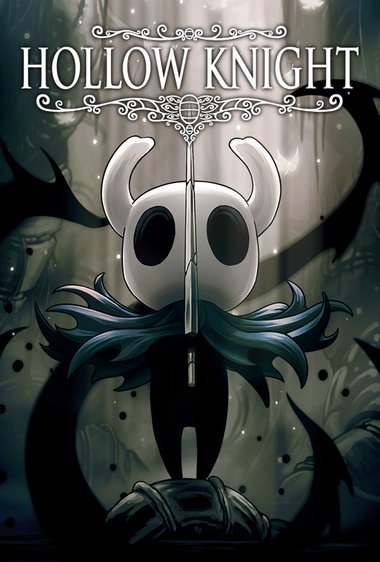
Often called a Metroid/Soulsborne hybrid, but Hollow Knight has a great deal of its own style. Excellent map design lets the player experience the transition from linear to semi-open-world on reaching the City of Tears; the abilities function as soft-locks, encouraging exploration without demanding strict linear progression. The atmosphere is remarkable: the bug kingdom of Hallownest feels simultaneously whimsical and funereal, a world whose beauty is inseparable from its decay.
The story is Hollow Knight’s only obvious weak point: in 2D, creating the vast Soulsborne sense of world and guiding the player through fragmented storytelling is hard. Given how small Team Cherry is, a game of this scale is already remarkable. At the time, it left me impatient for Silksong.

Gross profit for the year: £144. That figure arrives with the timing and weight of a punchline, but it is also the show’s argument in miniature. Farming, as Clarkson’s Farm presents it, is less a profession than a sustained act of institutional optimism, a commitment renewed each season against the accumulated evidence of weather, subsidy policy, mechanical failure, and soil. The series puts that helplessness on screen without aestheticising it. Jeremy Clarkson is an effective vehicle for this precisely because he is constitutionally unsuited to the role: the bewilderment is never performed, and his periodic fury at bureaucratic obstruction, at Natural England, at the sheer intractability of the land, reads as the authentic response of someone who has spent a career in a domain where competence and resources could solve most problems.
Kaleb Cooper is the show’s secret instrument. His expertise is so ingrained it has become atmospheric, expressed less in explanation than in the quality of his exasperation, and the comedy of the two of them, the apprentice who knows everything and the employer who knows nothing, never tips into condescension in either direction. The show becomes a compressed education in the political economy of British agriculture, in why small farms cannot survive without subsidy, in why the romantic image of the yeoman farmer bears almost no relation to the accountancy of the thing. It manages all this while remaining, in stretches, funny. The £144 gross profit demonstrates the economic reality; the television show documents it with clarity.
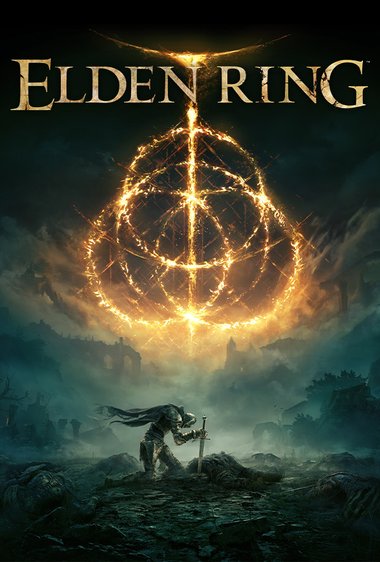
The Erdtree is visible from the first moment one steps into the Lands Between, golden and impossibly vast, and it never stops being visible. It orients everything: geography, theology, the player’s trajectory through a world whose scale produces genuine disorientation. Elden Ring is FromSoftware’s most ambitious work, and for its first forty hours, possibly their finest. Limgrave opens into Liurnia’s drowned melancholy; Liurnia gives way to the rot-poisoned nightmare of Caelid; beneath all of it, Siofra River’s starlit cavern reveals a world under the world, an entire civilisation buried like a footnote. The legacy dungeons, Stormveil, Raya Lucaria, Leyndell, operate at the density of the best levels in Dark Souls (2011) while the open world between them refuses to soften its hostility into scenery. The dead dragon Gransax draped across Leyndell’s walls, the enormous bolt lodged in the city’s foundations like a geological fact, is the single most sublime image in any game I have played: an entire civilisation built around the corpse of the thing that nearly destroyed it. Where Dark Souls gates progress behind mandatory bosses, each one a wall that the player must overcome or abandon the game entirely, Elden Ring dissolves the wall. One can leave any fight, ride Torrent across a continent, return hours later with better weapons and ten more levels, and the boss that seemed impossible becomes merely hard. The open world’s deepest formal consequence is the dissolution of mandatory suffering: the shift from endurance to curiosity, from a curated sequence of trials to a space in which the player chooses what to confront and when. And what one confronts, mostly, is architecture and absence. One reads the world the way one reads ruins, through item descriptions and the posture of the dead, across plateaus vast enough to dissolve the illusion of shared pilgrimage that Dark Souls sustained through its bonfires. The loneliness is structural. On my third playthrough, in the ashes of the Roundtable Hold, I found Hewg still sitting at his anvil, memory gone, hammering at a commission he could no longer name for a Tarnished he could no longer remember. I could not go back after that.
George R.R. Martin wrote the mythology that preceded the game: noble lineages, divine succession, a golden age sustained by the Erdtree’s grace. Miyazaki took those lineages and broke every one of them. Godrick grafts stolen limbs onto his body because he is too weak to earn the power that he inherited; Rennala cradles a rune that her husband left as a parting gift, endlessly attempting rebirth in a flooded library; Radahn, the greatest warrior among the demigods, wanders the rotting wastes of Caelid as a feral creature, still clutching his swords. The shattering was not an accident: Marika, the god who built the Golden Order, shattered the Elden Ring herself, and the Erdtree, the symbol of her order, physically bars the player’s entry in the late game, forcing one to burn it to proceed. The game’s theological argument is that every order, no matter how golden, becomes the thing that its subjects must destroy to be free. The six endings bear this out, each one a different philosophical response to a broken world: restore the Golden Order unchanged, perfect it by removing the gods’ caprice, curse every living being into equality through suffering, or, in Ranni’s Age of Stars, remove the ruling god entirely and leave the Lands Between ungoverned for the first time. The community that formed at launch to map the Marika-Radagon duality and debate Ranni’s intentions from scattered item descriptions only confirmed what the game’s structure already argues: this world is too large and too deliberately obscure for any single player to hold whole. From the Mountaintops onward, the density thins, formulaic catacombs recur, and the Elden Beast fleeing across its arena is a final boss that one outlasts rather than defeats. But the standard that the endgame fails to meet is one that the first forty hours set, and by the time one burns the Erdtree to pass through, the act feels less like a design failure than a theological one: the golden thing that oriented everything from the first moment must be destroyed, because the game said so from the start, and I simply was not ready to hear it.
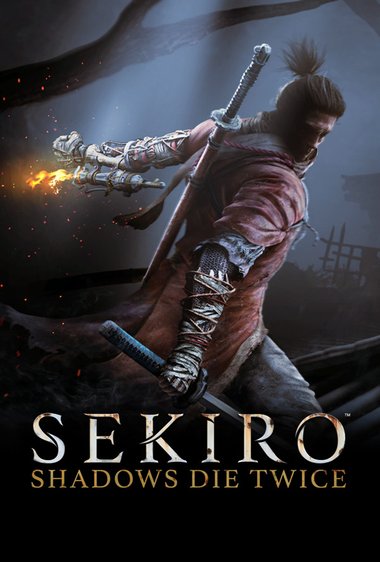
Sekiro: Shadows Die Twice strips away everything that FromSoftware had spent a decade building: no builds, no co-op, no character creation, no stamina bar, no levelling through stats. Miyazaki called it an action-adventure, not an RPG, and the constraint is the point. When the designer knows exactly what the player brings to every fight, every encounter can be tuned to a single sword, and the posture system that replaces stamina demands a rhythm that no other game in the genre has matched: deflect, attack, deflect, the meter punishing hesitation as harshly as recklessness, every boss encounter a duel rather than merely combat. Where Dark Souls rewards caution and Bloodborne rewards aggression, Sekiro rewards conversation: the sound of steel on steel is the language, and fluency is the only way through.
The fixed protagonist earns what the constraint costs. Wolf begins as a weapon, his shinobi training demanding obedience to his father above all. But Kuro, the child lord whose blood grants immortality, asks Wolf to help sever it: the Dragon’s Heritage spreads rot to the innocent, and Kuro wants it to end. The game keeps asking whether loyalty means following orders or understanding what one’s master truly needs, and every ending answers differently. In the Shura route, Wolf sides with his father, kills his physician, kills his mentor, and becomes a being consumed entirely by violence; the game ends abruptly, as if even the narrative cannot bear to watch. In the others, Wolf earns a death, or a life, or an uncertain journey. None is framed as correct. All cost something that cannot be recovered.
Genichiro atop Ashina Castle is the fight where the game declares what it expects: two phases under a lightning storm, the man who took Wolf’s arm, defeated now through the very system that his desperation could not master. By the final encounter, Genichiro is pathetic; he slits his own throat to drag Isshin back from death, and Isshin dismisses him as a pitiful grandchild before drawing his sword. Four phases follow, escalating from katana to spear to lightning, every deflection that the posture system taught compressed into a single encounter. Beating Sword Saint Isshin does not feel like winning. It feels like graduating.
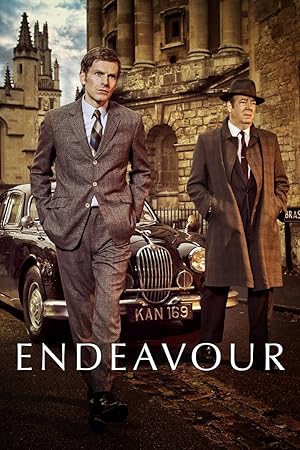
The first series is, by design, fairly conventional in its mysteries: four cases, each self-contained, structured according to the grammar of the British detective drama that Endeavour’s parent text did so much to establish. The score, still finding its footing, does not yet have the elegiac authority it will develop; the production occasionally shows the financial constraints of a series that had to prove itself after a single pilot. The important thing is that Russell Lewis has built the architecture of a career, and that one can already see, in these four episodes, most of the major relationships and moral coordinates that will carry the show through a decade. Shaun Evans avoids the obvious trap: there is no attempt to pre-empt John Thaw’s Morse, to give the audience an impression of the icon they already know. Instead there is a young man who is brilliant, solitary, and intermittently insufferable, qualities that cohere as a personality rather than a set of iconic attributes. Roger Allam’s Fred Thursday arrives almost complete, warm and gruff and principled in ways that are never sentimentalised. Oxford itself remains the show’s most reliable character: the colleges, the river, the light, a city that has apparently decided to preserve itself against every passing century. A living fossil, and the show is wise enough to know it.

Ben Whishaw is perfect casting because he makes Adam Kay credible. The veneer of sardonic indifference, the nonchalance deployed as clinical distance, sits entirely naturally on Whishaw, and for much of the series one is in danger of accepting it at face value. What Adam Kay’s own script, adapted from his memoir, achieves with real intelligence is the gradual dismantling of the reader-identification that the book’s first-person voice always risked flattering: the diary format invites complicity, but the television form allows other perspectives to accumulate around Adam’s self-portrait until the gaps become impossible to ignore.
Because Adam is not, at bottom, someone concealing a fragile heart beneath thorny wit. He is a coward who mistakes competence for character, who is overconfident precisely where confidence is most dangerous, and who lacks the capacity for self-reflection that might, in time, correct either of these things. The decision to leave the NHS for a comfortable private practice is not a breakdown or a trauma response; it is the logical expression of what he is. Whether he is a brilliant doctor is debatable and the show has the honesty to leave it so. As a human being, the evidence accumulates towards something less comfortable than the memoir’s admiring readership generally acknowledges.
Ambika Mod’s Shruti is the counterweight the show needs and uses without sentimentality: her trajectory does not exist to redeem Adam or to punish him but to insist that the system’s costs are not evenly distributed. Lucy Forbes directs with precision, holding the comedy and the institutional horror in equilibrium through episodes that lesser handling would allow to tip into either farce or melodrama. Only Ben Whishaw could make that rottenness this watchable, which is itself a kind of moral provocation the show earns.
Star Wars Jedi: Fallen Order is an obvious composite: elements from Dark Souls (2011), Sekiro (2019), Tomb Raider, and Hollow Knight (2017), each seam visible. Map design is decent but the map presentation is terrible; combat is sometimes padded through mob numbers rather than encounter design. Bugs were frequent on release, and puzzles are occasionally arbitrary.
And yet. The reason to play is not any single mechanic but the totality of the Star Wars fantasy: the hum of the lightsaber, the Force push that sends stormtroopers tumbling, the first time one deflects a blaster bolt back at a scout trooper. Respawn understood that the pleasure of being a Jedi is kinetic, and they built a movement and combat system that captures that kinetic joy with real precision. The final sequence on Nur, where the game strips away all pretence of safety and reminds one what it means to be hunted, is one of the finest Star Wars moments in any medium since the original trilogy.
Season 1 established the architecture: Martha Costello’s absolute authority at the bar, the chambers as a system of competing loyalties and suppressed appetites, the law as a profession that requires its practitioners to argue convictions they may not hold. Season 2 takes that architecture and uses it to stage something more searching: an examination of what it costs to hold to values when the institutional structures that were supposed to protect them have been quietly hollowed out. Brendan Kay’s case threads through the season with a patience that pays off fully; it stays in the mind for days because it refuses neat resolution, because moral residue is the point. A separate note is unavoidable: Shaun Evans playing Daniel is astonishing. The performance has a quality of controlled intensity that commands every scene that it occupies, and makes one regret all the screen time given to the comparatively thinly written pupils. Maxine Peake remains the series’ still point, but Evans is the surprise. The two of them together produce a heat that the show has not previously managed.
Silk Season 3 is accomplished enough that its collapse in the final two episodes registers as genuine loss rather than disappointment with a mediocre show. Peter Moffat’s background as a practising barrister gives the series a procedural texture that most British legal dramas only gesture towards: the chambers politics feel institutional rather than decorative, the conflicts of interest carry real weight, and Maxine Peake’s Martha Costello inhabits defence work as something that costs her rather than ennobles her. Seasons 1 and 2 built their authority on that groundedness, and for four of Season 3’s six episodes it holds.
Then the writing loses its nerve. Martha, gradually flattened across the season’s middle stretch, arrives at the finale as a version of herself that the earlier series would not have recognised: the defining vitality drained, the courtroom work rote, the characterisation collapsed into posture. Billy’s acquittal resolved through the revelation of his terminal illness is precisely the narrative tidying that moral complexity exists to resist. Martha’s exit, a bus passing in front of her as though obscured departure could stand in for meaningful ambiguity, closes on nothing. The case logic that these final two episodes offer would have embarrassed the seasons before them. One watches Season 3 for Peake, who delivers considerably more than the material asks, and for the six episodes that still remember what the show was for.
Maxine Peake constructs Martha Costello’s presence with what can only be called absolute authority: every hesitation, every pivot, every moment of doubt managed and metabolised within the professional carapace of a woman who has learned to trust the argument over the feeling. Peter Moffat, writing from the inside of the bar he once practised at, understands that the ethical drama of criminal advocacy is not about guilt or innocence but about what the System demands of the people who operate it, and what those demands slowly take from them. Six episodes is an unusual constraint, and here it proves a gift: the compression forces Billy, Clive, and Martha into full, indelible life within a duration that most legal dramas would spend on setup.
The single weakness is that the two pupils are given insufficient dimensionality, Martha’s pupil Nick in particular. One feels the shape of what the show might want to do with his arc without the episodes to do it in. That is a narrow complaint against a series this assured. The courtroom sequences have the texture of something observed rather than dramatised, and the scenes between Martha and Clive carry an erotic charge that the writing is smart enough never to resolve.
‘Try to make it sound like you wrote it that way on purpose.’ That line, spoken by Bill Murray’s Arthur Howitzer Jr. to one of his writers, is both editorial advice and a compressed statement of Wes Anderson’s entire method: the artefact so controlled that it no longer reads as control but as inevitability. The French Dispatch is, on its surface, a celebration of humanist magazine journalism, of the idiosyncratic mind let loose on a subject it loves. The technical and visual dimension is obvious. The emotional life underneath the symmetry is less expected.
The film’s force lies in the stories’ withholding: the painter behind glass, the journalist who keeps her professional distance even at the cost of connection, the student leader whose revolutionary moment is already receding by the time it arrives. Each figure seems to be enclosed within an invisible wall, surrounded by companions and yet alone in a way the companions cannot touch, sealed inside their own obsession. This is precisely the loneliness that Anderson’s detached, mechanical filmmaking style is equipped to capture: isolation rendered as aesthetic system, grief held at arm’s length and thereby made visible. Long-time Anderson viewers will find the film both familiar and disorienting; the disorientation comes from ‘moving’ and ‘delicate’ being exactly the right words, which they rarely are for his work. Of all his films, The French Dispatch is the most tender. One does not always notice tenderness when it is this well-armoured.
The satirical premise is sound, and when the film connects it connects with real force: Leonardo DiCaprio’s Dr. Randall Mindy, transformed from a nervous academic into a media-managed celebrity scientist, is his finest comic work, and the bureaucratic inertia of the Planetary Defence sequences has the bleak accuracy of genuine institutional satire. The problem is inconsistency of confidence. McKay seems uncertain whether he is making a film or delivering a brief, and that uncertainty produces sequences, particularly the two post-credits additions and the film’s broader treatments of political media, that abandon the tone entirely for something closer to sketch comedy. ‘Dark comedy’ names a tonal contract; one cannot honour it selectively. The satire is good when it trusts itself. Everything else is carried by DiCaprio, which is a narrow base for a film of this ambition.
To call it a medieval ‘Me Too’ film is accurate but insufficient, the label flattening what the film does with the Rashomon (1950) structure into something tidier than it deserves. Whatever the outcome, whatever the truth of the matter, everything remains about men: their reputations and their rights, their fiefs and their property. The film’s most telling formal gesture is the one it makes with chapter titles. All three chapters are titled ‘The truth according to’ their respective subjects; but in chapter three, the words ‘according to Lady Marguerite’ fade from the screen, leaving only: ‘the truth.’ The quiet certainty of that subtitle is more devastating than any argument the film could have made aloud. Matt Damon’s Carrouges is the film’s structural hinge and its most deliberately uncomfortable achievement. He pursues the duel not for Marguerite but for his own punctured honour, and the screenplay written with Nicole Holofcener never lets one forget it. The stud horse scene, so briefly placed and so precisely chosen, is the most emblematic metaphor in the entire film: Carrouges inspecting the animal’s breeding potential with the same proprietary satisfaction he brings to every claim he makes on Marguerite. Adam Driver’s Le Gris, by contrast, is the film’s most unsettling figure precisely because the film allows him charm: the second chapter presents a man who genuinely believes his own version, and the audience’s brief inclination to believe it with him is the trap. Jodie Comer carries chapter three with a stillness that accumulates unbearable weight. Her victory at the end is not a triumph; it is survival, and the film does not pretend otherwise.
The duel sequence itself is as physically and viscerally gripping as anything in Game of Thrones (2011), the mud and desperation stripping the ritual of any glamour. But the shot after it is harder to shake: a woman watching, free for now but tethered to a world that will never actually change its mind about her. Scott has made brutal, masculine spectacles for forty years. This one finally knows what it is looking at.
Artorias of the Abyss answered the base game’s second-half failures directly. Built after Dark Souls (2011) shipped, the DLC demonstrated what FromSoftware could produce with time to iterate, and its three major bosses remain the clearest evidence that the original’s late-game weaknesses were constraints, not choices. Artorias himself, a knight consumed by the very Abyss that he swore to contain, fights with the relentless aggression and delayed attack timings that set the template for every subsequent FromSoftware humanoid encounter; his broken arm, his feral leaps, his building frenzy created a vocabulary that Bloodborne (2015), Sekiro (2019), and Elden Ring (2022) would all inherit. Kalameet is the franchise’s first true dragon fight: patient, punishing, demanding the spatial awareness that the base game’s dragons never required. Manus, Father of the Abyss, is the Abyss made physical: a wall of darkness and reach whose aggression forces the player to abandon the cautious, shield-up approach that the base game rewarded. The DLC’s Oolacile, a civilisation that reached into the Abyss and was consumed by it, mirrors the player’s own journey through Lordran: curiosity met with annihilation, the reward for understanding indistinguishable from the punishment.
Dark Souls: Remastered preserves the game that built its world as a single continuous object. No loading screens, no fast travel, no map: one learns Lordran the way one learns a city, by getting lost in it. From Firelink Shrine the world spirals upward through the Undead Burg to the Parish and downward through the Depths into Blighttown; the elevator from the Parish drops the player back to Firelink, and the realisation that the world folds in on itself is the moment that its design philosophy becomes legible. Every sightline is a contract: the fortress on the cliffside can be reached; the archtrees visible from Blighttown’s depths can be descended to. The verticality is thematic: gods occupy the heights, the cursed and forgotten fester below, and the player’s path through the hierarchy is literal. Anor Londo crowns the ascent: a golden city bathed in sunlight, impossibly beautiful after the grime of Sen’s Fortress, until one discovers that the light is an illusion maintained by a hidden god and the city has been empty for an age. No other game, including its own sequels, has achieved this density of interconnected space, and the fact that no one has replicated it in the years since begins to look less like a gap in the market than a statement about what it cost to build. The storytelling matches the world: oblique, fragmentary, embedded in item descriptions and architecture rather than cutscenes. Gwyn, Lord of Sunlight, linked the First Flame and condemned the world to a cycle of sacrifice rather than let the age change. NPCs arrive at Firelink Shrine with their own arcs; Siegmeyer of Catarina loses purpose each time the player solves a puzzle for him, the kindness hastening his hollowing; Solaire of Astora seeks his own sun and finds a parasite instead. The multiplayer operates on the same principle: messages left by strangers using a curated lexicon, bloodstains replaying the final seconds of another player’s death, white phantoms drifting through one’s world as proof that someone else is here. Miyazaki modelled it on an experience of being stuck on a snowy hill and watching strangers push each other’s cars forward without ever speaking; the assistance is real, the connection transient, and the game never asks for more than that.
The difficulty is not incidental; it is the story. The Undead Curse strips memory and purpose: one goes hollow when one stops trying, and the game maps this onto the player’s own perseverance without stating the parallel. Every death is canon; every return to a bonfire is a resurrection built into the lore. The final boss is Gwyn himself, reduced to a hollow shell in an ashen arena, and the music that plays is a quiet piano rather than orchestral triumph. He can be parried: a god diminished to something that the player has already learned to handle. Rekindle the Flame or walk away: the choice is presented without commentary, and neither option resolves anything. But from the Lordvessel onward, the world that earns this ending begins to thin: Lost Izalith is Miyazaki’s self-admitted regret, the Bed of Chaos is a platforming puzzle in a game that was not built for it, and the zones between the four Lord Souls show the marks of a production that ran out of time before its ambition did. The standard that the second half fails to meet is the first half’s, and the first half of Dark Souls remains the highest sustained peak in the series. Anor Londo’s sun that was never real, the crossbreed that one cannot bring oneself to kill, Ash Lake hidden beneath the game’s ugliest zone: these images persist because the world that holds them was built as a single, continuous argument, and that argument has not been answered.

The Chernobyl (2019) of the opioid world: multiple storylines interwoven across collapsing timelines, with recovery, moments of triumph, and then disappointment, compromise, and heartbreak, the pattern repeating the way addiction itself repeats, the remission always shadowed by what is still in the bloodstream. Danny Strong’s scripts are ruthless in their structure, refusing the comfort of a clean villain. Purdue Pharma and the Sacklers are indicted, yes, but so is the FDA that approved the labelling, the doctors who signed the scripts, the entire healthcare apparatus that treated pain management as a market opportunity. Michael Stuhlbarg’s Richard Sackler is chilling because he never stops believing his own story: the drug works, the addicts are addicts by character rather than by design, and any other interpretation is a failure of will. Michael Keaton gives the best performance of his second career as Dr. Samuel Finnix, a small-town doctor who slowly realises what he has been made complicit in. The scene where he finally confronts a Purdue sales representative is not the catharsis one might expect; it is too late, too full of grief, and Keaton plays it as a man trying to find somewhere to put a remorse that has nowhere to go. Kaitlyn Dever’s Betsy Mallum carries the series’ grief, and the show earns its devastation honestly, never aestheticising the suffering or offering easy redemption.
The final episode does not let Purdue off the hook even as it dispenses something like resolution. The brand continues to be indicted in the closing minutes, and the coda strikes with the force of a public health report: OxyContin is still on sale across America. One does not know whether to grieve or simply go numb, and the series knows this, which is why it closes there, in that exact paralysis, and does not blink.
Demon’s Souls invented so much of its genre that playing it now requires constant recalibration: the stamina bar, the corpse run, committed animations, environmental storytelling through item descriptions, the entire asynchronous multiplayer vocabulary of messages, bloodstains, phantoms, summoning, and invasions. The game began as a failing project that no one expected to succeed, and the freedom of expected failure produced a proof of concept for a decade of design: the Nexus hub, the Maiden in Black, five Archstones branching into worlds with distinct identities. Tower of Latria remains the series’ unmatched atmosphere: a prison where Mind Flayers patrol corridors lit by distant singing, every floor identical enough to disorient, the claustrophobia tightening until the upper levels open into vertigo. It is survival horror inside an action RPG, and nothing that FromSoftware has built since has matched its specific dread.
But what the game pioneered and what it finished are different things. Of seventeen bosses, perhaps four demand real combat mastery: Flamelurker, False King Allant, Penetrator, and the Maneaters on their narrow bridge. The rest are gimmicks: puzzles, stealth checks, or the Storm Ruler spectacle that later games would revisit as deliberate homage instead of design principle. Healing grass means farming replaces pacing; World Tendency shifts entire zones through a system that the game never bothers to explain. Bluepoint’s remake wraps all of this in next-generation fidelity, and the result is a museum piece in the honest sense: mechanically 2009, visually 2020, the polish revealing the seams as clearly as it heightens the atmosphere. But Maiden Astraea, who took a Demon Soul from compassion and surrenders when her guardian falls, is the encounter in which the player, not the boss, is the villain: a moral question that FromSoftware would spend a decade finding different ways to re-ask. The later games would build cathedrals around ideas that Demon’s Souls sketched in pencil.
Amy on the submarine is probably in a fog from the very beginning: the depth, the recycled air, the claustrophobia compounding her pre-existing PTSD until her cognition is operating at a strange remove from events. By the final episode her thinking seems to have disordered itself, the detective’s procedural clarity buckling under the accumulated weight of the hull around her. This is a generous reading of what might simply be inconsistent writing, but the series invites it, and Suranne Jones plays Amy with exactly the right kind of dissociation: focused and fraying simultaneously.
Both the emotional and the thriller strands are handled with such care that they never jar against each other, which is rarer than it sounds in British crime drama of this kind. The pacing is smooth, the coordination between the submarine investigation and the parallel land inquiry unusually clean, and the impact holds across six episodes.
Pendleton Ward described it as ‘the ultra-violence of cartoons with conversations on compassion,’ and that is the show’s operating principle, not its contradiction. The audio is real: each episode overlays a podcast interview with a meditation teacher, a mortician, a death-row Buddhist, a dying mother, while Ward’s psychedelic animation tears the speakers apart, drowns them, feeds them to wolves, collapses their simulated universes around them. Clancy discusses kindness, forgiveness, presence, and ignores every word of it in his own life. The show never mocks this. It does not reconcile it either. Duncan Trussell called the title deliberate: ‘Gospel means good news.’ The irony and the earnestness occupy the same frame, and neither cancels the other, because the show understands that most people who talk about compassion are failing at it in real time, and that the talking still matters. The final episode uses audio recorded roughly three weeks before Trussell’s mother Deneen Fendig died of breast cancer. She is the only character in the series addressed by her real name; she greets Clancy as ‘Duncan’ on arrival. Partway through, the animation ages Clancy years within the conversation. He tucks his elderly mother into bed, where she dies. Then he becomes pregnant, gives birth to her, and they keep talking. When Clancy asks what one does about heartbreak, she answers simply: ‘You cry.’ Trussell said he did not think he would see his mother again; when he saw the finished episode, it was one of the highlights of his life. The Buddhist rebirth cycle rendered as a literal maternal exchange, a son giving birth to the woman who gave birth to him, while she tells him that love persists beyond the body: eight episodes of carnage and irony exist to earn that image, and it earns them back.
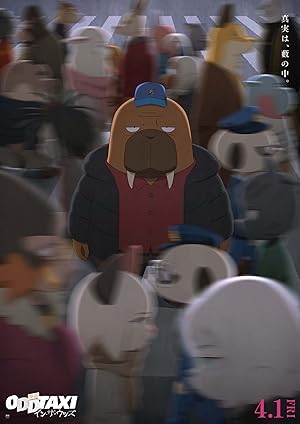
The pacing and the art style take a few episodes to settle into, and the early stretches can feel like an ensemble slice-of-life with unusually precise dialogue. Then, somewhere around episode five or six, a Paranoia Agent (2004)-style deja vu sets in: the sense that every detail has been placed, that the show’s universe is a closed system and one has been walking around inside it without noticing the walls. Right at that moment Shanji floated a hypothesis, one that later proved remarkably accurate, and carrying that hypothesis all the way to the end, one could only think: I must have been blind to not see this coming.
Kinoshita and writer Kazuya Konomoto achieve a pure form of fair-play mystery: nothing is withheld, every line pays off, every background character carries weight. The anthropomorphic aesthetic is not whimsy but method, a perceptual estrangement that lets the show’s social commentary, on loneliness, on idol culture, on the small predations of modern life, work without the weight of realism pressing down on them. Satoshi Kon’s ghost hovers over the whole enterprise, but Odd Taxi earns the comparison rather than merely invoking it. Brilliant.
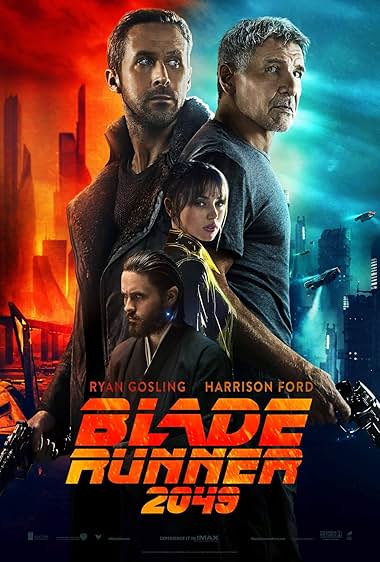
The proposition is ancient: creator and created, much like giver and receiver, seeking to erect an order of domination built on the accident of origin, an order that declares itself permanent. The ending is therefore self-evident from early in the film’s runtime; the question it is actually asking is not what will happen but whether the structure can survive contact with the feeling it generates. It cannot, and the film knows it cannot, and that foreknowledge gives every frame a quality of elegy.
Villeneuve and Roger Deakins fully realise a particular science-fictional imagination, one whose closest cinematic antecedent is Tarkovsky’s Solaris (1972): the idea that outer space, or its equivalent, is finally a mirror for interior states, and that the most advanced imaging technology is most useful when it renders smallness rather than spectacle. Ryan Gosling’s K moves through that world with the melancholy of someone discovering that even his most intimate feelings may have been manufactured, while Ana de Armas’s Joi and Harrison Ford’s Deckard give the film its two most piercing variations on love as projection and ruin. Everything that Solaris gestured towards but Soviet-era cinema could not render at full visual scale is here given that scale. Deakins’ Oscar for this film was overdue by a decade; the protein farm alone, the holographic sea, the Las Vegas ruins in their orange haze, constitute a visual argument that commercial cinema can still aspire to the sacred.
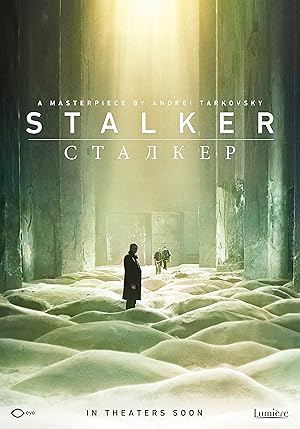
The city is sepia; the Zone is colour. The transition happens during the trolley ride, and Tarkovsky designs it so that one cannot pinpoint the exact frame where the world changes. This is the first argument the film makes: faith does not arrive as a discrete event. It saturates. The Zone itself, Tarkovsky insisted, does not symbolise anything: ‘The Zone is a zone, it’s life, and as a man makes his way across it he may break down or he may come through.’ The three men carry themselves into it more than they move towards anything inside. The Writer (Anatoly Solonitsyn) carries the exhaustion of a man who no longer believes his own talent; the Professor (Nikolai Grinko) carries a twenty-kiloton bomb; the Stalker (Alexander Kaidanovsky) carries nothing but the faith that the journey itself is sufficient. He is, as Tarkovsky said, ‘invincible because of his faith and his will to serve others,’ but the invincibility looks like weakness, like the willingness to weep in a puddle while stronger men argue above him.
The Room grants not what one wishes but what one is. Porcupine entered wishing to resurrect his brother and received wealth instead, because the Room saw his essence more clearly than he could. Then Porcupine hanged himself. This is the knowledge that paralyses all three at the threshold: the Writer refuses because he will not ‘pour the filth in my soul on to anyone’s head’; the Professor reveals his bomb but cannot detonate it; the Stalker, whose faith depends on the Room’s existence, cannot risk discovering that the Room does not work. Nobody crosses. The climax of a two-and-a-half-hour journey through alien territory is three men sitting in the rain outside a door they cannot bring themselves to open. The film does not punish them for this. It holds the shot while rain falls inside the Room and stops, while the three faces register everything the Room would have shown them if they had entered, and it asks nothing further. Then the return. Sepia again, the Stalker’s cramped apartment, his daughter Monkey reading at the table. She appears to push three glasses across the surface with her mind while Beethoven’s ‘Ode to Joy’ plays half-buried under the noise of a passing train. The glasses move after the vibration stops. In the film’s opening, a glass moved from train vibration alone; at the end, the causal order inverts. Whether this is miracle or coincidence is not the question the film is asking. The question is simpler: the Zone’s colour leaked into this final scene despite it being set in the city, the apartment filmed in the same palette as the alien territory the men could not bring themselves to enter. Faith has done something to the world around it, and the film’s last image is a child born already marked by something her father spent his life guiding others towards and could never claim for himself.
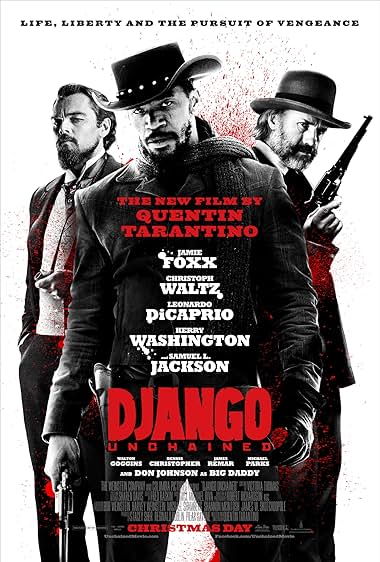
A story of the utmost simplicity, with only one dramatic reversal in the whole film, yet the screenplay and cinematography still manage to lead one by the hand. Robert Richardson’s widescreen compositions, all amber plantation interiors pressing against sunblasted exteriors, do something more than establish period: they externalise the argument that beauty and atrocity are not opposites but neighbours. Jamie Foxx’s Django moves through that beauty with a silence that the film gradually fills with purpose, and having now seen several of Tarantino’s pictures, I think I understand: his films are about the sheer visceral pleasure of watching.
The usual objection is that pleasure is the wrong response to slavery. Fair enough, and the argument has been made with real force. But Tarantino’s method is not exactly naivety, and it is not exactly exploitation either. By routing the liberation fantasy through genre, through the Spaghetti Western and blaxploitation traditions, through the Nibelung myth translated into Mississippi soil, he creates a frame inside which the audience’s enjoyment becomes the subject. The sensation of vast historical weight and suffocating helplessness pressing against each other on screen is something precious few directors can produce. That Christoph Waltz’s Dr Schultz must die precisely because his Enlightenment scruples cannot survive Candie’s world is not sentimentality. It is the film’s most honest admission: some moral positions cost everything, and the screen does not protect one from the bill.
Dostoevsky set out to write ‘a truly beautiful man’ and produced instead a figure whose beauty is indistinguishable from catastrophe. Prince Myshkin’s innocence, his social blindness, his radical empathy, are not flaws in an otherwise functional character; they are the character, and they make his destruction inevitable from the opening pages. The moment he glimpses Nastasya Filippovna’s portrait and sees Aglaya, the architecture of his breakdown is already legible. The two women function not as love interests in any conventional sense but as a wall between Myshkin and the superficiality of aristocratic life, each representing a dimension of experience his innocence cannot metabolise: Nastasya’s suffering, Aglaya’s pride, both demanding a response he is constitutionally incapable of giving. The tragedy is structural before it is emotional.
The Idiot is extraordinary, and separates itself from the more schematic explorations of goodness in literature, because Dostoevsky never states the opposition directly. The innocent versus the worldly: one expects this to be the thesis, announced and elaborated. Instead, Dostoevsky disperses it across more than a dozen characters whose individual characterisation is remarkably precise, letting the reader arrive at Myshkin’s fate only gradually, only in Part IV, through the accumulated weight of social interactions, failed interventions, and mounting dread. The yurodivyi, the holy fool of Russian Orthodox tradition, haunts the novel’s margins without ever being invoked by name. Rowan Williams reads Myshkin as an experiment in kenotic love, self-emptying love, and perhaps that is right: but what Dostoevsky shows is that self-emptying, in a world that runs on self-interest, is not sainthood but annihilation. The ‘idiot’ is just a gentle child standing on the other side of a gauze curtain. The curtain never lifts.
A masterwork of Hitchcock-style tension: every chapter makes one’s palms sweat, and the climax of the final chapter is, ironically, the least brilliant of the lot. Tarantino applies Hitchcock’s distinction between surprise and suspense with rare thoroughness. Surprise gives the audience one second of shock; suspense gives it twenty minutes of dread. The bomb under the table, as Hitchcock famously put it. In Inglourious Basterds, the audience carries the weight of dramatic irony through nearly every scene, watching conversations unfold with the knowledge that any word could detonate the situation.
The tavern sequence in Chapter Four is the purest expression of this: a room full of people who know almost everything except the one thing that would save them. Tarantino’s camera holds on a face, a hand, a glass of whisky, and the accumulated stillness becomes agonising. Christoph Waltz’s Hans Landa belongs in the company of Hitchcock’s most charming antagonists: danger located entirely in pleasantness, in the virtuoso performance of social grace. Opposite him, Brad Pitt’s Aldo Raine and Mélanie Laurent’s Shosanna give the film its two counter-forces: blunt theatrical vengeance on one side, patient and self-consuming vengeance on the other. The film is also, at another level, a meditation on cinema itself as a weapon, a fantasy of history rewritten through the sheer force of the image. It makes one newly aware of breathing.
McConaughey and Harrelson’s characters need no advertisement; everyone already knows how good they are. What the reviews tend to underemphasise is how precisely the dual-narrator structure earns those performances. The show operates on three temporal layers simultaneously, and the gap between what Rust Cohle and Marty Hart remember, what they choose to reveal, and what the camera contradicts produces a specific epistemological vertigo: ego and shame distort each man’s retrospective account in ways that he cannot see. Fukunaga’s visual grammar makes this legible without underlining it: Hart in medium shot, ordinary and exposed; Cohle in low angles that suggest both grandeur and vulnerability; the Louisiana landscape dwarfing both of them equally.
The mystery elements are not especially dense, and the resolution has divided critics for this reason. But the character development is extraordinarily rich, and the perspective structure of the opening six episodes sustains repeated viewing. Rust Cohle’s nihilism is not the show’s philosophy; it is the show’s symptom. One watches him articulate an airtight cosmology that happens to leave no room for the life he actually wants, and the tragedy is not the serial killer but the man who needed the killer to have a reason to feel anything. A series one could use as a psychology lecture slide deck.
I came here via Žižek, which is probably both the most honest and the most damning thing one can say about a film. The sunglasses are a near-perfect materialisation of what Žižek calls ‘going through the fantasy’: the ideological curtain not hidden behind reality but constituting it, readable only once one learns to look. OBEY. CONSUME. MARRY AND REPRODUCE. The subliminal grammar of late capitalism rendered in neon, legible at last. Carpenter made the film as a direct assault on Reaganite consumerism, and that directness is both its strength and its limitation. Roddy Piper’s Nada and Keith David’s Frank are less characters than social positions forced into collision, which is exactly why the film can afford its bluntness.
The discomfort is not with the politics but with the method. Old cinema’s reflex is to externalise everything: inner resistance becomes a six-minute alley brawl, ideology becomes a physical pair of glasses one can put on and take off. The metaphor does not breathe; it overflows the frame. Žižek reaches for this film precisely because the interpretation almost writes itself, which is to say the film does the critic’s work for him. There is something faintly disappointing in that. Carpenter’s rage is genuine, the allegory is effective, and yet one leaves feeling the film has been more useful to theory than to cinema.
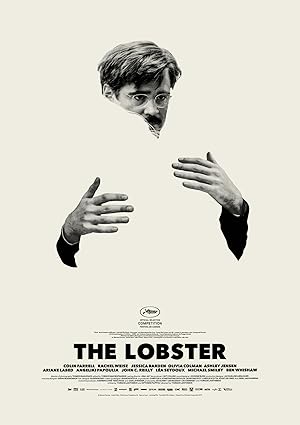
The metaphor is obvious; so obvious the film sometimes feels like a pile of stacked metaphors, each one labelled. Two totalitarian regimes, the Hotel’s enforced coupling and the Loners’ enforced solitude, frame the space between them as the only territory where something like authentic desire might exist, except of course that territory is also a trap. Lanthimos works in the tradition of alienation effects, flat delivery and ritualistic movement and classical music laid over mundane violence, and when the method is working it produces the cold clarity of thought made flesh.
Certain passages feel closer to cinematic poetry, to the pure image and sensation one finds in The Colour of Pomegranates (1969). But the plot keeps pulling one out of the imagery and the metaphorical mode, back into the mechanics of allegory, and here the allegory strains against the particularity it needs, the mechanics of the metaphor crowding out the texture of actual life. The score’s use of the tritone is equally heavy-handed: the cello staccato motif is striking and apt at first, the diabolus in musica as social prescription, but deploying the same motif unchanged in the second half starts to feel like laziness rather than rigour. All that said, on balance the virtues outweigh the flaws. The film earns its Cannes Jury Prize. It earns it, and it knows it, and that smugness is its most human quality.

Jean-Marc Vallée’s film does something event-based drama rarely manages: it moves one not through accumulated sentiment but through a specific, located image. McConaughey surrounded by monarchs, the butterflies indifferent to his dying body, and the waterworks simply would not stop from that moment on. The scene earns its beauty because nothing before it has been beautiful in that way; the film’s visual grammar is otherwise raw, handheld, documentary-adjacent, and the sudden stillness strikes like a blow. McConaughey lost nearly fifty pounds for this role and the performance goes far beyond the physicality: Ron Woodroof begins as a homophobic rodeo cowboy and ends as an unlikely advocate, and the transformation never once feels schematic.
The film has since accumulated a retrospective criticism worth absorbing: Rayon is a composite fictional character, and casting Jared Leto, however fully committed, in a transgender role raises questions the film itself cannot answer. The libertarian framing of the FDA as villain has been read as politically convenient, sidelining the collective activism of ACT UP in favour of a lone-wolf narrative. These tensions sit inside the film whether one wants them to or not. And yet Leto’s performance remains, whatever one thinks of the casting: there is a scene where Rayon, dying, visits her estranged father in a suit, and the controlled devastation Leto brings to it belongs to a different, better film straining to get out. Jared Leto was, for a period, made for roles that demand this kind of dissolution.
Vallée holds the whole thing together through restraint: the camera never editorialises, the score never tells one what to feel, and the film’s political anger stays in the body rather than the dialogue. It is not a perfect film. It is a powerful one, and the butterflies refuse to leave.
Like more than half of Allen’s films it centres on a couple in marital crisis, but here the arrival of a child is itself half the source of conflict: adoption as the event that crystallises, rather than resolves, every unspoken tension between Lenny and Amanda. The domestic comedy is familiar Allen territory; what is not familiar is the frame. The Greek chorus, shot at the ancient theatre of Taormina in Sicily and led by F. Murray Abraham with the weary authority of a man who has seen this particular tragedy too many times, is parody and genuine moral commentary at once. Cassandra prophesies and is ignored; Tiresias holds court; the chorus expresses exasperation in chorus, the classical machinery of fate grinding against the banality of Manhattan (1979) real estate and neurotic self-deception. The anachronism is the joke, but the joke earns its keep. Mira Sorvino’s Linda Ash, the biological mother Lenny unearths, is the film’s quiet gravitational point, and the Academy Award was not wrong. She is written as lowbrow, naive, cheerfully indestructible, and Sorvino plays her without condescension, making Linda the only character in the film who seems entirely at peace with who she is. The comedy of Lenny’s Aristophanic hubris, his need to locate and improve the source of his son’s genetic inheritance, rebounds off her imperviousness to improvement. Allen choreographs the collision between the elevated classical frame and Linda’s cheerfully unreconstructed existence with the timing of someone who has spent fifty years listening to jazz: each cut lands where the beat falls. Impulse drives everyone in this film slightly mad, and it is all the more pleasurable for that.
Antonius Block (Max von Sydow, twenty-seven and already carrying the weight of a man who has been alive too long) plays chess with Death because the game is all he has: a delay of the inevitable while he searches for something worth the delay. He confesses his strategy to a hooded figure he takes for a priest. The figure is Death, who replies: ‘I’ll remember that.’ Block says he wants to perform ‘one meaningful deed.’ At the witch-burning, he begs the condemned girl to show him the Devil, because the Devil must know God. She tells him to look into her eyes. He looks and sees only terror. Jöns (Gunnar Björnstrand) delivers what I think is the film’s most devastating speech: ‘Her poor brain has just made a discovery. Emptiness under the moon… We stand powerless, our arms hanging at our sides, because we see what she sees, and our terror and hers are the same.’ Block insists: ‘It can’t be so!’ But her hands have been broken by the villagers, and God says nothing. Gunnar Fischer’s hard sidelighting and German Expressionist chiaroscuro give the sky a luminosity that belongs to another physics entirely, and the faces it illuminates are the faces of people who have asked the question and received nothing back.
What Block finds instead of God is a bowl of wild strawberries and a cup of milk shared with Jof (Nils Poppe) and Mia (Bibi Andersson), a juggler and his wife with their infant son Mikael. Their names suggest Joseph and Mary. The strawberries and milk are a secular Eucharist: natural elements requiring no human process, offered without ceremony, received without irony. Block promises to remember this hour of peace for the rest of his life, and the promise is sincere because the rest of his life is short. His ‘one meaningful deed’ arrives not as theology but as strategy: he knocks over the chess pieces to distract Death while the holy family escapes. Total self-sacrifice as a diversion, a move Death cannot comprehend because it serves no one’s interest, least of all the man who makes it. The Dance of Death on the hilltop at dawn, that famous silhouette that Bergman improvised with remaining crew and bewildered tourists when he saw the sky, is the image the film was always moving towards: Block’s search for God answered by an accident of light, the figures silhouetted against a dramatic cloud that had nothing to do with the script. Jof sees the vision and describes it from a safe distance, his family beside him, the rain washing the tears from the dancers’ faces, and it is precisely because he never sought God that he is the only one left to watch.
Allen has always been a filmmaker of voices, but Radio Days is the film where the voice is the subject. The unnamed narrator, Allen himself, circles through a mosaic of 1940s Queens and Manhattan memories without ever quite landing in one: a story begins, glows briefly, and gives way to another, the whole structure mimicking the experience of tuning a dial through stations late at night. The comparison to Fellini’s Amarcord (1973) is inevitable and not wrong, but where Fellini’s nostalgia has a peasant’s earthiness, Allen’s is urban, bookish, shot through with the particular frequency of radio: a medium that required the listener to build the world from sound alone, the way memory builds it from what survives. The radio binds the film’s scattered episodes together the way a melody binds variations: Rockaway and Manhattan, working-class family and glamorous studio, all tuned to the same signal. The film accumulates grief rather than mere warmth because radio voices are the voices of people one never sees, and memory works the same way. Allen’s narrator confesses uncertainty, skips over gaps, romanticises without apology, because the point is not reconstruction but feeling: the feeling of a world that existed in full and is now accessible only as signal, and a weakening one at that. From one story to the next, from domestic comedy to radio studio to Rockaway beach, everything circles around voices that belong only to the past. These voices only get dimmer and dimmer.
Allen made Husbands and Wives (1992) in 1992 with a handheld camera and the energy of a controlled demolition, every marriage in it cracking along pre-existing fault lines. Manhattan Murder Mystery, made the following year with Marshall Brickman, his old Annie Hall (1977) collaborator, is the tonal antidote: lighter, swifter, warmer, and just as structurally precise. The mystery plot becomes couples therapy by other means, Carol’s obsessive pursuit of the possible murder next door dragging Larry out of comfortable inertia, their shared project of amateur detection doing what decades of marriage had not quite managed to do, making them interesting to each other again. At one hundred tight minutes, every scene does double work: advancing the mystery while documenting the marriage.
The casting of Diane Keaton and Alan Alda is part of the argument the film is making. Keaton brings the chemistry she and Allen built across Annie Hall (1977) and everything since, the bickering shorthand of two people who share a private language built from years of irony and proximity. Alda as Ted is the live threat to Larry’s complacency, charming and attentive and just attentive enough to Carol to keep Larry honest. Anjelica Huston’s Marcia, glamorous and theatrical, completes the quadrangle, a foil for everything Carol has sublimated into suburban routine. The screenplay is packed with reversals, each one landing with the click of a well-made mechanism. It is about murder, yes, and also about the clash of passion and interest between partners, about marital crisis, about real love: all of it compressed into a thriller that never forgets it is a comedy. One of Allen’s finest, and one that has never quite received its due.
The Volume deserves its own notice as a technological object: ILM’s cathedral of LED screens assembling photorealistic environments around a standing cast is more interesting than most of what those environments contain. The Mandalorian Season 1 is a borrowed game loop in live action, one mission per planet, one planet per week, each instalment completing itself and depositing the viewer back at the same narrative coordinate. The interactivity that makes this structure tolerable in games is absent; what remains is the side-quest feeling without the agency. Din Djarin moves through the galaxy in a helmet Pedro Pascal barely removes; the characterisation is deliberately thin by design. The design is the show.
In a galaxy where Yoda fought in the Clone Wars, trained generations of Jedi, and left a mark on galactic history, several battle-hardened mercenaries and bounty hunters have apparently never heard of him. The wonder they perform at Grogu’s appearance is played entirely straight. That is, one supposes, quite authentic.

The opening stays with Hiroko, and for a while the film’s melancholy is precise: grief metabolised as correspondence, memory reconstructed through the uncanny mirror of a stranger who shares a dead man’s name. Iwai turns Otaru’s winter whites into an emotional language, and Miho Nakayama’s dual performance earns its reputation. The doppelgänger conceit, which draws inevitable comparisons to Kieślowski’s The Double Life of Véronique (1991), is rigorous about its own meaning: the coincidence of names and faces doesn’t resolve grief, it refracts it. The second half is where my patience gets tested. What had been restrained tips into melodrama for its own sake, the film visibly straining to achieve the cathartic release it has been deferring, leaving sentiment without the structural justification for it. Etsushi Toyokawa’s Akiba Shigeru does not help: every scene in which he speaks actively undermines whatever emotional logic the film had been assembling. It is a performance that makes one aware of the effort in real time, which is precisely what a performance like this cannot afford.
The honest accounting goes something like this: taken as an anthology, only four or five episodes in Volume 2 have real depth of idea, and two or three are dead on arrival, ‘Automated Customer Service’ among them, a sketch that mistakes escalation for wit. By any honest measure the season does not hold together as a whole. But the subjective experience is a different matter entirely; criticism that insists on objectivity as a virtue tends to lose the thread there.
What Volume 2 has over its predecessor is a tonal coherence that the first season, for all its exuberance, lacked. The range is narrower and the selection is fiercer, and when the episodes work, they work with a compression that recalls the best short fiction rather than the prestige television from which anthology formats usually take their cues. ‘Pop Squad’, ‘Snow in the Desert’, ‘The Tall Grass’: each is a complete argument, a world assembled and dismantled in under fifteen minutes.
Then there is ‘The Drowned Giant’, which closes the season and which I prefer even to Zima Blue. Ballard’s source story is already a meditation on impermanence and human indifference to the extraordinary, but director Tim Miller finds images for it that the prose cannot: the giant’s body slowly scavenged, dismembered, dispersed into the ordinary world, remembered only by the scientist who bears witness and whose narration carries the full weight of elegiac grief. It climbs higher than Zima Blue precisely because it asks something harder of the viewer: not wonder at the sublimity of transcendence, but the more unglamorous work of bearing witness to entropy. One finished the episode unable to quite return to the world.
The standard history of vaccine development is told from the institutional centre outward: Wistar, NIH, Merck, the scientists who filed the patents. The Vaccine Race moves in the other direction. Wadman’s account of WI-38, the cell line derived from a fetus aborted in Sweden in 1962, which became the substrate for rubella, rabies, polio, and hepatitis A vaccines, never lets the anonymous Swedish woman from whom the tissue came drift entirely out of view. She had not been asked for consent; she had not heard her name connected to the science; she found out only when Wadman contacted her, fifty years later. This is science history framed as labour history: it accounts for who paid the costs as well as who accumulated the credit.
The Hayflick dispute gives the book its dramatic spine. Hayflick removed his WI-38 cultures from Wistar to Stanford; the NIH confiscated them; a lawsuit settled ambiguously, clarifying nothing about who owns human biological material, while Merck generated billions annually from the rubella vaccine programme without compensating him. Wadman is sympathetic but not credulous: Hayflick was right about the science, difficult as a person, and operating inside a legal framework that had not yet caught up with what his work made possible. The case belongs in direct genealogy with Henrietta Lacks, and Wadman knows it.
The book holds the institutional and the intimate in the same frame: Stanley Plotkin’s patient decades of rubella vaccine development, and the twenty thousand children born with congenital rubella syndrome during the 1964-65 epidemic, the constituency whose suffering motivated the entire project, are given equal moral weight with the men who ran the trials and filed the patents. The institutionalised children, prisoners, and orphans enrolled in trials they could not refuse are here, receiving the same archival attention as the scientists. Read in the shadow of the mRNA approvals of 2020-21, the questions that Wadman raises about consent, ownership, and whose bodies underwrite scientific progress feel considerably more live than historical.

Bottle of Lies is excellently reported. Eban spent a decade on the investigation, and the specific picture that she constructs, data falsification, contaminated products, FDA inspection protocols that gave plants months of advance warning to fabricate compliance, is thorough and credible. The whistleblower Dinesh Thakur’s case against Ranbaxy, which eventually yielded a $500 million settlement, is built with care.
The frame is the problem. The most damning finding in the book is structural fraud: Eban documents a two-tiered global supply chain in which higher-quality drugs are routed to Western markets while substandard versions reach HIV patients in Africa and Asia. This is a story about a pharmaceutical system that extracts cost from the poorest end of its supply chain, and the book declines to treat it as such. The FDA emerges as under-resourced rather than under-incentivised. The $500 million settlement becomes the resolution. Thakur becomes the hero. The structure stays standing.
I first came to The Remains of the Day in Chinese, years before Ishiguro’s English prose became part of my reading life, and even through that mediation the restraint was already audible: Stevens’s voice has the quality of a piece of music played almost too softly, the structure intact because the silence around it does so much of the work. Stevens is one of literature’s great unreliable narrators because he has perfected a form of self-deception so total that truth and falsehood have become irrelevant categories. He does not suppress his feelings for Miss Kenton; he has constructed an entire philosophy of professional ‘dignity’ that makes such feelings structurally invisible.
Ishiguro lets one see everything Stevens cannot, without once breaking the first-person frame. The dramatic irony is sustained across the entire novel, and it is devastating precisely because it is so quiet. Stevens recounts his life at Darlington Hall with the care of a man polishing silver, and one watches the years drain away, the political complicity deepen, the one person who might have saved him walk out of the door.
Lord Darlington’s Nazi sympathies are handled with the same reticence Stevens applies to everything: acknowledged, explained away, folded back into the larger narrative of service and duty. The novel’s argument is that institutional loyalty, carried far enough, becomes a form of moral abdication, and Stevens is both its illustration and its victim. The bus-stop scene near the end, where Stevens and Miss Kenton acknowledge what might have been and recognise it is irretrievably gone, is among the most heartbreaking passages in postwar fiction. Ishiguro does not raise his voice. He does not need to.
The Genius of Birds dismantles the architecture of a prejudice. ‘Bird brain’ encodes a specific neuroscientific assumption: intelligence requires a neocortex, mammals hold a monopoly on complex cognition, and the avian brain, lacking cortical lamination, must be operating at a lower level. Ackerman demolishes this assumption with the patience of someone who knows the evidence is on her side. New Caledonian crows craft multi-step tools; Clark’s nutcrackers cache tens of thousands of seeds and retrieve them months later; songbirds acquire dialects through a developmental process that parallels human language acquisition with uncanny precision.
The deepest argument is about convergent evolution: intelligence is not a single architectural achievement but a problem that evolution has solved more than once, through different neural substrates. Some bird brains pack neurons at densities that can exceed primate cortex, achieving comparable cognitive feats through circuits that look nothing like ours. This should unsettle anyone who thinks of the mammalian brain as the pinnacle of cognitive design.
The book is organised by cognitive domain, tool use, spatial memory, social intelligence, song, and each chapter builds from field observations to laboratory findings to theoretical implications. Ackerman writes with real enthusiasm and without condescension, though the treatment leans towards celebration rather than critical assessment of where the field’s claims outrun its evidence. That is a minor fault. The book makes one see birds differently, and once the seeing changes, it does not change back.
Watching this, one involuntarily draws the comparison with Amour (2012): both films orbit the dissolution of an elderly person’s grip on the world, both refuse the sentimental consolation that most films about ageing reach for, and both are, in their very different ways, formally uncompromising. The comparison is worth making only to note where Zeller departs from Haneke’s rigorous external gaze. Amour (2012) watches from outside. The Father goes inside and stays there.
The technique Zeller uses, adapted from his own stage play, is to install the audience within Anthony’s deteriorating subjectivity without announcing it. The apartment reconfigures. Actors shift between scenes without explanation. Time folds back on itself. These are not surrealist devices, not Kaufman-style experiments in ontological instability for their own sake: they are clinical descriptions of what Alzheimer’s feels like from within, and that accuracy makes the film’s third act so distressing. Anthony Hopkins does not perform confusion; he inhabits a state in which confusion is indistinguishable from reality, which is a different thing entirely. Olivia Colman’s Anne gives that subjectivity its necessary counterweight, the exhausted tenderness of someone forced to keep translating a world that no longer stays put.
Zeller adds to the discourse around dementia on screen by refusing to separate technical accomplishment from moral seriousness. The formal choice to follow the patient’s perspective is not a stylistic flourish; it is an ethical position. One emerges not having watched a man lose his mind but having, briefly and at a remove, lost one’s own.

The first half plays like conventional stand-up, and plays well: Gadsby is warm, self-deprecating, funny about growing up gay in Tasmania, funny about the pride parade, funny about coming out. The audience settles into the rhythm. Then Gadsby announces that she is quitting comedy, and proceeds to explain why by deconstructing the mechanism she has just been using on them. A joke requires two components: tension (the setup) and release (the punchline). For a performer who has survived violence, who has spent years making herself the butt of her own story, the tension is the trauma she survived, and the punchline is the moment she agrees to trivialise it. ‘Self-deprecation from someone who already exists in the margins is not humility,’ she says. ‘It is humiliation. I put myself down in order to speak, in order to seek permission to speak. And I simply will not do that anymore.’ The bus stop story is the structural proof. First telling: a man mistakes Gadsby for a man hitting on his girlfriend, realises Gadsby is a woman, backs off. ‘I don’t hit women.’ Punchline arrives; the audience laughs. Second telling, forty minutes later, without the punchline: the man came back and beat her. Bystanders did nothing. The audience waits for the release that comedy has trained them to expect. It does not come. ‘This tension is yours.’ One critic described sitting in ‘a kind of heartbroken trance.’ Gadsby builds from this towards Picasso: his affair with seventeen-year-old Marie-Thérèse Walter when he was forty-two, married, at the height of his reputation. ‘A seventeen-year-old girl is just never ever in her prime. Ever. I am in my prime. Would you test your strength out on me?’ The threat is real. The comedy has been disassembled and something else is standing in its place.
The resolution comes through Van Gogh. ‘We have the sunflowers not because Vincent van Gogh suffered. It’s because Vincent van Gogh had a brother who loved him. Through all the pain, he had a tether, a connection to the world.’ This is not a pivot back to warmth; it is an argument about what art actually requires. Genius does not need suffering. It needs a witness. Nanette was filmed at the Sydney Opera House Concert Hall after the smaller venue sold out, and the scale of the space matters: the same-sex marriage debate was live in Australia, and Gadsby was dismantling the comedy form inside the country’s most iconic cultural institution. The argument is clear enough; what stays is the experience of watching an audience trained to laugh sitting in silence because the performer has refused them the mechanism that would let them off the hook.
Cuarón called it ‘the anti-Blade Runner’: for every concept, the art department had to produce a real-world example. The fertility premise is the only speculative element in the film. Everything else, the refugee cages, the government-issued Quietus suicide kits, the detention centres that look like Abu Ghraib, is 2006 with the institutional fabric beginning to fail. Jim Clay’s production design was shot in East London and dressed to look worse; Emmanuel Lubezki used an 18mm lens with almost no close-ups, no conventional coverage, because, as he put it, ‘conventional coverage is what makes most movies feel the same.’ The car ambush that appears to be a single four-minute shot is actually six sections filmed at four locations over a week with five seamless digital transitions, and the remarkable thing about the technique is how completely invisible it makes itself. The blood that splatters the lens during the Bexhill battle was accidental, the result of a camera operator who had fallen that morning leaving only one afternoon take; Cuarón yelled ‘cut’ and was drowned out by an explosion; Lubezki called it a miracle and kept it, because the blood does what no directorial choice could have achieved deliberately: it places the audience physically inside the violence rather than behind a screen watching it. The ceasefire is the scene the film exists to reach. Kee’s (Clare-Hope Ashitey) baby cries inside a bombed-out apartment building during the Bexhill battle. A soldier screams ‘Ceasefire!’ The shooting stops. Total silence. Soldiers who have not seen a human child in nearly twenty years drop to their knees, make the sign of the cross. They part to let Theo (Clive Owen) and Kee through. Some pray; some crane forward to look. Then an RPG hits the government line and fighting resumes immediately, because one baby’s cry cannot reverse two decades of institutional collapse. Theo has been shot. He teaches Kee to burp the child. She names her Dylan, after Theo and Julian’s lost son. He loses consciousness as the ship Tomorrow emerges from the fog. Children’s laughter is heard over black. The hope the film extends is exactly as fragile as that image: a small boat in grey water, a name that insists on futurity, and the Human Project remaining invisible, unconfirmed, possibly a myth, because Cuarón knows that showing the cure would betray the film’s insistence that 2027 is not prophecy but diagnosis.

The first objection one hears is that the film withholds Woody Allen’s perspective. It does not: Dick and Ziering note from the outset that Allen declined all interview requests, include his recent audio recordings and public statements, and construct the documentary so that his evasions, his destruction of evidence, his decades of reputation management through legal and financial pressure, are all visible in their own words and on their own timeline. To say the film is one-sided is to say that a prosecution brief is one-sided. The question is whether the evidence holds. It holds. Setting aside the Yale-New Haven clinic, whose methodology and conditions the documentary examines with appropriate scepticism, the record is not the clean exoneration Allen’s defenders usually imply. The custody court found his behaviour towards Dylan grossly inappropriate, and Frank Maco, the Litchfield County state’s attorney, said there was probable cause while declining to prosecute in order to spare Dylan Farrow the ordeal of a trial, a fact the film makes clear and which Allen’s supporters have consistently inverted into exculpation. The timeline is not disputed. The pattern of behaviour is not disputed.
The second objection is bias. Yes: documentary filmmaking is not neutral, and advocacy documentaries are a genre with its own conventions and pressures. But the bias charge, when applied to this film, becomes a deflection: it asks one to weigh the affective investment of Dylan Farrow’s testimony against the structural investment Woody Allen has spent thirty years making in his own innocence, and to find them equivalent. They are not equivalent. To look at all of it and see nothing is not scepticism; it is a choice.
I came to Life Ascending having already been converted by Lane’s The Vital Question, and the disappointment was proportional to the expectation. The structure, ten chapters for ten ‘great inventions’ of evolution, imposes a listicle format on material that resists it. The origin-of-life and complex-cell chapters are strong because they draw on Lane’s own bioenergetic research, but the later chapters on consciousness and death read as though Lane felt obligated to fill a quota and reached for topics outside his expertise.
The writing is competent throughout but lacks the sustained argumentative drive that makes The Vital Question thrilling. Lane is at his best when tracing proton gradients across membranes; he is less convincing when speculating about the evolutionary origins of subjective experience. A book that had been five chapters rather than ten, concentrating on what Lane actually knows, would have been twice as good.
Though structurally similar to some classic text games, the continuous narrative gives Papers, Please real room to breathe. Lucas Pope understood bureaucracy as setting and mechanic at once: checking documents, comparing faces, cross-referencing dates produces a rhythm that is simultaneously tedious and absorbing, and the tension between those two states is the game’s entire emotional architecture.
After discovering nearly every mechanic around day 30, playability drops sharply, and long stretches without new story content are not unusual. But the premise remains sharp: a game that makes one feel complicit in systems one did not design.
The equations of classical mechanics work identically forwards and backwards in time; the second law of thermodynamics does not. Order out of Chaos opens with this contradiction, not as a curiosity to be filed away but as the fundamental unresolved fracture in physics, the place where the Newtonian synthesis quietly fails. Prigogine and Stengers read this fracture as an opportunity: if irreversibility is genuinely universal in nature, then the emergence of order from non-equilibrium conditions is not an anomaly to be explained away but the basic mode through which nature produces complexity.
The book then oversells itself. Prigogine and Stengers have a habit of gesturing towards consequences the thermodynamic argument cannot reach: biology, consciousness, social complexity are all invoked, but the leap from dissipative structures in Bénard convection cells to ‘a new dialogue with nature’ is rhetorically exciting and scientifically underspecified. The popular-science tone smooths over the places where the argument is still contested or incomplete, and one comes away with a more triumphalist picture than the science warrants. The book was hugely influential in the 1980s precisely because it arrived when people were hungry for a scientific framework that could accommodate complexity, emergence, and irreversibility, things that felt philosophically urgent but were marginalised in the physics mainstream. Reading it now, though, a lot of it has the flavour of promissory notes that did not fully cash out.
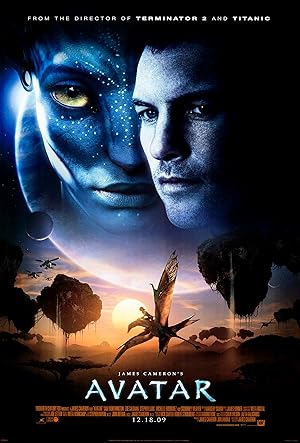
The one arresting thing is the motion capture, already mature enough in 2009 to carry an entire world into being: a technical achievement that deserved a better vehicle. Everything else is the furniture of a male-power fantasy from a decade that produced many. The first half establishes a functional enough main storyline between Jake and Neytiri, but the second half dismantles whatever credit the film had accumulated. Female characters become appendages to male agency; Grace Augustine exists to die and propel Jake’s arc; Neytiri, for all her initial ferocity, ends the film needing rescue. The Na’vi, assembled from composite colonial fantasies of noble savagery, are there to be saved by a man who absorbs their culture precisely as well as a coloniser imagines he could. Cameron believes his own pro-indigenous framing. That gap between intent and execution is not interesting; it is merely depressing.
The Self Illusion makes a case familiar from Buddhist philosophy but argued through cognitive neuroscience: the self is not a thing but a process, not a unified agent directing experience but a narrative assembled after the fact from multiple independent neural systems. Hood draws on classic experiments, the split-brain studies of Gazzaniga, the confabulation work of Ramachandran, priming effects that implicate unconscious processes in what subjects retrospectively report as deliberate choices, to argue that the coherent “I” who seems to be the author of one’s life is a useful fiction rather than a fact.
The argument is sound as far as it goes, and the survey of supporting evidence is clear and well-organised. Where the book is less satisfying is in working out what follows. If the self is an illusion, what does that mean for responsibility, autonomy, and intention? Hood gestures at these implications without fully developing them, and the final chapters slide into a mild optimism, the self is an illusion, but our social identities remain something we can hold on to, even if our inner selves cannot, that avoids the conclusion it appears to be approaching.
The best chapters are the neurological case studies, where the evidence for self-construction is most concrete: patients who confabulate motives, patients who cannot update their self-model after injury, the split-brain patient whose left hemisphere invents explanations for what the right hemisphere has just done. The theoretical ambition slightly exceeds the grip.
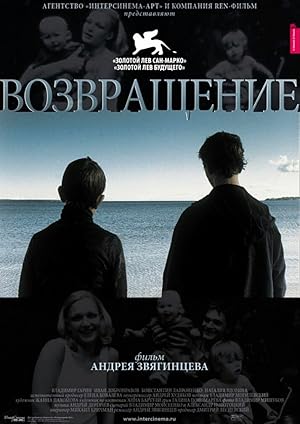
Before reading any analysis, one could only vaguely sense that this was something more than a father-son film. Zvyagintsev opens with the father posed in sleep exactly as Mantegna posed the dead Christ: simultaneously present and already absent, divine and mortal, a body that carries its own allegorical freight before it speaks a single word. From there, the film systematically withholds: twelve years of absence unexplained, a destination on the island unnamed, an object in the buried box never revealed. The questions pile up and are never answered, because answering them would collapse the film’s actual subject back into mere plot.
Stripped of backstory, the film becomes the bare structure of a test. The two brothers, Andrei who reaches towards the father’s authority and Ivan whose resistance is the only honest response to a presence that demands submission without explanation, enact something that feels mythological in the oldest sense: not metaphor but archetype, a story about what it means to be subjected to a power that makes no account of itself. Whether the father is God, the Soviet state’s ghost returning under Putin, or simply the crushing logic of patriarchy given flesh, the film refuses to choose, and that refusal is the source of everything. Ivan’s final scream at the drowned body echoes the cry of dereliction: not prayer but accusation, addressed to a god who came and went and explained nothing. One cannot watch it without reaching for the allegory, and one reaches for it because the film has made that reaching feel necessary.
Overcomplicated is a solid introduction to complexity as a property of modern technological systems, though not the book for anyone wanting a formal entry into complexity science. Arbesman identifies four factors that generate what he calls ‘overcomplicated’ systems: accretion, interaction, edge cases, and the sheer passage of time, and argues that we need to abandon the engineering instinct towards abstraction and adopt instead a biological mode of thinking, one attuned to feedback, cascading failures, and emergent behaviour.
The argument is clear and the examples are well chosen, even if the prose occasionally circles a point longer than necessary. Overcomplicated is useful for what it is: a readable primer that frames the right questions without claiming to answer them. It does not try to be more, and that restraint is a virtue.
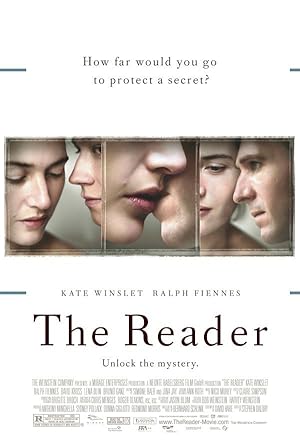
Schlink’s novel sustains a cold, unsentimental first-person voice that holds the moral ambiguity in tension without resolving it; Daldry’s adaptation warms everything up until the ethical questions float on the surface like decorative scum. The suicide scene is extended to an unbearable degree, the camera lingering as though emotional length were the same as emotional depth. What was a rigorous, uncomfortable literary exercise in complicity becomes softcore erotica with Holocaust framing, the body prioritised over the moral problem the body is supposed to embody. Every legal question raised in the courtroom sequences evaporates before it can become uncomfortable. The score dominates scenes where silence was the only honest choice. Better to read the book; failing that, better almost anything else.
Irrational Man traces existentialism from Kierkegaard through Nietzsche, Heidegger, and Sartre, and the opening section on the cultural and philosophical context is the most useful part. The four portraits that follow are less reliable: Barrett is more interested in elaborating his own reading than in presenting each thinker on their own terms, and the argument has a self-circling quality, fragments assembled around a thesis that never fully coheres. As an introduction to existentialism it is serviceable; as a path into the thinkers themselves, a roundabout one.
‘Green is not a creative colour.’ That line, delivered by a singing Notepad to a puppet who has just painted a clown, is the thesis of the entire series compressed into seven words. Yellow Guy’s clown is original, which is precisely why the Notepad pours black ink over it. Creativity is encouraged within pre-approved boundaries; deviation is punished. Becky Sloan and Joseph Pelling understood that the children’s television format is not incidental to this argument but is the argument itself: each episode opens with a cheerful Sesame Street-style musical number whose message reveals itself, by the episode’s end, as nonsensical, self-contradicting, and violent. Tony the Talking Clock teaches time and then rapidly ages the puppets until their ears bleed. A butterfly named Shrignold teaches love and devolves into cult-like worship of someone named Malcolm. A computer hijacks a geography lesson and traps the puppets in a digital world that glitches into body horror. The satire is not that bad ideas have been inserted into the educational format; the satire is that the format itself, the forced positivity, the sing-along structure, the assumption that the audience will comply, is the mechanism of indoctrination. Under the clever pastiche, the mythology accumulates. Roy, Yellow Guy’s father, a humanoid puppet who never speaks, only breathes, is revealed across six episodes as the one running the entire system: summoning the teachers, operating the machine, watching his son drown in oil. His only quoted words, from a magazine interview, are chilling: ‘My silly boy has allowed his eyes to grow arrogant and rude, for this I will take him on a trip to punish land.’ The calendar in every episode reads June 19. In Episode 4, Red Guy notices a red wire, follows it, and finds himself in a motion-capture suit: the first character to question the manufactured reality and leave. In Episode 5, Duck Guy is disemboweled and eaten by a band singing contradictory nutrition advice. Red Guy calls from a phone booth in the ‘real world.’ Neither escape nor knowledge is enough.
Episode 6 resolves this, or pretends to. Red Guy discovers a console that summons teachers, with Roy standing over it. He pulls the plug. The world resets. The characters are recoloured to match their favourite colours from Episode 1. The calendar flips from June 19 to June 20. The Notepad begins its song and is cut off. The cycle appears broken. But cutting the power cannot undo what the power produced. There is no pre-contaminated state. The puppets remain. The conditioning is already inside them, indistinguishable from personality, and no reset, no matter how cathartic, can pull it out.
Rather like Woody Allen’s narrative digression as a structural method, though on reflection that is simply how ordinary anxious people think: one thing leads sideways to another, and the sideways turn contains more truth than any direct approach would. Wilson’s camera, always handheld and voyeuristic, catches New York doing what cities do when no one is watching them, and his deadpan narration treats the footage as evidence for propositions that are never quite stated. Each episode begins with a banal how-to premise and spirals into genuine meditation: loneliness, memory, the social contracts we maintain without knowing why. The risotto episode is somehow about Phish. This is not a flaw.
One season felt exactly right. The format’s vulnerability is predictability: once one has learnt the grammar of the digression, the next digression announces itself too early, and the surprise that made it moving calcifies into charm. What he made in six episodes is irreplaceable: a portrait of urban solitude precise enough to make loneliness feel briefly less private, the trick that almost no art attempts and almost none pulls off.
Rovelli does what almost no other physicist-writer manages: he makes the conceptual architecture of loop quantum gravity feel intelligible and beautiful, and he does it without dumbing anything down. Reality Is Not What It Seems shares the sweeping historical vision of Seven Brief Lessons on Physics, but extends it into deeper territory, tracing the line from Democritus through Einstein to the granular structure of spacetime itself, where space is woven from discrete loops rather than continuous, and time emerges from quantum transactions rather than serving as a backdrop.
Rovelli writes about physics the way the best essayists write about anything: as though the reader’s understanding were not an obstacle to be overcome but a capacity to be trusted. The chapters on Dante’s cosmology and on the philosophical implications of quantum gravity are not digressions; they are the book’s argument, that physics has always been entangled with how we imagine reality, and that the imagination is constitutive of the science, not separate from it. As with Seven Brief Lessons, the prose is effortlessly fluid, and one comes away informed and altered in how one pictures the world.
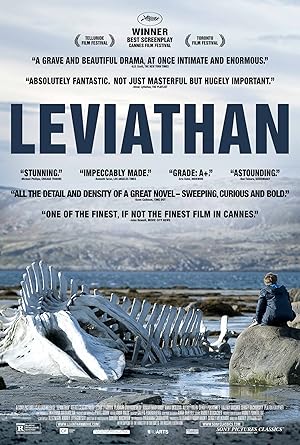
Leviathan is a film of formidable formal discipline. Its scope is vast in the way that cold and silence are vast: the Kola Peninsula coastline, the Arctic light, Mikhail Krichman’s cinematography making desolation feel like a philosophical argument. Aleksei Serebryakov’s Kolya stands at the centre of that argument as a man too ordinary to become heroic and too stubborn to vanish quietly. Zvyagintsev layers his Leviathans deliberately: Hobbes’s sovereign state as sea monster, the biblical beast from the Book of Job, and the literal whale skeleton bleaching on the beach outside Kolya’s house. The remarkable thing about that skeleton is what it does not do in the film: it is simply there, passed by, taken for granted, part of the landscape. Nobody in the film stops to contemplate it. Nobody needs to. The deepest impressions are always the ones that the film refuses to underline. On finishing it, there is a strange and indescribable alienation, an after-effect that takes hours to metabolise. The whale skeleton echoes in the mind long after the film has ended, insisting on a meaning that one cannot quite close. Close behind it: the barbecue scene, everyone drinking and eating in the ruins while portraits of the dispossessed, Lenin first among them, become shooting targets. History treated as target practice, ideology as something to pot at for sport. The Orthodox church built on the ruins of Kolya’s home in the final sequence completes the film’s argument about the unholy alliance between state power and religious authority in Putin-era Russia: the individual is devoured, the institution consecrates the devouring, and life continues.

Swaab’s reputation as a researcher had led me to expect rigour, and the first half delivers something close to it: a tour through his own work on sexual differentiation, brain development, and ageing, enriched by personal anecdotes and case histories that ground the neuroscience in actual patients and recollection. But the second half collapses into a grab-bag of topics, consciousness, memory, free will, treated with a generality that borders on negligence. The logical slope is the real problem: ‘we are our brains’ is stated as self-evident, yet the book never once engages with embodied cognition, as though the entire post-Damasio literature did not exist. The claim that sexual orientation is ‘determined before birth,’ supported almost entirely by Swaab’s own finding that the SCN is larger in homosexual men, does not constitute the proof he presents it as. And structurally, We Are Our Brains reads like a snippet collection, each chapter a self-contained vignette with no connective tissue. The book needed an argument; it settled for a bibliography.
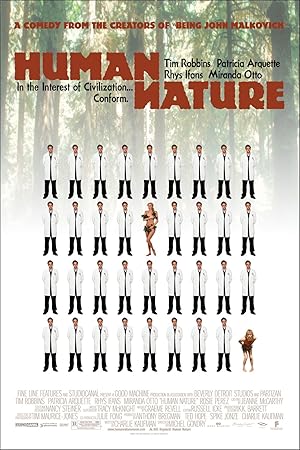
Kaufman’s screenplay is a grand parable built from three broken people and a set of nested ironies: a woman rejected by ‘civilization’ on account of her body hair, who retreated to the woods and built a life there; a scientist trapped between the demands of social propriety and the animal urgency he has spent his career conditioning away; a feral man raised among apes, who through nurture was never contaminated by ‘civilization’ at all. The three-way structure is beautifully engineered, each narrator contradicting the others from the grave or the laboratory or the wilderness, the unreliability not a postmodern tic but the whole point: everyone in this film is lying, including to themselves, about what they want and what they are. Kaufman understands, and the film keeps returning to, sexual desire as the one force that traverses all three states, the one constant that ‘civilization’ works hardest to manage and most consistently fails to contain. The satire of behaviourism, of Skinnerian conditioning applied to table manners as though the fork were the border between the human and the animal, is at its funniest when it is also most exact. Gondry’s handmade visual wit meshes here with Kaufman’s cynicism better than critics at the time allowed. ‘You fuck the mind,’ one character observes; but a pretty mind is more fuckable.
A conversation between anthropologist Xiang Biao and journalist Wu Qi, structured as an intellectual autobiography that doubles as a methodological statement. The insights are worth having but come infrequently. Xiang’s work on ‘Zhejiang Village’ in Beijing, and the conviction that it produced, that theory must be grounded, that intellectuals must learn to see from below, can be summarised as ‘treat people as people,’ which is what the puzzling title roughly means. The problem is that Self as Method does not always practice what it preaches. Xiang says ‘understanding is natural, not difficult, but we often refuse to understand,’ a claim that sounds profound until one asks whether most people would agree, at which point its distance from the ground becomes visible.
For someone who spent twenty years at Oxford and the Max Planck Institute, Xiang’s knowledge of his own institutional environment is oddly thin: he calls the colleges ‘mainly for undergraduate teaching,’ when anyone who has been through the tutorial system knows that is not what colleges are mainly for. The praise of ‘gentry spirit’ and the injunction to ‘know your own environment’ sit uneasily with these lapses.
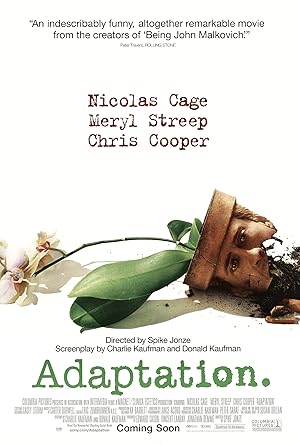
Four nested layers of narrative, each one eating the one below it: Kaufman’s inability to adapt Susan Orlean’s book, dramatised inside the film that pretends to be the adaptation; Orlean’s book, dramatised inside that; Donald’s commercial thriller, contaminating the whole structure from within; and the real Kaufman, somewhere outside all of it, watching. The screenplay credits include the fictional twin brother as co-writer, a move so audacious that awards bodies had to treat an invented person as a credited writer. Brian Cox’s McKee cameo is both a savage joke at screenwriting-manual culture and a sincere capitulation to it: the third act that Charlie resists and Donald embodies arrives anyway, and the film is honest enough not to pretend otherwise.
Nicolas Cage carries the architecture in the body. Charlie hunches, sweats through every social interaction, narrates his own self-loathing in voice-over that the film gradually reveals as another layer of the screenplay he cannot write; Donald bounces through the same rooms with the loose confidence of someone who has never once doubted that the world wants to hear from him. The two performances are so physically distinct that one forgets they occupy the same body: Charlie’s shoulders curl inward, Donald’s open outward, and the difference becomes two entire theories of what art is for. Charlie believes adaptation requires fidelity to the source’s resistance; Donald believes it requires a car chase. The film sides with neither and both, which is the cruelest possible answer, because it means the third act that Charlie has spent the whole film resisting arrives anyway, and by then it has become the only honest ending. And then, at a certain moment, the recursive machinery locks, and one suddenly understands both this film and the sensation of watching a Kaufman-scripted film: a structure becoming conscious of itself in real time, and dragging one along into the recognition.
The ice cream bin at the school is full of disposed cups. This detail, easy to miss on a first viewing, reframes everything: the janitor has been running this fantasy before. The car ride, the girlfriend, the visit to his parents, the stop for ice cream, the drive to the school where he works: not a narrative but a loop, executed again and again in the basement of a building where he mops floors. Jessie Buckley’s Young Woman changes names between scenes (Lucy, Louisa, Lucia, Ames), changes professions (physicist, poet, painter, gerontologist), changes clothing in what appears to be continuous time. She is a composite of every girl the janitor ever noticed, assembled from poems he memorised and films he loved and a woman who smiled at him at a trivia night whom he never approached. Jake finishes her sentences because they are his sentences. She recites ‘Bonedog’ by Eva H.D. as though she wrote it; the book is later visible on Jake’s shelf. She delivers Pauline Kael’s review of A Woman Under the Influence (1974) verbatim, impersonating Kael. The Oscar Wilde quote ‘Most people are other people’ is attributed to her as an original thought. Kaufman is not hiding any of this. Ten minutes in, the structure announces itself, and from that point one can actively map each shift, the borrowed voices, the shelf of consumed media, the loneliness that has no original material of its own. The farmhouse dinner is the loop’s most painful iteration. Jake’s parents (Toni Collette and David Thewlis) age and de-age between cuts without acknowledgment: the father goes from dark-haired and energetic to grey, doddering, Alzheimer-ridden; the mother shifts from imperious younger self to elderly. Nobody eats. The parents gush, getting their own stories wrong. The janitor is trying to work out when would have been the best time to bring a girl home, and no answer satisfies, because the real answer is that he never brought anyone. At the Tulsey Town ice cream stop, two servers look down on Jake: they are the popular girls who mocked the janitor in a school hallway. One frightened worker has bruises on her hands that match Jake’s. She warns the Young Woman not to ‘go forward in time.’ She is Jake’s self-image made visible.
The Oklahoma! dream ballet in the school is the loop’s final iteration. Young Jake dances as Curly; the janitor is Jud; the Young Woman is Laurey. Unlike the musical, the villain wins. The janitor stabs young Jake. Then old Jake delivers the Nobel Prize acceptance speech from A Beautiful Mind (2001) verbatim, in bad high-school-quality age makeup, to an audience wearing the same makeup: his parents, the ice cream girls, Buckley, everyone he has ever remembered. The DVD of A Beautiful Mind was on his shelf. The fantasy escalates from borrowed poems through borrowed reviews through a borrowed love story through a borrowed Nobel speech, each layer further from reality, each more desperately compensatory. The final shot is the janitor’s car buried under snow in the school parking lot. He went inside, let the fantasy play out one more time, and did not come back out. Kaufman’s choice to render the death as dream ballet and animated pig and musical number rather than as the novel’s graphic description is itself the film’s deepest act of empathy: it lets the dying man have his fantasy, which is all he ever had.
Why We Sleep made me angry in a way that only dishonest science can. Matthew Walker’s thesis, that sleep deprivation is a catastrophic public-health crisis linked to cancer, Alzheimer’s, obesity, and shortened lifespan, is presented with the confidence of settled consensus. It is not. Alexey Guzey’s detailed debunking, published in 2019, identified manipulated graphs, cherry-picked studies, exaggerated causal claims built from correlational data, and citations that did not support the assertions that Walker attached to them. Walker’s partial response acknowledged some errors but failed to address the core problems, and the scientific community’s largely silent acceptance of a bestselling book riddled with factual errors became its own case study in how popular science publishing fails.
The message that sleep matters is uncontroversial; the specific statistical claims are the problem, and a scientist who distorts data in service of a ‘good’ message is still distorting data. I felt deceived, and I do not forgive books that deceive me.
Tarkovsky’s Solaris station is not 2001’s pristine cathedral of ambition. It is cluttered and decaying, a museum of human failure, and that failure is the point. Kubrick asked what humanity might become; Tarkovsky asked what it has already lost. The film opens with forty minutes on Earth, entirely absent from Lem’s novel: Kelvin (Donatas Banionis) at his father’s dacha, rain falling on a pond, a retired pilot recounting strange things he saw above the ocean. Then the highway sequence: nearly five minutes of 1970s Tokyo (Akasaka and Iikura) shot as ‘the city of the future,’ Japanese road signs and multi-lane expressways that looked alien to Soviet audiences, the sound design growing abrasive until a hard cut to silence and water. Tarkovsky reportedly included it so that impatient viewers would leave. Those who remain are the audience the film wants.
The weightless library is the scene I return to. Hari (Natalya Bondarchuk) sits studying Bruegel’s Hunters in the Snow (1565), one of five Bruegel paintings that decorate the station. Weightlessness begins: candles float first, then the chandelier ripples, then a candelabra glides upward. A copy of Don Quixote drifts past. Kris and Hari begin to levitate, embrace, and slowly spin before the Bruegel while Bach’s chorale prelude BWV 639 returns on the soundtrack. It lasts roughly thirty seconds. Kubrick’s floating pen in 2001 (1968) is a moment of technological elegance; Tarkovsky’s floating books are a moment of humanist elegy. But Hari has already drunk liquid oxygen and painfully resurrected, has already been told by Sartorius (Anatoly Solonitsyn) that she is ‘not a woman and not a human being, just a reproduction, a mechanical reproduction.’ She will petition to be destroyed. Kelvin will wake to find her gone, with only a farewell note. The ocean manufactures what one has lost, and losing it a second time is worse, because the second loss carries the knowledge that the grief itself was legible enough to be replicated. The final shot is the answer to a question the film has been asking since the dacha. Kelvin appears to have returned home. Rain falls indoors. He kneels before his father in a direct allusion to Rembrandt’s Return of the Prodigal Son (1669). The camera pulls back through clouds to reveal: the house and pond sit on a small island in the surface of the Solaris ocean. Tarkovsky’s explanation was precise: ‘He has been recreated by the Ocean, the materialisation of his homesickness.’ Whether this is surrender or the only authentic choice available is not adjudicated. Empirical reality, which the station’s scientists spent the entire film defending, has produced nothing but cruelty, sterile corridors, and the destruction of what it could not classify. The ocean offers Kelvin his father, his home, his rain, everything he grieved, and if the price is that none of it is real, the film’s final image asks whether the distinction ever mattered as much as the scientists believed it did.
The most vivid impressions: the same commitment to practical scale as 2001, Kirk Douglas’s button-like chin anchoring every frame, and an ending that is spectacularly bad. Kubrick himself reportedly despised the film’s sentimental climax, and he was right; a single restrained shot of Varinia departing with the child would have done more than all that broad melodrama on the Appian Way, and would have been truer to what the historical record allows. The irony is that the film’s political spine, Dalton Trumbo’s name in the credits breaking the blacklist, is far more radical than anything in the denouement.
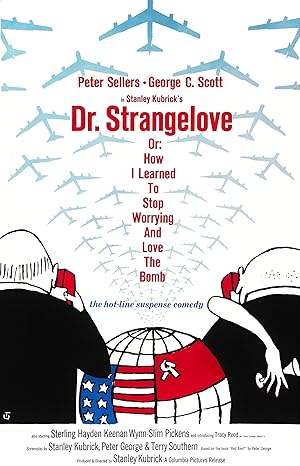
Peter Sellers across three roles is not merely extraordinary as a performance; it is extraordinary as an argument. Mandrake, Muffley, and Strangelove map onto three modes of institutional failure: bureaucratic impotence, liberal ineffectuality, and the amoral technocrat whose uncontrollable gloved hand keeps betraying the fascism beneath the procedural surface. The three settings, Burpelson, the War Room, the bomber cockpit, are all the geography a film about the end of the world requires. Kubrick achieves a tension and grandeur within these stripped constraints that most directors cannot reach with entire continents.
Strangelove’s final monologue, the mine-shaft proposal, the survival calculus, the barely suppressed glee, is nothing other than the logic of the figures who surrounded every major populist authoritarian movement of the following half-century: the technocrat who has made his peace with catastrophe and begun to find it useful. George C. Scott’s General Turgidson and Sterling Hayden’s General Ripper complete the triptych from the other side: one a buffoon who mistakes testosterone for strategy, the other a paranoiac whose private madness has acquired institutional authority. One watches it now and recognises the grammar immediately: the conspiratorial cartography, the eugenic undercurrent dressed as crisis management, the sense that the speaker has been waiting a long time for this moment. Kubrick made a film about the early 1960s and accidentally made a repeating template. The laugh-track of history has not worn it out.
I came to The Hitchhiker’s Guide to the Galaxy far too late, but here we are. Adams is doing something rare: making comedy carry the philosophical structure rather than decorating an existing one. The destruction of Earth for a hyperspace bypass, the bureaucratic indifference of the Vogons, the supercomputer that spends millennia computing the answer to life, the universe, and everything only to deliver ‘42’, these are not jokes with philosophical implications; they are philosophical arguments delivered as jokes. The puns are relentless, the setups absurdly patient, Adams spending half a page constructing the scaffolding for a single small gag. That commitment to the bit separates him from lesser comic writers.
The surprise is the melancholy. Beneath the absurdism runs something bleak: Arthur Dent is a man who has lost everything, his home, his planet, his species, and the universe responds with paperwork and bad poetry. The Vogon demolition fleet arriving with all its paperwork filed correctly is funny precisely because it is terrifying. Adams understood, long before it became fashionable to say so, that the real horror is not malice but indifference; that the universe is not hostile, merely unhelpful. He has people thinking seriously about the role of towels in civilisation, and somehow that sentence is not a joke. I loved every page. The towel stays packed.
Simply beautiful, and simply inexhaustible: two-plus hours with not a moment of drag, every character sharply drawn, every minor functionary essential to the machinery of the plot. Wang Shuangli, acting director of a local cultural centre, perpetually passed over, perpetually manoeuvring, is one of Chinese cinema’s great creations: not a tragic figure in the Western sense, not a comic one either, but a precise and devastating specimen of a particular mode of survival. The title announces the method: ‘back to back’ in estrangement, ‘face to face’ in performed cordiality, and the entire film lives in the gap between those two orientations. The allegorical texture is dense, line by line, and the visual allegory is equally unmissable: a film about institutional China that works as a portrait of institutional life everywhere that face (面子) and power decouple from merit. What is harder to explain is why the experience of watching is two solid hours of laughter, of marveling at how people can be so cunning and so vicious and so recognisable, and then, against all expectation, to end on a note that is (relatively) generous. One does not leave feeling consoled. One leaves feeling that the System has been named, and that naming it, precisely and without sentimentality, is its own kind of grace.
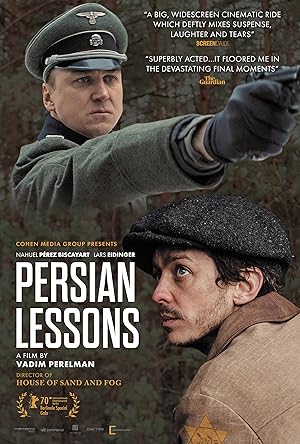
The plot is solidly conventional: nothing arrives that one did not see forming. But the cinematography and direction accomplish the task of telling the story commendably, which is more than most Holocaust films manage to do with a comparable premise. The classroom scenes in the first half are occasionally overwrought; in a film where detail is everything, where Nahuel Pérez Biscayart’s Gilles must remember every invented word of a language he fabricated to survive, any lapse in precision costs the drama something real. The final sequence, in which those invented words resolve into the names of the murdered, strikes with the force of a moral argument, not a cinematic flourish. An anti-fascist film this accomplished is rare; one has waited years for one.
Lane’s argument in The Vital Question is bioenergetic: the reason complex life exists at all, the reason eukaryotic cells arose only once in four billion years, comes down to energy. Bacteria and archaea are trapped by their own cell membranes: to maintain proton gradients for ATP synthesis, they must distribute copies of their genome near the membrane surface, and the energetic cost of maintaining hundreds of genome copies prevents them from expanding. The endosymbiotic event, an archaeon engulfing a bacterium that became the mitochondrion, liberated the host cell from this constraint, concentrating respiration in a dedicated organelle and freeing the nuclear genome to expand, diversify, and eventually produce every complex organism on Earth.
The alkaline hydrothermal vent hypothesis for the origin of life is the book’s other contribution: Lane argues that life began not in a primordial soup but at submarine vents where natural proton gradients across thin iron-sulphide barriers could drive the reduction of CO₂ by H₂, producing organic molecules without enzymes. The elegance of this proposal is that it explains why all life, from archaea to mitochondria to chloroplasts, uses proton gradients: because life was born inside one. Lane does not write down to his reader; the chemistry is worked out in full, the terminology exact. This is the most intellectually thrilling science book I have encountered: a single argument, pursued with total commitment, that redraws the map of life’s deepest history.
Every emotion in the film is engineered, and the engineering is masterful: the claustrophobia of flooded corridors, the oxygen-deprivation delirium, the CPR sequence that Mary Elizabeth Mastrantonio reportedly broke down filming and which breaks one watching it. Every character has a distinct personality, a fact that increases predictability somewhat, the audience knowing roughly who will survive and who will not, but the predictability does not blunt the impact because Cameron’s craft lies not in surprise but in inevitability, in making the audience feel that each event could not have been otherwise. Who could remain unmoved at the sight of a vast non-human civilisation, benevolent and alien and utterly beyond the terms of any ideology that has governed human violence? Who could stay calm during the underwater ‘car chase’ sequence, the two figures in darkened water, air running out, the numbers on the gauge too small? Not a single decision in the film is free from the dual pull of emotion and reason; not a single decision feels arbitrary or jarring. Cameron makes the mechanics of feeling transparent at a scale almost no one else can reach, without making them cheap. A supreme demonstration of his craft as writer and director both.

A group of cave explorers, trapped underground with no hope of rescue, kill and eat one of their number to survive. The question is whether they should be convicted of murder. Peter Suber takes Lon Fuller’s original 1949 hypothetical and extends it with nine fictional judicial opinions, each arguing from a different school of legal philosophy: natural law, positivism, legal realism, feminist jurisprudence, economic analysis, and more. The book is one of the most elegant introductions to legal reasoning I have encountered, and it requires no background in law to follow.
The Case of the Speluncean Explorers gets its force from the architecture of doubt: each opinion seems persuasive until the next one arrives and dismantles it, so that the reader is constantly revising their own position, discovering that their intuitions rest on philosophical commitments they had not examined. The sequencing is exact; Suber anticipates exactly where the reader’s objections will form and addresses them through the next judge’s reasoning, creating a momentum that carries the book in a single sitting.
By the end, the point is not that one judgment is correct and the others wrong. The point is that legal reasoning is a machine for exposing the philosophical assumptions one brings to punishment, necessity, authority, and mercy.
In the opening scene, two months pass at one breakfast table. The radio drifts from September 22 to Halloween; the milk expires; the newspaper dates shift. Nobody changes clothes. The conversation does not reset. Synecdoche, New York announces its method here: time moves the way it feels from inside a life, slow in the early minutes and then suddenly decades have gone, and the film will not stop to say when. Caden Cotard (Philip Seymour Hoffman), whose surname is borrowed from a psychiatric delusion in which patients believe themselves already dead, receives a MacArthur grant and uses it to build a full-scale replica of New York in a Manhattan warehouse. Actors are hired to play the people in his life. Then actors are hired to play those actors. The production never opens. It is always in rehearsal, always expanding, always one revision away from capturing the totality of a life that keeps happening while he tries to capture it.
Meanwhile his first wife Adele (Catherine Keener) leaves for Berlin with their daughter Olive and paints canvases so small that gallery visitors need magnifying spectacles to see them. Kaufman has said her work is ‘in a way much more effective than Caden’s,’ and the film agrees: she distils and succeeds; he inflates and fails. Sammy (Tom Noonan), an actor who claims to have been following Caden for twenty years, is cast to play him and mimics him so completely that Sammy eventually casts his own double, a man to play Sammy playing Caden. Hazel (Samantha Morton) buys a house that is perpetually on fire, real flames visible, smoke filling every room, and lives in it for thirty years before dying of smoke inhalation. The fire is never explained, and the refusal to explain it is the point: the film is not asking to be decoded but absorbed, each surreal detail a synecdoche for something too large to name directly. Hoffman holds all of this together through physical deterioration, pustules and seizures and a faucet gash that never heals, his body curling inward as the decades blur past, and his performance is so anchored in recognisable human bewilderment that the abstraction never floats free of grief.
In the final act, Caden surrenders direction of the production to Millicent Weems (Dianne Wiest), the actress who played a cleaning lady named Ellen. He takes her role. He becomes the cleaning woman in his own play, receiving instructions through an earpiece, shuffling through the ruins of the empty warehouse while Millicent narrates his every step. She tells him: ‘You realise you are not special. You have struggled into existence and are now slipping silently out of it. This is everyone’s experience. Every single one.’ Then Caden says, suddenly, ‘I know what to do with this play now. I have an idea.’ The earpiece gives him his final direction: ‘Die.’ He does. The one instruction he cannot revise, arriving at the exact moment he understands what his life’s work should have been.
Savage is a prolific Canadian nature writer, and Crows is a compact survey of humanity’s long, ambivalent relationship with corvids: revered in Indigenous cosmologies, reviled in European folklore, and increasingly studied by cognitive scientists who keep finding that crows are smarter than the experimental paradigms designed to test them. The book is at its best when it draws on field observations and cultural history, weaving myth, ornithology, and anecdote into something that reads more like a portrait than a monograph.
The weakness is the extended treatment of Bernd Heinrich’s crow research, which occupies more space than it earns. Heinrich’s framework for understanding avian intelligence feels dated, particularly his insistence on a hierarchy in which emotion is more ‘primitive’ than reason, a view that comparative cognition has moved well past. A book about crows should not make the reader doubt that its principal scientist understands what intelligence is. The book is structured less as a history than as a series of encounters, and that looser form is both strength and limitation: intimate enough to make corvid intelligence feel vivid, too scattered to build a sustained argument.
A rare popular-science book about mathematical modelling that actually explains the models. Kucharski traces the SIR framework from its epidemiological origins through its surprisingly wide applications: sociology, economics, criminology, online virality. The structure is tight, the introduction of technical material is well judged, and the repeated mathematical architecture behind diseases, ideas, financial panics, and violent crime is presented with enough specificity to be instructive rather than merely analogical.
The most striking section is the application of contagion models to violence: that outbreaks of violent crime can be modelled, and sometimes predicted, using the same equations that track measles transmission. Kucharski handles the ethical and methodological complications without flinching. The book’s only real weakness is a shortage of figures; for a book about models and transmission dynamics, the absence of diagrams and graphs is a puzzling omission. ‘In the time it takes to read this book, roughly 300 people worldwide will have died of malaria, over 500 of AIDS, and about 80, mostly children, of measles.’ The Rules of Contagion earns its urgency.
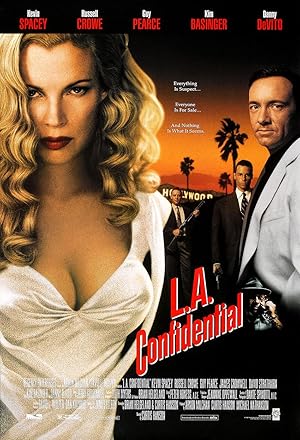
There is a version of film criticism in which Infernal Affairs (2002) is treated as the definitive modern noir, and that version is wrong. L.A. Confidential does everything the genre asks of it and then does something rarer: it gives each of its three protagonists a distinct moral grammar, so that the Nite Owl conspiracy unfolds differently depending on which set of eyes is reading it. Russell Crowe’s Bud White operates on fury and a private code about women; Guy Pearce’s Ed Exley on ambition mistaken for principle; Kevin Spacey’s Jack Vincennes on exhausted cynicism performing itself as charm. The performances are dazzling in the specific sense that they illuminate each other by contrast.
The second half offers almost nothing one could not see coming, and yet the suspense never relents. That is a rarer technical achievement than most critics acknowledge: to generate genuine tension not from uncertainty about plot but from the feeling of inevitability pressing down on people who are still trying to choose. Brian Helgeland and Hanson’s adaptation of Ellroy’s sprawling novel strips the machinery to the necessary elements and not one joint shows. By the end, partial justice is achieved and the institution survives intact, which is the most honest ending a film about the LAPD in the 1950s could possibly have.
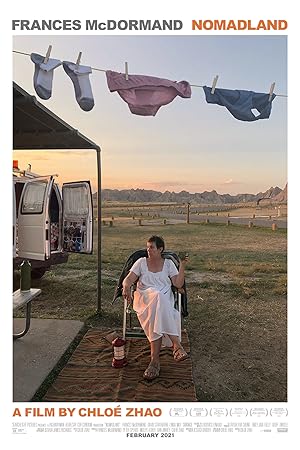
The score is far too weak for the images it accompanies. Einaudi’s piano pieces are lovely objects in their own right, but as deployed here they arrive slightly too readily, too smoothly, softening the film’s documentary edges at precisely the moments when those edges should cut. Zhao assembles an accumulation of stories: every person Fern (Frances McDormand) encounters forms a closed loop, every departure is also a potential return, every ending another beginning on the same road. It is a nomad’s idealist dream of how transience works. One suspects the real itineraries are less circular, the coincidences rarer. That the film needs the dream to function is not a flaw; it is the confession.
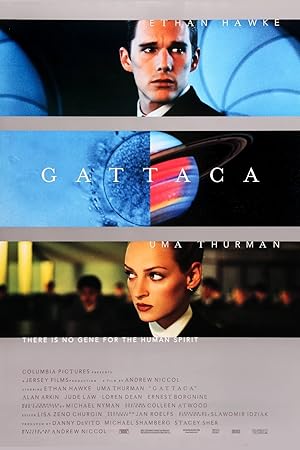
I had no idea the ending could be that good. The film earns it by spending ninety minutes being scrupulously, almost defiantly understated: the production design mixes 1950s architecture with near-future technology not as nostalgia but as a warning that this future has in some sense already arrived, and the performances stay cold and precise in step with the world they inhabit. The central irony is structural: Jerome Morrow (Jude Law), the genetically optimal man, destroys himself in an incinerator wearing a silver medal, the emblem of his only failure, while Vincent Freeman (Ethan Hawke), born without correction and given a 99% probability of cardiac failure, boards a spacecraft for Titan. The eugenics project does not produce flourishing; it produces a caste system in which perfection is as fatal as imperfection, only differently. Niccol understands what most science fiction films of the era did not: the horror of a genetic hierarchy is not primarily spectacular; it lives in the skin-cell readers by the office door, the urine tests, the quiet administrative violence of being classified in-valid before one has done anything. The film explores eugenics using 1% of luck as its moral lever, and the lever holds. There is no gene for the human spirit is a tagline that should be embarrassing but is not, because the film has actually argued it.
Jon Batiste’s jazz and Trent Reznor and Atticus Ross’s Great Before score were composed in deliberate isolation: the two teams did not communicate early on, so that Earth and the soul world would sound like different planets. The separation works. Batiste’s pieces carry the weight of bodies at instruments, fingers on keys, breath through brass; Reznor and Ross build glassy synths and pulsing resonance for a place where nothing has mass yet. Soul lives in the collision of those two palettes, and its argument emerges from a story that Herbie Hancock told the filmmakers: during a Miles Davis concert, Hancock played a chord so catastrophically wrong that he thought he had destroyed the whole night. Davis paused, then played notes that made the chord right. He did not hear it as a mistake; he heard it as something that happened, part of reality to be dealt with. Docter has said this anecdote captured what the film was trying to say, and it does: the film builds its entire first act around Joe Gardner (Jamie Foxx) treating jazz improvisation as a spiritual destination, the flow state as transcendence, and then methodically dismantles the frame. Joe achieves the gig of his dreams with Dorothea Williams (Angela Bassett) and feels nothing. ‘I thought I’d feel different,’ he tells her. Dorothea answers with a parable about a fish searching for the ocean while already swimming in it.
The dismantling is structural, not sentimental. 22 (Tina Fey), the pre-life soul who has resisted being born for millennia, accidentally inhabits Joe’s body and discovers pizza, a maple seed spiralling to the ground, the barbershop where Dez (Donnell Rawlings) tells his own story while handing her a lollipop. Joe dismisses all of it: ‘Those really aren’t purposes, 22. That’s just regular old living.’ He does not hear himself. The film’s sharpest move is staging this as Joe’s failure to listen to his own sentence, the answer sitting inside the dismissal. When the Jerrys later correct him directly, ‘A spark isn’t a soul’s purpose. Where did you get that idea?’, the revelation arrives not as new information but as something that was already there, the way Hancock’s wrong chord was already music before Davis made it legible. The ending is quiet in a way that Pixar rarely permits: Joe steps outside, a maple seed lands in his hand, and for the first time he notices it. We do not learn what happens next, and that uncertainty is the argument.
The second half arrives as a genuine surprise: the film has taken such care to embed one in Scottie’s (James Stewart) limited perspective that the revelation of the plot, delivered in Judy’s letter and then withheld from Scottie for another reel, produces a disorientation that the title has been promising all along. It is not dizziness from heights; it is the dizziness of learning that the reality one has been inhabiting was a construction, and that the construction was designed specifically for one’s own consumption. This is Hitchcock at his most ruthlessly self-aware about what cinema does to audiences.
The second half is harder to sit with. The sequence in which Scottie rebuilds Judy into Madeleine, choosing her clothes and hair and posture, is a textbook enactment of what Laura Mulvey would later theorise as the male gaze turned architectural: the woman as raw material, the man as sculptor. Kim Novak plays the humiliation with extraordinary restraint, which only sharpens it. The film is aware of what it is doing; whether that awareness is critique or complicity is the question it refuses to answer cleanly. The romance is the part the film does not know how to account for, or chooses not to address: Scottie’s love for Madeleine is never explained from Madeleine’s side, and after the revelation Judy’s love for Scottie is barely more legible. Hitchcock’s plotting here is thin, and no amount of atmospherics fully papers over it. The murderous husband walks away entirely unremarked upon by the detective whose job was presumably to find him. It is a film one admires more than one trusts.
Mental illness films have a structural advantage that is also a temptation: with an unreliable narrator, any ending can be retroactively justified, any incoherence absorbed into the premise. The film simply declares: the character was unwell; the ambiguity was intentional. Kon refuses this escape. Perfect Blue closes its ending hard. Every act of violence, every distortion of Mima’s reality, is attributed with clinical precision to Rumi, whose psychotic merger with the idol she manages is rendered not as mystery but as diagnosis. The resolution is so tight that the final shock strikes heavily: there is no interpretive slack to cushion it.
This is also a film that understands exactly where to cut. Not in the editorial sense only, though the editing is surgical, but in the sense of knowing precisely which moment in a scene carries the most damage, and driving the camera into it. Every transition cuts in the most painful available place. Kon Satoshi is often discussed alongside Aronofsky, who purchased the rights partly to recreate a single sequence, but the influence runs deeper than any individual image: it is an understanding of how identity fractures under the pressure of being watched, an understanding that Perfect Blue achieves in 81 minutes with no wasted frame. Mima’s final words to her reflection are not reassurance. They are a claim staked against the void, and one is not entirely sure it holds.
The crop-duster sequence has been studied so thoroughly, borrowed from so many times, reconstructed in so many analyses, that encountering the original carries a faint strangeness: the sensation of meeting a face one knows only from copies. Hitchcock and editor George Tomasini built the sequence on an inversion of every convention of cinematic threat: no shadows, no music, blinding midday light, flat open prairie, a camera that holds its wide shots long past the point of comfort. The emptiness is the weapon. By the time the plane appears, the editing has trained one to expect nothing, so when the attack comes, it comes from a direction the film has spent minutes insisting was empty.
The United Nations building, seen as it stood in 1959, prompts a different kind of reflection. Six decades on, the building is still there, largely unchanged, presiding over a world that has managed to accumulate almost no additional architecture of international cooperation in the intervening decades. The particular stagnation of the post-Cold War order, the inability to build new institutions at the scale the mid-century briefly imagined possible, makes the building look like a relic of ambition. Hitchcock meant it as backdrop. It has become a more complicated image than he intended.
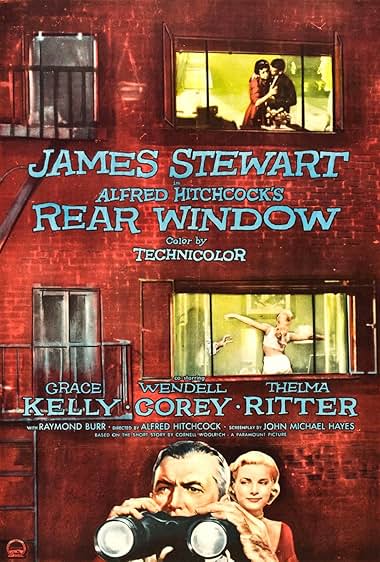
The courtyard set at Paramount was one of the largest indoor constructions in studio history: thirty-one apartments, working plumbing, a full day-to-night lighting cycle, real animals. Hitchcock built a world and then refused to let the camera leave the room from which it is observed. This is the formal constraint that generates everything. The audience’s perspective becomes identical to Jeff’s (James Stewart), not as a technique but as a condition: one cannot see around the corner, cannot enter the apartments, cannot escape the frame of the window. Cinema’s essential voyeurism, usually disavowed, is here both the subject and the mechanism. The courtyard contains enough life to keep the film from becoming merely a formal exercise. Each apartment is a storyline; each storyline is a possible future for Jeff and Lisa (Grace Kelly); and the three sections of the narrative, the mystery, the near-resolution, the crisis, divide the film so cleanly that on paper it sounds schematic. Watching, one feels none of the joins. The world contained in that small rectangle of light and sound expands to fill the entire available attention, and by the time Thorwald turns and looks directly back, the rupture of the voyeuristic compact is as physically shocking as anything Hitchcock ever produced. The whole world in a small rear window. The camera never leaves the room, and neither does one.
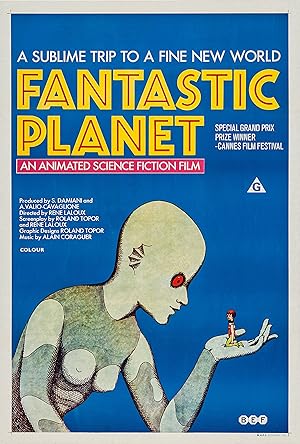
Twenty-five people worked for four years to produce 1,073 pencil drawings in pastel shades, each animated as cardboard cutouts against painted backgrounds: not cel animation, not rotoscope, but something deliberately two-dimensional and collage-like, motion that is stiff and choppy in a way that makes the world feel governed by its own physics rather than ours. Roland Topor, who co-founded the Panic Movement with Jodorowsky and spent his career making art that resembles sixteenth-century engravings of things that should not exist, designed every frame of Fantastic Planet as a self-sufficient image. A cage-bodied creature snakes an arm through its own exoskeleton to trap flying animals, shakes them to death, and laughs; it does not eat them. An intestinal desert curls upward when moistened by rain. Clothing-making mollusks exude foam directly onto the body. The imagery does not illustrate an allegory about colonialism or dehumanisation, though the allegory is legible enough: it generates its own logic, closer to Bosch than to any parable, and the viewer enters through sensation before arriving at meaning. Alain Goraguer’s score, built from electric piano, reverb-heavy guitar, wordless chanting, and baroque string textures that recall his years arranging for Serge Gainsbourg, does the same work: it establishes the phenomenological terms before the narrative has time to settle.
The film was co-produced between France and Czechoslovakia, production beginning in Prague in 1968 and halting when Soviet forces invaded that August. It survived the normalisation period because it was bringing in hard currency, and the surrealism that would have alarmed censors in live-action passed through because animation lowered ideological defences. The political content is there for anyone looking: a Draag council scene that parodies central planning, ‘de-Omization’ campaigns whose bureaucratic euphemism sanitises mass extermination, an oppressor species whose intellectual self-regard masks the banality of its cruelty. But the Grand Prix at Cannes in 1973 did not come from coded topicality alone, and Criterion’s restoration is not the reason it still feels alive. Topor and Laloux built a world that operates on different rules and trusted the accumulated strangeness to do what argument alone could not: make the viewer feel, bodily, what it is like to be small, disposable, and subject to forces that do not recognise one’s existence as a category worth preserving.
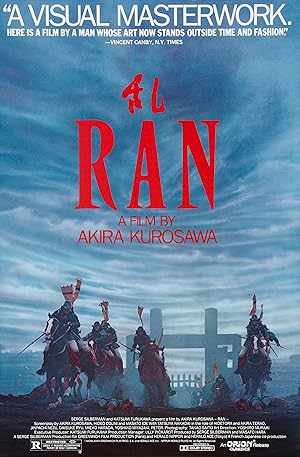
My first Kurosawa, which means I came to it unprepared and saw only part of what was there: the cloud-sea above the battlefield, shot in a scale that makes individual suffering look cosmically small; and the jester Kyoami’s loyalty, the film’s clearest moral force and the most moving thing in it, a devotion that has no strategic logic and therefore no end point. I regret not attending to the details more carefully, which is a different problem from the film’s. The whole film feels like a Shakespeare play, and this is not a loose comparison.
Kurosawa spent a decade developing Ran, transposing King Lear onto the Sengoku period warlord Hidetora Ichimonji (Tatsuya Nakadai), who divides his domain among three sons and is destroyed by the calculation. Where Shakespeare works within a Christian moral framework, Kurosawa operates in Buddhist terms: the chaos that follows, ran in Japanese, is not punishment so much as karma made visible, the sins of conquest propagating forward through time until nothing is left. Toru Takemitsu’s score plays against the images rather than with them, which is the right instinct; some of the great battle sequences run almost in silence, the carnage aestheticised into something that looks like a Noh performance, beautiful and terrible in equal measure. Lady Kaede, played by Mieko Harada, rivals Shakespeare’s own villains in complexity. I will watch it again and see everything I missed.
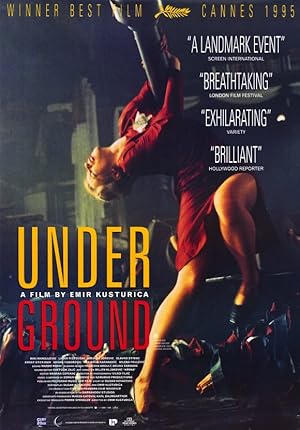
The charge against Kusturica has always been ready to hand: that Underground launders catastrophe into spectacle, that its grotesque festivity makes the very history it mourns look like a party. The charge is Žižek’s, argued at length in 1997, and it is worth taking seriously even if one disagrees in the end. Kusturica achieves something older and stranger than political allegory: he fuses narrative film with film-poem, so that the logic governing individual shots is lyric rather than dramatic, governed by rhythm and repetition rather than cause and effect. Every image carries the weight of magical realism, rooted in Balkan soil and oral tradition, in the brass bands and drunken weddings and exploding tanks (the same energy returns, looser and funnier, in Black Cat, White Cat three years later) that are less metaphors for Yugoslav chaos than its native idiom. Dušan Kovačević’s three-part structure, spanning WWII through the cold war to the 1990s wars, enacts a cyclical theory of history in which violence and festivity are identical: the feast is the massacre, the dance is the dirge. The cellar where violence and festivity literally coexist is an ideological bubble, Titoism in aspic, time preserved in amber while history burns above. That the people trapped below come to believe WWII is still running is less a plot device than a diagnosis: collective delusion sustained by those in power, a nation fed its own mythology until the mythology is all that remains. And when the characters finally surface, they surface into ruin. The film earns its three-hour runtime because the epic length is itself the argument: history takes that long to devour a people. The Goran Bregović soundtrack never stops; the music is not commentary but atmosphere, an assault that refuses to let one step back into critical distance.
The final sequence, the floating island, the last dance above water, tender and final beyond recovery: the film finds release without resolution. There is no homeland left to return to, so the film invents one, makes it float, and then lets it drift. That image is mourning without consolation, and it has not left me since.
How We Remember is the single book that has most shaped my thinking about memory mechanisms. More than Kandel’s In Search of Memory (2006), which made the field feel human and historical but did not give me a working systems account; more than any review paper or textbook chapter. Hasselmo does what almost no one else manages: he integrates computational modelling, pharmacology, and systems-level physiology into a coherent account of how the hippocampus encodes and retrieves episodic memory, with acetylcholine as the fulcrum between encoding and retrieval states. The framework is clean without being reductive. One reads it and the hippocampal circuit clicks into place, not as a list of anatomical connections but as a system with dynamics, with states, with reasons for being wired the way it is.
I first encountered this book early in my PhD, and it set the terms for how I think about the problems I work on daily: what does it mean for a circuit to switch between modes, how do neuromodulators sculpt the computational landscape, what is the relationship between oscillatory dynamics and the information the network carries. These are not abstract questions for me; they are the questions I bring to the recording rig. Hasselmo answered some of them, sharpened others, and made the rest feel tractable. Some books wait for the reader to grow enough to read them differently.
I went in on the strength of the name, and the name does not quite redeem it. Coppola’s direction is assured and unshowy, which in 1997 already marked a change of mode from his operatic phase, but assurance applied to John Grisham yields a film that is intelligent without being surprising. The idealist-versus-institution courtroom structure arrives fully assembled: the young lawyer with no resources, the corrupt corporation, the bought judge replaced by a better one at the opportune moment. Matt Damon’s Rudy Baylor is moral weight without interiority, a position in an argument rather than a person, which is arguably true of the Grisham template generally. The final monologue, where Baylor dresses up his decision to quit law as principled disillusionment, is the film’s least honest moment: one is invited to read it as integrity, but skill level and temperament are equally plausible explanations, and the screenplay does not have the rigour to insist on the distinction. Danny DeVito, at least, seems to be enjoying himself.
Lee Chang-dong takes Murakami’s ‘Barn Burning,’ a twenty-page story of ambiguity and absence, and loads it with everything Murakami left out: class, geography, rage, and a violence that the original never had to confront. In Faulkner’s ‘Barn Burning’ (1939), the poor man burns the rich man’s property. In Lee’s film, the rich man burns the poor’s. Jong-su (Yoo Ah-in) reads Faulkner throughout Burning and says he sees himself in the writing, and Lee described his own film as ‘the story of a young Faulkner living in the Murakami world.’ The inversion is the key. Murakami’s narrator is settled and married; Jong-su is a delivery driver and aspiring novelist from Paju, a farm town near the DMZ so close you can hear North Korean propaganda from loudspeakers across the border, and his father is in prison for assaulting a civil servant. From the first scene the triangle is loaded: Jong-su scrapes; Hae-mi (Jeon Jong-seo, in her screen debut) works part-time and mime-eats tangerines; Ben, played by Steven Yeun with a calibrated blankness that never quite registers as human, lives in a huge Gangnam apartment, drives a Porsche, and describes his profession as ‘playing.’
The sunset dance is the scene that splits the film open. At Jong-su’s father’s farm, the three have been smoking marijuana. Hae-mi, topless, dances to Miles Davis’s ‘Générique’ against a sky streaked red and purple, the scene shot over an entire month to capture consistent twilight. Jong-su watches and weeps. Ben yawns. That single divergence encodes everything: the aspiring writer who cannot articulate what he feels, and the rich man for whom other people are interesting the way barns are interesting, briefly, before they burn. Shortly after, Ben confides to Jong-su that he burns greenhouses as a hobby, one every two months, always abandoned ones whose absence nobody will notice and whose destruction the police will not investigate. Jong-su checks every greenhouse in the area. None burn.
Hae-mi disappears. Her cat, Boil, reappears in Ben’s apartment; a pink watch that Jong-su gave her sits in Ben’s drawer. Her suitcase remains in her unnaturally clean flat. The film provides evidence and withholds it in equal measure, and the withholding is the class argument made formal: some people can be erased because no structure exists to notice their absence, and the ambiguity the audience feels about whether Hae-mi is dead or simply gone is itself a reproduction of the social invisibility that makes her disposable. Lee said the film asks ‘whether some people are like greenhouses that nobody cares about,’ and Yeun, who to this day says he is the only person who knows who Ben really is, told the filmmakers that Ben’s motive would be ‘the emptiness in his heart.’
The ending is a five-minute handheld take. Jong-su stabs Ben, who does not resist, and for the first time in the film, Ben sheds a tear. Jong-su strips off his blood-soaked clothes, burns them alongside the Porsche, and walks naked to his truck in the falling snow. The nudity mirrors Hae-mi’s dance; both are strippings-bare. Lee: ‘The last scene can be read as a warning about how rage can explode, but it can also ask for the meaning behind what happens when rage explodes in this way.’ I do not think the film answers that question. I think the question is the point.
Sorkin’s gift, and his limitation, is that he knows precisely how to ignite ideological fury in an audience. Within the first ten minutes of ‘The Trial of the Chicago 7’, one is squarely on the side of the Seven: the historical backdrop is laid in with the efficiency of a master playwright, the prosecution is established as a Nixon-era political instrument, and Judge Julius Hoffman’s open bias has been made unmistakable. Sorkin understands that the courtroom is always a stage, that legal procedure is political theatre, and he choreographs accordingly, fast and righteous and crackling with walk-and-talk energy even when nobody is walking anywhere. The usual objection is that he simplifies: that the genuine ideological fractures between the defendants, Abbie Hoffman’s anarchic carnival against Tom Hayden’s institutional liberalism, are flattened into a clean dramatic arc. Fair enough. But the simplification is in service of something real, a film that asks what the legitimate expression of political fury looks like when every institution has been corrupted against one. Watching it is painful in a way that implicates the viewer rather than flattering them. This was a group of young people who believed in equality and peace, in civil rights, in every ideal that constitutes human decency at its minimum: and under a government rife with political manipulation, their only means of expressing that belief in front of the court was to read aloud the names of the dead. More than four thousand names. The scene in which Tom Hayden (Eddie Redmayne) reads them out, the room filling with the sound of a war’s accounting, is one of the few moments in the film where Sorkin’s machinery stops and something else takes over: grief, stripped of rhetoric. Five years of imprisonment were waiting for these men, and that verdict fell in front of a full press gallery. That the 2020 release date, arriving in the middle of the George Floyd protests and a contested election, made the film feel not like history but like a live broadcast: that was not Sorkin’s achievement, but it was the film’s.
Stuart: A Life Backwards is a story that strikes one clean through, one that does not release in the usual way. Based on Alexander Masters’ memoir of the same name, it tells the life of Stuart Shorter, a charismatic, violent, and homeless man whom Masters befriended through Cambridge activist circles, in reverse chronological order: beginning with the end and working backwards towards the wound. The reversal is not a gimmick. To understand how someone becomes who they are, one must resist the temptation of narrative momentum; one must slow down, turn around, look. Benedict Cumberbatch plays Masters with exactly the right degree of restrained bewilderment, the man who is listening harder than he knows how to articulate, the audience’s surrogate in every scene. But the film belongs, unmistakably, to Tom Hardy as Stuart. Hardy does not perform vulnerability; he inhabits a kind of feral tenderness that makes every frame feel like it might crack. The famous charge against biographical drama is that it flattens its subjects into legible arcs of suffering and redemption. Stuart refuses this. Stuart Shorter remains strange, difficult, and irreducible to the last, and Hardy never lets the camera steal his personhood in the name of sympathy. Both performances are extraordinary, but Hardy’s is one of the finest pieces of British acting of the decade.
The film is ruthless about trauma: it does not ennoble; it compounds, each wound making the next more likely and more severe. There is no catharsis on offer. Instead there is the sense that this particular life, told backwards, has the structure of an elegy, and that the only honest response to it is to sit with that.
The question ‘Life of Pi’ poses, whether the beautiful story or the brutal one is true, is not meant to be answered: the story one chooses to inhabit is not decoration but survival, and narrative is not an ornament on top of experience but the very structure that makes experience bearable. Ang Lee and cinematographer Claudio Miranda shoot the Pacific as a liminal space, a boundary between life and death where bioluminescent water, breaching whales, and a floating carnivorous island exist in the same order of reality as Pi’s (Suraj Sharma) grief and faith. The CGI tiger Richard Parker, created at enormous technical cost, is somehow less remarkable than the ocean itself: a vast, beautiful, terrifying character that dwarfs every human claim on it.
The structural irony that Rhythm and Hues Studios, responsible for the film’s extraordinary visual effects, filed for bankruptcy two weeks before it won the Oscar for Best Visual Effects, is a parable the film would have approved of: the beautiful story and the brutal story coexisting, one visible, one not. But watching it, one does not think about any of that. Whether it is the metaphysics of the story itself or the oceanic vistas, every moment reaches exactly where one cries. Some films earn their tears; this one makes the tears feel like understanding.
‘Mother’ sits on the same elevation as ‘Memories of Murder (2003)’, and the screenplay surpasses it. Where ‘Memories of Murder (2003)’ follows detectives fumbling through a real unsolved case, confronting the limits of institutional justice from the outside, ‘Mother’ inverts the perspective entirely: a desperate woman investigates from within, and the investigation destroys her. Bong Joon-ho and Park Eun-kyo co-wrote the script with a structural ruthlessness that few crime films manage, building an unreliable protagonist whose distortions the audience shares right up until the moment the distortions become impossible to maintain. Kim Hye-ja, cast precisely because the audience knew her as warmth personified from decades of television, is used against that warmth with surgical precision: the film is a deliberate subversion of her public image, and she carries every gram of it.
The acupuncture motif carries the screenplay: memory literally pressed out of the body, repressed and reinstated and finally performed as a dance in a field, the opening and closing image recontextualised into something between a ritual and a horror. Bong does not write villains; he writes people trapped by love and circumstance who do monstrous things for reasons one can follow all the way down. The film withholds catharsis as a matter of principle: the truth is buried, the justice system is irrelevant, and the final image is not resolution but endurance. I love it.
Five cab rides, five cities, one November night: Jarmusch’s Night on Earth is structured as a suite of small comedies and smaller elegies, each contained within the liminal capsule of a taxicab, each finding in that mobile confessional booth a different shade of human loneliness. The Helsinki segment is the one that lingers, four men condensing an entire social geography of grief into fifteen minutes of darkness. But the surprise of the film, on first encounter, is Rome: Roberto Benigni, playing a driver who subjects his dying priest passenger to an escalating catalogue of sexual confession, carries twenty-odd minutes almost entirely alone, and the fact that the priest dies mid-confession, leaving Gino still talking into the silence, tips the comedy into something stranger and more affecting than farce. The Cantonese title translates the film as ‘This Minute on Earth,’ which captures something the English title misses: not the whole night spread across geography, but the density of a single present moment, wherever one happens to be. Jarmusch is not interested in plot; he is interested in the irreducible texture of an encounter, the way two strangers in a confined space for twenty minutes can brush against each other’s entire interior lives without ever quite touching.
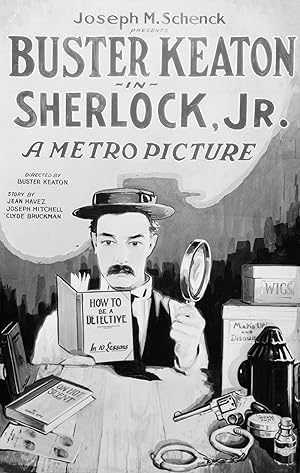
Spectacular is the right word, but it barely touches it. Sherlock Jr. is a film that thinks about cinema as a problem, as a question about the relationship between the watcher and the watched, and then solves the problem through physical comedy of the most precise and dangerous kind. Keaton’s projectionist steps into the film-within-a-film and is immediately, violently rejected by it, the landscape cutting around him with each edit so that he finds himself in a garden, then on a street, then at the edge of a cliff, then in a desert, his body the only constant in a world that refuses to cohere. The sequence predates every theoretical account of unstable cinematic space by decades. It was achieved without optical effects, through locked-off camera positions and meticulous in-camera editing, which makes it no less miraculous.
The chase sequence is masterfully shot, one watches it with hands over one’s head, not so much from suspense as from the sheer kinetic pressure of Keaton’s invention. He performed everything himself, including the motorcycle ride in which he sits on the handlebars unaware the driver has fallen off, and the combination of technical precision and physical courage is so sustained that the film occasionally becomes a demonstration of what a human body can survive for the sake of a joke. All of which makes the final image, Keaton peering through the projection booth window at the screen to learn how one is supposed to court a woman, so unexpectedly tender. He spent the whole film trying to enter the movie. At the end, he still needs it to tell him what to do. There is more melancholy in that conceit than the slapstick earns any right to contain, and somehow it does.
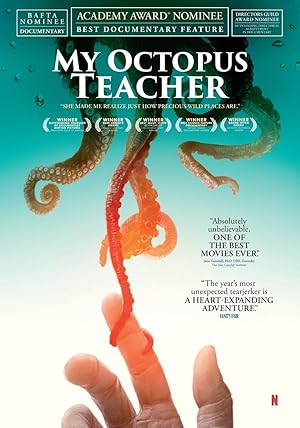
The South African kelp forest in My Octopus Teacher is filmed with the patience and chromatic richness the subject deserves, and the octopus herself, in her camouflage and play and predation, holds the attention throughout. But the framing is harder to accept than the film seems to realise. Craig Foster declines to intervene when a shark attacks the octopus on the grounds that doing so would be ‘interfering with nature,’ which raises an obvious question he never pauses to answer: is he not part of nature? The octopus may have sought his proximity precisely as a form of protection; the relationship was not symmetrical in the way the film prefers to present it.
What the film calls ‘learning’ is, more precisely, a man using a non-human creature as the occasion for his own emotional restoration. The octopus is consistently framed as a teacher, a gift, a presence that exists in order to illuminate Foster’s interiority. Not once does the film extend genuine imaginative humility towards what the octopus’s experience of this year might have been. The title announces the problem: My Octopus Teacher. The possessive, unremarked, says everything.
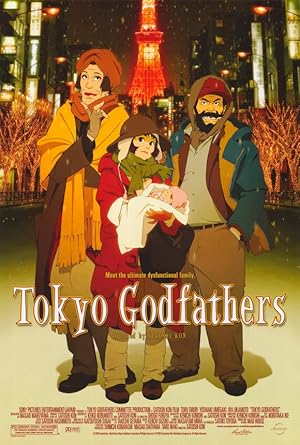
What immediately strikes one about Tokyo Godfathers is how completely it sets aside the mode one associates with Satoshi Kon. There is almost none of that technique from Paranoia Agent (2004) or Paprika (2006) of exploiting animation to dissolve the boundary between the psychological and the real, of using the medium’s plasticity as a tool for epistemological anxiety. Save for the recurring angel motif, delicately placed, this is a film that trusts its story to carry everything: three homeless people, a found baby, and a Tokyo on Christmas Eve dense with coincidence. The coincidence is the point. Kon constructs a secular miracle narrative in which the city itself seems to conspire towards reunion, each improbable accident nudging these three lives back towards the connections they have severed.
Gin, Hana, and Miyuki are among the most fully realised characters in animated film: an alcoholic with a lost daughter, a transgender woman with an abandoned past, a teenage runaway who stabbed her father in a moment she has been living inside ever since. The film treats each of them with the same unadorned compassion, never pitying them, never requiring them to redeem themselves through suffering, simply accompanying them through a night that changes the terms of their lives. The plotting risks melodrama at every turn and somehow holds its footing, because Kon understands that the genre conventions, the Christmas setting, the cascade of unlikely salvation, are not weaknesses to be concealed but honest acknowledgements that some stories require a little grace to resolve.
And that final お父さん from Miyuki, three syllables addressed to the father she fled and feared was dead, delivered with a simplicity that makes everything preceding it suddenly cohere. Animation can render the emotional absolute in a mode that bypasses irony entirely. One did not expect to be levelled by it. One was.
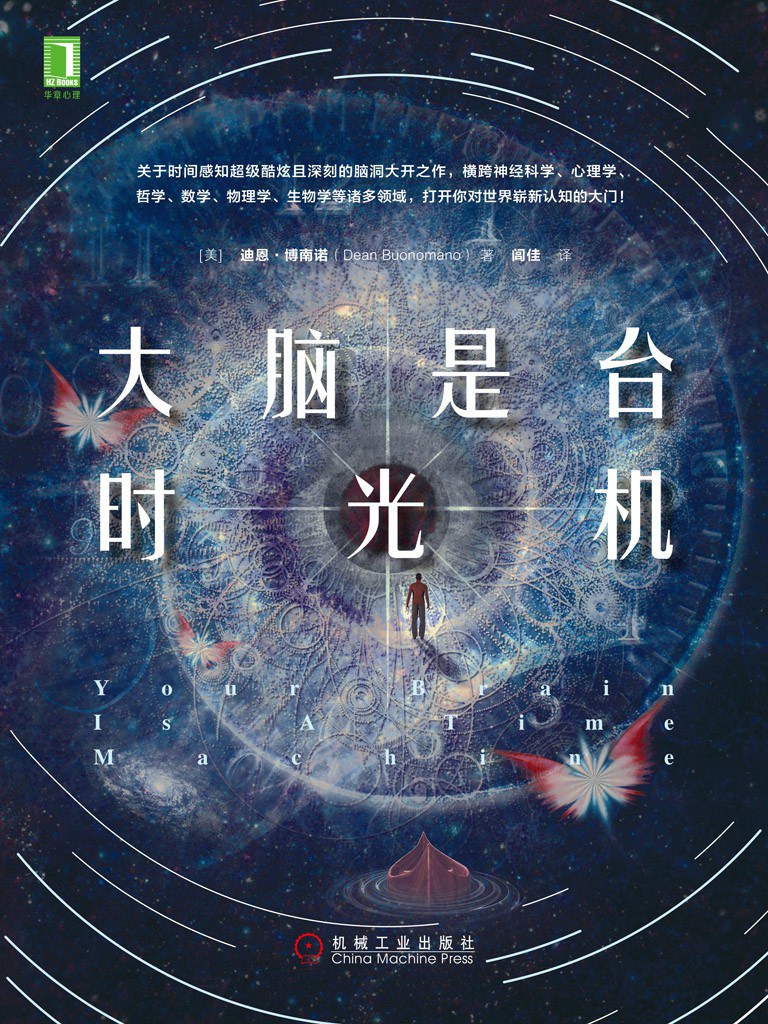
Misleading title. Your Brain Is a Time Machine spends far too long on the physics of time, relativity, the block universe, and explains all of it poorly; anyone interested would do better with Rovelli’s The Order of Time (2017). The neuroscience half, which ought to be the book’s centre of gravity, is where one expects Buonomano to deliver, and he does not. The kappa and tau effect experiments are striking, but the treatment stops well short of the question that matters: how does the brain actually construct temporal experience? The book meanders between physics, neuroscience, and philosophy without committing to any of them. Buonomano barely touches time cells, the hippocampal neurons that fire at specific moments during a temporal interval, despite the fact that they are arguably the strongest evidence for the brain’s intrinsic timing capacity beyond the sub-second scale. The distinction between interval timing, likely striatal and cerebellar, and the episodic temporal organisation performed by hippocampal sequences is never drawn. Theta phase precession, the mechanism by which place cells compress behavioural sequences into single oscillatory cycles, goes unmentioned, yet it is perhaps the most elegant neural solution to the problem of binding events across time. Eichenbaum’s late reviews remain more focused and more useful. The brain is indeed a time machine; Buonomano simply never opens the hood.
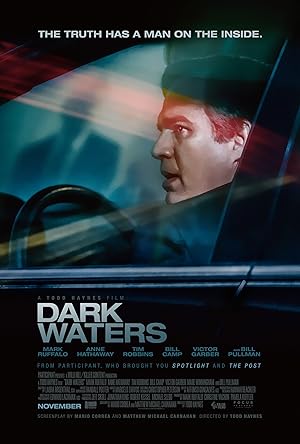
Todd Haynes and cinematographer Ed Lachman shot Dark Waters on vintage lenses through a desaturated palette of greys and institutional browns, and the effect is not period recreation but diagnosis: the film looks the way West Virginia’s contaminated water table feels. Every frame borrows the visual grammar of 1970s paranoia cinema, All the President’s Men (1976) and The Parallax View (1974), as though Haynes understood that a story about a chemical company poisoning an entire region for decades required the formal language of conspiracy, because that is precisely what it was. Mark Ruffalo’s Robert Bilott is not a crusading attorney; he is a corporate defence lawyer who stumbled onto the wrong file and could not put it down. Ruffalo plays him hunched, almost flinching, the posture of a man who knows the institution he is fighting is the same institution that trained him.
PFOA does not break down in the environment or in the body, which is why they are called forever chemicals, and the film has the same quality of persistence, of something that lodges and will not leave. Haynes films corporate malfeasance not as aberration but as system: the boardrooms are staffed not by villains but by the logic of routine decision-making, the consensus that concealment and profit are simply how things are done. This reading of institutional evil is more frightening than any individual antagonist, and it stays.
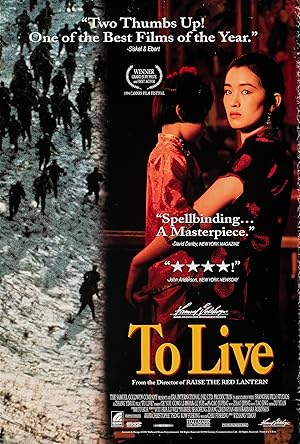
The shadow puppets are Zhang Yimou’s invention, absent from Yu Hua’s novel entirely, and they do the work that no dialogue in To Live could manage. Fugui’s puppet theatre is the one thing that survives every political upheaval: the gambling debts, the civil war, the Great Leap Forward. It is art as the residue of a life that history keeps stripping bare. When the puppets are finally burned during the Cultural Revolution, the loss registers not as political commentary but as something closer to an amputation. Zhang understood that if he gave his protagonist a craft, the destruction of that craft would say more about the era than any speech could.
Ge You’s Fugui won Best Actor at Cannes, and the performance earns it through what it refuses to do. He does not break down. He does not rage. He endures, and the endurance is its own form of horror, because it reveals how completely an era can train the survival instinct to override every other human response. The Fengxia death scene is where Zhang’s method becomes most devastating: she bleeds to death in childbirth because the trained doctors have been imprisoned as class enemies, and the only available help is young Red Guard students who have memorised ideology and nothing of medicine. They feed her seven mantou because that is what they know how to do, and the gap between their earnestness and her dying is the entire indictment.
The film was banned in China, and what earned the ban was not polemic but precision. Zhang says what he says without raising his voice. People of that era watched everything happen with no grammar for agency, no framework in which their actions could alter what was coming, and the helplessness simply floated in the air. Gong Li’s Jiazhen carries the losses her husband cannot articulate, and the two of them together constitute a portrait of survival so complete it becomes its own accusation: that a government could do this to its people, and that its people could live through it, and that living through it was not the same as being unharmed.

The plot of Devils on the Doorstep turns on the interpreter Dong Hanchen (Yuan Ding), who does not translate so much as falsify. Standing between Japanese prisoner and Chinese villagers, he rewrites threats as politeness and pleas as insults, each deliberate mistranslation widening a gap that no amount of goodwill can bridge. The device makes language itself the site of tragedy: communication, ordinarily the medium of communion, becomes the instrument through which two groups of people are shepherded towards a catastrophe that neither side can see forming. Dong Hanchen translates not between languages but between incompatible worlds, and the comedy of the early scenes, the villagers and their captive stumbling towards something resembling mutual recognition, curdles precisely because the audience can see the falsification that the characters cannot.
Hanaya Kosaburo (Teruyuki Kagawa) is the film’s proof of Jiang Wen’s thesis that circumstances merely reveal different facets of the same person. As a prisoner stripped of power, Hanaya displays a genuine, almost pathetic gratitude; restored to his uniform, he becomes capable of atrocity. The transformation is merciless because it is not a transformation at all. What crumbles under pressure turns out to be everything one had assumed was bedrock, and the film dramatises this with the consistency of a controlled experiment: the same body, three different men, the variable being nothing more than who holds the weapon. The villagers undergo the same dissolution. The film earned a seven-year ban from Chinese authorities and Jiang Wen’s removal from the director’s chair, because a war film with no heroes, only people trying to live, is a rebuke to every nationalist mythology that insists otherwise.
The last minutes make the argument formally. Shot entirely in black and white until then, the film shifts to colour for the severed head’s POV: the world seen through dying eyes, suddenly vivid, the marketplace and the sky and the Japanese soldiers rendered in the saturated tones of a life that is leaving. It is the most radical formal choice in Jiang Wen’s filmography, and it earns its place because it refuses the comfort of martyrdom. The head does not see meaning. It sees colour. And then it sees nothing.
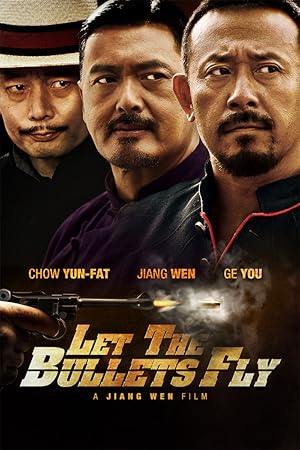
Let the Bullets Fly gives one Zhang Mazi as the only unmasked figure in a world of costumes. Every other character in the film is performing: Chow Yun-fat’s Huang Silang maintains a theatrical warlord’s grandeur that is itself a double bluff, since the real Silang and his body double are interchangeable, identity dissolved into the mechanics of power. Ge You’s Tang operates entirely through servility and calculation. Zhang Mazi alone refuses the performance, and the refusal is his weapon: his authenticity is not naivety but a form of aggression, the one move that a system built on mutual pretence cannot absorb. Jiang Wen plays this with the physical confidence of someone who has thought about what heroism actually looks like and decided it looks like a man who cannot be anyone other than himself.
The film broke box office records in China in 2010, earning 674 million yuan, and was read immediately as political allegory: the bandit-governor opposition mapped onto contemporary power structures, the townspeople’s uprising freighted with implications the censors apparently decided to tolerate. Jiang Wen has been deliberately evasive about the allegory in every interview since, which is itself a political statement of considerable precision. The film is a Rorschach test: every audience member reads their own politics into the three-way struggle between bandit, warlord, and townsfolk, and each reading is defensible because the allegory refuses to declare itself.
The Leone connection is real and visible in the wide-frame compositions, the operatic standoffs, the sense that violence is both spectacle and argument. But where Leone’s West is mythological, Jiang Wen’s Republican-era China is specifically, unmistakably political, and the action carries a distinctly Chinese argument about authentic selfhood against systemic absorption. The ending, in which everyone departs for Shanghai and the victory feels oddly hollow, is the honest conclusion: systems outlast individuals, and the pleasure of watching someone refuse to be bought is not the same as watching them win. That the film delivers this with wit and formal confidence, at the scale of popular entertainment, still feels rare. It does not reach Devils on the Doorstep (2000) or In the Heat of the Sun (1994). It was never going to. But very good Jiang Wen is a category most directors never approach.
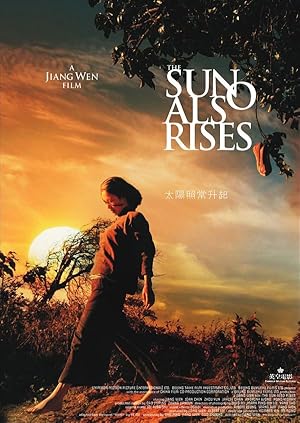
Three cinematographers shot The Sun Also Rises, each handling different episodes, and the result is a film that feels less like a single narrative than like three distinct visual worlds held in orbit by Jiang Wen’s conviction that they rhyme. Zhou Yun’s Mad Mother, standing on the train shouting into wind, is the image I keep returning to: a woman whose grief has crossed into a state that looks like madness from outside and feels like the only honest response from within. The sexual repression wound so tight it achieves its own gravity, the cold blue-grey sky pressing down on everything, Jiang Wen’s distinctly corporeal camerawork: any one of these would justify watching. Together they make a sensory argument, a film that insists on being felt before it is understood.
The four non-linear episodes move backwards through decades of Chinese history, and the structure enforces Jiang Wen’s demand at the formal level. The cold-to-warm alternation in the opening scene, where Zhou Yun is knocked down by Fang Zushe, rhymes with the cold-to-warm alternation in the final scene with the newborn, and it is a correspondence that does not announce itself, that one only notices after the fact, and that, once noticed, makes the film feel as though it had been dreaming of its own ending from the first frame. The cyclical structure underneath the surrealism is not obscure; it is patient. The film lost money, earning thirty million against an eighty-million-yuan budget, and the commercial failure is almost a confirmation: this was never a film built to be understood on first encounter. One spent the middle half-lost and half-bewildered, which is probably the correct state. By the end, I only wanted to cry.
Judgment at Nuremberg is, in practice, something like an extended, magnificently acted documentary. Abby Mann’s screenplay, adapted from his own television play, refuses simplification in its distribution of blame: the intranational pressures on ordinary Germans, the reluctance to testify against one’s own people, appeasement, the complicity of the Soviet Union and Britain and the Vatican, patriotism deployed as legal defence, the concept of so-called Laws of Nature invoked as moral absolute. The film does not simplify any of this, and the defence attorney’s arguments are presented with enough force that Maximilian Schell won the Oscar by playing the least comfortable person in the room. One personally disagrees with Judge Haywood’s verdict, and that disagreement itself illustrates the problem with anchoring jurisprudence in natural law: the intuitions feel universal until they don’t.
But the film keeps reaching for the human and forgetting that what belongs in a courtroom is jurisprudence. The issues touched on here resist being deeply examined in any bounded time, and at nearly three hours the film still feels like it has only scratched the surface of what rigorous legal argument might demand. The emotional climax, when Burt Lancaster finally speaks, is undeniably powerful; one wishes the film had trusted the law as much as it trusts the feeling.
The dual chronology of The Godfather: Part II is not a structural conceit but the thesis itself. Vito’s rise through 1910s Little Italy and Michael’s consolidation of power in 1958 alternate in extended blocks, and the parallelism forces a comparison at every cut: Vito built his empire to protect his family; Michael destroys his family to protect his empire. Gordon Willis shoots the two timelines in different temperatures, the immigrant origin story bathed in warm sepia tones, Michael’s present rendered in cold institutional light, and the colour itself becomes the moral argument that no dialogue needs to state. The same empire, two men, opposite trajectories. The warmth was lost.
Al Pacino’s Michael in the Senate hearing sits with absolute stillness while Tom Hagen (Robert Duvall) performs outrage on his behalf, and the stillness is the performance: power exercised through silence, control so total it reads as absence. When the mask finally cracks, in the confrontation with Kay, the rupture feels like something structural giving way. Robert De Niro speaks less than anyone in his storyline and communicates everything, his young Vito calibrated through months of studying Brando’s performance frame by frame, his Sicilian learned over four months in Trapani. The final image, Michael alone and ageing and irretrievably isolated, is among the most wrenching conclusions in American cinema: a man who won every battle and has no one left to tell.
Unquestionably the weakest of the trilogy, and the weaknesses are structural rather than incidental. Beyond the evident pressure of a rushed production, The Godfather: Part III suffers from two compounding problems: the last-minute replacement of Winona Ryder with Sofia Coppola in the role of Mary, which places a performer of limited experience inside the film’s climax; and the general quality of reluctance that haunts the project, the sense of a third act being performed out of obligation to the first two rather than generated from its own necessity. Michael’s ending is indefensible by any internal logic the trilogy has established, and the opera-house finale, which should devastate, is undermined before it can take hold. The trilogy problem is a real one. A third chapter almost always disappoints, burdened by the obligation to resolve what the first two films were wise enough to leave in productive tension. The Return of the King (2003) remains the exception that tests the rule. Once one accepts that this film was probably impossible to make well, it becomes bearable: a flawed conclusion to something that did not need a conclusion, carrying enough of the Corleone atmosphere to remind one, ruefully, of what was there before.
Paramount wanted to fire Coppola multiple times during production. They wanted a cheap, contemporary-set gangster picture; he fought for a 1940s period film. They wanted Robert Redford or Ryan O’Neal as Michael; he insisted on the then-unknown Al Pacino. When the rushes came back, executives thought the prints were defective because Gordon Willis had underexposed them so severely that Marlon Brando’s eyes were invisible. Robert Evans, Paramount’s head of production, rejected Coppola’s two-hour director’s cut and demanded a longer version with more family scenes. The final film runs nearly three hours, fifty minutes longer than Coppola wanted, and the irony is that Evans demanding more made The Godfather better. Almost nothing about how this film was made should have worked.
Everything works. Willis’s chiaroscuro, the deliberate masking of faces in shadow, turned out to be the visual language the material required: the darkness in the office, the sunlight at the wedding, the moral grammar established in the first five minutes and sustained for three hours. Brando stuffed cotton wool in his cheeks for his secret audition, applied shoe polish to his hair, and was so transformed that executives watching the tape did not recognise him; the performance that emerged carries the same quality of invention, a man built from the inside out, the voice and the stillness and the authority all arriving as though they had always existed. Lenny Montana, who played Luca Brasi, was a real enforcer for the Colombo crime family, and was so visibly nervous performing opposite Brando that Coppola added the scene of Brasi rehearsing his speech to incorporate the anxiety. ‘Leave the gun, take the cannoli’ was ad-libbed by Richard Castellano. The film is full of these accidents that became inevitabilities.
The baptism montage, Michael renouncing Satan at the altar while his men execute the heads of the Five Families, remains among the most devastating uses of cross-cutting in cinema: the sacred and the profane not juxtaposed but fused, the irony so precise it reads as moral verdict. Willis’s photography, warm and amber and almost nostalgic, gives the violence a beauty that is itself part of the argument: this is how power mythologises itself, and the film is honest enough to let the audience feel the seduction before it shows the cost. Watching it, one can see the conversation that would unfold across decades, Scorsese in sustained dialogue with Coppola, demythologising what Coppola mythologised. It would not be wrong to say the model is this formidable. Thanks to 山鸡 for the commentary, which made the detail finally legible.
Stardust Memories is Allen’s most nakedly adversarial film, and the one that got him into the most trouble with audiences who couldn’t tell whether they were the target. Sandy Bates, Allen’s transparent surrogate, attends a retrospective of his own work while being besieged by fans, critics, and studio executives demanding he stay funny, stay accessible, stay theirs. The Fellinian debt is acknowledged rather than concealed: the black-and-white cinematography, the harem of idealised women, the director paralysed by memory and mortality all arrive stamped with 8½ (1963)’s return address. What Allen adds, in his own characteristically sideways fashion, is the comedy of bad faith, the spectacle of an artist performing self-examination so ostentatiously that the performance becomes its own indictment. The film’s ending, in which the ‘film’ Sandy has been making is revealed to be the film one has been watching, is the oldest postmodern trick in the book; but Allen earns it, because the whole edifice has been building towards that recursive collapse.
The critics who felt personally mocked were not wrong, exactly; but later reassessments have converged on a more uncomfortable reading: Allen is satirising Sandy’s elitism as much as he is satirising the fans, staging a narcissist’s fantasy of being misunderstood and then quietly letting the staging show. The women are projections, as they so often are in this filmography, but here that projection is part of the pathology. One line cuts through all of it: ‘Relationships depend on luck. But people just don’t want to acknowledge that.’ Delivered with the flat finality of someone who has thought about this for twenty years and arrived nowhere, it is Allen’s credo and his alibi simultaneously. The film that surrounds it is too smart to be comforting, and too funny to be forgiven.
Following is the film Nolan had to make before he could make anything else, and it shows. Shot over a year of weekends on a budget of roughly six thousand pounds, in black and white, with a cast of mostly non-professionals, it has the stripped-down intensity of a calling card and the structural ambitions of someone who has already decided that chronology is a problem to be solved. The three-strand timeline, distinguishable by Bill’s bruising, does create genuine dramatic irony; the detective’s final onion-peeling of evidence is a satisfying piece of construction.
The trouble is that the non-linear editing has no purpose beyond demonstrating that it can be done. The structure reveals a twist without deepening character or sharpening theme; once the trick is understood, the film becomes, retroactively, a fairly slight story about a man being manipulated. The lead performs shifty anxiety throughout, which is at least appropriate to the material, but the second lead’s performance is something else entirely, the manner of someone reading lines with conviction they have not yet earned. One reaches for Following mainly when one needs a clear example of editing deployed as ostentation rather than argument: the formal ambition is unmistakable, but it has not yet found an object commensurate with it.
The opening of Manhattan is a sustained act of mythologisation: Isaac Davis narrating competing love letters to New York over Gershwin’s Rhapsody in Blue (1924), Gordon Willis’s black-and-white cinematography turning a city in fiscal crisis into pure romantic abstraction. Allen understood that Gershwin could do ideological work, that the music would seduce the audience into accepting Isaac’s worldview before Isaac had demonstrated he deserved it. The plot is, as noted, fairly straightforward: a narcissist cycles through women, damages each of them in proportion to his self-regard, and ends by reaching for the one person in the film who behaves with genuine integrity, only to discover, via that final scene, that he has left it too late.
The whole film is a narcissist staging his own tragedy, which means one is never quite sure how much of the irony is intentional. The critical reading that Tracy, far from being a passive figure, is the one person in the film with moral clarity, has accrued weight over the decades, not least because it makes the ending devastating in a way that resolves otherwise nagging discomfort. That final scene, its dialogue set against the Gershwin that has been selling Isaac’s self-image all along, is utterly shameless in the best possible sense: the music turns ironic, the myth collapses, and what is left is a man who has talked himself out of the only uncomplicated thing he had. Very typical Woody Allen.
Love and Death is Allen doing Shakespearean theatre in the manner of a stage comedy, which is a more precise description than it might sound. The film deploys its homages with the confidence of someone who has actually read the originals: Tolstoyan family trees and epic historical canvas, Dostoevskian interior monologue and existential guilt, Bergmanesque death imagery direct from The Seventh Seal (1957), dream sequences that borrow the austerity of Wild Strawberries (1957). The parody is affectionate throughout, never cheap, the kind that can only be written by someone who admires what they are mocking. Allen has described it as his personal favourite among his early comedies; one can see why, because it is the film where his absorption in Russian literature, genuine and deep, finds a form that matches it.
Diane Keaton’s Sonja gives the film its philosophical pressure: more articulate than Allen’s Boris, less encumbered by cowardice, she combines Natasha’s passion with Ivan Karamazov’s relentless interrogation of God and mortality. The debates between the two characters keep returning to the same Dostoevskian joke, namely that profound philosophical questions yield no satisfying answers, delivered here in vaudeville packaging. The pile of sources, Tolstoyan, Dostoevskian, Shakespearean, Bergmanesque, flagged and catalogued and stitched together, holds because Allen understands them well enough to let them contradict each other productively. It arrives at the same place Annie Hall (1977) would, two years later: life is meaningless and also worth every argument about whether it is.
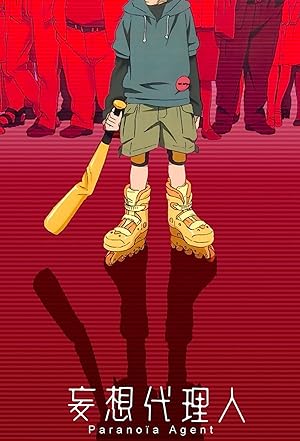
Paranoia Agent is the series Kon used as a repository for ideas that couldn’t be compressed into film-length form, which means it is also the work where his thematic obsessions are most fully mapped. Lil’ Slugger, the boy on inline skates with his bent golden bat, is a manifestation of collective desire rather than individual malice: he appears to people under pressure who need an escape route, a scapegoat, an external cause for collapse. The series understands that mass hysteria is not a pathology imposed on individuals from outside but a social compact, something people consent to because the alternative is accountability. Maromi, the pink dog mascot whose merchandise saturates the show’s Tokyo, is Lil’ Slugger’s other face: the comfort object and the threat are born from the same repressed trauma, Tsukiko’s childhood lie that became a city’s delusion.
The storytelling is gripping in the way that only architecturally precise plotting can be. One returns after each episode to re-examine the previous episode’s dream sequence with revised coordinates; the rewards are substantial and layered. It was only from episode ten onwards that the connection between Maromi and the bat became clear, which meant the final three episodes arrived with a slight sense of foregone conclusion, the revelation settling where one already, half-knowingly, expected it. That mild foreordination is not a flaw so much as a structural honesty: Kon is showing us a cycle, and cycles, by definition, have to end where they began. The final shots, a world rebuilt and already sliding back into the same patterns of denial, offer no comfort. They are not meant to.
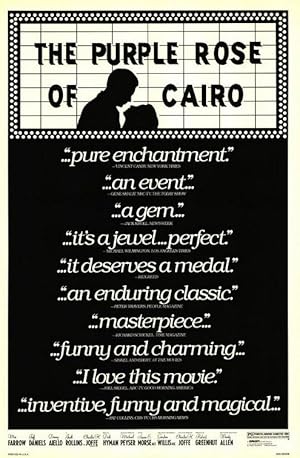
The Purple Rose of Cairo threads its meta conceit through every layer of the film instead of using it as a frame and stepping back. Tom Baxter walks out of the screen, and the gag immediately becomes a question: what does a fictional character lack that a real person has, and is the answer, whatever it is, a desirable thing to possess? Jeff Daniels plays both Tom and the actor Gil Shepherd, the wide-eyed movie hero and the calculating Hollywood professional, and the contrast does the film’s argumentative work quietly but precisely. Tom is loyal, romantic, brave, and incapable of real consequence; Gil is real, flawed, and gone the moment his career requires it. Cecilia, choosing Gil, chooses reality, and reality delivers what it always promises: betrayal dressed as pragmatism.
The Depression-era setting is not incidental. The film understands why cinema existed in the 1930s as a social institution, why Cecilia goes back every day, why the same film plays to the same audience who mouth the dialogue along with the screen. Allen loves cinema enough to make a film about the cruelty of loving it too much. The ending, Cecilia watching Fred Astaire dance through her tears until the tears dry and something close to consolation settles over her face, is among the most precisely calibrated final images in his filmography. One was still naively waiting for Gil Shepherd when the film ended; the film, having predicted this, had already moved on. It ranks close to Annie Hall (1977) in one’s estimation, and not by accident.
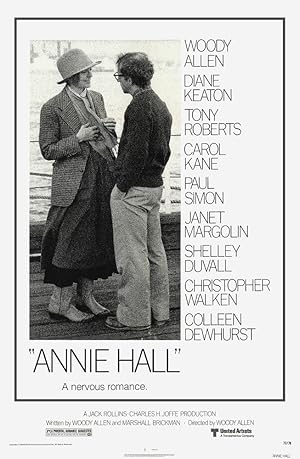
Annie Hall was originally called Anhedonia, the clinical term for the inability to experience pleasure, and the first rough cut ran 140 minutes and contained a murder mystery. Allen and editor Ralph Rosenblum spent months in the editing room dismantling the film they had shot and discovering, inside it, the film it was supposed to be: a neurotic’s post-mortem on a relationship already dead at the opening frame. That the greatest American romantic comedy was found in the cutting, carved out of a sprawling mess by two people who kept removing material until only the essential remained, is itself an argument about how art sometimes arrives: through recognition inside the wreckage. The cocaine sneeze was unscripted. Diane Keaton wore her own clothes. The eggs monologue, the one about needing the eggs, was conceived two hours before the final screening. The film that beat Star Wars (1977) for Best Picture was assembled from accidents that turned out to be inevitabilities.
The formal arsenal is the comedy’s skeleton and its subject simultaneously. The fourth-wall addresses, the split-screen therapy session where Alvy and Annie describe the same relationship in incompatible terms, the subtitle scene where what is said and what is meant run in parallel and never converge: each device is not decoration but a precise notation of how a neurotic mind processes intimacy. Alvy cannot simply experience the relationship; he must narrate it, annotate it, freeze-frame it, pull Marshall McLuhan from behind a lobby card to win an argument. The formal invention is the character flaw. Keaton’s Annie operates in a different mode entirely, her performance so naturalistic against Allen’s vaudeville that the gap between them becomes visible as a difference not of opinion but of being. She is present where he is retrospective, and the film knows this, which is why it sides with her even as it tells his story.
The final montage of memories, joyful scenes now coloured by knowledge of loss, achieves what very few films manage: it makes the sadness feel earned rather than manufactured. The Groucho Marx joke, ‘I wouldn’t want to belong to any club that would have me as a member’, is less punchline than diagnosis, a man unable to accept anything that would consent to make him happy. And then the eggs: ‘I thought of that old joke. This guy goes to a psychiatrist and says, “Doc, my brother’s crazy. He thinks he’s a chicken.” And the doctor says, “Well, why don’t you turn him in?” And the guy says, “I would, but I need the eggs.”’ I came away from it with the specific ache of mourning romantic idealism itself, the impossibility of sustaining the feeling that sustains everything else, and the knowledge that one keeps trying anyway, because one needs the eggs. Loved it completely.
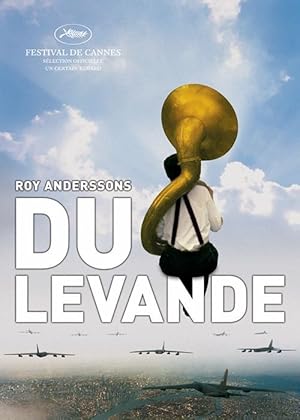
You the Living is the second panel of Andersson’s informal Living Trilogy, and arguably the most purely comic of the three: fifty-odd vignettes, each a single static wide-angle take, each a sealed universe of minor humiliation and inarticulate longing. The title is lifted from Goethe’s Roman Elegies (1795), an injunction to savour the warmth of one’s bed, and the cruelty of the irony is characteristic: these people are alive in the technical sense only. A man is executed for botching a tablecloth trick before royalty; a psychiatrist confesses he can no longer help anyone; a brass band wanders perpetually through rain. The Brechtian apparatus, the pallid faces and flat line readings, the artifice of the constructed sets, all conspire to produce not detachment but something stranger: an ironic compassion, a grief at arm’s length. That evening the occasion of watching was itself freighted: Annie Hall (1977) had just finished in the same sitting, and the combination was almost too much. What Andersson shares with Allen, across their vast stylistic differences, is the conviction that comedy and sorrow are not opposites but the same substance in two phases. One can only say that You the Living (2007) is an excellent film, and that it left one quite sorrowful, in a way that took some time to place.
Enlightenment Now is a book of graphs. Pinker selects fifteen metrics of human wellbeing and plots their improvement, presenting the display of data as though data were self-interpreting. The method does not bear scrutiny. The poverty line deployed throughout is $1.90 per day, a threshold so low that critics have pointed out the absurd result: fewer people counted as poor than as hungry or malnourished. What it measures is not poverty but the lower edge of destitution. The violence statistics use per-capita rates across centuries, ignoring the methodological objection that war deaths, as a fat-tailed distribution, cannot be analysed with standard statistics: the century without a world war looks like permanent progress until the next one arrives. The ecological frame is similarly selective: biodiversity collapse, fresh-water stress, and alternative welfare measures such as the Genuine Progress Indicator sit outside the story.
The framework that holds all of this together is the rhetorical move of loading ‘Enlightenment’ onto whichever side of any argument Pinker favours, and attributing every counterexample to ‘anti-Enlightenment forces’ or ‘progressophobia’, an accusation that ridicules rather than rebuts. The contradiction at the book’s ideological core: Pinker credits historical progressive movements for the moral progress his graphs document, then uses those same graphs to dismiss contemporary concerns about inequality, ecological collapse, and structural violence as irrational sentiment. The book mistakes the optimism of the comfortable for evidence, and calls the discomfort of everyone else a cognitive bias.
Pinker argues that language is a biological adaptation produced through natural selection, not a cultural invention transmitted across generations. Pinker marshals genuine observations in support: all human cultures develop language; deaf children exposed to impoverished sign input spontaneously invent systematic sign languages; specific brain regions are implicated in language in ways that suggest specialisation. These observations are well-documented and they deserve explanation. The problem is not the observations but the conclusion Pinker draws: that they settle the debate between nativism and its alternatives. Both sides accept these observations; neither side has resolved what they mean.
The poverty-of-stimulus argument, the book’s argumentative centrepiece, is its most exposed flank. Sampson argued that its logic would make learning in general mysterious: no learner receives negative evidence from nature, and yet learning occurs. Statistical learning research has since shown the stimulus to be far richer than Pinker assumed. The connectionist challenge from Elman and colleagues showed that domain-general networks can acquire grammatical structure without innately specified rules, a finding the book does not adequately address. Evans and Levinson later argued, from cross-linguistic evidence, that the direct universals are far fewer and less profound than nativist accounts imply, and that recursion itself may not be universal. Even on the nativist side, Chomsky’s own revisions to Universal Grammar and his rejection of Pinker’s evolutionary account left the foundations looser than the book suggests. The book presents nativism not as a live research programme contested on multiple fronts but as a matter approaching settlement. Pinker’s book has the energy of good science writing; it lacks the good faith.
The rotating hotel corridor in Inception was a hundred-foot set suspended on concentric rings, powered by electric motors, and Joseph Gordon-Levitt performed all but one of his own stunts across three weeks of filming. The freight train that tears through city streets was a real railway engine shell mounted on a tractor-trailer chassis driven through downtown Los Angeles. Hans Zimmer built the entire score on subdivisions and multiplications of the tempo of Édith Piaf’s ‘Non, je ne regrette rien’, the musical cue that warns dreamers of an impending kick, which means the famous brass notes are the Piaf song stretched to match dream-level time dilation. So much of this film was actually built rather than rendered, and the dream-world has weight because of it: the materiality is the argument, the proof that constructed realities can feel as solid as the one you wake into. The emotional content is real but it sits in a locked room at the centre of all the machinery, and the machinery is so spectacular that one sometimes forgets to feel it. Nolan shelved the project from 2001 to 2009, deciding he needed the experience of three films before he could execute it, and the patience shows in the scaffolding: every exposition beat arrives through Ariadne’s surrogate-audience function, the dream-level geography clean once the anxiety of first encounter subsides. The top spins and the cut comes, and Nolan has said the key is that Cobb is not looking at it, that he does not care, which is either the film’s deepest emotional statement or its most elegant evasion. One notices the distance. Whether the distance is the point is the question the film declines to answer.
Coming to Songs from the Second Floor only after A Pigeon Sat on a Branch Reflecting on Existence (2014) produces an odd temporal vertigo, the sensation of reading the first chapter of a book after already knowing its final page. The opening work of the Living Trilogy is also its most formally austere: 46 static tableau shots, every one of them in wide-angle fixed frame, with the exception of a single reverse tracking shot that stands out precisely because of its singularity. The chalky makeup, the flat affect, the cramped institutional interiors built in Andersson’s Stockholm studio, Studio 24: the sense of alienation crosses the screen without mediation. A girl does not know she is walking towards her death. A merchant does not know he is walking towards his ruin. The audience does not know the building outside the frame is swaying. Andersson names this condition ‘unknowing’, and makes it contagious.
The film’s deepest and most unsettling project is the representation of taming: it is saturated with its images while deliberately evacuating any reflection on it. People stand indifferent before a man weeping in the street. A teacher’s cries for help register as ambient noise. A young girl is sacrificed at a cliff-side altar in a desperate bid to restart economic progress, and the bystanders shuffle away as though from a middling theatrical event. By draining the scenes of moral commentary, Andersson sharpens the satirical edge past the point of comfort. The critique lives in that contrast between the depicted fact and the film’s silence about it. Compared to A Pigeon Sat on a Branch (2014), there is here a slightly clearer through-line in Karl’s story, but the film resists it, keeps pulling towards the collective rather than the individual. Civilisation gridlocked; everyone stranded; César Vallejo quoted somewhere in the middle: ‘I am sorry, but I cannot do anything.’ It is one of the most disquieting films one has seen.
The problem with The Strange Order of Things is not the biological thesis itself. Damasio is at his best when he traces homeostasis from single-celled life through nervous systems to feeling, making the case that affect is not a late human ornament but an elaboration of ancient life-regulating machinery. In that narrower form, the argument is persuasive: it gives feelings evolutionary depth and refuses the bad popular split between cognition as high brain work and affect as animal residue.
The book becomes frustrating when homeostasis is asked to explain culture by sheer expansion. Religion, music, art, ethics, education, governance, technology, and artificial intelligence are pulled into the same orbit without enough middle terms between bodily regulation and cultural form. The examples start to decorate the framework rather than test it. Damasio’s earlier books, especially Descartes’ Error, could make a large claim feel earned because the clinical cases created pressure on the theory. Here the theory arrives first and everything else is asked to confirm it. By the end, homeostasis has become less an explanation than a permission slip for explaining everything, which is exactly how a strong biological concept becomes intellectually useless.
Dehaene’s argument in Consciousness and the Brain is systematic and specific: consciousness is the global broadcast of information to widely distributed cortical networks, the signature of a particular computational architecture rather than a mysterious additional ingredient. The book is an extended case for global workspace theory, supplemented by experimental paradigms (masking, continuous flash suppression, the attentional blink) that allow consciousness to be turned on and off by the experimenter and the difference between conscious and unconscious processing to be studied directly.
The experimental chapters are the book’s strength. Dehaene is a rigorous cognitive neuroscientist, and the evidence from signatures of consciousness (the late cortical ignition, the P300, the involvement of frontoparietal networks) is assembled with precision. The argument that consciousness leaves a distinctive neural footprint, identifiable across different kinds of content and different kinds of manipulation, is well supported.
Where I found the theory less convincing was in its handling of phenomenal consciousness. Dehaene dismisses the hard problem somewhat too quickly for a book that claims to explain consciousness itself. Global workspace theory is strong on access consciousness, on what becomes available to report and act on, but the question of why any of it should be experienced at all remains open, and the book proceeds as though closing the functional account were the same as closing the experiential one. Valuable for the neuroscience; incomplete as philosophy.
Ninety minutes. The Beginner’s Guide asks for ninety minutes and leaves a guilt that does not wash off. Davey Wreden walks the player through a sequence of Source-engine levels made by a developer he calls Coda, narrating each one with the confidence of someone who believes proximity confers understanding: here is what Coda meant, here is why Coda stopped creating. One trusts him. That trust is the trap. Late in the game, one discovers that the lampposts appearing in level after level, presented as Coda’s signature motif, were added by Wreden himself. He modified the work he claimed to be merely preserving. He shortened an enforced wait in the prison chapter and added solutions to spaces that had resisted solution, because he could not tolerate a game without a way forward. By the final level, interpretation has become indistinguishable from invasion.
That final level is Coda’s response. Not a game but a direct address, asking Davey to stop. Stop sharing the work. Stop adding lampposts. Stop turning private sketches into public exhibitions. The player, who has been complicit in the narration for ninety minutes, absorbing Wreden’s readings, following his framings, finds that complicity reflected back: one was not witnessing a friendship but participating in its violation. Coda is fictional. The guilt is not.
The first game that made me cry. Not because it resolves anything; it refuses resolution with a precision that feels structural rather than coy. What it leaves one with is a question that has no clean answer: whether the urge to interpret another person’s interior life, to find meaning in their silences and withdrawals, is an act of empathy or an act of theft. As someone who has spent years translating other people’s words into other languages, I have never encountered a shorter, more precise articulation of that anxiety. The Beginner’s Guide does not ask to be enjoyed; it asks to be felt, and the feeling it produces is not comfort but recognition.

The history of endocrinology makes for good reading. Aroused moves from the nineteenth-century experimenters who first identified that organs produce chemical messengers into the bloodstream, through the isolation of insulin, oestrogen, testosterone, and cortisol, to the present-day complexity of the hormonal system and the political controversies it has generated. Epstein is a medical journalist, and the book has the journalist’s gift for story: the scientists are characters, the discoveries are dramas, and the wrong turns are as interesting as the right ones.
The book is sharpest where science and ideology collide. The testosterone chapter takes on popular claims about aggression with genuine scepticism: the evidence that testosterone causes aggression in humans is far weaker than received wisdom requires, and Epstein traces both the studies and the mythology with care. The insulin chapter is absorbing for different reasons: the extraordinary disputes over priority and credit behind its discovery turn the history of science into something closer to a court case, with consequences for millions of people depending on the result.
What the book trades off for readability is depth. Epstein describes the hormonal system through analogy rather than mechanism, and the analogies are good but not always sufficient; someone who wants to understand how the hypothalamic-pituitary axis actually works (the feedback loops, the pulse patterns, the receptor dynamics) will need to look elsewhere. The history is excellent; the science, simplified for a general audience, sacrifices enough precision that a specialist would find it frustrating at the edges.
Life Is Beautiful is a textbook demonstration of plant-and-payoff so precise it feels almost theoretical: every element introduced in the film’s first half, the romantic comedy set in sun-soaked pre-war Tuscany, returns with doubled force in the concentration camp sequences of the second. The riddle-loving Aryan doctor, the hat trick, the ‘Good morning, Princess!’, ‘Buongiorno, Principessa!’, the wink shared between father and son: Benigni and co-writer Vincenzo Cerami laid these fuses with extraordinary care. The formal conceit, comedy first so that one falls in love before one is asked to watch someone suffer, is borrowed from Chaplin’s logic in The Great Dictator (1940), but the emotional arithmetic is Benigni’s own. Guido’s game, the fiction he constructs around the camp’s rules to protect his son Giosuè, is storytelling as an act of love so total it constitutes a moral philosophy.
The critical controversy, whether a Holocaust comedy risks trivialising atrocity, feels beside the point in the watching of it. Benigni called the film a fable, and the word is precise: fables are not documentaries, they are machines for transmitting moral truth through the imagination. The setups are already delightful when they first appear, so that their later returns function as recognition and grief simultaneously. One could barely believe Guido was dead even at the ending; when the boy runs out to see the American tank and the score swells, one was already in tears. The film has constructed a space in which the feeling is the only true thing. Loved this film beyond almost anything.
The Irishman is structured as a triple-layered flashback, Frank Sheeran (Robert De Niro) narrating from a nursing home in old age, and that retrospective distance colours every act of violence with something it rarely has in Scorsese’s earlier gangster films: not glamour but regret, time pressing down on every frame. Joe Pesci’s Russell Bufalino is the anti-Goodfellas (1990) performance, a man whose power is expressed entirely through quietness, the soft voice and the patient silences more frightening than any of Tommy DeVito’s eruptions. Al Pacino’s Hoffa is charismatic and stubborn and tragic, a man who cannot stop being himself even when being himself is the thing that will kill him, and the phrase ‘I heard you paint houses’, mob code for killing, carries the weight of every euphemism the film uses to keep the violence at one remove from the men who order it. The scene near the end where Frank goes alone to select his coffin sits particularly vivid. The salesman asks whether it is for a woman or a man, and Frank says: ‘For me.’ A man who has outlived everything that gave his life its shape chooses the box he will be placed in alone. The ending, Frank asking the nurse to leave the door a little bit open, is Scorsese’s final word on a career spent romanticising these men: no achievement, no justice, only an old man in a room, waiting for no one who is coming.
One first encountered Howard Hughes through the name on the letterhead of the Howard Hughes Medical Institute, and assumed, reasonably enough, that it honoured some eminent scientist. The reality is stranger and more telling: HHMI was founded by an aviator-industrialist who wanted medical research to probe the genesis of life processes, which places him somewhere between a twentieth-century Elon Musk and Tony Stark, a wealthy tech obsessive whose reach exceeded every sensible boundary. Scorsese understands this type instinctively. The Aviator is not a conventional biopic in the mode of celebrating its subject from a respectful distance; it is a film about what ambition costs when the mind that houses it begins to crack.
DiCaprio renders Hughes’s OCD not as quirk or colour but as genuine, debilitating terror, and the performance is all the more remarkable for never losing the character’s imperial self-certainty even as the compulsions tighten around him. Robert Richardson’s cinematography deserves its own acknowledgement: the progression from warm two-strip Technicolor pastiche in the early sequences to a coldly clinical palette later is one of the more elegant uses of colour as psychological notation in contemporary cinema. That 山鸡 suggests DiCaprio is best suited to playing the unhinged may be reductive, but it contains enough truth to sting. One adored this film.
It is hard to articulate exactly what one feels about The Wolf of Wall Street, and the difficulty belongs to the film. DiCaprio’s speeches, his set pieces of narco-euphoria, the physical comedy of the quaalude crawl: every small gesture is calibrated to embody the nouveau riche desperate to turn money into spectacle. The performance finds the animal joy in Belfort’s derangement without once asking for sympathy, and Scorsese, who has spent his career filming charismatic criminals, understands that the most damning portrait is the one that never lifts its finger to point. The film makes the audience complicit, engineers three hours of uncomfortable pleasure, and then leaves the final image, Belfort’s seminar audience mirroring us in our seats, as a quiet indictment of everyone in the room. As storytelling craft, the film is frighteningly tight. The Swiftian reading, that this is savage satire rather than glamorisation, has been argued at length, and the debate will not be settled here: whether Belfort’s story is taken as critique or as spectacle, the narrative architecture holds either reading without strain. Whether it captures the reality of Wall Street, only those who ran it can say. The storytelling itself is among the tightest Scorsese has produced.
The premise of Frequency, a ham radio inexplicably bridging 1969 and 1999 via an aurora borealis anomaly, asks for a particular kind of good faith, and the film earns it. Behind that device is a family drama about a son who never got to know his father, wrapped in a science-fiction shell just substantial enough to carry the emotional weight without collapsing under its own logic. Dennis Quaid and Jim Caviezel, who never share the screen, generate genuine chemistry through the architecture of Toby Emmerich’s screenplay and the formal conceit that forces them to act against a radio microphone rather than each other.
The thriller mechanics, the butterfly-effect ripples that saving a life in 1969 sends cascading through a 1999 murder investigation, are tighter than the genre usually demands, and the telegraphing of beats, the way certain shots hint clearly at what is coming, reads less as a flaw than as craft. By the final act, one wanted to cry. It is a very fine story.
Mulholland Dr. is, with some effort, untangleable: the first two-thirds as Diane Selwyn’s guilt-ridden wish-fulfilment fantasy, the final act as its brutal dissolution, the blue box as the threshold object that lets the real intrude upon the imagined. The Silencio theatre sequence, in which Rebekah Del Rio’s a cappella ‘Llorando’ continues after she collapses mid-performance, crystallises the film’s governing logic: the illusion survives the body that produces it. As a piece of arthouse cinema, that scene earns its reputation; the film around it is a less settled proposition.
The critical consensus that the film is ‘incomprehensible’ is mostly the wrong objection, a failure of patience rather than a genuine narrative defect, but there are structural problems here that the Lacanian scaffolding (desire structured around absence, fantasy collapsing when the Real intrudes) tends to paper over rather than resolve. Lynch’s most significant miscalculation may have been underestimating how thoroughly the Freudian apparatus would be deployed: now every dream in a film automatically summons the couch, producing a critical discourse so thick with psychoanalytic attribution that the film’s stranger, more irreducible textures get flattened. Taken as a semi-commercial semi-arthouse object, it is more than acceptable. As the greatest film of the century, the designation a BBC poll awarded it, one remains sceptical.
The Thirteenth Floor arrived alongside The Matrix (1999) and eXistenZ (1999), forming an unofficial triptych of simulation-theory cinema at the end of the millennium. It is the quietest of the three, a noir detective story at its surface, and it was commercially crushed by the cultural gravity of The Matrix (1999), which means its philosophical ambition has been consistently undervalued. The adaptation of Daniel F. Galouye’s novel Simulacron-3 (1964) gives the film a literary pedigree that arguably makes it the oldest root of what later became the modern simulation-cinema family tree: nested realities, the question of whether simulated consciousness deserves moral consideration, and the vertigo of a ‘base reality’ that may itself be suspect.
The effects date in the way that Tron (1982) dates: the ‘edges of the world’ imagery, where the simulation simply stops and gives way to wire-frame void, carries the same endearing period texture. Everything else holds up rather well. As a precursor to Inception (2010), the structural kinship is clear: layered constructed realities, protagonists navigating downward through ontological floors, an ambiguous ending that refuses to confirm where bottom is.
The first half of The 400 Blows holds the attention; the latter portion confirms what 山鸡 had suggested, that the French New Wave would not be immediately congenial. I can relate to only a very small sliver of Antoine Doinel’s (Jean-Pierre Léaud) world: the indifferent parents, the punishing school system, the particular Parisian grimness of the postwar bourgeois interior are all recognisable as types, but the texture of that life is distant in a way that proximity to one’s own formation makes it difficult to bridge. The jump-cut editing, the deliberate refusal of classical continuity, sits against the grain of one’s instincts in a way that feels honest to acknowledge rather than dress up as appreciation.
And yet, with all of that, the film holds. The image quality is startlingly crisp for a film shot in 1959; it looks nothing like 1959. Truffaut won Best Director at Cannes and deserved it. Then Antoine runs, reaches the sea, and Truffaut freezes the frame on his face. The ocean one had been anticipating since before the film began, the sea large enough to hold a brutal adolescence, arrived, and offered nothing, and that was everything.
Coherence is gripping in the most literal sense: one’s attention does not slip for the full eighty-odd minutes, no small thing for a film shot over five nights without a script, on character notes alone. The many-worlds conceit, a passing comet acting as a decoherence event that allows the boundaries between parallel versions of the same dinner party to dissolve, is handled with the confidence of a film that uses science as structural logic rather than as decoration.
The complaints one wants to register are less about the film itself than about its reception. Reviews from self-identified ‘science students’ insisting the quantum-mechanical background is ‘hardcore’ or ‘rigorously accurate’ deserve a precise objection: neither the Copenhagen interpretation nor the Everettian many-worlds reading supplies empirical warrant for a passing comet producing visible parallel-timeline bleed at a dinner party in Los Angeles. The question of why this particular setup is held to be more scientifically rigorous than Your Name (2016)’s comet-and-time-swap is one the film’s more credulous admirers have not adequately addressed. Suspension of disbelief is the correct frame, and the film earns it honestly. One should not mistake that generosity for physics.
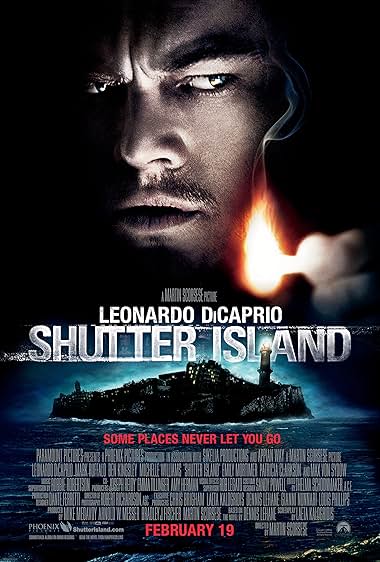
Shutter Island operates in the key of sustained dread, the kind that Scorsese engineers not through shock but through the slow, architectural accumulation of wrongness: an island that withholds its geometry, a face that won’t quite match its name, a score that tilts the inner ear just enough to make solid ground feel provisional. The film borrows the grammar of noir and Gothic melodrama, storms, labyrinthine corridors, women who appear and dissolve, and turns them into a phenomenology of guilt. Dennis Lehane’s source novel is a puzzle box; Scorsese’s adaptation is something stranger, a meditation on what the mind will construct to protect itself from what it already knows.
The ending at the lighthouse gathers everything the film has withheld and presses it into a single ethical question. Teddy Daniels (Leonardo DiCaprio) asks whether it is worse to live as a monster or to die as a good man, and the line carries the weight of a verdict passed from the inside. The horror is not the revelation but the choice: that a mind, fully restored to itself, might deliberately reach back into the dark rather than bear what lucidity costs. Scorsese holds on the lighthouse long enough for its symbolism to collapse into something rawer, not a beacon but a terminus, the place where self-knowledge and self-erasure become indistinguishable. Over three months of half-watched films passed before anything struck with comparable force.
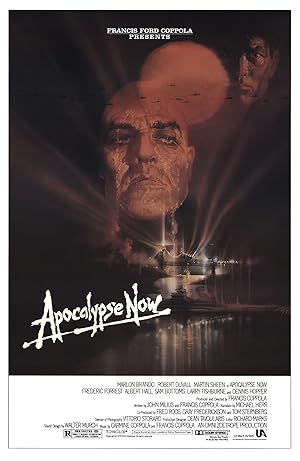
I had read Heart of Darkness (1899) and thought: this cannot be filmed. Not the prose, which is Conrad’s instrument of entrapment, and not the novella’s claim that the darkness is not in Africa but in the men who arrive there with lanterns and ledgers and the vocabulary of civilisation. Then Apocalypse Now appeared, and the moment Willard’s target turned out to be named Kurtz, something snapped into focus. Coppola understood that Conrad’s subject was not Africa but the structure of imperial self-mythology, which is why transposing it to the American war in Vietnam is not an adaptation so much as a translation into the idiom where the argument is still alive. The river journey deepens into jungle that the film renders as a kind of sentient suffocation, each stop further from command and closer to the unmediated thing that command exists to deny.
The Do Lung Bridge sequence is the philosophical bottom. Willard arrives at a forward position being shelled in darkness, finds no commanding officer, and encounters a soldier who, when asked who is in charge, replies: ‘Ain’t you?’ The line is the war’s epitaph. Kilgore’s helicopter assault, Wagner’s ‘Ride of the Valkyries’ blasting over napalm strikes while surfers scout the break, is the absurdist self-mythology of American military power performed as spectacle for its own audience, and the horror is that the spectacle works, that the music makes it beautiful, that one watches with something dangerously close to exhilaration before the smell of napalm in the morning arrives and the exhilaration curdles. Walter Murch, who coined the credit ‘Sound Designer’ on this film, understood that war cinema’s most insidious weapon is its capacity to make destruction gorgeous. Marlon Brando arrived on set at three hundred pounds, had not read Heart of Darkness, and improvised an eighteen-minute monologue in near-darkness that Coppola and the editors carved into Kurtz’s philosophical core. ‘The horror, the horror’ works exactly as it works in Conrad: not as description but as the only honest account a mind can give of itself after it has seen what it has done. The production’s own descent, Typhoon Olga destroying sets, Martin Sheen suffering a heart attack, Coppola mortgaging his house, became legend, and the legend is appropriate because the film is about what happens when an enterprise built on rational purpose travels far enough from its origin to discover what it was for. Every sense of shock from reading the novella applies here, because it is the same shock.
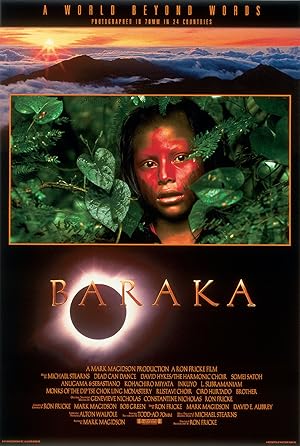
Baraka is the cinema of the overwhelming image, and for much of its ninety-six minutes the ambition holds. Almost every frame is composed with a rigour that makes most narrative filmmaking look slovenly; Fricke’s 70mm photography turns the human face, the ritual gesture, and the geological formation into objects of equivalent and mutual gravity. The cut between the chick-processing factory and the Tokyo morning commute is the film at its strongest: baby birds sorted along conveyor belts, then salarymen sorted through subway turnstiles, the visual rhyme so precise and so brutal that the argument, that industrial modernity processes human beings as it processes livestock, arrives without a single word, in the gap between two images. It is Eisensteinian montage deployed with absolute economy, delivered in the form of a juxtaposition lasting perhaps ninety seconds. Outside this sequence and a handful of others, the film struggles to escape the aesthetic of the very wealthy graduation reel. Scenes from different continents accumulate rather than cohere; the transitions feel arbitrary where they should feel inevitable, as though Fricke trusted the beauty of each individual shot more than the argument they might collectively make. The film gestures at a unified vision of humanity without quite constructing one. What it does construct is still enough.
The premise is eleven years in the gestation, the creative DNA descending from an abortive attempt to remake Heavy Metal, and Love, Death + Robots announces itself in the first episode with Sonnie’s Edge: a body-horror opener that sits somewhere between cyberpunk and rape-revenge narrative, provocateur before it is anything else. The critics who found the season too preoccupied with violence and titillation were not wrong. What they missed is that the season’s weakest episodes do not damage the best ones, and the best ones are extraordinary.
Zima Blue is the clearest case: a pool-cleaning robot who becomes a celebrated artist, all aesthetic ambition and self-erasure oriented towards reclaiming the first blue tile it ever perceived. The animation strips down as the story does; the visual language chooses simplicity because the narrative is about returning to simplicity. Alberto Mielgo’s The Witness goes in the opposite direction, building a cyberpunk loop of violence and desire with a visual grammar drawn from cinema and painting rather than animation convention, the graphic simplification underlying each frame co-existing with an eerie photographic presence. Good Hunting extends the range further still, beginning as a martial-arts fairy tale and pivoting into steampunk body-horror, tracing female agency and colonial transformation across an entire epoch in under fifteen minutes.
The format rewards selectivity: one approaches this season the way one approaches a short story anthology, knowing some pieces will not work and that the question is always whether the strongest justify the collection. They do. The season established that animation could carry adult philosophical fiction without burying the idea under spectacle. Zima Blue, in particular, feels permanent: the image of an artist dissolving back into their first perception is not something that one metabolises quickly.
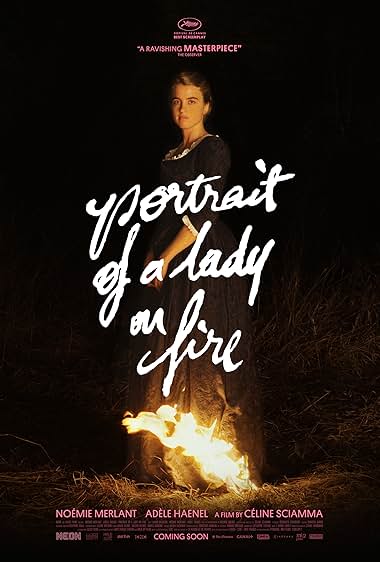
Portrait of a Lady on Fire has been received as a landmark of queer cinema, and the case is not baseless: Sciamma constructs a visual world from which the male gaze is architecturally excluded, where desire is rendered through the dynamics of mutual looking rather than the unidirectional economy of painter and subject, and where the 18th-century setting removes modern identity vocabulary entirely, universalising the love story by stripping it of its labels. The female gaze is practised frame by frame; looking itself becomes the film’s grammar.
The ending, however, sits in uncomfortable proximity to a failure that has become a pattern. When queer films resolve into lingering shots of beautiful women weeping to Vivaldi, grief aestheticised until it becomes another form of gorgeous suffering, one wonders whether the refusal of resolution has done any real work or simply substituted mood for meaning. Call Me by Your Name (2017) reached for the same mood and found only a fireplace and an ache without origin. Sciamma’s film is more disciplined, more intelligent, and at least free of that film’s troubling age dynamics; but the final passage, with its emotional ellipses and its unmotivated transitions, suggests that ‘queer’ is still being conflated with ‘atmospheric inconclusiveness.’ The earlier scenes, when the women are simply together and the film trusts that sufficiency, are worth the rest of it.
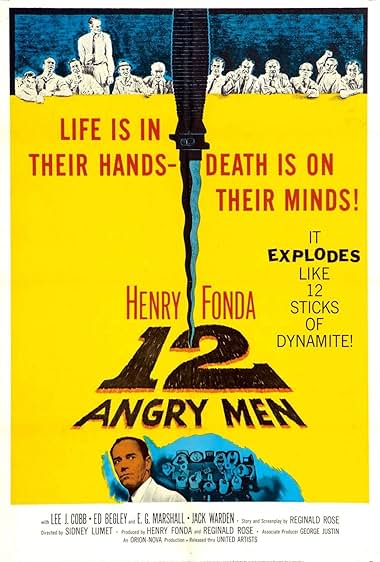
At the outset of 12 Angry Men one assumes, reasonably, that twelve characters confined to a single room for ninety-five minutes will blur into an undifferentiated mass of grievance and opinion. By the halfway mark, each juror has become as distinct as a character in a nineteenth-century novel: their class anxieties, their projection mechanisms, their specific modes of intellectual dishonesty all legible in the way they hold their bodies, the syntax of their interruptions, the precise character of their stubbornness. Sidney Lumet’s camera performs the psychological pressure invisibly, migrating from wide-angle shots above the sightline in the early deliberations, spacious, calibrated, almost bureaucratic, to telephoto lenses below eye level as the room contracts around the last holdout, the space itself becoming an instrument of the film’s argument.
The film is not, finally, about whether the boy is guilty; it is about what it costs a man to confront the fact that his certainty was never about the boy at all. Lee J. Cobb’s Juror 3 carries a wound that the film discloses slowly and without sentimentality: the estranged son, the photograph, the accumulated damage of a man who loved harshly and cannot account for what was lost. His final breakdown, barely two words, barely a whisper, is not catharsis in the theatrical sense but something rawer: a man finally seeing himself clearly enough to surrender a verdict he has been carrying around in place of grief. The film ends and the boy walks out into sunlight the camera has never shown us, because the story was always about the room.
The Quantum Story takes the form of forty chapters, each anchored to a specific paper or experimental result, spanning Planck’s 1900 blackbody paper through early-twenty-first-century debates on decoherence and quantum information. The approach is historiographically careful: characters appear as people with commitments and blind spots rather than as emblems of ideas, and Baggott, a physical chemist trained at Oxford, distinguishes throughout between what physicists believed and what the evidence supported. The prose is fluid for material this demanding.
The main reservation is scale. The book reliably tracks who presented what argument to whom and when, but it is steep, and the later chapters on quantum information and decoherence are compressed enough that readers without prior background will need to supplement. One does not need to finish it to benefit: the early chapters on the old quantum theory and the Copenhagen debates reward reading even if the later sections remain partially opaque, and the book is less forbidding in practice than most reviewers suggest.
Rebecca Skloot spent ten years researching The Immortal Life of Henrietta Lacks, and the research shows. The book weaves three stories together: the scientific history of HeLa cells, the most widely used human cell line in biological research; the biography of Henrietta Lacks herself, a Black woman from Baltimore who died of cervical cancer in 1951 and from whose tumour the cells were taken without her knowledge or consent; and Skloot’s own investigation, conducted alongside Henrietta’s daughter Deborah, which is as much about the Lacks family’s relationship with a history they were excluded from as it is about the cells.
The ethical dimensions are handled without sentimentality. Skloot does not flatten the researchers who took the cells into villains; the medical culture of the 1950s treated biological samples as institutional property rather than as belonging to the patient, and Lacks was not uniquely wronged so much as paradigmatically wronged in a system that wronged many. The cruelty is not that her cells were taken, but that the family learned from journalists rather than scientists, that they remained poor while institutions profited, and that Henrietta became a cell line before she became a person in the historical record.
Andrew Parker’s career has moved between the Australian Museum, Oxford, and the Natural History Museum in London, and In the Blink of an Eye carries the breadth of that accumulated natural history visibly. The book is stocked with animal optics, structural colour, and evolutionary oddities; many of the examples are interesting, and the prose moves well. As science communication it is enjoyable.
As a case for its own argument, it is less satisfying. Parker’s Light Switch Theory holds that the Cambrian Explosion was triggered by the evolution of eyes in predators, which suddenly made external appearance a matter of survival for prey; it receives surprisingly little dedicated treatment for a book premised on a single thesis. The theory’s deeper problem is timing: critics including Martin Brasier have argued that predatory behaviour was already spreading well before camera-type eyes appeared in the fossil record, which means the sequence the theory requires does not hold.
Melanie Mitchell writes about complexity science from the inside: she has worked with John Holland on genetic algorithms and with Douglas Hofstadter on analogy and cognition, and the book reflects intimate knowledge of the field, not an encyclopaedic pass through it. Complexity covers cellular automata, self-organised criticality, genetic algorithms, network theory, and information theory as it applies to living systems, and the survey is well judged, building from simple examples towards the harder conceptual questions.
What the field lacks, and what Mitchell honestly acknowledges it lacks, is a satisfactory definition of complexity itself. The book is a tour of phenomena that seem to instantiate something called complexity, systems where rich behaviour emerges from simple rules, where small-scale interactions generate large-scale structure without a blueprint, but the theoretical unity is still aspirational. The multiple candidate definitions (computational, thermodynamic, logical depth, effective complexity) are reviewed without resolution.
The most useful insight, and the one that stuck longest, is that complexity often lives at the boundary between order and chaos: too much order and the system cannot adapt; too much disorder and no pattern persists long enough to be selected for. This “edge of chaos” framing has been contested, and Mitchell is honest about the evidence, but as a heuristic it has kept its grip. A clear, honest introduction to a field still looking for itself.
I read The Hobbit in Chinese at around fifteen; Peter Jackson’s films had come first, then the trilogy, and the prequel was the last of the sequence. The world announced itself immediately: Bilbo’s pantry stocked for a party he did not plan, the riddles in the dark, Smaug’s voice rumbling through the Lonely Mountain. When I reread it in English at Cambridge, walking through countryside not unlike the English pastoral that Tolkien loved, the tone I had missed in the Chinese reading came through: that mixture of cosiness and danger, of fireside warmth and sudden violence, which is Tolkien’s signature and which no imitator has ever replicated.
Bilbo’s heroism is the heroism of someone who would rather be at home. He is not brave; he is stubborn, and curious, and too polite to refuse. The riddle contest with Gollum, the best scene Tolkien ever wrote in any book, is a contest between two creatures who are far more alike than either would admit, and the Ring passes between them through an accident that Tolkien later elevated into theology. On rereading, the melancholy outweighs the adventure: Thorin’s death, the desolation of the dragon, the sense that every quest exacts a cost the questers did not anticipate. A children’s book that an adult reads differently, and the difference is the point.
The ending is the book. Everything in The Return of the King builds towards the Scouring of the Shire and the Grey Havens, and those final chapters turn victory into an accounting of cost. Frodo saves the Shire but cannot live in it; the wound is too deep, the Ring’s absence an amputation that will not heal. When he sails from the Grey Havens, he sails because there is nowhere left for him in the world he saved. Tolkien understood that the hero’s reward could be departure, and that some wounds can only be treated by leaving everything one fought for behind. The battle sequences are extraordinary, Pelennor Fields in particular, but they matter less on rereading than Denethor’s despair, Éowyn’s fury, and Sam carrying Frodo up Mount Doom. Sam carries the moral weight of the entire trilogy, and his endurance is not heroic in any classical sense; it is the endurance of someone who loves his friend and cannot imagine stopping. The destruction of the Ring, Frodo’s failure at the Crack of Doom and Gollum’s accidental redemption, is Tolkien’s deepest theological statement: that grace operates through the least likely instruments, that mercy shown to the wretched is never wasted even when it appears to have been.
I finished the trilogy at Cambridge in early 2020, weeks before the world shut down, and the Grey Havens hit differently than they had in Chinese as a child: a farewell to a place I was about to leave. The Shire was scoured; the hobbits rebuilt it; but Frodo could not stay. I have carried that image since.
The structural gamble of The Two Towers is to split the Fellowship and run two narratives in parallel without intercutting: Books III and IV are self-contained, and the effect is disorienting in exactly the way that Tolkien intends. The reader experiences the separation as the characters do, with no knowledge of how the other half fares. Book III, the war narrative, has Helm’s Deep and the Ents’ march on Isengard, which are the trilogy’s most kinetic set pieces; Book IV, Frodo and Sam’s journey through Ithilien and into Mordor, operates at the opposite pitch: slow, intimate, claustrophobic.
Gollum is the great achievement of this volume. Tolkien gives him interiority without redemption: the Sméagol-Gollum duality, the creature arguing with itself, wanting to be good and wanting the Ring, is psychologically precise in a way that nothing else in the trilogy attempts. Sam’s distrust of Gollum and Frodo’s pity for him create a three-way dynamic that carries more tension than any battle. The tragedy is that Frodo is right to show mercy, and Sam is right not to trust, and neither rightness prevents the catastrophe that follows. Treebeard’s grief for the lost forests is the passage that hit hardest on rereading. Tolkien was writing about industrialisation, about the destruction of the English countryside that he loved, and Treebeard’s slow, patient fury at the felling of trees has an ecological resonance now that it could not have had in 1954. The Ents are Tolkien’s answer to the question of what happens when the natural world decides to fight back, and the answer is both magnificent and insufficient: they win the battle and lose the war, because the forests are already diminished beyond recovery.
I first read The Fellowship of the Ring as a child in Chinese, and the textures outlasted the plot: Frodo sneaking mushrooms from Farmer Maggot’s field, the smell of pipe-weed in the Prancing Pony, the terror of the Nazgûl on the road. When I came back to it at Cambridge, reading the English for the first time, those textures sharpened into something architectural. Tolkien builds Middle-earth the way that a geologist builds a landscape: layer by layer, stratum by stratum, each culture and language resting on the one beneath it, and the reader’s experience of depth is structural rather than metaphorical. One feels the weight of history in every place name because the history is actually there, documented in appendices and unpublished manuscripts, generating the text from below.
The departure from the Shire is the emotional foundation of the entire trilogy. Tolkien understood something that most fantasy writers do not: that adventure means loss, that leaving home is a wound, not merely the beginning of a story, that the story spends three volumes failing to heal. The Shire chapters are long because they need to be; the reader must love the Shire as much as Frodo does, or the sacrifice means nothing.
Reading this in England changed it. I had walked through the Cambridgeshire fields that look exactly like the Shire, and the hobbits’ world had become something remembered rather than imagined, which made the threat to it feel personal in a way that the earlier reading in Guangzhou had not. The Council of Elrond, which had once felt tedious, now read as the most important chapter in the book: a room full of people who do not trust each other deciding that someone must carry an impossible burden, and the smallest person in the room volunteering.

Connectome is strongest when it stays with the machinery: electron microscopy, image segmentation, C. elegans, mouse retina, the stubborn fact that neural circuits have to be traced before they can be understood. Seung is good at making scale legible. A synapse becomes a data problem; a cubic millimetre of tissue becomes an almost absurd archive. Reading it at Cambridge, when neuroscience was becoming a professional path rather than an intellectual weather system around me, I appreciated the ambition, and the book did clarify why wiring diagrams matter.
The problem is the slogan behind the project: the connectome as the self. That compresses a genuine insight into a metaphysical overreach. Connectivity constrains memory, personality, and behaviour, but it is not the whole person, and a static map of connections is not the same thing as dynamics, neuromodulation, plasticity, embodiment, or history. The late gestures towards mind-uploading make the problem worse, turning a concrete technical programme into aspirational transhumanist fog. As a map of a field, Connectome is serviceable; as an argument about identity, it mistakes the wiring diagram for the life conducted through it.
The premise is irresistible: an interactive film about a programmer in 1984 adapting a choose-your-own-adventure novel into a video game, the viewer making choices for the protagonist, the protagonist gradually becoming aware that someone else is controlling his actions. The marriage of form and theme, free will interrogated through a format that enacts its absence, is a structural conceit that sounds extraordinary in description. In practice, Bandersnatch is a tech demo wearing a narrative’s clothes. Fionn Whitehead does what he can with Stefan Butler, but the branching paths fragment characterisation to the point where no single version of the story accumulates enough weight to connect. One reaches an ending, is prompted to try again, reaches another, and the repetition does not deepen the experience; it dilutes it.
The meta-narrative, Stefan told he is being controlled by a viewer on Netflix in the twenty-first century, is clever exactly once. The problem is not the interactivity itself but what it reveals about the gap between concept and execution: choose-your-own-adventure storytelling and emotional investment may be structurally incompatible, the freedom to choose also the freedom not to care. As a technological experiment it is impressive. As drama it is thin. The best Black Mirror episodes leave one with a single image that refuses to leave; Bandersnatch leaves one with a flowchart.
Journey to Rodrigues is Le Clézio’s most intimate non-fiction: a pilgrimage to the island where his grandfather searched for pirate treasure at the Anse aux Anglais, following the same paths, reading the same volcanic landscape, trying to understand a man he never met through the geography the man obsessed over. The book is companion to the novel The Prospector (1985), which fictionalises the same material, but what the novel dramatises, the journal records: the angles of sunlight on black sand, the precise coordinates of ravines mapped in the grandfather’s notes, the slow accretion of geographical knowledge that becomes, in Le Clézio’s hands, a form of love.
What surfaces beneath the treasure-hunting narrative is a meditation on inheritance and loss. The grandfather’s obsession was driven by the forced sale of the family estate, Eureka, on Mauritius; a dispossession that scattered the family and turned the treasure into a substitute for what could not be recovered. Le Clézio’s Mauritian roots run deep, and Rodrigues is a site where personal and colonial history intersect: a tiny fragment of the Indian Ocean world that European empires used and discarded. The treasure is never found, and Le Clézio arrives at the admission that closes the book: one cannot share dreams, not even an ancestor’s. Coming to this after years of reading Le Clézio, I recognised the same restlessness that drove Hogan’s flights and Lalla’s return: the pull of origins, the persistence of what is invisible.
And Quiet Flows the Don is formidable in scale, though the scale kept me at some distance. Sholokhov spent more than a decade writing the four volumes, following the Cossack communities of the Don region through the First World War, the Revolution, and the Civil War. The strongest pages understand history as weight bearing down on households: conscription, rumour, hunger, reprisal, grief. The Cossack world feels dense with seasonal labour, horses, songs, kinship, pride, and old grudges, and the novel’s achievement is to make that world substantial enough that its destruction carries weight.
Grigory is the novel’s moral pivot, a man of profound instinct and no ideology who fights on both sides, loves two women, kills many men, and survives everything except his own contradictions. Sholokhov does not give him a programme; he gives him desires, loyalties, pride, and a capacity for violence and tenderness in approximately equal measure. That makes him absorbing, yet also exhausting. The novel’s passions are huge and often repetitive, and the women around Grigory, especially Aksinia and Natalya, carry the consequences of a world described more fully than they are allowed to inhabit.
The steppe sections are the parts I admire most. Sholokhov renders the Don’s flooding, the grass, the hawks, and the changing weather as a record of human events, so that landscape and history move alongside each other with a patience the plot sometimes lacks. Still, admiration is the right word. The novel is monumental, and sometimes one feels the monumentality being hauled into place.
The final image, Grigory returned to his ruined home with his son in his arms, everything else gone, is desolate because it refuses drama: this is just what remained.
The autobiographical and scientific strands of In Search of Memory belong to the same argument at different scales. Kandel begins with Vienna: the Anschluss, classmates who stopped speaking to him, Kristallnacht two days after his ninth birthday, his departure with his brother in April 1939 and his parents’ escape in September. Those scenes give memory an urgency that precedes the laboratory. The Nobel is an outcome, not the centre of gravity. Coming after Godfrey-Smith’s philosophy of science, the book felt like an account from inside how a research programme finds its object: a question about history, trauma, and mind narrowing until it can be touched.
The Aplysia chapters turn reductionism into an intellectual discipline. Kandel chooses the sea slug because the gill-withdrawal reflex, identifiable neurons, and sensory-motor synapses make one piece of memory experimentally legible. Serotonin, cAMP, PKA, CREB: short-term synaptic modulation opening into long-term structural change. Psychoanalysis supplies the question, behaviourism the behavioural grammar, cellular neurobiology the mechanism, and molecular biology the point at which memory begins to show its machinery. Kandel is generous about that machinery of discovery as well: Tauc, Schwartz, Greengard, Bailey, and the Columbia group appear as part of the apparatus, not as ornamental acknowledgements around a solitary genius.
Kandel’s great strength is his refusal to let explanation disenchant. The childhood memories of Vienna are not explained away by synapses; the synapses make their persistence stranger, more material, and more moving. His conversion from literature and psychoanalysis to biology becomes the book’s real drama: a humanistic question surviving by becoming experimental. By the end, a life has become a method.
Tomasello argues that human language and communication arise from a uniquely human capacity for shared intentionality, for understanding that another being has goals and beliefs distinct from one’s own, and for using that understanding to communicate rather than merely to signal. The comparative developmental psychology is the book’s strongest material: the experiments distinguishing what human infants can do from what great apes can do, and locating the divergence in the capacity for joint attention, are carefully constructed and the conclusions well-supported.
What I found less convincing was the theoretical architecture erected on this foundation. The jump from shared intentionality to the full complexity of human linguistic convention involves several moves that Tomasello makes quickly and that I was not always persuaded were warranted. Tomasello’s central insight is that human communication’s distinctive feature lies in mutuality of understanding, the fact that both parties know what both parties intend, more than in complexity of signal. The book reads like a specialist monograph partially adapted for a wider audience without completing the transformation; the evidence sections are rigorous, but the broader claims accumulate more smoothly than the evidence supports.
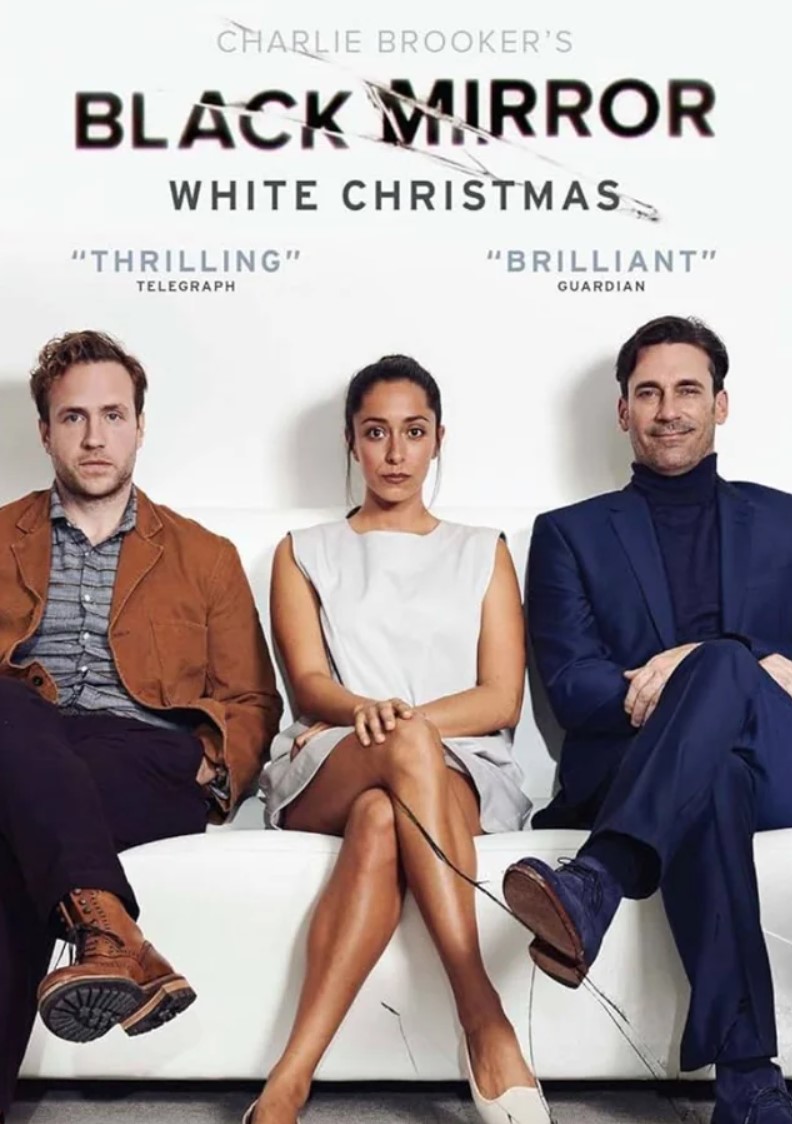
Black Mirror: White Christmas is the show’s masterwork. Jon Hamm and Rafe Spall sit in a remote cabin on Christmas Day, trading three nested stories that slowly reveal themselves as a single mechanism. The structure alone is worth studying: Hamm’s Matt narrates his backstory as a dating coach using augmented reality eyepieces to guide men through encounters, a setup that plays as dark comedy until it does not. Then the cookie: a digital copy of a person’s consciousness, extracted and enslaved as a smart-home assistant, subjected to time dilation until months of solitary confinement break its will. Then Spall’s Joe, trapped in a world where ‘blocking’ another person renders them a featureless grey silhouette, unable to see or be seen. Each story expands the show’s vocabulary; together they give Brooker his clearest account of what technology does to the boundaries between persons.
The final reveal, that the entire conversation has itself been a simulated interrogation, collapses every frame of reference the episode had established. And then the punishment: Joe’s cookie set to experience a thousand years per minute over a Christmas weekend, ‘I Wish It Could Be Christmas Everyday’ playing on loop, a sentence so disproportionate to any concept of justice that it stops being about crime and becomes about what cruelty looks like when it costs nothing to inflict. Matt’s real-world punishment is quieter and almost worse: placed on a permanent registry, blocked by everyone, he walks through the world as a red silhouette, visible only as a warning.
I have watched a great deal of television. I have not encountered seventy minutes that use their structure this ruthlessly. Every scene does double work: what it means on first viewing and what it means once one knows the frame is itself a frame. White Christmas is the episode I would hand someone who asked what Black Mirror is, and the episode I would hand someone who asked what television can do that film cannot.
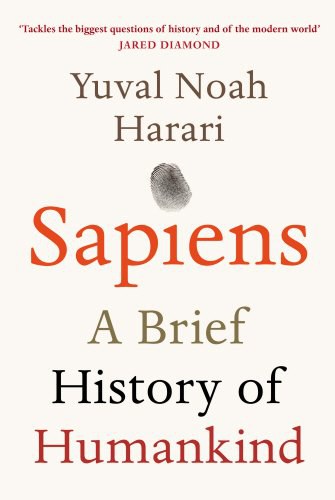
Sapiens gets worse the more one knows. Harari’s claim that large-scale human cooperation depends on shared imagined orders is useful for about ten pages. Money, nations, corporations, and legal systems do rely on collective belief. Then the book starts treating the observation as a master key, and the damage begins. Myth, institution, ideology, material constraint, and coercive state power keep being flattened into the same explanatory surface, as though naming something a fiction were the same as explaining how it works.
Coming after Bakewell’s patient intellectual history, the contrast was clarifying: she made ideas live in specific rooms and bodies; Harari turns specificity into fuel for a universal mechanism. The Cognitive Revolution becomes a switch, the Agricultural Revolution becomes a fraud, and modern history becomes a sequence of elegant reversals. ‘Wheat domesticated us’ is brilliant popular writing and weak historical explanation: it names a reversal, then lets the reversal do work that evidence should do. The book is full of this trick. A sentence arrives, the reader feels the click of recognition, and the actual historical argument quietly disappears.
Big history can be rigorous. This is TED-talk metaphysics with footnotes. The prose makes one feel as though complexity has been mastered when it has mostly been compressed. The book is confident, seductive, and careless exactly where it most needs discipline. I do not forgive books that teach people to mistake shortcuts for synthesis.
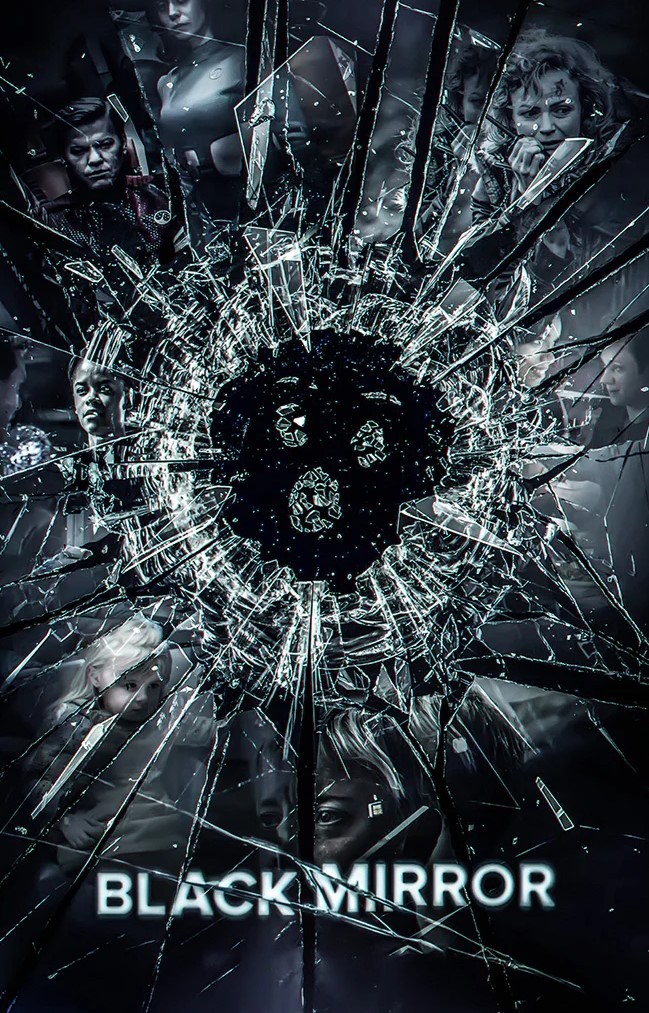
Three episodes, three entirely different textures of dread. ‘The National Anthem’ plays its grotesque premise, Rory Kinnear’s Prime Minister blackmailed into having sex with a pig on live television, not as farce but as procedure, the camera tracking the machinery of government and media as they grind towards the inevitable. The real image is not the act itself but the empty street afterwards: Princess Susannah released thirty minutes early, wandering free, and nobody notices because the entire country is watching. Brooker, whose career was built on satirising television, knows what he is diagnosing here. Not technology. Us.
‘Fifteen Million Merits’ is the one that will not leave. Daniel Kaluuya plays Bing with a quiet, accumulating fury that the System around him is designed to absorb. The dystopia is total: cycling for currency in screen-walled cells, consuming generated content, aspiring to nothing beyond the talent show that is the only permitted exit. When Bing finally breaks, pressing a glass shard to his throat on live television and screaming about the machinery that reduces everything to product, the judges do not punish him. They offer him a show. The rebellion is absorbed. The glass shard becomes a prop on his studio desk. I had not seen a more precise image for how systems digest the anger directed at them.
‘The Entire History of You’, written by Jesse Armstrong, grounds the anthology in domestic scale after two episodes of societal horror. The memory-recording grain is barely speculative; what Armstrong builds from it is a marital thriller where Toby Kebbell’s Liam discovers that jealousy and perfect recall form a feedback loop that can only destroy what it examines. Black Mirror announced itself with these three as something television did not have: an anthology for the age of screens, less interested in the technology than in the human weaknesses that the technology locates and widens.
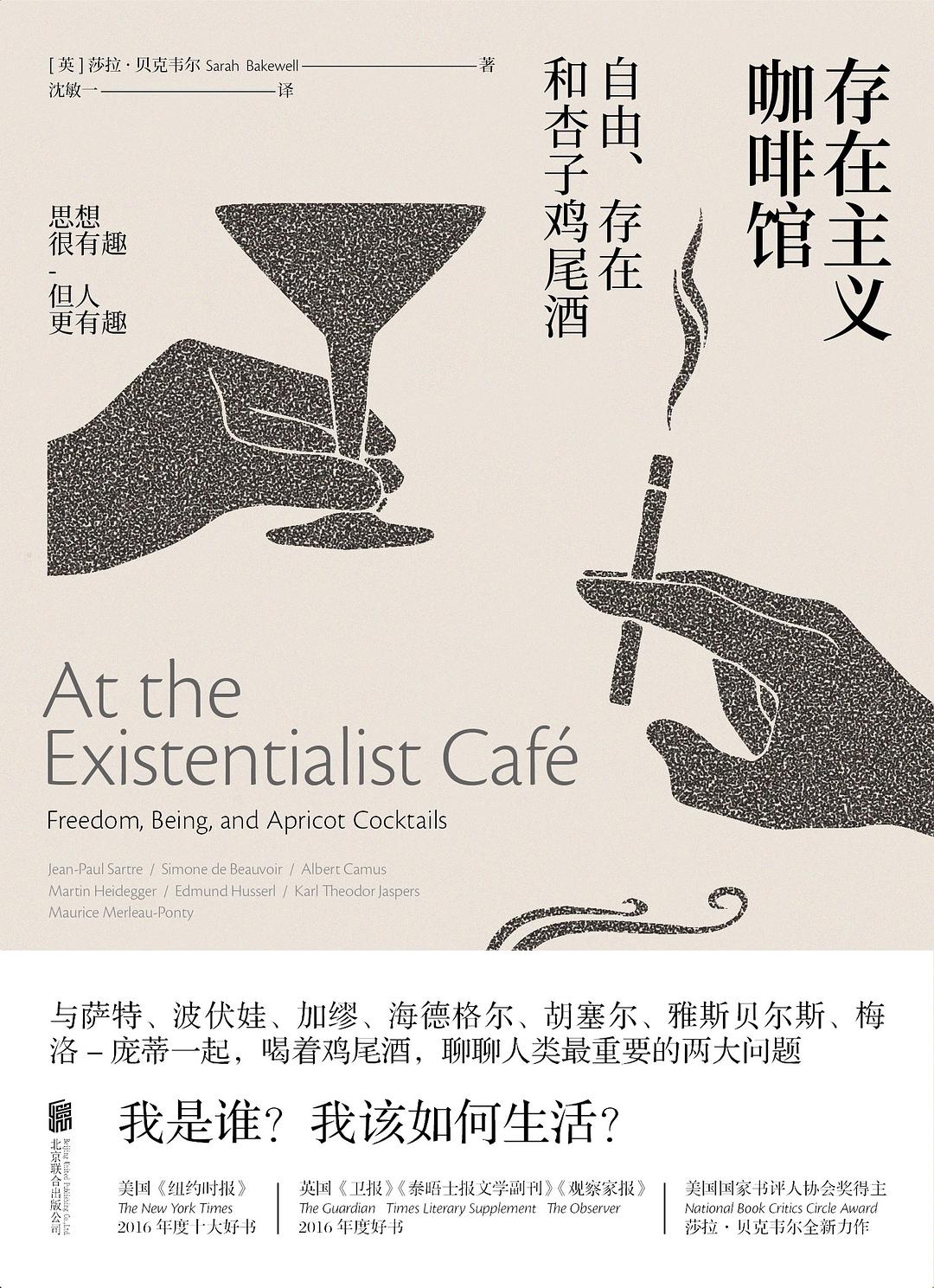
At the Existentialist Café has the right origin story: Sartre, Beauvoir, and Raymond Aron in the Bec-de-Gaz bar in 1933, with Aron pointing to an apricot cocktail and telling Sartre that phenomenology could make philosophy out of that glass. Bakewell understands why the anecdote matters. Existentialism, in her account, learns to think from rooms, bodies, and pressure: the drink on the table, the waiter, the political choices that follow one out of the café and into history.
I read the Chinese edition in Xiaoshu Guan in Hangzhou during a summer trip back from university. I had gone there for Tadao Ando’s building rather than for the shelves; as far as I remember, the book could not be borrowed out, so I returned the next day and spent two travelling days there finishing it. The circumstance now feels almost comically appropriate. Bakewell’s whole method is to return abstractions to their settings, making phenomenology less an academic vocabulary than a discipline of attention.
The book gave me my first sustained encounter with phenomenology as a practice rather than a theory. Husserl’s injunction to go back to the things themselves, to describe experience as it actually presents itself rather than as theory predicts it will, is rendered here as an intellectual revolution with consequences in literature, psychology, and politics. Bakewell moves from Sartre and Beauvoir’s cafés to Heidegger’s forest paths, from Merleau-Ponty’s body to the political compromises and betrayals of the twentieth century, without letting the ideas float free of the people who carried them. The portrait of Beauvoir is the book’s most valuable contribution: examined without either the hagiography of the devoted partner or the condescension of the feminist critique, she emerges as a philosopher in her own right whose existentialist inheritance shaped her feminism in ways that are still worth arguing about. I left Xiaoshu Guan with the sense that philosophy had acquired furniture, weather, and a body.
Words of a Dwarf is a large collection of aphorisms, some of them a single sentence, some extending to a paragraph. Akutagawa presents them in the preface not as a stable system of thought but as glimpses of his thought changing over time, and they read exactly that way: the residue of an extremely intelligent and often exhausted mind, witty, self-mocking, occasionally brilliant, and frequently despairing. The title announces the author’s own assessment of his enterprise; he is the dwarf, and these are his words, and the diminutive is a defence as much as a modesty.
The best aphorisms are precise to the point of cruelty, and Akutagawa directs the cruelty primarily at himself and at the category of ‘artist.’ His relationship to his own creativity was tormented: he wrote compulsively, felt the compulsion as a pathology, and observed it with the same analytic detachment that he brought to his fiction.
Three aphoristic turns crystallise the book’s temper: morality reduced to convenience, nature loved because it does not envy or deceive, and mysticism recast as something that civilisation advances rather than abolishes. They suggest a writer whose scepticism had become too sharp to leave anything intact, least of all himself.
Kappa takes Akutagawa’s moral compression and gives it a whole society to inhabit. The frame is already unstable: Patient No. 23, confined in a mental hospital, recounts his time in the country of the kappa, and the more precise his report becomes, the less secure the boundary between hallucination and diagnosis feels. The country begins as a grotesque mirror of Japan, then hardens into an industrial civilisation whose absurdities expose human arrangements by making them administratively literal. Fathers ask unborn children whether they wish to enter the world; one child declines, citing heredity and the badness of kappa existence. Workers displaced by machinery are killed under the Worker Slaughter Law and turned into food. Books are manufactured by feeding paper, ink, and powdered donkey brain into a machine.
Coming after the short stories, the expansion is startling. Akutagawa usually reveals a moral system through one decision; here he builds the system first and lets every institution disclose its own insanity: family, labour, censorship, religion, artistic celebrity, sexual pursuit, intellectual fashion. The jokes are often very funny, but they are funny in the way that a trap closing can be funny. Geel can explain worker meat as efficiency without raising his voice. The factory can mass-produce books, paintings, and music as though culture were merely another industrial output. The Church of Life can preach ‘live vigorously’ while Tok, the poet, drifts towards the one answer that doctrine cannot metabolise.
Tok’s suicide burns through the satire’s own form. The gunshot interrupts Mag’s anecdote about a kappa who dies after being told he might be a frog; afterwards, even death is immediately turned into interpretation, plagiarism, loneliness, pathology. Published in 1927, the year that Akutagawa killed himself, the scene feels impossible to keep at aesthetic distance. The horror of Kappa is that the insane patient may be the only one describing society with any accuracy. By the end, when he wants to return to Kappa-land rather than merely visit it again, the joke has become unbearable.
Akutagawa wrote in the range of a few hundred to a few thousand words, and within that constraint he achieved a density of psychological and moral observation that longer works can rarely sustain. The stories in Rashomon and Other Stories are varied in subject but unified in disposition: a precise, often ironic, sometimes blackly comic attention to the moment when human beings make the choice that reveals what they actually are.
The title story, in which a servant sheltering at the Rashomon gate watches a woman stealing hair from corpses and then robs her of her clothes, uses its shock economy with perfect control: the logic of each decision follows from the previous one, producing an effect both morally horrifying and psychologically exact. “In a Grove,” the most famous, gives seven separate accounts of a samurai’s death and achieves its effect not by revealing the truth but by demonstrating that the truth has been made irrecoverable by the self-interest of everyone who might provide it.
Akutagawa’s formal precision, his refusal to pad, his trust in the reader’s intelligence to follow implications that are never stated, produces in a few pages what most novels spend hundreds of pages working towards. I read the collection in an afternoon and thought about it for weeks.
The Wall is Sartre’s existentialism at the moment before it hardens into a public vocabulary. The five stories still carry the roughness of ideas being discovered in fiction rather than applied to it, which is why they feel more alive to me than a cleaner philosophical demonstration would. The title story is almost perfectly built: three condemned prisoners, one night before execution, and a body discovering in advance that it has already been exiled from itself. Fear is not described as an emotion but as a material rearrangement of the body: sweat, chill, bowels, skin, the absurd persistence of physical detail when the future has narrowed to a wall.
The brilliance of “The Wall” is that its ending does not simply illustrate absurdity; it makes absurdity operational. Pablo’s joke becomes true after truth and intention slip out of alignment, without the universe needing anything as comforting as moral design. Elsewhere, the collection is less flawless but still electric. “Erostratus” turns hatred of humanity into a ridiculous performance of self-importance; “Intimacy” is crueler and subtler, watching a woman discover that the freedom she narrates for herself is not the same thing as freedom that she can inhabit.
The stories are strongest when the existentialist thesis and the dramatic situation become indistinguishable: not philosophy inside fiction, but fiction as the place where philosophy first feels physically dangerous.
The clinical cases are Descartes’ Error at its best. Elliott, the patient who retained full intellectual function after a frontal tumour removal but could no longer make any decision worth making, is one of the most unsettling figures in modern neuroscience writing; Phineas Gage, the nineteenth-century railway worker who survived a tamping iron through his skull but not the personality that he had before it, is reinterpreted through lesion reconstruction to similar effect. These cases almost make Damasio’s argument by themselves: emotional feedback is not noise contaminating rational deliberation but integral to it, and Cartesian mind-body dualism is not just philosophically questionable but neurologically false.
The somatic marker hypothesis, the formal claim about how bodily states guide reasoning, is less satisfying. Damasio equivocates between the claim that emotional feedback matters for all reasoning and the narrower, more defensible claim that it matters specifically for social and personal decisions; the clinical evidence supports the latter, not necessarily the former. The mechanistic account of what a somatic marker actually is and how it is computationally instantiated remains gestural. The theoretical chapters repeat and elaborate without sharpening. The cases do the argument’s work; the argument cannot quite return the favour.
We is the novel Orwell read and reviewed before writing Nineteen Eighty-Four, and it deserves better than being known only as a precursor. D-503, a spacecraft engineer in the totalitarian One State, begins keeping a diary because the government requires it; what he records instead is his falling in love with I-330, a woman connected to an underground resistance movement. Citizens live in glass apartments, have sex by permit, and treat imagination as a disease.
The dystopian machinery is familiar because it was original when Zamyatin invented it. The surveillance, the performative uniformity, the controlled language: these devices have accumulated context through their more famous successors, and reading the source now requires an effort to read through the accumulated borrowings. What feels freshest is the narrator’s voice: D-503 is not a heroic rebel but a genuine true believer whose consciousness is cracked open against his will, and his record of that cracking is more psychologically exact than most of the genre.
The ending is ambiguous where 1984’s is not, and I prefer the ambiguity: whether D-503 has been repaired and I-330’s resistance crushed, or whether he has merely reassembled the self that was broken, is a question that Zamyatin leaves open because the One State leaves nothing unresolvable.
Marlow’s journey up the Congo River is framed as an anecdote told aboard a yawl anchored in the Thames estuary, and the choice of frame is doing everything. The Thames is also a river of darkness, Marlow remarks, recalling the Roman legionaries who brought civilisation to Britain the way that Leopold II’s agents bring it to the Congo, and the point is made with the quiet devastation of someone who has worked out exactly what to say and refuses to make it easier than it is.
Heart of Darkness is not a comfortable book, and the discomfort is not confined to the horror it describes. The prose is dense, recursive, resistant, Marlow’s voice looping back over its own hesitations in a way that makes linear comprehension difficult. The technique is the argument: this is what it is like to try to report back on something that Western civilisation cannot acknowledge about itself without dismantling the language in which it speaks. Kurtz’s famous last words, ‘the horror, the horror,’ are not description but diagnosis, the only honest thing that a European consciousness can say when it has seen clearly what it has been doing.
I read it before watching Apocalypse Now, and the reversal of the usual order was instructive: the novella’s Congo is not Vietnam, but the structure of the imperial project, the extraction of resources and the destruction of people under the rhetoric of civilisation, is the same structure. Coppola understood this.
The image of Marlow at the end, having decided not to tell Kurtz’s fiancée the truth, is the most precise description of complicity that I have encountered in any text: the decision not to disturb someone’s sustaining illusions because their sustaining illusions are also yours.
The brain sciences, as popularly presented, are largely the sciences of neurons. The Other Brain argues for a corrective: glia, the non-neuronal cells long treated as mere support tissue, are implicated in learning, memory, disease, and possibly consciousness in ways that had been systematically overlooked. Fields spent his career studying glia and writes the book partly as scientific history, partly as a polemic against neuron-centrism.
The strongest sections address specific mechanisms: the role of astrocytes in modulating synaptic transmission, and the way that myelin-producing oligodendrocytes regulate the timing of neural signals and their implications for psychiatric disease. Fields writes for a general audience with reasonable clarity, though the density of terminology accumulates.
The book’s polemical energy is also its weakness: the case that glia have been ignored is made so insistently that the equally important caveat, that neurons remain central and the glial revolution is still largely prospective, gets somewhat lost. Read with that caution, it is a useful expansion of the standard model.
Reading On the Origin of Species as a biology student who had been taught evolution as settled fact was like hearing the argument for something that I thought I already knew and discovering that I had not understood it at all. Darwin proceeds with Victorian thoroughness, accumulating domestic pigeons, barnacles, coral reefs, and the distribution of finches across islands until the evidence has weight and the theory has the feel of inevitability. The argument is not presented as a sudden illumination but as a long patient pressure, and the prose has the same quality: unhurried, exact, and relentlessly cumulative.
What I had not expected was how much of the argument turns on difficulty rather than simplicity. Darwin spends entire chapters on problems with his theory: how does a complex structure like the eye arise? How do sterile worker castes in insects evolve? He addresses these not by dismissing them but by working through them with the same analytical care as the supporting evidence, and the intellectual honesty of these passages makes the book convincing. The reader watches a mind that has honestly grappled with every objection and not been dissuaded.
The chapter on the imperfection of the geological record struck me most: Darwin acknowledges that the fossil evidence available in 1859 is inadequate to his theory, then argues that this is what we should expect given the conditions of fossilisation, and turns an apparent weakness into a prediction. A hundred and fifty years later, the prediction has largely held.
The book is beautiful in the way that comprehensive arguments are beautiful when the comprehension has been honestly earned rather than imposed, when the theory has been made to do genuine work rather than just to explain what the theorist already believed.
Thus Spoke Zarathustra is structured like a sequence of revelations, but the revelations rarely survive the tone in which they arrive. Zarathustra descends from his mountain, speaks, withdraws, returns, sings, meets animals and disciples and higher men; each episode creates another platform for pronouncement. The Übermensch and eternal recurrence arrive surrounded by rhythm, metaphor, and posture, yet the book keeps asking for awe before it has earned assent. After a while the ego of the performance was all that I could hear.
The sharp passages on ressentiment, herd morality, and self-deception do exist, and they explain why people keep extracting individual lines from the book. But the surrounding voice smothers them. The work wants aphorism, scripture, poem, philosophical novel, and sermon all at once, and the mixture brings out the worst kind of authorial self-regard: the sense that sounding elevated has become a substitute for thinking through the claim. The book mistakes height for force and becomes exhausting: a long performance of profundity that keeps admiring its own mountain.
The title poses a question that the novel never quite stops asking: if there is no eternal recurrence, if everything happens only once and therefore as good as never happened, does that make life unbearably light or unbearably meaningless? Tomas, the Prague surgeon and serial philanderer, believes in lightness; Tereza, the woman that he cannot stop himself from marrying, believes in heaviness, in the irreversibility of choices and the moral weight of love. They answer the fundamental question differently, and The Unbearable Lightness of Being is about what happens when one loves someone who does that.
The novel is also political, set against the Prague Spring of 1968 and the Soviet invasion that followed. Tomas’s surgical career is destroyed because he publishes an essay drawing an analogy between Czech collaborators and Oedipus, intending a philosophical argument, and the regime takes it as a political accusation. The way that power flattens the nuances of private discourse into a single readable surface is something that Kundera understands from the inside.
Sabina, the artist who betrays and moves on, who has no programme beyond the refusal of kitsch, is the novel’s moral posture, and it is not enough; the novel knows that it is not enough. The novel ends not with Tomas and Tereza arguing but with them in the countryside, briefly happy before their deaths, after the dog who bound their domestic life has gone. It is the most human thing that Kundera ever wrote, and the most forgiving.
The Joke was Kundera’s first novel and still feels like one of his best, which is part of why reading it early made the rest of his work arrive with such force. Ludvik writes a postcard to a girl that he wants to impress: “Optimism is the opium of the people! A healthy atmosphere stinks of stupidity! Long live Trotsky!” He is denounced, expelled from the party and the university, and sent to work in the mines with other political undesirables. The joke costs him everything.
Fifteen years later, he returns. He has identified the man responsible for his condemnation and arranged, through careful seduction, to sleep with his wife as an act of revenge. The seduction succeeds. The revenge is a complete failure: the marriage has already dissolved on its own terms, the wife turns out to welcome the encounter for reasons that have nothing to do with Ludvik, and the man that he wanted to wound is past caring about any of it. History has quietly rendered his fifteen-year project of retribution incoherent.
The title’s joke keeps widening beyond the postcard: Ludvik assumes that private grievance can be preserved intact, that revenge can make time answerable, that the score can still be settled after history has moved on. It does not work. The final image, of a folk music festival in Ludvik’s home town proceeding with perfect sincerity as his life collapses around it, is one of Kundera’s most devastating acts of compression.
Immortality is Kundera’s longest and most formally ambitious novel, and the one in which the line between fiction and essay most completely dissolves. The novel begins with a woman in her sixties at a swimming pool, making a graceful girlish gesture as she waves goodbye to her instructor; Kundera decides to write a novel about her and names her Agnes. Agnes’s story runs alongside meditations on Goethe and Bettina von Arnim, who represents the obsessive fan’s desire to possess a great man’s image, and alongside a direct appearance by Kundera himself in conversation with a character called Professor Avenarius.
The novel’s great subject is the desire to leave a trace, to be remembered, to secure some permanent version of oneself against the forgetting that awaits everyone. Goethe curated his own image deliberately and well; Bettina constructed a Goethe for herself regardless of what he actually was. Both strategies fail, for different reasons. Agnes, who wants only to disappear into silence, carries the novel’s moral intelligence but is also its most passive figure.
The gesture at the opening, a sixty-year-old woman’s momentary girlishness, returns at the end as the purest form of what the novel has been about: a fragment of behaviour that is entirely personal, entirely inexplicable, entirely itself, and therefore the closest thing to genuine immortality that anyone achieves.
The title comes from Rimbaud, and the irony is structural. Jaromil, the poet-protagonist of Life is Elsewhere, is a young man of genuine lyric gift who is also a narcissist, a mommy’s boy, and a petty informer. He denounces his girlfriend’s brother to the secret police and regards his own suffering as more important than the actual suffering that it causes. Kundera traces his formation with a remorselessness that is also a kind of pity: Jaromil did not invent himself; his mother invented him, and the revolution found him convenient.
The satire of Romantic aesthetics is precise. Kundera knows the tradition from inside, and his portrait of the young poet who confuses intensity of feeling with artistic virtue, who believes that the purity of his suffering makes him a better writer, and who is talented and dangerous in the same motion, is one of literature’s most devastating self-critiques of a cultural type.
The scene in which Jaromil’s revolutionary enthusiasm has led him to a very bad place, and he dies young enough not to have to live with what he has become, is both tragedy and mercy: the novel withholds from him the reckoning that would have been more honest and more damning. Kundera gives Jaromil the Romantic’s death, young and passionate and incomplete, and in doing so completes the indictment.
Slowness reads like a compact late-Kundera diagram beside the larger machinery of The Joke and The Unbearable Lightness of Being. Two stories run in parallel across a single French night: an episode from a libertine’s memoirs set in the eighteenth century, in which pleasure is measured in the time taken to reach it; and a contemporary academic conference at the same chateau, in which no one remembers anything and everyone performs. The argument is stated almost baldly: speed is the form that forgetting takes, and the world moves fast in order not to have to remember. The libertine’s amour, conducted with ceremony and slowness, is also a form of memory; the modern conference, organised around forgetting, produces only spectacle.
The novel is too schematic for its length, a diagram rather than a fiction, but the diagnosis is sharp. The scene in which a conference participant gets on a motorcycle and drives very fast so that the embarrassing moment that everyone witnessed will be forgotten has the quality of a cartoon that is also exact. A primer for what follows.

I read this in my first year of university, having already encountered the Sheep Man and the Dolphin Hotel in Dance Dance Dance without knowing their origin. That backwards reading turned out to fit Murakami uncannily well. The Sheep Man’s first appearance arrived as recognition rather than revelation, and the Dolphin Hotel’s original form already carried the sadness of what it would become. A Wild Sheep Chase is built for that kind of belatedness: everyone seems to have entered the story after the decisive event has already happened elsewhere.
The hardboiled outline is almost absurdly clean: a divorced advertising copywriter uses a photograph from the Rat in a campaign, the Boss’s secretary notices a sheep with a star-shaped mark, and the narrator is sent north with a woman whose ears seem to possess their own metaphysical agency. The clues lead through Sapporo, the Dolphin Hotel, the Sheep Professor, a Hokkaido mountain road, then finally to the Rat’s empty house. Yet the form keeps draining agency from the detective plot. The narrator follows instructions, waits, cooks, reads, runs, runs out of cigarettes, meets the Sheep Man, and slowly learns that the search was never arranged for his enlightenment.
The sheep’s path through the Sheep Professor, the Boss, and the Rat gives the novel a strange political charge: power as possession, a force that enters bodies and leaves institutions behind. Murakami sketches that allegory lightly, trusting the absurdity to carry the politics. The book’s real force gathers in the Rat’s absence. By the time the narrator speaks with him in the dark, Rat has already hanged himself to kill the sheep inside him, turning disappearance into the only remaining act of resistance. The ending carries the particular ache of early Murakami: a friend already lost, a mystery solved too late to matter, and J’s bar left with money for the dead to keep drinking.
Godfrey-Smith is a philosopher of biology and also a scuba diver, and Other Minds keeps both forms of attention active at once. The book uses cephalopods, especially octopuses, to ask how minds can arise along evolutionary paths almost completely separate from our own. Octopuses and vertebrates share a common ancestor so distant that their nervous systems feel like different answers to the same ancient problem: how a body senses, acts, remembers, and holds a world together.
The underwater scenes give the philosophy its pressure. Godfrey-Smith watches octopuses in their rocky dens, their arms investigating the world with a semi-independent intelligence, their skin shifting colour and texture as if the boundary between perception and expression had loosened. From there the book moves outward: the Cambrian, nervous systems, animal bodies, the evolutionary usefulness of experience. It never pretends that the hard problem has been solved. The restraint matters. Godfrey-Smith lets uncertainty stay open while still making the question feel materially sharper.
I loved it because it shifted consciousness from sealed human interior to evolutionary event with multiple possible architectures. The octopus becomes a companion mind from another branch of life: close enough to meet one’s gaze, distant enough to expose how provincial our usual theories of mind can be.
Cajal wrote this short book for young scientists, and it reads like advice from a grandfather who has learned everything the hard way and wants to spare beginners the wasted time. The chapters cover topics that no one teaches: the temperament required for scientific work, the danger of premature publication, the importance of choosing a problem that is neither too large nor too small, the specific psychological traps that afflict intelligent people who are not yet disciplined. The tone is bracing rather than gentle: Cajal does not flatter beginners.
His taxonomy of bad scientific characters, the egotist who publishes before confirming, the polymathic dilettante who never commits, the neurotic perfectionist who revises forever, is observationally sharp and recognisably accurate. His description of how great discoveries are made, not by searching for them but by attention to anomalies that do not fit the current framework, anticipates later philosophy of science. His insistence on the necessity of willpower, of sitting at the bench when one does not feel inspired, is unfashionable and correct.
The book is a product of its era in ways that require adjustment: Cajal’s assumptions about who does science are narrow, and some of the career advice reflects a university environment nothing like the present one. But the psychological core remains intact. I have gone back to it repeatedly.
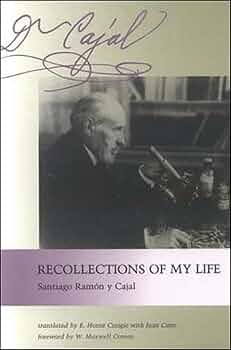
Cajal won the Nobel Prize in Physiology or Medicine in 1906 for discovering that the nervous system is composed of discrete individual cells rather than a continuous network, but Recollections of My Life is not a book about that discovery. It is a book about the conditions under which a scientist forms. Cajal’s childhood in rural Aragon reads like a picaresque novel: a restless, difficult boy who drew obsessively, was apprenticed to a barber, briefly jailed, and finally directed by a father who understood the energy but not the form towards medicine. The path to the microscope was indirect and private.
The autobiography’s force is the combination of self-knowledge and scientific honesty. Cajal describes his successes and his errors: the years spent on dead-end problems, the experiments that failed, the periods of depression and doubt. He is forensically clear about how he learned to look at things, literally, through a microscope, and the cultivation of that kind of attention is itself a major theme of the book. The observer who established that nerve cells were discrete rather than fused into a continuous net is the same observer who learned as a child to draw what he saw rather than what he expected to see.
Cajal’s determination carries a particular quality: it is not the ambition of someone who expects to be recognised, but the stubbornness of someone who is convinced by his own observations and will not let the absence of agreement stop him.
Liu Cixin begins with the Cultural Revolution, the death of an astrophysicist, and a daughter who makes first contact with an alien civilisation in despair of her own species, and then escalates across three volumes to the destruction of the solar system, the weaponisation of dimensions, and the collapse of the universe. The scale of the Three-Body Problem trilogy is vertiginous in the best sense.
What distinguishes it from ordinary space opera is the philosophical and scientific seriousness. The dark forest in the second volume is Liu’s solution to the Fermi Paradox: the universe is silent because every intelligent civilisation, knowing that others exist and that resources are finite, must choose between destroying first or being destroyed. Detection means death. The logic is inexorable and terrible, and Liu develops it not as a plot device but as a sustained philosophical argument about survival under genuine scarcity.
The third volume is the most emotionally demanding. Cheng Xin makes two decisions that may doom humanity, and the novel refuses to condemn her for either; the horror is structural, not personal, a universe in which correct moral intuitions and rational survival decisions point in opposite directions. The final sections, in which the universe is revealed to have been weaponised down from eleven dimensions to three, bring the dark forest logic to its ultimate conclusion and produce a sense of scale that very few works of fiction have given me. I read all three in a single summer, barely surfacing.
The Origin of Consciousness in the Breakdown of the Bicameral Mind is probably the book that influenced me most deeply during secondary school, before I had any formal training in neuroscience or philosophy of mind, before I had the vocabulary to say why it mattered. Jaynes’s thesis is wild and almost certainly wrong in its specifics: that ancient humans lacked subjective consciousness as we know it, that the right hemisphere issued commands experienced as the voices of gods, that the bicameral mind collapsed under the weight of societal complexity and the invention of writing. The neuroscience does not hold up. The historical evidence, built largely on the contrast between the Iliad and the Odyssey, reads too much into linguistic absence. Dennett and others have noted that Jaynes defines consciousness so narrowly, as metaphor-based introspective narration, that the argument risks circularity.
None of this diminishes the book’s power. What Jaynes understood, and what has aged remarkably well, is the claim that consciousness is metaphorical at its base: that we grasp the inner world through spatial and physical metaphors, that ‘seeing’ a point and ‘grasping’ an idea are not decorative language but the very architecture of self-awareness. This anticipates Lakoff and Johnson, Damasio’s narrative self, and a whole tradition of embodied cognition that Jaynes could not have known was coming. The thesis that metaphor gave birth to consciousness is the thread I still pull on.
Coming back to it now, the audacity of the question matters more than the rightness or wrongness of the bicameral mind. Jaynes asked how consciousness began, not what it is, and in doing so forced everyone who came after him to reckon with the possibility that subjective experience has a history, that it was not always there, that it arrived. I need to re-read it properly someday, with the training I now have. But even the memory of that first reading, the feeling of an entire framework for understanding the mind snapping into focus, has not faded.

Jake Barnes’s war wound is the novel’s structural principle, not its subject. His impotence is physical, but the entire expatriate world Hemingway builds around him, the endless drinking in Paris, the aimless movement between cafés and countries, is impotent too. The Sun Also Rises is about people who have been damaged beyond repair trying to live as though they have not been, and the tension between those two states produces the novel’s particular kind of agony: everything is said in the gaps between what is actually spoken.
The Pamplona section catches fire. The bullfighting sequences do something that I did not expect: they establish the only site of genuine value in the entire novel. Pedro Romero’s artistry in the ring requires presence, courage, and a willingness to face death without evasion, and against his example, every other character’s avoidance and self-deception stands exposed. Brett’s affair with Romero amounts to destruction, not seduction; she knows that she will ruin him, he is too young and too pure for her damage, and she sends him away before it is too late. That act of renunciation is the closest thing to heroism that the novel permits, and it comes from the character least expected to produce it. The ending is devastating in the way that only Hemingway can be devastating: with economy. ‘Oh, Jake, we could have had such a damned good time together.’ ‘Yes. Isn’t it pretty to think so?’ Two sentences that contain a whole novel’s worth of grief, and neither character raises their voice. This was the first time that I understood that a great novel could be built almost entirely from what it refuses to say.
Underground is Murakami at his furthest from his usual territory: no magical realism, no jazz references, no passive male protagonist drifting through encounters. Published in Japanese across two books, the 1997 survivor interviews and the 1998 Aum-member interviews, it is journalism as oral history: a series of interviews about the 1995 sarin gas attack on the Tokyo subway system conducted by Aum Shinrikyo. Murakami talked to dozens of people and asked them to tell him what happened. Then he listened.
What emerges is not a document about terrorism in the usual sense. The perpetrators are almost absent from the first part; instead, Murakami lets the survivors speak in their own voices, with their own rhythms of memory and retrospection. A morning commute interrupted. The smell that was not quite the smell of anything. The slow understanding that something had gone wrong. Each account is ordinary and devastating in its ordinariness: these are people who boarded trains to go to work, and their ordeal is rendered through the specific texture of their individual days rather than through abstraction.
The second part interviews Aum members. This is harder reading because many are not shown as monsters. Several are educated, thoughtful, disillusioned with ordinary Japanese society in ways that are familiar from Murakami’s fiction. The book forces the question of what creates the conditions in which someone commits mass murder for an ideology, and it refuses to answer simply; its argument, stated in the introduction, is that Japanese society must examine what it offered these people, and what it failed to offer them, if it wants to understand how Aum was possible. On a later reread, it had only grown.
A thousand pages of 1Q84 felt like being trapped in an elaborate mechanism whose gears turn endlessly without producing anything. The premise is irresistible: Aomame climbs down an emergency staircase on the Tokyo expressway and enters an alternate 1984, where two moons hang in the sky and Little People emerge from the mouths of the dead to build air chrysalises. But Murakami does almost nothing with the apparatus. The Little People are never explained, the air chrysalises are never explained, and the novel’s engine turns out to be a love story between two people who held hands once in primary school and have been searching for each other for twenty years. That love story, taken alone, is touching. The problem is that it does not need a thousand pages, a cult, a private investigator, or a metaphysical architecture to work. 1Q84 is the longest and most exhausting argument that I have encountered for the proposition that more is less.
The Great Gatsby is so cleanly constructed that the craft almost conceals its coldness. Nick Carraway narrates with a detachment that shades into complicity; Daisy Buchanan is more symbol than person; Gatsby himself is less a tragic figure than a cautionary illustration of the American myth of self-reinvention. The green light, the eyes of Doctor T. J. Eckleburg, the Valley of Ashes: the symbolism is precise, occasionally heavy-handed.
What I found harder to enter was the investment. Fitzgerald is forensically good at depicting the emptiness of wealth and the casual cruelty of the very rich, but his novel requires the reader to care about these people, and I found it difficult to do so. Gatsby’s love for Daisy feels more like obsession with a projection than genuine feeling, and the novel treats this as tragedy rather than as a study in narcissism.
The prose is undeniably good: ‘So we beat on, boats against the current, borne back ceaselessly into the past’ is one of the better last sentences in American fiction. But the book kept me at arm’s length.
124 was spiteful. 124 was loud. 124 was quiet. Morrison structures her novel in three movements, each named by what haunts the house, and Beloved itself operates like a haunting: circling, returning, refusing to resolve into linear sense. Sethe killed her baby daughter rather than let schoolteacher take her back to Sweet Home, and the novel holds that act without judgement or excuse, letting the reader sit inside the impossible logic of a mother who murders out of love, who cuts her child’s throat with a handsaw because slavery is worse than death and she knows this from the inside.
The narrative is fragmented by design. Events surface in pieces, approached from different angles, accumulating meaning through repetition rather than revelation. Morrison’s ‘rememory,’ the idea that traumatic memories exist as physical things in the world, things that one can bump into even if they are not one’s own, is the novel’s most powerful formal device: it makes the past remembered and re-encountered, an obstacle that one cannot walk around. The stream-of-consciousness passages in Part Two, where Sethe’s, Denver’s, and Beloved’s voices merge until individual identity dissolves, are unlike anything else in American fiction that I had read at that point.
The ending unsettles the whole structure: ‘This is not a story to pass on.’ Morrison writes a story that she then instructs us to forget, and the instruction is itself unforgettable, a final turn of the screw that makes the reader complicit in exactly the erasure that the novel spent three hundred pages resisting. I understood perhaps half of what Morrison was doing. The half that I understood was enough.
The split narrative is the achievement. Two stories alternate chapter by chapter: a ‘Hard-Boiled Wonderland’ in which the narrator works as a human data processor for a shadowy organisation called the System, his subconscious weaponised as an encryption device; and the ‘End of the World,’ a walled town of eerie stillness where a new arrival reads dreams from unicorn skulls in a library, gradually losing his shadow and, with it, his capacity to feel. The two narratives mirror and eventually collapse into each other, and the revelation that the walled town is the narrator’s own subconscious gives the book its strongest structural charge.
The ‘End of the World’ sections are the reason I still think about it. The town operates on dream logic, where causality is suspended and events have the hushed inevitability of a fairy tale. The Librarian, who may be the same woman across both narratives, reads dreams without understanding them, and her presence has a tenderness that Murakami’s female characters do not always achieve. The shadow’s slow disappearance, what it costs to surrender one’s emotional core in exchange for perfect safety, remains the book’s cleanest image. The ‘Hard-Boiled’ chapters are funnier and more recognisably Murakami: sandwiches, whisky, a chubby granddaughter and her eccentric scientist grandfather. They are also thinner, more schematic, more attached to a cyberpunk-noir apparatus that has not aged as well as the walled town. The final choice, between a safe eternity and the dangerous, mortal, feeling world, still gives the novel real weight. I like the book most as an architectural experiment with one extraordinary half and one entertaining but less durable half.
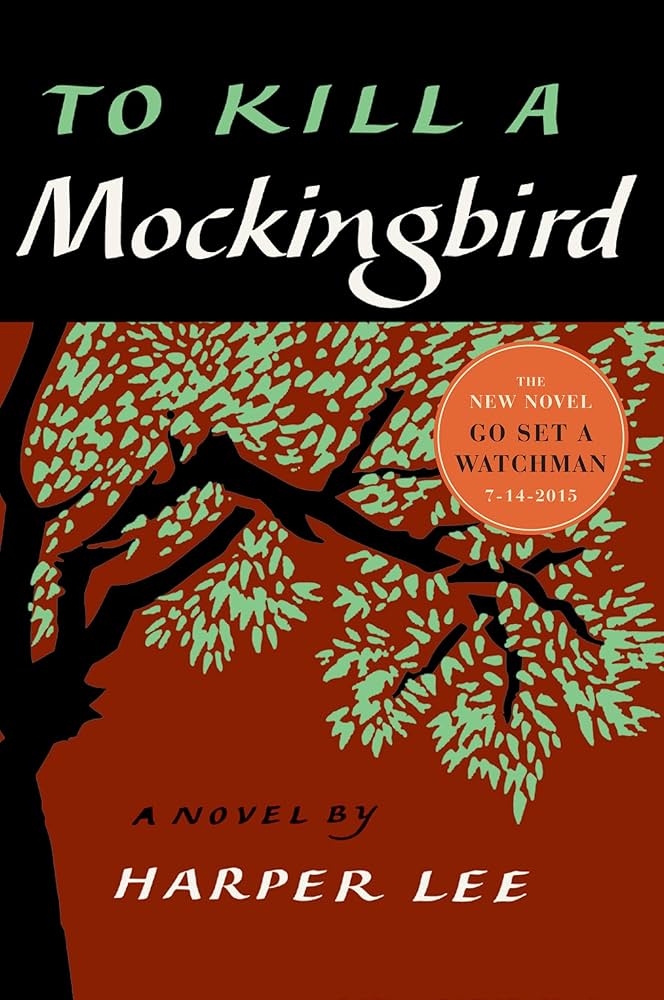
To Kill a Mockingbird arrives with so much accumulated prestige that it is difficult to read it fresh. Scout’s narration has a charm that the novel earns, and the childhood sequences, the Radley house, the summer games with Dill, the schoolyard rituals, are well-observed. The trial of Tom Robinson carries the moral weight, and Atticus Finch remains one of literature’s more durable portraits of principled legal defence against a racist system.
The framing is harder to accept. The novel asks us to admire Atticus as a white man who does the right thing in a racist town, and it measures racial injustice almost entirely through what it costs the white characters to witness it. Calpurnia is the most important Black character and she exists mainly to raise white children well. Tom Robinson, the actual victim, is given less interiority than almost anyone else in the book. The moral framework is compassionate but paternalistic, more concerned with Atticus’s conscience than with the lives of the people that he is defending, and the novel’s enduring reputation as the pre-eminent American novel about racism reflects something about which stories are told by whom and for which audience. It is a well-crafted, emotionally legible novel. It is also, now, easier to see what it leaves out.
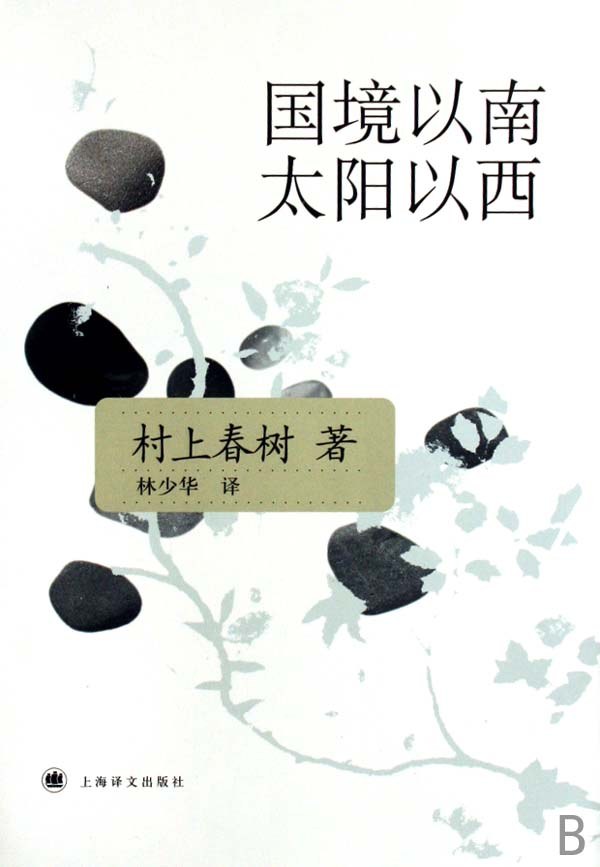
Murakami stripped down to the bone. Hajime has everything that a person is supposed to want: a good marriage, a successful business, two healthy children. When Shimamoto reappears after decades, his contentment becomes irrelevant. South of the Border, West of the Sun hinges on the rupture between the life one has and the life one might have had, and Murakami traces it with the spare, almost merciless economy of a short story stretched to novella length.
The title maps the emotional terrain: ‘South of the Border’ references the Nat King Cole record Hajime and Shimamoto listened to as children, evoking romantic possibility and the warmth of shared memory; ‘West of the Sun’ points somewhere colder, a Siberian delirium in which farmers walk towards the horizon and freeze to death, mistaking exhaustion for purpose. Shimamoto may be real or may not. The envelope that she leaves contains only sand.
But the subplot that cuts deepest is Izumi. Hajime’s casual cruelty in high school, sleeping with her cousin out of sheer boredom and barely registering the damage, echoes forward in ways that he cannot undo, and seeing what his thoughtlessness did to her is worse than anything that Shimamoto’s disappearance could inflict. The novel refuses resolution, and the refusal is the point.
The Giver is strongest as a first dystopia: clean premise, controlled revelation, moral machinery simple enough to be legible without becoming stupid. Jonas lives in the Community, a society that has eliminated war, pain, inequality, and choice; everything is assigned, from careers to family units to the time of one’s death. As Receiver of Memory, he inherits the suppressed history of the world before Sameness, every colour and mountain and snowfall and cruelty that the Community traded away for peace and order.
The book’s strength is also its limit. Lowry is very good at rendering ethical horror as administrative calm, and Jonas’s first experience of colour, the red apple turning red in mid-air, remains a beautifully economical image of impoverished safety. But the world is so neatly arranged around its thesis that the novel often feels like a moral demonstration rather than a living society. Memory means depth; choice means pain; safety means flattening. The relationship between Jonas and the Giver gives the book warmth, but the structure keeps announcing what each symbol is for.
As an initiation into dystopian thinking, it is elegant; as a novel, it feels too clean, too pedagogical, too eager for every piece of the world to know its job.

The first gender-studies book I read, and the one that cracked open a way of thinking that I did not know existed. Butler’s claim, that gender is performative, not expressive of an interior identity, a repeated set of stylised acts that produce the illusion of a stable gendered self, was electrifying on first encounter. Gender Trouble is not easy reading. Butler’s prose is dense, recursive, and assumes familiarity with Foucault, Lacan, and Beauvoir that I did not have. I understood perhaps sixty per cent on the first pass and returned to it twice.
What I grasped, and what has stayed, is the demolition of the sex/gender distinction: Butler’s argument that even ‘biological sex’ is itself a category whose boundaries are drawn by the same cultural forces that produce gender. This was the intellectual move that changed how I thought about identity, not as something discovered but as something constructed, and the construction is never finished, never stable, always open to subversion. The drag analysis in the final chapters, where Butler argues that drag does not imitate a prior original but exposes the fact that all gender is imitation without an original, is the book’s most famous passage and its most vivid. I did not follow every argument. I did not need to. The underlying logic, that the ‘natural’ is always effect rather than origin, produced by repetition until the seams are invisible, had been arriving through a very different idiom for weeks. The framework was enough.
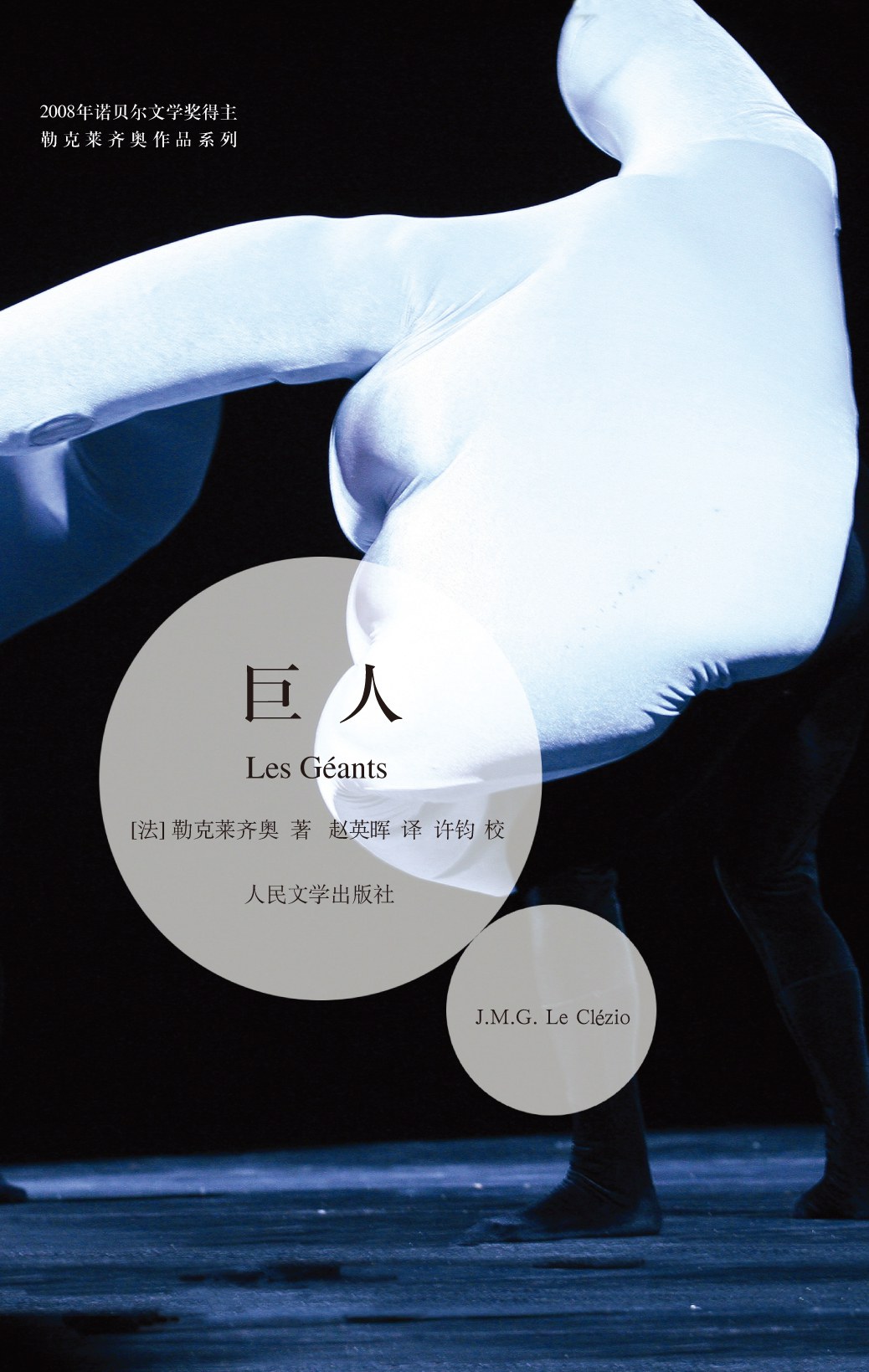
The Giants is the logical terminus of Le Clézio’s experimental period, and it reads like a final, furious statement before the long exhale of Desert (1980). Hyperpolis, the colossal shopping centre that is the novel’s setting and antagonist, is consumer capitalism rendered as architecture: a space so vast, so saturated with commodities, signage, and artificial light that it ceases to be a place and becomes a condition. One does not enter Hyperpolis; one is absorbed by it. The prose catalogues merchandise with a relentlessness that borders on vertigo, and the typographic experiments of War (1970) are pushed further here: pages filled with advertising slogans, brand names, numerical sequences, the textual detritus of a civilisation that communicates exclusively through commerce.
If War diagnoses the war, The Giants names the general. The ‘giants’ of the title are not people but systems: the corporate structures, the advertising machines, the distribution networks that have replaced human contact with transaction. Le Clézio achieves something rare here: a novel that makes one feel the oppressiveness of abundance, the specific violence of having too much rather than too little. Reading The Giants last among the early novels felt right. The trajectory from The Book of Flights (1969) through War to this book describes a tightening spiral: from global flight, to urban warfare, to the belly of the machine itself. Around these years, Le Clézio was already turning towards Panama and Mexico, towards indigenous communities and a completely different kind of book. I understand now why that turn had to happen. One cannot keep writing from inside Hyperpolis without losing one’s mind. Something had to give, and what gave was the entire project.

The Autumn of the Patriarch is the most demanding of the Márquez novels that I read that summer, and the most formally extreme. A dictator, the Patriarch, has ruled a nameless Caribbean nation for somewhere between one hundred and two hundred years; the novel opens with his death and circles outward from that event through a series of long, winding sentences that can extend for pages without a full stop. The prose is deliberately disorienting: narrators shift mid-sentence, time collapses, events are described, contradicted, revised, and the reader is positioned inside a collective memory that has been so thoroughly corrupted by power that the truth is irretrievable.
The formal difficulty is not obscurantism. It is the argument. A dictatorship that has lasted long enough destroys its subjects and the possibility of clear testimony; what remains is not history but rumour, fear, and myth. The Patriarch himself is less a character than a gravitational field, pulling everything around him into distortion. He is vain, ignorant, superstitious, capable of extraordinary cruelty and occasional tenderness, and the novel refuses to reduce him to a single mode. Márquez seems to be working through a question: how does a man come to embody an entire system of oppression, and what does that system do to the man in return?
The loneliness is almost absolute: a man who has wielded absolute power for a century dies surrounded by no one who knew him, in a palace overrun by cows, and his death changes almost nothing, because the structures that he embodied have long since outlived any individual who inhabits them.
No One Writes to the Colonel is the driest of Márquez’s major works and, in some ways, the most precise. The unnamed colonel has been waiting fifteen years for the military pension that he is owed. He is old, ill, poor, and his wife is sick; they live on borrowed money and a fighting cock that their dead son Agustín left behind. Each week the colonel goes to the dock to collect the mail that never arrives. Each week he walks home. Márquez describes this repeated ritual, this systematic disappointment, with such matter-of-fact precision that the comedy and the tragedy become indistinguishable.
The colonel is not a pathetic figure; he is an absurdly dignified one. He refuses to sell the cock, though selling it would solve their immediate problems; he refuses to despair, though despair would be the rational response to his situation. His wife begs him to accept the reality of their circumstances. He cannot, or will not. Márquez writes his stubbornness without condescension, as though dignity in the face of systematic state neglect were not delusion but the only sane response to an insane situation.
The setting is a swampy tropical town under an unnamed dictatorship; political violence happens just off the page, referenced in the cockfighting pit, clandestine papers and censored newspapers. Agustín was killed for distributing clandestine political literature. The colonel’s pension was earned in a civil war that his side may or may not have won, that was certainly not won for people like him. The novella ends with the colonel’s answer when his wife asks what they will eat: “mierda.” Three decades of waiting, and what remains is this single word, delivered with absolute composure. It is the funniest and saddest ending I know.
If One Hundred Years of Solitude is Márquez building a world, Love in the Time of Cholera is Márquez doing something harder: making a love story that by any ordinary standard is pathological read as one of the great romantic accounts in literature. Florentino Ariza waits fifty-one years, nine months, and four days for Fermina Daza, by then Fermina Urbino, to become available again, having been rejected in their youth. He does not wait with dignity; he sleeps with hundreds of women, conducts affairs, buries his mother, and never entirely stops. When the opportunity finally arrives, both are in their seventies. Márquez does not resolve this. He holds the contradiction open: Florentino is faithful and faithless simultaneously, romantic and grotesque, a man whose love is real and whose conduct is real and who refuses the choice between them.
The cholera of the title is double. The epidemic is historical, part of the Caribbean world that Márquez constructs with the same loving specificity as Macondo; but it is also a metaphor for lovesickness, which Florentino’s doctor initially mistakes for cholera when the young man arrives with all the symptoms. Márquez treats love with the clinical detachment of a physician observing an illness, and the effect is both funny and devastating: here is a condition that consumes a human life, produces all the symptoms of derangement, and is given the social sanction of poetry and song.
The ending, on the river, is one of the most morally ambiguous in all of the novels that I have read: the boat flying the yellow cholera flag so that no one will board it, the two old lovers finally together in a space that is neither past nor future, time itself having stopped at the point where love is possible.
The war of Le Clézio’s title is not fought with weapons. It is fought with fluorescent lighting, with the hum of refrigeration units, with the ceaseless noise of traffic and the saturating assault of advertising. War opens with the declaration that the war is here and spends its entirety proving it: modern urban existence is a form of warfare waged against the senses, and no ceasefire has been signed. Bea B. wanders through the city not as a character in any traditional sense but as a consciousness under siege, and the prose registers light, sound, texture, and movement with an accumulating density that becomes, for the reader, its own form of bombardment. Le Clézio embeds photographs and diagrams into the text, breaking the boundary between novel and visual art, and the disorientation is structural: one does not read this book so much as endure it.
The supermarket sequence is the centrepiece. Le Clézio transforms the hypermarché into a battlefield where consumer goods sit like ammunition on shelves, where the sheer material surplus of capitalist abundance registers as violence against the body. This is not polemic; it is closer to phenomenology, the rendering of pre-reflective perception until objects press against consciousness with physical weight. Having read The Book of Flights (1969) a month earlier, I recognise the continuity: Hogan’s flights across continents end in the same trap, the same inescapable modernity. But War refuses to flee. It stays in the city and fights, and the difference is everything.
Le Clézio writes as though language were an instrument of the war that he describes, each sentence a controlled detonation aimed at the reader’s complacency. The incantatory accumulation of sensory detail builds layer upon layer until reading itself becomes an act of endurance. I came out of this book and the city looked different.

One Hundred Years of Solitude is the novel that most powerfully demonstrated to me what fiction could do. The Buendía family builds Macondo from jungle mud, and over the course of a century the village is visited by alchemy and war, banana companies and civil conflicts, love and amnesia and finally oblivion. Márquez writes in a mode that takes the miraculous as given: Remedios the Beauty ascends to heaven while hanging laundry; a yellow plague of butterflies announces the arrival of Mauricio Babilonia; the patriarch José Arcadio Buendía speaks to the ghost of Prudencio Aguilar for years before anyone realises he is mad. The prose holds all of this with the same equanimity it holds the mundane, and the effect is not of a fairy tale but of a complete world, one in which the boundary between the natural and the supernatural has never been drawn.
What I did not expect was the melancholy. The Buendía men repeat themselves compulsively: the same given names cycle through the generations, the same character patterns recur with slight variations, the same doomed projects absorb the same energies. Colonel Aureliano Buendía fights thirty-two civil wars and loses every one of them; he ends his life making gold fish in his workshop, melting them down, and making them again. The family’s incapacity to love without destroying is figured by the incest at the family’s origin and its end. Faulkner is structurally present; so is Borges in the self-consuming circularity. But the voice belongs entirely to Márquez.
The novel is built like a trap that can only be understood once it has closed: the last Buendía reads the Sanskrit parchment that was written at the novel’s beginning, translating the fate of his family in the moment it reaches its fulfilment, and the city is erased before he finishes the last page. I thought about Macondo for weeks after finishing. Some books end; this one lingers.
Le Clézio subtitles The Book of Flights ‘roman d’aventures,’ which is either irony or confession: the adventure is flight itself, perpetual and purposeless, across continents and through prose that refuses to settle into any genre one could name. Jeune Homme Hogan moves from Southeast Asia to Mexico to unnamed cities, not towards anything but away from everything, and the book follows him with a restlessness that infects its own form. Fiction dissolves into essay; essay dissolves into manifesto; manifesto dissolves into lists, diagrams, typographic eruptions that scatter words across the page like debris. Le Clézio is not writing a novel. He is writing against the novel, and the tension between the two produces something that I had not encountered before.
Hogan flees consumer modernity: its noise, its advertising, its relentless colonisation of attention. But Le Clézio is honest enough to acknowledge the paradox. The book is itself a product, an object that sits on shelves in bookshops, a participant in the very economy that it rails against. At one point Le Clézio addresses the reader directly, accusing them of complicity; at another he turns the accusation on himself. The flight is impossible because the escapee carries the prison with him, because language and consciousness are already structured by the civilisation that he is trying to leave behind. This was my first Le Clézio. I found in him a writer who could hold rage and tenderness in the same sentence, who could catalogue the horrors of modern existence without flinching and then turn a page and describe the light on a tropical river with a precision that borders on prayer. I read everything of his that I could find in the weeks that followed.
Okonkwo is one of the most frustrating protagonists that I have encountered, and Things Fall Apart is better for it. His fear of becoming his father, lazy and debt-ridden and buried in disgrace, drives everything: the wrestling, the violence, the refusal to show tenderness even to his favourite daughter, the murder of Ikemefuna. Achebe writes Okonkwo’s rigidity without apology or distance, letting the reader admire his strength while watching it become the instrument of his destruction.
The first two parts are richer than the third. Achebe’s portrait of Igbo village life before the missionaries arrive has a depth and texture that makes its own argument: the justice system, the religious practices, the proverbs that carry generations of accumulated wisdom, the elaborate social hierarchy. This is not a simple society awaiting civilisation; it is a complete world with its own logic. When the missionaries and the District Commissioner arrive in Part Three, the collision feels inevitable but no less devastating for that.
The final paragraph is the cruellest thing in the book. The District Commissioner, contemplating Okonkwo’s suicide, decides it might merit ‘a reasonable paragraph’ in the book that he plans to write: The Pacification of the Primitive Tribes of the Lower Niger. An entire life, an entire culture, reduced to a footnote by the man who destroyed it. Achebe performs in one sentence the very erasure that his novel exists to resist.
I came to Dance Dance Dance without having read A Wild Sheep Chase, arriving at the Dolphin Hotel with no knowledge of what it had once been. This turned out to be its own kind of reading experience: the narrator returns to Sapporo to find that the original building, worn and human, has been razed and replaced by a sterile corporate tower bearing the same name, and I felt the loss as absence rather than as history. On a hidden floor of the new hotel, the Sheep Man waits in his filthy suit with the only wisdom that matters: keep dancing, do not stop, do not ask why.
The command is not inspiration; it is survival. Murakami wrote this during Japan’s bubble years, and the novel registers the era’s manic emptiness with a precision that has only sharpened since. Every character that the narrator meets has been hollowed out by success or by the pursuit of it: the film star Gotanda, elegant and imploding; the receptionist Yumiyoshi, warm but enclosed; the call girl with her own peculiar code. The narrator himself drifts through their lives not as agent but as witness, connected to each of them and helping none.
Gotanda makes this Murakami’s most affecting novel for me. He is everything that the narrator is not, famous, beautiful, wealthy, and he is the one who stops dancing. What happens to him arrives without melodrama, almost as an aside, and its quietness is the worst thing about it. Murakami trusts that understated devastation cuts deeper than spectacle, and he is right. Arriving at the hotel blind, with no memory of its former life, was somehow the truer way to encounter this book.
The God Delusion was the right book at the right time. I was questioning received beliefs with the intensity of someone who had only recently discovered that questioning was permitted, and Dawkins provided the scaffolding: a clear, witty, unapologetic argument that religious belief is a testable hypothesis, a claim about the world rather than a sacred domain exempt from scrutiny. The ‘Ultimate Boeing 747 Gambit’ did more to reorganise my thinking than anything else that I read that year: if complex life requires a designer, the designer must be even more complex and therefore even less likely to have arisen without explanation. Natural selection provides what design cannot: incremental, non-random accumulation of complexity. The regress stops.
The Spectrum of Theistic Probability, a scale from 1 (absolute certainty that God exists) to 7 (absolute certainty that God does not), is the framework that I still use when people press me on whether I am ‘really’ an atheist. Dawkins places himself at 6.9: not certain, but as close to certain as one can responsibly be. This precision matters. It distinguishes confident disbelief from the dogmatic mirror image of faith.
The book’s weakness is the one that its critics identify: Dawkins attacks religion as a social phenomenon with great force but engages theology at the level of its crudest expressions. Terry Eagleton’s objection, that criticising religion without reading theology is like holding forth on biology from the Book of British Birds, is not entirely fair, nor is it entirely wrong. The arguments work against the religion that I actually encountered growing up; whether they work against Aquinas or Tillich is a different question, and Dawkins does not seem interested in finding out. But the book did what it needed to do: it gave me permission to think what I was already thinking, and it gave me reasons.
Toru Okada is among fiction’s most passive protagonists, and The Wind-Up Bird Chronicle tests whether passivity itself might constitute a form of resistance. His wife vanishes, his cat vanishes, and instead of acting in any conventional sense, he descends into a dry well to sit in darkness. Around this void, Murakami layers an encyclopedic collection of narratives: Lieutenant Mamiya’s account of the Japanese army on the Manchurian-Mongolian border, encounters with psychics and corrupt politicians, set pieces that accumulate without fully resolving. The book is a sprawling, ungainly thing, and I mean that partly as a compliment.
The Manchuria sections are what anchor the whole work. There is a scene of extreme violence in which Boris the Manskinner has a prisoner flayed alive in front of assembled soldiers, and it has stayed with me longer than anything else that Murakami has written. Its force comes less from the violence itself than from its structural placement: embedding wartime atrocity inside a domestic story about a man searching for his missing cat forces one to see that historical evil and personal unhappiness share a root system. Noboru Wataya, the sinister brother-in-law, crystallises this: less a crude villain than a politician whose corruption is inseparable from the institutional machinery around him.
The third volume sags and the novel never quite coheres, which is why I admire it more than I love it. But Murakami’s ambition here is on a different scale from his other work, and the well itself, dark, silent, transformative, is the image that I return to.
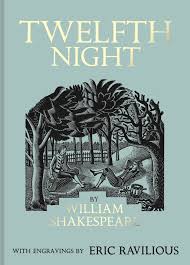
I read Twelfth Night for AP English at my international school in Guangzhou, and it was the first Shakespeare that made me laugh out loud. The cross-dressing plot, Viola disguised as Cesario, Olivia falling for Cesario, Orsino falling for Cesario without knowing it, is a machine for producing confusion, and the play runs the machine with glee. Malvolio in yellow stockings, believing that Olivia loves him, is the funniest thing in Shakespeare, and the cruelty is the reason: everyone is in on the joke except the one person that it destroys. Sir Toby Belch and Sir Andrew Aguecheek are wonderful idiots, and Feste the fool speaks the only real wisdom in the play, which is Shakespeare’s recurring trick but never better deployed than here.
The play is about disguise, but identity is a costume here, and removing one costume only reveals another underneath. Viola cannot stop being Cesario even when she wants to; Orsino cannot stop performing lovesickness; Olivia cannot stop performing grief. Everyone is playing a part, and the comedy arises from the fact that the parts have taken over. I wrote an essay on this for class and got an A, which at the time felt like the most important thing. It was not, but the play was.
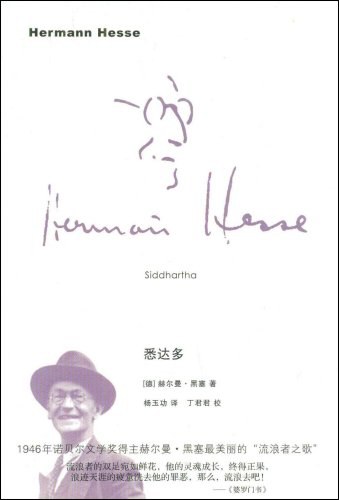
Siddhartha follows its eponymous Brahmin’s son through asceticism, desire, wealth, despair, and final enlightenment by a river in ancient India. Hesse’s thesis is that wisdom cannot be transmitted through doctrine and must be lived, which gives the novel a form as schematic as its argument: each stage of Siddhartha’s life is a phase to be passed through and discarded, and the people that he moves through with, Kamala the courtesan, Govinda the friend, the ferryman Vasudeva, exist as vehicles for his development rather than as people. Kamala provides the sensual education that leads Siddhartha back to renunciation; the novel does not seem to notice the asymmetry of this arrangement, or to consider what Kamala’s experience of it might be.
A fable needs either its architecture or its characters; Siddhartha has the architecture but characters that remain opaque, Orientalist projections of ‘Eastern wisdom’ onto a landscape of archetypes. Bland, if not offensive.
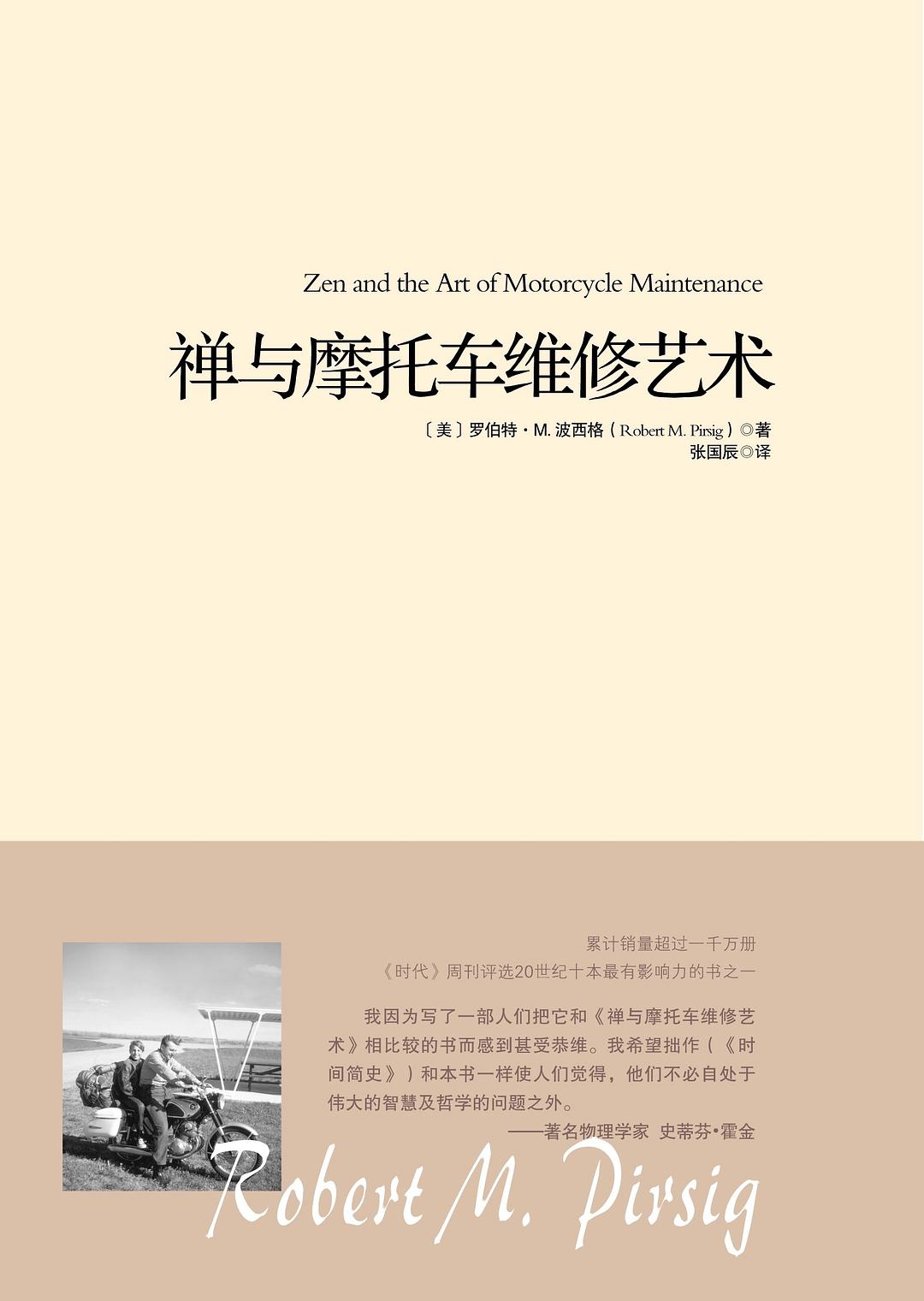
Zen and the Art of Motorcycle Maintenance was the first book that I read that convinced me that philosophy was not a separate activity from living but a description of the same thing being done more carefully. The narrator rides a motorcycle from Minnesota to California with his son Chris, weaving the travel narrative together with extended ‘Chautauquas,’ discursive passages on the nature of Quality. Quality, as the narrator develops it, is the pre-intellectual entity that gives things their value: it precedes both classical analytical thinking and romantic intuitive feeling, and one responds to it before deciding how to categorise the response.
The book’s structure is doubled: the narrator that we meet is the cautious, diminished survivor of a previous self, Phaedrus, a rhetoric professor who pursued the definition of Quality with such intensity that it broke him into the psychiatric system. As the road narrative progresses, the Chautauquas reconstruct Phaedrus’s argument, and the two narratives are on a collision course. The revelatory thing was that philosophical obsession appeared here as a thing that happens to a person, not an abstraction: the questions about how the world works are the same questions as the ones about how to live in it, and confusing the two can break a mind.
The motorcycle maintenance of the title is the book’s best metaphor: the difference between treating a machine as something to be understood and treating it as an instrument to be managed is the same difference that Pirsig finds everywhere, between relating to the world and merely using it. I had not read anything that worked this way before, and the feeling of the philosophical ground shifting beneath the travel narrative was new and completely absorbing.
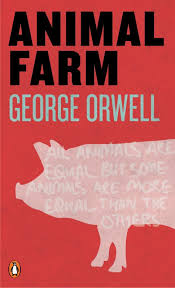
I came to Animal Farm already suspicious of Orwell, having read Nineteen Eighty-Four a few months earlier and come away thinking that he was less revolutionary than his reputation. The fable confirmed the suspicion. The allegory is transparent: the pigs are the Bolsheviks, Napoleon is Stalin, Snowball is Trotsky, Boxer is the credulous proletariat who works himself into collapse for masters who do not deserve his loyalty. The narrative arc, revolution betrayed from within, is presented as though it were an inevitable law of political physics rather than a specific historical outcome, and there the book fails. By collapsing ‘socialism’ into ‘Stalinism,’ Animal Farm lets every reader conclude that collective projects are doomed, which amounts to a defence of the status quo rather than a critique of power. Orwell called himself a democratic socialist, and perhaps he was, but the book that he wrote has been more useful to the right than to any left. The CIA bought the film rights through intermediaries and funded the 1954 animated adaptation, altering the ending to remove the scene where pigs and humans become indistinguishable, turning Orwell’s ambiguous fable into a straightforward anti-communist tract. Orwell’s own ‘List,’ the names of suspected communist sympathisers that he passed to the Information Research Department in 1949, does not help his case. Intent is not reception: whatever Orwell meant, Animal Farm becomes propaganda against the very class that it claims to champion.
After Norwegian Wood I expected quiet realism and got an Oedipal fable wrapped in Murakami’s most elaborate metaphysical machinery. Two narratives alternate: Kafka Tamura, a fifteen-year-old running from his father’s prophecy that he will kill his father and sleep with his mother, and Nakata, an elderly, simple-minded man who talks to cats and stumbles into a murder. The tonal distance from Norwegian Wood was the first surprise; the second was how effortlessly Murakami juggles modes, moving from domestic realism to the supernatural without a single apologetic transition.
The supporting characters carry the book. Oshima, the haemophiliac librarian whose conversations with Kafka about Schubert and Greek tragedy form the intellectual spine, is among the most fully realised figures in Murakami’s work. Miss Saeki’s contained grief over her dead lover becomes almost architectural; when her past finally breaks through, the effect is devastating precisely because it has been so carefully withheld. But the novel’s ambition exceeds its discipline in places: the Oedipal consummations feel more like provocations than earned consequences, and the Colonel Sanders figure drifts into whimsy where it needed weight.
Kafka on the Shore showed me that Murakami’s range extends far beyond his reputation as a writer of wistful love stories, and that the surrealist mode could carry genuine emotional force. I liked it; I did not love it; but I could see where it was reaching.
Everyone told me that Nineteen Eighty-Four was the most important political novel ever written. I finished it thinking that Orwell had written a cautionary tale that was itself more useful to the powerful than to the powerless. The totalitarian machinery is convincing enough; the telescreens, the Thought Police, the endless revisions of history are vivid in the way that a well-constructed nightmare is vivid. But what proved harder to shake was the suspicion that Orwell’s sympathies were less revolutionary than his reputation suggests. The proles, who constitute eighty-five per cent of the population, are dismissed in a few contemptuous paragraphs: they are too stupid, too passive, too animalistic to revolt. The only people who matter in this novel are Party intellectuals, and the only revolution that Orwell can imagine is one conducted by educated men writing diaries. For a writer who claimed to stand with the working class, this is a remarkable failure of imagination. O’Brien’s torture of Winston is effective horror, but it is horror in the service of a thesis that I am not sure I accept: that power is its own justification, that the Party wants power for the sake of power. The passage reads as despair dressed up as political analysis. I came away thinking that Orwell was better at describing what he feared than at understanding how resistance actually works.

My first Murakami, and the book that taught me that a novel could be built almost entirely from accumulated mundane detail: meals cooked alone, records stacked by the turntable, walks to nowhere in particular. The story is simple enough to summarise in a sentence; what Toru Watanabe remembers of his university years in late-sixties Tokyo, pulled between Naoko, who is drowning in grief after their best friend Kizuki’s suicide, and Midori, who is violently, uncompromisingly alive. But the summary misses everything. What Murakami achieves here is a novel where the emotional weight gathers not in the dramatic events but in the spaces between them: the silences during Toru’s visits to Ami Hostel, the exact quality of light in Naoko’s room, the careful way that Reiko tunes her guitar before playing.
The deaths accumulate quietly. Kizuki kills himself at seventeen and opens a wound that never closes. Naoko follows. And in a single devastating parenthetical, the narrator mentions that Hatsumi, too, will take her own life: not as revelation but as an aside, buried in the middle of an unrelated paragraph, and the effect is closer to how grief actually arrives; not as climax but as ambush, something one walks into while thinking about something else. Every novel that I had read until then treated death as a dramatic event. Murakami treats it as weather. The architecture is almost schematic: Naoko is the past, Midori is the present; Ami Hostel is withdrawal, Tokyo is engagement; Toru is strung between them, unable to choose either. But the prose dissolves the scheme into something lived and textured, and when Toru says ‘Death is not the opposite of life but an innate part of it,’ Norwegian Wood has earned every word of it. I read it in three days and could not listen to the Beatles for weeks afterwards without feeling Naoko’s absence like vertigo.
The Hobbit: The Battle of the Five Armies disposes of Smaug in its first ten minutes and then has nothing to replace him. Two hours of CGI battle across Erebor and the dale follow, five armies colliding without the tactical clarity that made Helm’s Deep or Pelennor Fields legible as spaces. The film’s one genuine thread is Thorin’s gold-fever arc: Richard Armitage earns the dragon sickness, the paranoia accumulating slowly enough to feel psychological rather than magical, and his confrontation with Bilbo (Martin Freeman) on the battlements was the thing that the story was actually building towards. But the film cannot give that thread room to breathe. Azog, the CGI antagonist that was invented for the trilogy, has never been convincing as a physical threat, and the duel on the frozen lake resolves a rivalry that the film manufactured rather than found. Freeman plays the loss quietly, and the film moves on.
The comparison with Jackson’s own The Return of the King (2003) is unavoidable and does not go well. Where that film gave its deaths time to register, Théoden’s charge into the dawn, Frodo and Sam on the mountain, the Grey Havens farewell, this one moves through Thorin’s final scene and does not linger. The Return of the King understood that endings are the only thing that justifies the length of what precedes them; this film treats Thorin’s death as just another sequence and Bilbo’s homecoming as coda rather than conclusion.
Ned Stark spends the novel being the protagonist, which is why his execution at the Sept of Baelor shocks as completely as it does. A Game of Thrones trains the reader in all the conventions of heroic fantasy: the righteous lord, the noble quest, the truth that must be told; then it violates them cleanly and without apology. Joffrey gives the order; Ilyn Payne lifts the sword; Arya is watching from the crowd. The fantasy genre had done many things before this. It had not done this.
The structural choice works in tandem with the subversion: eight rotating point-of-view chapters, each character seeing the same events from entirely different angles, each carrying different blind spots. Ned Stark’s honour is not a virtue in King’s Landing; it is a liability, and the novel knows this long before Ned does. Tyrion’s intelligence earns contempt rather than respect. Daenerys, three thousand miles away on the Dothraki sea, is becoming someone that the novel will take three more volumes to reconnect with the main plot. Martin’s thesis, worked out through structure rather than statement, is that Westeros is a system, and the system rewards cruelty and punishes honour without exception.
Reading this in a single week, what I understood was the momentum: the sense that anything could happen, that the rules of narrative protection did not apply. That this same quality made it impossible to continue is something that I understood only later. After Ned’s execution, the series commits to a grimness that accumulates its own conventions; characters that one has followed are no longer safe, and eventually the body count becomes as formulaic as the heroics that it displaced. I stopped at the end of this first book, not quite willing to follow Martin where he was going, and have not gone back.
The narrator of Naive. Super has stopped studying, has moved into his brother’s empty apartment, and has decided to start over with small things. He loses a game of croquet, buys a ball and a peg board, and begins to rebuild his days through repetitive play. He makes lists. He faxes a meteorologist friend. He reads books about the solar system. The prose style matches this programme: very short sentences, each one factual and deliberate, accumulating the way that small things accumulate when large things are temporarily unavailable.
Loe wrote this as a kind of anti-novel, and the comedy arises from the gap between the flatness of the prose and the scale of the questions that it turns out to be asking: what does one do when the narrative that one’s life was supposed to follow no longer makes sense, when ambition feels like a language once spoken but no longer remembered? The answer, here, is to simplify radically. The mallet. The balls. The letters to the beavers. This book gave permission for a certain kind of sadness: the suggestion that slowing down completely, going back to childhood basics, is a necessary recalibration rather than a failure. I was not having the particular crisis that the narrator is having, but I understood the feeling of wanting to start again with smaller things, and the book was funny and sad and exact about it.
The first dystopia that I read, before Nineteen Eighty-Four, before Brave New World, and maybe the simplest gut punch. Firemen burn books; one fireman starts reading them; the world outside his window is already on fire in a different sense. Bradbury’s prose has a feverish quality that suited the shock of that first reading: the sentences run hot, full of images that arrive before one has time to think about them, and the burning of the old woman’s library, her choice to stay and burn with her books, was the first scene in a novel that frightened me.
Fahrenheit 451 thinks through fire more than through argument: Bradbury writes it the way that other writers write water, as an element that reveals everything that it destroys. Montag’s rebellion is clumsy and half-formed, and the ending, the book people walking along the railroad tracks, memorising entire novels to preserve them, is more hopeful than the novel has earned. But I did not care about earned endings. I cared that someone had written a book about what happens when a culture stops reading, and that the book itself was the answer.
The publisher warned Hawking that each equation in A Brief History of Time would halve sales, which is why the book contains only one. The resulting text is a sustained act of translation: black holes, the Big Bang, the uncertainty principle, the arrow of time, rendered in prose accessible to anyone prepared to slow down for a few dense pages. Coming to this without any physics background, I found myself understanding perhaps sixty per cent with real confidence, which felt like success rather than failure.
Hawking is best when he leaves the strangeness intact: at very small scales the universe becomes probabilistic rather than deterministic, spacetime curves around mass, black holes emit radiation and eventually evaporate, and asking what came before the Big Bang may be a category error similar to asking what is north of the North Pole. These are structural revisions to how one conceives of reality, not incremental surprises. Hawking’s achievement is making the strangeness legible without pretending that it is comfortable. Some of the cosmology has since been updated and the later chapters on quantum gravity are harder than the early ones, but the book still has the thing it first gave me: the conviction that the universe is so much weirder than intuition allows, and that this is magnificent rather than frightening.
I read The Golden Age in late middle school and understood it the way one understands anything shocking on first encounter: viscerally, without context. Wang Er and Chen Qingyang are ‘sent down’ to rural Yunnan during the Cultural Revolution, and what follows is a story about sex, boredom, punishment, and the human body’s stubborn refusal to comply with political directives. The sexual frankness was what hit me first; Wang Xiaobo writes about the body with a bluntness that felt transgressive in a way that I had not encountered in Chinese literature, and at that point transgression was its own justification.
What I missed, and what I can see now, is the satire. The ‘struggle sessions,’ the self-criticisms, the absurd bureaucratic machinery of political correction, are not backdrop but subject: Wang Xiaobo is writing about a system that attempts to regulate desire itself, and the comedy arises from the system’s inevitable failure. The Golden Age is a novel about the body as the last site of resistance when every other form of dissent has been foreclosed. I did not have the vocabulary for that yet. I just thought it was funny and strange and unlike anything that I had read before, and that was enough.
Sophie’s World is a textbook dressed as a novel. Sophie Amundsen receives letters from a mysterious philosopher who walks her through the history of Western thought from Thales to Sartre, and for the first half the pedagogical framing almost works: the philosophy is simplified but not falsified, and the progression from the pre-Socratics through Descartes and Hume has the pleasure of a well-drawn map. Then the metafictional reveal arrives: Sophie and Alberto are characters in a book written by a Norwegian UN major for his daughter Hilde’s birthday, and they gradually become aware of their own fictional status.
The problem is that the novel can never decide whether it is a philosophy primer with fictional decoration or a story with philosophical interruptions, and it is not quite either. The characters remain what they were from the beginning: vehicles for exposition, and the metafictional layer raises real questions about consciousness and free will without having the craft to pursue them. I came away with the outline of Western philosophy’s history and very little else. I wanted more than an outline.
Offending the Audience contains no story, no characters, no scenery. Handke’s actors come on stage and spend the first section telling the audience exactly what is not happening: there is no play here, no narrative, no pretence that this stage is somewhere else. The demolition of theatrical convention is conducted in near-monotone, and the effect on first encounter was the feeling of a floor disappearing.
The famous ending, a long escalating list of accusations hurled directly at the audience, was funny and shocking and slightly bewildering. The insults are the piece’s logical conclusion: if the audience is denied the comfortable position of spectator from the beginning, if the event consists entirely of direct address, then the ending turns passive presence into complicity, and the insults are what that complicity has coming. The simpler shock was that someone had written a play that ended by yelling at the people watching it, and this seemed an act of rare honesty.
By the end, Offending the Audience feels like a diagnosis of what performances usually do: manufacture a separation between stage and auditorium that allows everyone to pretend that they are not implicated in what they are watching. The insults, in removing that comfort, are paradoxically the most welcoming thing in the piece. I did not understand all of this then. The feeling of the floor disappearing was enough.
Benedict Cumberbatch’s Smaug gives The Hobbit: The Desolation of Smaug its reason to exist. His voice gives the dragon an intelligence that scale alone cannot provide: the creature has been lying on this hoard for a hundred and fifty years with no one to talk to, and the conversation with Bilbo plays as a cat toying with its food, intellectually superior and faintly amused. Smaug already knows the answers before he asks; every flattering epithet Bilbo offers (‘Luck-wearer’, ‘Riddle-maker’, ‘Barrel-rider’) is accepted as his due, and ‘Barrel-rider’ is immediately seized on and deduced. Martin Freeman matches the performance exactly, trembling hands and wide eyes and a hobbit forcing himself to be clever while something ancient and immensely powerful watches him with what is, evidently, boredom. The boredom is more frightening than the fire. The sequence runs forty minutes in the mountain and produces the only scene in the trilogy where the dramatic stakes feel entirely real, because the power imbalance is total and Freeman’s physical fear is the only thing holding it together.
Everything around Smaug is filler of varying quality. The first half, through Mirkwood’s hallucinatory corridors, Thranduil’s halls, and into Lake-town’s corrupt politics, builds momentum that the previous film consistently dissipated. But Legolas appears despite being absent from the book; Tauriel (Evangeline Lilly) is invented entirely, her romance with Kíli a subplot that the story has no need of, and Lilly does more with it than it deserves. The barrel chase, thrilling for three minutes, extends past the point where spectacle sustains itself. The film ends before completing its own confrontation, cutting to credits as Smaug bears down on Lake-town with ‘I am fire. I am death’; a structural gamble that requires trust that the previous film did not earn, and that leaves the audience holding a cliffhanger where a third film must now carry a battle that in the novel occupied a single short chapter. This film comes closest to justifying the trilogy, and it does so almost entirely in the scenes where one small man and one very large dragon are alone in a room together.
The Kite Runner was the first novel that I read that made me understand what fiction could do. Amir watches Hassan get raped in an alley and does nothing; I read that scene and felt something that I could not name, a physical revulsion not at the violence but at the cowardice, at how completely I understood Amir’s paralysis. Hosseini never lets Amir off the hook. The guilt does not fade; it metastasises. Amir frames Hassan for theft to push him out of sight, and the novel’s most devastating detail is that Hassan knows and goes quietly, carrying the shame that Amir put on him without a word of accusation.
The move to America could have been an escape, but Hosseini uses it as a slow compression. Baba pumps petrol and Amir writes stories and the Afghan community in Fremont re-creates a country that no longer exists. When Rahim Khan’s phone call pulls Amir back to Taliban-controlled Kabul, the return operates on two levels: a man going back to rescue his best friend’s orphaned son, and a man going back because twenty years of running have not outpaced a single act of looking away. The revelation that Hassan was Baba’s illegitimate son, that the Pashtun patriarch had crossed the ethnic line that he publicly upheld, reframes the entire novel’s architecture of shame.
What I understood was the story; what I missed was the politics. The Hazara-Pashtun hierarchy, the Soviet invasion, the Taliban’s particular cruelty towards ethnic minorities: these were furniture to me then, context that I did not know I needed. The novel’s weakness is visible now: Hassan is too saintly, too passive, more instrument of Amir’s redemption than a person with his own interiority. But none of that mattered. What mattered was that someone had written a book in which a boy’s worst moment followed him for decades, and that the only possible response was to go back. ‘For you, a thousand times over.’
In a single evening at Bag End, the dwarves sing two songs. ‘Misty Mountains Cold’ is a mournful a cappella dirge: Thorin (Richard Armitage) begins alone, a low rumble, and the others join until the room falls silent and thirteen exiles become a people with a cause. Minutes earlier, the same dwarves performed a slapstick plate-tossing routine while Bilbo (Martin Freeman) flinched in the corner. The Hobbit: An Unexpected Journey cannot decide which of these films it wants to be, and that indecision runs through every frame: the White Council scenes reach for Lord of the Rings gravitas while Radagast rides a rabbit-drawn sled with bird droppings caked to his face; the Riddles in the Dark sequence, the film’s one genuinely Tolkien scene, plays out with the focused intimacy of a two-hander, Andy Serkis shifting between Sméagol’s childlike delight and Gollum’s snarl mid-sentence, the Ring changing hands through accident and mercy rather than force; and then the Goblin-town escape collapses into a physics-defying chase so weightless that critics compared it to a video-game demo. One slim children’s novel distributed across three films forces Jackson to invent, and what he invents pulls in every direction at once.
Freeman is the justification. His Bilbo is all closure at first, arms crossed, chin tucked, retreating from every intrusion, and then the Took side surfaces in micro-moments: the unconscious lean towards the map, the sprint after the departing company with the contract flapping behind him. The casting is so exact that the transition from reluctant host to someone who leaps over Gollum’s head out of pity rather than force feels continuous with the body language Freeman established in the first ten minutes. The film’s deeper problem is that it cannot give Freeman’s performance enough room. The 48fps decision compounds the tonal confusion: the hyper-clear frame strips the world of the photographic texture that allowed the LotR films to feel lived-in, sets become visible as sets, makeup becomes visible as makeup, and the fantasy contract that 24fps preserves is broken. The Shire looked exactly as I remembered it; the rest of the film spent two and a half hours trying to be something that Tolkien’s novel never needed to be.